Rabbits and Small Game in Nevada
For many of us who dream of chasing trophy elk or giant mule deer across Nevada's vast landscapes, the reality of the draw system can be a hard pill to swallow year after year. It's easy to get caught up in the pursuit of those coveted tags, sometimes forgetting the sheer joy and immediate gratification that hunting can offer. But don't let the draw system steal all your enthusiasm! There's a whole world of accessible, exciting, and delicious small game hunting opportunities right here in Nevada that can keep you sharp, feed your family, and get you outdoors more often. This guide will dive deep into everything you need to know about chasing rabbits and other small game in the Silver State.
The Immediate Appeal of Small Game Hunting in Nevada
It's a familiar story for many hunters in Nevada: you pour over draw odds, meticulously apply for those once-in-a-lifetime tags, and then… nothing. Or maybe you draw a tag, but it's for a unit you're unfamiliar with, or the season is short and doesn't align with your schedule. The frustration is real, and it can leave you feeling like the only way to hunt is to win the lottery. But what if I told you there's a fantastic alternative that offers abundant opportunities, requires minimal financial investment compared to big game, and is often open for months on end? That's the beauty of small game hunting in Nevada. It's an antidote to the draw blues, a way to stay connected to the land, and a chance to put healthy, organic meat on your table.
Beating the Big Game Draw Odds
Let's be honest, the big game draw in Nevada can be brutal, especially for non-residents or those chasing premium tags like trophy elk or bighorn sheep. Years can go by without drawing, leaving you with little to show for your applications but accumulated bonus points. This can be incredibly disheartening and can deter new hunters from even getting started. But small game doesn't play by those rules. For species like cottontail rabbits, jackrabbits, and many ground squirrels, there's no draw, no point system, and often, extremely generous season lengths and bag limits.
This accessibility means you don't have to wait years for a chance to hunt. You can plan a trip relatively last minute, or even spend a few hours after work, knowing you'll have a legitimate opportunity to pursue game. It's a fantastic way to cure "cabin fever" during the long stretches between big game seasons. The barrier to entry is significantly lower, making it a perfect starting point for anyone new to hunting or looking for more immediate success and a constant connection to the field. While we often obsess over where Nevada posts its draw odds tables, with small game, you can just grab your license and go!
Accessible Hunting Opportunities
One of the biggest advantages of small game hunting in Nevada is the sheer amount of accessible public land. Nevada is the most federally owned state in the Lower 48, with vast tracts of Bureau of Land Management (BLM) and National Forest ground. While big game might concentrate in specific units that are hard to draw, small game animals, particularly rabbits and squirrels, are far more widespread. You'll find them in almost every corner of the state where there's suitable habitat, from the sagebrush flats to rocky canyon bottoms and scattered timber.
This wide distribution means that you likely don't have to travel far from home to find a good spot. It also means less competition compared to the crowded trailhead parking lots you might encounter during the rifle deer season. Many units that are overlooked by big game hunters can be absolute goldmines for small game. You can use mapping apps like GoHunt to easily identify public land and scout for prime rabbit or squirrel habitat, looking for dense brush, rocky areas, or riparian zones. This allows for a more relaxed, less stressful hunting experience where the focus is truly on the pursuit and enjoyment of the outdoors, rather than navigating crowds.
Building Skills for Bigger Pursuits
Don't underestimate small game hunting as merely a stepping stone; it's a fantastic proving ground for skills that directly transfer to big game. The basic principles of hunting — scouting, tracking, stalking, shot placement, and understanding animal behavior — are all honed when chasing rabbits and squirrels. You learn to read terrain, anticipate animal movements, and make quick, ethical shots under pressure. Imagine trying to close the last hundred yards on a pronghorn or a mule deer; the practice you get stalking a wary jackrabbit across open terrain is invaluable.
For instance, understanding how to use draws and rims to close distance on a cottontail hiding in a ravine is excellent practice for playing thermals on a rimrock stalk when you're after deer. You'll develop your glassing skills, learning to pick out subtle movements or shapes that don't quite fit the landscape, just as you would when glassing Nevada's Basin and Range for mule deer. Even the act of preparing physically for long glassing days is something you'll practice, albeit on a smaller scale, when covering ground for rabbits. Small game hunting sharpens your senses and refines your instincts, making you a more proficient, well-rounded hunter regardless of what species you're ultimately pursuing.
Common Small Game Species You'll Encounter
Nevada offers a surprising diversity of small game, each presenting its own unique challenges and rewards. While most hunters will likely focus on rabbits, there are other opportunities to explore. Understanding the behavior and preferred habitat of each species is key to finding success.
Cottontail Rabbits
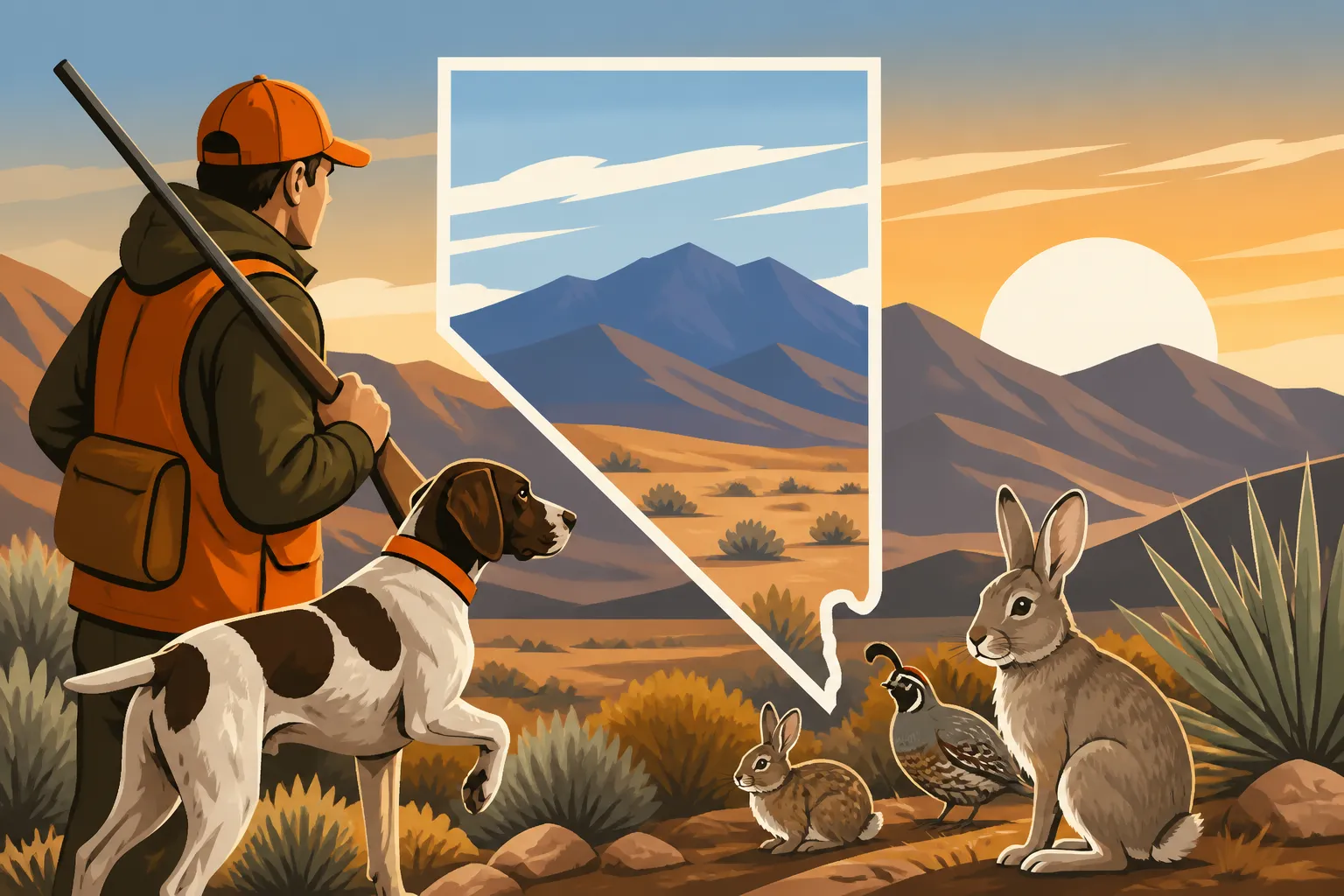
Cottontail rabbits (primarily Desert Cottontails in Nevada) are arguably the most popular small game animal in the state, and for good reason. They are abundant, widely distributed, and provide excellent table fare. You'll typically find cottontails in areas with dense brush, rocky outcrops, riparian zones along washes, and the edges of agricultural fields. They thrive where there's good cover to hide from predators and plenty of vegetation to munch on. Think thick sagebrush, rabbitbrush, greasewood, and rocky hillsides with scattered junipers.
Hunting cottontails usually involves still-hunting slowly through prime habitat, flushing them from cover, or sitting patiently near known feeding areas, especially during dawn and dusk. They often won't run far, darting into the nearest dense cover, which can make for exciting, fast-paced shooting. Early morning and late afternoon are usually the most productive times, as they are most active during these periods. Don't be surprised to find them concentrated around water sources in Nevada's driest country, especially during hotter months.
Jackrabbits
While technically hares, not rabbits, jackrabbits are another readily available small game species. Nevada is home to both Black-tailed and White-tailed Jackrabbits, with Black-tails being far more common across the open, arid basins. Unlike cottontails who prefer dense cover, jackrabbits favor wide-open spaces, sagebrush flats, and grasslands, where their incredible speed and keen eyesight are their primary defenses. They are much larger than cottontails, often weighing 5-10 pounds, and their meat, while leaner, can be quite good if handled properly.
Hunting jackrabbits is a different challenge. They typically won't hold tight for a flush; instead, they'll bolt at the first sign of danger, reaching speeds up to 40 mph. This makes them a fantastic target for those looking to improve their long-range shooting skills with a rifle or test their quick reflexes with a shotgun. Spot and stalk is a common tactic, slowly glassing open country from an elevated position, then planning an approach. You'll often see them silhouetted against the morning or evening sun. They provide fantastic practice for shooting sticks or bipod on rocky ground and learning to hold for wind across a wide basin, skills vital for big game.
Ground Squirrels and Marmots
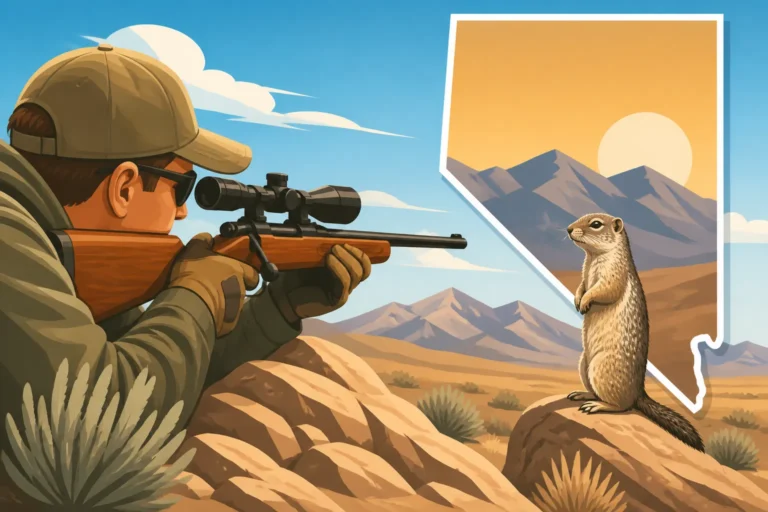
Beyond rabbits, Nevada offers opportunities for various ground squirrels and marmots. The common Belding's Ground Squirrel (often called "pot guts" by locals) and various rock squirrels can be found in different habitats across the state. They are generally smaller targets, making them excellent for honing marksmanship skills with a .22LR rifle or even an air rifle. Marmots, larger members of the squirrel family, tend to inhabit higher elevations and rocky terrain, often near aspen pockets or mountain meadows.
Hunting ground squirrels can be a fun, relaxed way to spend a day in the field. They are often active during midday when other game is bedded down, and they provide constant opportunities for shooting. Finding a colony and patiently waiting for them to emerge from their burrows can be very rewarding. Marmots, being larger and more wary, present a more significant challenge, often requiring careful stalking and precise shots. Always be aware of your backdrop and what lies beyond your target, as small bullets can travel surprisingly far.
Essential Gear and Tactics for Small Game
Successfully hunting small game requires a thoughtful approach to gear and tactics. You don't need a truckload of expensive equipment, but having the right tools for the job will make your time in the field much more productive and enjoyable.
Firearms and Ammunition Choices
The choice of firearm largely depends on the species you're targeting and your personal preference. For cottontails, a 12 or 20-gauge shotgun with #4, #5, or #6 birdshot is a classic choice, especially when hunting in dense cover where quick, close-range shots are common. The spread of the shotgun pattern increases your chances of connecting with a fast-moving target. However, if you're still-hunting or sitting and waiting, a .22LR rifle can be incredibly effective and quiet.
For jackrabbits in open country, a .22LR rifle is often preferred, allowing for accurate shots at longer distances (50-100 yards). Some hunters even opt for a .17 HMR or .22 WMR for a flatter trajectory and more knockdown power on larger jacks, especially if shooting at 100+ yards is anticipated. For ground squirrels and marmots, the .22LR is king, offering affordability and accuracy for these smaller targets. If you're looking for an even quieter option for close ranges, perhaps near more populated areas (where legal and safe), a powerful air rifle can be surprisingly effective for squirrels and close-range cottontails. Always bring ample ammunition, as opportunities can come fast and furious.
Stealth, Spotting, and Stalking
Regardless of the species, stealth is paramount in small game hunting. These animals are prey species, and they are acutely aware of their surroundings. Slow, deliberate movements are key. When still-hunting for cottontails, move like a predator: take a few steps, then pause, scanning the cover ahead and to your sides. Look for ears, eyes, or the subtle outline of a rabbit hunkered down. They often won't move until you're quite close.
For jackrabbits in open country, your optics are your best friend. A good pair of binoculars (like a 10×42) will help you spot them from a distance before they spot you. Once spotted, a careful stalk is required. Use available terrain features — small rises, draws, or even large sagebrush — to break your silhouette and conceal your approach. Pay attention to the wind, as scent can carry, and use it to your advantage, just as you would when reading wind on a long sage stalk for bigger game. These are fantastic opportunities to practice your fieldcraft without the high stakes of a big game tag.
The Role of Dogs in Small Game Hunting
While often associated with upland birds or waterfowl, a well-trained dog can be an incredible asset for small game hunting, particularly for flushing cottontails from thick cover. A good rabbit dog, often a beagle or a similar breed with a strong nose, can systematically work through dense brush that would be nearly impenetrable for a human hunter. The dog's job is to locate the rabbit, push it from cover, and ideally, circle it back towards the hunter.
This method can be incredibly effective and add an exciting dynamic to the hunt. Retrievers can also be useful for quickly locating downed game in thick vegetation, preventing lost animals. However, ensure your dog is well-behaved, under control, and accustomed to gunshots. Always prioritize your dog's safety, especially on hot days or in areas with potential hazards like rattlesnakes. When thinking about Chukar Is Nevada's Signature Upland Bird, remember that a good bird dog can also easily transition to chasing rabbits, making them a versatile hunting companion.
Seasons, Regulations, and Licensing
Before you even think about heading out into Nevada's beautiful and rugged landscape for small game, it's absolutely crucial to understand the current seasons, bag limits, and licensing requirements. Regulations are in place to manage wildlife populations sustainably and ensure fair chase. Ignoring them can lead to hefty fines and loss of hunting privileges, which nobody wants.
General Season Dates and Bag Limits
Nevada offers very generous seasons for most small game, often running for many months or even year-round for some species like jackrabbits and coyotes. Cottontail rabbit season typically opens in late summer/early fall and extends through the winter, providing ample opportunity. Ground squirrels often have even longer seasons, sometimes year-round, depending on the specific species and management unit. Bag limits for rabbits are usually quite generous, often 10-15 per day, with possession limits that reflect multiple days of hunting.
It's vital to remember that these dates and limits can change annually, and specific units might have different rules. You must consult the current Nevada Department of Wildlife (NDOW) Hunting Regulations for the most up-to-date information. Don't rely on last year's regulations or hearsay. NDOW's website is the authoritative source. Keep a copy (physical or digital) with you in the field. Here's a general overview, but again, always verify with current NDOW regulations:
| Species | Typical Season Length | Average Daily Bag Limit | Primary Habitat |
|---|---|---|---|
| Cottontail Rabbit | ~August – February | 10-15 | Dense brush, rocky areas |
| Jackrabbit | Year-round (often) | No Limit (often) | Open flats, sagebrush |
| Ground Squirrels | Year-round (often) | No Limit (often) | Grassy areas, rocky slopes |
| Marmot | ~September – January | 2-3 | High elevation rocks, meadows |
Note: This table provides a general idea. Always check current NDOW regulations for exact dates, bag limits, and specific unit rules.
Licensing Requirements
To hunt any game animal in Nevada, including small game, you need a valid Nevada hunting license. Non-residents will need a nonresident hunting license, and residents will need a resident license. Additionally, a Nevada Upland Game Bird Stamp is required for hunting upland birds, but typically not for rabbits or squirrels. However, if you plan to combine your rabbit hunt with a chukar or quail hunt, then you'll need that stamp.
If you were born after January 1, 1960, you'll also need to show proof of hunter education. Nevada Accepts Hunter Education From Any State, so if you've taken a course elsewhere, you're usually good to go, provided you have your certificate. If not, you'll need to complete a course, either in-person or online. You can learn more about how Nevada Verifies an Out-of-State Certification or compare Online and Classroom Hunter Education Compared options. Youth hunters also have specific requirements and license options in Nevada, so be sure to check those if you're bringing a junior hunter along.
Public Land Access and Regulations
Nevada is a public land hunter's paradise, with the vast majority of small game hunting taking place on lands managed by the Bureau of Land Management (BLM) and the U.S. Forest Service. These lands are generally open to hunting, but it's your responsibility to know the boundaries. Apps like GoHunt or onX maps are invaluable for identifying public versus private land and understanding a unit boundary before you apply or head out. Always be respectful of private property and ensure you have permission before crossing or hunting on it.
Beyond land ownership, be aware of specific regulations that apply to motorized vehicle use on public land. Many areas have seasonal road closures, or restrictions on off-road travel, which can impact how you access your hunting spots. You also need to be mindful of fire restrictions, especially during dry summer and fall months, as careless actions can lead to devastating wildfires. Remember that Nevada's roads are long and its services are far apart, so always be prepared with extra fuel, water, and emergency supplies.
The Often Overlooked Culinary Delights
One of the most rewarding aspects of small game hunting is the incredible table fare these animals provide. Rabbit, in particular, is lean, healthy, and versatile meat that can be prepared in countless delicious ways. Far from being a lesser meat, it's considered a delicacy in many cultures. But just like with big game, proper field care is essential to ensure the best quality meat makes it to your plate.
Field Dressing and Cooling Considerations
The moment you harvest a small game animal, especially rabbits and squirrels, the clock starts ticking on proper field care. Warm temperatures are the enemy of good meat. Immediately after the shot, field dress the animal. For rabbits and squirrels, this is usually a quick process: make an incision through the hide behind the ribs, pull the hide over the body, and remove the entrails. This allows the carcass to cool rapidly and prevents bacteria from spoiling the meat.
During warmer hunting seasons, like Nevada's August archery deer window, or for earlier small game seasons, getting the meat cooled quickly is even more critical. If you're out for a full day, consider bringing a cooler with ice to store your harvested game. This is especially important if you're hunting multiple animals. A clean game bag or even a simple plastic bag can protect the meat from dirt and flies. The quicker you can get the body temperature down, the better the flavor and shelf life of your harvest.
Recipes and Preparation Methods
Rabbit meat is often compared to chicken, with a mild, slightly gamey flavor that takes well to a variety of seasonings and cooking methods. It's fantastic for slow-cooking, braising, or stewing, which tenderizes the meat beautifully. A classic rabbit stew with root vegetables, or rabbit braised in wine, are hearty and delicious options. Rabbit can also be fried like chicken, creating a crispy, flavorful meal.
For jackrabbits, which tend to be leaner and have a stronger, gamier flavor, marinades are your friend. Soaking the meat in buttermilk or a vinegar-based marinade can help tenderize it and mellow the flavor. They are excellent for slow-cooked chili, pulled rabbit sandwiches, or even ground into sausage. Ground squirrels, being small, are often best pan-fried or roasted whole. Don't be afraid to experiment with different spices and cooking techniques. There's a wealth of online resources and traditional recipes for preparing small game that will turn your harvest into a culinary delight.
The Sustainable Table
Hunting small game isn't just about the thrill of the chase; it's a powerful connection to the food we eat. By harvesting your own rabbits and squirrels, you're participating in a sustainable food system, knowing exactly where your meat comes from and how it was raised (or, in this case, lived wild and free). This direct connection to the source is incredibly rewarding and often missing from our modern diets.
Embracing small game as a food source also fosters a deeper appreciation for conservation. When you understand the effort required to put meat on the table, you naturally become a stronger advocate for healthy habitats and responsible wildlife management. It's a way to truly live off the land, even if just for a meal or two, and to honor the traditions of hunting as a means of sustenance.
Small Game for Skill Building and Family Fun
Beyond filling the freezer, small game hunting offers unparalleled opportunities for skill development and creating lasting memories with family and friends. It's not just about the harvest; it's about the entire experience, from scouting to the stalk to the shared campfire meal.
Introducing New Hunters to the Field
If you're looking to introduce a new hunter to the sport, particularly youth, small game is an ideal starting point. The lower pressure of a non-draw tag, the abundance of game, and the shorter stalks or more frequent action can keep interest levels high. Instead of potentially long, cold, and fruitless days chasing elusive big game, a small game hunt often provides immediate engagement and success, which is critical for building confidence in beginners.
Imagine a crisp fall morning, walking through sagebrush with a youngster, pointing out tracks, identifying different plants, and then the excitement of spotting a cottontail or a jackrabbit. The quick action of a shotgun or the precision of a .22 rifle shot offers an adrenaline rush without the ethical weight of a big game animal. It teaches them patience, observation, and respect for the animal in a tangible way. Plus, the legal shooting hours and blaze orange in Nevada requirements are generally less stringent for small game compared to big game, though always check NDOW regulations for specific rules regarding youth hunting requirements in Nevada.
Sharpening Your Hunting Prowess
Even for seasoned big game hunters, small game provides an excellent off-season opportunity to keep your skills honed. Think of it as practice for the "big leagues." You can practice your glassing techniques, using your binoculars or spotting scope to pick out small details in the landscape. You'll refine your stalking methods, learning how to move silently and utilize cover effectively. It's a great way to maintain your proficiency with a rifle or shotgun, ensuring your muscle memory and accuracy are sharp for when that coveted deer or elk tag finally comes around.
Hunting small game can also help you understand animal behavior better. Observing how a rabbit uses cover, how a jackrabbit reacts to pressure, or where a squirrel feeds can provide insights into how larger animals might behave in similar environments. It's also an excellent way to e-scouting a Nevada unit before the season, identifying potential water sources, terrain features, and access points that could be valuable for any species. The knowledge gained from consistent small game hunting will undoubtedly make you a more effective and adaptable hunter overall.
Year-Round Outdoor Engagement
Perhaps one of the most significant benefits of small game hunting is that it allows you to stay connected to the outdoors for a greater portion of the year. When big game seasons are closed, or you don't have a tag, small game often provides an open door to get out into the Nevada wilderness. This sustained engagement with nature is crucial for physical and mental well-being. It keeps you hiking, observing, and learning about the ecosystems around you.
Beyond the specific act of hunting, these trips are opportunities to simply explore, to discover new corners of the state, and to appreciate the beauty of Nevada's diverse landscapes. You might combine a rabbit hunt with shed antler gathering (making sure to check shed antler gathering rules in Nevada) or simply enjoy a hike through an area you've never visited. The regular contact with the wild fosters a deeper sense of stewardship and appreciation for conservation, reminding us why we love Nevada hunting in the first place.
Disclaimer
Please remember that hunting regulations, season dates, and bag limits are subject to change. Always consult the most current Nevada Department of Wildlife (NDOW) regulations before planning any hunting trip. This guide is for informational purposes only and does not supersede official state regulations.