Can You Drive Off Road to Retrieve Game?
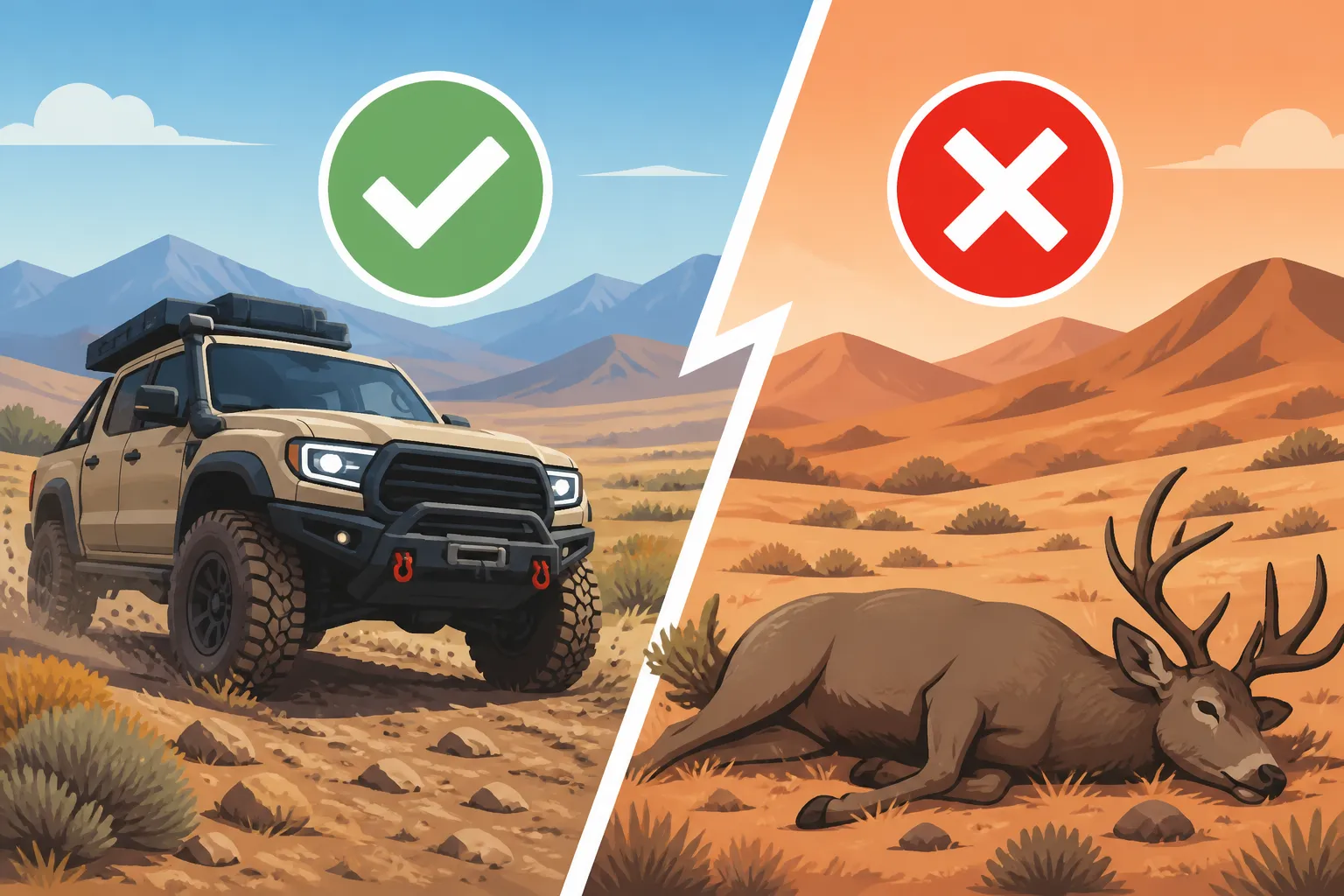
There’s nothing quite like the rush of finally getting a shot on a Nevada big game animal after weeks, months, or even years of waiting. But that surge of adrenaline can quickly turn to dread when you realize your hard-earned deer or elk is down far from any road, nestled deep in rugged terrain. The immediate thought for many of us, especially with a heavy animal like an elk, is, "Can I just drive a little closer to get it out?" It's a natural instinct, especially when facing a long, tough pack-out. However, the answer to driving off-road to retrieve game in Nevada is almost always a resounding "no," with very few, highly specific exceptions. This guide will walk you through the realities of motorized vehicle use on Nevada's public lands, clarifying the rules, the ethics, and what you really need to know before you even think about putting your truck in four-wheel drive.
The General Rule: Stay on Designated Roads
Nevada is a vast state, and a huge percentage of it is public land, managed primarily by the Bureau of Land Management (BLM) and the U.S. Forest Service (USFS). While this offers incredible hunting opportunities, it also comes with a strict set of rules regarding vehicle access. The baseline rule across most of this public domain is straightforward: stay on designated roads and trails.
The Intent of Travel Management Plans
Federal agencies develop what are called Travel Management Plans (TMPs) or Motor Vehicle Use Maps (MVUMs) precisely to govern where vehicles can and cannot go. These plans aren't just arbitrary rules; they're designed to protect the very resources that make hunting possible – sensitive habitats, water sources, and the sheer wildness of the landscape. Without these plans, a few tracks here, a few tracks there, and suddenly, you have a spiderweb of unofficial roads scarring the land, leading to significant erosion, habitat fragmentation, and diminished wilderness experiences for everyone. It's about striking a balance: allowing access for recreation while safeguarding the environment for future generations. When you see those signs saying "Motorized Vehicle Use Prohibited Off Designated Routes," they're not kidding.
Defining "Off-Road" in Nevada's Open Country
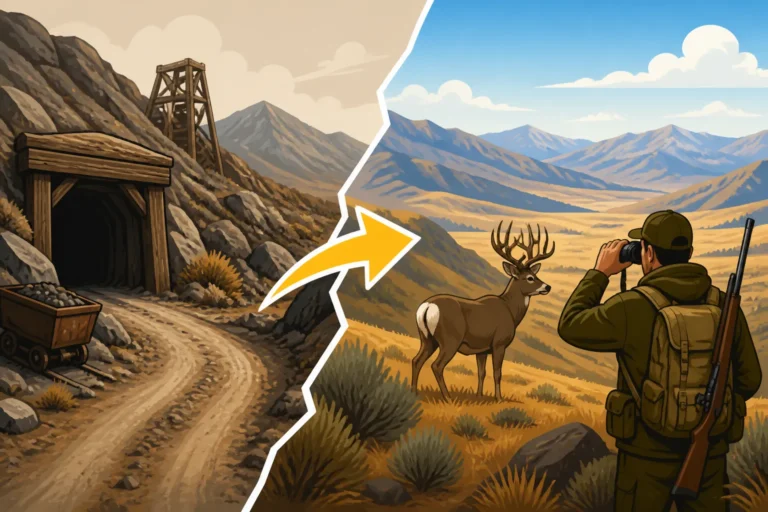
In the wide-open spaces of Nevada, it can sometimes feel like "off-road" means driving anywhere you please. But that's a dangerous misconception. "Off-road" doesn't just mean carving a brand-new path through virgin sagebrush. It also includes driving on old, faint two-tracks, washes, or even seemingly established trails that are not officially designated on a current map. If a route isn't explicitly marked as open for vehicle use on an official map, driving on it is considered off-road. Many hunters have inadvertently fallen into this trap, thinking an old cattle trail or a long-abandoned mining track was fair game. Remember, these landscapes are fragile, and even a single vehicle pass can leave a lasting impact, especially after a rain or in soft, dry soil.
The Impact of Unauthorized Vehicle Use
Driving off designated routes might seem like a small shortcut to retrieve your animal, but the cumulative impact is significant. It leads to severe soil erosion, particularly on slopes or in sensitive desert environments where vegetation is sparse. It destroys native plant communities that provide critical forage and cover for wildlife. It can disturb nesting birds, interrupt migration patterns, and degrade critical winter range. Beyond environmental damage, it also creates conflicts with other public land users – hikers, backpackers, birdwatchers, and even other hunters who value the solitude and untouched nature of these wild places. Furthermore, breaking these rules carries serious consequences, including hefty fines and the potential impoundment of your vehicle, not to mention a blot on your hunting record. Protecting these areas is crucial for the future of Nevada hunting.
Specific Exceptions and Local Regulations
While the general rule is strict, many hunters wonder if there are any special provisions for game retrieval. The reality is, explicit exceptions allowing off-road vehicle travel for game retrieval are exceedingly rare, especially on federal public lands in Nevada.
The Rarity of Explicit Game Retrieval Rules
Most public land agencies do not have a blanket policy or an easily accessible permit that allows hunters to drive off designated routes solely for game retrieval. If such an exception existed, it would be heavily abused and lead to widespread environmental damage. Think about it: if every hunter with an animal down could just drive to it, our wild landscapes would quickly become a maze of vehicle tracks. Instead, the agencies generally expect hunters to be prepared for the physical challenge of packing out their game. If you're wondering about a specific area, your best bet is to contact the local BLM field office or US Forest Service Ranger District directly for their most current travel management plan information. Don't rely on old maps or anecdotal advice from fellow hunters; regulations can change.
Wilderness and Wilderness Study Areas
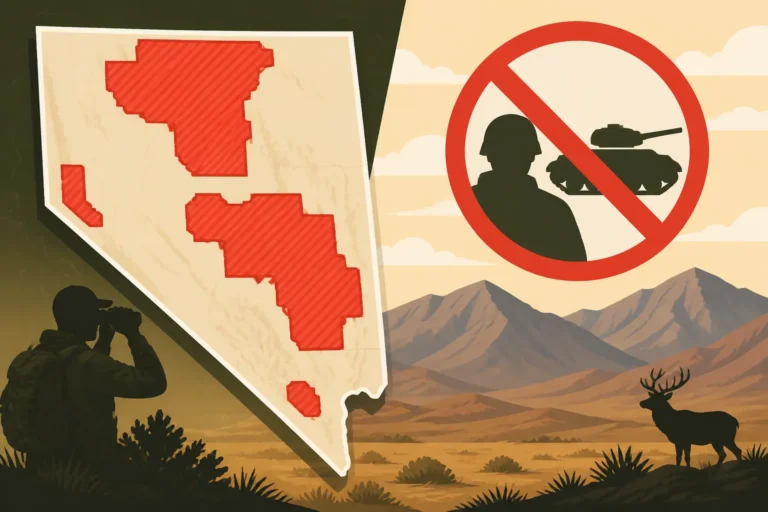
This is one area where the rules are crystal clear, and absolutely no exceptions are made for motorized vehicles. Nevada contains numerous Wilderness Areas and Wilderness Study Areas (WSAs), designated to preserve their pristine, undeveloped character. In these areas, any motorized vehicle use is strictly prohibited. If you harvest an animal inside a Wilderness or WSA, you must pack it out on foot or with the aid of pack animals. There are no two ways about it. Violating this rule is a serious offense, often resulting in significant fines and federal penalties. Before you even apply for a tag, it's crucial to understand Wilderness Study Areas and Vehicle Limits and identify any such areas within your chosen unit using resources like onX Hunt. Knowing these boundaries upfront can save you a world of trouble and ensure you hunt ethically and legally.
Unit-Specific Rules and Agency Discretion
In very rare and specific circumstances, an agency might grant a temporary and highly restricted allowance for vehicle access, but this is almost always tied to extraordinary circumstances, such as assisting an injured hunter or during specific, pre-approved wildlife management operations. It is not a general allowance for convenience. For example, if a hunter is injured and unable to walk out, emergency services might use a vehicle to access them, but this is a search and rescue operation, not a game retrieval service. As a hunter, you should never plan on such discretion being available for game retrieval. Always assume you will need to pack out your animal from where it falls, regardless of how far that might be. The responsibility rests squarely on the hunter to be physically prepared and equipped for such a task.
Understanding "Designated Routes" on Public Land
The key to staying legal and respectful on Nevada's public lands is understanding what constitutes a "designated route" and how to identify one. This isn't always as simple as it sounds, but modern tools make it much easier.
Navigating with Official Maps
The absolute most important tool in your arsenal for understanding vehicle access is an official Motor Vehicle Use Map (MVUM) for Forest Service lands, or the specific Travel Management Plan maps for BLM areas. These maps are the definitive guide. They clearly mark which roads and trails are open to motorized vehicles, which are seasonally closed, and which are completely off-limits. You can usually find these maps online on the respective agency websites, or pick up paper copies at district offices.
However, in today's digital age, many hunters rely on mapping apps like onX Hunt. These apps are incredibly powerful because they layer official public land boundaries, private land, and designated routes directly onto your phone or GPS device. An app like onX Hunt often incorporates the very MVUM data or BLM travel plan information, making it much easier to see in real-time if the faint track you're considering driving on is actually a legal route. Always double-check your digital maps against official sources, as data updates can sometimes lag, but generally, these tools are invaluable for Reading a Land Ownership Layer Correctly and navigating responsibly.
Identifying Legal Two-Tracks and Primitive Roads
This is where many hunters get into trouble. Nevada is crisscrossed with countless two-tracks and primitive roads. Some are official, designated routes; many are not. An official designated route will typically be marked as such on an MVUM or BLM travel map. Sometimes, an old logging road or a long-abandoned ranch track might look like a road you can drive, but if it's not on the official map, it's considered off-road.
It's tempting to follow tracks left by others, assuming they knew what they were doing. Don't. Many people drive where they shouldn't, and following their tracks only perpetuates the problem and won't save you from a citation. Look for road signs (though these are often missing on primitive routes), clearly maintained surfaces, and, most importantly, verification on your map. If there's any doubt, assume it's closed to motorized travel. It's better to hike the extra distance than to risk a fine, damage the land, and potentially lose your hunting privileges. For more on navigating these challenges, understanding Remote Road Conditions Across Nevada is also critical, as many legal routes are still incredibly rough.
Consequences of Violating Travel Management
The penalties for driving off-road on public land can be severe. You could face significant fines, potentially running into hundreds or even thousands of dollars. Your vehicle could be impounded, leaving you stranded far from civilization. In some cases, repeated violations could lead to a loss of hunting and fishing privileges. Beyond the legal ramifications, there's the moral cost. As hunters, we are stewards of the land. Our actions reflect on the entire hunting community. Illegally driving off-road not only damages the environment but also provides ammunition for anti-hunting groups who argue that hunters disrespect public lands. It's simply not worth the risk, for your wallet, your reputation, or the future of hunting access. Be sure to check Motorized Travel Rules on Nevada Public Land before you head out.
| Land Management Agency | General Vehicle Access Rule | Game Retrieval Exception | Key Resources for Maps |
|---|---|---|---|
| BLM (Bureau of Land Management) | Restricted to "designated routes" on Travel Management Plans. | Extremely rare; generally, no specific allowance. | BLM field office maps, online TMPs, onX Hunt. |
| USFS (U.S. Forest Service) | Restricted to "designated routes" on Motor Vehicle Use Maps (MVUMs). | Extremely rare; generally, no specific allowance. | USFS MVUMs (online/print), onX Hunt. |
| National Parks/Monuments | Restricted to paved roads; no off-road. | No. Hunting generally prohibited anyway. | Park visitor centers, official websites. |
| State Wildlife Mgmt Areas (WMAs) | Varies by WMA; generally, designated roads only. | Varies; check specific WMA regulations. | NDOW website, WMA kiosks. |
| Wilderness & Wilderness Study Areas (WSAs) | Absolutely NO motorized vehicles. | Absolutely NO motorized vehicles. | BLM/USFS maps, onX Hunt. |
This table provides general guidance. Always consult specific local regulations for the area you intend to hunt.
Ethical Considerations and Practical Realities
Beyond the black-and-white rules of legal vehicle access, there are important ethical considerations and practical realities that every responsible Nevada hunter needs to weigh when retrieving game.
The Hunter's Responsibility to Pack It Out
This is perhaps the most fundamental ethical tenet in backcountry hunting: if you pull the trigger or release an arrow, you are morally and legally responsible for retrieving that animal. This means being prepared to pack it out, no matter how tough the terrain or how far the distance. Nevada's landscape is often rugged, steep, and vast, and animals frequently drop in places far from convenient access. Responsible hunters understand this challenge and train for it. They bring appropriate gear, like a good quality game bag, a sturdy frame pack, and plenty of water. They know their physical limits and, importantly, they bring hunting partners who can help share the load. Planning for Packing an Animal Out of Roadless Country is a critical part of any successful hunt here.
Planning for Retrieval Before the Shot
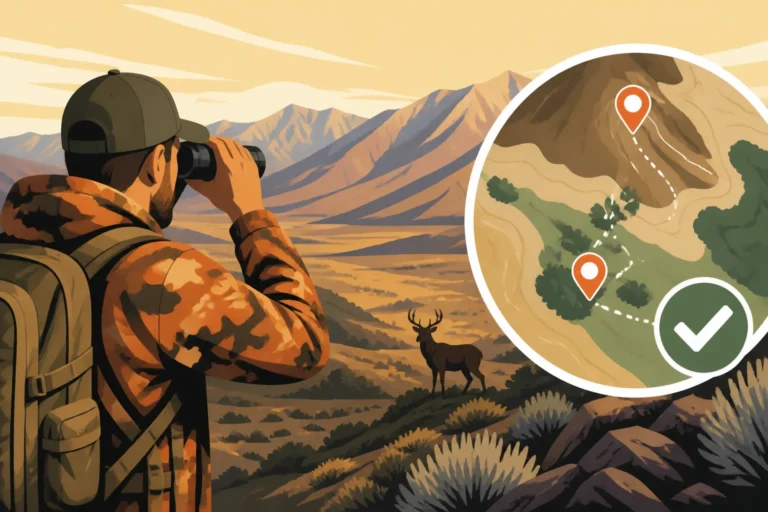
The best way to handle game retrieval is to plan for it before you even take the shot. As you're scouting a unit, whether in person or using digital tools, pay close attention to potential shot angles and, more critically, retrieval routes. Ask yourself: "If an animal drops right there, how would I get it out?" This might influence where you choose to hunt, or even whether you take a shot at all. Using tools like GoHunt or onX Hunt for E-Scouting a Nevada Unit Before the Season can help you identify designated roads, contours, and possible pack-out routes. Consider the terrain – is it a gradual slope or a cliff face? What about vegetation density? Will you have to cross a deep canyon or a thorny thicket? Being honest with yourself about the retrieve beforehand is a mark of a truly ethical and prepared hunter. It also influences decisions like how many hunting partners you bring and what gear you choose, knowing that a bone-dry creek bed might become an impassable slog after a rain, or that a beautiful sage flat might conceal hidden washouts ready to swallow a tire.
When to Call for Help (and Who to Call)
There are legitimate emergencies where external help might be needed, but these are almost always situations involving human safety, not just animal retrieval convenience. If a hunter is injured, lost, or faces a life-threatening situation, absolutely, call for help (911, county sheriff, or game warden if you have Cell Coverage Across Nevada Hunt Units). Search and Rescue (SAR) teams are there for people in distress.
However, do not call law enforcement or game wardens to ask for an exception to vehicle rules because you have an animal down in a difficult spot. Their job is to enforce the rules and ensure safety, not to facilitate illegal game retrieval. Misusing emergency services for convenience is irresponsible and can pull vital resources away from genuine emergencies. If you've got an animal down and you're struggling, your best bet is to call a hunting partner, a trusted friend, or a family member to come help you pack it out on foot. Investing in a satellite messenger device for remote areas can be a literal lifesaver, allowing you to call for non-emergency help from partners when you have no cell service.
Ultimately, the responsibility for game retrieval rests solely on the hunter. Understanding the land, the rules, and your own capabilities will ensure a successful, ethical, and legal hunt in Nevada's incredible backcountry.
Disclaimer
This article is for general informational purposes only and does not constitute professional advice. Laws, prices and regulations vary by location and change over time. Consult a qualified professional for guidance on your specific situation.