Nevada Guides Need Federal Permits on Top of a State License
If you're dreaming of chasing mule deer across Nevada's sagebrush basins or bugling in an elk in the high country, chances are you've considered hiring a guide. It makes sense – these landscapes are vast, and the learning curve is steep. But what many hunters don't realize is that guiding in Nevada isn't just about having a state license; it's a deeply layered system, especially given that so much of the Silver State is federal public land. This guide is here to untangle that complexity, helping you understand precisely what legal requirements your guide must meet to ensure your hunt is ethical, legal, and truly unforgettable.
The Layered Reality of Nevada Guide Licensing: More Than Just a Card
When you think about a professional hunting guide, you probably imagine someone with deep knowledge of the land, tracking skills, and an uncanny ability to find game. All of that is true, but there's a foundational element that often gets overlooked: proper licensing. In Nevada, this isn't a simple one-and-done deal. Because a staggering amount of the state is managed by federal agencies, a guide needs more than just a state-issued piece of paper. They need to navigate a complex web of permissions that can make or break the legality of your hunt. Ignoring these nuances can lead to severe headaches for both the guide and, unfortunately, for you, the client.
Imagine planning the hunt of a lifetime, only to discover halfway through that your guide is operating illegally on federal ground. Not only would that taint your experience, but it could also put you in a sticky situation with land management agencies. The frustrations are real – you're paying good money, often investing years in the draw process, and the last thing you need is a legal technicality to derail everything. This layered system exists to ensure accountability, protect public lands, and maintain ethical standards, but it places the onus on both the guide to acquire the permits and the hunter to verify them.
State Licensing Requirements: The First Hurdle
Every guide operating in Nevada must first obtain a license from the Nevada Department of Wildlife (NDOW). This is the baseline, the absolute minimum requirement. NDOW sets the standards for guide conduct, ensuring a level of professionalism and knowledge. This process involves applications, background checks, and often proving competency or experience in the field. Think of it as their hunting license for business – it allows them to legally charge for their services within the state's jurisdiction.
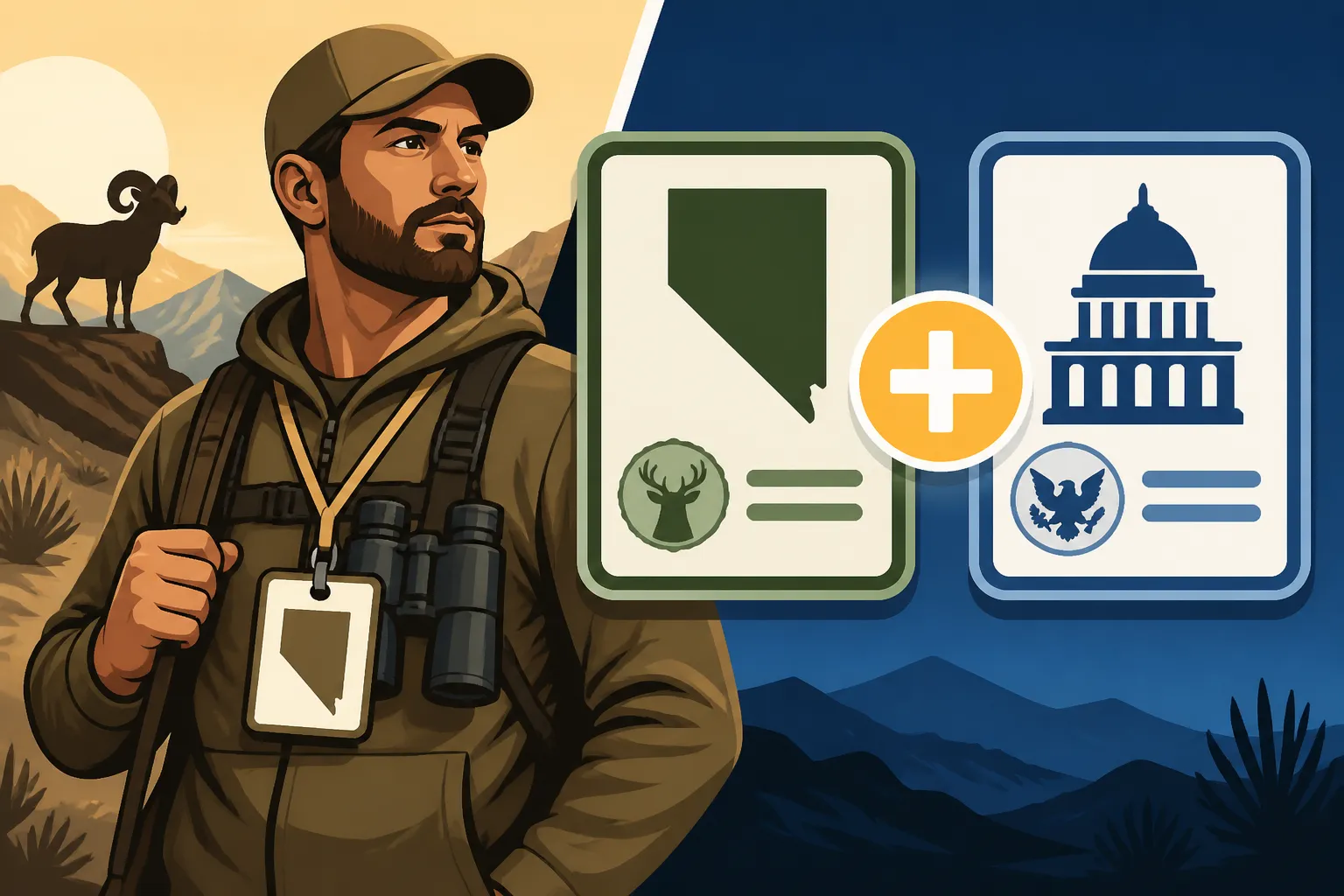
However, a state license alone is like having a driver's license but no car. It's essential, but it doesn't give them access to all the roads. A state license signifies that NDOW recognizes them as a legitimate guiding service, but it doesn't grant permission to operate on specific pieces of land, especially if those lands are not state-managed. This is where many people, even some guides, can get confused. They might assume that once NDOW gives the green light, they're free to roam. That assumption can lead to significant problems, particularly on the vast stretches of federally owned land that characterize Nevada.
Federal Land Permits: The Crucial Second Layer
Here's the often-missed but critically important part: Nevada Is the Most Federally Owned State in the Lower 48. This means the vast majority of prime hunting grounds – the rugged mountain ranges, expansive sagebrush flats, and remote canyons where big game roams – are managed by agencies like the Bureau of Land Management (BLM) and the U.S. Forest Service. These federal agencies have their own set of rules and permitting processes for commercial operations, and guiding falls squarely into that category.
A guide can hold a pristine Nevada state guide license, but without the appropriate federal land permit for the specific area they are operating in, they are essentially trespassing as a commercial enterprise. This isn't just a minor infraction; it can result in heavy fines, confiscation of equipment, revocation of future permits, and even criminal charges. For a client, it means their entire hunt, from the moment they step onto federal land with that guide, is compromised. It’s a huge liability that responsible guides understand and diligently address, but it's a detail that can be easily overlooked by an uninformed hunter.
Understanding the Nevada Department of Wildlife (NDOW) State License
The Nevada Department of Wildlife is the primary state agency responsible for managing wildlife and regulating hunting activities, including the licensing of guides. Their role is to ensure that anyone offering paid hunting services meets specific qualifications and adheres to state laws and ethical standards. This state license is the foundation, a testament that the guide has passed a basic level of scrutiny from the state's wildlife authority.
But this foundation also comes with distinctions. Not all NDOW licenses are created equal, and understanding these differences is vital for anyone looking to hire a professional. The complexities begin with the different classifications of licenses and extend through the application and renewal process, each step designed to uphold the integrity of the guiding profession in Nevada.
Master Guide vs. Guide Distinction
In Nevada, NDOW distinguishes between a "Guide" and a "Master Guide." This isn't just a fancy title change; it reflects a significant difference in experience, scope, and responsibility. A "Guide" typically operates under the supervision of a Master Guide or within specific, more limited parameters. They might be newer to the profession or specialize in a particular aspect of a hunt. On the other hand, a "Master Guide" is recognized as having extensive experience and is often permitted to operate independently, as well as supervise other guides. They bear a greater responsibility and typically have a proven track record.
The distinction matters because it impacts the overall expertise and logistical capabilities a guiding service can offer. A Master Guide often has a broader understanding of various units and species, accumulated over years in the field. When you are looking for a guide, asking if they are a Master Guide or a Guide working under one can give you insight into their level of experience and independence. What a Nevada Master Guide License Allows is quite extensive, granting them the ability to organize and lead hunts across the state within the confines of their federal permits.
Application Process and Annual Renewal
Obtaining a Nevada guide license from NDOW is not a trivial process. Applicants must submit a detailed application, often including proof of relevant experience, a clean criminal record check, and potentially a written or practical examination. There are fees involved, and the entire process is designed to vet individuals thoroughly before they are authorized to guide paying clients. This rigorous application process helps weed out unqualified or unethical individuals, providing a layer of protection for hunters.
Once a license is granted, it's not for life. Nevada guide licenses require annual renewal. This ensures that guides remain compliant with all current regulations, maintain their insurance, and continue to uphold the standards set by NDOW. A guide who lets their license lapse, even for a short period, is operating illegally. It’s a good practice for hunters to always ask about a guide's current license status and even verify it directly with NDOW. A guide who is on top of their renewals is demonstrating professionalism and respect for the regulations that govern their livelihood.
What a State License Allows and Doesn't Allow
A Nevada state guide license allows an individual or outfitter to legally solicit and conduct paid hunting trips within the state of Nevada. This includes activities like scouting, transportation of clients, providing advice on hunting tactics, and assisting with game retrieval and field dressing. It certifies them as a legitimate business operator in the eyes of the state for these services.
However, and this is the critical point, the state license does not automatically grant permission to operate on any land. It is essentially a business permit, not a land-use permit. If a guide plans to take clients onto private land, they must have prior permission or leases from the landowner. If they plan to take clients onto federal public land – which includes most of Nevada's prime big game hunting areas like those managed by the Bureau of Land Management or the National Forests – they must also possess the necessary federal special use permits. Without these federal permits, even a fully state-licensed guide cannot legally operate a commercial hunt on federal property. This distinction is the source of much confusion and potential legal peril for both guides and their clients.
The Federal Land Permit: Navigating BLM and Forest Service Regulations
Nevada is a land of vast open spaces, and a significant portion of those spaces falls under the management of federal agencies. The Bureau of Land Management (BLM) and the U.S. Forest Service oversee millions of acres that are crucial habitats for deer, elk, antelope, and bighorn sheep. While these lands are public and generally open to hunters, commercial operations like guided hunts require specific federal permits. This is where the complexity truly ramps up, as each agency has its own regulations, application processes, and areas of jurisdiction.
Understanding this aspect is non-negotiable for hunters who hire guides. Your guide might be exemplary, state-licensed, and knowledgeable, but if they lack the federal permit for the specific area you're hunting, they're operating unlawfully. This isn't a small detail; it's a fundamental requirement that protects the integrity of public lands and ensures fair commercial use.
Why Federal Permits Are Necessary in Nevada
The rationale behind federal permits is straightforward: commercial activities on public lands need to be regulated to prevent overuse, ensure environmental protection, manage resource allocation, and provide fair access. Imagine if every state-licensed guide could simply set up shop anywhere on federal land without specific permission. It would lead to chaos, potential degradation of natural resources, and an unfair advantage for some operators over others. Federal permits ensure that guides are accountable to the land management agencies for their operations.
These permits also help manage the impact of commercial activity. For example, some areas might have sensitive wildlife habitats or cultural sites that require special consideration. The permitting process allows federal agencies to assess a guide's proposed activities, ensuring they align with conservation goals and public land ethics. For you, the hunter, this means that a federally permitted guide is operating within a framework designed to protect the very resources you've come to enjoy. It's an essential layer of oversight that a state license alone cannot provide.
BLM Joint Permits and Special Recreation Permits
The Bureau of Land Management (BLM) is arguably the most significant landowner in Nevada, making their permitting process crucial for many guides. The BLM issues Special Recreation Permits (SRPs) for commercial uses of their lands. For hunting guides, this often comes in the form of an outfitter and guide permit. Nevada has a unique system with the BLM where they issue "Joint Permits" to Master Guides, effectively streamlining the process somewhat, but it still requires separate approval from the federal agency. BLM Nevada Issues Joint Permits to Master Guides is a testament to the partnership between state and federal agencies to manage these resources.
Getting a BLM permit is no small feat. It involves a lengthy application, proof of insurance, adherence to specific operating plans, and often a competitive bidding process or an assessment of existing operations. These permits are typically site-specific, meaning a guide might have a permit for one unit or region but not another. Therefore, a diligent hunter should always ask to see proof of the specific BLM permit for the unit where their hunt will take place. This ensures that their guide isn't just generically permitted but legally cleared for your specific hunting adventure on that piece of public land.
National Forest Service Outfitter and Guide Permits
While the BLM covers vast deserts and sagebrush flats, the U.S. Forest Service manages Nevada's higher, more forested mountain ranges, like sections of the Humboldt-Toiyabe National Forest. These areas are critical for species like elk and higher-elevation deer. Just like the BLM, the Forest Service requires its own set of permits for commercial guiding activities. These are often referred to as "Outfitter and Guide Special Use Permits."
The Forest Service permitting process is similar in its rigor to the BLM's, requiring detailed operating plans, environmental assessments, and proof of liability insurance. These permits are also typically unit or forest-specific. A guide operating in the Ruby Mountains, for example, would need a Forest Service permit specific to that area if their hunt takes them into the national forest boundaries. Without it, they're in violation of federal law. This means that a guide who primarily operates on BLM land might not automatically have permission to guide in a National Forest, even if those areas are adjacent. As a hunter, verifying the correct federal permit for the specific terrain and agency is paramount.
The Practical Implications for Hunters and Guides
The intricacies of guide licensing and federal permits in Nevada aren't just bureaucratic hurdles; they have very real, tangible implications for both the guides providing the service and the hunters paying for it. For guides, it's about staying in business and maintaining a good reputation. For hunters, it's about ensuring a legal, ethical, and worry-free experience, free from unexpected legal troubles or the taint of an unlawful operation. Understanding these implications is a crucial part of being an informed hunting client.
The thought of traveling hundreds or thousands of miles for a hunt, only to have it jeopardized by an unlicensed guide, is a nightmare scenario. That's why due diligence isn't just recommended; it's absolutely essential. The responsibility ultimately falls on both parties to ensure everything is above board.
Ensuring Your Guide Is Legally Compliant
As a hunter, you have every right to expect that the guide you hire is operating legally. In fact, it's your responsibility to do your homework. A legally compliant guide will openly and readily provide proof of all necessary state and federal permits. They should be able to show you their current NDOW guide license and the relevant federal land permits (BLM SRP or Forest Service Special Use Permit) for the specific unit or area where your hunt is scheduled. Don't be shy about asking. A reputable guide will appreciate your thoroughness, as it reflects your commitment to a legal hunt.
Think of it like hiring any other professional. You wouldn't hire an uncertified electrician or an unlicensed contractor for a major home renovation. Hunting is an investment of time, money, and passion, and your choice of guide should be made with similar scrutiny. A guide who is evasive or reluctant to share their credentials should raise an immediate red flag. This transparency builds trust and ensures that you're not inadvertently supporting an illegal operation, which could have repercussions for you.
The Consequences of Unlicensed Guiding
The consequences for a guide operating without the proper state or federal permits are severe. For the guide, it can mean significant fines, confiscation of equipment (including vehicles, weapons, and even harvested game), the loss of their guiding license, and being barred from obtaining future permits. Repeat offenses can lead to felony charges. This isn't just a slap on the wrist; it can effectively end a guide's career and lead to financial ruin.
For the hunter, the consequences, while perhaps less severe, are still highly undesirable. Your hunt could be immediately terminated by law enforcement. Any game you harvest might be confiscated. You could face fines or even charges for aiding and abetting an illegal activity, even if you were unaware of the guide's non-compliance. Beyond the legal ramifications, there's the emotional toll of a ruined hunt, wasted money, and the ethical stain of having participated in an unlawful act. It's simply not worth the risk to choose a guide who cuts corners on their legal obligations.
Verifying a Guide's Credentials
So, how do you verify that your guide is legitimate? Start by asking them directly for their NDOW guide license number and their federal permit numbers (BLM or Forest Service, depending on the hunt unit). Most reputable guides will proudly display these on their websites or readily offer them upon request. Once you have these numbers, you can often cross-reference them. Verifying a Nevada Guide License can typically be done through the Nevada Department of Wildlife's licensing division, and federal land permits can sometimes be verified by contacting the specific BLM field office or National Forest ranger district responsible for the unit you plan to hunt.
When researching, platforms like BookYourHunt and GoHunt can be valuable resources for finding reputable outfitters and reading client reviews. However, always remember that these platforms are aggregators, and while they do vet listings, the ultimate responsibility for verifying specific permits for specific hunt areas rests with you. Don't rely solely on a website's claim; take the extra step to contact the relevant agencies. This proactive approach ensures peace of mind and safeguards your hunting investment.
Geographic Considerations: Where Federal Permits Matter Most
Nevada’s landscape is a mosaic of different land ownerships, but overwhelmingly, it's federal ground. This geographical reality means that the need for federal guiding permits is not just a theoretical concept; it's a practical necessity for virtually any guided big game hunt in the state. The type of terrain and the specific hunt unit often dictate which federal agency's permits are required. Understanding this geographic interplay is crucial for both guides in acquiring the right permits and hunters in verifying them.
From the expansive basins managed by the Bureau of Land Management to the high peaks overseen by the Forest Service, almost every desirable hunting location will necessitate federal clearance for a commercial operation. This isn’t a one-size-fits-all situation; a guide might hold permits for a desert mule deer hunt on BLM land but not for a high-country elk hunt in a National Forest.
BLM Dominated Units
Many of Nevada's most iconic hunting units, particularly those known for mule deer, antelope, and desert bighorn sheep, are predominantly comprised of Bureau of Land Management (BLM) property. These are the vast, open, sagebrush-covered valleys and lower mountain ranges that define much of the Great Basin. If your hunt takes place in one of these areas, it's almost a certainty that your guide will need a BLM Special Recreation Permit. BLM Ground Is Where Most Nevada Hunting Happens, making these permits fundamental to a guide's operation.
A guide specializing in antelope on the open flats or chasing mule deer in the sprawling basins will spend the vast majority of their time on BLM ground. Their BLM permit would specify the particular field offices or hunt units where they are authorized to operate. A common mistake for hunters is assuming that a general state license covers these federal lands. It absolutely does not. Always confirm that your guide holds the correct, unit-specific BLM permit for your planned hunt. This ensures that the terrain you'll be traversing and hunting is legally accessible for commercial outfitting.
National Forest High Country
While the BLM manages the lower and mid-elevations, the U.S. Forest Service oversees Nevada's highest mountain ranges – places like the Ruby Mountains, Schell Creek Range, and sections of the Humboldt-Toiyabe National Forest. These are the areas where you'll find the most timber, higher elevations, and crucial habitats for elk and certain high-country mule deer. If your guide plans to take you into these more mountainous, forested regions, they will need a U.S. Forest Service Outfitter and Guide Special Use Permit.
These permits are just as critical as BLM permits but apply to different ecosystems and administrative boundaries. A guide specializing in Bugling Bulls in Nevada's Northern Mountains will almost certainly be operating on Forest Service land during those hunts. The Forest Service also has regulations concerning Motorized Travel Rules on Nevada Public Land and Camping Rules on Nevada BLM Ground (though the latter is BLM specific, Forest Service has similar camping rules). A guide operating without a valid Forest Service permit in these areas would be operating illegally, regardless of their state license. It's imperative that hunters understand which agency manages the specific topography of their hunt and verify the corresponding federal permit.
Wilderness and Wilderness Study Areas
Nevada also contains significant tracts of designated Wilderness Areas and Wilderness Study Areas (WSAs). These lands are managed by either the BLM or the Forest Service but come with an additional layer of restrictions, particularly regarding motorized access. In these areas, the "wilderness character" is protected, meaning mechanized equipment (including vehicles) is generally prohibited beyond designated trailheads. Wilderness Study Areas and Vehicle Limits are strict.
For guides, operating in Wilderness or WSAs adds another dimension to their permitting requirements. Their federal permit must explicitly allow for commercial operations within these restricted zones, and their methods of operation (e.g., using pack animals instead of vehicles for transport) must adhere to wilderness regulations. While the underlying federal permit (BLM or Forest Service) is still necessary, the specific conditions and endorsements on that permit for wilderness operations are critical. If your hunt ventures into one of these truly remote and roadless areas, double-check that your guide's federal permit specifically covers commercial activities in designated wilderness.
The Role of Outfitters in Securing Permits and Ensuring Compliance
For many hunters, the term "guide" and "outfitter" are used interchangeably, but there's a subtle yet important distinction, especially when it comes to permits. An outfitter is typically the business entity that organizes and provides the entire hunting trip, often employing multiple guides. The outfitter is usually the one who holds the primary state outfitter license and, critically, the federal land permits. Guides working for an outfitter then operate under the outfitter's umbrella of permits and licenses. This structure places a significant responsibility on the outfitter to manage and maintain all necessary legal authorizations.
This makes the outfitter a linchpin in ensuring a legal and ethical hunt. Their ability to successfully secure and maintain these permits speaks volumes about their professionalism, planning, and long-term commitment to operating within the law.
Permit Acquisition and Management
Acquiring federal permits is a complex and time-consuming process for outfitters. It's not a simple online form; it involves submitting detailed operating plans, demonstrating financial stability, proving extensive experience, and often undergoing environmental reviews. These permits can be for specific areas, for a certain number of client days, or for particular seasons. An established outfitter will have a dedicated process for tracking renewal dates, submitting updated paperwork, and maintaining compliance with all permit conditions.
Furthermore, some federal permits are highly competitive, especially for prime hunting units or species. Outfitters might have held the same permits for decades, building a relationship with the managing agency. This historical context and diligent permit management are key indicators of a reputable operation. When you hire an outfitter, you're essentially leveraging their established network of permits and their proven ability to navigate the bureaucratic landscape. This expertise is a significant part of the value they provide.
Compliance and Reporting Obligations
Holding federal permits isn't a one-time achievement; it comes with ongoing compliance and reporting obligations. Outfitters are often required to submit annual reports to the BLM or Forest Service detailing their operations, client numbers, areas used, and even harvest success in some cases. They must adhere to strict environmental guidelines, ensuring minimal impact on public lands. This might include rules about waste disposal, fire restrictions, and camping practices.
These reporting requirements serve a vital purpose: they allow federal agencies to monitor the impact of commercial activities, ensure adherence to permit conditions, and gather data for land management decisions. An outfitter who takes these obligations seriously is demonstrating a commitment not just to their business, but to the conservation and responsible use of public resources. This level of accountability is something you want in the company you choose for your hunt.
Working with Agencies for Land Access
Reputable outfitters often have established working relationships with the local BLM field offices and Forest Service ranger districts. They understand the nuances of the land, the concerns of the land managers, and the specific regulations that apply to their permitted areas. This collaboration is mutually beneficial: agencies have a reliable point of contact for commercial operations, and outfitters can stay informed about any changes in policy or land conditions.
This collaborative approach often extends to conservation efforts. Many outfitters contribute to wildlife habitat projects, support land access initiatives, or participate in local wildlife advisory boards. When you choose an outfitter with a strong, positive relationship with land management agencies, you're not just getting access to a hunting opportunity; you're often supporting an operation that is actively engaged in the stewardship of the land and its wildlife. This ensures that the areas you are hunting are not only legally accessible but also managed responsibly for future generations.
Choosing a Reputable Guide: Beyond Just a State License
So, you've done your research, talked to some folks, and you're ready to pick a guide for your Nevada adventure. But how do you really differentiate between a good guide and a great guide, especially when it comes to something as crucial as legal compliance? It goes beyond simply seeing a license. It involves asking pointed questions, digging into their background, and understanding the value of true experience on permitted lands. This diligence is your best defense against a ruined hunt.
Remember, you're not just paying for someone to point you towards an animal. You're paying for their expertise, their safety protocols, their ethical standards, and, critically, their legal right to operate where you want to hunt. Don't let enthusiasm for the hunt overshadow the need for thorough vetting.
Asking the Right Questions About Federal Permits
When you're interviewing potential guides or outfitters, make federal permits a central part of your conversation. Don't just ask if they "have all their permits." Be specific. Ask:
- "Which federal agency (BLM or Forest Service) manages the unit we'll be hunting?"
- "Can you provide your specific BLM Special Recreation Permit number or Forest Service Outfitter and Guide Special Use Permit number for [mention the specific unit/area]?"
- "What are the dates of validity for that permit?"
- "Does your permit cover [mention specific activities, e.g., using a pack string, operating in a WSA]?"
A truly professional guide will not only answer these questions confidently but will likely have the documentation readily available to send you. They understand that this is part of their professional obligation and a common concern for informed clients. An evasive answer, or a general assurance without specific details, should be a significant red flag. Questions to Ask a Nevada Outfitter should always include permit verification at the top of the list.
Researching a Guide's History and References
Beyond the permits, delve into the guide's history. How long have they been guiding in Nevada? What specific units do they specialize in? Ask for references from past clients, and make sure to call them. When speaking with references, inquire about their overall experience, the guide's professionalism, adherence to safety, and, yes, whether they felt confident in the guide's legal standing on public lands.
Look for consistency. Does the guide's website or their verbal claims align with what references say and what you can verify with state and federal agencies? A guide with a long-standing positive reputation, particularly on sites like BookYourHunt or GoHunt, often indicates a consistent track record of ethical and legal operation. While online reviews are a good starting point, nothing beats a direct conversation with previous clients who can speak to the full experience, including the often-overlooked logistical and legal aspects.
The Value of Experience on Permitted Lands
A guide who has spent years, even decades, operating under federal permits in specific units brings an invaluable depth of knowledge. They don't just know that they need a permit; they understand the nuances of the permit, the specific access roads (and their current conditions), the seasonal closures, and the local agency contacts. They've likely navigated permit renewals, reporting requirements, and inspections multiple times.
This kind of experience translates into a smoother, more efficient, and ultimately safer hunt for you. They understand the terrain not just for game location but for legal access, camping spots, and emergency protocols. This deep institutional knowledge is something that a newly licensed guide, or one who tries to cut corners on permitting, simply cannot offer. When you hire an experienced, fully permitted guide, you're investing in peace of mind and the highest likelihood of a successful and legally sound hunting adventure in Nevada.
Common Misconceptions and Hunter Due Diligence
The world of hunting regulations, particularly when it comes to guiding services on public lands, can be riddled with misconceptions. These misunderstandings can lead to unintended legal trouble or, at the very least, a less-than-ideal hunting experience. As a hunter, it's not enough to simply trust that your guide has everything handled; you have a responsibility to conduct your own due diligence. This means dispelling common myths and being proactive in your verification process.
Navigating these waters requires a clear understanding of what’s fact and what’s fiction, and a willingness to ask the tough questions. Your investment in a guided hunt is significant, and protecting that investment means being an informed consumer every step of the way.
Assuming a State License is Enough
One of the biggest and most dangerous misconceptions is believing that a state guide license from NDOW is all a guide needs to operate anywhere in Nevada. As we've discussed, this is fundamentally incorrect. Nevada's vast public lands, especially those managed by the BLM and U.S. Forest Service, require separate federal permits for commercial use. This is not a loophole or an optional extra; it is a mandatory legal requirement.
A guide operating on federal land with only a state license is engaging in unauthorized commercial activity. They are essentially running an illegal business on federally managed property. This oversight, whether intentional or accidental, puts both the guide and their clients at serious risk. Never assume. Always verify that your guide holds both the state guide license and the appropriate federal land permit for the specific area and type of hunt you're undertaking. Reading a Nevada Unit Boundary Before You Apply can help you determine which federal agency manages your desired hunting ground.
The Importance of Written Agreements
When you book a guided hunt, a clear, written contract or agreement is absolutely essential. This document should spell out all the terms and conditions of your hunt, including dates, species, services provided, payment schedules, cancellation policies, and, crucially, a clear statement about the guide's licensing and permitting. The agreement should confirm that the guide possesses all necessary state and federal permits for the specific hunt unit and dates.
A written agreement protects both parties. It clarifies expectations, prevents misunderstandings, and provides a legal framework in case of disputes. If a guide is reluctant to provide a detailed written contract, consider that a major red flag. Reputable outfitters will insist on a contract precisely because it formalizes the arrangement and demonstrates their professionalism. This is especially true for significant investments like a guided elk or bighorn sheep hunt.
Using Online Resources for Vetting
In today's digital age, online resources can be incredibly helpful for vetting potential guides. Websites like GoHunt and BookYourHunt provide directories of outfitters, often with client reviews, success rates, and contact information. These platforms can be a great starting point for identifying potential guides and gathering initial information. They allow you to compare services, read testimonials, and get a sense of an outfitter's reputation within the hunting community.
However, it's vital to use these resources as a starting point for your due diligence, not the final word. While these platforms do a good job of listing legitimate businesses, they cannot always verify the specifics of a guide's federal land permits for a particular unit in real-time. Always cross-reference the information you find online with direct communication with the guide and, if necessary, the relevant state and federal agencies. Online resources are powerful tools, but they should supplement, not replace, your personal verification efforts to ensure a fully compliant and enjoyable Nevada hunting experience.
| Permit Type | Issued By | Covers | Required For Commercial Activity On | Key Considerations |
|---|---|---|---|---|
| State Guide License | Nevada Dept. of Wildlife (NDOW) | General guiding authority within Nevada | All paid hunting services in NV | Basic requirement, annual renewal, Master Guide vs. Guide distinction. |
| Special Recreation Permit (SRP) | Bureau of Land Management (BLM) | Commercial use of BLM lands | Vast majority of Nevada's public land | Often unit-specific, requires detailed operating plans and insurance. |
| Outfitter & Guide Special Use Permit | U.S. Forest Service (USFS) | Commercial use of National Forest lands | Higher elevation, forested areas of NV | Unit-specific, adheres to USFS regulations, may have wilderness stipulations. |
Disclaimer
This article is for general informational purposes only and does not constitute professional advice. Laws, prices and regulations vary by location and change over time. Consult a qualified professional for guidance on your specific situation.