Bugling Bulls in Nevada’s Northern Mountains
Trying to call in a bull elk in Nevada's vast, often dry, and surprisingly open northern mountains can feel like searching for a needle in a haystack while blindfolded and whispering. The sheer scale of the landscape, coupled with elk that have a PhD in evasion, means your typical timber-hunting tactics often fall flat. This comprehensive guide is here to unravel the mysteries of bugling bulls in this unique environment, offering practical strategies to turn those distant calls into close encounters, even when the cover seems non-existent.
Understanding Nevada's Northern Elk Habitat
Nevada isn't typically the first place that comes to mind when you picture elk hunting, but don't let that fool you. The northern ranges, with their island mountain ranges rising from the sagebrush seas, hold some incredible elk. However, this isn't your dense timber country of the Rockies; it's a completely different game that requires a nuanced approach to calling and hunting.
The Unique Landscape of Nevada's Elk Country
Imagine vast expanses of sagebrush flats stretching for miles, abruptly interrupted by towering mountain ranges. These "islands in the sky" are often covered in pinyon pine, juniper, and aspen pockets at higher elevations, providing critical cover and forage for elk. Unlike the continuous forest of other Western states, Nevada's elk habitat is fractured, forcing animals to travel significant distances between food, water, and bedding areas. This means that a bull might bugle from a seemingly exposed hillside, only to vanish into a small draw or stringer of timber that you never even noticed from a distance. Understanding these subtle terrain features is paramount, as they often dictate elk movement and where a calling setup might actually work.
The dryness, especially in early archery seasons, also plays a huge role. Elk are constantly seeking out reliable water sources, making these areas prime spots to focus your efforts. A small spring or a man-made guzzler can act as a magnet for game, and knowing how to locate a guzzler from home or identify natural water in a unit can give you a significant advantage. This fragmented, often arid environment means that traditional "walk-and-bugle" tactics need to be adapted, focusing more on strategic glassing and pinpointing areas where elk are concentrated before attempting a call.
Key Areas and Herd Concentrations
While elk are found in various northern Nevada units, some stand out year after year for their trophy potential and robust populations. Units like 071, 072, 073, 074, 101, 102, 103, and even some of the more rugged units in the northeast around the Ruby Mountains or Jarbidge Wilderness, offer excellent opportunities. These units often feature higher elevation pockets with good cover and more consistent water sources, which support larger and healthier herds. It's crucial to dive deep into unit-specific information when you're preparing for a hunt. Tools like GoHunt's scouting platform can be invaluable for analyzing historical harvest data, draw odds, and habitat features for specific units. They provide the kind of detailed insights that go beyond general maps, helping you understand where elk might actually be.
However, even within these prime units, herd concentrations can shift based on forage availability, hunting pressure, and current weather patterns. A good understanding of the local geography and recent wildlife reports can help narrow down your search. For instance, areas that have seen recent wildfire activity might offer lush new growth that attracts elk, but the lack of mature timber could make calling more challenging. Conversely, unburned areas with thick cover might hold elk, but accessing them could be tougher. Always remember that How Nevada Elk Herds Were Established is a testament to careful management, and knowing the history of your chosen unit can offer clues about current herd behavior.
Elevation and Terrain Influence on Elk Behavior
Nevada's basin and range topography means significant elevation changes within a single unit. Elk will move between these elevation bands throughout the day and the season. During the early archery season, when temperatures can still be quite warm, elk often reside at higher elevations where timber offers shade and cooler temperatures, descending to feed during cooler periods. As the season progresses and temperatures drop, they might spread out more or even move to lower, more protected slopes.
The steepness of the terrain also dictates elk movement and your approach. In incredibly rugged, broken country, elk can vanish into small draws and canyons with surprising speed. This makes closing the distance after a bugle a challenging endeavor. Conversely, flatter, more open sagebrush hillsides might allow for long-range glassing, but provide little to no cover for a stalk. Understanding how elk use specific terrain features – a hidden bench, a north-facing slope with dense pinyons, a stringer of aspens in a deep draw – is vital. These are the places where elk feel secure, and where a well-executed calling setup has the best chance of success. Your ability to read a Nevada hunt unit before you apply, factoring in these elevation and terrain nuances, will directly impact your hunting strategy and success.
The Art of Elk Bugling
Bugling isn't just about making noise; it's about speaking the language of elk. In Nevada's unique environment, where open country can make every sound travel for miles, understanding the subtleties of elk vocalizations becomes even more critical.
Why Bulls Bugle and What Their Calls Mean
Elk bugle for a variety of reasons, and recognizing these different intentions is key to responding appropriately. The most obvious reason is during the rut: mature bulls bugle to assert dominance, challenge other bulls, and attract cows. A deep, throaty chuckle often signals a dominant bull in the area, letting others know who's boss. A screaming bugle followed by a series of grunts and chuckles can be an invitation to fight, or a display to impress nearby cows.
But bulls bugle outside of aggressive encounters too. Sometimes, a bull will let out a locator bugle, essentially asking, "Who's out there?" This is especially common at dawn and dusk, or when a bull feels secure and is simply checking for other elk. Knowing the difference between an aggressive challenge, a questioning call, or a soft, contented bugle from a herd bull is paramount. A locator bugle, for example, requires a different response than a full-on challenge. If you mimic a challenging bugle to a bull merely announcing his presence, you might spook him or make him wary, especially in heavily hunted areas. It's about listening, interpreting, and then crafting a response that aligns with the conversation the elk are already having.
Types of Bugles and When to Use Them
There's a wide range of bugles, and each has its place.
- Locator Bugle: A short, relatively high-pitched, often questioning bugle. Use this when you're trying to find elk at dawn or dusk, or when you've just entered a new area. It's not overly aggressive and serves to simply announce your presence without challenging. Think of it as a "hello, anyone home?"
- Challenge Bugle: A loud, drawn-out bugle, often ending with deep grunts and chuckles. This is used to confront another bull, or to try and draw a dominant bull in. It implies you're a rival and ready to fight. Use this cautiously, especially in open country, as it can alert elk to your exact location from a long way off.
- Social Bugle: Often softer, with less aggression, this can be a herd bull keeping his cows together or a satellite bull trying to entice cows away from a main herd. These calls are typically less intense than challenge bugles and might be accompanied by cow calls.
- Whining Bugle: Sometimes a bull, especially a younger one, will emit a high-pitched, almost whining bugle. This can signal nervousness or a less dominant posture.
Your choice of bugle should always be a reaction to what you're hearing from the elk. If a bull gives a soft, questioning bugle, a gentle, equally curious response might be best. If he's screaming, then a confident challenge, or perhaps a more subtle response to gauge his interest, could be appropriate. The goal isn't to just make noise, but to have a dialogue.
Mastering Different Calling Techniques
Becoming proficient with various calling techniques is essential. Diaphragm calls offer hands-free operation, allowing you to manipulate your bow or rifle simultaneously. Their versatility lets you produce a wide range of cow, calf, and bull sounds. Learning to use different diaphragm sizes can help you match the pitch and tone of the elk you're hearing. Bugle tubes are crucial for adding volume and realism, especially when projecting calls across Nevada's expansive basins. They help deepen the sound and add the distinctive "growl" that an elk's vocal cords naturally produce.
Beyond the actual calls, the delivery is what truly makes the difference. Are you confident? Are you panicked? Elk can sometimes pick up on these subtle nuances. Practice in different environments to understand how your calls project. Learn to control your breath to create realistic quivers and breaks in your bugles. Even the direction you face can impact how the sound carries across the terrain. Experiment with different brands of calls like Phelps Game Calls or Rocky Mountain Elk Foundation (RMEF) calls to find what works best for your vocal cords and desired sounds. Ultimately, it’s about making your calls sound as natural and believable as possible, blending seamlessly into the ambient sounds of the mountains.
Strategies for Bugling in Open Nevada Terrain
Bugling in Nevada's open, high desert ranges requires a completely different mindset than hunting in dense timber. You can't just dive in and expect to ambush a bull; visibility works both ways. Patience, careful observation, and strategic positioning are your best friends here.
Locating Bulls with Locator Bugles
In the vastness of northern Nevada, the first challenge is often simply finding where the elk are. This is where locator bugles shine, especially during the early morning and late evening hours when bulls are most vocal. Rather than blindly wandering, take a high vantage point at first light. Use your optics to scan the distant ridges and basin bottoms. Then, let out a single, clear locator bugle, projecting it across the landscape. Don't overdo it. One good bugle, followed by several minutes of absolute silence, is often more effective than a rapid-fire series of calls.
The goal is to get a distant bull to respond, giving away his general location. Pay close attention to the wind, as sound carries differently with it. You might need to adjust your position to ensure your call is projected into potential elk bedding or feeding areas. Once you get a response, mark the location carefully on your map or GPS. Then, consider a quiet, strategic move to get closer, using terrain features to mask your approach. Remember, in this country, a bull's bugle could be miles away, and trying to sprint to it will likely blow your cover. It's often a game of Locator Bugles for Finding Bulls at Dawn, patiently waiting for the perfect opportunity.
Setting Up for a Calling Sequence in Sparse Cover
Once you've located a bull and decided to engage, your setup is critical, especially when cover is minimal. In Nevada's pinyon-juniper or aspen patches, you rarely have the luxury of a dense screen.
The key is to use any available cover to your advantage. This might mean setting up just over the lip of a rise, behind a lone juniper tree, or in a shallow drainage. The goal is to break up your silhouette and give the incoming bull a reason to come looking for you.
Position yourself so that you can see a reasonable distance, but also have some form of concealment. If possible, set up with the wind in your favor, blowing from the elk towards you, or at least across you.
Often, a two-hunter calling setup that actually works is ideal here. One caller (the "bugler") can stay slightly behind the shooter, drawing the bull's attention while the shooter moves into a prime shooting lane, concealed and ready. The bugler becomes the target, and the shooter capitalizes on the distraction. This is a tactic particularly well-suited to the more open country, where a solo caller is easily pinpointed.
Crucially, think about the bull's approach. Where will he likely come from? Can you use that small dip in the terrain or that clump of sagebrush to hide your final position? In thin cover, it's often more effective to call from a position that forces the bull to expose himself as he comes to investigate, rather than allowing him to circle downwind undetected.
Reading Elk Responses and Adjusting Your Strategy
Elk are incredibly vocal, and their responses (or lack thereof) tell a story. Learning to read these signals is what separates a good caller from a great one.
Strong, aggressive bugle: This bull is likely hot and ready to engage. A confident, but not overly aggressive, response might keep him coming. However, if he's screaming, a more submissive cow call might draw him in by appealing to his desire to find cows, rather than fight another bull.
Soft, questioning bugle: This bull is curious but cautious. A gentle cow call or a soft chuckle might be more effective than a challenge. He's asking, "Are you really there?"
Silent approach: Sometimes a bull will shut up and come straight in, especially if he's a satellite bull trying to sneak a peek at the "herd" he thinks he hears. Stay absolutely still, maintain your cover, and be ready. This is where the advantage of a second hunter acting as a shooter really shines.
Circling downwind: This is a common and frustrating maneuver. Elk have an incredible sense of smell, and they will almost always try to get downwind of the sound to scent-check what's calling them. If you see this happening, you have a few options:
- Cut him off: If the terrain allows, try to quickly move and intercept him before he gets completely downwind. This is risky and requires knowing the terrain intimately.
- Go silent: Let him come in, hoping he commits to the visual before he gets your scent.
- Create a new sound: Quickly move to a new location (if possible and safe) and make another call, trying to re-direct him.
Ultimately, flexibility is key. If your first calling sequence isn't working, don't be afraid to change it up. Try different calls, different tones, and different levels of aggression. Sometimes, a silent approach with some soft cow calls is more effective than a full-on bugle match.
Integrating Cow and Calf Calls for Success
While the sound of a roaring bull is undeniably exciting, often the most effective way to draw in a wary bull, especially in open country, is to appeal to his natural instinct to gather and protect cows.
The Power of Cow Calling in Thin Timber
Nevada's "thin timber" isn't the dense, dark woods you might imagine. It often consists of scattered pinyon pine and juniper, or small groves of aspens on north-facing slopes. These areas still provide critical cover, and elk use them for bedding and escape. When a bull is reluctant to commit to a bugle challenge, or when you simply want to entice him closer without an aggressive confrontation, cow calling is your secret weapon. A series of soft, pleading cow mews can be incredibly effective, making a bull believe there's a receptive cow nearby, perhaps separated from the herd.
The beauty of cow calling in these sparse environments is that it's less intimidating than a bugle. A bull might be wary of another bull, but his desire to breed can often override his caution when he hears what he perceives to be a lone cow. Focus on making varied calls – short, sharp mews; longer, drawn-out estrus sounds; and even the occasional calf chirp. These sounds mimic a natural herd, making your setup more believable. The goal is to make the bull curious enough to investigate, allowing you to get a visual and, hopefully, a shot. Remember, Cow Calling Bulls in Thin Timber requires subtlety and realism, not just volume.
Combining Calls for Realistic Scenarios
The most effective calling sequences often involve a combination of sounds, creating a realistic scenario that appeals to a bull's instincts. Think about what a natural elk encounter sounds like: cows softly mewing, a calf chirping, perhaps a herd bull occasionally bugling to keep his harem together, and satellite bulls trying to sneak in.
Here are a few combinations to try:
- "Estrus Cow and Satellite Bull": Start with a few excited estrus mews, then immediately follow with a less aggressive, perhaps slightly questioning, satellite bull bugle. This makes it sound like a hot cow is attracting a subordinate bull, which can infuriate a herd bull and make him charge in to defend his territory.
- "Lost Calf and Concerned Cow": A series of frantic calf chirps followed by soft, worried cow mews. This can attract a bull who is paternal or simply curious, especially if he thinks there's a vulnerable calf in the area.
- "Quiet Herd": Just a series of soft cow mews and chirps, with no bugling at all. This works well for silent bulls or when hunting areas with high pressure. It makes it sound like a peaceful herd, lulling a bull into a false sense of security.
The key is to make it sound believable. Don't just string calls together randomly. Imagine the story you're trying to tell with your calls, and try to replicate that scenario as authentically as possible. Using multiple callers can help achieve this, with one person focusing on cow sounds and another on bull sounds, mimicking a natural herd dynamic.
Using Non-Vocal Cues: Raking and Stomping
Beyond vocalizations, incorporating non-vocal cues can significantly enhance the realism of your calling setup, especially when trying to fool a bull in open country.
-
Raking: Use a branch or even your bugle tube to rake against a tree, mimicking a bull rubbing his antlers. This visual and auditory cue can be incredibly powerful. It signals presence and dominance. Combine it with a challenge bugle or some aggressive chuckles. The sound of antlers grinding against a tree can be a huge motivator for a dominant bull to come investigate. Just be sure not to reveal your position entirely. Raking aggressively behind a small clump of trees, allowing only the sound to carry, can be very effective.
-
Stomping: A subtle but effective cue can be stomping your foot or scuffing the ground. This mimics the sound of an elk walking or pawing the ground. It adds to the illusion that there's an actual animal present, not just a sound. Use this judiciously and softly, especially when a bull is getting close and you want him to believe there's movement without giving away your exact position.
These non-vocal cues are particularly valuable in Nevada's sparser habitat, where visual confirmation is often more difficult for the elk due to the broken terrain. By engaging multiple senses, you increase the chances of convincing a wary bull to close the distance.
Essential Gear and Tactics for Northern Nevada Elk Hunting
Hunting Nevada's northern mountains demands specific gear and tactics to maximize success. The terrain is unforgiving, distances are vast, and the weather can be unpredictable. Being prepared is half the battle.
Optics for Long-Range Scouting and Glassing
In Nevada, your optics are arguably more important than your rifle. The ability to glass vast areas of sagebrush and mountain slopes from a distance is paramount. Elk often feed and bed in areas that offer sparse cover but are still visible from miles away. A good quality pair of binoculars (10×42 or 10×50 are excellent for all-day use) mounted on a tripod is essential. This allows for stable, fatigue-free glassing sessions, letting you pick apart distant hillsides for the tell-tale shape of an elk. Remember, Binocular Size That Survives an All-Day Session often comes down to comfort and optical quality.
For even more detailed long-range scouting, a high-power spotting scope (20-60x or 22-70x) is a game-changer. This allows you to not only identify elk but also to evaluate bulls for size and characteristics from extreme distances, helping you decide whether a stalk is warranted. When you're trying to find a bull bugling miles away, a good spotting scope can confirm whether that distant speck is a cow or a trophy bull. Spotting Scope Power for Open Country is crucial, as you'll often be looking across wide basins and need to resolve fine details. Brands like Swarovski, Zeiss, Kowa, and Vortex offer excellent options, catering to different budgets but all delivering the clarity needed for this type of hunting. Using The Grid Glassing Method, Step by Step from a high vantage point will allow you to systematically cover ground and increase your chances of spotting elk before they spot you. This also ties directly into Why Nevada Deer Hunting Is a Glassing Game, as the principles apply just as much to elk.
Call Selection and Maintenance
A diverse set of calls is crucial for adapting to different elk responses.
- Diaphragm calls: Carry several, ranging from smaller, higher-pitched calls for cows and young bulls, to larger, deeper-toned calls for mature bulls. These are hands-free and versatile.
- Open reed calls: Great for easily producing realistic cow and calf sounds, and often easier for beginners to master.
- Bugle tube: Essential for adding volume, realism, and the distinct "growl" of a bull's bugle.
Maintain your calls! Clean your diaphragm calls regularly, and ensure your bugle tube is free of debris. Nothing ruins a calling sequence faster than a call that fails. Practice with all your calls year-round, not just weeks before the season. Get comfortable switching between calls quickly, even under pressure. Consider a lanyard or pouch to keep your calls readily accessible.
Physical Preparedness for Rugged Terrain
Nevada elk hunting is physically demanding. You'll be covering vast distances, often at high elevations, across broken, rocky, and steep terrain. This is not a flatland hunt. Preparing Physically for Long Glassing Days is non-negotiable. Begin a rigorous fitness regimen months before your hunt, focusing on cardiovascular endurance, leg strength, and core stability. Hiking with a weighted pack, especially up and down hills, will simulate hunt conditions.
Carrying adequate water is another critical factor. The arid environment means dehydration is a constant threat. You might be a long way from any natural water sources, so a good hydration pack and backup water bottles are essential. Be prepared to carry at least a gallon of water per person per day, potentially more if it's hot. Your footwear needs to be robust, offering excellent ankle support and traction on rocky, uneven ground. Broken-in, high-quality hiking boots are a must. Remember, when you do successfully harvest an animal, you'll be Packing an Animal Out of Roadless Country, which requires even greater physical stamina and the right gear like a sturdy pack frame.
Timing Your Bugle Efforts with the Elk Rut
The timing of your hunt significantly impacts the effectiveness of bugling. The elk rut in Nevada, like elsewhere, is a dynamic period, with different phases responding best to different calling approaches.
When the Elk Rut Peaks in Nevada
Understanding When the Elk Rut Peaks in Nevada is paramount for planning your bugling strategy. Generally, the elk rut in Nevada, particularly in the northern mountains, kicks into high gear from mid-September through early October. This is the period when bulls are most active, vocal, and susceptible to calling. During the peak rut, dominant bulls are actively gathering and defending their harems of cows, and satellite bulls are constantly trying to sneak in and steal a breeding opportunity. This high level of social activity makes them more responsive to both challenge bugles and cow calls.
However, the exact timing can vary slightly year to year based on factors like weather, temperatures, and herd health. A colder, wetter September might see the rut kick off a bit earlier, while a prolonged warm spell could delay it. It's always a good idea to pay attention to local wildlife reports and talk to biologists or experienced hunters in the area for the most up-to-date information as your hunt approaches. This peak window is when you'll hear the most bugling, and your chances of calling in an aggressive bull are at their highest.
Early Season vs. Peak Rut Bugling
Your calling approach needs to adapt as the season progresses.
Early Season (Late August/Early September, often during archery season):
During the initial phases of the rut, often coinciding with Nevada's August archery deer window, bulls are just starting to get vocal. They might be sparring lightly, and testosterone levels are rising, but the full-blown chaos hasn't begun. At this time, aggressive bugling can often scare bulls off, as they're not yet ready to commit to a fight.
- Strategy: Focus on locator bugles at dawn and dusk to find bulls. Once located, switch to softer cow and calf calls. Try to sound like a small, contented herd, or a single cow looking for companionship. This appeals to a bull's curiosity without triggering his fight response. A little light raking might pique his interest. Hunting a Wallow During Early Archery can also be productive, as bulls will be visiting these sites.
Peak Rut (Mid-September to Early October):
This is prime time for bugling. Bulls are highly aggressive, constantly bugling, and actively seeking cows.
- Strategy: You can be much more aggressive with your bugling. Challenge bugles, especially when combined with chuckles and grunts, can provoke a response from herd bulls guarding their cows. Simulate a satellite bull trying to cut into a herd with a mix of cow calls and less dominant bugles. Don't be afraid to bugle against cow calling in September, as this mimics what real elk are doing. This is the time to really let loose and try to ignite a response.
Post-Rut Calling Strategies
Even after the peak rut has passed, usually late October into November, bugling can still be effective, though it requires a different approach. Bulls are often "rutted out," tired, and less aggressive, but they still respond to the right calls.
- Strategy: Aggressive bugling is usually counterproductive now. Instead, focus heavily on cow and calf calls. Bulls are often solitary or in small bachelor groups, trying to recover energy. A lone cow call can sound like an easy, low-effort opportunity for a bull still looking for a receptive female, or even just companionship. Soft mews, whines, and chirps are your best bet. You might also find that bulls are more responsive to calls in thick cover, as they are seeking security and recuperation. Patience is even more critical in the post-rut, as bulls are more cautious and move less.
Understanding these seasonal shifts allows you to adapt your calling, making your efforts more productive throughout Nevada's diverse elk seasons, which include Nevada Elk Rifle Hunts Stretch From October Into December and Nevada Elk Muzzleloader Timing by Unit options.
Ethical Considerations and Hunter Safety
Hunting in Nevada's remote, rugged country comes with significant responsibility. Beyond the thrill of the chase, we have an obligation to the animals, the land, and our fellow hunters.
Recognizing Hunting Pressure and Ethical Calling
Nevada elk tags are coveted, and while the state is vast, popular units can experience significant hunting pressure, especially during the peak rut. This pressure can make elk wary and change their behavior dramatically. Over-calling, or calling aggressively in an area that's already seen a lot of hunter activity, can make bulls shut down and become "call-shy."
- Ethical calling: When you hear another hunter's bugle, give them space. Don't try to move in on their setup or mimic their calls to cut off their animal. Communicate with other hunters if possible, especially in high-traffic areas, to avoid dangerous situations and promote a respectful hunting environment. If a bull has been heavily pressured, scaling back on aggressive bugles and relying more on subtle cow and calf calls might be more ethical and effective. The idea is to make the experience as natural as possible for the animal, even as you attempt to draw it in.
Always consider the animal's welfare. Don't call in a bull if you don't have a clear, ethical shot opportunity. Passing up a shot for the sake of an ethical kill is a sign of a responsible hunter.
Safety in Remote Nevada Elk Country
Nevada's northern mountains are beautiful but unforgiving. Safety must be your top priority.
- Partner hunting: Whenever possible, hunt with a partner. This increases safety in case of injury or other emergencies. Have a plan for communication, especially in areas with no cell service. Satellite messengers or radios are essential tools.
- Tell someone your plan: Always inform a trusted person of your exact hunting location, planned route, and expected return time.
- Navigation: Carry multiple navigation tools: a GPS device, a physical map, and a compass. Know how to use them. Technology fails, so a backup is critical.
- First Aid: Carry a comprehensive first-aid kit and know how to use it. Be prepared for common injuries, snake bites (especially in earlier seasons), and altitude sickness.
- Water and Food: Carry more water and food than you think you'll need. Dehydration is a serious risk in the arid climate.
- Weather Preparedness: Nevada weather can change rapidly. Layering for basin and range temperature swings is crucial. Be ready for hot days, cold nights, and sudden storms, even if the forecast looks clear. Pack rain gear, extra warm layers, and emergency shelter.
- Firearms Safety: Always follow strict firearms safety rules. In a calling situation, ensure you know where your hunting partner is at all times. Be aware of your shooting lanes and what's beyond your target.
Understanding Nevada Regulations for Elk Hunting
Before you even step foot in the field, it's your responsibility to be intimately familiar with Nevada's hunting regulations. These laws are designed to manage wildlife populations and ensure fair chase.
- Tagging and Reporting: Understand the specific requirements for tagging a harvested elk immediately after the kill. Nevada has strict rules about evidence of sex requirements on a carcass and mandatory reporting after a Nevada harvest. Failure to comply can result in fines and loss of hunting privileges.
- Unit Boundaries: Know your unit boundaries precisely. Nevada's unit groups and how they combine can be complex. Hunting in the wrong unit, even accidentally, is a serious violation. Utilize tools like onX Hunt or GoHunt maps to verify your location.
- Legal Shooting Hours and Blaze Orange: Be aware of Nevada Legal Shooting Hours for Big Game and Blaze Orange Requirements Through the Season, which can vary by weapon and season. Even if not required for archery, wearing blaze orange when transitioning or in high-traffic areas is a smart safety measure.
- Weapon Restrictions: Understand the specific weapon restrictions for your tag (e.g., archery, muzzleloader, rifle) including minimum bow draw weight for big game, broadhead requirements for bowhunting, and muzzleloader caliber minimums for elk.
- Baiting and Trail Cameras: Know the rules regarding baiting and trail camera rules in Nevada. These regulations are in place to ensure ethical and fair chase hunting.
- Conservation: Remember that hunting is a privilege. Support conservation efforts by respecting the land, packing out all your trash, and following leave-no-trace principles.
Troubleshooting Common Bugling Challenges
Even the most seasoned elk callers encounter challenges. The key is to be adaptable and persistent, understanding why a bull might not be responding as expected.
Dealing with Hung-Up Bulls
Ah, the "hung-up" bull. Every elk hunter knows this frustration. You've called him in, he's bugling his head off, but he just won't commit to that final 50-100 yards. He's standing just out of sight, just out of range, bugling incessantly, demanding you come to him.
- Why they hang up: In Nevada's open country, bulls get hung up for a few key reasons: they can't see the "elk" they hear (no visual confirmation), they're trying to circle downwind to scent-check, or they're a dominant herd bull who expects the "challenger" or "cow" to come to him. Sometimes it's simply a lack of sufficient cover for them to feel secure making that final approach.
- Strategies:
- Go silent: Sometimes, when a bull is hung up, going completely silent for 5-10 minutes can make him nervous enough to come looking. He expects a response; when he doesn't get one, his curiosity or aggression might override his caution.
- Move away slightly: If you have a second hunter, have the caller move back slightly, making it sound like the "elk" are leaving. This can sometimes make a bull rush in, fearing he's losing the opportunity.
- Add cow/calf sounds: If you've been bugling, try switching to soft, pleading cow mews. He might be wary of another bull, but still interested in a cow.
- Raking: Combine a subtle rake with soft calls. This gives him another auditory cue without demanding he expose himself visually.
- Be patient: Often, patience is the only answer. If you've got a good setup, wait him out. He might eventually make a mistake.
- Re-evaluate cover: Is there any way for him to come in with more cover? Can you shift your position slightly to give him a more comfortable approach route?
Adapting to Silent Bulls
Not all bulls are talkers. Sometimes, you'll encounter a completely silent bull, even during the rut. These quiet giants often slip in and out of areas unnoticed, and calling them can be challenging.
- Why they're silent: Silent bulls might be older, wiser, and more wary of hunter pressure. They might be satellite bulls trying to sneak into a herd without drawing attention from the dominant bull. Or, they could be "ghost" bulls that simply prefer to move undetected.
- Strategies:
- Glassing is key: For silent bulls, reliance on optics is even more critical. Spend more time glassing, looking for any movement or subtle signs. E-scouting a Nevada unit before the season can help identify likely bedding and feeding areas.
- Focus on cow/calf calls: If you suspect a silent bull is in the area, forgo aggressive bugles. Stick to soft, reassuring cow and calf sounds. This often works better on wary animals, appealing to their more basic instincts without challenge.
- Ambush tactics: Instead of calling to locate, try setting up in areas where you know elk travel or feed, like near water sources or along natural pinch points. Call periodically with soft cow sounds and wait patiently.
- Fresh sign: If you find fresh tracks, droppings, or rubs, set up nearby and make some subtle calls. A silent bull might be close by and simply needs a gentle invitation.
- Movement and cover: If you get no response, move carefully to a new spot, covering ground and always staying vigilant for a bull that might be silently approaching.
Overcoming Environmental Factors (Wind, Heat, Terrain)
Nevada's environment presents unique challenges that can greatly affect your bugling efforts.
- Wind: Wind is both your friend and foe. It carries your calls further, but it also carries your scent.
- Strategy: Always try to call with the wind in your face or quartering. If you're calling across a canyon, the wind might swirl unpredictably. Pay attention to thermals: air generally rises in the morning and falls in the evening. Position yourself to use the wind to your advantage for scent control, even if it means your calls don't project as far. Strong winds can also mask your calls, requiring more volume or a more strategic position.
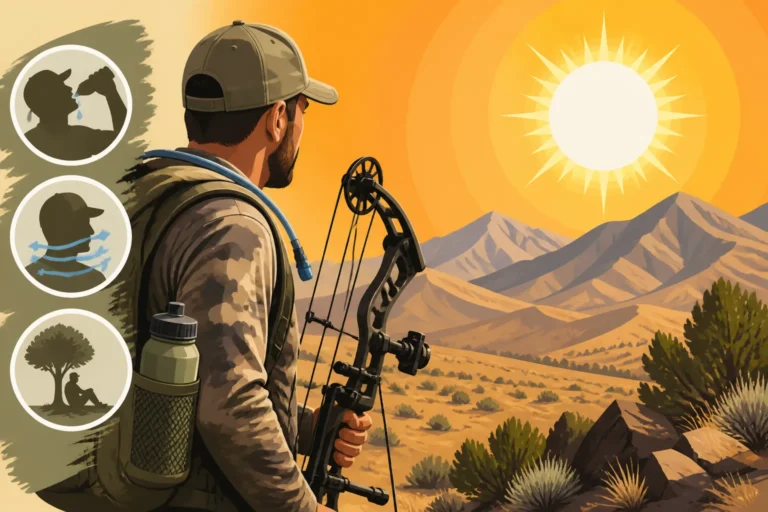
- Heat: Early season hunts can be very hot, especially in August. Elk activity will be concentrated during cooler morning and evening hours.
- Strategy: Focus your calling efforts heavily during these prime times. During the heat of the day, elk will be bedded in the thickest, shadiest cover they can find, often at higher elevations. Your best bet might be to locate them via glassing and then plan a silent stalk for the evening. When the heat is on, Heat Management on an August Archery Hunt is critical for both you and the meat of your harvested animal.
- Terrain: The open, broken terrain of Nevada is a constant factor.
- Strategy: Use the terrain to your advantage for concealment. That small dip, the rise, the lone juniper – use anything you can to break up your outline. Glass constantly before and after calling. Sound travels far, so be aware that any elk within earshot might pinpoint your location. When a bull responds from a distant ridge, use the terrain to mask your approach, staying out of sight as much as possible. A good understanding of Reading Wind on a Long Sage Stalk can also dramatically improve your chances in this open country.
By understanding and adapting to these challenges, you'll be much better equipped to call in those elusive Nevada bulls.
Disclaimer
Hunting is an inherently dangerous activity. This guide provides general information and recommendations but cannot cover every potential scenario. Always prioritize safety, respect wildlife, and adhere to all local, state, and federal hunting regulations. Consult official Nevada Department of Wildlife (NDOW) resources for the most current regulations and licensing requirements. The author and publisher are not responsible for any accidents, injuries, or legal infractions that may occur.