Hunting Solo Against Hiring a Guide
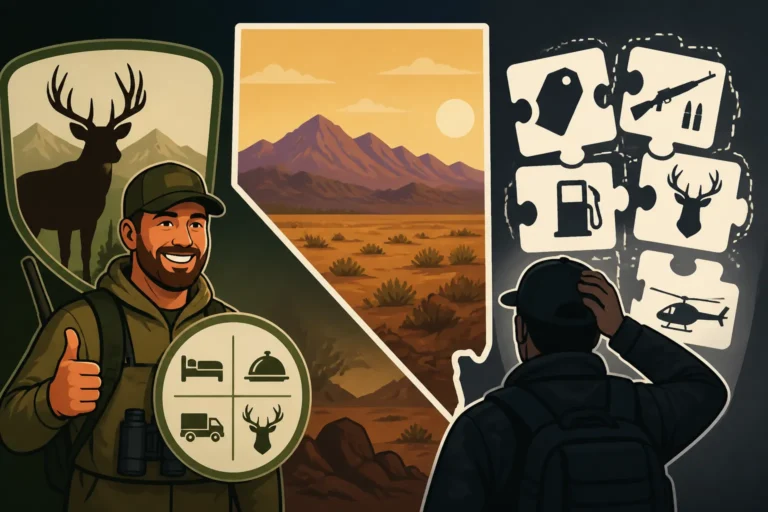
The decision between embarking on a Nevada hunting adventure completely solo or investing in a guided experience is a deeply personal one, fraught with considerations that go beyond just the cost of a tag. Many hunters wrestle with this choice, often driven by romantic notions of self-reliance versus the stark reality of Nevada’s vast, challenging landscape. This guide is here to help you weigh the pros and cons, understand the nuances, and ultimately decide which path aligns best with your hunting aspirations, skill set, and budget for your next pursuit in the Silver State.
The Allure of the Solo Nevada Hunt: Independence and Personal Growth
There's something uniquely captivating about the idea of a completely do-it-yourself (DIY) hunt in Nevada. You're out there, just you and the land, making every decision, relying solely on your own wits and grit. It's a true test of character and skill, and for many, it's the purest form of hunting.
The DIY Spirit and Its Rewards
Choosing to hunt solo or with a self-sufficient group often stems from a deep-seated desire for independence. When you plan every aspect of your hunt, from the e-scouting sessions at your kitchen table to the final pack-out, the feeling of accomplishment is immense. You save money, of course, as guide fees are a significant expense, but the rewards extend far beyond your wallet. There’s an unparalleled sense of satisfaction that comes from deciphering a unit yourself, locating game, executing a stalk, and ultimately, harvesting an animal on your own terms. It fosters a profound connection to the land and enhances your self-reliance in ways few other activities can. Every challenge overcome, every mistake learned from, adds another layer to your personal growth as a hunter.
The Steep Learning Curve of Nevada's Public Lands
While the DIY spirit is strong, Nevada's landscape presents a learning curve that can be incredibly steep. This isn't your average timber hunt where deer might be found in predictable cover. Nevada is a state dominated by vast, open public lands, primarily managed by the BLM and Forest Service, characterized by sprawling sagebrush basins, rugged mountain ranges, and extreme elevations. Simply finding game can be an enormous task for an unfamiliar hunter. There's a particular art to Glassing Nevada's Basin and Range for Mule Deer or understanding how Hunting Water in Nevada's Driest Country influences game movement, which often takes years to develop. Without prior experience in similar terrain, or extensive pre-season scouting, you could spend days covering ground only to see very little, leading to frustration and burnout.
The sheer scale of these units means that detailed preparation is paramount. You can spend countless hours with maps, online resources, and tools like GoHunt to get a feel for the terrain and potential animal locations. However, translating those digital insights into real-world success on the ground, especially when dealing with the fickle nature of wild animals, is where the true challenge lies. This is where many solo hunters realize the depth of local knowledge required.
Logistical Challenges and Risks
Beyond finding game, the logistics of a solo hunt in Nevada can be daunting. The state’s remote nature means services are often few and far between. A simple vehicle breakdown on a little-used two-track can quickly turn into a serious situation. Navigation can be tricky, even with modern GPS devices, as many areas lack cell service, and unmarked trails abound. More critically, managing an animal after a successful harvest is a huge undertaking alone. Packing an Animal Out of Roadless Country is back-breaking work with a partner; doing it solo, especially a large mule deer or elk, requires meticulous planning, physical conditioning, and often multiple trips.
Then there are the safety aspects. Hunting alone always carries inherent risks – slips, falls, unexpected weather changes, or even just fatigue can become dangerous without someone else there to assist. Emergency communication becomes vital, relying on satellite messengers or personal locator beacons in areas where a cell signal is a distant memory. The vastness that makes Nevada so appealing also amplifies the potential for unforeseen complications.
The Benefits of a Guided Nevada Hunt: Expertise and Efficiency
For many hunters, especially those traveling from out of state or with limited time, a guided hunt offers a compelling alternative to the DIY approach. It’s an investment, for sure, but one that often translates into a significantly higher chance of success, a safer experience, and a much deeper understanding of the hunt itself.
Leveraging Local Knowledge and Experience
The primary advantage of hiring a guide in Nevada is instant access to their invaluable local knowledge. A reputable guide lives and breathes these units. They understand seasonal game patterns, bedding areas, travel corridors, and those subtle terrain features that hold animals. They know where the animals are likely to be during different phases of the season, from early archery to late rifle. They've often spent months, if not years, How Outfitters Scout Before Your Arrival, studying their areas, observing herds, and finding specific animals. This intimate familiarity with the landscape and its wildlife dramatically reduces the amount of time you spend simply searching.
Guides also excel at reading the landscape in real-time. They can interpret fresh tracks, droppings, and rubs, adjust to changing weather patterns, and adapt hunting strategies on the fly – skills that take decades to acquire. This expertise not only increases your chances of success but also enriches your understanding of the hunt, turning it into a valuable learning experience rather than just a solitary endeavor. They often know the nuances of Reading a Nevada Hunt Unit Before You Apply better than anyone.
Minimizing Risk and Maximizing Opportunity
A guided hunt inherently comes with a built-in layer of safety and logistical support. You’re not alone in remote country; you have experienced professionals focused on your well-being. This includes everything from navigating treacherous roads to providing first aid in an emergency. How Outfitters Plan Emergency Evacuations is a critical part of a guide's preparation, giving you peace of mind in far-flung locations. Moreover, guides typically handle all the heavy lifting after a kill – field dressing, caping, and packing out the animal. This takes a tremendous physical burden off your shoulders, allowing you to focus on the hunt itself.
With a guide, your time in the field is optimized for hunting. You’re not wasting precious daylight driving around, getting lost, or trying to interpret unfamiliar terrain. Instead, you're actively glassing, stalking, or calling, maximizing your opportunities. This efficiency is particularly valuable if you have a limited number of days for your hunt or if you've drawn a highly coveted, hard-to-come-by tag for species like Nevada elk or bighorn sheep, where every moment counts. Booking platforms like BookYourHunt can help connect you with reputable outfits that specialize in these high-stakes hunts.
The Investment and What It Covers
Let’s be honest: hiring a guide is a significant financial investment. What a Guided Nevada Elk Hunt Costs can be substantial, and prices vary widely based on the species, the duration of the hunt, and the level of service provided. However, when considering the cost, it’s crucial to look at the value proposition. A guided hunt often includes much more than just the guide's time. It typically covers lodging, meals, in-field transportation (often in rugged 4x4s), assistance with field dressing and packing, and sometimes even a camp cook or additional support staff. Many guides provide top-tier optics, allowing you to see the country through professional-grade glass.
What’s generally not included are your hunting license and tag fees, meat processing, taxidermy, travel to and from the hunt area, and tips for your guide and staff. It’s essential to clarify all these details upfront with any outfitter you're considering. While the upfront cost is higher, you're paying for expertise, efficiency, safety, and a significantly higher probability of a successful and enjoyable hunt. This can often outweigh the potential savings of a DIY hunt, especially if your time is limited or you're pursuing a once-in-a-lifetime tag.
Finding Your Balance: When to Go Solo, When to Hire a Guide
The best approach often isn't black and white. It's about weighing your personal circumstances against the demands of the hunt and finding a balance that sets you up for success and enjoyment. There's no shame in either choice; only you can determine what's right for your Nevada adventure.
Assessing Your Experience and Resources
Before making a decision, take an honest inventory of your own hunting experience. Have you successfully hunted big game in similar vast, open, and physically demanding landscapes before? How comfortable are you with advanced navigation, survival skills, and field first aid? What's your physical conditioning like? Hunting in Nevada, especially for species like Chukar Is Nevada's Signature Upland Bird or in rugged mountain goat country, can be incredibly demanding. Preparing Physically for Long Glassing Days and tough hikes is non-negotiable, whether guided or solo.
Consider your available time. Can you realistically dedicate weeks to e-scouting, followed by days or even weeks on the ground before the season, and then the actual hunt? Or is your vacation time limited to the hunt itself? Your budget is also a key factor. A DIY hunt typically requires an investment in quality gear, optics, and potentially a capable vehicle. A guided hunt shifts much of that capital expenditure into the service fee. There's a point where the cost of outfitting yourself for a solo hunt, combined with the lost opportunity cost of unsuccessful attempts, might approach or even exceed the price of a guided trip.
Considering the Species and Unit
The type of animal you're pursuing and the specific unit you're hunting in Nevada can heavily influence your decision. For highly sought-after tags like those for trophy elk in units renowned for growing giants, such as where Nevada Elk Herds Grew From Nothing Into a Trophy Draw, a guide can dramatically improve your odds. These hunts are often incredibly competitive, and the marginal advantage a guide provides can be the difference between success and going home empty-handed with a high-value tag. Similarly, for mountain lion or bighorn sheep, where specialized tracking skills or knowledge of incredibly rugged terrain are paramount, a guide often becomes almost a necessity.
However, for more common species like mule deer in units with decent access and ample public land, a DIY hunt can be very rewarding if you have the skills and time. The same goes for small game or upland birds, though some hunters still appreciate bird dog guides for chukar. If you're trying to draw a tag in a unit known for its extreme remoteness, or one with limited public access points, the logistical support and established access of an outfitter might save you a world of headaches and wasted time.
Hybrid Approaches and Learning Opportunities
The choice isn't always an "either/or" proposition. Many hunters find success and satisfaction in hybrid approaches. A "semi-guided" hunt, for instance, might provide some of the guide's knowledge, logistical support, or transportation, but leaves much of the actual hunting and stalking up to you. What Semi-Guided Actually Means on a Hunt varies widely by outfitter, so clarify expectations. This can be a great middle ground, offering more support than a pure DIY hunt while retaining a strong sense of personal accomplishment.
Another strategy is to book a shorter guided trip initially to learn a new unit or species, then apply that knowledge to future DIY hunts. Think of it as an intensive education course. Some hunters also use outfitters for specific services, like packing out an animal from a remote wilderness area after a successful solo kill. Exploring these options can provide the best of both worlds, helping you grow as a hunter while mitigating some of the biggest challenges. Ultimately, your choice should align with your goals, your experience level, and the unique demands of hunting in Nevada.
| Feature | Solo (DIY) Hunt | Guided Hunt |
|---|---|---|
| Cost | Lower upfront, higher personal gear investment | Higher upfront, often all-inclusive (except tags/tips) |
| Experience | Requires high self-reliance and existing skills | Leverages guide's expertise and local knowledge |
| Logistics | Hunter responsible for all planning, transport, recovery | Handled by outfitter (camp, meals, in-field travel) |
| Physical Demands | Very high, especially for animal recovery | Still high, but recovery assistance available |
| Time Commitment | Extensive for planning, scouting, and execution | Focused on hunting, minimal prep required from client |
| Risk | Higher, particularly in remote areas | Lower, with professional safety and emergency plans |
| Success Rate | Varies widely, highly dependent on hunter's skill | Generally higher due to expertise and focused effort |
| Learning | Self-discovery, trial and error | Direct instruction and insight from experienced pros |
| Accomplishment | Immense personal satisfaction from self-reliance | Satisfaction of successful hunt, learning from experts |
Disclaimer
This article is for general informational purposes only and does not constitute professional advice. Laws, prices and regulations vary by location and change over time. Consult a qualified professional for guidance on your specific situation.