Donating Meat After a Guided Hunt
You’ve just wrapped up a fantastic guided hunt in Nevada, perhaps bringing down a majestic elk or a hard-earned mule deer. The adrenaline is still humming, the memories are fresh, and now you're looking at a mountain of delicious wild game. But what if you've harvested more than your freezer can handle, or you simply feel a calling to share this bounty? Donating your game meat to those in need is a wonderful way to give back, and this guide will walk you through the specifics of how to do it ethically and legally here in the Silver State.
Why Consider Donating Your Wild Game Meat in Nevada?
For many hunters, a successful hunt isn't just about filling the freezer; it's about connecting with nature, pursuing a challenge, and contributing to wildlife management. Sometimes, though, the harvest can be substantial, especially with larger animals like elk or even multiple deer tags. Perhaps you're a nonresident hunter, and the logistics of transporting a full animal's worth of meat back across state lines seems daunting, or maybe your freezer at home is already bursting. Whatever the reason, the idea of letting any part of that precious protein go to waste is simply unthinkable for most of us.
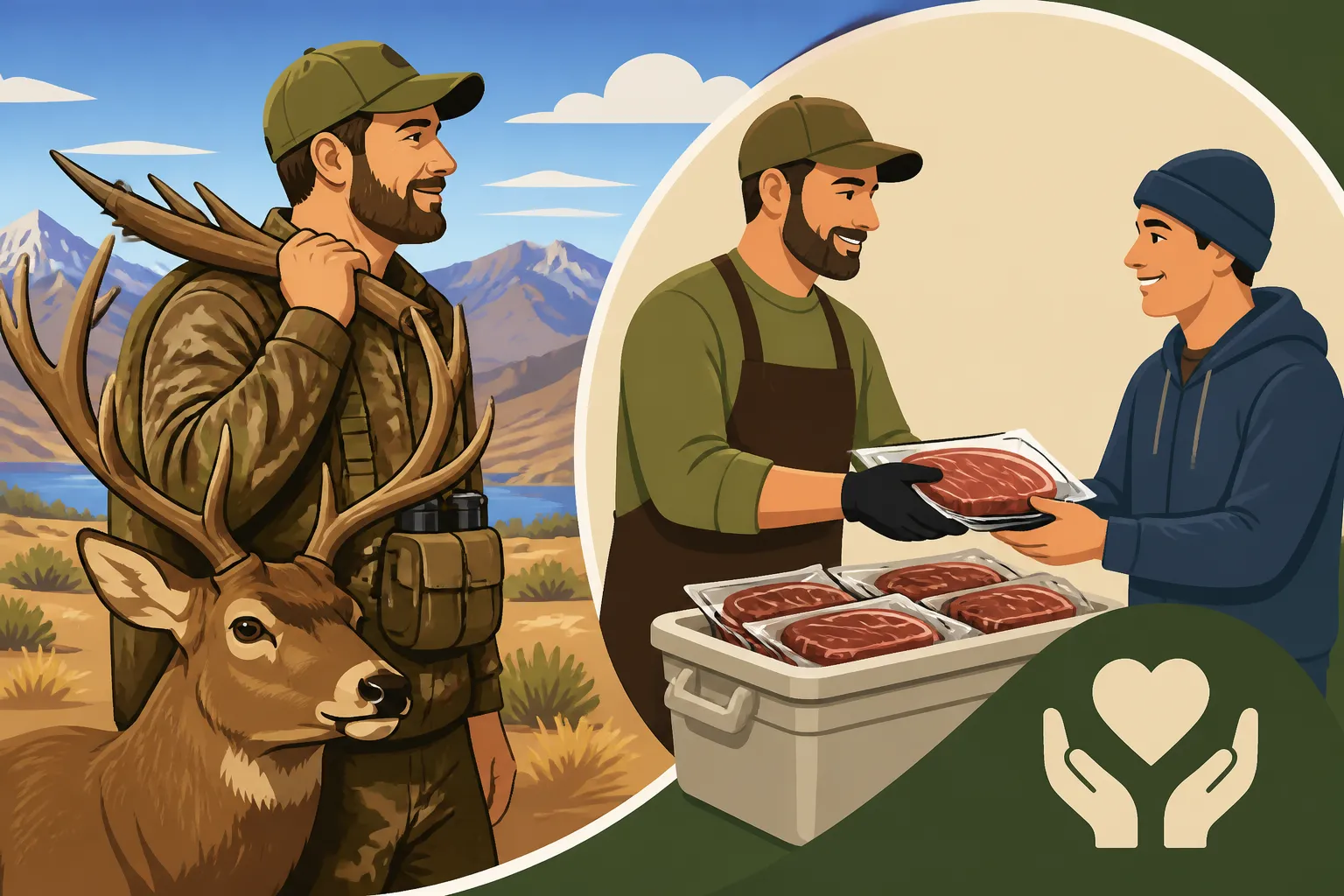
Donating game meat is a deeply rewarding act. It ensures that a valuable, lean, and organic protein source reaches families who might be struggling with food insecurity. It transforms your hunting success into a tangible benefit for your community, reinforcing the positive role hunters play in conservation and charity. Plus, knowing that your efforts in the field are directly helping others can add an extra layer of meaning to your entire hunting experience. Many hunters find immense satisfaction in knowing their harvest provides nourishing meals beyond their own dinner table. It’s a powerful way to honor the animal and the privilege of the hunt.
Even if you typically process all your own game, the sheer volume from a successful elk hunt, for instance, can sometimes push the limits of home processing. Or, maybe you hired an outfitter, and while they've helped with the field dressing, the next step of full butchering and transport presents a logistical hurdle that makes donation a practical, as well as charitable, choice. Outfitters often know local resources, which can be helpful if you mention your intention to donate when you are initially booking your trip; they often have preferences for What Outfitters Expect From Their Clients regarding carcass handling.
Navigating Nevada's Meat Donation Programs and Regulations
Donating wild game meat isn't as simple as dropping off a package at a local food bank. There are specific rules and programs in place to ensure food safety and legal compliance. Nevada, like most states, has regulations governing the processing and distribution of wild game for public consumption. You can't just hand over field-dressed meat to a stranger. The key here is proper processing through an approved facility. This step is critical because it ensures the meat is handled, inspected, and packaged in a way that meets public health standards.
Most meat donation programs rely on a network of state-inspected or USDA-inspected processors who understand the unique requirements of wild game. These processors are equipped to break down the animal, ensuring all inedible parts are discarded, and the lean muscle is packaged hygienically. The Nevada Department of Wildlife (NDOW) regulations are designed to prevent the spread of disease and ensure that donated meat is safe for consumption. You can always check Where the Current Nevada Regulations Are Posted for the most up-to-date information.
One of the main requirements is that the animal must have been legally harvested and properly tagged. Mandatory Reporting After a Nevada Harvest is essential, as is ensuring you've met all evidence of sex requirements if applicable for your species. Transparency and adherence to game laws are paramount. If there's any question about the animal's health or if it was taken under unusual circumstances, a reputable processor will likely decline to accept it for donation. This is for everyone's protection. For instance, if an animal was taken under How Outfitters Handle a Wounded Animal circumstances that led to significant meat damage or contamination, it might not be suitable for donation.
Connecting with Approved Processors and Charities
So, you've decided to donate. Now, how do you actually make it happen? The first step is to identify an approved game processor in Nevada that participates in donation programs. Not all butchers handle wild game, and fewer still are set up for charitable donations. Many states have "Hunters for the Hungry" or similar programs that facilitate these donations. While Nevada has some community-based initiatives, it's often more decentralized than other states.
Your best bet is to start by contacting the Nevada Department of Wildlife (NDOW) offices. They can often provide a list of local processors who work with hunters for donation purposes. You'll want to call these processors ahead of time to confirm their participation, their current capacity, and any specific requirements they might have. Some processors might charge a reduced fee for donated animals, or certain programs might cover the processing costs. It’s worth asking about this when you call. Remember, many outfitters, especially those listed on platforms like BookYourHunt, often have established relationships with local processors, which can streamline this step.
Once the meat is processed, it then needs to go to a charity or food bank. Again, a participating processor often has direct connections to local food banks, shelters, or other charitable organizations that are set up to receive and distribute game meat. These organizations understand how to handle and store wild game and are equipped to get it to those who need it most. It's usually not on the hunter to find the final recipient directly; the processor acts as the intermediary. Sometimes, if you're researching potential hunts, resources like GoHunt might offer community forums where hunters share information about local processors and donation opportunities they've used.
Here's a quick comparison of general options you might encounter:
| Donation Scenario | Typical Hunter Responsibility | Key Considerations |
|---|---|---|
| Direct to Processor/Program | Proper field dressing, transport to processor, confirm program rules | Processor is approved, costs, program covers distribution |
| Working with Outfitter | Communication of intent, financial agreement for processing/transport | Outfitter's preferred processor, costs, ensure outfitter understands your intent |
| Self-Processed, then Donated | Strict adherence to hygiene, packaging standards, finding direct recipient | Local food bank acceptance, legalities of homemade donations, storage limits |
| Salvaged Meat (Specific Cases) | Follow The Meat Salvage Requirements for Big Game | NDOW guidance crucial, specific conditions apply, not for general donation |
Logistics of Getting Your Harvested Meat to Those in Need
The journey from the field to a charitable plate involves several logistical steps, especially in a state like Nevada where distances can be vast and temperatures can swing wildly. After a successful hunt, Field Dressing in August Heat is absolutely critical. Rapid and thorough cooling of the carcass is paramount to ensure the meat remains fit for consumption. This becomes even more important if the meat is destined for donation, as strict quality standards apply.
Once field dressed, the animal needs to be transported from the harvest site to the processor. If you’re hunting in remote areas, this can mean packing an animal out of roadless country. Proper cooling during transport is essential, especially on warm days. Many hunters use coolers packed with ice, or even large game bags that allow for airflow while protecting the meat from dirt and insects. For larger animals or longer distances, Getting Meat Cooled on an Early Season Hunt can be a major undertaking, often requiring pre-planned ice chests or even a stop at a meat locker before reaching the final processing facility. You should discuss these logistics with your guide if you're on a guided hunt, as What Outfitter Prices Almost Never Include is often meat processing and transport beyond the initial field care.
If you’re driving long distances to drop off the animal at a processor, factor in travel time and potential stops. How Far Apart Nevada Fuel Stops Are can influence your route planning, and having extra ice on hand is always a good idea. Once at the processor, they will take over, handling the butchering, packaging, and often, the coordination with the receiving charity. Make sure you get clear instructions on any paperwork or confirmation you need for your records. This process, while seemingly complex, is incredibly worthwhile when you consider the impact your donation can have.
Disclaimer
This article is for general informational purposes only and does not constitute professional advice. Laws, prices and regulations vary by location and change over time. Consult a qualified professional for guidance on your specific situation.