Pronghorn on Nevada’s Valley Floors
Hunting pronghorn in Nevada's vast, open country can feel incredibly daunting. You might find yourself staring across miles of sagebrush, wondering how on earth you're supposed to spot, let alone approach, an animal with eyesight like a 10x binocular. This guide will walk you through the unique challenges and proven strategies for successfully hunting pronghorn on Nevada's expansive valley floors, turning those endless horizons into your hunting advantage.
Understanding Nevada Pronghorn: Built for the Open Flats
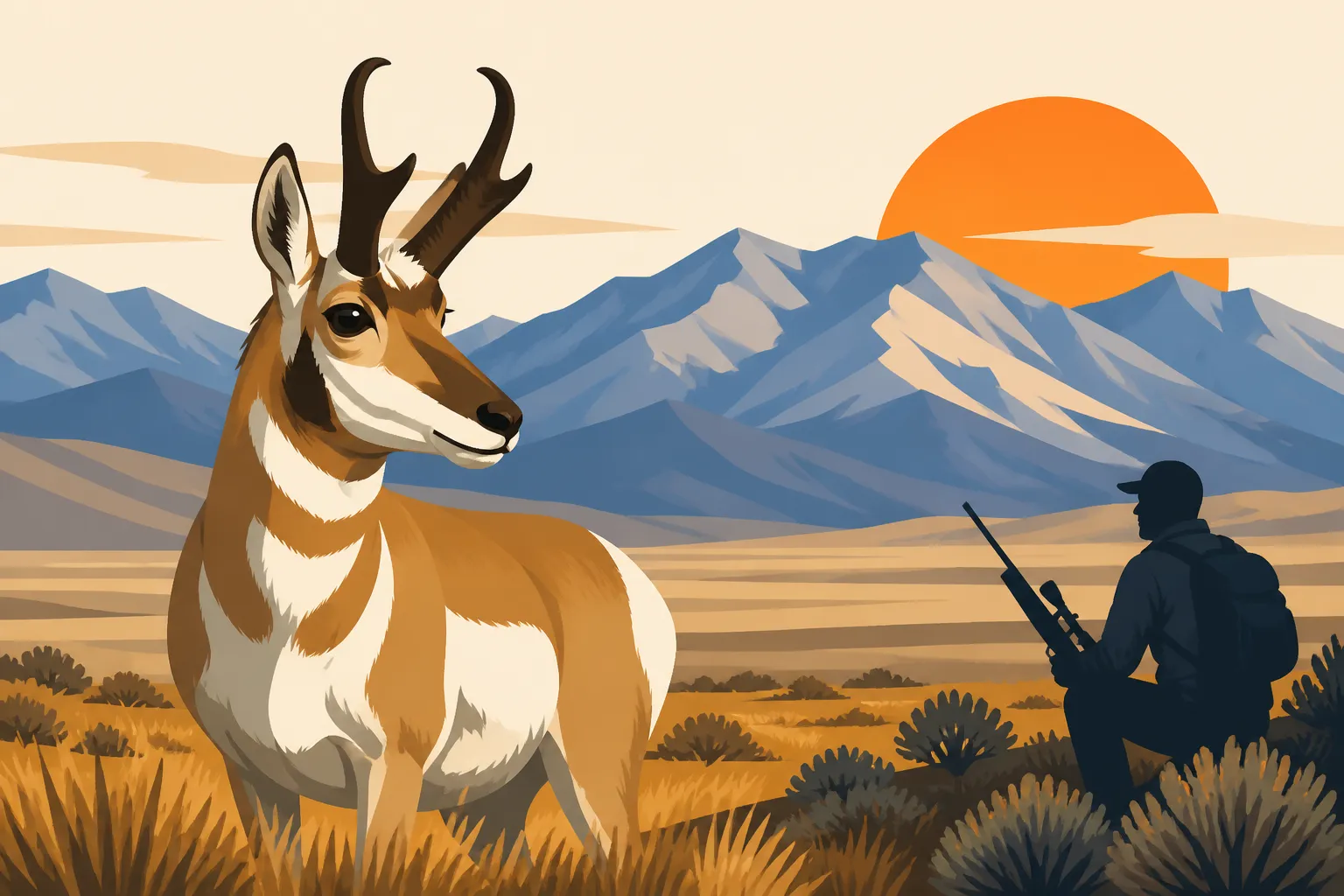
Pronghorn are truly magnificent creatures, perfectly engineered for survival in the wide-open, often stark, landscapes of the American West. They are not deer, despite being called "antelope" by many, and they possess a suite of adaptations that make hunting them a unique challenge, especially in Nevada's vast, relatively flat terrain. Understanding these biological marvels is the first step to successful hunting.
Their Unique Adaptations for Speed and Sight
When you see a pronghorn bolt across the flats, you're witnessing the fastest land mammal in North America. They can sustain speeds of 35-40 miles per hour for miles and hit bursts over 50 mph. This incredible speed isn't just for show; it's their primary defense mechanism against predators in an environment where cover is scarce. Their powerful legs, lightweight bones, and large lung capacity all contribute to this athletic prowess. But it's not just speed that sets them apart. Pronghorn also possess enormous eyes, set far back on their heads, giving them an almost 360-degree field of vision. It's often said that a pronghorn can spot a hunter over a mile away, and while that might be a slight exaggeration, their visual acuity is undeniably phenomenal. This means that closing the distance on a pronghorn often requires a completely different approach than, say, a mule deer in broken timber. You can't just sneak through the trees; you're often playing a game of inches and terrain features.
Their coats are also incredibly adapted, a striking mix of white and tan that helps them blend into the arid landscape, especially when bedded down. The white rump patch, when flared, acts as an alarm signal to other pronghorn, visible for miles. These highly tuned senses and physical attributes mean that hunters must be even more meticulous in their scouting, glassing, and stalking efforts.
Typical Habitat and Behavior Patterns
In Nevada, you'll primarily find pronghorn inhabiting the expansive sagebrush basins and high desert flats. These are areas characterized by low-growing vegetation, plenty of wide-open spaces, and often limited water sources. Unlike deer or elk that might seek refuge in timbered canyons or dense forests, pronghorn thrive where they can see danger coming from a long distance. They prefer open grasslands, sagebrush-steppe, and agricultural fringes, often staying well away from anything that might block their vision or impede their escape. You'll rarely find them deep in the pinyon-juniper breaks or high up in the mountains, though they might occasionally venture into foothills.
Their behavior is often driven by their need for vigilance. They typically feed during cooler parts of the day, early morning and late evening, and will often bed down in exposed areas during midday, relying on their eyesight to detect threats. They are highly social animals, often found in herds ranging from a few individuals to dozens, especially outside of the rut. This can be both a blessing and a curse for hunters; more eyes mean more chances of being spotted, but a larger herd can also provide opportunities for one or two animals to be distracted while you make your move. Water sources, even small ones like spring-fed troughs or guzzlers, can be critical areas to focus on, especially during hotter early-season hunts. Understanding these patterns is key to narrowing down your search area and predicting their movements.
When Pronghorn Bucks Go Into Rut
The pronghorn rut in Nevada typically kicks off in late August and can extend into late September, with the peak often falling in the first couple of weeks of September. This period drastically changes pronghorn behavior and can present both increased opportunities and amplified challenges for hunters. During the rut, dominant bucks will establish territories and actively defend them, trying to gather and hold a harem of does. This territorial behavior can make bucks less cautious than usual, as their focus shifts from pure survival to breeding.
You'll often see bucks chasing does, fighting with rival bucks, and generally exhibiting more movement and vocalization. This heightened activity can make them easier to spot, and a buck deeply engrossed in herding his does might offer a brief window of opportunity for a quicker stalk. However, it's also worth remembering that all those does still have incredible eyesight, and if one of them spooks, the entire herd, including your target buck, will be gone in a flash. Strategies like using a decoy can be particularly effective during the rut, as a dominant buck might mistake it for an intruder challenging his territory. Understanding "When Pronghorn Bucks Go Into Rut" is crucial for planning your hunt and adjusting your tactics.
Finding Antelope in Nevada's Expansive Valleys
Nevada's valleys are vast, sometimes stretching for dozens of miles between mountain ranges. Trying to find a needle in a haystack can feel less daunting than locating a specific pronghorn buck in such immense landscapes. However, with modern tools and time-tested techniques, you can systematically break down these enormous units and drastically improve your odds.
E-Scouting the Perfect Pronghorn Unit with Tools like GoHunt
Before you even set foot in the field, effective e-scouting can save you countless hours and miles. Websites and apps like GoHunt have revolutionized how hunters approach unit selection and in-depth research. You can use their data layers to analyze public land boundaries, terrain features, vegetation types, and even historical harvest data for specific units. For pronghorn, look for large, unbroken tracts of public land with extensive sagebrush flats, sparse treelines, and crucially, accessible water sources like springs, stock ponds, or developed guzzlers. Using satellite imagery, you can identify subtle terrain changes – slight rises, dry washes, or even small rock outcroppings – that might offer crucial cover during a stalk.
Pay close attention to road networks. While pronghorn often shy away from heavily trafficked areas, roads can provide critical access to good glassing points and potential starting points for long stalks. Remember, in Nevada, even the "main" dirt roads can be rough and remote, so having a good understanding of access is paramount. GoHunt's detailed maps and draw odds calculators can help you weigh your chances in different units, considering factors like tag quotas and applicant numbers. Analyzing past harvest success rates can also give you a realistic expectation for a particular area.
The Art of Glassing Vast Basins for Pronghorn
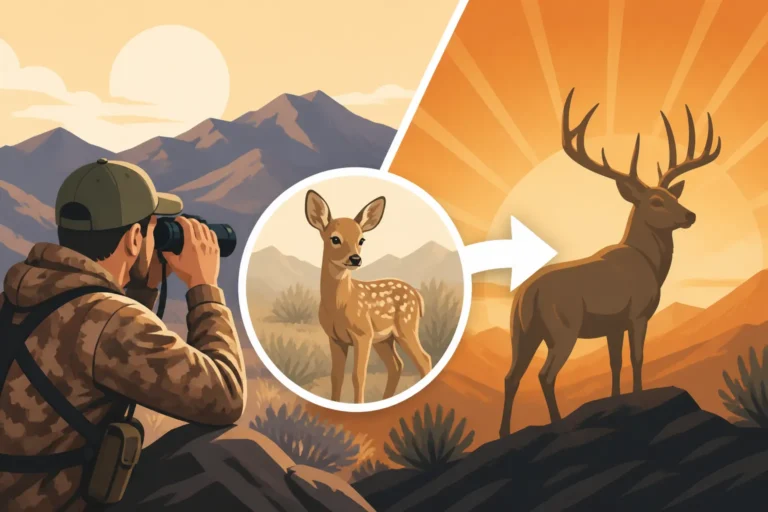
Once you're in the field, glassing becomes your single most important skill for pronghorn hunting. Forget still-hunting through the timber; you'll spend 90% of your time behind optics. This means investing in quality binoculars (10x-15x are popular choices) and a high-power spotting scope (20-60x or even higher) mounted on a sturdy tripod. Don't skimp here; your eyes are your most valuable tool. The key to successful glassing is patience and a systematic approach. Find a high vantage point that overlooks a large expanse of prime pronghorn habitat. Set up your spotting scope and slowly, methodically, scan the landscape.
Start by breaking the terrain into manageable sections, working in a grid pattern. Don't just look for an entire animal; often, you'll pick up a white patch, a dark horn, or a flicker of movement. Pay extra attention to areas near water, fence lines, and any low ridges or depressions where an animal might bed down or seek shelter from the wind. Early mornings and late evenings are prime times, as pronghorn are usually more active. Midday, they often bed, but their contrasting colors can still make them visible if you're meticulous. Remember, you might be looking for "Optics Power for Nevada's Long Sightlines," so use the highest magnification you can effectively manage to pick apart distant details. This is where a stable tripod makes all the difference, eliminating shake and allowing you to discern small details far away. For more on this, check out "Glassing Grids Across a Nevada Basin".
Reading Antelope Body Language on a Stalk
Once you've spotted your target buck, the real challenge begins: the stalk. Pronghorn are notoriously wary, and their keen eyesight means they often detect movement long before you get within shooting range. Being able to read their body language is crucial for deciding when to push and when to back off. If a pronghorn has its head up, ears swiveling, and is staring intently in your general direction, it's time to freeze. Any further movement will likely send them bolting. If they stomp a front foot, they've definitely seen something and are trying to get you to commit to a movement so they can determine if you're a threat.
If they've merely noticed something indistinct, they might stand for a long time, trying to figure out what's going on. This is your chance to remain absolutely motionless, ideally blending into the landscape. Wait until they relax, lower their head to feed, or turn away before making your next move. If they start walking or trotting away, it's often a lost cause unless you can quickly identify new, better cover for an approach. Understanding "Reading Antelope Body Language on a Stalk" is as vital as the physical act of stalking itself, allowing you to react appropriately and increase your chances of success.
The Challenging Pronghorn Stalk: Closing the Distance
Stalking a pronghorn is arguably one of the most difficult feats in Western big game hunting. The open terrain that defines Nevada's valleys offers minimal cover, making every step a calculated risk. It's a game of patience, stealth, and an intimate understanding of the landscape.
Using Terrain to Break Your Silhouette
In country that often appears flat as a pancake, finding and utilizing every scrap of cover becomes an art form. This means identifying subtle undulations, dry washes, erosion gullies, or even the low profile of a sagebrush bush that can momentarily obscure your approach. Before you even begin to move, plan your route meticulously using your binoculars or scouting app. Look for a path that keeps you out of sight for as long as possible. Sometimes, this means taking a much longer, circuitous route, even if it adds significant distance to your stalk.
Crawl, belly-crawl, or move in a low crouch whenever you're exposed. Keep the sun at your back if possible, both to hide your silhouette and to make it harder for the pronghorn to see you clearly due to glare. A key strategy is "Using a Rim to Break Your Silhouette." Even a small, barely perceptible rise in the ground can provide enough cover to shield you from the pronghorn's keen eyes. Practice moving slowly and deliberately, minimizing noise and sudden movements. The goal is to appear as part of the natural landscape, not a moving threat.
Playing the Wind in Open, Flat Country
Wind is a critical factor in any hunt, but it takes on particular importance in the vast, open expanses where pronghorn roam. While pronghorn don't rely on their sense of smell as heavily as, say, a whitetail deer in dense timber, they are still capable of detecting human scent, especially if the wind carries it directly to them over long distances. More importantly, wind can be your ally in masking sounds or your enemy by swirling unexpectedly. Always try to approach with the wind in your face or quartering into you, so your scent cone blows away from the animal.
However, the wind in Nevada's wide valleys can be notoriously fickle, often changing direction or swirling unpredictably as it interacts with subtle terrain features. Be prepared to adjust your stalk if the wind shifts. A sudden change could mean having to backtrack and find a new approach or even abandoning the stalk entirely if the conditions become unfavorable. Strong winds can also create noise, which can work to your advantage by muffling the sounds of your movement. But always prioritize scent control, and constantly monitor the wind direction, often by carrying a small bottle of wind-checker powder. For more insights on this, refer to "Reading Wind on a Long Sage Stalk".
Best Time of Day to Stalk Antelope
The time of day can significantly influence the success of your pronghorn stalk. Generally, the "Best Time of Day to Stalk Antelope" aligns with their periods of activity and vulnerability. Early mornings, just after sunrise, and late evenings, leading up to sunset, are often prime windows. During these times, pronghorn are typically actively feeding, moving between bedding areas, or heading to water. Their focus is often on foraging, making them slightly less vigilant than when they are bedded down and solely focused on security.
Midday stalks, while possible, are often the most challenging. Pronghorn frequently bed down in exposed areas during the hotter parts of the day, relying entirely on their eyesight. Approaching a bedded pronghorn in wide-open country requires extreme patience and often an extensive belly-crawl, as they will be staring intently at their surroundings. However, if you spot a buck bedded in a depression or behind a small rise, and you can establish a completely concealed approach, a midday stalk can be very effective, as the animals are static. The key is to catch them during a moment of relative distraction or when the sun angle makes them difficult to see, and you have ample cover.
Essential Gear for Nevada Pronghorn Hunters
Hunting pronghorn demands specific gear choices that cater to the vast distances, open terrain, and often harsh conditions of Nevada. Equipping yourself properly can make the difference between a frustrating trip and a successful hunt.
Optics: The Non-Negotiable Tool for Antelope Hunting
As we've discussed, pronghorn hunting is first and foremost an optics game. Your binoculars and spotting scope are not just helpful tools; they are absolutely essential. For binoculars, a 10×42 or 12×50 power is a solid choice for general glassing, allowing you to cover ground quickly and comfortably for extended periods. Brands like Vortex, Leupold, or Swarovski offer excellent clarity and durability that stand up to tough desert conditions.
However, for picking out details at extreme ranges – judging horn length, identifying a specific buck from a herd, or confirming a bedded animal – a high-power spotting scope is non-negotiable. A 60-80x scope on a sturdy tripod will be your best friend. A good quality tripod, like those from Manfrotto or Really Right Stuff, is crucial to eliminate wobble and allow for prolonged, strain-free glassing sessions. Many experienced pronghorn hunters consider their spotting scope setup more important than their rifle. This is how you locate and assess animals that are miles away, deciding if a stalk is even worth attempting. Remember, in Nevada, your "Binocular Size That Survives an All-Day Session" needs to be durable and comfortable.
Rifles and Ammunition for Long Shots
Given the open country, shots on pronghorn can often be at extended ranges. While ethical hunters always strive for the closest possible shot, preparing for a potential long shot is prudent. Therefore, a flat-shooting rifle caliber is highly recommended. Calibers like .25-06 Remington, 6.5 Creedmoor, .270 Winchester, .30-06 Springfield, or even .300 Winchester Magnum are popular choices. The key is a rifle that can deliver sufficient energy and maintain accuracy over distances typically associated with open-country hunting.
Pair your rifle with high-quality, boat-tail ammunition designed for accuracy and reliable expansion. Practice extensively at various distances, not just 100 yards, but out to 300, 400, or even 500 yards if you anticipate those types of shots. A good quality scope with a ballistic reticle or turrets that allow for precise elevation adjustments is invaluable. Knowing your "Rifle Zero Distance for Long Sage Shots" and practicing holding for wind with a sturdy rest like shooting sticks or a bipod are critical skills. Always use a rangefinder to eliminate guesswork and ensure you know the exact distance to your target.
Decoys and Calls: When to Use Them on Nevada Pronghorn
Decoys and calls can be incredibly effective tools for pronghorn hunting, especially during the rut. A life-sized buck decoy, strategically deployed, can pique the curiosity of a dominant buck, drawing him closer to investigate or challenge the "intruder" in his territory. The trick is to have a partner set up the decoy while you move into a shooting position, or to use a lightweight, portable decoy that attaches to your backpack for a solo stalk. The effectiveness of a decoy often hinges on the buck's rutting aggression and his desire to defend his harem.
Calls, typically fawn-in-distress or challenge grunts, can also be used to get a buck's attention, especially if he's far out or moving away. Some hunters have success using a doe bleat to draw a buck closer. However, both decoys and calls require careful timing and an understanding of the animal's mood. If a buck is already spooked or wary, a call or decoy might just confirm his suspicions and send him running. But used correctly, during the peak of the rut, these tools can turn a seemingly impossible stalk into a close-range encounter. Mastering "Using a Decoy on Nevada Pronghorn" can be a game-changer for your hunt.
Navigating the Nevada Pronghorn Draw and Seasons
Hunting pronghorn in Nevada usually requires drawing a tag, as over-the-counter tags are rare for big game. Understanding the draw process, season timing, and specific regulations is paramount to putting yourself in a position to hunt these incredible animals.
Nevada Antelope Season Dates and Timing
Nevada's pronghorn seasons are generally short and occur in late summer to early fall. Archery seasons typically open in August, often when temperatures are still quite high. This means hunters need to be prepared for "Heat Management on an August Archery Hunt" and ensure quick field dressing and cooling of any harvested animal. Rifle seasons usually follow in September, sometimes extending into early October for specific units. These seasons are designed to coincide with the pronghorn rut, which, as mentioned, usually peaks in early to mid-September.
The specific "Nevada Antelope Season Dates" will vary slightly year to year and significantly by unit. It's crucial to consult the Nevada Department of Wildlife (NDOW) regulations publication each year to confirm dates for your chosen unit. The short season windows mean you need to be prepared and maximize your time in the field. Understanding the various hunt codes and their associated dates is part of the extensive research required for a successful application.
Understanding Draw Odds and Tag Strategies with GoHunt
Drawing a Nevada pronghorn tag can be challenging, especially for non-residents or for highly sought-after units. Nevada uses a bonus point system, where applicants earn points for each year they apply and are unsuccessful. These points are then squared, giving a mathematically increasing advantage to those with more points. Tools like GoHunt's Insider platform are invaluable for researching historical draw odds, understanding the bonus point system, and strategizing your application. You can analyze success rates by weapon type (archery, muzzleloader, rifle), residency, and the number of points applicants had when they drew.
This data allows you to make informed decisions: do you apply for a premium unit with slim odds but a high trophy potential, or a more accessible unit with better draw odds but perhaps lower expectations for a giant buck? For example, GoHunt can show you that while some units are notoriously difficult to draw, others might be slightly easier, especially for archery or muzzleloader tags. Remember, "Nevada Applications Run March 23 to May 13," so you'll want to have your research done and application submitted well before "The Nevada Application Deadline in May." Carefully considering your choices and applying strategically is essential for increasing your chances of success in the draw.
Antelope Horns-Only Hunts and Their Nuances
In some Nevada units, you might encounter "Antelope Horns-Only Hunts." These tags are often designed to increase hunting opportunities while protecting the overall population, particularly does. On these hunts, you are legally restricted to harvesting a buck with horns that meet specific criteria, usually relating to the length or configuration of the horns, or sometimes requiring a minimum amount of "curl" or visible black prong.
These specific regulations demand that hunters be particularly proficient at field judging pronghorn from a distance. You can't just shoot the first buck you see. It requires careful observation through your spotting scope to ensure the animal meets the legal requirements before you even consider a stalk. Misidentifying an animal could lead to a violation, so it's critical to understand the precise regulations for your specific tag. These hunts add another layer of challenge and ethical consideration to an already demanding pursuit, emphasizing careful target identification before taking a shot.
| Aspect | Early Archery Season (August) | Rifle Season (September/October) | Horns-Only Hunts (Variable) |
|---|---|---|---|
| Temperatures | Often hot, requiring heat management and quick game care. | Generally milder, but can still be warm. | Varies by season timing. |
| Pronghorn Behavior | Pre-rut, herds may be larger and more concentrated. | Peak rut, bucks are territorial, chasing does, less cautious. | Focus on specific horn criteria; behavior varies by season. |
| Stalk Difficulty | Animals are highly vigilant; minimal cover can be challenging. | Bucks distracted by rut can be more approachable, but does are still wary. | Similar to general seasons, but target identification is key. |
| Gear Focus | Hydration, cooling gear, top-tier optics. | Flat-shooting rifle, accurate ammo, optics, potentially decoys. | Precision optics for field judging, ethical shot placement. |
| Primary Challenge | Extreme heat, wary animals, long distances. | Identifying a distracted buck, avoiding spooking the harem. | Accurately judging horn size/shape from afar. |
Disclaimer
Hunting is an inherently dangerous activity. This article provides general information and recommendations for hunting pronghorn in Nevada and should not be considered a substitute for personal research, professional guidance, or official regulations. Always consult the current year's Nevada Department of Wildlife (NDOW) hunting regulations for specific season dates, unit boundaries, legal requirements, and licensing information before planning any hunt. Ensure you possess the necessary skills, physical fitness, and appropriate gear for the conditions you may encounter. Always prioritize safety, ethical hunting practices, and respect for wildlife and the land.