How Goats Reached Nevada’s High Ranges
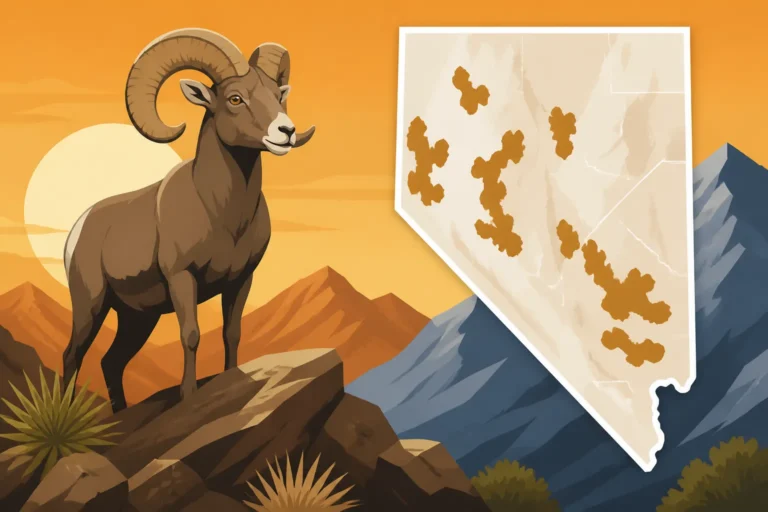
When you picture Nevada hunting, most folks probably imagine mule deer traversing vast sagebrush basins or perhaps an elk bugling from a juniper-studded slope. But tucked away in some of the state's most rugged, high-altitude terrain, a truly unique big game animal thrives: the Rocky Mountain Goat. Many hunters wonder how these incredible creatures, more commonly associated with the northern Rockies, came to call the Silver State home. This guide will take you through the fascinating journey of how mountain goats were introduced to Nevada, the challenges and successes of these transplant efforts, and what it means for those lucky enough to pursue them today.
The Absence: Why Goats Weren't Always Here
It might seem odd that an animal so perfectly adapted to extreme alpine environments wasn't naturally present in a state known for its towering mountain ranges. While Nevada boasts over 300 mountain ranges, providing plenty of vertical relief, the specific ecological niche for mountain goats, as found in their native range, was historically absent. Unlike bighorn sheep, which evolved to thrive in the rugged, arid mountain ranges of the Great Basin, mountain goats require continuous, high-elevation alpine and subalpine habitat with deep snowpacks and specific forage to truly flourish.
Nevada's mountains, while steep and formidable, often feature more broken, isolated high-alpine pockets interspersed with vast sagebrush valleys at lower elevations. This mosaic landscape, while perfect for species like the state's three bighorn subspecies, didn't offer the extensive, connected high-country required for a self-sustaining mountain goat population to establish naturally and expand over millennia. The lack of natural corridors connecting these isolated alpine "islands" across the Basin and Range province played a significant role in their historical absence. The conditions just weren't quite right for a natural migration and establishment.
Furthermore, there's the element of competitive exclusion. Nevada's mountains were already well-occupied by various subspecies of bighorn sheep. While mountain goats and bighorns can coexist, they often compete for similar resources, particularly in marginal habitats. The bighorns, being native and perfectly adapted to the specific conditions, likely presented a biological barrier to any natural ingress of mountain goats from distant, contiguous populations. This delicate ecological balance meant that if mountain goats were ever to be found in Nevada, it would require human intervention.
A Vision Takes Flight: Early Transplant Efforts
The idea of introducing Rocky Mountain Goats to Nevada was born out of a desire to expand the state's big game hunting opportunities and to introduce a species that could utilize some of the state's otherwise under-tapped, extreme high-alpine habitat. Wildlife biologists and conservationists recognized that while bighorn sheep dominated the lower to mid-elevations of many ranges, there were certain inaccessible, craggy peaks that might just be suitable for goats. This vision wasn't about displacing native species but enhancing biodiversity and providing new challenges for hunters.
The first significant transplant efforts began in the early 1960s, a testament to long-term wildlife management planning. The process of capturing wild mountain goats from established herds in other states and relocating them to new, challenging environments is no small feat. It involves careful planning, extensive surveys of potential habitat, and highly skilled capture teams using techniques like net-gunning from helicopters to safely secure the animals. These initial goats were often sourced from robust populations in states like Idaho or Montana, where they were more abundant.
The Ruby Mountains, specifically the Ruby Crest Wilderness area in northeastern Nevada, were chosen for the very first release. This choice was deliberate: the Rubies are one of Nevada's most impressive mountain ranges, boasting a continuous crest of high-altitude terrain, numerous glacial lakes, and steep, rocky cirques that mimic prime goat habitat in other states. The hope was that these initial releases would form the nucleus of a new, self-sustaining population. However, success wasn't immediate, and the early years were a careful waiting game to see if the animals would adapt, reproduce, and ultimately thrive in their new home. It was a true experiment in wildlife management, driven by a long-term vision.
Building a Foothold: Success Stories and Challenges
The initial transplants into the Ruby Mountains proved to be a success, albeit a slow and steady one. The goats found the rugged, high-elevation terrain of the Rubies to their liking, and over the decades, the population gradually expanded. Today, the Ruby Mountains remain the stronghold for Nevada's mountain goat population. Subsequent transplant efforts followed, notably into the East Humboldt Range, which lies just to the north of the Rubies and offers similar prime habitat. These efforts further solidified the presence of mountain goats in northeastern Nevada, creating a more robust and genetically diverse population.
These successful introductions weren't just a matter of dropping animals off and hoping for the best. Ongoing monitoring, habitat assessments, and careful management were, and still are, critical. Biologists regularly conduct aerial surveys, often similar to methods used for counting other alpine species like bighorn sheep, to estimate herd sizes, monitor health, and observe population trends. How Nevada Counts Bighorn From the Air gives some insight into these aerial efforts, which apply to goats too. Understanding herd dynamics is vital to ensure that the populations remain healthy and within the carrying capacity of their specialized habitats.
One notable expansion also occurred far to the south, into the Spring Mountains, home to Mount Charleston, west of Las Vegas. This isolated mountain range presents a unique, high-elevation "sky island" ecosystem in the Mojave Desert. The introduction here created another distinct population, allowing for a broader distribution of the species across the state, albeit in highly localized pockets. Each of these populations, though small by Rocky Mountain standards, represents a triumph of conservation and careful planning. Tools like GoHunt can help hunters visualize these specific high-alpine areas when researching units like the Ruby Mountains or the Spring Mountains, showcasing the distinct habitat where these goats thrive.
Hunting Nevada's Alpine Gems: Opportunities and Demands
For hunters, the presence of Rocky Mountain Goats in Nevada represents one of the state's most sought-after and challenging big game opportunities. Because these populations are relatively small and localized, tags are exceptionally rare and highly coveted. Drawing a Nevada mountain goat tag is truly a once-in-a-lifetime event for most hunters, often requiring years, if not decades, of applying. Nevada Mountain Goat Draw Odds are notoriously low, making success in the draw a significant achievement in itself.
The hunt itself is physically grueling. Mountain goats inhabit the most extreme, vertical terrain imaginable, often at elevations exceeding 10,000 feet. A typical hunt involves extensive hiking, often off-trail, through steep talus slopes, rocky cirques, and dense krummholz. Hunters must be in peak physical condition, prepared for long days, unpredictable weather, and significant elevation gains. Proper gear is paramount, from sturdy boots suited for Choosing Boots for Sharp Volcanic Rock to high-quality optics for spotting animals against vast, rugged backdrops.
Planning a Nevada mountain goat hunt involves meticulous e-scouting and on-the-ground reconnaissance, especially since these animals are found in very specific, often remote, areas. Hunters rely heavily on detailed maps, satellite imagery, and potentially resources like GoHunt to identify potential habitat, access points, and escape routes in case of inclement weather. Understanding Elevation Bands Worth Understanding in Nevada is crucial, as goats stick to the highest, most precipitous zones. The experience, while demanding, is unparalleled, offering breathtaking scenery and the chance to pursue an iconic alpine species in one of its most unique settings. It's a testament to the foresight of those who worked to introduce these magnificent animals to Nevada's high ranges decades ago.
Comparing Key Species in Nevada's High Country
To further understand the unique place of Rocky Mountain Goats in Nevada's ecosystem, here's a brief comparison with the state's native bighorn sheep, which often occupy similar, though distinct, high-country niches.
| Feature | Rocky Mountain Goat | Bighorn Sheep (Desert, California, Rocky Mtn.) |
|---|---|---|
| Native Status | Introduced (Non-Native) | Native |
| Primary Habitat | Extreme alpine, continuous high peaks, heavy snow | Rugged, rocky mountain ranges, often arid |
| Coat Color | Creamy white, thick, shaggy | Tan to dark brown, short hair |
| Horns | Black, unbranched, dagger-like | Brown, curled (males), smaller spike (females) |
| Elevation | Typically above tree line, highest peaks | Varying, from desert canyons to high alpine |
| Distribution | Ruby Mountains, East Humboldt, Spring Mountains | Widespread across many Nevada ranges |
| Climbing Style | Agile, deliberate on vertical rock faces | Powerful, dynamic on steep, broken terrain |
This table highlights how, despite inhabiting high-altitude terrain, goats and sheep fill somewhat different roles and have distinct characteristics, which informed the decision to introduce goats to specific Nevada ranges where they wouldn't directly compete with existing bighorn populations.
Disclaimer
This article is for general informational purposes only and does not constitute professional advice. Laws, prices and regulations vary by location and change over time. Consult a qualified professional for guidance on your specific situation.