Rocky Mountain Goats in Nevada’s Highest Ranges
Finding yourself in Nevada's towering alpine country, rugged and remote, is an experience unlike any other. For many, the sight of a Rocky Mountain Goat gracefully navigating what looks like an impossible rock face is truly breathtaking. But for a select few, this majestic animal represents the pinnacle of big game hunting, a true test of grit and determination in some of the state's most unforgiving landscapes. This guide will walk you through everything you need to know about these incredible creatures and the extraordinary hunt they offer, from their history in the Silver State to the demanding challenges of pursuing them high above the sagebrush flats.
Nevada's Unexpected Alpine Residents: Rocky Mountain Goats
You might be thinking, "Goats in Nevada? Isn't that a desert state?" And while the vast majority of Nevada is indeed sagebrush and arid basins, tucked away in its northeastern and east-central corners are island mountain ranges that scrape the sky, reaching elevations well over 11,000 feet. These are not your typical desert dwellers; Rocky Mountain Goats are creatures of true alpine environments, and their presence here is a testament to dedicated conservation efforts. It's truly something special to witness these animals thriving in such a unique corner of the Great Basin.
A History of Introduction and Expansion
The story of Rocky Mountain Goats in Nevada is one of deliberate and successful introduction, which often comes as a surprise to many hunters. Unlike species such as mule deer or elk, which have long historical ties to the state, Nevada's goat population is relatively young. The first successful transplants of Rocky Mountain Goats into Nevada occurred in the 1960s and 1970s, primarily in the Ruby Mountains and later in the Schell Creek Range. These initial efforts, carefully planned by the Nevada Department of Wildlife (NDOW) and partner organizations, aimed to establish a new big game species in suitable high-elevation habitat that was largely unoccupied by other large mammals.
These were painstaking operations, involving the capture of goats from established populations in states like Idaho, Utah, and Montana, and then their release into Nevada's most remote, rugged peaks. Imagine the logistics involved in moving these hardy creatures! It wasn't just a matter of dropping them off; biologists had to identify specific areas with the right mix of cliffs, high-altitude forage, and isolation to give the new herds the best chance of survival and expansion. Over the decades, these initial efforts paid off, and the populations slowly began to grow, establishing a foothold in their new homes.
The success of these introductions has been a source of pride for conservationists, demonstrating that with careful planning and habitat analysis, new wildlife populations can thrive. It also speaks to the resilience of the Rocky Mountain Goat itself, an animal perfectly adapted to survive in some of the harshest terrestrial environments. While the overall numbers remain relatively small compared to other big game species, the fact that they exist at all in Nevada’s remote peaks is a remarkable conservation story.
Where These Majestic Animals Call Home
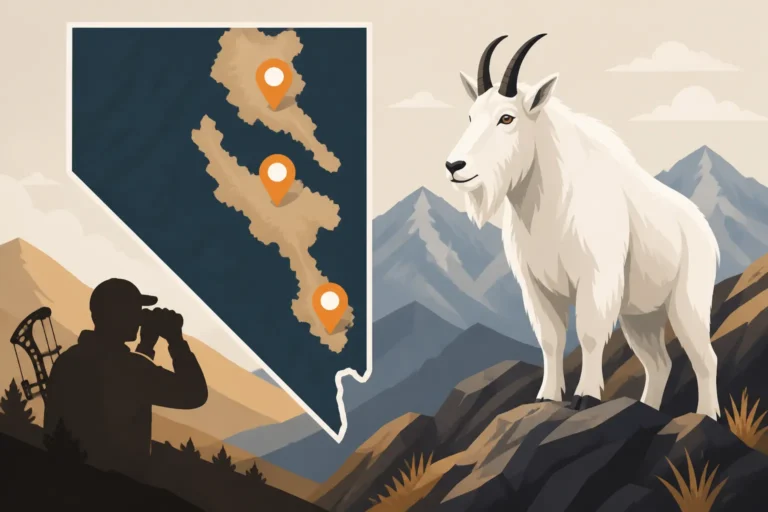
Today, Nevada's Rocky Mountain Goats are primarily found in a handful of geographically isolated but incredibly rugged mountain ranges. The most well-known stronghold, and often the first place people think of, is the Ruby Mountains, near Elko in northeastern Nevada. This range, sometimes called the "Nevada Alps," offers ideal habitat with its soaring granite peaks, deep canyons, and expansive alpine meadows. It's a truly spectacular place to hunt or simply observe wildlife.
Beyond the Ruby Mountains, significant populations have also become established in the East Humboldt Range, which sits just to the east of the Rubies, and further south in the Schell Creek Range and Mount Moriah area, particularly within the Great Basin National Park vicinity. These ranges share a common characteristic: extreme elevation, steep cliffs, and a genuine wilderness feel. It's not the kind of country you just stumble into; accessing these areas requires serious planning, appropriate gear, and often a substantial physical effort.
What makes these specific ranges so perfect for goats is their unique combination of vertical escape terrain and high-elevation forage. Goats need precipitous cliffs to evade predators, and they find abundant sustenance in the sparse, tough vegetation that grows above the tree line. If you're looking at a map and seeing nothing but contours packed tight together, forming impossibly steep lines, you're likely looking at goat country. These remote, isolated strongholds ensure that these unique animals have the solitude and habitat they need to flourish in a state more commonly associated with vast open deserts.
Navigating the Vertical World: Goat Habitat and Terrain
Hunting Rocky Mountain Goats in Nevada isn't just about finding the animal; it's about conquering their domain. This isn't a walk in the park; it's a vertical expedition into some of the most challenging terrain in the lower 48. Understanding their habitat is key to even beginning to plan a hunt, as their preferences dictate everything from where you'll find them to how you'll move through the landscape.
The Rugged High Country They Prefer
Rocky Mountain Goats are creatures of the extreme, perfectly designed for life in the high alpine. They gravitate towards areas with extremely rugged topography, characterized by steep, rocky slopes, exposed cliffs, and jagged peaks. We're talking about elevations typically above 9,000 feet, often pushing well over 11,000 feet in Nevada's tallest ranges. These areas provide both food and, crucially, protection from predators. A goat's ability to navigate seemingly impossible cliff faces is their primary defense mechanism, making these vertical environments their ultimate sanctuary.
When you're scouting or hunting this kind of country, you're looking for natural features like cirques, bowls, and high ridges that offer a commanding view. These are not places for ATVs or even horses in many instances. Access is often limited to foot travel, demanding significant stamina and technical climbing skills in some areas. The terrain dictates a style of hunting that emphasizes patience, expert glassing, and a willingness to push your physical limits. You'll often find yourself on scree slopes, boulder fields, and icy patches, even in early fall, making every step a calculated risk. For those considering this adventure, remember that understanding how elevation shapes Nevada hunting seasons and choosing boots for sharp volcanic rock are critical considerations.
Moreover, the geology of these Nevada ranges plays a huge role. The Ruby Mountains, for example, are predominantly granite, forming dramatic, sharp peaks and endless rockslides. This provides the ideal blend of cover, escape routes, and nutrient-rich forage in the sparse vegetation that clings to the high slopes. It’s a harsh but beautiful environment, and to truly appreciate it, you have to be willing to immerse yourself completely in its verticality. This is where you’ll find those big, shaggy billies, moving with an almost effortless grace across ground that would challenge the most experienced mountaineer.
Life Above the Tree Line
Above the tree line, a distinct and often unforgiving ecosystem takes hold, and this is where Nevada's Rocky Mountain Goats spend the vast majority of their lives. In these high-elevation zones, trees become stunted krummholz or disappear entirely, replaced by alpine meadows, tundra, and exposed rock. The vegetation here is hearty but sparse, consisting of grasses, sedges, forbs, and lichens that can withstand harsh winds, intense UV radiation, and short growing seasons. These are the primary food sources for goats, which are highly adapted to extract maximum nutrition from this tough diet.
The weather above the tree line is famously unpredictable. Even in August or September, you can experience all four seasons in a single day: brilliant sunshine, sudden thunderstorms, hail, or even snow flurries. Temperatures can drop dramatically as soon as the sun dips below a ridge, making proper layering and preparation absolutely essential for anyone venturing into this habitat. This constant environmental challenge reinforces the need for specific adaptations in the goats themselves, from their thick coats to their incredible lung capacity.
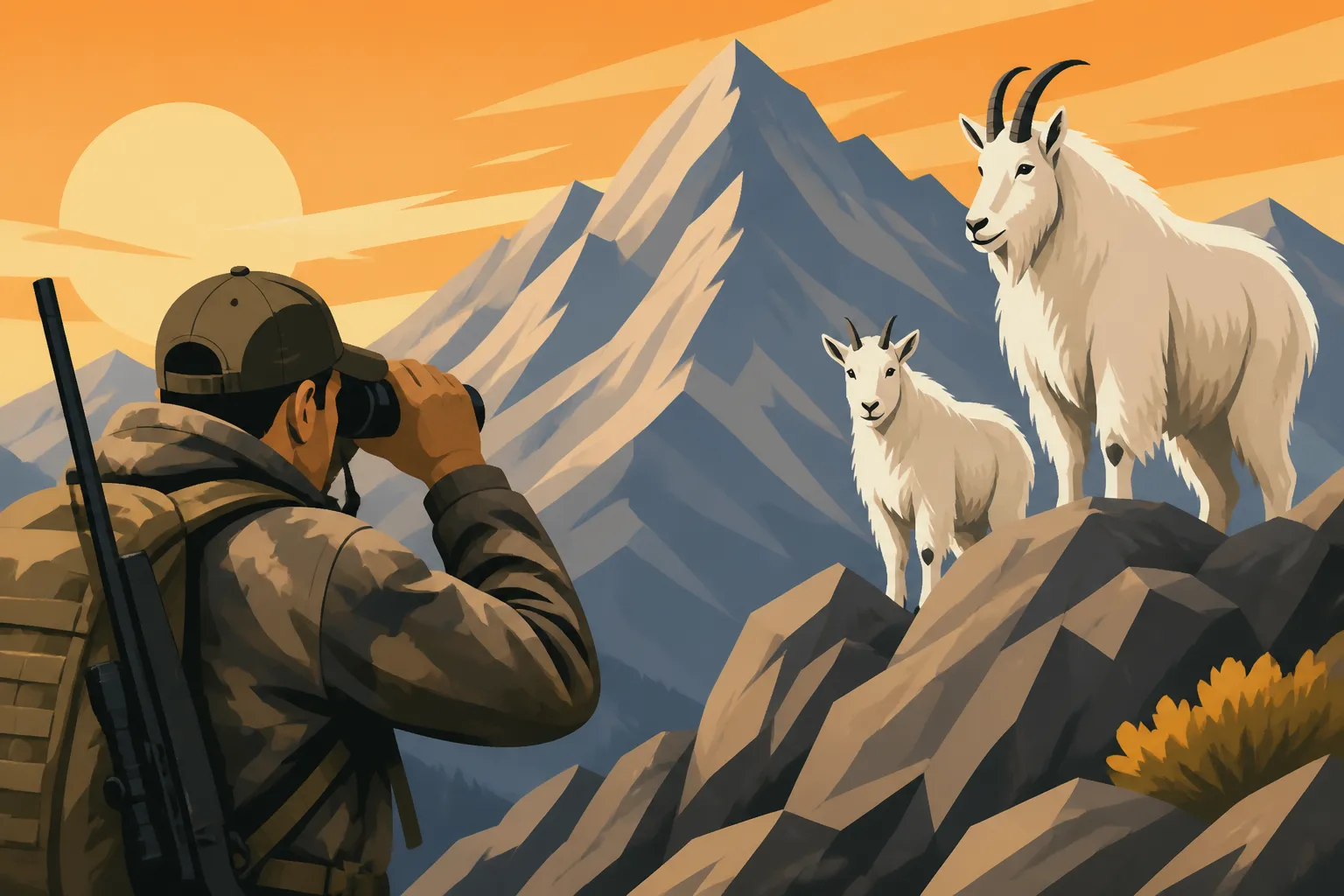
Furthermore, this treeless environment offers expansive sightlines, which impacts both the goats and the hunters pursuing them. Goats rely on their vision and the sheer difficulty of their terrain to detect and evade threats. For hunters, this means the game becomes a sophisticated glassing game. You'll spend countless hours behind high-powered optics, meticulously picking apart distant slopes and rock bands, often for days, just to locate a herd or a specific animal. Understanding spotting scope power for open country is paramount here, as is preparing physically for long glassing days. The rewards, however, of observing these magnificent animals in such a stark, wild setting are immeasurable, even if you never pull the trigger.
Goat Biology and Behavior: Survival in Extreme Environments
Rocky Mountain Goats are biological marvels, perfectly engineered to thrive in places where most other large mammals would perish. Their very existence in Nevada's highest reaches is a testament to their incredible suite of adaptations, which allows them to not just survive but flourish in some of the most brutal landscapes on Earth. Understanding these aspects of their biology and behavior is crucial for any aspiring goat hunter.
Adaptations for Cold and Altitude
One of the most striking features of a Rocky Mountain Goat is its iconic white coat. This isn't just for show; it's a highly functional, multi-layered insulation system that allows them to withstand extreme cold and high winds. Their outer layer of long, coarse guard hairs sheds snow and ice, while a dense, woolly undercoat traps warmth close to their bodies. This incredible insulation is so effective that they can comfortably bed down in blizzard conditions where other animals would quickly succumb to hypothermia. You'll often see them unbothered by freezing temperatures that would send a human scrambling for shelter.
Beyond their fur, goats possess a number of physiological adaptations for high altitude. Their large lungs and hearts, combined with a high red blood cell count, allow them to efficiently process oxygen in the thin air that characterizes their habitat. This means they can exert themselves vigorously at elevations where humans struggle with simple tasks. Their hooves are another engineering marvel: cloven and pliable, with rough pads and sharp, non-slip edges, they provide unparalleled traction on icy rock and steep terrain. Watching a goat navigate a seemingly sheer cliff face is truly awe-inspiring, a masterclass in balance and grip that makes them uniquely suited to their vertical world.
Their diet also reflects their adaptation to scarcity. Goats are herbivores, consuming a wide variety of alpine plants, including grasses, sedges, forbs, and even lichens. They are incredibly efficient foragers, able to extract nutrients from sparse vegetation. In winter, when food is even scarcer, they will paw through snow to access buried plants. These adaptations collectively make them the undisputed kings of the high country, capable of surviving and reproducing in an environment that remains hostile to nearly every other large ungulate.
Seasonal Movements and Social Structures
While Rocky Mountain Goats are primarily residents of the alpine zone year-round, they do exhibit some subtle seasonal movements driven by food availability and breeding. During the late spring and summer, after the deepest snows have melted, they spread out across the high meadows and cliff bands, enjoying the flush of new growth. This is when forage is most abundant, and nannies are often seen with their kids, which are born in late May or early June. These young kids, born with a thick white coat, quickly develop the coordination to follow their mothers on dangerous terrain, learning the routes and escape cover.
As fall approaches and the rut begins, typically in November and December, billies (males) become more active, seeking out nannies. While not as dramatic as the elk rut, there is competition among males, with head-butting and pushing contests to establish dominance. During this period, goats may move to slightly lower elevations or more sheltered areas to find mates, though they rarely descend far from their core high-country habitat. The severity of winter will dictate their movements somewhat, but generally, they remain in the high country, utilizing wind-swept ridges where snow is thinner, exposing critical forage, or seeking shelter in cliff overhangs.
Goats generally live in small groups, with nannies and kids forming nursery herds, and younger billies often forming bachelor groups. Older, mature billies, particularly trophy-class animals, tend to be more solitary, especially outside of the rut. This solitary nature, combined with their preference for the most inaccessible terrain, makes finding and targeting a mature billy a significant challenge. Successfully reading a Nevada hunt unit before you apply, and understanding their subtle movements and social dynamics, can give a hunter a critical edge in these demanding environments. Their ability to seemingly appear and disappear into the landscape, using every fold and rock outcropping for cover, is part of their mystique and challenge.
Managing Nevada's Precious Goat Herds
Given their relatively small population numbers and the specialized habitat they occupy, the management of Rocky Mountain Goats in Nevada is a critical task. The Nevada Department of Wildlife (NDOW) takes a very cautious and conservative approach to ensure the long-term health and stability of these unique herds. This isn't just about allocating tags; it's about understanding the animals, their habitat, and the delicate balance of their alpine ecosystem.
NDOW's Conservation and Allocation Strategies
NDOW's primary goal in managing Rocky Mountain Goats is the long-term conservation of the species within Nevada. This means ensuring healthy, sustainable populations, even if it results in very limited hunting opportunities. Unlike species with larger numbers, goat tags are exceedingly rare, allocated through a highly coveted draw system. The number of tags issued each year is minimal, often in the single digits statewide, and sometimes no tags are issued for a particular unit if population metrics indicate it's not prudent. This conservative approach reflects the fragility of these populations and the challenges of managing animals in such remote terrain.
The allocation of tags is based on robust scientific data, including annual aerial surveys, population modeling, and harvest data from previous years. Biologists assess herd health, recruitment rates (number of young surviving), and sex ratios to determine sustainable harvest levels. The focus is on harvesting older, mature billies to maintain a healthy breeding population, while also carefully considering the impact on overall herd dynamics. NDOW also works to protect and enhance goat habitat, collaborating with land management agencies like the U.S. Forest Service and Bureau of Land Management to minimize disturbance and ensure critical forage and escape terrain remain viable.
Because goat tags are so rare, the draw system is exceptionally competitive. Nevada's squared bonus point system makes it even more challenging, but also provides a distinct advantage to those who accumulate points over many years. When Nevada applications run March 23 to May 13, hopeful hunters from across the country throw their hats in the ring for a chance at this once-in-a-lifetime tag. The draw odds for Nevada Mountain Goat are among the lowest in the West, truly making it a dream tag for most. This intense competition underscores both the rarity of the animal and the immense value hunters place on the experience.
Population Monitoring and Health
Monitoring Rocky Mountain Goat populations in Nevada presents unique challenges due to their preferred habitat. Counting animals in sheer, inaccessible terrain is no easy feat. NDOW biologists primarily rely on aerial surveys conducted using helicopters, often during late summer or early fall when goats are typically higher on the mountains and more visible against the rocky backdrop. These surveys involve experienced crews flying precise transects, meticulously counting animals, classifying them by sex and age (nannies, kids, billies), and recording their locations. These flights are both dangerous and expensive, but they provide the most accurate data for population estimates.
Beyond direct counts, biologists also analyze other metrics like kid-to-nanny ratios, which provide insights into the health of the reproductive segment of the herd and future recruitment. Harvest data from successful hunters is also invaluable, providing information on the age and condition of harvested animals, which contributes to understanding population trends. Genetic sampling, when feasible, can also help assess herd connectivity and genetic diversity, crucial factors for long-term resilience. How biologists count a desert big game herd, even in these high alpine environments, is a testament to their dedication.
Maintaining healthy goat populations also involves monitoring for disease. While isolated in their high-country strongholds, goats can still be susceptible to various pathogens, particularly respiratory diseases if they come into contact with domestic sheep or other susceptible wildlife. NDOW works to mitigate these risks and responds quickly to any signs of disease to prevent widespread outbreaks. The overarching goal is to ensure that future generations of hunters and wildlife enthusiasts will continue to have the opportunity to marvel at these magnificent animals in Nevada's majestic high country.
The Ultimate High-Country Challenge: Hunting Nevada Goats
Drawing a Nevada Rocky Mountain Goat tag is just the first step in what will undoubtedly be one of the most physically and mentally demanding hunts you will ever undertake. This isn't a casual hunt; it's an expedition into extreme terrain that will test every fiber of your being. From the moment you receive that coveted tag, your focus must shift to rigorous preparation.
Physical Demands and Mental Fortitude
Let's be blunt: a Nevada goat hunt is not for the faint of heart or the out of shape. The physical demands are immense. You will be climbing steep, rocky slopes, often at high altitude, for days on end. Your pack will be heavy, loaded with optics, water, food, and survival gear. Expect to gain thousands of feet of elevation daily, traversing unstable scree fields, navigating boulder gardens, and potentially scrambling up exposed rock faces. Many hunters compare it to a mountaineering expedition with a rifle or bow. This kind of exertion in thin air can quickly lead to exhaustion, altitude sickness, and poor decision-making if you're not properly conditioned.
Mental fortitude is equally crucial. The days will be long, success is never guaranteed, and the weather can turn hostile in a matter of hours. You'll need the mental toughness to push through fatigue, the patience to glass for hours without seeing an animal, and the resilience to keep going when conditions are miserable. Frustration, discomfort, and even fear are all emotions you might encounter. A positive attitude, unwavering determination, and the ability to stay focused under pressure are invaluable assets. Many successful goat hunters say the mental game is just as important as the physical. Preparing physically for long glassing days is absolutely essential for this kind of challenge.
Training for a goat hunt should begin months, if not a year, in advance. Focus on cardiovascular endurance (hiking with a heavy pack, trail running, stair climbing) and strength training, especially for your legs and core. Simulating hunt conditions by hiking steep terrain with a pack weighing 30-50 pounds is an excellent way to prepare. This preparation isn't just about success; it's about safety. Being physically capable reduces the risk of injury and allows you to make sound decisions when it matters most, particularly if you find yourself having to pack an animal out of roadless country.
Essential Gear and Scouting for Success
The gear you bring on a Nevada goat hunt can literally make or break your trip. Every item needs to be lightweight, durable, and reliable, built to perform in extreme alpine conditions. Your pack system is paramount: a high-quality internal frame pack (60-80 liters) is necessary to carry your gear and, hopefully, a substantial amount of meat and hide. Layering for basin and range temperature swings is critical, meaning you'll need a versatile clothing system that can adapt from intense sun to freezing wind and snow. This includes a waterproof/breathable shell, insulation layers (puffy jacket, fleece), and moisture-wicking base layers.
Footwear is another non-negotiable area for quality. You'll need stout, mountaineering-style boots with excellent ankle support and stiff soles for navigating rocky terrain. Choosing boots for sharp volcanic rock is a serious consideration, as the abrasive nature of much of Nevada's geology can shred lesser boots. High-quality gaiters will protect your lower legs and keep scree out of your boots. For optics, don't skimp. A high-power spotting scope (20-60x or 25-75x) on a sturdy tripod is absolutely essential for picking apart distant slopes, as is a good pair of 10x or 12x binoculars. When glassing Nevada's basin and range for mule deer, many of the same principles apply, but with goats, the stakes are even higher.
Pre-season scouting, both physically and from home, is vital. E-scouting using tools like Google Earth, Gaia GPS, or GoHunt's mapping features can help you identify potential goat habitat, escape terrain, bedding areas, and water sources. Look for areas with a combination of steep cliffs, alpine meadows, and benches. If possible, a physical scouting trip or two into your unit will give you invaluable firsthand knowledge of the access routes, terrain challenges, and animal patterns. Even then, be prepared for the unexpected, as goats are masters of disappearing into their vertical world. Carrying enough water you must carry on a desert day hunt is also critical, as high-altitude water sources can be scarce or contaminated.
Cracking the Nevada Goat Draw: Strategies and Odds
Drawing a Nevada Rocky Mountain Goat tag is often considered the holy grail for many Western big game hunters. It's an exceptionally difficult draw, a true testament to the rarity of the opportunity and the quality of the experience. Understanding the intricacies of Nevada's draw system is essential for anyone hoping to beat the odds and punch a goat tag.
Understanding the Application Process
The application process for Nevada big game tags, including Rocky Mountain Goats, typically runs from late March to mid-May. Specifically, Nevada applications run March 23 to May 13 each year, with the deadline being firm. All applications are submitted online through the Nevada Department of Wildlife (NDOW) website. Before you can apply for any big game tag, you'll need to purchase a non-refundable Nevada combination hunting license, which is a prerequisite for entry into the draw. This license is an additional cost on top of the application fees for each species you apply for.
When applying for goats, you'll list your hunt choices by unit and season. Unlike some other species, goat units are very limited, and often only one or two tags are available in a specific unit, if any. Researching the unit history, including past harvest statistics and draw odds, is crucial. Resources like GoHunt's insider service can be incredibly helpful for analyzing draw odds, unit break downs, and success rates, giving you an edge in making informed choices. They compile years of data, allowing you to see which units might offer the slightest mathematical advantage, or where the largest billies have historically been harvested.
It's important to understand that applying for a goat tag means you are committing to a potentially long game. Most successful applicants have accumulated many bonus points over the years. Even with max points, drawing a goat tag is never a certainty; it's a game of probabilities and luck. However, consistent application is the only way to build those points and give yourself a fighting chance.
Maximizing Your Chances with Bonus Points
Nevada operates on a unique squared bonus point system, which significantly favors applicants who have accumulated more points over time. This system means that your total number of "chances" in the draw is equal to your bonus points squared, plus one entry for the current year's application. So, if you have 5 bonus points, you don't just get 5 chances; you get (5*5) + 1 = 26 chances. This dramatically increases the odds for those with a long history of applying.
For example, if you have 10 bonus points for Rocky Mountain Goat, you would have (10*10) + 1 = 101 entries in the draw. This structure makes it incredibly difficult for a first-time applicant to draw a goat tag, as they only have 1 chance. This system is designed to reward loyalty and persistence, acknowledging the dedication of hunters who have been trying for years. Understanding how Nevada's squared bonus point system works is fundamental to strategizing for any premium Nevada tag.
If your primary goal is to eventually draw a goat tag, the most straightforward strategy is to apply consistently every year. Even if you don't draw, you'll accumulate another bonus point, which significantly increases your chances in subsequent years. You also have the option of buying a Nevada point-only application if you decide not to apply for a hunt this year but still want to build points. While the tag cost is substantial for non-residents (A nonresident Nevada elk tag runs $1,200, and goat tags are similarly priced, around $1,500 for the tag itself, not including the license or application fees), the experience is widely considered worth every penny. For those with their sights set on this ultimate prize, patient accumulation of points is the only viable path.
Field Judging Your Billy: Identifying a Trophy
Once you’ve drawn that incredibly rare Nevada goat tag and endured the grueling climb into their high-country domain, the next critical challenge is identifying the right animal. Ethical hunting demands precise field judging, especially for a species with limited tags and a strong emphasis on selective harvest. You don't want to make a mistake after all that effort!
Key Characteristics of Mature Billies
Field judging Rocky Mountain Goats, particularly differentiating between mature billies (males) and nannies (females), can be challenging from a distance, especially given their similar appearance. However, there are several key characteristics to look for that will help you identify a mature billy. Generally, billies are larger and more heavily built than nannies, with a blockier body and thicker neck. Their head often appears broader, and their horns tend to be thicker at the base and have a more noticeable curve. The base circumference of the horns is a crucial indicator of age and maturity in a billy, often appearing "swept back" more distinctly than a nanny's.
Nannies, while also having horns, typically have thinner bases and a straighter, more slender horn profile. They also tend to have a more delicate build and a narrower face. Another subtle but helpful indicator is behavior: mature billies often appear more solitary, especially outside of the rut, and may be found on the absolute steepest, most inaccessible terrain. Nannies, on the other hand, are more frequently seen in nursery groups with kids or other nannies. Carefully observing the animal’s body language and how it interacts with its surroundings can provide valuable clues.
Using high-quality optics is absolutely essential for accurate field judging. Your spotting scope set up for glassing from a ridge, paired with powerful binoculars, will allow you to scrutinize horn shape, base thickness, body size, and behavior from a safe distance. Don't rush the process. Take your time, observe the animal for an extended period, and compare it to others in the group if possible. This careful observation ensures you make an ethical and informed decision, targeting a mature billy that aligns with responsible hunting practices.
Making the Shot Count in Challenging Conditions
After days of relentless climbing and meticulous glassing, the moment of truth arrives. Making the shot count on a Rocky Mountain Goat is paramount, and the conditions often present significant challenges. Shots are typically long, angles are steep, and wind is almost always a factor in the high country. This is not the place for an unpracticed shot. Ethical hunting demands that you are proficient with your chosen weapon in conditions that mimic the hunt.
Rifle hunters should be intimately familiar with their rifle's ballistics at extended ranges and steep angles. Practicing shooting uphill and downhill from various improvised positions – sitting, kneeling, prone – is critical. A rangefinder with angle compensation is an indispensable tool. A stable shooting platform, such as a bipod or shooting sticks, is also vital on rocky ground, as it's rare to find a perfectly flat spot for a prone shot. Holding for wind across a wide basin becomes even more crucial when your target is a small animal perched precariously on a cliff. Remember, suppressor legality for hunting big game is something to check, as it can aid in hearing protection and reduce recoil, helping with follow-up shots if needed.
Bowhunters face an even greater challenge. Getting within bow range of a goat in their open, vertical habitat requires incredible stealth, patience, and a bit of luck. Shots will likely involve steep angles, which significantly affect arrow trajectory and require specialized practice. Minimum bow draw weight for big game and broadhead requirements for bowhunting are non-negotiables in Nevada, ensuring a clean, ethical harvest. Regardless of your weapon, always prioritize shot placement. Aim for the vitals, and only take a shot when you are confident you can make a clean kill. A wounded goat in this terrain can be impossible to recover, which is every hunter's worst nightmare. Patience and discipline are your best friends when that magnificent billy finally steps into range.
Ethical Considerations and Post-Harvest Logistics
Harvesting a Rocky Mountain Goat is an achievement of a lifetime, but the journey doesn't end with the shot. Ethical hunting practices and proper post-harvest logistics are just as important in these challenging environments, ensuring respect for the animal and maximum utility of the meat and trophy.
Respecting the Animal and the Landscape
The immense effort and commitment required to hunt Rocky Mountain Goats naturally fosters a profound respect for the animal and its habitat. This respect extends beyond the hunt itself. It means choosing your shot carefully to ensure a quick, clean kill, minimizing any suffering. It means understanding that once an animal is down in such steep terrain, the work has only just begun. There's a moral obligation to recover the animal, no matter how difficult the circumstances. Leaving an animal in the field is unacceptable, especially given the rarity of these tags.
Respecting the landscape means practicing Leave No Trace principles rigorously. Pack out everything you pack in, including all trash, spent casings, and any remnants of your camp. Avoid disturbing sensitive alpine vegetation. Be mindful of your impact on other wildlife and the pristine environment. The high country is fragile, and it's our responsibility as hunters to ensure we leave it as we found it, or better. This ethical stance is not just about rules and regulations; it's about the deep personal connection and responsibility that comes with pursuing such an incredible creature in its wild home.
Furthermore, consider the impact of your actions on public perception. Every hunt is an opportunity to showcase responsible, ethical hunting. Your conduct in the field, your commitment to recovery, and your respect for the environment all contribute to how non-hunters view our tradition. A Nevada goat hunt is a rare privilege, and with that privilege comes a heightened responsibility to uphold the highest standards of sportsmanship and conservation.
Field Care and Packing Out Your Trophy
Once your goat is down, the clock starts ticking, especially if the weather is warm. Proper field dressing and meat care are crucial to preserving the quality of the meat. In these high-altitude environments, temperatures can drop quickly, but intense sun can also cause meat to spoil rapidly. Field dressing in August heat, even in the mountains, requires swift action. Get the hide off, remove the entrails, and quarter the animal as quickly as possible. Hanging the quarters in breathable game bags allows for air circulation, which helps cool the meat. If snow or ice is available, packing it around the meat can aid in cooling.
Packing an animal out of roadless country, particularly a goat taken high on a mountain, is perhaps the most physically demanding aspect of the entire hunt. A mature billy can weigh well over 200 pounds, and you'll be carrying that weight down steep, uneven terrain. This often requires multiple trips, or a coordinated effort with hunting partners. Having strong, durable game bags is essential, as is a robust internal frame pack that can handle heavy loads. Think about the logistics well in advance: identify the easiest (or least difficult) route down, consider where you might cache meat if necessary, and ensure you have sufficient water and food for the arduous journey.
Beyond the meat, properly caring for the hide and horns is vital if you intend to have a taxidermy mount. Cape the animal carefully, especially around the face and neck, and ensure the horns are cleaned. If you're planning a full body mount, consider how you will protect the delicate fur during the pack out. Once off the mountain, get the hide and horns to a taxidermist or freezer as quickly as possible to prevent hair slippage or damage. The combination of incredible scenery, extreme physical challenge, and the ultimate reward of a hard-earned trophy makes a Nevada Rocky Mountain Goat hunt an unforgettable, once-in-a-lifetime adventure for those fortunate enough to draw a tag.
Disclaimer
Please be aware that hunting regulations, season dates, and application procedures can change. Always consult the official Nevada Department of Wildlife (NDOW) regulations and current year's hunting proclamation before planning any hunting activity. This content is for informational purposes only and does not constitute legal advice.