Tribal Land Boundaries Nevada Hunters Must Respect
Navigating Nevada's vast and often confusing landscape can be a real adventure for any hunter, but nothing can throw a wrench into a well-planned trip quite like encountering an unexpected boundary. For many, the idea of hunting in Nevada conjures images of endless public lands, which is largely true, yet tucked within and alongside these expanses are numerous tribal lands. Understanding where these boundaries lie, what they mean for access, and how to respectfully navigate them is absolutely crucial to avoiding an unintentional trespass, which nobody wants. This guide is here to walk you through the nuances of identifying and respecting tribal land boundaries, helping you hunt responsibly and within the law.
Why Understanding Tribal Land is Crucial for Nevada Hunters
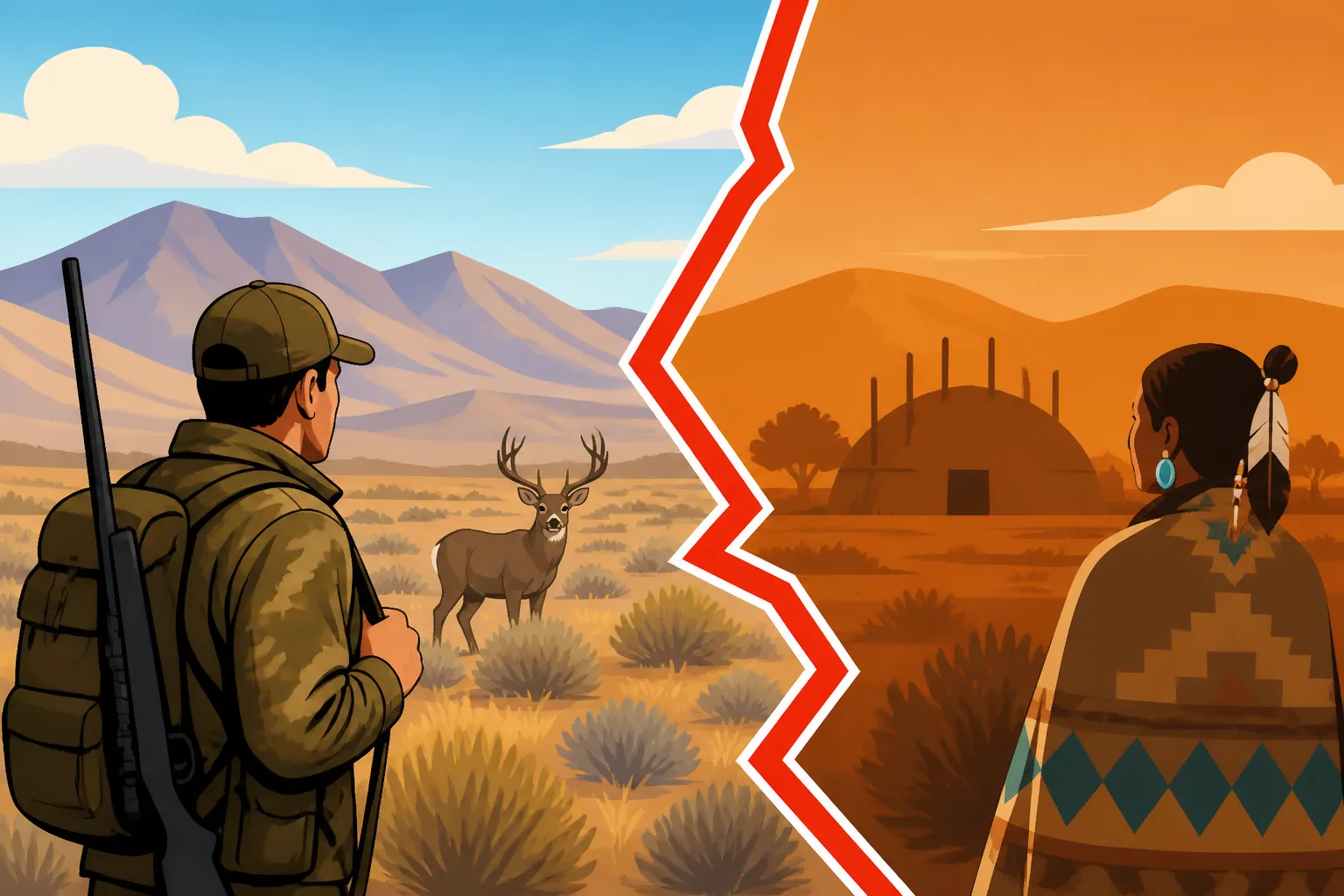
The sheer scale of public land in Nevada is a huge draw for hunters, but it's easy to get complacent and assume that every piece of un-fenced ground is fair game. This mindset can lead to real problems when you encounter tribal lands, which are fundamentally different from BLM or National Forest ground. Recognizing this distinction isn't just about following rules; it's about respecting sovereignty, avoiding legal trouble, and upholding the integrity of the hunting community.
The Legal and Ethical Imperative
First and foremost, crossing onto tribal land without permission is trespassing, plain and simple. It's not a gray area. Just like venturing onto private ranch land without a landowner's consent, doing so on tribal lands can lead to serious legal consequences, including fines, confiscation of equipment, and potentially even criminal charges. These lands are sovereign territories, and their laws and regulations are enforced by tribal authorities, often in conjunction with state or federal agencies. You wouldn't want someone hunting in your backyard, and tribal nations expect the same courtesy and respect for their homelands and resources.
Beyond the legal ramifications, there's a strong ethical imperative. Tribal lands often hold immense cultural, historical, and spiritual significance for the people who call them home. These areas are not just hunting grounds; they are ancestral lands, repositories of tradition, and living landscapes deeply connected to tribal identity. Approaching these areas with a mindset of respect and understanding is paramount. It demonstrates a recognition of tribal sovereignty and a commitment to being a responsible and conscientious outdoorsperson, which ultimately benefits everyone by fostering better relationships between hunters and tribal communities.
Nevada's Unique Land Ownership Puzzle
Nevada is often celebrated as the "most federally owned state" in the Lower 48, meaning a huge percentage of its landmass is managed by agencies like the Bureau of Land Management (BLM) and the U.S. Forest Service. This makes it a public land hunter's paradise. However, sprinkled throughout this vast public domain, and often bordering it, are various tribal reservations and trust lands belonging to the numerous sovereign Native American tribes within the state. These lands are not federal public lands, nor are they state lands. They are distinct entities with their own governance and land management practices.
This unique mosaic of ownership creates a complex puzzle for hunters. You might be glassing a wide-open basin, seeing nothing but sagebrush and mountains, and assume it's all BLM ground. Yet, a subtle shift in the landscape, an old fence line, or even just an invisible boundary on a map could mark the edge of a tribal reservation. Understanding Reading a Nevada Unit Boundary is a good start, but tribal boundaries add another layer of complexity that requires specific attention. It's not enough to know you're on public land; you need to know which public land, and whether a tribal holding lies nearby. This deep dive into land status is essential for ethical and legal hunting in the Silver State.
Identifying Tribal Land Boundaries in the Field
The vastness of Nevada can make boundary identification tricky. Out in the sagebrush, a boundary line isn't always marked with a big, obvious signpost or a clear-cut fence. This is where modern technology really shines, helping you keep track of your position relative to all types of land ownership, including crucial tribal boundaries.
Utilizing Digital Mapping Tools
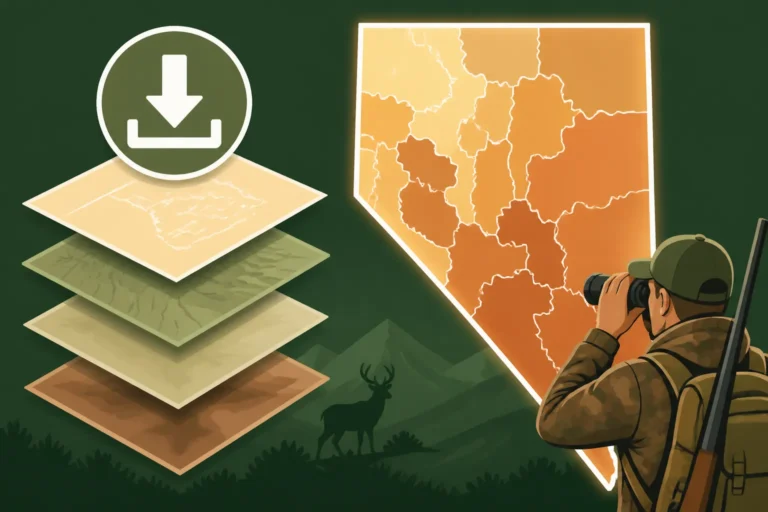
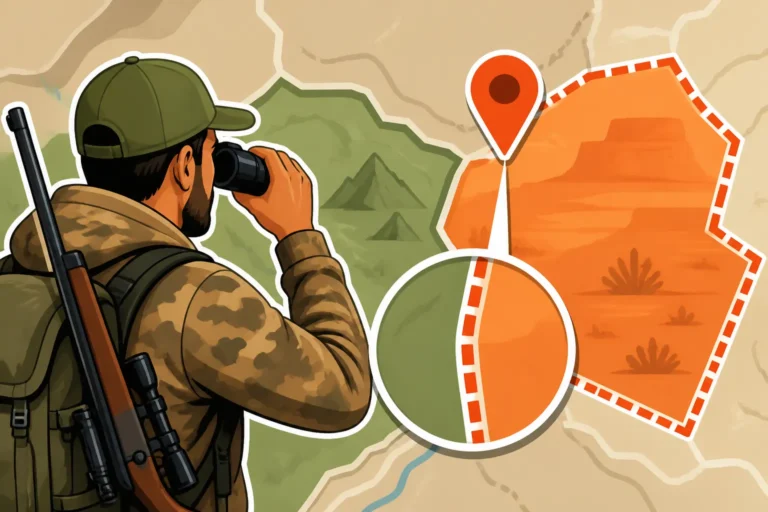
In today's hunting world, digital mapping tools are absolutely indispensable, especially in a state like Nevada where the landscape can feel endless and unmarked. Services like onX Hunt and GoHunt have revolutionized how hunters understand and interact with land ownership. These apps provide detailed plat maps directly on your phone or GPS device, showing clearly defined boundaries for federal public lands (BLM, National Forest), state lands, private parcels, and, most importantly, tribal lands. Without these tools, you're essentially navigating blind, relying on outdated paper maps or vague memory, which is a recipe for trouble.
To use these effectively, you need to download the maps for your hunt area before you lose cell service, which is a common occurrence in Nevada's remote units. Once loaded, you can simply open the app, and your location will show up on the map in real-time, overlaid with color-coded land ownership layers. If you see yourself approaching a section marked in the specific color for tribal land, you know to change your course. This foresight allows you to plan your stalks, retrieve downed game, or even just set up camp without ever worrying about crossing into an area where you don't have permission. Learning Using onX Layers for Nevada Public Land is a game-changer for avoiding these issues.
Recognizing Physical Markers and Signage
While digital maps are your best friend, it's also important to be aware of potential physical markers on the ground. Tribal lands might be marked with various forms of signage, though this is not always consistent, especially in remote areas. You might see signs that explicitly state "Private Property," "Tribal Land," "No Trespassing," or "Restricted Access," often in multiple languages or with specific tribal insignia. These signs, when present, are clear indicators that you are approaching or are already on land with specific rules.
Fences are another common physical marker, though they can be ambiguous. Not all fences denote a change in land ownership; some are merely pasture fences or property lines between private landowners. However, a fence accompanied by "No Trespecting" signs or specific tribal markings should absolutely be heeded. In some areas, the very character of the landscape might change – perhaps a shift in grazing patterns, different types of structures, or even unique cultural markers that, while not explicitly "no trespassing" signs, suggest a different kind of management or ownership. Always be observant, but never rely solely on physical markers, as they can be sparse, damaged, or simply non-existent in the vastness of Nevada's backcountry.
Permitting and Access on Tribal Lands
The most common misconception about tribal lands is that they are just another type of public land, albeit with a different name. This couldn't be further from the truth. Accessing and hunting on tribal lands operates under a completely different set of rules, and ignoring this distinction can lead to immediate and severe consequences.
General Rules of Thumb for Tribal Access
The absolute golden rule for tribal lands is this: assume no public access for hunting unless explicitly stated and permitted by the tribal nation itself. Unlike federal lands, where your state hunting license generally grants you permission to hunt, tribal lands are sovereign. This means each tribal nation has the inherent right to manage its own lands, resources, and wildlife, including setting its own hunting seasons, regulations, and permit requirements. Your standard Nevada hunting license and tags do not grant you permission to hunt on tribal lands.
In most cases, if hunting is allowed at all, you will need to purchase a specific tribal hunting permit directly from the tribe. These permits often come with their own set of fees, which are separate from your state license and tag costs, and their own unique regulations, such as specific hunt dates, zones, or species limits that may differ significantly from state rules. Some tribes might not offer any hunting opportunities to non-tribal members at all, reserving their resources for their own people or for specific cultural practices. It’s crucial to do your homework well in advance, because showing up at the boundary with just your state license is almost certainly a recipe for disappointment, and potentially, legal trouble.
Contacting Specific Tribal Nations
If you are interested in hunting opportunities on tribal lands in Nevada, the only reliable way to get accurate information is to contact the specific tribal nation directly. Each of the many federally recognized tribes in Nevada manages its lands independently, meaning that the rules, seasons, and availability of permits can vary drastically from one reservation to another. There isn't a single, statewide tribal hunting authority; you must go to the source.
Look for a tribal game and fish department, natural resources department, or a tribal council office. A quick online search for the specific tribal nation (e.g., "Pyramid Lake Paiute Tribe hunting permits" or "Duck Valley Shoshone-Paiute hunting information") is your starting point. Be prepared to ask specific questions about permit availability for non-tribal members, application procedures, fees, hunt units, species offered, and any special regulations that apply. Remember to be patient and respectful in your inquiries. Some tribes, like the Pyramid Lake Paiute Tribe, do offer specific Pyramid Lake Paiute Hunting Permits or the Shoshone-Paiute Tribes of the Duck Valley Reservation Permits for hunting and fishing, but their systems are unique to them. Always verify the most current information before making any plans, as policies can change.
Avoiding Accidental Trespass and Navigating Confusion
Even with the best intentions and diligent planning, the sheer scale and remoteness of Nevada can sometimes lead to moments of confusion in the field. Preventing accidental trespass requires proactive planning and a clear head when unexpected situations arise. The goal is always to stay on the right side of the line, both legally and ethically.
Pre-Hunt Scouting and Planning
The single most effective way to avoid accidental trespass onto tribal lands is thorough pre-hunt scouting and planning. This process starts long before you ever set foot in the field. Utilize those indispensable digital mapping tools, like onX Hunt or GoHunt, from the comfort of your home. Identify your chosen hunt unit, and then critically examine all surrounding land ownership layers. Look for any tribal lands adjacent to or even within your unit. Sometimes, tribal parcels can be small and isolated, almost like islands surrounded by public land, making them easy to miss if you're not paying close attention. This is a vital part of E-Scouting a Nevada Unit Before the Season.
Once you've identified potential tribal boundaries, plan your access routes, glassing points, and potential stalk corridors to always remain firmly on public or permitted land. Create waypoints and boundaries on your mapping app that clearly delineate these no-go zones. This isn't about avoiding a vast area; it's about knowing exactly where those invisible lines are. Even if you don't plan to hunt on tribal land, knowing where it is means you won't accidentally pursue a game animal across a boundary or set up camp in the wrong spot. Always err on the side of caution; if a boundary looks ambiguous or too close for comfort, plan a route that gives you plenty of buffer.
What to Do If You Suspect You've Crossed Over
It happens. You're deep in the backcountry, the terrain is rough, and your focus is entirely on that buck just over the ridge. Suddenly, you glance at your GPS and realize you might have just stepped onto tribal land. Panic can set in, but the key is to remain calm and act decisively and respectfully. Your first priority is to immediately cease any hunting activity. Do not continue to pursue game, do not shoot, and certainly do not attempt to tag an animal if you've harvested it on what you now suspect is tribal land.
Your next step is to carefully and directly return to clearly marked public land. Re-trace your steps if possible, or use your GPS to navigate back to the nearest confirmed public land boundary. Do not try to sneak out or hide your presence. If you encounter tribal law enforcement or game wardens, be polite, cooperative, and honest about your situation. Explain that you believe you may have inadvertently crossed a boundary and were in the process of rectifying the situation. While there might still be consequences for trespassing, demonstrating respect and immediate compliance can often lead to a more understanding outcome than trying to evade or argue. Knowing Trespass Law on Posted Property generally is always a good idea, but tribal laws can be even more stringent.
Different Tribal Nations and Their Approaches to Hunting
Nevada is home to a number of distinct tribal nations, each with its own rich history, culture, and approach to managing its lands and resources. This means there isn't a one-size-fits-all answer to hunting on tribal lands; it truly depends on the specific tribe.
Examples of Tribal Hunting Opportunities
While many tribal lands are closed to public hunting, some tribal nations in Nevada do offer specific hunting and fishing opportunities for non-tribal members. These opportunities are generally highly regulated and are a significant source of revenue and resource management for the tribes. For instance, the Pyramid Lake Paiute Tribe, located northeast of Reno, manages the Pyramid Lake fishery and surrounding lands, offering permits for fishing and sometimes for specific game animals on their reservation. Access to these lands and resources is strictly controlled through their tribal game and fish department, requiring separate permits and adherence to their specific regulations, which may differ from state laws. You'd need to consult their official resources for specific seasons and availability, but it's an example of how a tribal nation provides managed access.
Similarly, the Shoshone-Paiute Tribes of the Duck Valley Reservation, located on the Nevada-Idaho border, also manage hunting and fishing on their lands. They have their own game and fish department that oversees seasons, bag limits, and permit sales for big game, upland birds, and waterfowl. Hunters interested in these areas must purchase tribal permits directly from the Duck Valley Shoshone-Paiute Tribes and follow their specific regulations. These opportunities often provide unique hunting experiences in well-managed areas, but they underscore the critical point: state licenses are insufficient, and tribal rules are paramount. Always verify directly with the tribe before making plans.
Respecting Tribal Sovereignty and Conservation Efforts
When we talk about tribal lands, it's essential to remember that these are not merely another category of land ownership; they represent the sovereign territory of distinct nations. Tribal nations have inherent rights to self-governance, which extends to the management of their natural resources, including wildlife. Their conservation philosophies and management practices are often deeply rooted in traditional ecological knowledge, cultural values, and long-term sustainability, which may not always align with state-managed wildlife strategies. For example, some tribes might prioritize subsistence hunting for their members, manage for spiritual purposes, or have different views on predator management or harvest quotas.
Respecting tribal sovereignty means acknowledging and honoring these differences. It means recognizing that tribal governments have the authority to decide who can access their lands, under what conditions, and for what purpose. As hunters, this translates into a responsibility to educate ourselves about these unique relationships and to abide by the rules set forth by each tribal nation, even if they differ from what we are accustomed to on state or federal lands. It's an opportunity to learn about different approaches to conservation and to show respect for the diverse ways people interact with and steward the land and its wildlife.
| Feature | Nevada Public Land (BLM/NF) | Tribal Land (General) |
|---|---|---|
| Primary Jurisdiction | Federal/State Agencies | Sovereign Tribal Nation |
| Hunting Access | Generally open with state license | Requires tribal permit, often separate fees |
| Regulations | NDOW (State) rules | Tribal game & fish rules, may differ from state |
| Land Ownership Maps | Clearly marked on apps/maps | Clearly marked, but access rules are different |
| Cultural Sites | Protected by federal law | Deeply significant, often protected by tribal law |
| Permit Purchase | NDOW (State) | Directly from Tribal Game & Fish Department |
Disclaimer
This article is for general informational purposes only and does not constitute professional advice. Laws, prices and regulations vary by location and change over time. Consult a qualified professional for guidance on your specific situation.