Units Near Ely Within a Day Trip
Hunting in Nevada can feel like an overwhelming endeavor, especially when you're dreaming of a quick day trip from a central hub like Ely. The vast, rugged landscape can easily swallow up your plans, leaving you driving for hours on rough roads just to get to a trailhead. But don't despair! With a little planning and the right mindset, it's absolutely possible to find excellent hunting opportunities close enough to Ely that you can be back in town for dinner, or at least before midnight. This guide will walk you through how to identify those units and make the most of your limited time in the field.
Understanding Ely's Unique Hunting Landscape
Ely sits nestled in White Pine County, a region that embodies the classic "Basin and Range" topography Nevada is famous for. This isn't your typical timber hunting; it's vast, open country defined by long mountain ranges separated by wide, arid valleys. For a day trip, this means understanding how accessibility and terrain influence your choices.
The "Basin and Range" Reality Around Ely
Imagine towering mountain ranges, often sparsely timbered with pinyon pine and juniper at higher elevations, dropping steeply into expansive sagebrush flats. This is the heartbeat of hunting around Ely. While some of these ranges, like the Schell Creek Range or the Egan Range, offer significant elevation gain and more "traditional" mountain hunting for deer and elk, the valleys in between are home to antelope and sometimes chukar. The sheer scale of the landscape means that even a unit "near" Ely can involve substantial driving on unimproved roads once you leave the main highway. You're not looking for a quick stroll from your truck; you're looking for areas where the access roads allow for a timely in-and-out, not necessarily short hiking.
The ground itself can be extremely rocky, often covered in volcanic scree or sharp limestone, which can be tough on boots and vehicle tires. Water is scarce, making reliable springs or guzzlers critical focal points for wildlife, especially during early seasons. Understanding these fundamental characteristics is the first step to narrowing down your day-trip options.
Key Factors for a Day Trip Unit
When considering a unit for a day hunt out of Ely, you need to prioritize a few key factors that might be less critical on a multi-day backcountry excursion.
- Road Access Quality: This is paramount. Look for units or parts of units that have well-maintained dirt or gravel roads leading into them, minimizing the risk of breakdowns or getting stuck. Highways 50, 93, and 6 will be your friends for initial access, but you'll need to know which dirt roads branch off them into huntable country. Poor roads can turn a two-hour drive into a four-hour ordeal, eating up valuable hunting time. Remember, even a "good" dirt road out here can be washboarded or rocky.
- Public Land Percentage and Accessibility: Nevada is dominantly public land, but private parcels, especially along valley bottoms or near ranching operations, can exist. For a day trip, you want units with easily verifiable and abundant public access, minimizing the need to navigate tricky land boundaries. Tools like onX Hunt are invaluable for instantly identifying public vs. private land, helping you avoid frustrating surprises and ensuring you stay legal. Reading a Land Ownership Layer Correctly is crucial for this.
- Proximity to Ely: While this seems obvious, "proximity" in Nevada is relative. A two-hour drive on a highway might put you 100 miles away, but still closer in terms of time than a 50-mile drive on a rough, unmaintained dirt track. Aim for areas where your actual driving time, including any dirt roads, keeps you within a reasonable window for a dawn-to-dusk hunt plus travel.
- Terrain Manageability: For a day trip, you might not want to tackle the most rugged, remote wilderness areas unless you're exceptionally fit and have a specific plan. Look for units that offer a mix of terrain – perhaps accessible ridges for glassing, or draws that provide cover for a stalk, without requiring an all-day ascent just to get into decent hunting ground.
Identifying Promising Units for a Day Trip
Knowing what to look for is one thing; identifying specific areas is another. Around Ely, you have access to a variety of units that offer different opportunities. It's always best to check the current Nevada big game regulations for specific unit numbers and their boundaries, as these can sometimes be adjusted.
Units North and East of Ely
Heading north or east from Ely often puts you into country known for good mule deer and elk potential, particularly in the higher elevations. These areas might include portions of the Schell Creek Range or the northern Egan Range. Units in these general vicinities are often well-regarded.
- Schell Creek Range Foothills: East of Ely, the Schell Creek Range is a prominent feature. While the highest elevations require a significant trek, the foothills and lower mountain slopes often have dirt roads that provide reasonable access. These areas can hold mule deer, especially during earlier seasons, and the occasional elk. The terrain here can be steep but also features draws and pockets of cover that can be glassed effectively from accessible vantage points. This is where Glassing Nevada's Basin and Range for Mule Deer really pays off.
- Northern Egan Range: Northwest of Ely, parts of the Egan Range offer similar opportunities. Access might be off Highway 93. You'll find mixed pinyon-juniper forest and sagebrush country. This transition zone is a key habitat for deer. For a day trip, focus on areas where roads get you into the lower and mid-elevations of the range, allowing for focused glassing and stalking without needing to pack in for multiple days. Look for areas with historical water sources as game will often be concentrated there.
Units South and West of Ely
Venturing south or west of Ely opens up different kinds of terrain, often more arid and flatter in the valleys, but with significant mountain ranges as well.
- Central and Southern Egan Range Valleys: While the higher Egan Range is to the north, the valleys immediately south and west of Ely, easily accessed off Highways 6 or 93, are prime antelope country. These units are generally very open, allowing for long-range glassing. A day trip here is often about covering ground with your vehicle, spotting animals from a distance, and then planning a strategic stalk using terrain features like small draws or rims to conceal your approach. Spot and Stalk Antelope on Nevada's Open Flats is the name of the game here.
- More Arid Ranges and Valleys: Further south and west, some units become even drier, supporting desert mule deer and more antelope. While access might be less developed than closer to Ely, the sheer openness means you can often spot game from greater distances, reducing the need for extensive hiking. However, this also means less cover for stalking. For these areas, scouting on maps like onX Hunt for prominent roads, canyons, and potential water sources becomes even more critical.
Reading a Nevada Hunt Unit Before You Apply
Before you even think about putting in for a tag, or simply before you head out for a general season small game hunt, you absolutely must understand the unit you're targeting. Nevada's unit system can seem a bit cryptic at first. Each unit number isn't just a random assignment; it encodes information about the region and often relates to the game management units.
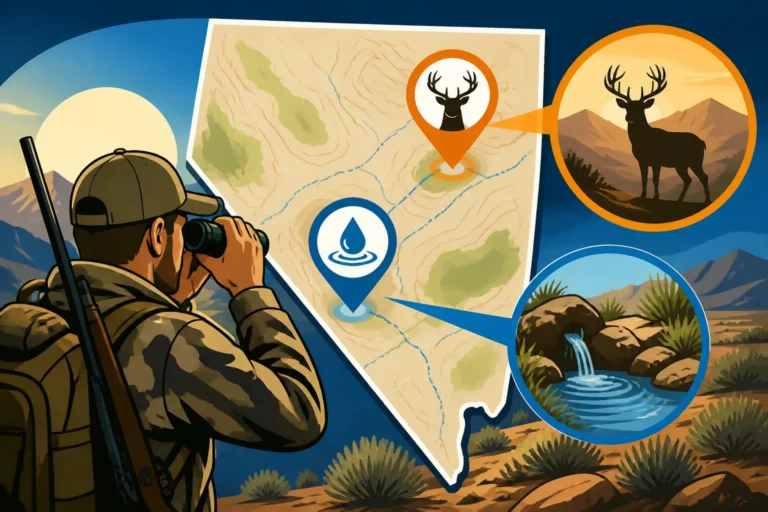
You'll need to study detailed maps that show unit boundaries, land ownership (public vs. private), and topography. This is where e-scouting tools like GoHunt and onX Hunt truly shine. They allow you to overlay unit boundaries directly onto satellite imagery and topographical maps, helping you visualize the terrain and access points from your couch. You can identify potential glassing knobs, water sources, and road networks without burning a drop of fuel. Reading a Nevada Hunt Unit Before You Apply will save you countless hours and frustration. For a day trip, focus on parts of the unit that are closest to a main access road and have a high percentage of public land.
Practical Strategies for Day Hunting Near Ely
A successful day trip isn't just about picking the right unit; it's about smart preparation and efficient execution in the field. Nevada's vastness demands respect and careful planning.
Essential Gear and Preparation
You're only out for a day, but this is still Nevada's high desert. Conditions can change rapidly, and distances are deceptive.
- Water, Water, Water: Even for a day trip, carry significantly more water than you think you'll need. Two liters per person per day is a bare minimum; four is better, especially during early seasons or strenuous activity. Dehydration is a real and dangerous threat here. Water You Must Carry on a Desert Day Hunt is not just advice, it's a survival instruction.
- Optics are King: Binoculars (10x, 12x, or even 15x) are non-negotiable. A spotting scope on a sturdy tripod is highly recommended if you're glassing for deer or antelope across wide basins. You'll spend more time looking through glass than walking, especially on a day hunt where efficiency is key. A good rangefinder is also essential for judging distances in the wide-open country.
- Navigation Tools: A reliable GPS device or a smartphone with a mapping app like onX Hunt is crucial. Download offline maps before you leave cell service. This will help you stay on public land, navigate unmarked roads, and mark crucial waypoints like game sightings or your vehicle. E-Scouting a Nevada Unit Before the Season is where this preparation begins.
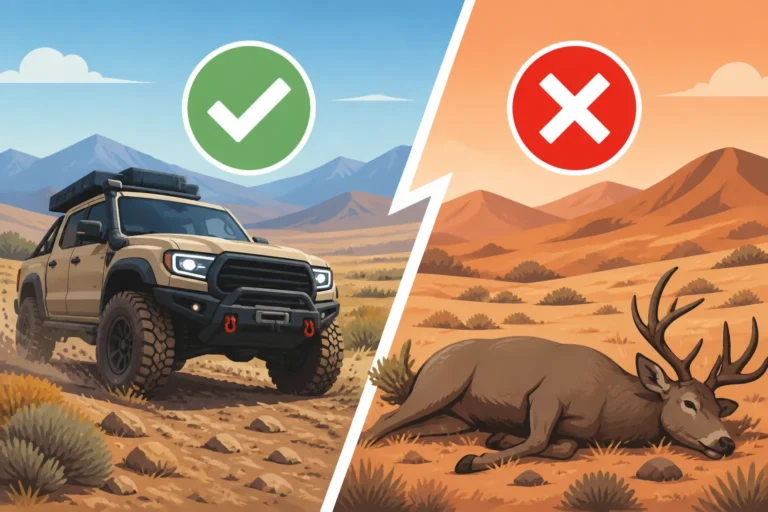
- Vehicle Preparedness: Your vehicle is your lifeline. Ensure it's in top condition, especially tires. Carry a full-sized spare, a tire plug kit, and a small air compressor. Tools for minor repairs, extra fuel, and fluids are also wise. Many "roads" around Ely are simply two-tracks that can become impassable after rain or can be extremely rocky.
Maximizing Your Limited Time
With only a day, every minute counts.
- Pre-dawn Departure: Get out of Ely well before first light. You want to be on your glassing point or at your starting location as the sun rises, ready to spot game moving during the golden hour.
- Strategic Glassing: Don't waste time walking aimlessly. Identify key terrain features from your e-scouting efforts – ridge lines, saddles, draws, and pockets of cover. Find a high vantage point that allows you to survey a large area, then methodically pick it apart with your optics. Spend 30-45 minutes on one spot before moving to the next. The Grid Glassing Method, Step by Step is a great technique to employ.
- Focus on Known Game Hotspots: If you have historical knowledge or have done extensive e-scouting, focus your efforts on areas known for feeding, bedding, or watering. For early seasons, water sources are particularly crucial. For later seasons, south-facing slopes or areas with good winter forage might be more productive.
- Have a Backup Plan: The first spot might not pan out. Have one or two alternative areas in mind within your chosen unit, or even a different unit nearby, that you can quickly move to if your initial plan falls flat.
Leveraging E-Scouting Tools
In Nevada's vastness, electronic scouting is your best friend, particularly for day trips when physical scouting time is limited.
- onX Hunt: This app is indispensable. Not only does it show land ownership, but it also provides topographical maps, satellite imagery, and even historical fire data which can reveal new growth areas attractive to game. Use it to mark potential glassing spots, water sources, and access roads. Before you leave Ely, download all relevant maps for offline use, as cell service will be sporadic to non-existent. You can even use it to mark potential animal bedding areas or travel corridors.
- GoHunt: This platform offers comprehensive draw odds, harvest data, and unit breakdowns that can help you understand the potential of a unit before you apply for a draw tag. While less critical for small game, for big game draw tags, GoHunt's data can inform which units are more likely to offer success or hold trophy animals, guiding your choice of units to focus on for a day trip if you're targeting big game. They also have excellent maps and filters to help narrow down units based on public land percentage and species.
When combining these tools, you can create a highly detailed plan that maps out your drive, your exact glassing points, and even potential stalk routes. This pre-trip work dramatically increases your efficiency on a short day hunt.
Important Considerations for the Ely Hunter
Even with all the preparation, Nevada hunting presents unique challenges that you need to be aware of.
Understanding Public Land Access
While Nevada boasts an impressive amount of public land, primarily managed by the Bureau of Land Management (BLM) and the U.S. Forest Service, navigating it can still be tricky. Around Ely, many large ranches exist in the valleys, and their private property can abut or even checkerboard with public land. Always confirm your location with onX Hunt or similar mapping software to avoid inadvertent trespass. Remember, just because a road looks open doesn't mean it remains public throughout its length. Crossing Private Ground to Reach Public can be a complex issue, so make sure you understand the rules.
Also, be aware of specific regulations regarding motorized vehicle use on public lands. Many areas, especially those designated as Wilderness Study Areas (WSAs) or just areas with sensitive habitat, have restrictions on where you can drive. Stick to established roads and trails. Motorized Travel Rules on Nevada Public Land are important to review.
Road Conditions and Vehicle Preparedness
This cannot be stressed enough. Nevada's backroads are notoriously rough. What looks like a simple dirt track on a map can be a deeply rutted, rocky, or sandy nightmare in reality.
| Consideration | Description | Impact on Day Trip |
|---|---|---|
| Road Quality | Graded dirt, two-track, gravel, washboarded, rocky. Conditions vary wildly by maintenance and recent weather. | Slows travel, increases wear on vehicle, higher chance of flat tires. |
| Cell Service | Extremely limited outside of Ely and major highways. Assume no service. | Essential to download offline maps. Carry satellite messenger for emergencies. |
| Fuel & Services | Distances between gas stations and services can be vast. The closest services might be in Ely or sometimes much further. | Carry extra fuel, water, and emergency supplies. Be self-sufficient. Carrying Extra Fuel on a Nevada Hunt is common practice. |
| Recovery Gear | Shovel, tow strap, tire repair kit, air compressor, jump starter. Potentially a high-lift jack or traction boards. | Getting stuck alone in remote country can be dangerous and costly. |
Always tell someone where you are going and when you expect to return. Many of these roads see very little traffic, and a breakdown could leave you stranded for a long time. Having a good, reliable 4×4 with decent ground clearance is almost a necessity for venturing off the main highways around Ely.
Disclaimer
This article is for general informational purposes only and does not constitute professional advice. Laws, prices and regulations vary by location and change over time. Consult a qualified professional for guidance on your specific situation.