Nevada Mountain Goat Season Timing
Getting a Nevada mountain goat tag feels like winning the lottery, and for good reason—they're incredibly rare, offering a hunt in some of the most spectacular, rugged country. If you've been dreaming of chasing these elusive animals, understanding the precise season timing and the unique challenges involved is your first crucial step. This guide will meticulously break down Nevada's mountain goat seasons, application strategies, and what to expect when you finally draw that coveted tag.
The Elusive Nature of Nevada's Mountain Goats
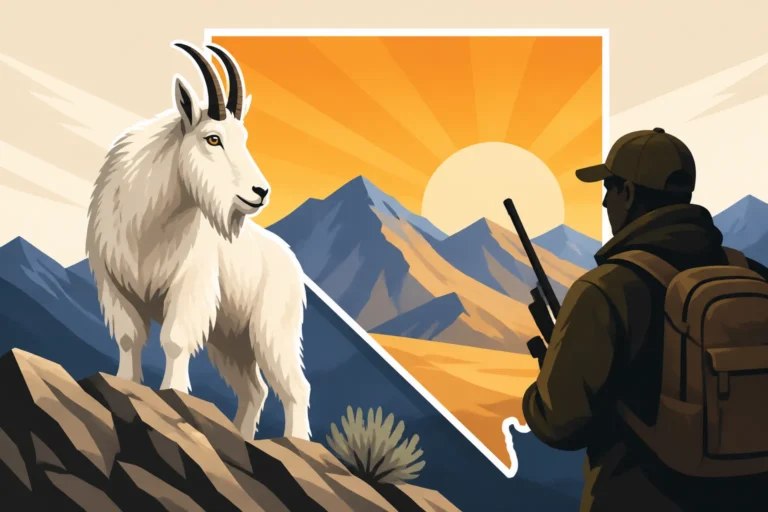
Mountain goats in Nevada are a true testament to the state's diverse and demanding wilderness. Unlike mule deer or even elk, these animals inhabit only the most precipitous, high-altitude terrain, making their populations inherently smaller and their hunts exceedingly difficult to secure. The sheer beauty of their habitat and the challenge of the chase combine to make a Nevada goat tag one of the most sought-after in the West.
Rocky Mountain Goat Population Dynamics
Nevada's mountain goat herds are relatively small, a product of their specific habitat requirements and the history of their introduction. Unlike native bighorn sheep, mountain goats are not indigenous to Nevada. They were successfully introduced in the late 1960s and early 1970s into the Ruby Mountains and later into the Snake Range, with additional transplants aimed at establishing viable populations. Today, these herds are carefully managed to ensure their health and sustainability within these unique, isolated mountain ranges. This careful management is exactly why the number of tags issued each year remains exceptionally low, making drawing one a monumental achievement for any hunter. When you consider the small, localized herds, you quickly understand why the draw odds are so slim for a coveted permit.
Limited Tag Allocation and High Demand
Because of these small, specific populations, the Nevada Department of Wildlife (NDOW) allocates very few mountain goat tags each year. We're talking about a handful of tags, often single digits, across the entire state. This extreme scarcity drives demand through the roof, with thousands of applicants vying for what often feels like an impossible dream. The limited number of tags means that hunters accumulate bonus points for many years, hoping that one day, their number will finally come up in the draw. It's a long game, a true test of patience and persistence, but the reward of hunting one of these magnificent animals in such incredible surroundings is what keeps applicants coming back year after year. For many, simply the chance to hike into the remote areas where these goats live is an adventure in itself, even if a tag never materializes.
Decoding Nevada's Mountain Goat Season Structure
Nevada's mountain goat seasons are carefully structured to align with the species' biology, habitat, and the state's overall big game management goals. These hunts typically take place later in the year, when the goats have moved to slightly lower elevations or are more visible against snowy backdrops, though they never truly abandon their high-country fortresses.
General Season Dates and Timing
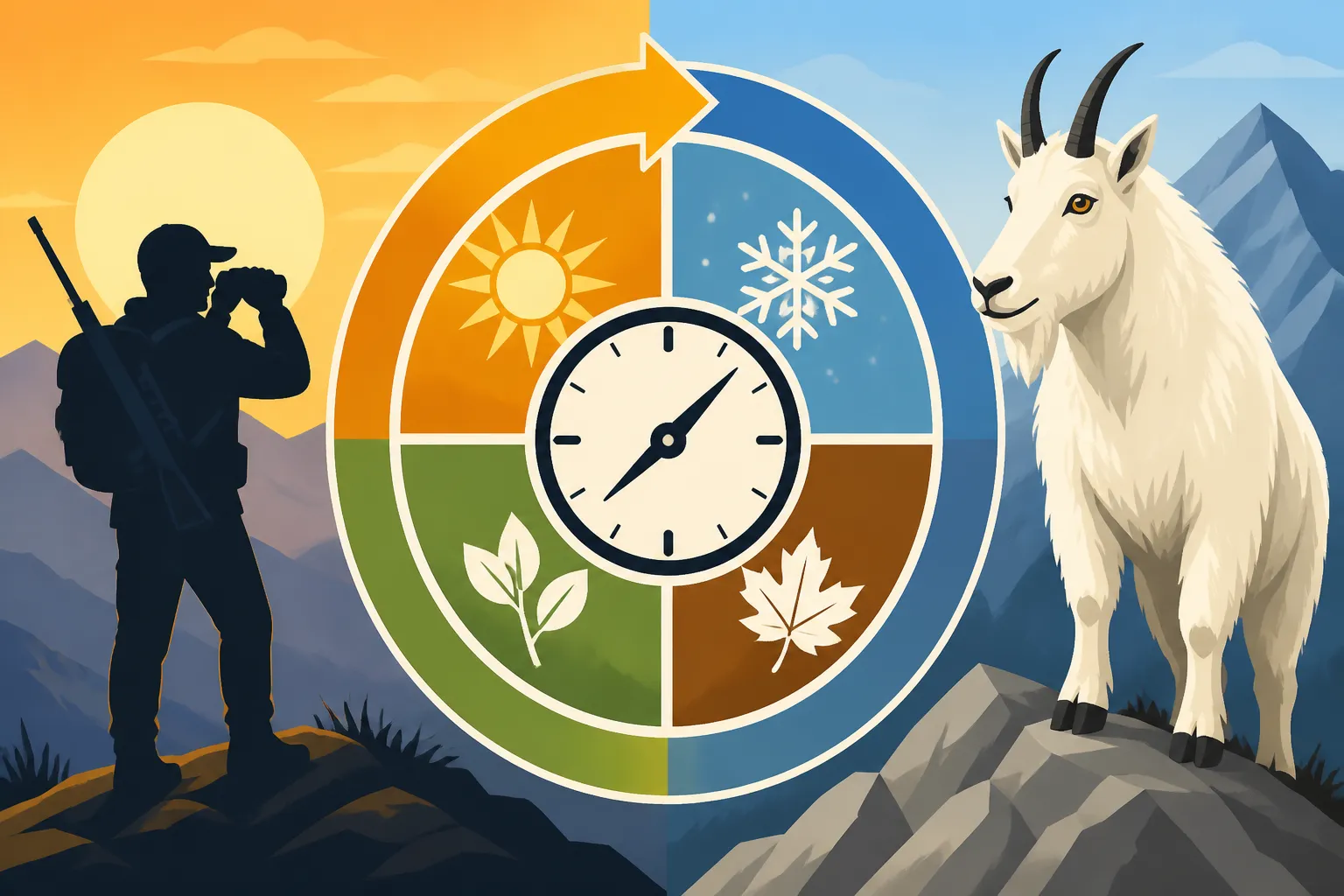
The general season for Nevada mountain goat hunts usually falls in the fall, extending from late September through November, and sometimes even into early December. This timing often allows hunters to experience the crisp, cooler temperatures of autumn and potentially early snowfalls, which can make goats more visible against the white landscape. While exact dates can shift slightly year to year based on NDOW's regulatory cycle, hunters should anticipate a season that typically begins in the last week of September and might run all the way to the first week of December.
This extended season gives successful applicants a decent window to plan their hunt, especially considering the inherent challenges of accessing and hunting these animals in rugged terrain. It also means hunters need to be prepared for a wide range of weather conditions, from mild fall days to severe winter storms that can roll in quickly at high elevations. Understanding when Nevada Mountain Goat Hunts Are Scheduled is critical for planning logistics and physical conditioning.
Unit Specific Timings and Weapon Types
Nevada's mountain goat hunts are unit-specific, meaning that the few tags available are allocated to particular game management units where viable goat populations exist. Currently, the primary units offering mountain goat opportunities are in the Ruby Mountains (Unit 101) and the Snake Range (Unit 261). There might be very limited, if any, tags in other units, and that can change over time. Each unit will have its own specific opening and closing dates, which, while generally within the fall window, can vary by a week or two.
Most mountain goat tags are for general rifle seasons, given the challenging shots often presented in open, steep terrain at long distances. Archery-only seasons for mountain goats are extremely rare, if they exist at all, due to the immense difficulty of getting within bow range of these wary animals in their wide-open, vertical world. However, it's always wise to consult the most current Nevada Big Game Seasons and Regulations guide for precise dates and weapon restrictions for each unit before applying. Hunters will also need to review the specific hunt numbers to understand the exact parameters of the tag they are applying for.
Understanding Unit Boundaries and Terrain Challenges
Drawing a mountain goat tag means you're headed into some of Nevada's most unforgiving yet breathtaking country. Understanding the specific unit boundaries for areas like the Ruby Mountains or the Snake Range is paramount. These aren't your typical sagebrush basins; these are true alpine environments, characterized by jagged peaks, glacial cirques, and incredibly steep, rocky slopes. The terrain itself is a challenge, often requiring technical climbing skills or at least a high degree of comfort with exposure and significant elevation gain.
A crucial part of your pre-hunt strategy will involve meticulously E-Scouting a Nevada Unit Before the Season to identify key features, potential goat hangouts, and, most importantly, feasible access routes. You'll spend hours pouring over topographical maps and satellite imagery, looking for benches, saddles, and drainages that might offer a path through the vertical maze. Access to these units is often limited to rough, high-clearance roads that may only be open seasonally, further complicating logistics. Even once at a trailhead, expect significant hiking, often off-trail, just to reach goat country.
Applying for a Nevada Mountain Goat Tag
The application process for a Nevada mountain goat tag is part of the larger big game draw, which is notorious for its complexity and low odds, especially for premium species like mountain goats. It's a process that requires attention to detail, a clear understanding of the bonus point system, and a healthy dose of optimism.
Application Process Overview
Applying for a Nevada mountain goat tag is integrated into the state's main big game draw, which opens in March and typically closes in May. Anyone born after 1959 needs Nevada Hunter Education, or an equivalent from another state, to be eligible. The application itself is submitted online through the NDOW license portal. You'll need a valid Nevada hunting license and then select your species choices. For mountain goat, you'll list your preferred unit and season choice, remembering how incredibly rare these tags are. The application system allows you to purchase a "point only" if you don't wish to apply for a tag but still want to build your bonus points, a common strategy for goat and sheep hunters.
The system will prompt you for your choices, and you'll typically rank them by preference. Unlike some states, Nevada charges the full tag fee upfront when you apply, and this fee is refunded if you are unsuccessful in the draw, minus a small, non-refundable application fee. It's a significant financial commitment to apply for a tag that could cost well over a thousand dollars for non-residents. Keep a close eye on the calendar for When Nevada Big Game Applications Open and the hard deadline for submission.
Draw Odds and Strategy
Let's not sugarcoat it: Nevada Mountain Goat Draw Odds are among the toughest in the West. With only a handful of tags issued annually and thousands of applicants, the odds of drawing in any given year are often less than 1%. This is where Nevada's squared bonus point system becomes both a source of hope and frustration. The system is designed to give applicants with more points a significantly better chance by squaring their accumulated points. So, while 10 points give you 100 chances, 20 points give you 400 chances, exponentially increasing your opportunities compared to those with fewer points.
Despite this, it's not a true "preference point" system where the highest points automatically draw. It's still a lottery, just one where your lottery tickets multiply with points. Many seasoned hunters use tools like GoHunt to meticulously analyze historical draw data, success rates, and the number of tags issued per unit. This data can help inform your unit choices, though for mountain goats, the choice often comes down to simply applying for any goat tag, given their scarcity. Don't be discouraged by the low odds; every year, someone draws that dream tag.
Leveraging GoHunt and Other Scouting Tools
In the quest for a Nevada mountain goat tag, every edge counts, and this extends beyond the draw itself into the realm of preparation. Modern hunting tools, like the comprehensive platform offered by GoHunt, provide invaluable data that can inform your application strategy and eventual hunt planning. GoHunt's Insider service, for instance, offers detailed draw odds broken down by unit, resident/non-resident status, and points tier, allowing you to see exactly where your accumulated bonus points might stack up. This kind of data analysis is crucial for understanding the historical likelihood of drawing in specific units, even if those odds remain minuscule for mountain goats.
Beyond the application phase, these digital tools become indispensable for pre-scouting. Once you've beaten the odds and drawn a tag, you'll want to dive deep into satellite imagery, topographical maps, and public land ownership layers. Services like onX Hunt or Gaia GPS, often integrated with or complementary to platforms like GoHunt, allow you to visualize the extreme vertical terrain of mountain goat country from your living room. You can identify potential bedding areas, escape routes, water sources, and even possible pack-out routes. Given the minimal road access and incredibly rugged nature of these units, thoroughly Reading a Nevada Hunt Unit Before You Apply and planning your approach using these digital resources will save you invaluable time and effort in the field.
| Nevada Mountain Goat Application & Season Key Dates | Typical Timeline | Notes |
|---|---|---|
| Application Period Opens | Early March | Online via NDOW portal, requires valid license |
| Application Deadline | Early to Mid-May | Exact date varies, often a Friday by 5 PM PT |
| Draw Results Announced | Late May / Early June | Notified via email/account, check actively |
| Archery Season Dates (if available) | Typically None | Very rare for mountain goat, consult regulations |
| Rifle Season Dates (General) | Late September – Early December | Unit-specific, check regulations for exact dates |
| Bonus Point Purchase Window | July 1 – October 31 | Point-only option for non-applicants |
Key Considerations for a Nevada Mountain Goat Hunt
Drawing a mountain goat tag is only the first step; the real work begins when you start planning for the hunt itself. These are not hunts for the faint of heart, demanding peak physical condition, robust gear, and an unwavering mental fortitude.
Terrain and Access Challenges
The phrase "mountain goat country" immediately conjures images of dizzying heights and impossible angles, and Nevada's goat habitat lives up to that reputation. We're talking about hunting in the highest reaches of the Ruby Mountains and the Snake Range, where elevations routinely exceed 10,000 feet and the air is thin. The terrain is characterized by steep, scree-covered slopes, sheer rock faces, and deep, shadowed canyons. Footing is often treacherous, with loose rock, precarious ledges, and hidden hazards around every bend.
Vehicle access is minimal, often limited to rough dirt roads that may require 4×4 and high clearance, leading to trailheads that are still miles and thousands of feet below where the goats actually live. From there, it's all on your feet. Expect days filled with grueling ascents and careful descents, often with a heavy pack. You'll likely encounter challenging sections that push your physical and mental limits. This type of hunting isn't about covering vast distances horizontally; it's about gaining vertical feet and navigating truly technical ground.
Weather Variability and High-Altitude Conditions
Hunting in Nevada's high country during the fall and early winter means being prepared for anything Mother Nature can throw at you. A sunny, crisp autumn morning can quickly turn into a raging blizzard, trapping hunters in exposed terrain. Temperatures can swing wildly, from comfortable daytime highs to bitter, freezing nights, often dropping below zero. High winds are a constant companion, especially on exposed ridges and peaks, making glassing difficult and chilling you to the bone.
Rain can quickly turn trails into slick, muddy hazards, and snow can obscure already tricky footing. You'll need to be equipped with a robust layering system, capable of adapting to rapid changes in conditions. Think high-quality base layers, insulating mid-layers, and bomb-proof outer shells that are both waterproof and windproof. Preparing Physically for Long Glassing Days and carrying appropriate gear for Layering for Basin and Range Temperature Swings is not just good practice, it's a matter of safety. Hypothermia is a real threat in these environments, as is dehydration at altitude. Constant vigilance of the weather forecast and the ability to adapt your plans on the fly are non-negotiable for a successful and safe mountain goat hunt.
The Role of Optics in Spotting Goats
In the vast, open, and incredibly broken terrain of Nevada's mountain ranges, your optics are not just an accessory; they are arguably the most critical piece of gear you'll carry. Mountain goats, despite their striking white coats, blend surprisingly well into the snow and light-colored rock of their high-alpine habitat. They often bed down on tiny ledges or in shadows, making them incredibly difficult to spot with the naked eye.
This is where a high-quality spotting scope and a pair of powerful binoculars become indispensable. You'll spend countless hours meticulously Glassing Grids Across a Nevada Basin or a vast mountainside, patiently picking apart every rock outcropping, every snowfield, and every pocket of timber. The sheer scale of the landscape demands Optics Power for Nevada's Long Sightlines, allowing you to identify a tiny white speck on a distant peak and then discern if it's a goat, a rock, or a patch of snow. A sturdy tripod for your spotting scope is non-negotiable, providing the stability needed for long, sustained glassing sessions in windy conditions. Often, it's only through this rigorous optical examination that you'll locate the elusive animals, allowing you to then plan an agonizingly slow and careful stalk through the treacherous terrain.
Preparing for a High-Altitude Mountain Goat Hunt
Once you've drawn that coveted tag, the real work begins. A Nevada mountain goat hunt is not a casual endeavor; it demands a high level of physical and mental preparation to safely and successfully navigate the extreme environment these animals call home.
Physical Conditioning and Stamina
Let's be blunt: a mountain goat hunt is one of the most physically demanding big game hunts you can undertake. The average hunter, even those in good shape, will be challenged by the relentless vertical climbs, the thin air, and the arduous descents over unforgiving terrain. Your preparation should begin months in advance, focusing on building both cardiovascular endurance and muscular strength, particularly in your legs and core.
Think beyond just jogging. Incorporate intense hiking with a weighted pack, mimicking the weight you'll carry during the hunt. Seek out steep inclines, stadium stairs, or even a stair climber at the gym. Practice ascending and descending uneven terrain. Don't neglect strength training for your quads, hamstrings, glutes, and calves, as these will bear the brunt of the work. Remember, you'll be doing all of this at high altitude, where oxygen is scarce. If possible, spend some time in high-elevation environments before your hunt to acclimatize, even if it's just a weekend trip. Proper hydration and nutrition during your training are also key to maximizing your performance and avoiding injury in the field.
Essential Gear and Pack Systems
Your gear choices can literally make or break a mountain goat hunt. Every item in your pack needs to be lightweight, durable, and perform reliably in extreme conditions. Your pack itself is crucial—opt for a high-quality, comfortable backpack capable of carrying heavy loads, not just your daily essentials but also potentially a goat hide, head, and meat. When it comes time for Packing an Animal Out of Roadless Country, a capable pack system is your best friend.
Footwear is another non-negotiable category. Invest in sturdy, waterproof, high-ankle mountaineering boots that provide excellent support and traction on rocky, steep, and potentially snowy terrain. Break them in thoroughly long before your hunt. Other essential items include a robust layering clothing system, as discussed earlier, a high-quality tent or shelter that can withstand high winds and snow, a compact sleeping system rated for freezing temperatures, and a reliable water filtration system. Navigation tools, including a GPS device, satellite communication device (like a Garmin inReach or Zoleo), and paper maps with a compass, are also critical, as cell service will be nonexistent in most goat hunting areas. Headlamps, first-aid kits, and sufficient high-calorie food are also paramount. Every ounce counts, but never at the expense of safety or essential functionality.
Scouting and On-Mountain Tactics
Beyond the e-scouting you've already done, nothing beats getting boots on the ground if you have the opportunity before the season. Even a quick pre-season trip to familiarize yourself with the terrain, verify access, and identify potential goat sign can be invaluable. However, for many, the actual hunt is the first time they'll truly be in the unit.
Once on the mountain, the primary tactic for mountain goats is patient, thorough glassing. Goats often move slowly and can bed for long periods, making them difficult to locate. Dedicate yourself to methodically Glassing Nevada's Basin and Range for Mule Deer, and goats, from every vantage point. Once an animal is spotted, the stalk begins. This will involve an incredibly slow, deliberate approach, using every contour, rock, and patch of cover to break your silhouette and mask your movement. Goats have exceptional eyesight and are notoriously wary. Playing the wind is critical, as they can also detect scent from a remarkable distance. Shots are often long and steep-angled, demanding precision marksmanship. Be prepared for multiple stalks, aborted attempts, and the likelihood of needing to climb even higher than you thought possible. This is a game of patience, stealth, and unwavering determination.
From Glassing to Pack Out: On the Mountain Goat Hunt
The climax of years of applying and months of rigorous preparation culminates in the actual hunt. This is where your skills, gear, and mental toughness are truly put to the test, from the moment you spot your goat to the challenging process of packing it off the mountain.
Ethical Shot Placement and Recovery Challenges
Once you've successfully completed a stalk and are within ethical shooting range, making a clean, decisive shot is paramount. Mountain goats are incredibly tough animals, and their preferred habitat often means that a poorly placed shot can result in a lost animal in impossibly steep terrain. Aim for the vitals, typically a shot that takes out both lungs and potentially the heart, to ensure a quick and humane harvest. Practice shooting at various inclines and declines before your hunt, as you'll rarely find a flat shooting platform in goat country. Account for bullet drop and wind, and only take a shot you are 100% confident in.
After the shot, the recovery can be as challenging, if not more so, than the hunt itself. A goat that drops in place is a blessing, but often, they will tumble or move to an even more inaccessible spot. Carefully mark the last known location and the direction of travel. Approach with caution, being mindful of loose rock and steep slopes. Retrieving a goat from a sheer cliff face can be dangerous, sometimes requiring specialized equipment or even professional assistance. Always prioritize safety over recovery, and never put yourself in an unnecessarily risky situation.
Field Dressing and Meat Care in Remote Areas
Once you've reached your downed goat, the work of field dressing and meat care begins immediately. Depending on the time of year, temperatures at high elevation can be quite cold, which helps preserve the meat, but it's still crucial to act efficiently. Remove the hide, head, and all internal organs quickly to allow the carcass to cool. Mountain goats are not huge animals, but they are dense, and the hide can be surprisingly thick. Ensure you save the hide with the head attached for proper caping if you plan on taxidermy, as well as evidence of sex requirements for tagging.
Given the remote nature of these hunts, you'll almost certainly be quartering the animal for the pack out. This involves breaking the goat down into manageable pieces, typically four quarters, the backstraps, and the tenderloins. If you have the capacity, carrying game bags for each piece of meat is highly recommended to keep it clean and protected. Keep the meat off the ground and in the shade to cool as rapidly as possible. Proper field care is essential not only for preventing spoilage but also for honoring the animal and ensuring you bring home high-quality wild game meat.
The Long Pack Out
The pack out is often the most grueling part of a mountain goat hunt. What took hours or even days to ascend will now need to be descended, often with a heavy, awkward load. You'll likely be carrying 50-70+ pounds of meat, hide, and antlers, in addition to your regular gear, over extremely difficult terrain. This is where all that physical conditioning truly pays off. Take frequent breaks, stay hydrated, and be incredibly deliberate with every step to avoid falls or injuries.
Planning your pack-out route during the stalk, if possible, can be a lifesaver. Look for the path of least resistance, even if it adds a little distance. Remember, a shorter, safer route is always preferable to a direct but dangerous one. Having a hunting partner is invaluable for sharing the load and ensuring safety. Depending on the distance and difficulty, a pack out can take an entire day or even longer, often requiring a spike camp if you're deep in the wilderness. Successfully Packing a Buck Out of Roadless Country is a monumental achievement, a final physical challenge that solidifies the unforgettable experience of a Nevada mountain goat hunt.
Disclaimer
Please remember that hunting regulations, season dates, and unit boundaries can change. Always consult the most current Nevada Department of Wildlife (NDOW) regulations and official proclamations before planning and undertaking any hunting activities. This article is intended for informational purposes only and should not be considered a substitute for official legal documents or expert guidance.