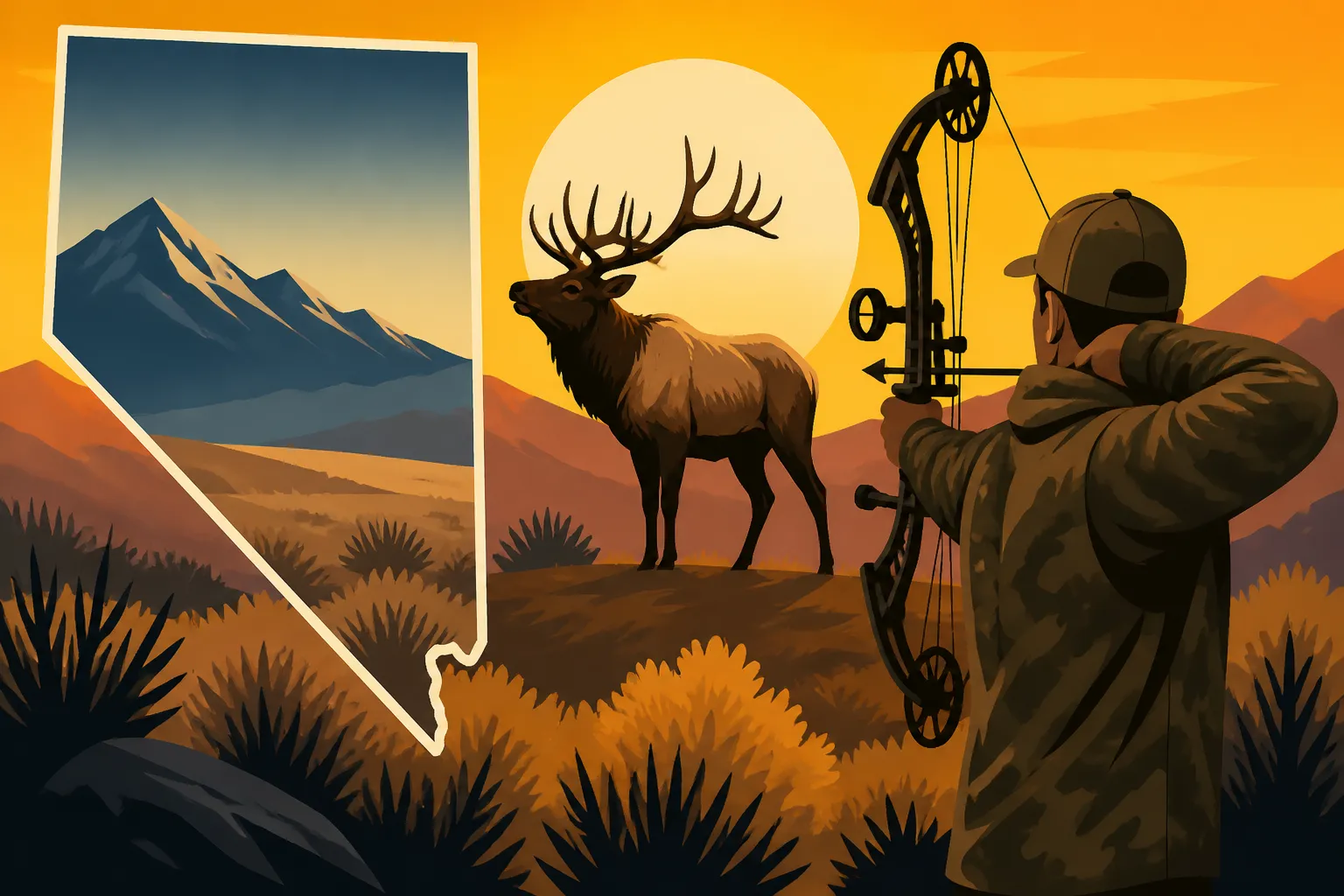
When Nevada Elk Archery Season Runs
Trying to figure out the exact dates for Nevada's big game seasons can often feel like you're staring at a riddle written in code, especially when you're specifically hoping to chase elk with a bow. This guide is designed to demystify the process, clearly laying out when Nevada's archery elk season typically runs and giving you the crucial details you need to plan your hunt effectively.
Navigating Nevada's Elk Archery Season Dates
Nevada's elk archery season isn't a single, uniform block of time across the entire state. Oh no, that would be far too simple, wouldn't it? Instead, the Nevada Department of Wildlife (NDOW) designs seasons that are highly specific to individual hunt units, and sometimes even within those units, you'll find different archery windows. This unit-by-unit approach is put in place to manage herd health and hunting pressure, but it certainly adds a layer of complexity for us hunters trying to make sense of it all. Generally, you're looking at prime opportunities in the late summer and early fall, when bull elk are vocal and active.
General Season Framework
When we talk about the general framework for Nevada's archery elk season, we're mostly talking about a window that opens up in late August and stretches into September. This timing is absolutely critical because it often coincides with the pre-rut and the very beginning of the full-blown rut, depending on the unit and the year. Imagine standing on a sagebrush ridge at dawn, a crisp chill in the air, listening for that first locator bugle – that's the dream, and it's what these early archery seasons deliver.
The exact dates can, and often do, shift slightly from year to year. NDOW releases its official Big Game Season and Application Guide annually, and that's your bible for the current year's dates. But for planning purposes, you can typically bank on those late August and most of September dates as your target for archery elk. There are often "early" archery hunts that might start a bit before the main September window, and then "late" archery opportunities that might overlap with muzzleloader or even early rifle seasons in some units, especially if they are cow tags or less-pressured areas. It's a strategic dance by the state to maximize opportunity while managing herd objectives.
Unit-Specific Variations and Their Impact
This is where the rubber meets the road. Simply knowing "August and September" isn't enough for Nevada. Every unit has its own unique character, its own elk population dynamics, and therefore, its own specific season dates. For instance, some units might have an archery season that runs from August 20th to September 7th, while another unit might run from September 1st to September 20th, and yet another might have two distinct archery windows – an early one and a later one for different tag types (like bull vs. antlerless).
These variations are based on careful analysis by NDOW biologists, considering factors like migration patterns, calving seasons, and even past harvest data. For the archer, this means you absolutely must drill down into the specific hunt code you're applying for. You can't just assume. Tools like the comprehensive data available on platforms like GoHunt become invaluable here, allowing you to quickly filter and sort through the myriad of unit codes and their corresponding dates without flipping through hundreds of pages of regulations. Understanding these nuances is paramount, as a drawn tag in the wrong unit or for the wrong date simply won't work for your planned hunt. Don't forget to check the official NDOW regulations for the current year for the most accurate information on each unit's specific archery dates.
The Nevada Elk Archery Draw Process
Even if you know exactly when the season runs, you can't hunt without a tag, and getting an elk tag in Nevada is almost exclusively through a draw system. This process is highly competitive, especially for nonresident hunters and for those coveted bull tags in prime units. Understanding the draw and its timeline is just as critical as knowing the season dates themselves, because if you miss a deadline or misunderstand a hunt code, your archery dreams for the year are over before they begin.
Application Deadlines and Point System
The application period for Nevada's big game draw typically runs from late March to mid-May each year. Missing this window means you'll have to wait another year, so mark your calendar in permanent ink! The exact closing date in May is a hard deadline, and there are no exceptions. This is the period when you log into your NDOW account, select your hunt choices, and submit your application. It’s also when you decide whether to apply for a tag or just purchase a bonus point.
Nevada utilizes a squared bonus point system, which means the more points you have, the exponentially better your odds become. For example, if you have two points, your application is essentially entered four times (2×2). With three points, it's nine times (3×3), and so on. This system heavily favors those who have been consistently building points, making it a long-term strategy for many hunters. While it might seem daunting, consistently applying or at least purchasing a point each year is how you eventually stack the odds in your favor for a premium archery elk tag. Many hunters use resources like GoHunt to analyze historical draw odds, which can help inform their application strategy and choice order, maximizing their chances given their point accumulation. Learning more about how Nevada Squares Your Bonus Points Into Draw Chances can really clarify this system.
Understanding Hunt Codes and Choices
The Nevada draw system relies on specific "hunt codes" to designate a particular species, weapon type, unit, and season date combination. For instance, a hunt code like "ELKBA010" might indicate an Elk (ELK), Archery (BA), in Unit 010 (a specific geographical area). But it's more complex than that. Often, the season dates are embedded within the final digits of the hunt code itself, or explicitly stated in the regulations next to it. You might see multiple archery hunt codes for the same unit, but for different timeframes (e.g., an early archery bull hunt vs. a later archery antlerless hunt).
When you apply, you typically get to list up to five choices, in order of preference. Your first choice is obviously the one you want the most, but it’s crucial to make realistic choices for your second, third, and subsequent options. A common mistake is to only apply for the highest demand, low-odds units and then have nothing as a backup. Researching past draw statistics, which show how many points it took to draw each hunt code, is essential. This careful consideration of Choice Order Strategy in the Nevada Draw can drastically impact your success. Remember, even if your first choice is a long shot, a smart second or third choice might be a much more attainable tag, still offering a fantastic archery elk experience.
Here's a simplified look at the typical application timeline:
| Event | Typical Window | Key Action for Hunters |
|---|---|---|
| Application Period Opens | Mid-to-Late March | Start researching units, hunt codes, and draw odds. |
| Application Period Closes | Mid-May | Submit your application or purchase a bonus point. |
| Draw Results Announced | Late May / Early June | Check your results and plan your hunt if successful. |
| Archery Season Opens (Early) | Late August (Unit Dependent) | Start scouting, dialing in gear, and conditioning. |
| Archery Season Peak (Rut) | Early to Mid-September (Unit Dep.) | Prime time for bugling and active elk. |
| Archery Season Closes (Late) | Late September (Unit Dependent) | Last chances for archery success. |
Note: These dates are general and subject to change. Always consult the current NDOW regulations.
Essential Gear and Preparation for Nevada Archery Elk
Once you've navigated the draw and hopefully secured that coveted tag, the real work begins. Nevada's elk country is stunningly beautiful but unforgiving, demanding robust gear and a serious commitment to physical and mental preparation. Archery hunting, in particular, requires you to get incredibly close to your quarry, which amplifies every challenge inherent in hunting the Great Basin's rugged terrain.
Minimum Bow Requirements and Broadheads
Before you even step foot in the field, make sure your archery setup meets Nevada's legal requirements. For big game, including elk, Nevada has specific regulations regarding bow draw weight and broadhead types. While exact numbers can vary by state, Nevada typically requires a minimum draw weight, often around 40 pounds, for hunting big game. This ensures enough kinetic energy for a humane kill. Always verify the current Minimum Bow Draw Weight for Big Game directly in the NDOW regulations.
Beyond draw weight, broadhead rules are equally important. You cannot just use any arrow tip. Nevada mandates broadheads that are sharpened, fixed-blade or mechanical designs, and they must meet certain cutting diameter and blade count specifications. Expandable broadheads, for example, are legal in Nevada, but they must meet the state's minimum cutting diameter requirements when deployed. It’s absolutely vital to confirm your chosen broadhead is compliant. Using an illegal broadhead, even accidentally, can result in fines and the loss of your animal. Take the time to practice with your hunting broadheads before the season, ensuring they fly true and that you are confident in your setup's performance.
Physical Demands and Wilderness Preparedness
Nevada elk hunting is not a stroll in the park; it's a marathon in the mountains. The terrain is often steep, rocky, and covered in dense sagebrush, pinyon, and juniper. Elevations can range from 7,000 to well over 10,000 feet, which can be a shock to those not accustomed to high-altitude exertion. Moreover, August and September can still bring surprisingly hot days, especially in southern units, making hydration and heat management critical. You might be hiking miles each day, often with a heavy pack, in pursuit of animals that are masters of their environment. This is why Preparing Physically for Long Glassing Days and the arduous stalks that follow is paramount.
Your physical fitness directly correlates to your success and safety. Start an intensive training regimen months before your hunt, focusing on cardiovascular endurance, leg strength, and carrying weight. Pack an emergency kit, first aid supplies, navigation tools (GPS, map, compass), and sufficient Water You Must Carry on a Desert Day Hunt. Cell service is virtually nonexistent in much of Nevada's backcountry, so a satellite messenger or inReach device like a Garmin inReach is not just a luxury, but a vital piece of safety equipment. Familiarize yourself with how to use it before you're in an emergency situation. Being prepared means you can focus on the hunt, not on surviving the elements.
Scouting and Tactics for Archery Elk in Nevada
Successfully archery hunting elk in Nevada, especially during those early bugling seasons, hinges on effective scouting and employing the right tactics for the open, often sparse, terrain. It's a game of patience, stealth, and keen observation. Unlike denser timber environments, Nevada's open country demands a different approach.
Pre-Season Scouting and E-Scouting Tools
Gone are the days when you could just show up on opening morning and expect to find elk. For Nevada, pre-season scouting is absolutely non-negotiable. If you can, make a trip (or several) to your chosen unit months before the season. Look for water sources, historical elk bedding areas, travel corridors, and recent sign. Pay attention to how the elk are using the terrain – are they high in the mornings, dropping to cover during the day, or using specific draws for travel?
For those of us who can't spend endless weeks in the field, e-scouting has become an indispensable tool. Platforms like Google Earth, Gaia GPS, and the detailed layers available on GoHunt allow you to dissect a unit from the comfort of your home. You can identify potential glassing points, analyze topo maps for hidden pockets, locate watering holes, and even mark potential camping spots. Look for north-facing slopes where elk might bed during hotter weather, or areas with thicker timber for cover. Understanding E-Scouting a Nevada Unit Before the Season can save you days of aimless wandering and put you right in elk country when the season opens. Compare this digital data with historical harvest reports and draw odds, often available on NDOW's website or aggregated by GoHunt, to build a comprehensive picture of your unit.
Calling Strategies and Terrain Challenges
Archery elk hunting during the rut in Nevada often involves calling. However, the open nature of much of the Great Basin means your calling strategy needs to be adapted. Loud, aggressive bugles might carry for miles, but they can also alert elk to your exact location from a long distance, making a close approach difficult. Often, more subtle locator bugles, cow calls, or even raking a tree to simulate a bull thrashing, are more effective for drawing a bull closer without immediately giving away your position. Knowing When the Elk Rut Peaks in Nevada helps determine how aggressive your calling should be.
The terrain itself presents significant challenges. Wide-open sage flats offer little cover, making a stealthy approach incredibly difficult. You'll need to master using every small dip, rim, or clump of juniper to break up your silhouette and close the distance. Learning to Reading Wind on a Long Sage Stalk is crucial, as swirling winds can bust you in an instant. Sometimes, the best strategy is to be patient, glass from a distance, and wait for the elk to move into more favorable terrain before attempting a stalk. Or, conversely, to move quickly and aggressively when the sound of bugling bulls gives you a clear indication of their location, using the cover of draws and creek beds to cut the distance. Success often boils down to a blend of calculated risk and extreme patience.
Conclusion
Understanding when Nevada's elk archery season runs is just the first step in a complex but incredibly rewarding journey. From deciphering the unit-specific dates and navigating the competitive draw process to preparing your gear and body for the strenuous demands of the Great Basin, every detail matters. With careful planning, thorough scouting, and a solid understanding of the regulations, you'll be well on your way to experiencing the thrill of chasing bugling bulls in Nevada's stunning backcountry.
Disclaimer
The information provided in this guide is for general informational purposes only and is subject to change. Hunting regulations, season dates, and application procedures are determined by the Nevada Department of Wildlife (NDOW) and can vary annually. It is the responsibility of every hunter to consult the most current official NDOW Big Game Season and Application Guide and other relevant regulations before applying or hunting. Relying solely on third-party information may lead to errors or non-compliance.