Nevada Squares Your Bonus Points Into Draw Chances
Navigating Nevada's big game draw can feel like trying to decipher an ancient riddle, especially when you start diving into how those precious bonus points actually work. Many hunters get incredibly frustrated seeing low draw odds year after year, wondering if their accumulated points are making any real difference. This guide is here to unravel the mystery of Nevada's squared bonus point system, helping you understand its unique mechanics and how to strategically use it to boost your chances of drawing that dream tag.
Understanding the Nevada Draw System's Complexity
It’s no secret that drawing a premier big game tag in the Silver State is tough. The demand far outstrips the supply, leading to draw odds that can feel disheartening. What makes Nevada's system particularly unique, and often confusing for those accustomed to other western states, is how it handles those hard-earned bonus points. It's not just a straight accumulation; there's a mathematical twist that can dramatically alter your perspective on the draw.
The Frustration of Low Odds
For many, the annual Nevada draw is a cycle of anticipation followed by disappointment. You apply, you wait, and then the results come out, often showing you didn't draw, even with a handful of points. This can be incredibly disheartening, making you question if the effort of building points is truly worth it. It’s easy to feel like you’re just throwing money into a black hole, especially when you see those "0.5% success rate" numbers for the units you've been dreaming of. The sheer volume of applicants for coveted species like trophy mule deer or bull elk means competition is fierce, and a standard point system might not feel like it moves the needle much. Hunters invest time in scouting, researching units, and dreaming of specific hunts, only to be met with the cold reality of the draw statistics. This frustration is a completely valid part of the Nevada hunting experience for many.
Why Nevada's System is Unique (Squared Points)
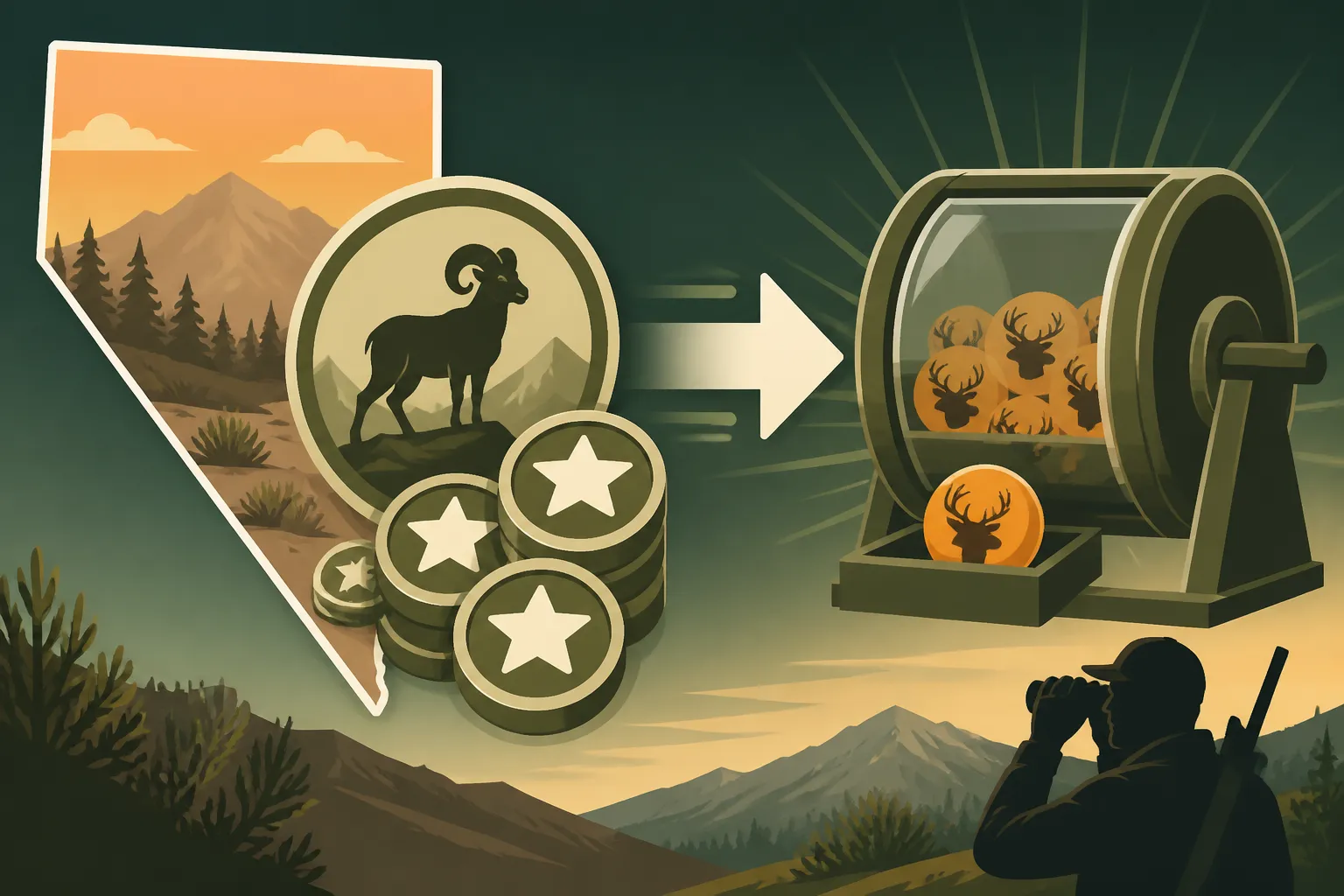
Unlike some states where each point simply adds one entry into the draw, Nevada implements a "squared" bonus point system. This isn't just a quirky detail; it fundamentally changes the value and impact of your points. Instead of your points being 'X' entries, they become 'X-squared' entries. So, if you have 1 point, you get 1 chance (1×1). But if you have 4 points, you don't get 4 chances; you get 16 chances (4×4). Ten points? That's 100 chances (10×10)! This system heavily favors those who consistently apply and build up a significant number of points over time. It's designed to reward loyalty and persistence, creating an exponential increase in your odds as your point total grows. This is why you'll often hear experienced Nevada hunters emphasize the long game when it comes to the draw. They understand that while initial point accumulation feels slow, the exponential growth eventually pays off handsomely. It’s a stark contrast to states that use a pure preference point system where the highest point holders draw first, or a pure lottery where everyone has an equal chance regardless of history.
The Mechanics of Nevada's Bonus Point System
Understanding the actual mechanics of how these points are acquired, squared, and applied to your application is crucial for anyone hoping to hunt big game in Nevada. It’s not just about applying; it’s about applying smart. The system is designed to reward dedication, but you need to know the rules to play the game effectively.
How Bonus Points Are Earned
Earning bonus points in Nevada is relatively straightforward, but it requires consistency. Each year you apply for a big game tag and are unsuccessful in drawing your first choice, you are awarded one bonus point for that species. This point is then added to any points you've accumulated in previous years for that specific species. It’s important to remember that these points are species-specific; a bonus point for mule deer won't help you draw an elk tag, and vice-versa. If you don't apply for a particular species in a given year but wish to retain and continue building points, you have the option to submit a "point-only" application. This ensures your existing points don't lapse and allows you to add one more to your tally without actually entering the draw for a tag. This flexibility is key for hunters who might be taking a year off from actively hunting but still want to increase their long-term odds. This process helps ensure that when you are ready to apply for a tag, you have the strongest possible chance. For more details on this, check out Buying Nevada Points Without Applying to Hunt.
The "Squared" Advantage Explained
This is where Nevada's system truly differentiates itself. When your application enters the draw, your total accumulated bonus points for that species are squared. As mentioned earlier, if you have 1 point, you get 1 entry (1×1). With 2 points, you get 4 entries (2×2). With 5 points, you get 25 entries (5×5). And with 10 points, you get 100 entries (10×10)! This exponential growth means that the difference between having a few points and having many points is not linear; it's vast. A hunter with 5 points has significantly more than five times the chances of a hunter with 1 point. This system ensures that while everyone has a chance, those who have been playing the long game have a vastly improved mathematical probability of drawing a tag as their point totals increase. It truly makes every successive point more valuable than the last. Understanding this mechanism is vital for appreciating why patience is so important in the Nevada draw.
The Impact of Multiple Choices
Nevada's application allows you to list up to five choices for each species. While it might seem like a good idea to fill all five slots, it's critical to understand how the bonus point system interacts with these choices. Your bonus points are only applied to your first choice. If you don't draw your first choice, your application is then considered for your second, third, and subsequent choices, but without the benefit of your squared bonus points. These later choices are essentially treated as pure lottery applications, offering the same odds as someone with zero points. This means that if you're seriously trying to capitalize on your accumulated points, you need to put your most desired unit and hunt period as your first choice. The strategy then becomes whether to use subsequent choices on units with generally higher odds (even if less desirable) as a backup, or to leave them blank if you're only interested in drawing a top-tier hunt that absolutely requires your points. This nuanced approach to secondary choices is a common point of confusion for new applicants, often leading to wasted application opportunities if not properly understood.
Accumulating and Managing Your Nevada Bonus Points
Successfully navigating the Nevada draw means more than just applying; it involves a thoughtful strategy for accumulating and managing your bonus points over the long haul. It's a commitment that pays off for those with patience.
Buying Points Without Applying to Hunt
Life happens, and sometimes you can't commit to a hunt in a given year, or perhaps you're simply building points for a truly once-in-a-lifetime tag. Nevada offers a fantastic option for these scenarios: you can purchase a bonus point without actually entering the draw for a tag. This "point-only" application ensures that your bonus point accumulation continues uninterrupted. It's an often-underestimated strategy for nonresident hunters, especially, who might have limited travel windows or simply aren't ready to invest in a full hunt yet. By consistently purchasing points each year, even when not applying for a tag, you dramatically increase your future draw odds. This small annual investment can prevent the disheartening experience of letting your hard-earned points lapse or losing out on another year of exponential growth. Just make sure to mark your calendar for the Nevada Applications Run March 23 to May 13 period to ensure you don't miss the deadline for these point-only applications. For a deeper dive into this specific strategy, check out Buying Nevada Points Without Applying to Hunt.
What Happens to Points When You Draw a Tag
This is a critical piece of information that every Nevada applicant needs to understand: when you successfully draw your first choice for a big game tag, your accumulated bonus points for that specific species are zeroed out. This means you start over at zero points for that species in subsequent draws. This "use it or lose it" aspect applies only to the species for which you drew. Your bonus points for other species you may have been accumulating remain untouched. For example, if you draw a mule deer tag, your mule deer points reset to zero, but your elk points (if you have any) remain intact. This system ensures that hunters don't continuously draw premium tags every year, spreading the opportunity around over time. It makes drawing a tag a significant event, often signaling the end of a long point-building journey and the start of a new one. Understanding this consequence is vital for managing expectations and planning your future applications. You can learn more about this by reading What Happens to Nevada Points When You Draw.
Species-Specific vs. General Points
It's a common misconception for newcomers to think that all bonus points are interchangeable, but in Nevada, they are strictly species-specific. A point earned for mule deer can only be used to apply for a mule deer tag. Similarly, elk points are only for elk, bighorn sheep points only for sheep, and so on. There are no "general" bonus points that can be applied across different species. This means that if you are interested in hunting multiple species in Nevada, you need to actively build bonus points for each one independently. This specialization in the point system further emphasizes the need for a long-term strategy for each desired species. It’s also why hunters often choose to focus their efforts on one or two species at a time, especially if their budget for "point-only" applications is limited. This dedicated approach to point accumulation is fundamental to success in the Nevada draw.
Calculating Your Chances: What Squared Points Really Mean
Beyond simply understanding that your points are squared, it's incredibly valuable to grasp the actual mathematical impact this has on your draw chances. This isn't just theory; it's the engine driving the draw.
A Detailed Look at the Draw Pool
When the Nevada Department of Wildlife (NDOW) conducts its big game draw, all eligible applications for a specific unit and hunt code are pooled together. Each application is assigned a number of "chances" based on its bonus point total for that species, squared, plus one additional chance for the current year's application. For instance, if you have 4 bonus points, your application gets (4×4) + 1 = 17 chances in the draw. If you have 0 points, you still get 1 chance (0x0)+1. These chances are then randomly drawn from the total pool. The more chances your application has in that pool, the higher your statistical probability of being selected. This is the beauty and the beast of the squared system: low point totals don't offer much advantage, but once you hit higher point numbers, your chances begin to skyrocket, making each additional point increasingly valuable. This method is a key reason why patience is so heavily rewarded in Nevada.
Examples of Point Accumulation and Draw Chances
Let's put some real numbers to this to illustrate the power of squared points.
| Bonus Points | Squared Chances (Points^2) | Current Year Chance | Total Entries in Draw |
|---|---|---|---|
| 0 | 0 | 1 | 1 |
| 1 | 1 | 1 | 2 |
| 2 | 4 | 1 | 5 |
| 3 | 9 | 1 | 10 |
| 4 | 16 | 1 | 17 |
| 5 | 25 | 1 | 26 |
| 6 | 36 | 1 | 37 |
| 7 | 49 | 1 | 50 |
| 8 | 64 | 1 | 65 |
| 9 | 81 | 1 | 82 |
| 10 | 100 | 1 | 101 |
As you can see from the table, the jump from 1 point to 2 points takes you from 2 entries to 5 entries – more than double. The jump from 5 points to 10 points gives you almost four times as many entries (from 26 to 101). This exponential scaling demonstrates exactly Why Four Nevada Bonus Points Buy Seventeen Chances is a significant advantage compared to a linear system. It emphasizes that those who commit to building points over many years truly separate themselves from the general applicant pool, making their odds dramatically better for the most sought-after tags. This clear advantage is what keeps many hunters diligently applying year after year.
Comparing Squared Points to Other States
Many western states use different draw systems, and understanding these differences can highlight why Nevada's approach is so unique. States like Arizona and Utah, for example, also incorporate bonus points, but they often use a hybrid system that might grant a certain percentage of tags to the highest point holders before a lottery, or simply add one chance per point. Colorado uses a pure preference point system where the highest point holders draw first, effectively guaranteeing a tag after enough years.
Nevada's squared system, however, doesn't guarantee a tag, even with maximum points. It simply increases your probability of drawing. You could, theoretically, draw with zero points (a pure lottery chance), and a hunter with 20 points could still be unsuccessful. The beauty and frustration of it lie in that pure chance element, heavily weighted by your point total. This makes Nevada's system a true hybrid, blending elements of a pure lottery with a significant reward for persistence. When comparing draw odds, it's crucial to factor in these differences. A 5% draw odds in a preference point state might mean you'll draw in roughly 20 years, whereas a 5% draw odds in Nevada with low points could mean anything, but with high points, it becomes a much more realistic proposition. This difference in philosophy shapes application strategies for hunters across the West.
Strategic Application: Maximizing Your Nevada Draw Odds
Armed with a solid understanding of how Nevada's bonus points work, the next step is to develop a strategic approach to your applications. This isn't just about wishing for luck; it's about making informed choices.
Analyzing Draw Odds Data
Before you even think about putting down a unit code, you absolutely need to dive into the previous year's draw odds and harvest statistics. NDOW provides detailed data, often available on their website, showing how many applicants applied for each unit and hunt code, how many tags were issued, and the point levels of successful applicants. Websites like GoHunt also offer sophisticated tools that analyze this data, providing clearer visualizations and predictive analytics to help you make sense of it all. This data is your compass. It helps you identify trends, understand which units are realistic given your point total, and which are truly "long-shot" units.
Don't just look at the overall draw odds; pay close attention to the odds at different point levels. You might see a unit with 2% overall draw odds, but closer inspection might reveal that hunters with 10+ points had 20% odds. This kind of detail is invaluable for making a strategic first choice. Learning Reading a Nevada Hunt Unit Before You Apply and Reading Nevada Hunt Draw Statistics will provide you with the necessary tools to interpret this information effectively.
Unit Selection and Point Strategy
Choosing your unit is perhaps the most critical part of your application strategy. This is where your accumulated points truly come into play. For hunters with very few points, aiming for a premier, high-demand unit as a first choice is almost certainly a wasted application of your precious bonus points. While you still get one chance, you're competing against hundreds of applicants with significantly more chances.
Instead, consider a two-pronged approach based on your current point total:
- Low to Moderate Points (0-5 points): Focus your first choice on units with historically higher draw odds, even if they aren't the absolute "trophy" units. These units might have higher tag quotas, lower applicant numbers, or less desirable hunt dates (e.g., early archery in August which requires intense Heat Management on an August Archery Hunt). The goal here is to draw a tag and go hunting, while continuing to build points for species where you're accumulating them.
- High Points (6+ points): This is where you can start to seriously target those coveted, low-odds, trophy units as your first choice. Your squared points now give you a very significant advantage. You've earned the right to shoot for the moon. Even then, remember that it's still a lottery; a high point total increases your probability, but it doesn't guarantee a tag.
It's also worth thinking about what kind of hunt you want. Are you prioritizing a specific species, a specific area, or simply getting a tag in hand? Your personal hunting goals should heavily influence your unit selection. The NDOW regulations booklet will also detail Nevada Archery Deer Season Structure or Nevada Elk Rifle Season Structure which can help you decide which units have the right timing for your hunt plans.
Group Applications and Point Averaging
Nevada does allow group applications, which can be a fantastic way for hunting partners or family members to apply together. However, there's a crucial rule to understand: when a group applies, their bonus points for that species are averaged. For example, if two hunters apply together for mule deer, and one has 8 points and the other has 4 points, their average point total is (8+4)/2 = 6 points. This averaged point total is then squared for the group's application.
This means that if you're the high-point holder in a group, applying with a lower-point partner will effectively lower your chances in the draw. Conversely, if you're the low-point holder, applying with a higher-point partner will increase your chances. This can be a strategic move for low-point hunters looking to capitalize on a friend's point accumulation, but high-point holders need to weigh the benefit of hunting with a partner against the reduction in their individual draw odds. It’s a give-and-take that requires open discussion and agreement among all parties. For further details on this, explore Group Application Rules in the Nevada Draw. Understanding How Nevada Averages Points Across a Group is essential to avoid surprises.
Common Pitfalls and Misconceptions About Nevada Points
Even experienced hunters can fall prey to common mistakes or misunderstandings regarding Nevada's bonus point system. Avoiding these pitfalls can save you time, money, and frustration.
Forgetting the Application Deadline
This might sound obvious, but it's a mistake that costs countless hunters their chances every year: simply forgetting the application deadline. The window for applying for Nevada's big game draw is typically from late March to mid-May. Specifically, When Nevada Big Game Applications Open and The Nevada Application Deadline Date are critical dates to mark on your calendar. Missing this deadline means you forfeit the opportunity to apply for a tag and to earn a bonus point for that year. It's a year lost in the long game of point accumulation, and for those chasing high point totals, it's a significant setback due to the squared system. Set multiple reminders, use a calendar, or even put a note on your fridge. This is one of the easiest mistakes to avoid, yet one of the most impactful.
Misunderstanding Point Restoration
While your bonus points for a specific species are zeroed out when you draw a tag, they are not gone forever. You immediately begin accumulating points again from zero the following year if you apply for that species and are unsuccessful, or if you apply for a point-only. The misconception often arises when hunters think their points somehow "reset" or disappear if they skip a year of applying altogether (without buying a point-only). Your accumulated points do not expire as long as you apply for a point-only or a tag at least once every two years. If you miss two consecutive years without applying for a tag or purchasing a point, then your points for that species will indeed be lost. This is a critical detail. Make sure you understand this rule to protect your hard-earned bonus points. For comprehensive information on how this process works, refer to What Happens to Nevada Points When You Draw.
The Role of the Combination License
Before you can even apply for a big game tag or purchase a bonus point in Nevada, you are required to purchase a Nevada Combination Hunting/Fishing License. This license is the foundational requirement for participating in any big game draw. It's not an optional add-on; it's a prerequisite. Many new applicants, especially nonresidents, sometimes overlook this or assume it's included in the tag application fee. It's not. The cost of the combination license is separate from the application fees and the actual tag fees (should you draw). Failing to purchase this license before or concurrently with your application submission will result in your application being rejected. This is another fundamental step that, if missed, can derail your entire draw strategy for the year. Ensure this is the very first item on your checklist when preparing for the draw. More information on this requirement can be found in Nevada's Combination License Comes Before Any Tag.
Leveraging Resources for Nevada Draw Success
In today's digital age, hunters have access to an incredible array of tools and resources that can significantly enhance their draw strategy. Don't go into the draw blind; utilize the information available to you.
Using Online Draw Odds Tools
Several excellent online platforms specialize in compiling and analyzing draw odds data for western states, and Nevada is no exception. Services like GoHunt are prime examples of resources that take the raw data provided by NDOW and turn it into actionable insights. These tools allow you to filter results by species, unit, weapon type, and even point level, making it much easier to identify units where your current bonus point total gives you a realistic chance. They can show you trends over several years, predict future draw odds based on various factors, and help you model different application strategies.
Imagine being able to instantly see how your 7 mule deer points stacked up against the applicant pool for Unit 102 last year, or what your odds might be if you waited one more year to accumulate 8 points. These platforms can offer that level of insight, transforming what used to be hours of spreadsheet analysis into a few clicks. Investing in a subscription to one of these services can be incredibly valuable for serious applicants, especially those targeting high-demand species or units.
NDOW's Official Resources
While third-party tools are fantastic for analysis, always make sure to consult the official Nevada Department of Wildlife (NDOW) resources. Their website is the definitive source for current regulations, application dates, and the raw draw statistics. The official "Big Game Seasons and Application Guide" is updated annually and contains all the legal requirements, hunt unit boundary descriptions, and species-specific information you'll need. This document will tell you everything from Nevada Legal Shooting Hours for Big Game to Broadhead Requirements for Bowhunting. NDOW also publishes the prior year's draw statistics in detail, showing applicant numbers, tag quotas, and success rates by unit and point category.
It's essential to cross-reference any information from third-party sites with NDOW's official publications to ensure accuracy and to stay compliant with all regulations. Regulations can change year to year, and staying informed directly from the source is paramount. NDOW’s resources are free, comprehensive, and updated regularly, making them an indispensable part of your application toolkit.
The Importance of Research and Planning
Ultimately, successful navigation of Nevada's bonus point system and the big game draw comes down to thorough research and meticulous planning. It's not just about accumulating points; it's about knowing how and when to deploy them effectively.
Start your research early, well before the application period opens in March. Use tools like GoHunt to explore different units, understand their characteristics, and gauge potential draw odds. Look at harvest data to understand success rates for different units, which can often be found by digging into Where Nevada Publishes Harvest Data. Consider the terrain and access for different units, perhaps using satellite imagery and mapping apps to scout remotely. Factors like road access, water sources (critical in the arid landscape, especially for hunts like Sitting Water in Nevada's Dry Units), and general animal densities should all factor into your decision.
Develop a long-term point strategy for each species you wish to hunt. Decide how many points you're willing to accumulate before you seriously target a premium tag. If you're new to Nevada, consider applying for point-only for a few years to build a foundation. If you have several points, pinpoint a handful of units that align with your point total and hunting ambitions. This level of preparation will not only increase your chances of drawing but also ensure that once you do draw that coveted tag, you're ready to make the most of your Nevada hunting adventure.
Disclaimer
The information provided in this guide is for general informational purposes only and is subject to change. Hunting regulations and draw systems can be complex and are updated periodically by the Nevada Department of Wildlife (NDOW). Always consult the official NDOW website and their current year's Big Game Seasons and Application Guide for the most accurate and up-to-date regulations before applying or hunting.