Rocky Mountain Bighorn in the East
Hunting Rocky Mountain Bighorn Sheep in Nevada's eastern reaches isn't just a hunt; it's often a lifelong dream, a challenge that pushes you to your physical and mental limits in some of the most remote and breathtaking country the Silver State has to offer. Many hunters feel a deep frustration with the sheer difficulty of even drawing a tag, let alone the rigorous demands of the hunt itself. This guide aims to pull back the curtain on pursuing these magnificent animals, delving into their habitats, the draw odds, and the strategies you'll need to turn that dream into a hard-earned reality.
The Elusive Appeal of Rocky Mountain Bighorn in Nevada's East
There's something truly captivating about a bighorn sheep. Maybe it's their incredible agility on vertical terrain, their striking horns, or the fact that they live in places most humans only dream of visiting. For many, drawing a bighorn tag in Nevada isn't just about the animal; it's about the adventure, the test of will, and the immersion in a wild landscape that feels truly untamed. In the eastern part of the state, we're talking about the Rocky Mountain subspecies, and they present their own unique set of challenges and rewards.
A Dream Tag in a Rugged Landscape
The term "dream tag" gets thrown around a lot in hunting circles, but for Rocky Mountain Bighorn, it truly applies. These tags are incredibly rare, making the draw a low-percentage game that many hunters play for decades, accumulating bonus points and crossing their fingers year after year. It's easy to get discouraged when the draw results come out and your name isn't on the list yet again. This isn't a hunt you just decide to do next season; it's a commitment, an investment in time and patience, both in the application process and the preparation that follows if you're lucky enough to draw. The rugged, often unforgiving landscapes of eastern Nevada are perfectly suited to these sheep, offering the vertical escape and sparse vegetation they thrive on, but they demand a serious physical and mental toll from anyone attempting to hunt them.
Distinguishing Rocky Mountain Bighorn from Other Subspecies
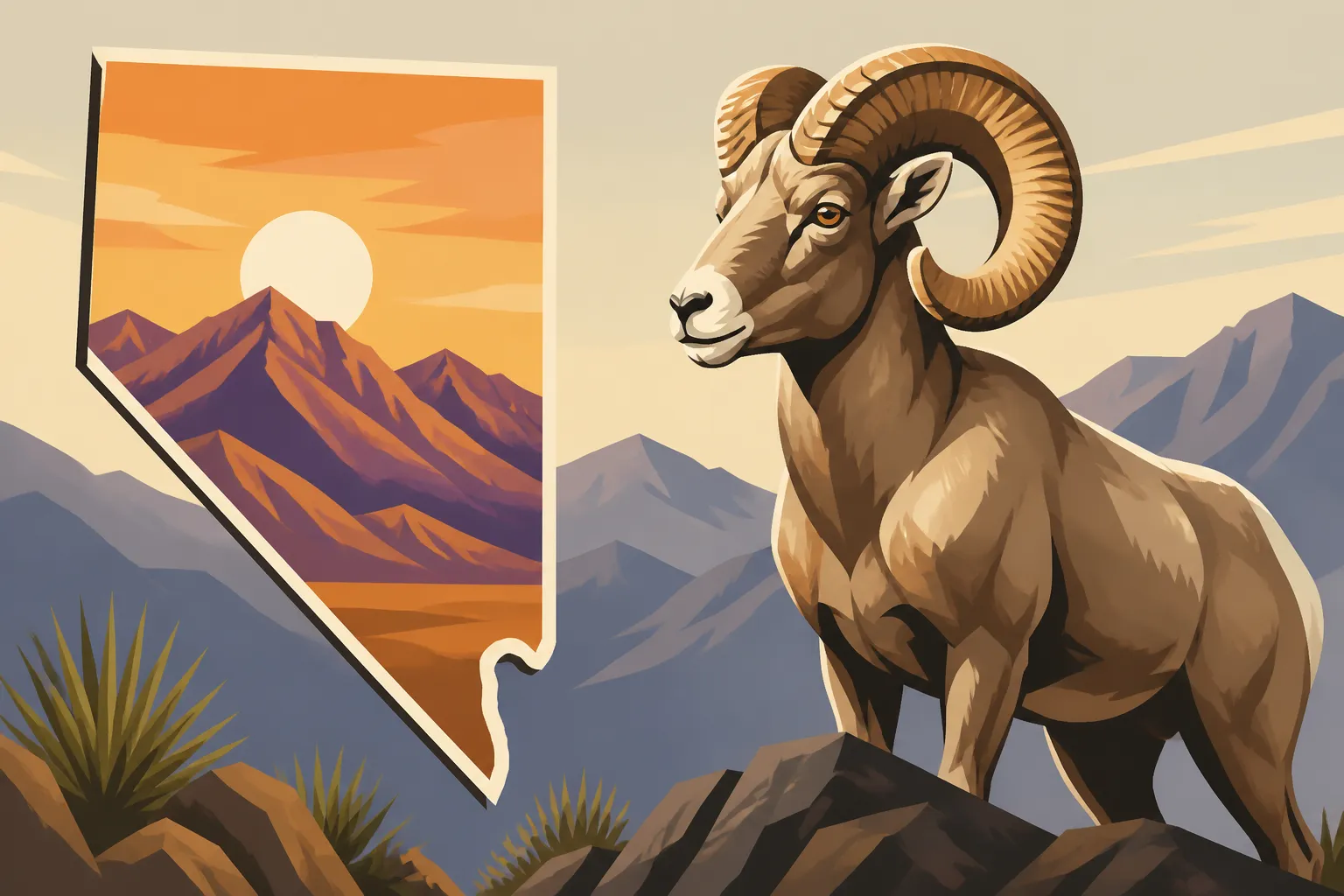
Nevada is unique in that it's home to not one, but three distinct bighorn subspecies: Desert Bighorn, California Bighorn, and Rocky Mountain Bighorn. While all are incredible animals, they each have their own preferred habitats and subtle physical differences. The Rocky Mountain Bighorn, generally found in the higher, more eastern ranges, are typically larger-bodied than their desert cousins. Their coats are usually a darker brown, almost chocolate, especially in mature rams, contrasting with the lighter, often tan or reddish-brown hue of desert sheep. Their horns, while still displaying that characteristic curl, tend to be more massive and heavier in overall bulk compared to the California bighorn. Understanding these differences isn't just academic; it helps you to anticipate the kind of terrain you'll be scouting and hunting. If you're lucky enough to draw, you'll want to be absolutely sure you know Why Nevada Counts Three Bighorn Subspecies and what makes your specific tag unique.
Where Nevada's Eastern Bighorn Herds Roam
When we talk about Rocky Mountain Bighorn in Nevada, we're focusing on the majestic, high-elevation ranges that line the state's eastern border. These aren't the classic sagebrush basins or even the relatively gentle slopes you might find mule deer on. This is truly vertical country, demanding respect and preparation. The sheep here have adapted to a life among cliffs, jagged peaks, and sparse alpine vegetation, making them incredibly difficult to locate and even harder to approach.
Key Mountain Ranges and Habitat Zones
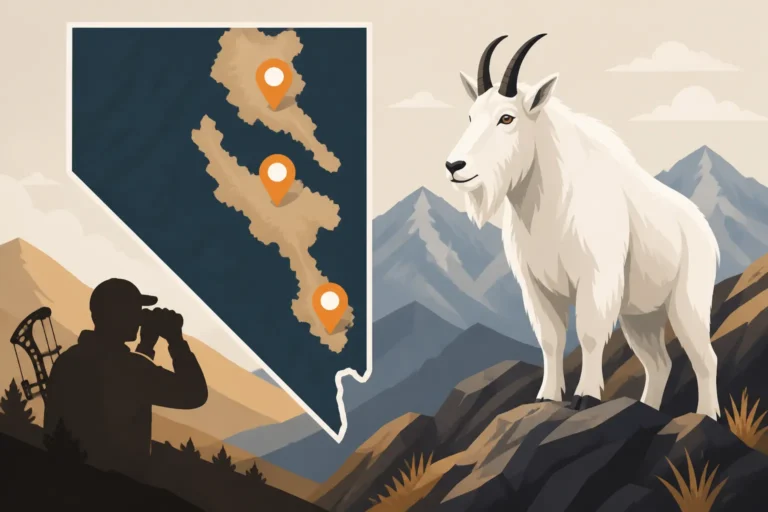
The primary strongholds for Rocky Mountain Bighorn Sheep in Nevada are found in the eastern part of the state, particularly in ranges like the Snake Range, home to Great Basin National Park, and the Schell Creek Range. These areas boast elevations that soar well above 10,000 feet, providing the steep, rocky escape terrain that bighorn sheep depend on for survival. You'll also find some populations in the Ruby Mountains and occasionally other isolated high ranges further north, though the eastern units are generally the most productive for this subspecies. These mountain ranges are characterized by deep canyons, sheer rock faces, and high-alpine bowls that transition into scattered timber at lower elevations. It’s a stark, beautiful, and unforgiving environment where sheep can disappear into the landscape with incredible ease. When you're Reading a Nevada Hunt Unit Before You Apply, paying close attention to the topography and elevation profile of these eastern units is critical to understanding the kind of hunt you're signing up for.
Understanding Preferred Terrain and Elevations
Rocky Mountain Bighorn Sheep are creatures of habit when it comes to terrain, favoring steep, rocky slopes, cliff bands, and open areas above timberline. They need excellent visibility to spot predators from a distance, which is why they prefer the wide-open, high-elevation benches and ridgelines. You'll often find them grazing on sparse grasses and forbs in alpine meadows during warmer months, but they are never far from the safety of vertical rock. These sheep are masters of camouflage, blending seamlessly into their grey, brown, and white surroundings. During the winter, they'll typically descend to lower, south-facing slopes to find accessible forage, but even then, they'll seek out steep, wind-blown areas that shed snow faster. Understanding these preferences is key to your scouting strategy; you're not looking for deer sign in dense cover, but rather focusing your optics on the most inaccessible, rocky faces.
Drawing a Rocky Mountain Bighorn Tag: A Long Shot Worth Taking
Let's be real: drawing a Rocky Mountain Bighorn tag in Nevada is tough. It's one of the hardest tags to get in the country, and anyone who tells you otherwise isn't being entirely truthful. However, "tough" doesn't mean impossible, and the system Nevada uses, while complex, does offer a path for persistent hunters. It’s a game of patience, strategy, and a healthy dose of luck.
Navigating Nevada's Bonus Point System for Sheep
Nevada's draw system utilizes bonus points, and for sheep, these points are highly coveted. The frustrating part for many is that these points are squared, meaning the more points you have, the exponentially greater your chances become in the draw. So, if you have one point, you get one "chance" (plus your current application). If you have two points, you get four "chances." Three points get you nine "chances," and so on. This system really favors those who've been applying for many years, which can feel daunting for new applicants. Understanding Nevada Squares Your Bonus Points Into Draw Chances is fundamental to grasping your real odds. It means that while a first-time applicant might have a slim chance, someone with 15 or 20 points has a significantly better, though still not guaranteed, shot.
Analyzing Draw Odds with GoHunt and Official Data
When you're serious about drawing a bighorn tag, you need to pore over draw odds. This is where resources like GoHunt become invaluable. They compile years of official Nevada Department of Wildlife (NDOW) data, offering powerful tools to analyze success rates by unit, point level, and hunt code. You can see not just the average number of points it took to draw, but the range of points, giving you a more realistic picture of your chances. While NDOW provides the raw data, platforms like GoHunt really shine in their ability to visualize this complex information, making it digestible and actionable. They help you identify trends, assess the demand for certain units, and make informed decisions on where to apply. Remember, Nevada Applications Run March 23 to May 13, so you've got a window to crunch these numbers before the deadline hits.
Strategic Unit Choices for Better Chances
Some units are simply "better" than others in terms of overall trophy potential, access, or historical success rates, and these units typically require a massive number of bonus points. However, within the eastern Rocky Mountain Bighorn units, there might be subtle differences in draw odds. Sometimes, a unit with slightly less favorable terrain or historically lower harvest success might offer a marginally better chance of drawing because fewer hunters apply for it. This is where your research with GoHunt's Insider tool or deep dives into NDOW's harvest statistics come into play. It's about balancing the dream of a monster ram with the reality of drawing a tag. You might choose a unit with a slightly lower trophy potential but better odds, hoping to get your foot in the door for a bighorn experience. Remember to scrutinize Reading a Nevada Hunt Number Before You Apply thoroughly to ensure you're applying for the correct species and weapon choice for your desired unit.
| Nevada Bighorn Subspecies Comparison | Primary Habitat | Distinguishing Features |
|---|---|---|
| Rocky Mountain Bighorn | High-elevation, steep mountain ranges in eastern Nevada (e.g., Snake, Schell Creek). Alpine meadows, cliffs, rocky peaks. | Generally largest body size. Darker brown coat, sometimes with a grayish tint. Massive, heavy horns with a tighter curl. White rump patch. |
| Desert Bighorn | Arid, lower elevation desert mountain ranges across southern and central Nevada. Sparse vegetation, rock outcroppings, canyons. | Smaller body size than Rocky Mountain. Lighter, often tan or reddish-brown coat. Horns tend to be more flared and less massive than Rocky Mountain. White rump patch. |
| California Bighorn | Mid-elevation mountain ranges in northern and western Nevada. Juniper, sagebrush, rimrock country. | Intermediate body size. Often a lighter brown or grizzled coat. Horns are typically more slender and have a wider, more open curl than Rocky Mountain, but heavier than Desert. White rump patch. |
Hunting Strategies for Nevada's Eastern Bighorn
Once you beat the odds and secure that coveted Rocky Mountain Bighorn tag, the real work begins. This isn't a casual stroll in the woods. These hunts are physically demanding and require meticulous planning, keen observation skills, and the mental fortitude to push through some of the toughest terrain Nevada has to offer. Success often hinges on a combination of pre-season scouting, in-the-field patience, and a willingness to embrace discomfort.
The Art of Glassing and Long-Range Scouting
In the vast, open landscapes of eastern Nevada, glassing isn't just a strategy; it's the strategy. You simply cannot effectively cover enough ground on foot to find bighorn sheep. You'll spend countless hours behind your optics, systematically dissecting every rock slide, cliff band, and high-alpine basin. This means finding a good vantage point, often a high ridge or peak, and setting up with a high-quality spotting scope and binoculars. You'll be looking for tiny specks that resolve into sheep, often miles away. The patience required is immense; sheep can appear out of nowhere or remain motionless for hours, blending perfectly with their surroundings. Learning to pick apart terrain and identifying likely bedding or feeding areas is an art form. This is where Optics Power for Nevada's Long Sightlines really becomes critical; you need clarity and magnification to differentiate a ram from a ewe, and a legal ram from a sub-legal one.
Physical Demands and Preparation for Steep Country
Let's not sugarcoat it: a Rocky Mountain Bighorn hunt in eastern Nevada will test your physical limits. These sheep live in extreme vertical terrain. You'll be gaining and losing thousands of feet of elevation daily, often off-trail, through loose scree, jagged rocks, and steep inclines. A good hunt involves long days of climbing, descending, and navigating unstable footing. You absolutely need to be in peak physical condition. This means months of dedicated training focused on cardio, leg strength, and endurance. Don't underestimate the impact of elevation either; if you're coming from sea level, the thin air at 10,000+ feet will hit you hard. Many experienced hunters will tell you that Preparing Physically for Long Glassing Days is just as important as knowing how to shoot your rifle, because if you can't get to where the sheep are, or stay there comfortably, your chances plummet.
The Importance of Water Sources and Rugged Access
In arid Nevada, water is life, and this holds true for bighorn sheep as well. While bighorn can go for extended periods without drinking free water, they still rely on springs, seeps, and seasonal snowmelt, especially during the hotter months. Identifying these critical water sources on your maps during e-scouting can help narrow down vast areas. Sheep will often congregate or travel near these vital resources. However, accessing these remote areas themselves is another logistical puzzle. Many of Nevada's eastern ranges have very few maintained roads, often requiring high-clearance 4×4 vehicles, and sometimes even ATVs or foot travel to reach the true backcountry. You need to be self-sufficient, carrying ample Water You Must Carry on a Desert Day Hunt and understanding that help is often many hours away. The rough, unpaved roads and lack of services are part of the challenge but also contribute to the wildness of the experience.
Essential Gear and Logistics for a High-Country Bighorn Hunt
A successful Rocky Mountain Bighorn hunt in Nevada demands not only physical prowess and keen hunting skills but also the right gear. Given the remote, rugged, and often extreme conditions, your equipment choices can literally make or break your hunt. From optics that help you spot a ram miles away to a rifle that can reach across vast canyons, every piece of gear plays a critical role.
Optics That Make a Difference in Vast Terrain
When hunting bighorn in Nevada, your optics are arguably your most important tools. The terrain is so immense that finding sheep without high-quality glass is like trying to find a needle in a haystack. You'll need top-tier binoculars (10x-15x is ideal) for general scanning and a powerful spotting scope (20-60x or even 80x magnification) on a sturdy tripod for detailed examination and field judging. Brands like Swarovski, Zeiss, Leica, and Maven are popular choices among serious sheep hunters for their clarity and durability. A good rangefinder that can accurately read distances out to 1,000+ yards is also non-negotiable for shot placement in open country. Many hunters will pair their handheld binoculars with a bino harness system to keep them accessible and protected throughout the grueling days. The ability to sit on a vantage point for hours, patiently dissecting the landscape, is enhanced exponentially by clear, powerful glass.
Choosing the Right Rifle and Caliber
For Rocky Mountain Bighorn, you'll want a rifle and caliber that can perform accurately at extended ranges. While shots can certainly be close, the nature of the terrain often dictates longer shots across canyons or open slopes. Flat-shooting cartridges like the 6.5 PRC, .300 Win Mag, 7mm Rem Mag, or even the venerable .30-06 are popular choices. The rifle itself should be reliable, accurate, and preferably lightweight, as you'll be carrying it up and down steep mountains. Pair it with a high-quality scope that holds zero, has clear glass, and offers appropriate magnification for both close and long shots. Always practice extensively from various field positions, including prone with a bipod or shooting sticks, as stable shooting rests are often hard to find in vertical country. Understanding Choosing a Rifle for Basin and Range Country is key, as sheep terrain mirrors some of the same open-country shooting challenges.
Planning for Remote Backcountry Operations
Nevada's eastern bighorn country is remote, often hours from the nearest paved road or town. This means you need to be entirely self-sufficient. Planning your logistics is paramount. This includes carrying enough food and water for the duration of your trip, plus extra for emergencies. A reliable communication device like a satellite messenger or phone is essential for safety, as cell service is almost nonexistent. You'll need appropriate clothing layers to handle extreme temperature swings, from freezing mornings to hot afternoons, especially depending on the season. A well-stocked first-aid kit is critical. If you're successful, consider how you'll Packing an Animal Out of Roadless Country which can be an incredibly arduous task, often requiring multiple trips or a pack animal if you're using an outfitter. Freeze-dried meals, a lightweight tent or tarp, and a dependable sleep system are also crucial for extended stays in the backcountry.
Conservation and Ethical Considerations for Bighorn Hunters
Drawing a Rocky Mountain Bighorn tag isn't just about the hunt; it's also about becoming a steward of these incredible animals. Hunters play a vital role in bighorn conservation, and adhering to ethical hunting practices and regulations is paramount. This harvest is a privilege, and treating the animal, the land, and the regulations with the utmost respect is a non-negotiable aspect of a bighorn hunt.
Ram Curl Requirements and Field Judging
Nevada has specific ram curl requirements to ensure sustainable harvest and protect younger rams. Typically, this involves a "full curl" or a specified age class (e.g., 7 years old). Field judging a bighorn ram, especially at long distances and on steep terrain, can be incredibly challenging. You'll need to be proficient with your spotting scope and know precisely what characteristics to look for to determine legality. This often involves assessing horn mass, the tightness of the curl in relation to the eye and nose, and sometimes even tooth wear if you can get close enough (which is rare). It's far better to pass on a ram if you're uncertain about its legality than to make a mistake. Mistakes in bighorn hunting carry severe penalties and undermine conservation efforts. Many experienced sheep hunters will tell you to "let the air out of the horn" if there's any doubt about legality.
Contributing to Bighorn Conservation Efforts
Hunters are, without a doubt, the greatest conservationists, and bighorn sheep are a prime example. The funds generated from license and tag sales, particularly the high cost of nonresident sheep tags and auction tags, directly support research, habitat restoration, and transplant programs that have helped bring bighorn populations back from historic lows. Beyond monetary contributions, ethical hunters advocate for healthy habitats, participate in volunteer efforts like water development projects, and report poaching. Diseases, like pneumonia, can decimate bighorn herds, and biologists closely monitor populations to understand these threats. Hunters also often assist wildlife agencies by providing valuable observations from the field. Understanding How Biologists Count a Desert Big Game Herd and how those numbers inform management decisions gives you a deeper appreciation for the overall health of these fragile populations. By participating in this draw and, if successful, in the hunt, you become an active participant in ensuring the future of Nevada's majestic Rocky Mountain Bighorn.
Disclaimer
Please be aware that hunting regulations, season dates, and unit boundaries can change. Always consult the official Nevada Department of Wildlife (NDOW) regulations and current proclamations before planning or undertaking any hunting activities. This information is intended as a general guide and not a substitute for official legal documentation.