Choosing a Rifle for Basin and Range Country
Heading out for a hunt in Nevada's vast Basin and Range country presents a unique set of challenges, especially when it comes to selecting the right rifle. The sheer scale of the landscape, coupled with unpredictable weather and the potential for long-distance shots, means your choice of firearm isn't just a preference—it's a critical component of your success and ethical hunting. This guide will walk you through everything you need to consider, from calibers and rifle features to optics and practice, ensuring you're well-equipped for the Silver State's demanding terrain.
Understanding the Unique Demands of Basin and Range Hunting
Hunting in Nevada is an experience unlike almost anywhere else. The term "Basin and Range" isn't just a geological description; it's a defining characteristic of your hunt, dictating everything from your physical preparation to your gear choices. Ignoring these unique demands can lead to frustration in the field, missed opportunities, and even unsafe situations.
The Vastness and Openness of Nevada Terrain
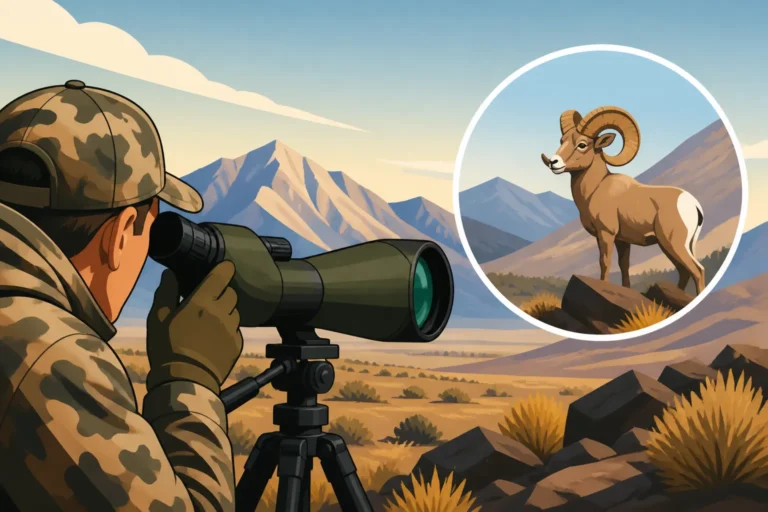
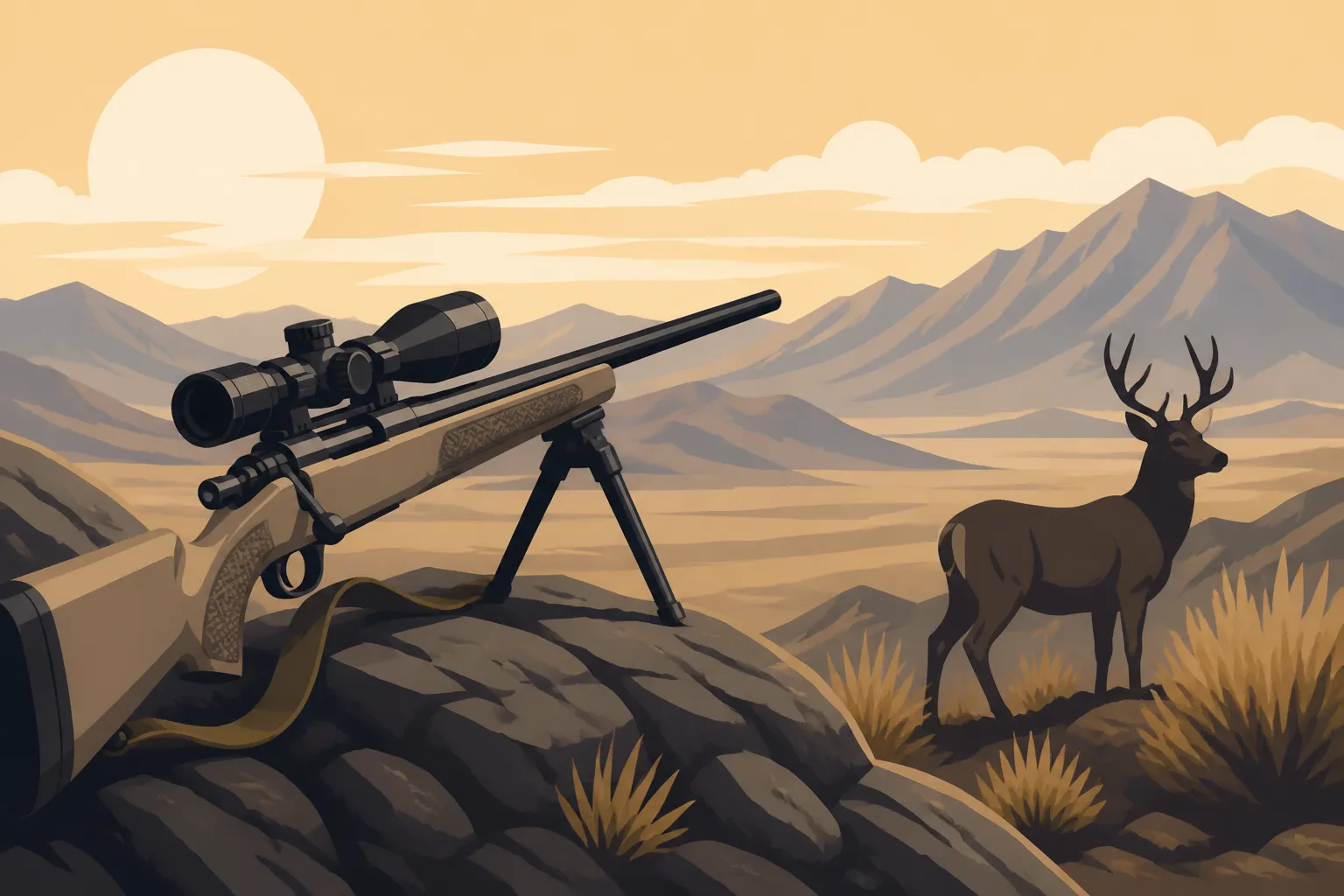
Imagine standing on a ridge, glassing for miles across sagebrush flats and distant mountain slopes. This isn't just a pretty picture; it's the reality of a Nevada hunt. The Great Basin's expansive, open terrain means your targets—be they mule deer, elk, or pronghorn—are often visible at considerable distances. Unlike dense forests where shots might be measured in dozens of yards, here, it's common for an ethical shot opportunity to present itself at 300, 400, or even 500 yards. This isn't to say every shot will be long, but you need to be prepared for it.
The lack of consistent, dense cover also plays a huge role. Stalking game can be incredibly challenging, requiring careful planning and often leaving you exposed for the final approach. This often means you'll need to make a shot before you can close the distance much further, placing a premium on accuracy at range. Every piece of gear, especially your rifle, needs to be up to the task of delivering precision in these wide-open spaces. You'll spend more time looking through glass than walking in many units, and understanding how to effectively search these expansive areas is key, as covered in our guide on Glassing Nevada's Basin and Range for Mule Deer. The rifle you choose must be capable of reaching out with authority and accuracy when that hard-earned opportunity finally arises across a wide-open flat.
Extreme Weather and Temperature Swings
Nevada's desert and mountain environments are notorious for their drastic weather changes. A crisp, cool morning can quickly turn into a scorching afternoon, only to be followed by a bitterly cold night. Wind is a constant companion in the Basin and Range, often howling across valleys and whipping over ridges, making shot placement exponentially more difficult. Dust storms can reduce visibility to near zero, and sudden thunderstorms can turn dry washes into raging rivers, impacting your mobility and even your rifle's performance.
Your rifle needs to be a workhorse that can handle these abuses. Wooden stocks might look classic, but they can warp with moisture and temperature shifts, impacting accuracy. Metal components need durable finishes to resist corrosion from sweat, dust, and occasional rain. The optics, especially, must be robust enough to maintain zero despite bumps, temperature fluctuations, and exposure to the elements. These environmental factors aren't just an inconvenience; they are critical variables that must be accounted for in your gear selection and shooting technique. Staying comfortable and prepared for these shifts also applies to your personal gear, highlighting the importance of proper Layering for Basin and Range Temperature Swings.
The Importance of Weight and Durability
Hunting in Nevada often means covering significant ground, either on foot or with a combination of vehicle and hiking. There are vast tracts of roadless country, wilderness areas, and steep, rocky climbs. Every ounce matters when you're packing your gear up and down those unforgiving slopes. A heavy rifle might feel stable on the bench, but after miles of hiking across uneven terrain, it can become a significant burden, leading to fatigue and impacting your ability to hold steady for a shot.
Beyond weight, durability is paramount. Your rifle will get bumped, scraped, and exposed to dust and grit. It might take a tumble on loose scree or get wedged against a rock during a tricky descent. You need a rifle that can withstand this kind of abuse without losing its zero or failing to function. A flimsy stock, unreliable action, or fragile optics mounting system is a liability, not an asset, in the harsh Nevada environment. This focus on lightweight, durable gear extends to all aspects of your trip, underscoring the necessity of Preparing for Long Days in Open Terrain both physically and mentally.
Caliber Considerations for Nevada's Open Country
When selecting a rifle for Nevada, the caliber is arguably the most discussed and debated topic. It’s not just about how big a hole it makes, but how effectively it delivers a bullet to a distant target under varied conditions, and how well you can shoot it.
Balancing Power with Shootability
The open spaces of Nevada might tempt you to reach for the biggest, fastest magnum cartridge available. While raw power certainly has its place, it must be balanced with your ability to accurately and consistently shoot that cartridge. A powerful magnum that you flinch with, or that causes excessive recoil leading to poor form, is far less effective than a slightly less powerful cartridge that you can shoot with confidence and precision. For example, a hunter who can consistently place shots with a .308 Winchester out to 400 yards will be more successful than one who struggles to manage the recoil of a .300 Winchester Magnum past 200 yards.
For mule deer and antelope, calibers like the 6.5 Creedmoor, .270 Winchester, .308 Winchester, and 7mm-08 Remington offer excellent ballistic performance, manageable recoil, and more than enough energy for ethical kills out to typical hunting distances. If you're targeting elk, especially larger bulls, or simply want more insurance for those longer shots, stepping up to a .30-06 Springfield, 7mm Remington Magnum, or a .300 Winchester Magnum might be warranted. However, always prioritize a rifle and caliber combination that allows you to shoot your best. Many experienced Nevada hunters will tell you that shot placement, born from practice and confidence, trumps raw caliber power every single time. Our article on the Best All-Around Caliber for Open Country offers more insights into this critical decision.
The Role of Ballistics at Extended Ranges
Ballistics become paramount when you're regularly engaging targets at ranges beyond 200 or 300 yards. Bullet drop, wind drift, and retained energy are all factors that dramatically influence a bullet's performance downrange. A cartridge with a flatter trajectory reduces the amount of elevation adjustment needed, making range estimation errors less critical. High ballistic coefficient (BC) bullets, which are more aerodynamic, resist wind drift better and retain more velocity and energy as they travel further.
Understanding your chosen caliber's ballistic performance is crucial. You'll need to know your rifle's zero distance and how your bullet performs at various increments. Many hunters find a 200-yard or even 300-yard zero to be effective in Nevada, allowing for minimal holdover within common hunting distances. Tools and apps (like those offered by GoHunt) can provide detailed ballistic data, helping you generate custom dope cards or holdover charts for your specific rifle and ammunition. This data allows you to make precise adjustments for elevation and wind, which are non-negotiable for ethical long-range hunting. Without this foundational knowledge, even the best rifle and scope are rendered ineffective when the crosshairs are floating above a mule deer silhouetted on a distant ridge. Setting your Rifle Zero Distance for Long Sage Shots correctly is a foundational step in mastering these longer engagements.
Popular Calibers and Their Performance
Let's look at some common calibers that shine in Nevada's wide-open spaces:
- 6.5 Creedmoor: Extremely popular for its mild recoil, excellent accuracy, and high ballistic coefficient bullets. It's fantastic for deer and antelope out to impressive distances, and with proper bullet selection, can handle elk at moderate ranges.
- 7mm-08 Remington: Similar to the 6.5 Creedmoor in many respects, offering a slight bump in bullet weight and diameter with manageable recoil. Another superb choice for deer and antelope, and perfectly capable for elk within reasonable range.
- .270 Winchester: A classic Western cartridge. It throws flat-shooting bullets at high velocities, making it very effective for deer, antelope, and even elk. Recoil is moderate, and ammunition is widely available.
- 308 Winchester: Perhaps the most versatile short-action cartridge, known for its accuracy, moderate recoil, and wide array of bullet options. It's a solid choice for all Nevada big game, offering reliable performance.
- 30-06 Springfield: Another timeless classic. It offers a significant power increase over the .308, capable of handling any big game animal in North America. Recoil is more pronounced but still manageable for most shooters.
- 7mm Remington Magnum: A true magnum, delivering higher velocities and flatter trajectories than non-magnum 7mms. Excellent for all big game, especially elk at longer ranges, but comes with increased recoil and muzzle blast.
- 300 Winchester Magnum: When maximum power and long-range capability for larger game like elk are desired, the .300 Win Mag stands out. It's a heavy hitter, demanding good shooting fundamentals and tolerance for significant recoil, but offers exceptional reach and knockdown power.
Here’s a comparative glance at these popular calibers for Nevada hunting:
| Caliber | Typical Bullet Weight (gr) | Approx. Muzzle Velocity (fps) | Effective Deer Range (yards) | Effective Elk Range (yards) | Key Features |
|---|---|---|---|---|---|
| 6.5 Creedmoor | 120-147 | 2600-2900 | 500+ | 400 | Low recoil, high BC, excellent accuracy |
| 7mm-08 Remington | 120-160 | 2700-2900 | 500+ | 400 | Mild recoil, good ballistics, versatile |
| .270 Winchester | 130-150 | 2900-3100 | 550+ | 450 | Flat trajectory, moderate recoil, widely available |
| .308 Winchester | 150-180 | 2600-2800 | 450+ | 400 | Accurate, low recoil for power, extremely versatile |
| .30-06 Springfield | 150-200 | 2700-2900 | 500+ | 450 | All-around power, good bullet selection, moderate recoil |
| 7mm Remington Magnum | 140-175 | 3000-3200 | 600+ | 500+ | High velocity, flat trajectory, more recoil |
| .300 Winchester Magnum | 165-200 | 3000-3200 | 600+ | 500+ | Max power for large game, long range, significant recoil |
Note: Effective range estimates are highly dependent on individual shooter skill, bullet construction, and precise ballistic data for specific loads.
Rifle Features that Make a Difference in the Desert
Beyond the cartridge it fires, the rifle itself has specific attributes that will greatly impact your success and comfort in Nevada’s challenging environment. These aren't just aesthetic choices; they are functional elements that directly contribute to the rifle's reliability, accuracy, and ease of use in the field.
Action Type and Reliability
For most serious big game hunting in Nevada, the bolt-action rifle remains the gold standard. Its simplicity, inherent accuracy, and robust reliability are unmatched. A quality bolt action, with its strong locking lugs and direct feed system, is less prone to fouling and malfunctions than more complex semi-automatic designs, especially when subjected to dust, dirt, and extreme temperatures. When you've hiked for miles, finally spotted your buck, and the moment of truth arrives, you want an action that you can trust implicitly.
While semi-automatic rifles are legal for hunting big game in Nevada (with specific magazine capacity limits for hunting), their complexity and heavier weight often make them less practical for the kind of long-range, precision hunting that defines the Basin and Range. The ability to cycle a second round quickly is rarely as important as the ability to place the first shot accurately. Consider brands like Tikka, Savage, Weatherby, and Ruger for their track record of producing accurate and reliable bolt-action rifles that stand up to tough conditions. If you're considering using a suppressor, which can reduce recoil and protect your hearing, ensuring your rifle is threaded for one is a smart move, and it's important to understand Suppressor Legality for Hunting Big Game in Nevada.
Stock Materials and Ergonomics
The choice of stock material is more than just personal preference; it directly impacts durability, weight, and consistency in accuracy. Traditional wooden stocks, while beautiful, are susceptible to warping and swelling with changes in humidity and temperature. This can lead to shifts in point of impact, which is unacceptable for precision hunting. Modern synthetic stocks, typically made from fiberglass, carbon fiber, or polymer composites, are far more stable, impervious to weather, and often lighter.
Look for a stock with good ergonomics: one that feels comfortable in your hands, allows for a consistent cheek weld, and has a grip that provides control even when wet or dusty. Some stocks offer adjustable length of pull or comb height, which can be invaluable for achieving a perfect fit with your optics. Features like aggressive texturing or rubberized grip panels can improve handling, especially if you find yourself shooting with cold, gloved, or sweaty hands. A well-designed stock will mitigate recoil and promote repeatable accuracy, which is exactly what you need when that big buck steps out at an unexpected range.
Barrel Length and Profile
Barrel length and profile are a careful balancing act between velocity, weight, and handling. Longer barrels generally provide higher muzzle velocity, which translates to a flatter trajectory and more retained energy downrange—a definite advantage for those longer Nevada shots. However, longer barrels are also heavier and less maneuverable, making them cumbersome to carry through brush or get into position quickly. A barrel that's too light can heat up quickly, leading to "walking" groups, which compromises accuracy on follow-up shots or during extended range sessions.
For most Nevada hunting, a barrel length between 20 and 24 inches is a good compromise. This range provides sufficient velocity for magnum cartridges to perform, while keeping the overall rifle package manageable for hiking and stalking. A medium-contour barrel, perhaps fluted to reduce weight and increase surface area for cooling, offers a good balance of rigidity for accuracy and reduced weight for portability. The barrel's twist rate is also critical; it must be appropriate for the bullet weights you intend to shoot to stabilize them correctly and achieve optimal accuracy.
Optics and Accessories: Beyond the Rifle Itself
A rifle is only as good as the system it operates within, and in Nevada, that system absolutely includes your optics and essential accessories. Without a high-quality scope and stable shooting aids, even the most expensive, accurate rifle will fall short of its potential.
Choosing the Right Scope Magnification and Features
The vast, open country of Nevada practically demands high-quality optics. Your rifle scope needs to offer a balance of sufficient magnification for distant targets, a clear sight picture, and robust construction to withstand the harsh environment. A variable power scope, typically in the 3-15x or 4-20x range, provides the versatility needed for both closer encounters (though less common in open country) and those inevitable long shots. While higher magnification can be tempting, remember that it also narrows your field of view and can make it harder to find game quickly, especially if they're moving.
Key features to look for include:
- Excellent Glass: Clear, bright glass with good light transmission is non-negotiable, especially during dawn and dusk. Look for fully multi-coated lenses.
- Reliable Turrets: Precise, repeatable adjustments for elevation and windage are critical for dialing in long shots. Capped turrets offer protection against accidental adjustments, while exposed, locking turrets allow for quick, tool-free changes.
- Reticle: A simple duplex reticle works well, but many long-range hunters prefer a ballistic reticle (BDC or Christmas tree style) or a first focal plane (FFP) reticle with hash marks for holdovers at any magnification.
- Durability: The scope must be shockproof, waterproof, and fog proof. A one-piece tube design generally offers superior strength.
Ultimately, your rifle scope is your primary aiming device, and it’s not an area to cut corners. Invest in the best you can afford, as it will often contribute more to your accuracy than upgrading the rifle itself. Our discussion on Optics Power for Nevada's Long Sightlines can help you narrow down your choices for maximum effectiveness.
Mounts, Rings, and Reliability
It's a common and costly mistake to pair a high-quality rifle and scope with cheap rings and mounts. The mounting system is the critical link between your scope and your rifle; if it fails, your rifle is useless. In the rough terrain of Nevada, your rifle will be subject to bumps, scrapes, and vibrations. A loose screw, a weak ring, or an improperly seated base can lead to a shift in your point of impact, known as losing your "zero," which can ruin a hunt.
Look for robust, steel or high-grade aluminum rings and bases. One-piece scope bases offer superior rigidity and alignment. Brands like Leupold, Talley, Warne, and Nightforce are known for producing high-quality, reliable mounting systems. Pay close attention to proper installation: use a torque wrench to ensure all screws are tightened to the manufacturer's specifications, and consider using a small amount of threadlocker (like blue Loctite) on base screws. A solid, properly installed mounting system ensures your scope stays put, maintaining its zero shot after shot, season after season.
Shooting Aids for Stability in Open Country
Unlike hunting in dense cover where you might brace against a tree, the open country of Nevada offers few natural rests. To achieve maximum accuracy at extended ranges, you'll almost always need a stable shooting platform. This is where shooting aids become indispensable.
- Bipods: Attaching directly to your rifle's forend, a bipod offers excellent stability for prone or seated shots. Brands like Harris and Atlas are popular, known for their rugged construction and ease of deployment. They are great for glassing from a prone position and quickly transitioning to a stable shot.
- Shooting Sticks: These versatile aids are perfect for kneeling or standing shots, offering height adjustability that bipods often lack. They come in various configurations—mono-, bi-, and tripods. Many hunters find a sturdy set of trekking poles, which they already carry for hiking, can double as effective shooting sticks in a pinch.
- Tripods with Rifle Rests: For the ultimate stability, particularly for very long shots or when shooting from uneven terrain, a heavy-duty tripod combined with a purpose-built rifle rest (like those from Hog Saddle or Arca Swiss compatible systems) is invaluable. These setups offer rock-solid support and allow for precise adjustments, especially crucial when you're Shooting Sticks or Bipod on Rocky Ground. While heavier, they are often used in conjunction with a spotting scope on the same tripod, making it an efficient tool for both glassing and shooting.
Choosing the right shooting aid depends on your hunting style, the terrain, and your comfort level. Often, a combination (e.g., a bipod for prone and sticks for kneeling) provides the most flexibility. Practicing with these aids before your hunt is just as important as practicing your shooting fundamentals.
Ammunition Selection for Long-Range Performance
Even with the perfect rifle and scope, your hunt's success ultimately hinges on the ammunition you use. Selecting the right bullet for Nevada's big game and the potential long ranges is paramount for ethical, quick, and humane kills.
Bullet Construction for Ethical Kills
At extended ranges, bullets face increased challenges. They lose velocity and energy, and can be more susceptible to wind drift. When they finally strike an animal, they need to perform consistently, even at lower impact velocities. This is where bullet construction becomes critical.
For deer, antelope, and elk, you want a bullet that expands reliably without fragmenting excessively, and that retains enough weight to penetrate deeply into vital organs.
- Controlled Expansion Bullets: Often bonded or monolithic (solid copper/gilding metal), these bullets are designed to hold together and expand in a controlled manner, creating a large wound channel while maximizing penetration. Examples include Nosler AccuBond, Hornady InterBond, Barnes TTSX/LRX, and Swift A-Frame. They are excellent choices for elk and larger deer.
- Rapid Expansion/Lead Core Bullets: While some traditional lead-core bullets work, many are designed for closer ranges and higher impact velocities. At longer distances, where velocities drop, they might not expand as reliably. However, modern designs like Hornady ELD-X and Berger VLD Hunting offer excellent long-range ballistics and terminal performance, expanding reliably even at lower velocities, though some hunters prefer more controlled expansion for elk.
Always match your bullet to the game you're pursuing and the ranges you anticipate. A bullet that performs well at 100 yards might not be the best choice when its velocity has dropped significantly at 500 yards.
Ballistic Coefficient and Velocity
For long-range shooting, the ballistic coefficient (BC) of your chosen bullet is incredibly important. As mentioned, a higher BC bullet is more aerodynamic, meaning it sheds velocity slower, resists wind drift more effectively, and retains more energy downrange. This translates to a flatter trajectory and less guesswork in windy conditions, which are common in Nevada.
Velocity is the other critical factor. While a high BC helps retain velocity, starting with a higher muzzle velocity gives your bullet more initial momentum to work with. However, extreme high velocity isn't always the answer, as some bullets are designed to perform best within a specific impact velocity window. Matching a high-BC bullet with a respectable muzzle velocity will give you the best chance for long-range accuracy and ethical terminal performance. For hunters who want to master the nuances of external ballistics, understanding how to apply corrections for environmental factors, like how to best manage Holding for Wind Across a Wide Basin, is essential.
Utilizing ballistic calculators, readily available through platforms like GoHunt, is invaluable for understanding how your chosen load performs across varying distances and conditions. Input your bullet's BC, muzzle velocity, and environmental data (temperature, altitude, humidity) to generate accurate drop charts and windage corrections.
Factory Loads vs. Handloads
Many hunters grapple with the choice between factory-loaded ammunition and handloads (custom-loaded cartridges).
- Factory Loads: The easiest and most convenient option. Quality factory ammunition from reputable manufacturers like Federal Premium, Hornady Precision Hunter, Nosler Trophy Grade, and Winchester Expedition Big Game offers excellent consistency and accuracy. Advancements in manufacturing have made factory ammo incredibly precise, and for many hunters, it's more than sufficient. They are also readily available, though specific calibers and bullet types can sometimes be hard to find in remote areas.
- Handloads: For those seeking the absolute maximum in accuracy and customization, handloading offers unparalleled control over every component. You can experiment with different powders, primers, bullets, and seating depths to fine-tune a load specifically for your rifle. This can often result in tighter groups and better ballistic consistency than factory ammunition. However, handloading requires a significant investment in equipment, time, and knowledge. It's a rewarding hobby, but not necessary for every hunter.
Whether you choose factory loads or handloads, the most important thing is consistency. Once you find a load your rifle shoots accurately, stick with it. Purchase enough of the same lot number to last you through practice and the entire hunting season.
Training and Practice for Nevada's Hunting Conditions
Having the best rifle, scope, and ammunition means nothing if you can't put a bullet where it needs to go under hunting conditions. Nevada's demanding environment makes consistent, focused practice absolutely vital.
Range Practice Beyond 100 Yards
Too many hunters practice exclusively at 100 yards, believing that if they can shoot a tight group there, they're ready for anything. In Nevada, where 300, 400, or even 500-yard shots are not uncommon, 100-yard practice is just the starting point. You need to get comfortable shooting at actual hunting distances.
Find a range where you can safely shoot out to 300, 400, or 500 yards. If that's not possible, practice shooting smaller targets at closer ranges (e.g., a 2-inch target at 100 yards to simulate a 10-inch target at 500 yards). Practice dialing your scope for elevation or using your reticle's holdovers. Don't just shoot groups; practice shooting a single, cold bore shot, which is often the reality of a hunting situation. This kind of extended-range practice builds confidence and familiarity with your rifle's ballistic performance, making you a more effective and ethical hunter. A solid Building a Practice Routine Before Opener should always prioritize these longer distances.
Positional Shooting and Field Scenarios
You'll rarely find a perfectly level bench rest in the Nevada backcountry. Your shots will likely be taken from awkward positions: prone on a rocky slope, kneeling in the sagebrush, sitting with your pack as a rest, or even standing with shooting sticks. Therefore, your practice should reflect these real-world scenarios.
- Prone: Practice shooting prone from various surfaces – flat ground, uphill, downhill. Use your bipod effectively.
- Kneeling/Sitting: Utilize shooting sticks, your backpack, or even your trekking poles as rests. Practice getting into these positions quickly and steadily.
- Unsupported/Off-Hand: While long-range off-hand shots are generally ill-advised, practice getting a quick, steady off-hand shot for closer, surprise encounters.
- Simulate Hunting Stress: Practice when you're a bit tired or out of breath, simulating the physical exertion of a stalk. Practice getting your rifle out of your pack, quickly acquiring a target, and making the shot. The more realistic your practice, the more prepared you'll be when the moment of truth arrives. Before heading out, taking the time for Sighting In After a Long Drive to Camp is another often-overlooked but crucial step.
Understanding Environmental Factors
Nevada's environment doesn't just impact your gear; it impacts your bullet's flight path. Wind, temperature, and elevation all play a role in external ballistics.
- Wind: Wind is arguably the biggest challenge to long-range shooting. Learn to read wind flags on the range and observe natural indicators like sagebrush swaying or distant dust. Practice making wind calls and applying corrections. Tools and apps (like those offered by GoHunt) can help you learn how much wind drift to expect for your specific bullet and velocity.
- Temperature and Elevation: Air density changes with temperature and elevation, affecting bullet trajectory. While a slight difference might not matter at 100 yards, it can be significant at 400+. Understand how these factors affect your drop chart and adjust accordingly. Most ballistic calculators can account for these variables.
- Terrain: Learn to use natural terrain features to your advantage—a rock for a rest, a small rise to break your silhouette. But also understand how uphill and downhill shots affect point of impact (gravity affects the bullet, but your line of sight changes relative to gravity).
The more you understand and practice with these environmental variables, the more confident and successful you'll be. It's not just about hitting the target; it's about consistently making ethical shots under realistic hunting conditions.
Disclaimer
The information provided in this guide is for general educational purposes only and should not be considered legal advice. Hunting regulations and laws are subject to change, and it is the sole responsibility of the individual to consult the most current Nevada Department of Wildlife (NDOW) regulations and all applicable federal, state, and local laws before hunting. Always prioritize safety, ethical hunting practices, and responsible firearm handling.