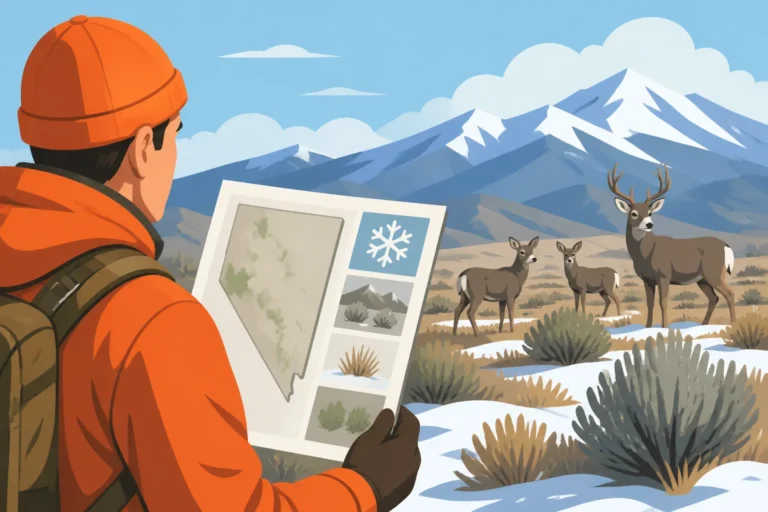
Why Nevada Counts Three Bighorn Subspecies
Many hunters dream of drawing a bighorn sheep tag, but when you look at Nevada’s regulations, you might scratch your head wondering why there are three distinct categories for what seems like the same animal. It's not just a bureaucratic quirk; recognizing different bighorn subspecies in Nevada is absolutely crucial for their specific conservation, habitat management, and, ultimately, for the distinct hunting opportunities available to those lucky enough to draw a tag. This guide dives deep into why Nevada acknowledges these separate bighorn populations, where each type lives, and what makes them so unique.
The Fascinating World of Nevada's Bighorn Sheep
For anyone who's spent time glassing the sheer cliffs and rugged peaks of Nevada, spotting a bighorn sheep is a truly breathtaking experience. Their ability to navigate such unforgiving terrain is nothing short of astounding. But what many don't realize is that Nevada isn't home to just "bighorn sheep." Instead, the state proudly manages and conserves three distinct subspecies: the Desert Bighorn, the California Bighorn, and the Rocky Mountain Bighorn. This level of detail isn't just for show; it reflects deep biological differences and the varied ecological niches these magnificent animals fill across the vast and diverse Nevada landscape.
Why the Distinction Matters for Wildlife and Hunters
The recognition of separate subspecies is far more than an academic exercise. Each subspecies has evolved over millennia to thrive in particular environments, leading to differences in genetics, physical appearance, behavior, and even susceptibility to disease. For wildlife biologists, understanding these distinctions is paramount for effective management. What works for a desert-dwelling bighorn sheep might be entirely inappropriate for one living in the high, cold mountains. This granular approach allows the Nevada Department of Wildlife (NDOW) to implement targeted conservation strategies, ensuring healthy populations for each unique group.
For hunters, this distinction directly impacts the hunt itself. Different subspecies inhabit different regions of the state, require varied hunting tactics, and offer unique challenges. For example, hunting Desert Bighorn in the scorching southern ranges is a vastly different experience from pursuing Rocky Mountain Bighorn in the snow-dusted peaks of eastern Nevada. The specific units, season dates, and even the "look" of a trophy ram can differ significantly. When you're dreaming of a Nevada Bighorn Sheep Guided Hunts opportunity, knowing which subspecies you're pursuing informs everything from your gear choices to your physical preparation.
A Look Back at Bighorn Resilience and Recovery
It's hard to imagine now, given their majestic presence, but bighorn sheep populations in Nevada faced a severe crisis in the late 19th and early 20th centuries. Unregulated hunting, habitat loss, and particularly the devastating impact of diseases introduced by domestic sheep decimated their numbers across the West. Many herds vanished entirely. The fact that Nevada is now home to robust, huntable populations of all three subspecies is a testament to decades of dedicated conservation efforts.
These efforts have included strict hunting regulations, habitat protection and restoration, and critically, numerous transplant programs. Wildlife agencies, often in partnership with conservation organizations, meticulously captured and relocated bighorn sheep from healthy populations to historical ranges where they had been extirpated. This strategic approach, as detailed in how Nevada Bighorn Transplant Programs rebuilt herds, has been incredibly successful, allowing these resilient animals to reclaim their place in Nevada's wild country. It's a true success story of wildlife management that continues to unfold.
Desert Bighorn: Masters of the Arid South
When most people picture a bighorn sheep in Nevada, they're probably envisioning the Desert Bighorn. These iconic animals embody the rugged spirit of the Silver State's southern reaches, surviving and thriving in some of the most unforgiving landscapes imaginable. Their presence is a constant reminder of the incredible adaptability of wildlife to extreme conditions.
Where to Find Desert Bighorns in Nevada
The Desert Bighorn, Ovis canadensis nelsoni, predominantly roams the vast, arid mountain ranges of southern and western Nevada. Think of places like the Desert National Wildlife Refuge, the Sheep Range, the Spring Mountains, and countless other rugged, rocky strongholds extending down towards Lake Mead and even the California border. These ranges, often characterized by steep, broken terrain, sparse vegetation, and extreme temperatures, are their domain. This is truly where Desert Bighorn Across Southern Nevada make their home, blending seamlessly into the sun-baked rock and sparse sagebrush.
Hunters often find themselves scouting these areas by glassing from distant vantage points, trying to pick out the subtle movement of a ram against the textured hillsides. Water sources, often rare and scattered, become critical focal points for wildlife in these parched environments, drawing sheep in predictable patterns, especially during the hotter months.
Unique Adaptations to Extreme Environments
Survival in the desert requires specialized adaptations, and the Desert Bighorn has them in spades. Perhaps their most remarkable adaptation is their ability to go extended periods without free water, obtaining much of their moisture from the plants they eat, like cacti and succulent desert shrubs. When they do find water, they can rehydrate rapidly, sometimes consuming several gallons in one sitting. Their light-colored coats reflect solar radiation, helping them stay cooler under the intense desert sun, and they often seek shade in caves or under overhangs during the hottest parts of the day.
Their hoof structure is another marvel, providing incredible traction on the steep, rocky slopes they call home. They can navigate precarious ledges and seemingly impossible climbs with effortless grace, using their powerful legs and surefootedness to evade predators like mountain lions. These adaptations mean that hunting Desert Bighorns often involves significant physical exertion in hot, dry conditions, requiring hunters to be prepared for the demands of the environment.
California Bighorn: Rulers of the Northern Ranges
Moving away from the scorching low deserts, we encounter the California Bighorn, a subspecies more at home in the rugged, often higher elevation ranges of northern Nevada. While still embracing rocky terrain, their habitat often includes more varied vegetation and a slightly less extreme climate than their desert cousins.
Key Habitats for California Bighorns in Nevada
The California Bighorn, Ovis canadensis californiana, inhabits the mountainous regions of northwestern Nevada, particularly in areas like the Santa Rosa Range, Jackson Mountains, and Sheldon National Wildlife Refuge. These ranges, while still very arid, receive slightly more precipitation than the southern deserts, allowing for more diverse plant communities, including aspen groves and sagebrush-steppe habitats at higher elevations. This is where California Bighorn in Northern Nevada thrive, finding solace and sustenance in these expansive, rugged territories.
Finding California Bighorn often means focusing on steep, broken country interspersed with pockets of timber or dense brush, providing both forage and cover. Their movements can be influenced by snowpack in winter and the availability of green forage in spring and summer. Hunters pursuing these sheep will often find themselves navigating a mix of open sagebrush flats and dense, rocky canyons, sometimes contending with more varied weather conditions than their southern counterparts.
Physical Traits and Herd Dynamics
California Bighorn rams tend to have horns that are less massive at the base than Desert Bighorns, and their curl is often tighter, forming a more complete spiral. Their coats are typically a darker brown than the paler Desert Bighorn, helping them blend into the more varied vegetation of their habitat. They are still incredibly well-muscled animals, built for climbing and enduring harsh conditions.
Their herd dynamics are similar to other bighorn subspecies, with rams and ewes often segregating for much of the year, coming together during the rut. Observing these behaviors can be key to a successful hunt. Understanding how Ram Curl Requirements Nevada Enforces helps ensure sustainable harvest, as these regulations are in place to protect younger rams and ensure older, genetically superior animals contribute to herd health before being harvested. Like all bighorn, California Bighorns are primarily grazers, feeding on grasses, forbs, and shrubs available in their specific range.
Rocky Mountain Bighorn: High Country Dwellers
For those accustomed to images of bighorn sheep in the Rockies, Nevada actually offers a taste of that experience with its populations of Rocky Mountain Bighorn. These sheep represent the easternmost bighorn presence in the state, clinging to some of Nevada's most impressive and elevated mountain ranges.
Exploring Rocky Mountain Bighorn Territories
The Rocky Mountain Bighorn, Ovis canadensis canadensis, is found in the extreme eastern part of Nevada, specifically in the majestic Ruby Mountains and the contiguous East Humboldt Range near Elko, and further south in the Schell Creek and Snake Ranges. These ranges are characterized by their higher elevations, often exceeding 10,000 feet, featuring alpine meadows, scattered timber, and abundant cliffs and rock slides. This is truly the domain of the Rocky Mountain Bighorn in the East, a stark contrast to the low-lying deserts of their southern relatives.
Hunting here often means dealing with significant elevation changes, colder temperatures, and potentially early snowfalls. The terrain is incredibly steep and physically demanding, rewarding hunters who have prepared thoroughly for high-country exertion. Water is generally more abundant in these areas due to snowmelt and higher precipitation, influencing sheep movements differently than in the desert.
Distinguishing Them from Their Cousins
Rocky Mountain Bighorn are generally the largest of the three subspecies, with rams often boasting the heaviest and most impressive horn growth, sometimes forming a wider, more open curl than the California Bighorn. Their coats are usually a darker brown-gray, often with a more prominent white rump patch. While still incredibly agile, their adaptations are geared towards colder, higher-altitude environments.
Their diet, too, reflects their habitat, incorporating a wider variety of alpine grasses and forbs. Distinguishing them from California Bighorn can be subtle, but generally, Rocky Mountain Bighorn are larger-bodied with heavier, wider-spreading horns. NDOW conducts extensive surveys, often How Nevada Counts Bighorn From the Air, to monitor herd health and population numbers for each subspecies, ensuring management is tailored to their specific needs and locations.
The Scientific Approach to Subspecies Classification
The decision to recognize three distinct bighorn subspecies in Nevada isn't arbitrary. It's the result of decades of scientific study, combining morphological analysis (physical characteristics), genetic research, and ecological observation. This detailed classification is vital for both conservation and responsible hunting management.
Genetic Lineage and Physical Distinctions
Modern science, particularly genetics, plays a huge role in confirming subspecies distinctions. DNA analysis has revealed clear genetic differences among the Desert, California, and Rocky Mountain Bighorns, supporting the idea that these populations have been reproductively isolated for long enough to evolve unique genetic signatures. These genetic differences correlate with observable physical traits:
- Size: Rocky Mountain Bighorns tend to be the largest, followed by California, then Desert Bighorns.
- Coloration: Desert Bighorns are typically lighter, almost sandy brown, blending with their arid habitat. California Bighorns are a medium brown, and Rocky Mountain Bighorns often have a darker, more grayish-brown coat.
- Horn Shape: While there's individual variation, Desert Bighorn horns often have a wider flare, California Bighorns a tighter curl, and Rocky Mountain Bighorns often boast massive, sweeping curls.
These distinctions are what allows Nevada to proudly declare it Nevada Holds All Three Bighorn Subspecies, a rare feat among Western states. The nuanced differences are a testament to evolution shaping animals to specific landscapes.
How Management Decisions Are Influenced
Recognizing these subspecies directly influences how NDOW manages bighorn populations. Each subspecies has its own population objectives, harvest quotas, and conservation challenges. For instance:
- Habitat Management: Conservation efforts for Desert Bighorn might focus on developing new water sources (guzzlers) or protecting existing springs. For Rocky Mountain Bighorn, management might involve forest thinning to improve forage or controlling access to sensitive lambing grounds.
- Disease Monitoring: Different subspecies may have varying susceptibilities to specific diseases. Close monitoring and rapid response protocols are crucial to prevent outbreaks from devastating entire herds.
- Transplant Programs: When relocating bighorns, care is taken to move animals of the appropriate subspecies into suitable historical ranges. This maintains genetic integrity and ensures the animals are well-adapted to their new environment.
This scientifically-driven management ensures that hunting tags issued are specific to each subspecies within designated units, allowing for precise control over harvest rates and contributing directly to the health and sustainability of each unique population.
Conservation Efforts and Their Impact
The story of Nevada's bighorn sheep is a prime example of successful wildlife conservation, proving that with dedicated effort and scientific management, even severely depleted populations can rebound. This success is not accidental; it's the result of ongoing programs, partnerships, and constant vigilance.
Transplant Programs and Habitat Restoration
As mentioned earlier, transplant programs have been a cornerstone of bighorn recovery. By capturing bighorns from healthy, robust herds and releasing them into historic but vacant habitats, NDOW has effectively re-established populations across the state. These efforts require extensive planning, disease testing, and careful monitoring of the released animals. This active management contrasts with a hands-off approach, ensuring genetic diversity and establishing new breeding groups where they once thrived.
Beyond transplants, habitat restoration is a continuous effort. This includes protecting and enhancing water sources crucial for desert survival, as well as managing vegetation to provide optimal forage and cover. Efforts to control invasive species like cheatgrass, which alters natural fire regimes and reduces native plant diversity, are also vital. Such programs are critical for the long-term health of these animals, especially considering how factors like How Drought Affects Great Basin Deer can also impact bighorn forage.
Ongoing Challenges for Nevada's Bighorns
Despite their impressive recovery, Nevada's bighorns still face significant challenges. Disease, particularly pneumonia spread by domestic sheep, remains a serious threat, capable of wiping out entire herds. Habitat fragmentation from development, roads, and increasing human presence also poses ongoing problems. Competition for forage and water with other ungulates, including wild horses, can add pressure in certain areas.
Climate change also presents a long-term challenge, with potential impacts on water availability and vegetation patterns. Therefore, conservation efforts are never truly "finished." They require continuous adaptation, research, and public support to ensure these majestic animals continue to thrive for generations to come.
Applying for a Nevada Bighorn Tag
Drawing a bighorn sheep tag in Nevada is often considered the pinnacle of Western big game hunting. It's an incredibly difficult draw, a once-in-a-lifetime opportunity for most, made even more competitive by the state's unique draw system. Understanding this process is crucial for anyone hoping to chase a ram in the Silver State.
Understanding the Draw System and Odds
Nevada's tag allocation system is highly competitive, especially for bighorn sheep. The state uses a bonus point system that squares your accumulated points, giving you an exponentially increasing number of "chances" as you build more points. This means that Why Nevada Squares Bonus Points can significantly improve your odds over time, but it still often takes many years, sometimes decades, to draw a bighorn tag.
The draw opens with the general big game application period, typically in March, with a hard deadline in May. You must purchase a Nevada hunting license and combination license before you can apply. You’ll need to research specific hunt units for each subspecies, considering factors like ram quality, terrain, and success rates from previous years. Online platforms often provide detailed draw odds for each unit. For example, Nevada Bighorn Sheep Draw Odds can be found on various hunting resources, helping you strategize your application. It's a game of patience and persistence, but the reward is immeasurable.
| Bighorn Subspecies | Primary Range in Nevada | Key Characteristics | Typical Horn Shape | General Size |
|---|---|---|---|---|
| Desert Bighorn | Southern/Western NV Ranges (e.g., Sheep Range, Spring Mountains) | Lighter coat, excellent heat tolerance, can go long without water | Wider flare, tight curl | Medium |
| California Bighorn | Northwestern NV Ranges (e.g., Santa Rosa Range, Jackson Mountains) | Medium-brown coat, slightly more varied habitat (sagebrush, sparse timber) | Tighter curl, often not as massive at base as Rocky | Medium-Large |
| Rocky Mountain Bighorn | Eastern NV High Ranges (e.g., Ruby Mountains, Schell Creek Range) | Darker coat, largest body size, adapted to alpine environment | Massive, sweeping curl, wider spread | Large |
Essential Tools for Planning Your Application
When it comes to putting in for a coveted Nevada bighorn tag, you can't just guess. You need to do your homework. Start by thoroughly reviewing the official Nevada Big Game Seasons and Regulations, available on the NDOW website. This document is your bible, detailing all legal requirements, unit boundaries, and specific hunt codes. Understanding how to interpret a Reading a Nevada Hunt Unit Before You Apply is essential for making informed choices.
Beyond the regulations, leveraging online tools and communities can give you a significant edge. Websites like GoHunt (mentioned for their draw odds resources) offer invaluable unit data, harvest statistics, and analysis to help you make strategic application choices. They can help you visualize Nevada Bighorn Sheep Draw Odds and compare units based on a variety of metrics. While no tool guarantees a tag, informed decisions increase your chances in such a low-odds draw. Remember, The Nevada Application Deadline in May comes quickly, so start your research early! Good luck, and may your patience eventually be rewarded with a truly incredible Nevada bighorn adventure.
Disclaimer
The information provided in this article is for general guidance and informational purposes only. Hunting regulations, seasons, and draw odds can change rapidly. Always consult the official Nevada Department of Wildlife (NDOW) regulations and resources before planning any hunting trip or applying for tags. It is your responsibility to ensure you are compliant with all current laws and regulations.