Nevada Mountain Lion Quotas by Zone
One of the trickiest parts about hunting mountain lions in Nevada isn't necessarily finding the animal, but navigating the ever-changing landscape of quotas. It can be incredibly frustrating to finally draw a coveted tag, scout hard, and then realize the season in your chosen zone has already closed due to quota limits being met. This guide is here to help you understand how Nevada manages its mountain lion populations through zone-specific quotas, how those quotas are set, and crucially, how to stay informed so you don't miss your window.
Understanding Nevada's Quota System for Mountain Lions
Nevada's approach to mountain lion management is pretty unique, largely because these elusive predators roam vast, often remote, territories. Unlike deer or elk, where seasons are usually fixed dates, lion hunting often operates on a quota system that can see seasons close unexpectedly. This isn't done to make things harder for hunters, but rather to ensure the long-term health and stability of the cougar population across the state. It's a fine balance between providing hunting opportunities and maintaining a robust predator population that plays a vital role in the ecosystem.
Why Quotas Exist for Mountain Lions
At its heart, the quota system for mountain lions is a scientific management tool. Mountain lions are apex predators, meaning they sit at the top of the food chain, and their numbers directly influence the health and dynamics of deer, elk, and bighorn sheep populations. Too many lions can lead to localized declines in prey species, while too few might throw the entire ecosystem out of whack. The Nevada Department of Wildlife (NDOW) strives to maintain a healthy and sustainable cougar population, ensuring genetic diversity and a stable distribution across suitable habitat.
These quotas are put in place to prevent overharvesting in any single area. Imagine if there were no limits and every hunter simply went to the most accessible or productive areas; certain zones could quickly see their lion populations severely impacted. This would not only be detrimental to the lions themselves but could also lead to imbalances in prey populations, potentially affecting future hunting opportunities for other species. So, while it can be a logistical headache for us, the quota system is fundamentally about responsible wildlife stewardship and ensuring these magnificent animals continue to thrive in the Silver State.
How Quotas Are Established
Setting these quotas is a complex, data-driven process. NDOW biologists don't just pull numbers out of a hat; they rely on years of research, field observations, and harvest data. They conduct various surveys, including track counts, remote camera studies, and population modeling, to estimate how many mountain lions are present in different regions of the state. These estimates take into account factors like kitten survival rates, prey availability, and habitat quality, all of which influence a lion population's ability to grow or decline.
Public input also plays a role. NDOW regularly engages with hunters, conservation groups, and the general public to discuss management plans and solicit feedback. This collaborative approach helps shape the final quotas, reflecting both scientific understanding and the values of the community. What's crucial to understand is that these quotas are adaptive; they can change from year to year based on new data or unforeseen circumstances, like a particularly harsh winter or a significant change in prey numbers. Tools like those found on GoHunt can provide insights into historical quotas, helping you see these trends.
Navigating the Mountain Lion Management Zones and Quotas
Nevada is a vast state, and its mountain lion populations are not evenly distributed. Some areas offer prime habitat, while others are less suitable. To manage these populations effectively, NDOW divides the state into specific management zones. These zones are not always as straightforward as deer or elk hunt units, sometimes grouping multiple units or defining areas based on biological considerations rather than strict geographical boundaries.
Breaking Down Nevada's Zones
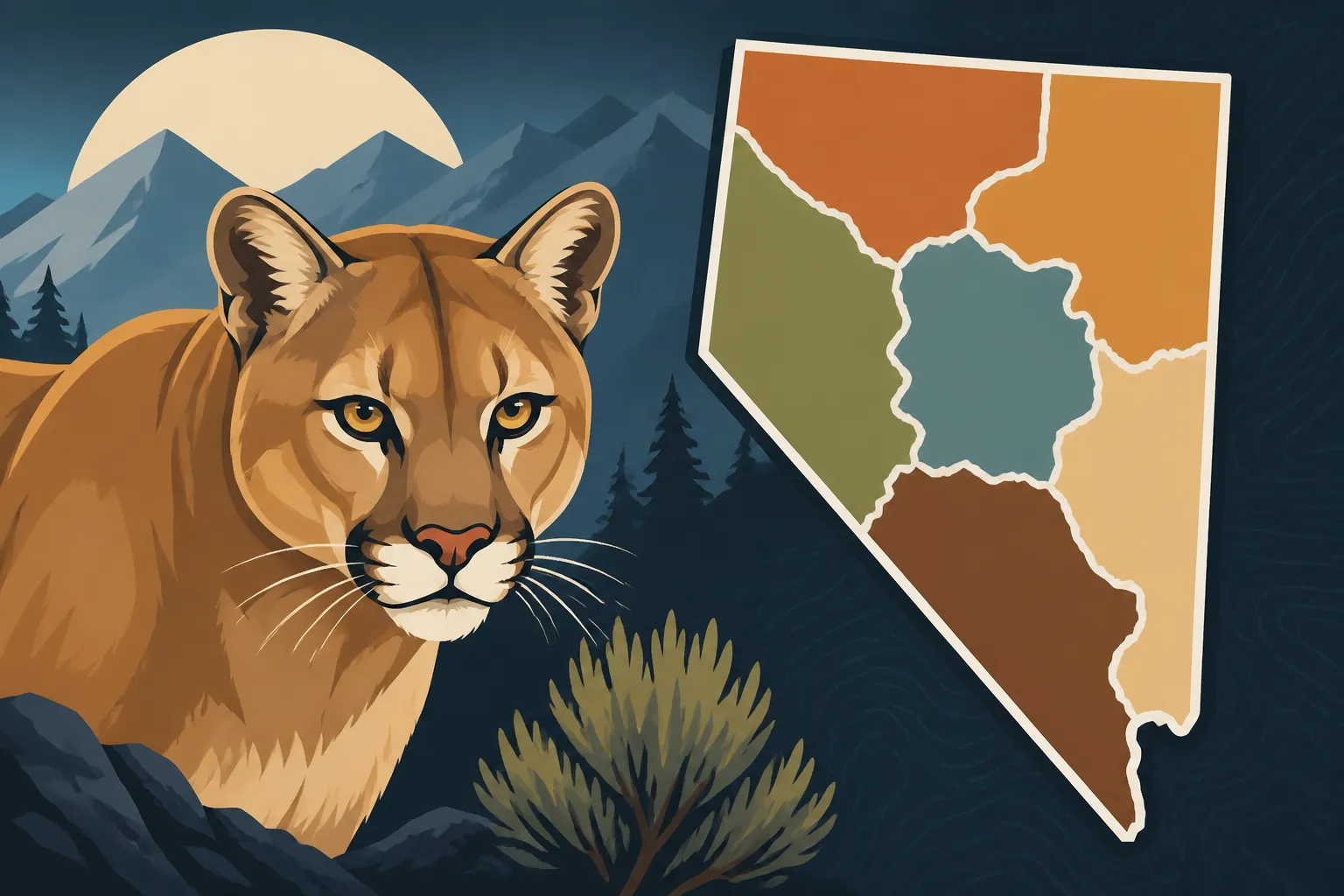
Nevada's mountain lion management zones are essentially large regions where specific quotas are applied. These zones are designed to group areas with similar habitat, prey bases, and estimated lion densities. For example, some zones might encompass vast, rugged mountain ranges that are perfect cougar country, while others might be smaller, more fragmented areas. It's not uncommon for these zones to overlap or combine what you might know as traditional deer hunt units, making it essential to consult the specific mountain lion regulations for the exact boundaries.
Understanding these zones is paramount to a successful hunt. Drawing a tag for a specific zone means you can only harvest a lion within those defined boundaries, and your hunt is subject to that zone's particular quota. For example, a zone in northern Nevada might have a higher quota due to more abundant elk and deer populations, while a desert zone in the south might have a much lower quota reflecting sparser prey and fewer lions. This granular approach ensures that harvest is distributed appropriately, preventing localized depletion while allowing for opportunity where populations can sustain it.
Let's look at a simplified, illustrative example of how these zones and quotas might be structured, keeping in mind that actual numbers and boundaries vary and must be verified annually.
| Example Mountain Lion Management Zone | General Location in Nevada | Primary Habitat Type | Example Quota Range (Annual) | Season Length (Approximate) | Key Prey Species |
|---|---|---|---|---|---|
| North Range Complex | Northeastern Nevada | Conifer Forests, Aspen | Moderate (e.g., 10-15 animals) | Sept – March (or until quota) | Elk, Mule Deer |
| Central Basin & Peak | Central Nevada | Sagebrush, Juniper | Low to Moderate (e.g., 5-10 animals) | Sept – March (or until quota) | Mule Deer, Bighorn |
| Southern Desert Mountains | Southern Nevada | Desert Scrub, Canyons | Low (e.g., 2-5 animals) | Sept – March (or until quota) | Bighorn, Mule Deer |
| Western Slope Regions | Western Nevada | Pinion-Juniper, Transition | Moderate (e.g., 8-12 animals) | Sept – March (or until quota) | Mule Deer, Wild Horses |
Please remember, these numbers and season lengths are illustrative examples and do not reflect current or actual quotas. Always refer to the most recent Nevada Department of Wildlife regulations for accurate and up-to-date information.
Interpreting Quota Information
Once you have your tag for a specific zone, your next critical step is to understand and actively monitor the quota for that area. NDOW publishes the initial quota numbers in their big game regulations booklet, but this is just the starting point. The nature of a quota hunt means that the season for your zone can close at any time once the quota is filled. This can be incredibly frustrating if you've planned a hunt only to find the door shut before you even arrive.
To combat this, NDOW provides real-time (or near real-time) updates on harvest numbers and season closures. This information is typically available on the NDOW website, often on a dedicated "quota status" page. It's not enough to check it once; you need to be checking it constantly, especially as the season progresses and more animals are harvested. Many savvy hunters also use resources like GoHunt's Insider service, which often aggregates and updates this information quickly, providing a centralized place to monitor the status of various hunts. Understanding "Nevada Mountain Lion Tagging Requirements in Nevada" is also crucial once you've successfully harvested an animal, as immediate reporting is often part of the process.
Staying Informed and Ethical Hunting Practices
Hunting mountain lions in Nevada demands a level of vigilance and ethical responsibility that goes beyond many other big game hunts. Because of the dynamic nature of quotas, staying informed is not just a suggestion; it's a necessity for a legal and successful hunt. Beyond the logistics, there's a deep responsibility that comes with pursuing these incredible animals, reinforcing the hunter's role in conservation.
The Importance of Real-Time Updates
I can't stress this enough: always check the current quota status before you head out, and if you're in the field for several days, find a way to check periodically. Cell service can be spotty, if not nonexistent, in many of Nevada's remote hunt units, which adds to the challenge. However, platforms like GoHunt often have features for push notifications or easily accessible dashboards that make monitoring the "Nevada Mountain Lion Quotas and Zones" much simpler. Knowing "How Nevada Manages Lion Harvest" is key to understanding why these real-time updates are so critical; the system is designed to respond quickly to harvest data.
Missing a closure notification could lead to you inadvertently harvesting an animal after the quota has been met, which carries serious legal penalties. This isn't just about avoiding a fine; it's about respecting the management system put in place to protect the species. Many hunters use satellite communicators or Garmin inReach devices not just for emergencies, but also to send and receive text messages to check the latest quota status when they're deep in the backcountry. It's a small investment for peace of mind and legal compliance.
Ethical Considerations and Reporting Requirements
Hunting mountain lions is a privilege, and with that comes significant responsibility. Ethics play an enormous role. This means pursuing animals fairly, respecting their role in the ecosystem, and ensuring every effort is made to recover a harvested animal. For many, "Hound Hunting for Nevada Lions" is a traditional and effective method, but even with hounds, ethical considerations like avoiding non-target animals or young kittens are paramount.
When you are fortunate enough to harvest a mountain lion, the work isn't over. Nevada has strict mandatory reporting and check-in requirements. Typically, you need to report your harvest to NDOW within a very short timeframe – often within 24 or 48 hours, and sometimes even less. This usually involves presenting the carcass, or at least the hide and skull, to an NDOW office or authorized agent for inspection and tagging. This allows biologists to collect crucial biological data, like age, sex, and health, which directly feeds back into next year's quota setting process. These requirements are as vital to conservation as the quotas themselves, ensuring that accurate data drives future management decisions. Just like with "Baiting Rules That Apply to Bears" and other predator management rules, understanding the specifics is critical.
Disclaimer
This article is for general informational purposes only and does not constitute professional advice. Laws, prices and regulations vary by location and change over time. Consult a qualified professional for guidance on your specific situation.