How Nevada Manages Sage Grouse Hunting
Hunting sage grouse in Nevada is an experience unlike any other, demanding respect for the land and the bird. For many of us who cherish the vast, open sagebrush country, the idea of these iconic birds dwindling is a real and often disheartening concern. It’s tough to see a landscape you love changing, and tougher still to feel like the opportunities to pursue these incredible birds are constantly shrinking or becoming more complex. This guide is here to shed some light on exactly how Nevada manages sage grouse hunting, aiming to demystify the regulations and the science behind the seasons, so you can understand the delicate balance at play and perhaps even plan your next hunt with greater insight.
The Delicate Balance of Sage Grouse Management in Nevada
If you've spent any time at all in Nevada's immense sagebrush country, you know it's a place of stark beauty and incredible resilience. But it’s also a surprisingly fragile ecosystem, and at the heart of its unique character is the Greater Sage-Grouse. These birds are what we call an "indicator species," meaning their health reflects the health of the sagebrush landscape itself. When sage grouse populations struggle, it's a signal that something deeper is amiss in that vast, beautiful, but delicate habitat. For hunters and conservationists alike, seeing these birds thrive is paramount, and it’s why their management is such a critical, complex undertaking. The frustration of wanting to hunt a species you love while simultaneously worrying about its future is a heavy one, and Nevada’s wildlife agencies are constantly navigating this challenging path.
Understanding Sage Grouse Habitat and Threats
The sagebrush sea is more than just a backdrop; it's the entire world for sage grouse. They literally live, breed, and eat sagebrush year-round. They need vast, interconnected expanses of it, not just a few scattered patches. This means that anything that fragments or degrades this habitat poses a direct threat to their survival. We’re talking about things like the encroachment of urban development, which thankfully is less of an issue in most of Nevada’s sage country, but also more insidious threats like invasive species.
Take cheatgrass, for example. This non-native annual grass might not seem like a big deal, but it creates a continuous fuel bed that dramatically increases the frequency and intensity of wildfires. Sagebrush is slow-growing and doesn't recover well after a severe burn, especially if cheatgrass takes over the burned area. A wildfire tearing through critical winter range or nesting habitat can set a local sage grouse population back decades, if it ever recovers at all. Then there's the ongoing impact of certain human activities, like mining or certain agricultural practices, which can directly reduce or fragment the large tracts of sagebrush these birds need. It’s a constant battle to protect and restore these critical areas, and it demands a long-term conservation outlook that goes far beyond just setting hunting seasons.
The Role of Scientific Research and Monitoring
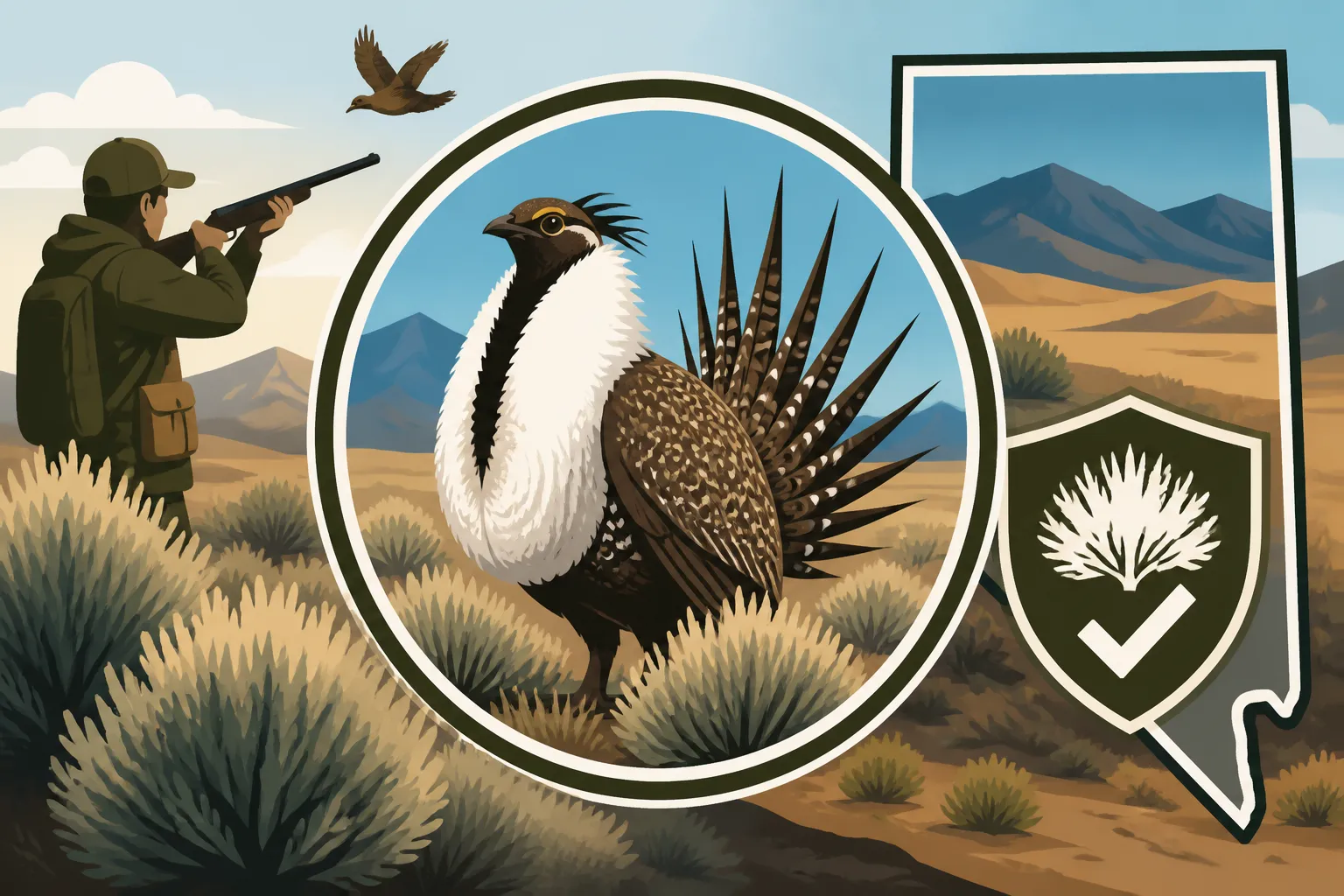
Nevada's wildlife biologists aren't just guessing when it comes to sage grouse. They're on the ground, year after year, meticulously gathering data to understand population trends and habitat health. One of the most iconic methods is the "lek count." If you've ever had the privilege of witnessing a sage grouse lek at dawn, you know it's an unforgettable spectacle. Males gather on these traditional breeding grounds, strutting and booming to attract females. Biologists visit these leks every spring, counting the number of males displaying, which gives them a crucial index of the breeding population.
Beyond leks, they conduct brood surveys in the summer to assess reproductive success – how many chicks survived per hen. This tells them how well the birds are reproducing and helps predict future population trends. They also monitor habitat conditions, looking at sagebrush height, cover, and the presence of invasive species. All this data is fed into complex models to give the Nevada Department of Wildlife (NDOW) the most accurate picture possible of sage grouse health. This isn't just academic; it’s the bedrock upon which all management decisions, including hunting regulations, are built. Partner organizations, often involving volunteers and local land managers, play a huge role in this data collection, extending the reach of these crucial monitoring efforts across the state.
Nevada's Regulatory Framework for Sage Grouse Hunting
Navigating the regulations for sage grouse hunting can sometimes feel like trying to solve a puzzle, especially when seasons are constantly adjusted based on population data. The core of Nevada's management approach for sage grouse is a deeply conservative one, rooted in the understanding that these birds are vulnerable and require careful stewardship. NDOW takes its responsibility seriously, and that often means making tough decisions that impact hunter opportunity in the short term, all for the long-term health of the species. The regulations—from bag limits to specific unit closures—aren't arbitrary; they are direct responses to the data collected on the ground, aiming to ensure sustainable hunting opportunities while prioritizing population stability.
Season Setting and Quota Determination
The process of setting sage grouse seasons in Nevada is an annual exercise in patience and precision. Each spring, after the critical lek counts and early summer brood surveys are complete, biologists crunch the numbers. They look at a host of factors: not just the number of birds, but also the previous year's reproductive success, over-winter survival rates, and even broader environmental conditions like drought or exceptional rainfall. A dry spring might mean poorer chick survival, for instance, which would lead to more restrictive regulations.
NDOW then takes these recommendations to the Nevada Board of Wildlife Commissioners, who are the ones who ultimately vote on the hunting seasons. It’s a public process, and it allows for input from all stakeholders, including hunters. Often, if populations are stable or showing signs of recovery, you might see slightly more liberal seasons. If populations are declining, however, the seasons can become very restricted, or even closed in certain units. This adaptive management approach is crucial for a species like the sage grouse, which can experience significant fluctuations year to year. It’s this cautious approach that ensures hunting remains a sustainable activity. For a deeper dive into this, you might find How Nevada Sets Its Tag Quotas insightful.
Permit Requirements and Hunter Education
Beyond a general hunting license, there's a specific requirement for hunting sage grouse in Nevada: you need a special permit. This isn't just a formality; it's another layer of the state's conservation strategy. These permits are typically drawn through an application process, and their number is often limited, directly controlling the total hunter effort on the species. The application period usually aligns with the general big game draw, which can be a whirlwind of deadlines and decisions for hunters.
These permits also help NDOW gather better harvest data, as permit holders are often required to report their success. This feedback loop is essential for refining management strategies in future years. Furthermore, whether you're chasing sage grouse or any other game animal in the Silver State, hunter education is a foundational requirement. If you were born after 1959, you absolutely need to complete a hunter education course to legally hunt big game in Nevada, and sage grouse fall under that umbrella. This ensures hunters are not only safe and responsible in the field but also understand the ethical considerations and conservation principles that underpin all hunting. You can learn more about this general requirement in Anyone Born After 1959 Needs Nevada Hunter Education, and specifically for sage grouse, make sure you check out Nevada Sage Grouse Permit Requirements.
Navigating Hunt Units and Access for Sage Grouse
One of the biggest hurdles for any hunter, especially those new to Nevada, is understanding the vast and sometimes bewildering system of hunt units. This challenge becomes even more pronounced when you’re pursuing a species like sage grouse, which has very specific habitat requirements and can be found in scattered, sometimes remote, pockets across the state. It’s easy to get frustrated trying to figure out where to even begin, but with the right tools and a little homework, you can significantly improve your chances of finding huntable populations and accessing public land legally and ethically.
Reading Nevada's Hunt Unit Designations for Sage Grouse
Nevada's hunt units aren't just arbitrary lines on a map; they're designed to help manage game populations at a more localized level. For sage grouse, these unit boundaries often encompass specific sagebrush habitats or population centers. When you look at the regulations, you'll see specific units listed for sage grouse seasons, and many units will simply be closed. This isn't to make things harder, but rather to protect vulnerable populations while allowing hunting where the numbers can sustain it.
Learning to read these unit designations and understanding what they mean is crucial. Online mapping platforms, like GoHunt's mapping tools, become invaluable here. They allow you to overlay unit boundaries with land ownership, helping you identify public access points and prime sagebrush habitat. Before you even apply, understanding the unit's terrain, its sagebrush density, and its history of sage grouse harvest is key. This background knowledge helps you make an informed decision on where to focus your limited draw chances. For a deeper understanding of how these units are structured, check out Reading a Nevada Hunt Unit Before You Apply and to help visualize those boundaries on your maps, take a look at Downloading Nevada Unit Boundary Layers.
Public Land Access and Ethical Hunting Practices
Nevada is truly a public land hunter's paradise, with a massive percentage of the state managed by federal agencies like the Bureau of Land Management (BLM). This is excellent news for sage grouse hunters, as vast tracts of sagebrush country are open for public access. However, "open" doesn't always mean easy. Many of these areas are remote, with rough roads that demand a well-prepared vehicle, and cell service is often non-existent.
It's absolutely essential to respect land ownership boundaries. While a lot of sage grouse country is public, there are often private ranch lands interspersed within units, especially in the valleys. Always carry a reliable map and GPS with current land ownership overlays (again, tools like GoHunt are a lifesaver here). Trespassing, even accidentally, can lead to serious consequences and reflects poorly on all hunters. Also, be mindful of motorized travel rules. Wilderness Study Areas (WSAs) and other designated areas have strict limits on vehicle use, and driving off-road to chase birds or retrieve downed game is rarely, if ever, allowed. Understanding these rules is not just about legality; it's about being an ethical and responsible hunter who respects the land and its resources. You can read more about the sheer volume of public land in BLM Ground Is Where Most Nevada Hunting Happens, and get up to speed on vehicle rules with Motorized Travel Rules on Nevada Public Land.
Here’s a simplified look at some factors influencing sage grouse seasons:
| Factor | Impact on Sage Grouse Population | Potential Effect on Hunting Season (General) |
|---|---|---|
| Wet Spring / Summer | Generally improves chick survival and forage. | Potentially more liberal bag limits/longer seasons. |
| Drought Conditions | Reduces chick survival, degrades forage quality. | More restrictive bag limits, shorter seasons, or closures. |
| Extensive Wildfires | Destroys sagebrush habitat, increases predation. | Unit closures, significant harvest reductions for years. |
| Low Lek Counts | Indicates declining breeding population. | Reduced tag quotas, shorter seasons, or closures. |
| High Brood Success | Indicates good reproduction for future years. | Potentially stable or slightly increased harvest. |
| Invasive Species | Degrades habitat, increases fire risk. | Long-term habitat concerns leading to conservative seasons. |
| Winter Severity | Affects adult survival, especially in harsh winters. | Can lead to conservative seasons if severe losses occur. |
Conservation Efforts Beyond the Hunt
It’s easy to focus on the hunting regulations, permit applications, and scouting, but sage grouse management in Nevada is a much broader effort. Hunting, while an important part of conservation funding through license sales and Pittman-Robertson funds, is just one small piece of a much larger and more complex puzzle. The real heavy lifting for sage grouse conservation often happens behind the scenes, far from the hunting season, through dedicated habitat work and collaborative partnerships. It's an ongoing, year-round commitment that involves everyone from federal agencies to private landowners and, crucially, individual hunters.
Habitat Restoration and Partnerships
Protecting and restoring sagebrush habitat is the single most important thing we can do for sage grouse. This isn’t just about fencing off areas; it’s active, hands-on work. For example, efforts are continuously underway to control invasive species like pinyon and juniper trees, which can encroach on sagebrush ecosystems, creating perches for predators and reducing valuable sagebrush cover. Mechanical treatments or prescribed burns might be used to thin these conifers, allowing sagebrush to flourish again.
Then there's the challenge of cheatgrass, which we discussed earlier. Rehabilitation efforts after wildfires often focus on seeding native grasses and sagebrush species to prevent cheatgrass dominance, a battle that can take years to yield results. These projects are massive undertakings, requiring significant resources and collaboration. NDOW works hand-in-hand with federal agencies like the BLM and Forest Service, but also with private landowners, conservation groups, and even volunteers. It's a true partnership, where everyone brings resources and expertise to the table to heal the landscape. Understanding How Wildfire Changes Sagebrush Habitat gives you a deeper appreciation for the scale of this work.
The Hunter's Role in Sage Grouse Conservation
As hunters, we have a vital role to play in sage grouse conservation, extending far beyond the actual hunt itself. First and foremost, our license and tag purchases directly fund wildlife management activities, including sage grouse research, habitat restoration, and enforcement. This financial contribution is absolutely critical. Beyond that, though, our presence in the field makes us invaluable eyes and ears for biologists. Reporting your observations of sage grouse, especially during summer brood surveys or if you notice unusual bird behavior or habitat degradation, can provide crucial data that helps managers make better decisions.
Ethical behavior is also paramount. This means knowing and adhering to all regulations, respecting private property, and practicing responsible hunting techniques. It means understanding that the opportunity to hunt sage grouse is a privilege, one that requires our active participation in ensuring the species' future. By being responsible stewards of the land and advocates for sage grouse habitat, we ensure that future generations will also have the chance to experience the thrill of hunting this remarkable bird in Nevada’s iconic sagebrush country. If you're looking for more general data on harvest success and population trends, Reading a Nevada Hunt Statistics Table can be a great resource.
Disclaimer
This article is for general informational purposes only and does not constitute professional advice. Laws, prices and regulations vary by location and change over time. Consult a qualified professional for guidance on your specific situation.