Nevada Quail Bag Limits by Species
One of the most enjoyable things about hunting in Nevada is the sheer diversity of game, and for many, that means chasing quail across the state's varied landscapes. But let's be real, keeping track of different bag limits for various species can be a bit of a head-scratcher, leaving you wondering if you're filling your vest properly or accidentally overdoing it. This guide is here to untangle all that for you, ensuring you understand the specific daily and possession limits for each quail species you might encounter in Nevada.
Understanding Nevada's Quail Diversity
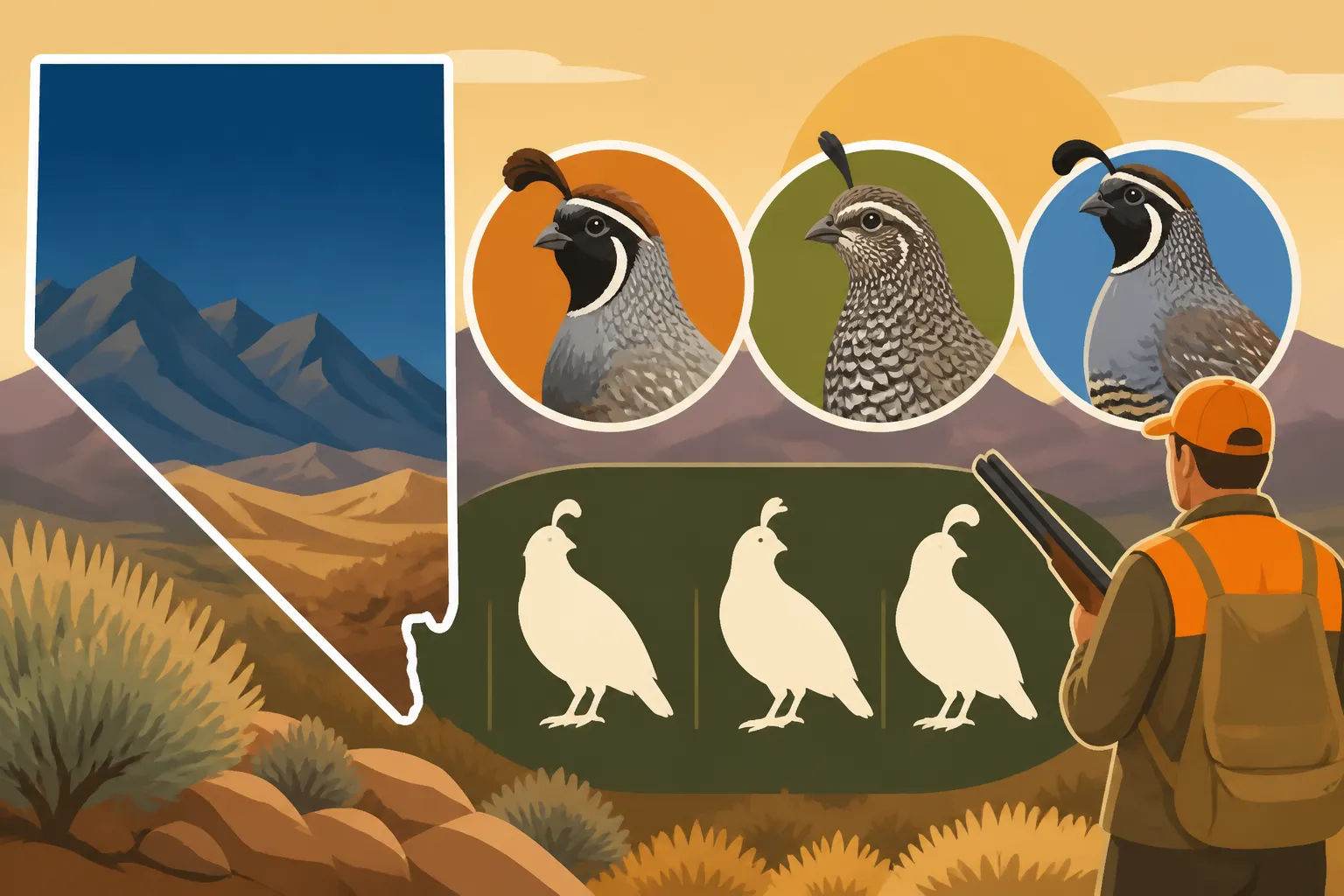
Nevada might be known for its vast deserts and soaring mountain ranges, but within these dramatic landscapes thrive several species of quail, each with its own preferred habitat and unique characteristics. Knowing which species you're pursuing is the first step toward understanding the regulations that govern your hunt. It’s not just about what you can shoot, but also where you’ll find them.
California Quail: The Valley Favorite
Ah, the California quail! For many hunters, this is the quintessential quail experience. These handsome birds, with their distinctive topknots, are commonly found in the valleys and foothills of western Nevada, often near agricultural fields, riparian zones, and brushy cover. They absolutely love areas where there's a good mix of dense cover for hiding and open areas for feeding. You'll often hear their cheerful "chi-ca-go" call echoing through the willows and sagebrush long before you see them explode from cover.
They tend to form large coveys, especially outside of breeding season, making for exciting, fast-paced action when you stumble upon a big group. If you've ever walked along a dry creek bed lined with heavy brush and cottonwood trees, you've likely walked through California quail country. They are resilient birds, often thriving even in areas with some human development, as long as they have access to food, water, and protective cover. Many hunters focus their efforts on these birds due to their widespread distribution and willingness to hold in cover, at least for a moment, making them a popular target.
Gambel's Quail: The Desert's Gem
Heading south and into the hotter, drier parts of the state, you'll encounter the Gambel's quail. These striking birds, with their bold facial markings and forward-curving topknot, are perfectly adapted to the desert environment. They're often associated with thickets of mesquite, catclaw acacia, and cholla cactus, especially near ephemeral washes or permanent water sources. Think of the country around Las Vegas or Laughlin, and you're imagining Gambel's quail habitat.
Hunting Gambel's quail is a totally different ballgame than California quail. They are notoriously leggy, preferring to run through the dense, thorny desert vegetation rather than flush, often leading hunters on a merry chase. When they do flush, they typically fly short distances before dropping back into cover, ready to run again. This can make for some incredibly challenging, but equally rewarding, hunts. Finding a reliable water source, especially in the heat of an early season hunt, is often key to locating these desert speedsters. It's truly amazing how they thrive in such arid conditions.
Mountain Quail: High Country Challenges
For those willing to put in the vertical miles, the mountain quail offers a truly unique Nevada hunting experience. These are the largest of the North American quail species, and they live up to their name by inhabiting higher elevations, often in dense conifer forests, mountain mahogany thickets, and chaparral zones. You'll find them in the more rugged, timbered mountain ranges, particularly in the northern and eastern parts of the state. These birds are less common than their valley-dwelling cousins, and they are masters of stealth.
Hunting mountain quail is typically a much more solitary affair. Coveys are generally smaller, and the birds are experts at utilizing dense cover to avoid detection. When flushed, they often fly downhill at incredible speed, quickly putting terrain between themselves and the hunter. This isn't a hunt for the faint of heart; it involves steep climbs, navigating thick brush, and a keen eye for subtle signs. However, the reward of finding and successfully bagging these elusive birds amidst the stunning backdrop of Nevada's high country is something truly special. Always be prepared for demanding terrain when chasing these mountain dwellers, which often requires a completely different approach than a typical valley hunt. Preparing Physically for Long Glassing Days can offer some good advice that applies to any tough mountain pursuit.
Nevada Quail Bag Limits: A Closer Look
Alright, let's get down to the nitty-gritty: the actual numbers you need to keep in mind when you're out in the field. Nevada has specific daily and possession limits that apply to all quail species combined. It's crucial to understand these rules to ensure a responsible and legal hunt. This isn't just a suggestion; these are the laws that protect our wildlife populations and ensure future hunting opportunities.
Daily Bag Limits Explained
The daily bag limit is the maximum number of quail you can legally harvest in a single calendar day. In Nevada, this limit is generally quite generous, which speaks to the health of our quail populations in many areas. For all species of quail – California, Gambel's, and Mountain – the daily aggregate bag limit is 10 birds. This means that no matter which species you encounter, or how many of each you harvest, the total number of quail in your possession for that day cannot exceed ten.
So, if you're having an amazing day and you've shot five California quail, you can still legally harvest five more Gambel's quail, but your total must not go over ten. This aggregate limit simplifies things a bit, as you don't need to count each species separately, but it places the responsibility squarely on the hunter to know their total. It’s always a good idea to count your birds as you go, especially if you're hitting multiple coveys or different habitats. Don't push it right up to the wire if you're not absolutely sure of your count.
Possession Limits Clarified
Beyond the daily bag, there's also a possession limit, which refers to the maximum number of legally taken game birds you can have in your possession at any given time, including those stored at home, in your vehicle, or at camp. In Nevada, the possession limit for quail is typically twice the daily bag limit, meaning 20 birds. This rule is designed to prevent hunters from stockpiling large quantities of game over multiple days without proper processing or consumption.
This possession limit means that if you're on a multi-day hunt, you can harvest your daily limit of 10 birds on day one, and if you haven't eaten or gifted any, you can still harvest another 10 birds on day two, bringing your total to 20. However, once you hit that 20-bird mark, you cannot harvest any more quail until you've reduced your possession total by consuming, processing, or sharing some of your birds. It's a common mistake for hunters to forget about the possession limit when they're away from home for an extended trip, so always keep it in mind.
Here's a quick summary table for clarity:
| Quail Species | Daily Bag Limit (Aggregate) | Possession Limit (Aggregate) | Typical Habitat |
|---|---|---|---|
| California Quail | 10 Birds (all species combined) | 20 Birds (all species combined) | Valleys, foothills, riparian areas, agricultural edges |
| Gambel's Quail | 10 Birds (all species combined) | 20 Birds (all species combined) | Desert washes, mesquite thickets, arid lands near water |
| Mountain Quail | 10 Birds (all species combined) | 20 Birds (all species combined) | High elevation forests, dense mountain brush |
Species-Specific Considerations
While the bag and possession limits are aggregate for all quail species, there are subtle considerations to keep in mind. For instance, while you can mix and match, identifying the species you're shooting at is always important for ethical hunting and for understanding the health of local populations. If you're consistently only finding one type of quail in an area, it helps you understand the habitat better.
One thing to always remember is that these limits apply to legally harvested birds. If you're hunting within a specific unit, make sure you're aware of any temporary closures or specific unit restrictions that might apply. While rare for quail, it's always wise to consult the current regulations booklet or a resource like GoHunt before heading out. They often have maps and information to help you pinpoint areas where you might find different species. Knowing your target and your location, perhaps by using Reading a Nevada Unit Boundary Map or Using onX Layers for Nevada Public Land, will always set you up for success.
Beyond the Bag: Essential Quail Hunting Regulations
Just knowing your bag and possession limits isn't quite enough to ensure a fully legal and responsible quail hunt in Nevada. There are several other critical regulations that every hunter needs to be familiar with, covering everything from when you can shoot to what kind of equipment you can use. Ignoring these can quickly turn a great day afield into a frustrating encounter with a game warden.
Legal Shooting Hours and Blaze Orange
One of the most fundamental rules for any hunt is adhering to legal shooting hours. For upland game birds like quail in Nevada, shooting hours generally run from one-half hour before sunrise to sunset. This window can shift slightly throughout the season as the sunrise and sunset times change, so it's always a good practice to check a reliable source for the exact times on the day you plan to hunt. A sunrise/sunset app on your phone can be a lifesaver here, keeping you within the legal window and ensuring ethical shots in good light. Nevada Legal Shooting Hours for Big Game gives a general idea, and while big game hours can sometimes differ, the principle of knowing your specific times is the same.
As for blaze orange, the rules for upland bird hunting are typically less stringent than for big game rifle seasons. Often, blaze orange is not required by law for upland bird hunting in Nevada. However, wearing some visible orange is always a smart, ethical choice for safety, especially if you're hunting with partners, or in areas where other hunters might be present. Visibility reduces the risk of accidents, plain and simple. Even if the law doesn't demand it, your common sense for safety should. Blaze Orange Requirements Through the Season provides more context on when it is and isn't mandatory.
Weapon Restrictions and Ammunition
When it comes to quail hunting, shotguns are the weapon of choice, and there are specific rules regarding their use. In Nevada, shotguns must be plugged to a maximum capacity of three shells – one in the chamber and two in the magazine. This is a common regulation across many states for migratory and upland birds, and it’s an easy rule to overlook if you're not accustomed to it. Make sure your shotgun is properly plugged before you even leave home.
As for ammunition, lead shot is generally legal for upland game birds like quail on most public lands in Nevada. However, it's always wise to double-check local regulations, especially if you're hunting near water sources or in specific wildlife management areas. Some areas might have restrictions on lead shot to protect waterfowl or other species that are sensitive to lead. Always be aware of your chosen shot size and material. It's often recommended to use smaller shot sizes like 7.5 or 8 for quail, as they are small birds and larger shot can cause excessive meat damage.
Tagging and Transportation Rules
Unlike big game, individual quail don't require a physical tag immediately upon harvest. However, you must keep "evidence of sex" on big game animals and often a wing or head on birds, especially migratory ones, until you've reached your vehicle or final destination for the day. For quail, you usually need to leave a fully feathered head or wing attached to the bird while in the field and during transport from the field to your camp or home. This allows game wardens to identify the species if needed and confirm that the birds were legally taken. Once you're at home and preparing them for the freezer, you can fully process them.
When transporting your birds, ensure they are securely stored and accounted for, especially if you're crossing state lines, which can have entirely different regulations. Always maintain the integrity of your harvest to avoid any questions about illegal taking. If you're camping, remember to review Camping Rules on Nevada BLM Ground and ensure your game is stored properly to prevent spoilage, particularly during early, warmer seasons.
Maximizing Your Nevada Quail Hunt
Hunting quail in Nevada isn't just about knowing the rules; it's about understanding the birds, their environment, and employing smart strategies. With three distinct species spread across vastly different terrains, a successful hunt often comes down to careful planning and adapting to conditions. There's a real art to getting into those coveys, whether it's the valley floor or high in the mountains.
Scouting and Habitat Recognition
One of the biggest keys to consistent quail hunting success is thorough scouting and the ability to recognize prime habitat. Quail are creatures of habit and density. They need three things: food, water, and cover, all within a relatively small area. Understanding how rainfall impacts How Rainfall Drives Chukar Numbers can also give you insight into quail populations, as both are upland birds heavily dependent on annual moisture. For California quail, look for brushy draws, river bottoms, and the edges of agricultural fields. For Gambel's, focus on desert washes with mesquite and catclaw, especially within a mile or so of permanent water sources. Mountain quail will be in dense timber, mountain mahogany, or chaparral at higher elevations.
Pre-season scouting, whether it's driving remote roads, hiking likely areas, or using digital mapping tools, is invaluable. Pay attention to droppings, tracks in dusty areas, and those tell-tale quail calls. Apps like GoHunt can be incredibly helpful for identifying public land, mapping out potential water sources, and understanding the topography of a unit. You can mark potential covey locations, plan your routes, and identify escape cover even before you step foot in the field. Knowing where the land is public, which you can determine by Reading a Land Ownership Layer Correctly, helps you focus your efforts where you're legally allowed to be.
Choosing the Right Gear and Dogs
Your gear can make or break a quail hunt. Lightweight, comfortable hiking boots with good ankle support are essential, especially if you're chasing Gambel's through rocky desert or scaling slopes for mountain quail. Dress in layers, as Nevada's temperatures can swing wildly, particularly in the morning and evening. A good upland vest or pack with plenty of room for birds, water, and extra shells is a must. And always, always carry plenty of water for yourself and any canine companions. When you're in open country, there's often no easy refill, and Water You Must Carry on a Desert Day Hunt is a real concern.
And speaking of canine companions, a well-trained bird dog is perhaps the ultimate asset for quail hunting. Pointers, flushers, or versatile breeds can drastically improve your success rate by locating birds, holding them for a flush, and retrieving downed game in thick cover. There's nothing quite like watching a good dog work a covey. Ensure your dog is in excellent physical condition, accustomed to the terrain and temperatures, and has appropriate protective gear like booties if you're in thorny country. Always check Hound Rules for Mountain Lion Hunting or Bird Dog Rules for Chukar Hunting if you're unsure about specific rules related to dogs in certain areas or for particular game species, though quail rules are generally more relaxed.
Respecting Private Land and Public Access
Nevada has vast amounts of public land, primarily managed by the BLM and National Forests, which is fantastic for hunters. However, private land exists, often in checkerboard patterns or along valley bottoms, and respecting those boundaries is paramount. Always know precisely where you are. Motorized Travel Rules on Nevada Public Land also apply, so be aware of where you can and cannot drive your vehicle.
Before you hunt, make sure your maps are updated, whether they're paper or digital. Ignorance of boundaries is never an excuse for trespassing. If you plan to hunt near private property, consider asking for permission well in advance. Sometimes, a friendly knock on a landowner's door can open up unexpected opportunities. But if permission isn't granted, respect that decision and move on. Maintaining a good relationship with landowners is vital for preserving hunting access across the state. Remember that even on public land, access can be tricky, and What Nevada Backroads Do to a Tire means you need a reliable vehicle and possibly some recovery gear.
Disclaimer
This article is for general informational purposes only and does not constitute professional advice. Laws, prices and regulations vary by location and change over time. Consult a qualified professional for guidance on your specific situation.