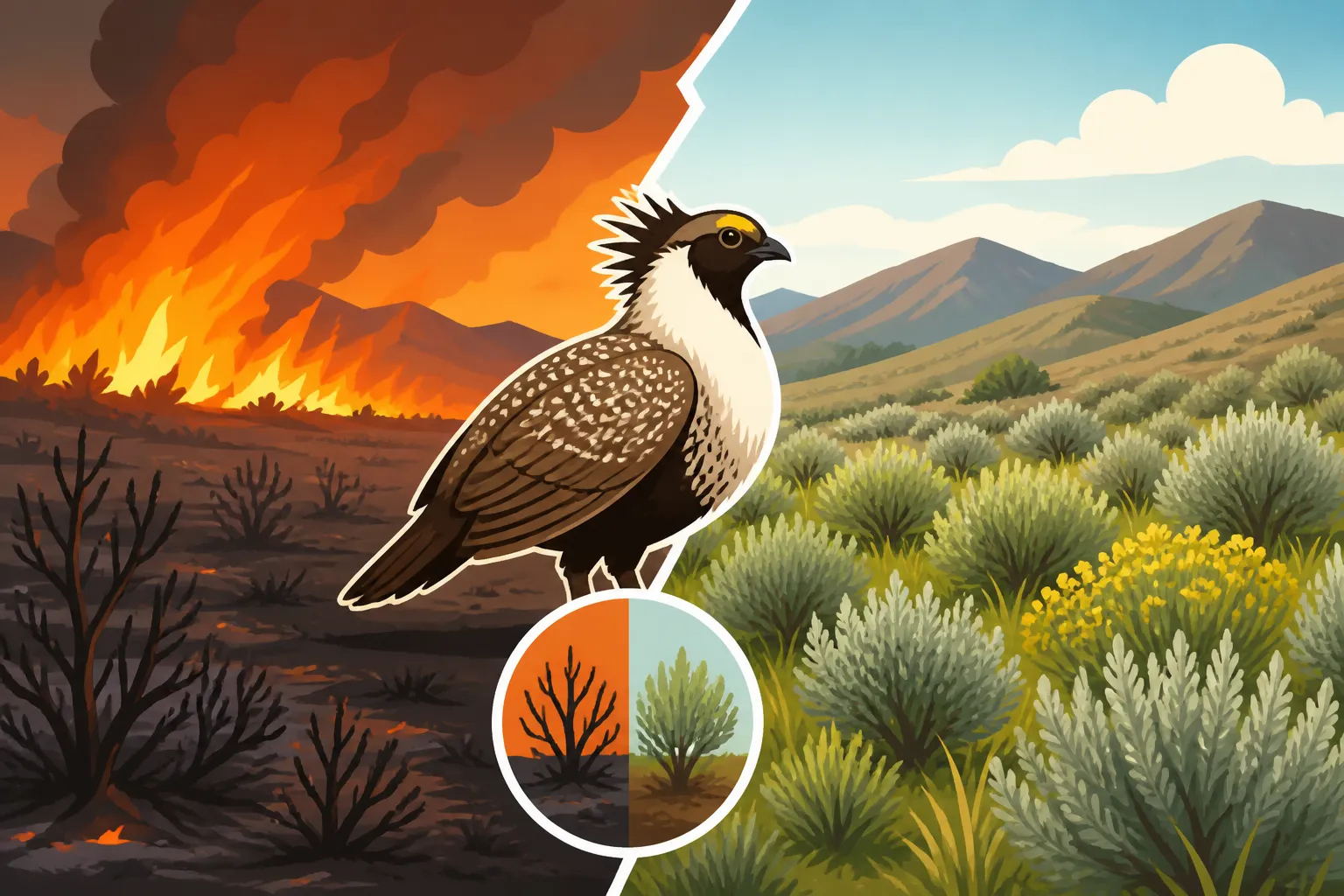
How Wildfire Changes Sagebrush Habitat
Hunting in Nevada is an experience defined by vast, open landscapes, and the health of those landscapes directly impacts the game animals we pursue. When wildfire sweeps through our sagebrush country, it doesn't just clear the land; it fundamentally alters the habitat that deer, elk, and especially sage grouse rely on, presenting a significant challenge for wildlife and a new set of considerations for hunters. This guide will walk you through how these fires transform our cherished sagebrush ecosystems, from immediate devastation to long-term ecological shifts, and what that means for both the wildlife and your hunting plans.
The Lifeblood of the Great Basin: Understanding Sagebrush Ecosystems
To truly grasp the impact of wildfire, we first need to appreciate just how vital the sagebrush ecosystem is to Nevada. It’s more than just a plant; it's the very foundation of life for countless species across the Great Basin.
Why Sagebrush is So Critical for Nevada Wildlife
Big sagebrush (specifically Wyoming big sagebrush, mountain big sagebrush, and basin big sagebrush) isn't just common; it's an absolute powerhouse for wildlife. For our beloved mule deer, sagebrush is a primary winter forage. When snow blankets the higher elevations, those aromatic leaves are often the only thing poking through, providing crucial nutrition that keeps deer alive until spring. It’s a literal lifeline. Beyond food, the dense structure of sagebrush provides invaluable cover. Fawns can hide from predators, and adult deer find thermal protection from both the searing summer sun and the brutal winter winds. Without it, they're exposed, vulnerable, and often struggle to survive. Mule Deer Are the Reason Most Hunters Apply in Nevada is a good read if you want to dive deeper into why this species is so important to the state.
Then there are the sage grouse, the iconic bird of the sagebrush sea. These magnificent birds are obligate sagebrush users, meaning they must have sagebrush for every single aspect of their life cycle. They eat its leaves, hide their nests under its canopy, raise their chicks among its branches, and rely on its cover to escape predators. If there's no sagebrush, there are no sage grouse. It's that simple. Numerous other species, from pygmy rabbits to pronghorn, also rely on this unique plant community for their survival. You can read more about Sage Grouse and Nevada's Sagebrush Sea to understand their specific needs.
The Slow Pace of Sagebrush Growth and Recovery
Here’s where the challenge truly lies: sagebrush isn’t a quick-growing plant. It’s not like annual grasses or some deciduous shrubs that bounce back vigorously after a fire. Sagebrush grows slowly, often taking decades—sometimes even a century or more—to reach maturity and provide the kind of dense, protective cover and abundant forage that wildlife needs. A mature sagebrush plant may be 50 to 100 years old. When a hot wildfire rips through, it doesn't just top-kill the plant; it often incinerates the entire plant, including the seeds in the soil. Unlike some pines or aspens, sagebrush doesn't typically sprout from root crowns after a fire. It has to re-establish from seed, and those seeds need very specific conditions to germinate and grow. This slow regeneration means that once sagebrush habitat is lost, it can take an incredibly long time—longer than many of us will hunt in a lifetime—for it to truly recover to its former glory. This makes every acre of intact sagebrush incredibly precious.
The Immediate Devastation: What Happens During a Wildfire
When a wildfire ignites in sagebrush country, the scene is one of immediate, overwhelming destruction. The ecosystem, so carefully balanced, is instantly thrown into chaos.
Direct Impact on Sagebrush Plants
Sagebrush plants contain volatile oils that make them highly flammable, almost explosive, when dry. This is why you often see sagebrush country burn so intensely and quickly, especially with strong winds. The fire doesn't just scorch the leaves; it often burns the plant down to nothing, leaving behind only ash and bare soil. The intense heat generated by these fires can sterilize the upper layers of the soil, destroying the existing seed bank for sagebrush and other native plants. It changes the chemical composition of the soil, making it less hospitable for native species to return. The sheer heat can also kill off beneficial soil microorganisms that are crucial for a healthy ecosystem. When the fire front passes, what's left is often a lunar landscape, black and devoid of the intricate life that once thrived there. The native grasses and forbs that grow beneath the sagebrush are also consumed, further stripping the land of its diverse plant life.
Effects on Wildlife During and Immediately After a Blaze
The immediate aftermath for wildlife is devastating. Animals capable of moving quickly, like mule deer, elk, and antelope, will flee the flames, often heading for unburned areas, river bottoms, or other refuges. This displacement can push them into already occupied territories, increasing competition for resources or forcing them into areas with higher predator density. Smaller, slower-moving animals, or those with very limited home ranges like ground squirrels and reptiles, are often caught in the blaze, suffering direct mortality. Ground-nesting birds, including sage grouse, lose their nests and chicks.
Even for those that escape the immediate fire, the habitat is gone. Winter ranges, which might be critical for deer survival in the coming months, are now barren. Without the cover of sagebrush, animals are exposed to predators and the elements. The search for food becomes a desperate scramble, and stress levels skyrocket. The intricate web of life is severed, leaving a stark, black canvas where once there was a thriving, vibrant ecosystem. Hunters using tools like GoHunt for their unit research might notice post-fire adjustments to herd distribution maps, reflecting this immediate displacement.
The Lingering Aftermath: Long-Term Habitat Transformation
The fire might be out, but the battle for the land has just begun. The long-term impacts of wildfire are often more insidious and, in many ways, more damaging than the immediate devastation.
The Invasion of Cheatgrass and Other Annuals
Perhaps the most significant long-term consequence of wildfire in sagebrush country is the opportunistic invasion of non-native annual grasses, particularly cheatgrass. Cheatgrass, an invasive species, loves disturbed soil and thrives in the wake of a fire. It sprouts quickly, consumes available moisture, and outcompetes any attempts by native plants to re-establish. The problem doesn't stop there: cheatgrass creates a dangerous feedback loop. It dries out incredibly early in the season, providing abundant, highly flammable fuel. This means that areas dominated by cheatgrass are far more prone to frequent and intense wildfires than native sagebrush stands. Cheatgrass and What It Did to Nevada Range dives deep into this specific issue.
Where historically a sagebrush ecosystem might burn every 50 to 100 years, a cheatgrass-dominated landscape can burn every 3 to 5 years. This creates a "fire cycle" that continuously prevents slow-growing sagebrush from ever re-establishing, effectively converting once-rich sagebrush habitat into a monoculture of cheatgrass. This fundamentally transforms the landscape, making it inhospitable for many native species.
Altered Forage and Cover for Big Game and Upland Birds
The shift from diverse native vegetation to cheatgrass and other annuals has profound effects on wildlife. For mule deer, the loss of sagebrush means a significant reduction in critical winter browse. Cheatgrass offers very little nutritional value for deer, especially in winter. This can lead to decreased body condition, reduced fawn survival rates, and overall declines in herd health. While other species might adapt to some degree, sage grouse, as we discussed, simply cannot. The complete absence of sagebrush means these birds lose their sole source of food, nesting cover, and escape routes. Post-fire, you often see complete localized extirpation of sage grouse populations, meaning they vanish from that area entirely.
Furthermore, the low-lying, sparse nature of cheatgrass and young annuals offers almost no cover from predators. A deer or a sage grouse chick trying to hide in a cheatgrass field is far more exposed than one nestled within the dense branches of a sagebrush plant. This increased predation pressure further impacts wildlife populations trying to survive in a burned landscape. When you're researching units on GoHunt, it's really important to look at recent burn scars on satellite imagery and understand how they might affect animal distribution and behavior. These changes can dramatically shift where you expect to find game, and GoHunt's mapping features are invaluable for identifying these transformed areas.
Water Availability and Soil Erosion Post-Fire
Another critical long-term impact is on water resources and soil stability. Healthy sagebrush ecosystems, with their deep root systems and litter layer, are excellent at holding soil in place and allowing moisture to slowly percolate into the ground. When a fire burns away this vegetation, especially on steeper slopes, the soil is left exposed and vulnerable. Intense rainstorms, common in the Great Basin, can then lead to severe soil erosion, washing away topsoil and nutrients that are vital for future plant growth. This eroded sediment can clog streams and fill in important water sources for wildlife.
The lack of vegetation also increases runoff, meaning less water infiltrates the ground to replenish springs and underground aquifers. This can lead to decreased water availability in a naturally arid region, further stressing wildlife populations. Hunters who rely on Hunting Water in Nevada's Driest Country will find that understanding these post-fire hydrological changes is crucial for locating animals in affected areas. Burned areas become hot, dry, and unstable, changing the entire dynamic of how animals use the landscape.
Managing the Burned Landscape: Recovery Efforts and Hunter Implications
Dealing with the aftermath of wildfires in sagebrush habitat is a monumental task, but it's one that conservation agencies and concerned citizens are tackling head-on. As hunters, understanding these efforts and how they impact our strategy is key.
Restoration Techniques and Challenges
Restoration efforts in burned sagebrush ecosystems are complex, expensive, and often take many years to show significant results. Common techniques include aerial seeding of native grasses and forbs, and sometimes even sagebrush seeds, though the latter is notoriously difficult. Specialized drills are used to plant seeds directly into the soil. In some cases, agencies may plant young sagebrush seedlings grown in nurseries. Another critical part of restoration involves controlling invasive species like cheatgrass, often through targeted herbicide applications or prescribed grazing.
Beyond reseeding, habitat improvements might include juniper removal in areas where encroaching conifers have outcompeted sagebrush. Water Development Projects Built for Wildlife are also often part of post-fire recovery, ensuring that essential water sources remain available as the habitat slowly rebuilds. The sheer scale of burned acreage in Nevada means these efforts are ongoing, requiring sustained funding and commitment. The challenges are immense: unpredictable weather, continued fire cycles, and the slow growth rate of sagebrush itself mean that full ecological recovery is a multi-decade, if not multi-century, endeavor.
How Wildfire Affects Hunting Strategies and Unit Choices
For hunters, understanding burned areas is paramount. When you're doing your pre-season scouting or even using e-scouting tools, burn scars on satellite imagery should immediately grab your attention. A recent burn might mean game animals have shifted their patterns entirely, moving to unburned pockets of habitat or entirely out of a unit. However, some older burns can eventually become attractive again as certain plants regenerate. Early successional plants that thrive after fire, like certain forbs, can provide temporary forage.
Using platforms like GoHunt, you can overlay burn maps with historical animal movements and harvest data to make more informed decisions. You might find that a unit with extensive burn scars that once had great mule deer numbers now holds fewer animals, or that they're concentrated in very specific unburned drainages or adjacent mountain ranges. Conversely, an older burn, say 10-15 years out, might start to show some patchy sagebrush regrowth and increased forage diversity, potentially drawing deer back in. Always check the official unit descriptions and recent game surveys, as these often reflect post-fire conditions. Reading a Nevada Hunt Unit Before You Apply takes on new importance when wildfires have altered the landscape. You might need to adjust your expectations for specific areas or even consider different units entirely based on the extent and age of recent fires. Knowing E-Scouting a Nevada Unit Before the Season and how to interpret these landscape changes from your computer screen can save you a lot of time and effort in the field.
| Aspect | Unburned Sagebrush Habitat | Post-Wildfire Sagebrush Habitat (Short-term) | Post-Wildfire Sagebrush Habitat (Long-term) |
|---|---|---|---|
| Dominant Vegetation | Big sagebrush, native grasses | Bare ground, ash, some annual weeds | Cheatgrass, other invasive annuals, sparse sagebrush |
| Wildlife Cover | Excellent, varied height & density | Non-existent, extreme exposure | Poor, low-lying, less thermal protection |
| Forage Quality | High-quality browse for deer, specific for sage grouse | Very low, limited palatable plants | Reduced, often dominated by less nutritious invasives |
| Fire Risk | Moderate, depending on fuel loads | High (from dry annuals, creating a cycle) | High (increased cheatgrass, frequent fires) |
| Soil Stability | Good, root systems hold soil | Poor, increased erosion | Variable, often reduced stability |
| Hunter Considerations | Predictable patterns, established routes | Seek unburned fringes, expect displacement | Identify areas with early regrowth or different species |
Hunter's Role in Habitat Conservation
As hunters, we have a vital role to play in the conservation of sagebrush habitat. Our connection to the land and our passion for wildlife means we have a vested interest in these ecosystems thriving. This can involve supporting conservation organizations that are actively involved in sagebrush restoration projects. Many state wildlife agencies also have volunteer programs for planting seedlings, removing invasives, or improving water sources. Donating a portion of your hunting dollars to conservation groups directly contributes to these efforts.
Beyond active participation, simply being aware of the impact of wildfires and advocating for sound land management policies is crucial. Understanding the delicate balance of these environments helps us make better choices when we’re out in the field and when we’re supporting political efforts that affect public lands. Every hunter's dedication to understanding and contributing to the health of the sagebrush biome makes a difference in ensuring these landscapes continue to provide for wildlife and future generations of hunters.
Disclaimer
This article is for general informational purposes only and does not constitute professional advice. Laws, prices and regulations vary by location and change over time. Consult a qualified professional for guidance on your specific situation.