Desert National Wildlife Refuge Rules
Stepping foot into Nevada's vast public lands can feel like pure freedom, but when you look at an area like the Desert National Wildlife Refuge, it's easy to get bogged down in a mire of confusing regulations. Many hunters, especially those new to the state or used to more straightforward BLM land, find themselves scratching their heads, wondering what's allowed and what's strictly off-limits in this unique and vital desert habitat. This guide is here to untangle those rules, clarify the opportunities, and help you plan a respectful and legal hunt within one of Nevada's most special places.
Understanding the Desert National Wildlife Refuge's Unique Status
The Desert National Wildlife Refuge (DNWR) isn't just another stretch of open desert; it's a designated refuge, meaning it has a specific conservation mission that influences every aspect of its management, including public access and hunting. This distinction is crucial for hunters to understand, as the rules here are often more stringent and nuanced than on typical Bureau of Land Management (BLM) acreage or even national forest lands.
A Refuge, Not Just Public Land
When we talk about "public land" in Nevada, most hunters immediately think of the vast expanses managed by the BLM or the forested stretches of the Humboldt-Toiyabe National Forest. These lands generally have broad public access mandates. However, a National Wildlife Refuge like the DNWR operates under a different primary directive: wildlife conservation and habitat protection. While compatible public uses, including hunting, are permitted, they are secondary to the refuge's core mission. This means that access might be limited to certain areas, specific seasons, or require special permits beyond your state hunting license and tag. It's a place where wildlife comes first, and human activities are carefully managed to ensure minimal disturbance to the desert ecosystem. Ignoring this fundamental difference can lead to frustration and potential legal issues.
Proximity to Population Centers and Its Impact
One of the most defining characteristics of the Desert National Wildlife Refuge is its surprisingly close proximity to the metropolitan area of Las Vegas. This isn't some remote, untouched wilderness hundreds of miles from civilization; parts of it are practically on the city's doorstep. This proximity brings unique challenges and opportunities. On one hand, it makes the refuge relatively accessible for day trips or weekend hunts for a large population base. On the other hand, it means the refuge experiences significant recreational pressure, not just from hunters, but also hikers, off-road enthusiasts, and sightseers. The refuge management must balance these diverse interests with its conservation goals, which often results in stricter regulations regarding vehicle access, camping, and even where and when hunting can occur, all to protect the fragile desert environment and its inhabitants from overuse or undue disturbance. This constant balancing act directly shapes the rules you'll encounter as a hunter.
Why the Rules Differ from BLM or National Forest
The operational philosophy of the U.S. Fish and Wildlife Service, which manages national wildlife refuges, is inherently different from the BLM or the Forest Service. While all federal land agencies have conservation responsibilities, the refuge system prioritizes wildlife above all else. For instance, the BLM manages for multiple uses, including grazing, mining, and recreation, alongside conservation. National Forests balance timber, recreation, and wildlife. Refuges, by design, focus primarily on providing sanctuary and managing habitat for wildlife species.
This focused mission translates into stricter rules on vehicle access, often limiting travel to designated routes only, rather than the more permissive "open cross-country travel" you might find on some BLM lands. You'll also encounter more specific rules about what you can hunt, when, and where, with certain areas potentially closed to hunting entirely or only open for very specific game species to protect sensitive populations or habitats. The Desert National Wildlife Refuge, for example, has vast wilderness areas where motorized access is strictly prohibited, and even foot traffic can be regulated to protect bighorn sheep lambing grounds or sensitive plant communities. It's not about being prohibitive for the sake of it, but about ensuring the refuge can fulfill its core purpose.
General Hunting Regulations Within the Refuge
Hunting within the Desert National Wildlife Refuge is a privilege, and it comes with a distinct set of rules that often go beyond statewide Nevada Department of Wildlife (NDOW) regulations. It’s imperative for every hunter to be fully aware of these refuge-specific mandates to ensure a legal and enjoyable experience. This isn't a place where you can just assume the state hunting regulations cover everything; there's an extra layer of federal oversight here.
Permitted Species and Restricted Areas
While the Desert National Wildlife Refuge is synonymous with desert bighorn sheep, it also offers opportunities for other game species, though often under tight control. Mule deer and certain upland game birds like chukar and quail can be hunted in specific areas and during designated seasons. However, don't expect a free-for-all. Areas may be temporarily or permanently closed to hunting for various reasons, such as protecting sensitive wildlife populations, managing visitor safety in high-use zones, or preserving critical habitat. For example, some units might be open for sheep but closed to deer, or vice versa. It’s crucial to consult the annual refuge-specific hunting regulations pamphlet, available from the refuge office or their website, in addition to the statewide NDOW regulations. This pamphlet will clearly delineate open and closed areas, sometimes even using maps to mark specific boundaries that differ from standard NDOW hunt unit lines. Always double-check this information, because accidentally stepping into a closed area with a firearm can result in serious penalties.
Specific Season Dates and Tag Requirements
One common pitfall for hunters is assuming that refuge seasons align perfectly with statewide NDOW seasons. While often overlapping, refuge seasons can have earlier closures, later openings, or different hunt period structures altogether, especially for bighorn sheep. For deer, for instance, a statewide archery season might run for several weeks, but within the refuge, it might be truncated or restricted to certain zones. Likewise, special refuge permits might be required in addition to your state big game tag, particularly for highly sought-after species like bighorn. These permits are usually non-transferable and often specify the exact dates and areas you are allowed to hunt. It's not uncommon for a limited number of "refuge access permits" to be issued, even to successful tag holders, to control hunter density and minimize impact. Always check the specific refuge regulations for the species you intend to hunt and the unit you've drawn. When Nevada Archery Deer Season Opens and When Nevada Archery Deer Season Closes might give you the statewide picture, but the refuge rules are the ultimate authority within its boundaries.
Vehicle Access and Travel Restrictions
This is where the Desert National Wildlife Refuge often presents the biggest challenge and source of confusion for hunters. Unlike many BLM lands where you might have more latitude, vehicle access within the refuge is highly regulated. Most travel is restricted to established, maintained roads. "Established" is key here; often, old two-track trails or washes that might look passable are strictly off-limits. Cross-country travel, even for retrieving downed game, is generally prohibited. The refuge has vast designated Wilderness Areas where all motorized and mechanized travel is forbidden. This means no ATVs, no dirt bikes, and even no mountain bikes in these zones.
You might be able to drive your truck on a graded dirt road to a trailhead, but from there, you're on foot. This necessitates careful planning for packing out game and understanding the physical demands of a hunt in roadless country. Always look for signage, consult refuge maps, and understand that violations of vehicle restrictions are taken very seriously. These rules are in place to prevent habitat degradation, minimize erosion, and protect the wilderness character of the refuge. For hunters used to driving closer to their hunting spots, this requires a significant shift in strategy and preparation. Motorized Travel Rules on Nevada Public Land might apply generally, but the refuge's rules are even more stringent.
| Feature | Typical Nevada BLM Land | Desert National Wildlife Refuge (DNWR) |
|---|---|---|
| Primary Mission | Multiple-use (grazing, mining, recreation, conservation) | Wildlife conservation and habitat protection |
| Vehicle Access | Generally open to established roads and some two-tracks | Strictly limited to designated, maintained roads only |
| Cross-Country | Often permitted for retrieval, with common sense | Generally prohibited, even for game retrieval |
| Wilderness Areas | Motorized travel generally restricted | All motorized/mechanized travel strictly forbidden |
| Hunting Seasons | Statewide NDOW regulations | Refuge-specific seasons may differ from statewide |
| Permits | State license and tag | State license/tag + potential refuge-specific access permits |
| Camping | Dispersed camping widely allowed | Restricted to designated sites or specific rules apply |
Special Considerations for Desert Bighorn Sheep
The Desert National Wildlife Refuge is arguably most famous for its thriving population of desert bighorn sheep. This magnificent animal is the undisputed crown jewel of the refuge, and hunting opportunities, while rare and highly coveted, are deeply intertwined with the refuge's management and conservation efforts.
The Refuge's Iconic Bighorn Herds
The DNWR was originally established, in large part, to protect and manage desert bighorn sheep populations. Today, it hosts some of the healthiest and most robust herds in the state, making it a dream destination for any sheep hunter. These sheep are incredibly well-adapted to the harsh desert environment, finding sustenance and shelter among the rugged, rocky slopes and remote canyons. The sheer number of sheep, and the quality of rams found here, is a testament to the refuge's successful management practices and its vast, undisturbed habitat. For many, drawing a bighorn tag for a unit within the refuge is the ultimate prize, representing years of applying and accumulating bonus points. Desert Bighorn Across Southern Nevada dives deeper into where these majestic animals roam.
Application and Drawing for Bighorn Tags
Getting a bighorn sheep tag for the Desert National Wildlife Refuge is one of the most challenging feats in western big game hunting. Tags are extremely limited, and draw odds are notoriously low, even for residents. Nonresidents face even steeper odds due to quotas and the state's bonus point system. Hunters must apply through the general Nevada big game draw, selecting specific hunt units that fall within the refuge boundaries. Because these tags are so rare, many hunters put in for years, even decades, building up valuable bonus points through systems like those explained in Nevada Squares Your Bonus Points Into Draw Chances. Even with multiple points, success is far from guaranteed; it's truly a hunt of a lifetime opportunity, and the application process is an annual ritual for dedicated sheep fanatics.
Guided Hunts and Access Challenges
While hiring a guide isn't mandatory for bighorn sheep in Nevada, many successful tag holders for the DNWR opt to use one, especially given the refuge's challenging terrain and complex access rules. A reputable Nevada sheep guide will not only bring invaluable experience in locating and judging rams but will also be intimately familiar with the refuge's specific regulations, boundaries, and travel restrictions. They'll know which roads are open, which areas are closed, and how to navigate the wilderness zones responsibly.
For hunters who draw a tag and plan a do-it-yourself hunt, the access challenges are significant. You'll need to be exceptionally self-reliant, prepared for extensive foot travel, and skilled in desert navigation. Satellite communication devices are highly recommended, as cell service is nonexistent in much of the refuge. Without a guide, understanding Wilderness Study Areas and Vehicle Limits becomes even more critical, as venturing into restricted areas can void your hunt and result in fines. The sheer size and remoteness, despite its proximity to Vegas, means you must be prepared for true backcountry conditions.
Planning Your Hunt: What to Know Before You Go
A successful hunt in the Desert National Wildlife Refuge hinges on meticulous planning and thorough preparation. This isn't a place for last-minute decisions or relying on assumptions. The unique environment and specific regulations demand a proactive approach.
Required Permits and Paperwork
Beyond your standard Nevada hunting license and the specific big game tag for the unit you've drawn, hunting in the DNWR often requires additional permits issued by the refuge itself. These "refuge special use permits" are often specific to the species and hunt season and are designed to control hunter numbers and ensure compliance with refuge-specific rules. It's not uncommon to be required to pick up your permit in person from the refuge headquarters or to attend a mandatory orientation. Always verify the current requirements well in advance of your hunt. Carrying all necessary permits, licenses, and tags, along with a valid ID, is non-negotiable when in the field. Refuge officers, like state game wardens, have the authority to check your documents and ensure you are operating legally within the refuge boundaries. Make copies of everything and keep them separate from your originals in case of loss or damage.
Scouting Restrictions and Best Practices
Scouting is an essential part of any successful hunt, but within the Desert National Wildlife Refuge, it's subject to the same regulations as hunting itself. This means adhering to vehicle restrictions, respecting closed areas, and understanding that certain activities, like setting up trail cameras or baiting, are strictly prohibited. Baiting and Trail Camera Rules in Nevada will outline the statewide laws, but refuge rules can be even stricter. When scouting, focus on learning the terrain, identifying potential water sources, and understanding animal movement patterns without disturbing the wildlife.
Using mapping tools like onX Hunt or GoHunt is absolutely critical for effective scouting in the DNWR. These apps provide detailed topographical maps, land ownership overlays, and, most importantly, often have layers that clearly delineate refuge boundaries, wilderness areas, and designated roads. You can use these tools to e-scout from home, marking potential glassing points, water sources, and access routes. Using onX Layers for Nevada Public Land can be a lifesaver when navigating these complex areas. However, remember that technology is a tool, not a substitute for on-the-ground knowledge and respecting the specific rules of the refuge.
Safety and Respecting the Environment
Hunting in the Desert National Wildlife Refuge means being prepared for an extremely harsh and unforgiving environment. Summer temperatures can be dangerously high, and even in cooler months, sudden weather changes are common. Dehydration is a constant threat, so carry far more water than you think you'll need. Water You Must Carry on a Desert Day Hunt is not an exaggeration. The terrain is rugged, with steep, rocky climbs, loose scree, and sharp volcanic rock that can tear up boots and ankles. Snake awareness is also paramount, especially during warmer months.
Beyond personal safety, respecting the fragile desert environment is paramount. Pack out everything you pack in – leave no trace. This includes all trash, spent casings, and even organic waste like apple cores. Avoid disturbing sensitive vegetation or rock formations. Understand that the Desert National Wildlife Refuge is a unique and irreplaceable ecosystem, and hunters have a responsibility to be stewards of this land. Your actions reflect on the entire hunting community, so always practice ethical behavior and leave the area better than you found it.
Navigating the Landscape and Boundaries
The Desert National Wildlife Refuge is a vast and complex area, intertwining with military lands and general public access areas. Understanding its internal and external boundaries is not just good practice, it's a legal necessity for any hunter. Getting lost or inadvertently trespassing into a restricted zone can have severe consequences.
Identifying Open vs. Closed Areas
One of the biggest challenges for hunters in the DNWR is accurately identifying where hunting is permitted and where it is strictly prohibited. The refuge is not a monolithic hunting ground; it has various zones with different regulations. Some areas may be permanently closed to hunting to protect sensitive habitat or designated as non-hunting recreation zones near visitor centers. Other areas might be seasonally closed, perhaps during lambing season for bighorn sheep. There are also vast Wilderness Areas within the refuge where motorized access is completely forbidden, transforming your hunting strategy into a foot-powered expedition.
Always obtain the most current refuge map, ideally one that specifically delineates hunting zones. These maps are available from the refuge headquarters and often online. Pay close attention to boundary markers, both on physical maps and in the field. While some boundaries may be signed, others might rely on natural features or GPS coordinates. Familiarize yourself with the general layout of the refuge and specifically the areas where your drawn unit falls. This due diligence is paramount to avoid inadvertently breaking rules.
Using Mapping Tools for Success
In today's hunting world, digital mapping tools are indispensable, and nowhere are they more crucial than in navigating complex areas like the Desert National Wildlife Refuge. Apps like onX Hunt and GoHunt provide invaluable layers that can display public land boundaries, refuge perimeters, wilderness area borders, and even military land overlays. With these tools, you can pinpoint your exact location in relation to these crucial lines, even without cell service.
Before your hunt, download offline maps of your specific hunting unit within the refuge. This ensures you'll have access to all the critical information even in the most remote canyons. Use these apps to identify designated roads versus closed tracks, mark potential water sources, and plan your approach and exit routes. They can show you Finding Guzzlers and Springs on a Map, which are critical for both wildlife and hunter survival in this arid environment. Remember that while these tools are powerful, they should be used in conjunction with official refuge maps and your own common sense. Technology is a great aid, but it doesn't replace careful observation and respect for the land.
Restricted Areas and Military Overlap
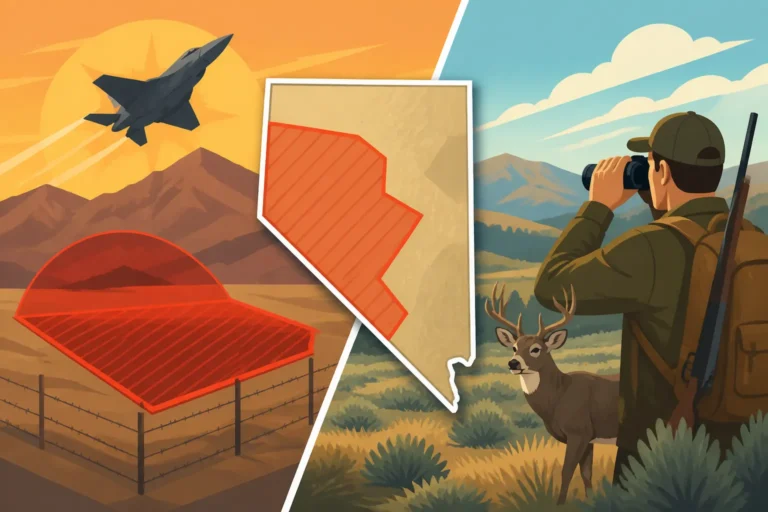
The Desert National Wildlife Refuge shares boundaries and airspace with military training ranges, particularly the Nellis Air Force Range. This overlap creates additional layers of complexity and strict restrictions that hunters must respect. Certain parts of the refuge might be subject to military closures for live-fire exercises or other training operations. These closures are absolute and are enforced with extreme seriousness. Trespassing onto military land, even inadvertently, can lead to severe legal consequences, including fines and potential arrest.
It is absolutely vital to consult the latest military land closure information before and during your hunt. This information is usually posted by the military base itself and sometimes through refuge channels. Military Land Closures Nevada Hunters Face provides a broader overview of this issue across the state, but within the DNWR, it's particularly acute. Pay close attention to any posted signs, listen for official warnings, and always err on the side of caution. Do not assume an area is open just because you don't see warning signs; check with official sources. The dynamic nature of military operations means that areas open one day could be closed the next, so staying informed is crucial for your safety and legal compliance.
Disclaimer
This article is for general informational purposes only and does not constitute professional advice. Laws, prices and regulations vary by location and change over time. Consult a qualified professional for guidance on your specific situation.