Nevada Legal Shooting Hours for Big Game
One of the trickiest parts of hunting in Nevada, especially when you're out there long before dawn or lingering as dusk settles, is making absolutely sure you're within the legal shooting hours. It's a common frustration for hunters, often leading to anxiety about whether that perfect shot opportunity falls inside the legal window, or if lingering too long might land you in hot water. This guide is here to untangle the specifics of Nevada's legal shooting hours for big game, offering practical advice and insights to ensure every hunter stays legal and ethical, no matter the season or terrain.
Deciphering Nevada's Official Shooting Hours for Big Game Hunters
Understanding the bedrock rule for legal shooting hours in Nevada is crucial for every big game hunter. It's not just a guideline; it's a strict regulation designed to ensure fair chase and public safety, and misinterpreting it can lead to serious consequences. Getting a handle on this fundamental timing, knowing where to verify it, and appreciating the reasoning behind it will make you a much more confident and responsible hunter.
The Fundamental Half-Hour Rule Explained
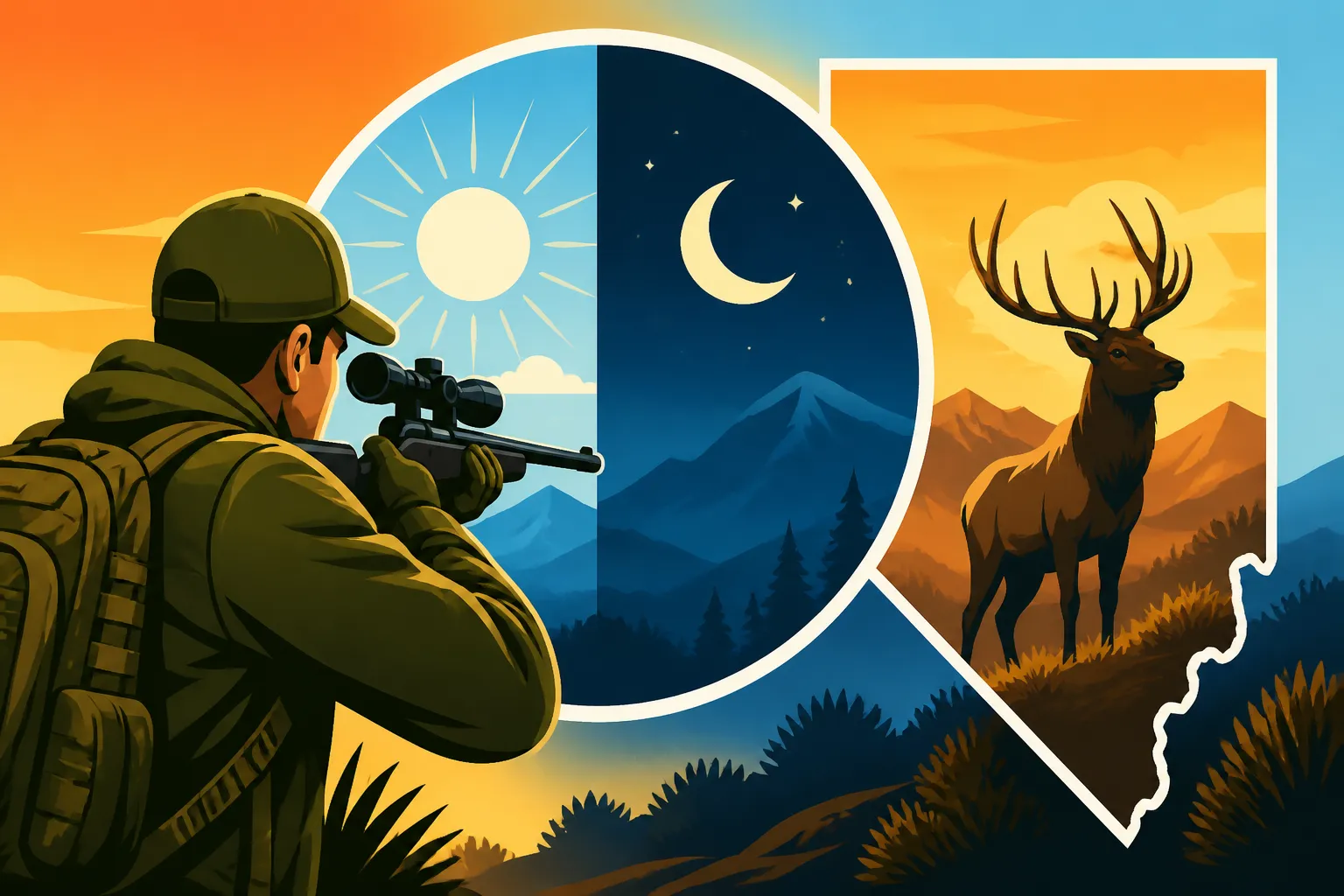
At its core, Nevada's legal shooting hours for big game are quite straightforward: you are permitted to hunt from one-half hour before sunrise to one-half hour after sunset. This "half-hour rule" is consistent across all big game species in the state, whether you're chasing mule deer in the Ruby Mountains, elk in eastern Nevada, or pronghorn across the wide-open flats. It means that while the sun might still be below the horizon, or has just dipped out of sight, you technically have a window of legal light for shooting.
However, "legal light" isn't always the same as "good light." That extra thirty minutes on either end of the day can often be very dim, especially if you're hunting in thick timber or deep canyons where the sun's direct rays are obscured even when it's technically above the horizon. This is where the practical application really comes into play, as an ethical shot demands you clearly identify your target, its sex, and confirm a clean background. Just because it's legal doesn't mean it's always advisable. This rule is a hard boundary, a "not before this, not after that" line in the sand that helps define the hunting day. It's the standard that game wardens use, and it's the standard we as hunters must uphold.
Where to Find Official Sunrise and Sunset Information
The exact timing of sunrise and sunset isn't a fixed thing; it shifts daily and varies by your specific location within Nevada. Relying on a general understanding or even what your phone's basic weather app might say for a nearby city often isn't precise enough, especially in a state as vast and geographically diverse as Nevada. The official times are tied to the specific longitude and latitude of your hunting spot, and they literally change by the minute as the season progresses.
Fortunately, there are several reliable ways to get this crucial information. The Nevada Department of Wildlife (NDOW) often publishes tables in their yearly hunting regulations booklet, typically broken down by month and major towns or regions. These are a good starting point, but for hyper-local accuracy, digital tools are invaluable. Many popular hunting apps, such as GoHunt, incorporate precise sunrise and sunset calculators based on your GPS location. These apps update in real-time, giving you the exact legal window for your specific stand or glassing point. It's a game-changer for avoiding guesswork, and honestly, a modern necessity for any serious hunter. You can also find numerous reputable online weather services that offer specific sunrise and sunset times by inputting your exact coordinates or even a specific address near your hunting unit. Always check these times daily, or even several times a day if you're moving between different parts of a unit, as even a few miles can slightly alter the official times.
Why These Specific Timings Are in Place
The "half-hour before sunrise to half-hour after sunset" rule isn't arbitrary; it's steeped in tradition, ethics, and safety. Historically, it stems from the concept of "fair chase," ensuring that hunters have sufficient natural light to positively identify their target and make an ethical shot. Low light conditions, whether too early or too late, significantly increase the risk of misidentification – mistaking a doe for a buck, or worse, shooting at something that isn't game at all.
Beyond ethics, safety is a paramount concern. In the fading light of evening or the dim glow of pre-dawn, backgrounds become indistinct, and it's harder to confirm what lies beyond your target. This creates a higher risk of accidental injury to other hunters or non-target animals. The consistent statewide rule provides a clear, unambiguous boundary that all hunters can follow, simplifying enforcement and promoting a uniform standard of responsible hunting. It's about drawing a line that generally guarantees enough ambient light for safe and ethical hunting without giving an unfair advantage that completely natural light would provide. For more on the specifics, understanding the current Nevada regulations are posted can help clarify these and other rules.
Real-World Challenges and Smart Strategies for Adhering to Shooting Hours
Even with the "half-hour rule" clearly defined, the reality of hunting in Nevada's rugged, varied terrain can throw curveballs. The ambient light doesn't always match the clock, and being off by even a few minutes can have serious implications. Successfully navigating these challenges requires a blend of keen observation, smart use of technology, and a deep commitment to ethical hunting practices.
Judging Light Levels in the Field: A Hunter's Dilemma
One of the biggest struggles for any hunter is the subjective nature of "enough light." The legal definition is objective – based on celestial events – but what constitutes enough light for a responsible shot is often deeply personal and varies wildly depending on conditions. A cloudy morning, a deep canyon, or dense timber can make it feel much darker than the official sunrise time suggests. Conversely, a clear, open ridge during a full moon can feel plenty bright an hour before the sun peeks over the horizon.
Experienced hunters often develop an internal clock and a sense of light. They'll arrive at their glassing spot well before legal light, using the time to set up their optics, like those discussed in Optics Power for Nevada's Long Sightlines, and watch the landscape slowly reveal itself. The dilemma arises when that trophy buck steps out right at the edge of legal light. Is there enough contrast to distinguish antlers? Can you see your crosshairs clearly? Is the background truly safe? This isn't just about legality; it's about the moral imperative to ensure a quick, humane kill. Many hunters choose to err on the side of caution, holding their shot even if it means missing an opportunity, because the integrity of the hunt and the respect for the animal come first. It’s a constant battle between opportunity and ethics.
Tools and Technology for Precise Timekeeping
Gone are the days of guessing based on a cheap wristwatch or relying solely on a printed table from the back of the regulations booklet. Modern technology has provided hunters with an array of precise tools to keep track of legal shooting hours, greatly reducing the risk of a violation. The most common and useful are dedicated hunting apps on smartphones or GPS devices. Many of these apps, including popular ones like GoHunt, utilize your device's GPS to pinpoint your exact location and then calculate the hyper-local sunrise and sunset times, including the critical 30-minute buffers. They often display a countdown timer, showing you precisely how much legal light remains or when the shooting window will open.
Beyond apps, a quality GPS unit, even without mapping features, will often display sunrise/sunset times. Some higher-end binoculars or spotting scopes now integrate digital compasses and even time-of-day features that can link to your phone for data. However, remember that technology can fail. Always have a backup plan. A simple digital watch with a timer function, set manually based on verified times, can be a lifesaver if your phone battery dies or you lose signal. And always, always double-check the times before you head out, especially if you've moved to a new area or if several days have passed. This due diligence is part of Preparing Physically for Long Glassing Days.
Common Violations and How to Avoid Them
The most frequent violations related to shooting hours usually stem from carelessness, miscalculation, or simply pushing the envelope too far. Hunters might genuinely misread a table, forget to account for changes in time, or assume that "just a few minutes early" won't matter. But it does matter. Game wardens are very aware of these windows and often patrol areas known for early or late activity.
Here's how to steer clear of common pitfalls:
- Verify Daily: Sunrise and sunset times change every single day. Don't rely on yesterday's information, especially if you're on a multi-day hunt.
- Know Your Location: The times vary across Nevada's vast units. What's legal in Elko might be slightly different in Las Vegas. Use GPS-based calculations.
- Account for Terrain: Deep canyons or heavy tree cover make it feel darker than it is. While the legal time doesn't change, your ability to make an ethical shot might. This is where your personal ethical judgment comes in.
- Set Alarms: Use your phone or watch to set an alarm for 30 minutes before sunrise (to get ready, not to shoot!) and another for 30 minutes before sunset (to cease shooting).
- When in Doubt, Don't Shoot: This is the golden rule. If you're questioning whether there's enough legal light, or if you can clearly identify your target, hold off. No animal is worth a violation or, worse, an unethical shot that wounds an animal or endangers someone.
- Don't Confuse Shooting Hours with Travel Time: You can typically hike to and from your hunting spot outside of legal shooting hours, but your weapon must be unloaded if you're carrying it in a vehicle during those times. Remember, Rules on Hunting From a Vehicle are strict.
By being meticulous with your timekeeping and exercising sound judgment, you'll ensure your hunt remains within the bounds of Nevada law and personal ethics.
Adapting to the Dynamic Nature of Nevada's Legal Shooting Window
Nevada's diverse hunting seasons stretch across months, from the heat of August archery hunts to the crisp cold of late rifle seasons. Throughout this period, the amount of daylight available, and thus the legal shooting window, constantly changes. Being aware of these shifts and planning your hunts accordingly is a sign of an experienced and responsible hunter.
How Shooting Hours Change Throughout the Hunting Season
The length of daylight varies significantly from summer to winter, directly impacting when you can legally hunt. In August, for example, during the early archery deer window, the days are long, and you might have a shooting window stretching well over 13 hours. By contrast, a late rifle deer season in November or December will see much shorter days, with your legal shooting window possibly shrinking to just 9 or 10 hours. This is an important consideration when you're looking at When Nevada Rifle Deer Seasons Fall.
The critical point here is that it's not just the total daylight that changes, but the actual clock times for sunrise and sunset shift daily. For instance, in early September, sunrise might be around 6:30 AM, pushing your shooting start to 6:00 AM. By late October, sunrise could easily be 7:30 AM, meaning you can't shoot until 7:00 AM. The sunset times recede equally. This means that a hunt planned for late season requires a different approach to your mornings and evenings than an early season hunt. You might need to be in your stand or glassing point much earlier relative to when you can actually take a shot, or plan to be packing up much sooner in the evenings.
Here’s a quick look at how the average shooting hours shift across some key months in Nevada (approximate times for central Nevada):
| Month (Big Game Season) | Approximate Sunrise (Central NV) | Legal Start Time | Approximate Sunset (Central NV) | Legal End Time | Approximate Legal Window Length |
|---|---|---|---|---|---|
| August (Archery) | 6:20 AM | 5:50 AM | 7:40 PM | 8:10 PM | 14 hours 20 minutes |
| September (Archery/Muzz) | 6:45 AM | 6:15 AM | 7:00 PM | 7:30 PM | 13 hours 15 minutes |
| October (Rifle) | 7:15 AM | 6:45 AM | 6:10 PM | 6:40 PM | 11 hours 55 minutes |
| November (Rifle) | 7:40 AM | 7:10 AM | 5:00 PM | 5:30 PM | 10 hours 20 minutes |
Note: These are approximations and will vary daily and by specific geographic location. Always check official sources.
Planning Your Hunt Around Shifting Daylight
Because the shooting window shrinks and moves with the seasons, your hunting strategy needs to be flexible. For early season hunts, especially during Nevada's August Archery Deer Season Opens the Year, you have a long window, but heat management is a bigger concern. The best animal movement might still be concentrated in the very early and very late hours, even with ample legal light. You might spend more time glassing during the midday heat.
As you move into rifle seasons, and the days shorten, you need to maximize those prime morning and evening hours. This means being in position well before legal light, often hiking in the dark, and staying put until the last legal minute of shooting light fades. This is where E-Scouting a Nevada Unit Before the Season really pays off, allowing you to identify access points and potential game corridors that align with these shorter windows. If you're on a multi-day hunt, you'll notice the changes from one day to the next. What was legal shooting time on Monday might be a minute or two different by Friday. Don't assume. Always check.
Moreover, if you're trying to hunt actively all day, remember that the middle of the day, while legal, might not offer the best success rates depending on the species and conditions. Deer and elk, for instance, often bed down during the brighter, warmer parts of the day.
The Intersection of Shooting Hours and Hunter Ethics
Adhering to legal shooting hours is not just about avoiding a citation; it's a fundamental aspect of hunter ethics. The "half-hour" rule is a minimum standard, but true ethical hunting often calls for more stringent self-regulation. If you're facing a shot opportunity within the legal window, but the light is so low that you can't confidently identify your target, ensure a clean shot, or clearly see your surroundings, the ethical choice is to pass.
This decision-making process is critical, especially when considering the implications for Reading Wind on a Long Sage Stalk and other challenging hunting scenarios. A wounded animal, a misidentified animal, or an unsafe shot are all outcomes that no responsible hunter wants. The half-hour before sunrise and after sunset often represents the dimmest conditions during the legal window. While legal, these moments require extreme caution. Good optics can certainly help extend your effective vision in low light, but they cannot create light that isn't there. Ultimately, the responsibility for an ethical shot, within legal parameters, rests entirely on the individual hunter. This principle is woven into all aspects of hunting, from preparing for the physical demands of the hunt to understanding complex regulations like Legal Shooting Hours and Blaze Orange in Nevada.
Disclaimer
This guide is intended for informational purposes only and does not constitute legal advice. While we strive to provide accurate and up-to-date information, hunting regulations can change. It is the responsibility of every hunter to consult the official Nevada Department of Wildlife (NDOW) regulations booklet and website for the most current and precise rules, season dates, and legal requirements before heading afield.