Choosing a Unit by Terrain Difficulty
Nevada big game hunting units feature diverse terrain difficulties and physical demands ranging from sagebrush flats to peaks exceeding ten thousand feet.
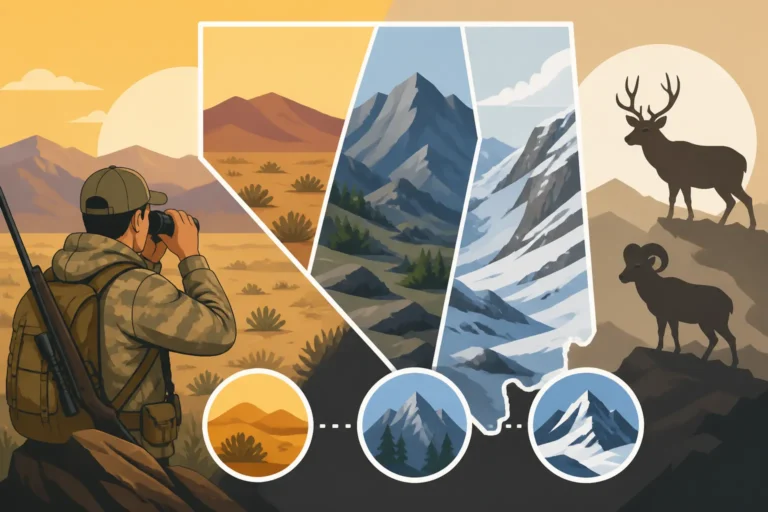
Nevada big game hunting units feature diverse terrain difficulties and physical demands ranging from sagebrush flats to peaks exceeding ten thousand feet.
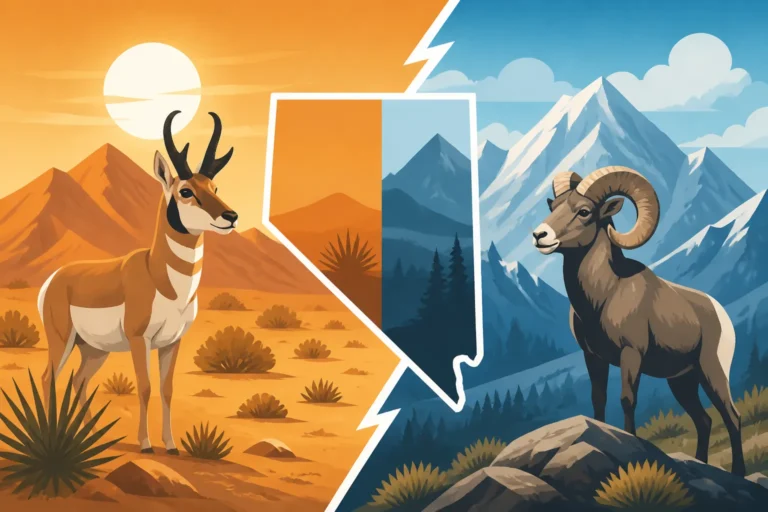
Nevada hunting unit choices compare sagebrush basins with high country mountain ranges for mule deer, elk, and pronghorn.
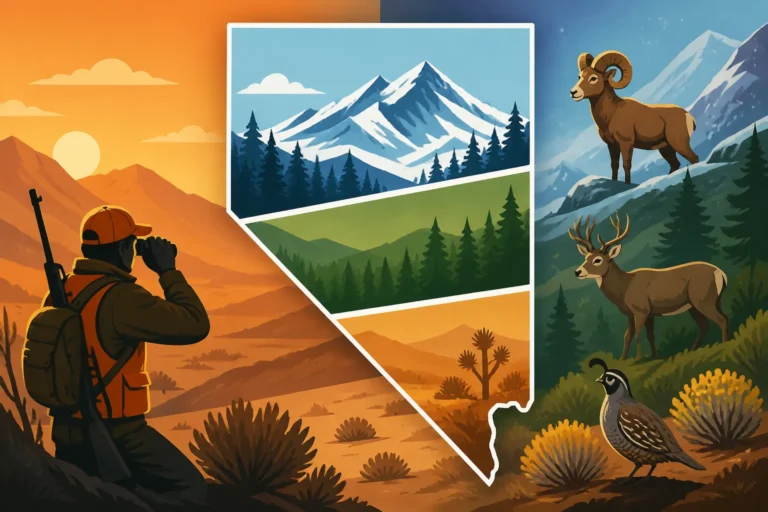
Nevada elevation variations dictate big game habitats, weather patterns, and seasonal wildlife migrations for hunters tracking animals.
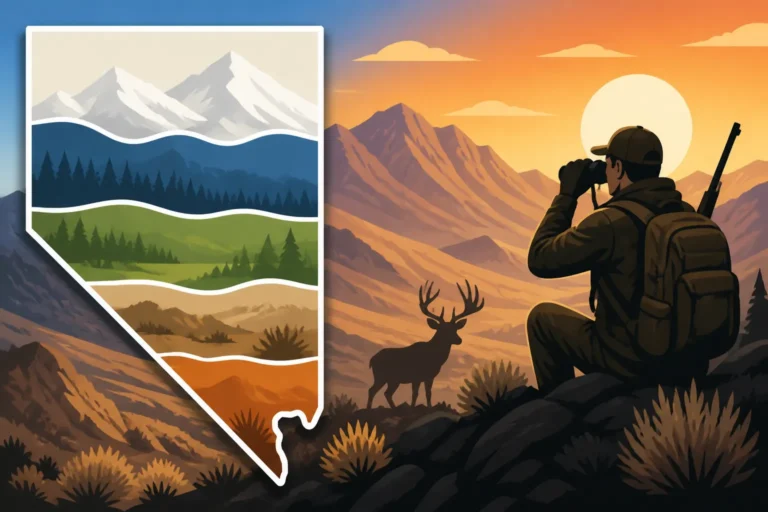
Elevation bands in Nevada explain mule deer and elk movement, seasonal temperature swings, and vegetation zones across hunt units.
Nevada public land regulations permit hunters to set up primitive camps on Bureau of Land Management and Forest Service areas.
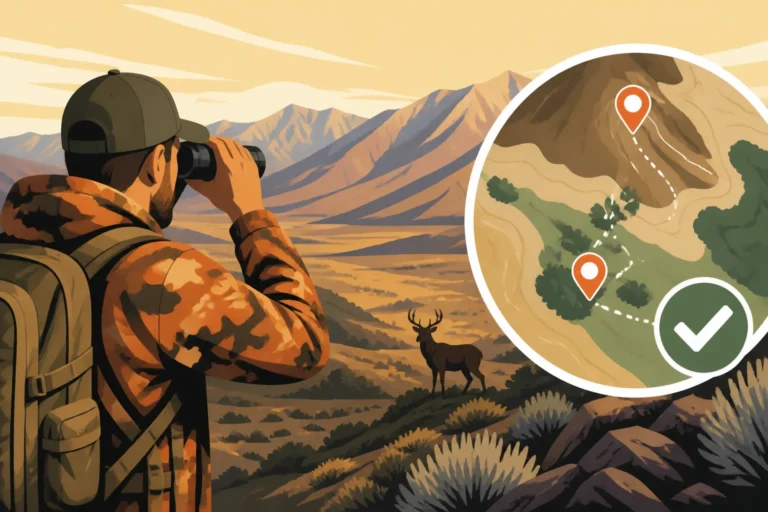
Nevada hunting camp selection strategies explain how to evaluate high mountain basins, desert flats, and riparian zones.
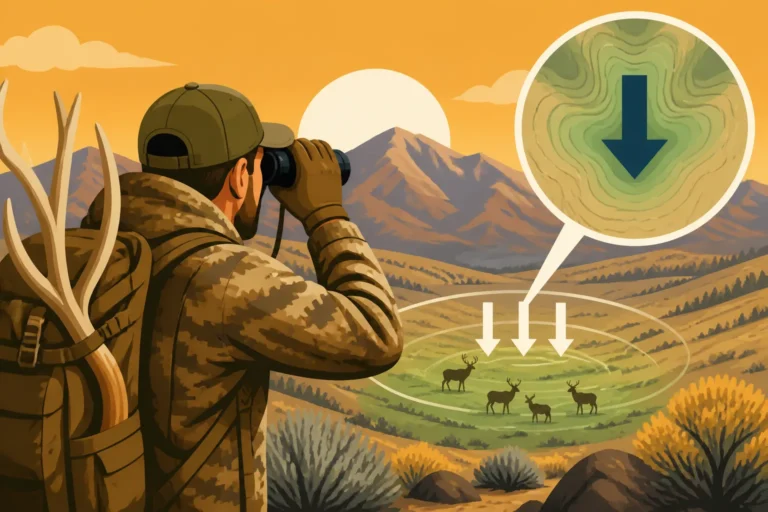
Nevada hunting strategies help hunters escape opening weekend crowds, avoid road access pressure, and find quiet ground.
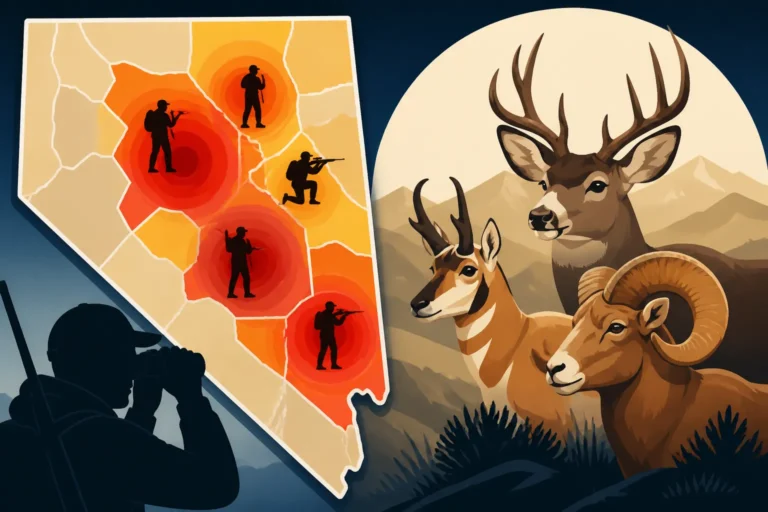
Accessible terrain, trophy mule deer reputations, and proximity to Nevada cities drive heavy hunting pressure in specific units.
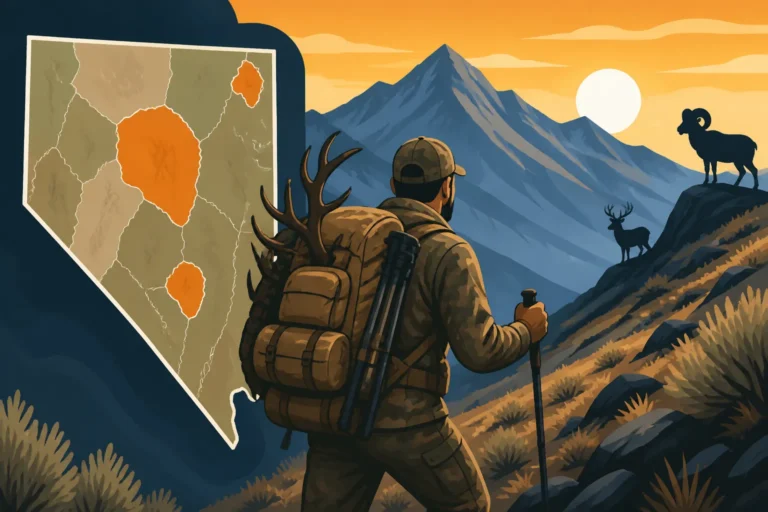
Nevada backcountry hunting units require pack trips because sheer distance and rugged terrain block all wheeled vehicle access.

Nevada hunting units near Las Vegas offer big game opportunities in rugged desert terrain just a short drive from the city.