Units That Get the Heaviest Hunting Pressure
It’s a familiar scenario for any hunter in the West: you’ve poured over maps, studied regulations, and maybe even burned some vacation time scouting, only to find opening morning feels more like a crowded park than a serene wilderness hunt. Encountering heavy hunting pressure can quickly sour an otherwise amazing experience, turning a peaceful stalk into a frustrating game of dodging other hunters. This guide will help you understand why some Nevada units attract more orange vests than others and offer practical strategies to find the solitude and quality hunting experience you truly crave.
Why Certain Nevada Hunt Units Become Pressure Cookers
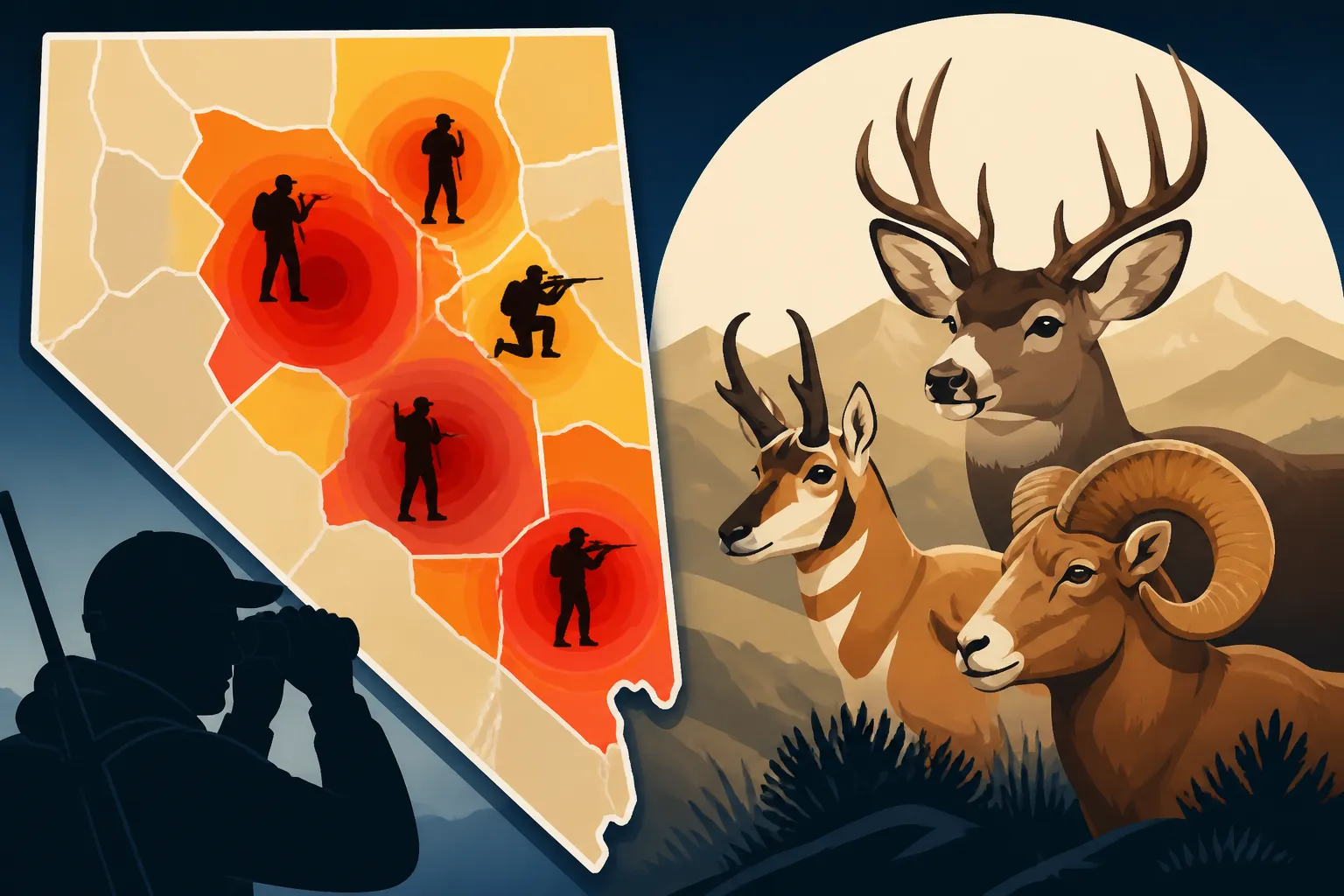
Not all hunt units are created equal, and several factors conspire to make certain areas magnets for hunters, leading to what many of us would consider "heavy pressure." Understanding these underlying reasons is the first step in either preparing for them or actively avoiding them.
Accessible Terrain and Road Networks
One of the most straightforward indicators of potential hunting pressure is how easy it is to get around. Units with extensive road networks, whether paved highways, well-maintained gravel roads, or even a dense web of two-track dirt roads, inherently attract more hunters. People often choose areas where they can drive close to their hunting spots, set up camp near a vehicle, and have relatively easy access for packing out game. This is especially true for those with physical limitations, families, or simply less experience in truly remote backcountry travel. A unit crisscrossed by old mining roads or established county routes will almost always see more vehicle traffic and boot tracks than one requiring significant foot travel or pack stock to access its core. Consider a unit with a major state highway running right through it, providing dozens of pull-offs and trails leading into prime habitat—it's a recipe for concentration. You might spend days driving past truck after truck, each one representing another group of hunters in the area.
Reputation for Trophy Animals or High Success Rates
Let’s be honest, everyone wants to tag a big buck or bull. Nevada has developed a reputation for some truly magnificent mule deer and elk, and certain units have become legendary for producing record-book animals. When a unit consistently yields high-scoring trophies or boasts impressive hunter success rates, word gets around quickly, both through traditional hunting circles and increasingly, online forums and data analysis sites. This creates a feedback loop: high success rates attract more applicants, which in turn means more hunters in the unit, even if the overall tag quota remains relatively stable. Many hunters are willing to deal with more pressure if it means a statistically better chance at a high-quality animal. They might prioritize the potential for a trophy over a quiet, solitary experience. For instance, a unit like 162 for elk, or some of the traditional mule deer strongholds, will always see a significant buzz, even among non-residents. Checking Nevada Draw Odds Before You Apply is a great way to see which units are highly sought after.
Proximity to Population Centers
This one is a simple fact of logistics. Units that are within a reasonable driving distance—say, a couple of hours—from major population centers like Reno, Las Vegas, or even smaller but significant towns like Elko and Ely, tend to experience more day hunters or weekend warriors. These hunters might not have the time or resources for multi-day backcountry excursions, so they gravitate towards easily accessible areas where they can get out for a morning or an afternoon. The cumulative effect of many such short trips can make a unit feel very crowded, even if few people are spending a full week in the field. This also means that opening day pressure will be particularly intense as hunters swarm in from nearby towns. Think about the units surrounding the Reno-Carson City corridor; they're convenient, but that convenience comes with a cost in terms of solitude.
Decoding the Data: Identifying High-Pressure Units Before You Apply
The good news is that you don't have to go into the draw blind. There are several powerful tools and data points available to help you predict where hunting pressure might be highest, allowing you to make more informed decisions about your application.
Analyzing Draw Odds and Application Data
One of the clearest indicators of a unit's popularity, and thus its potential for high pressure, is its draw odds. Units with extremely low draw odds, especially for non-residents or for antlered tags, are popular for a reason. Often, that reason is a combination of trophy potential and perceived high animal numbers. Websites like GoHunt specialize in compiling and analyzing this data, providing invaluable insights into application trends and success rates. If a unit takes 10+ points to draw, you can bet that the few hunters who do draw those coveted tags are going to be dedicated and present. Conversely, units with higher draw odds or those that might have leftover tags after the main draw often see less overall pressure simply because fewer people are vying for them. This doesn't necessarily mean fewer animals, but it often translates to more elbow room. Reading a Nevada Hunt Unit Before You Apply and then cross-referencing that with draw data is critical.
Consulting Harvest Reports and Unit Statistics
Nevada's wildlife agency provides detailed harvest statistics, often broken down by unit. These reports can tell you not only the total number of animals harvested but also the number of hunters who participated in that unit, their success rates, and even the average days hunted per animal taken. A unit with a high number of hunters per square mile and a relatively low success rate could indicate heavy pressure and pressured animals. Conversely, a unit with fewer hunters and a decent success rate might suggest a more spread-out experience. Pay close attention to the number of tags issued versus the hunter effort. If a unit issues many tags and sees many hunters, even if the success rate isn't sky-high, it's going to feel busy. Where Nevada Publishes Harvest Data will give you a direct source for this information.
| Indicator | High Pressure Unit (Likely) | Low Pressure Unit (Likely) |
|---|---|---|
| Road Access | Dense network of roads, easy vehicle access | Limited roads, requires foot/pack animal |
| Draw Odds | Extremely low (difficult to draw) | Moderate to high (easier to draw) |
| Trophy Reputation | Known for large animals, high scores | Less publicized, consistent harvest |
| Proximity to Cities | Within 1-3 hours of major towns | Remote, long drive from population centers |
| Hunter Density | High number of hunters per square mile | Few hunters spread over large area |
| Success Rate | Could be high (trophy unit) or low (pressured) | Consistent, but not necessarily "trophy" |
| Public Land Access | Many designated access points, trailheads | Fewer defined access points, rugged terrain |
Utilizing Mapping Software for Public Access Points and Road Densities
Modern mapping applications like onX Hunt are indispensable tools for pre-season scouting. They allow you to overlay public and private land boundaries, identify major trailheads, and visualize road networks. Units with a high density of public land parcels that are also easily accessible via roads will generally see more pressure. Look for units where access points are few and far between, or where the terrain quickly becomes rugged and roadless. Areas designated as Wilderness or Wilderness Study Areas, for example, strictly limit motorized travel, inherently reducing pressure. Use these maps to identify pinch points, popular camping areas, and potential escape routes for pressured game. E-Scouting a Nevada Unit Before the Season can give you a head start on this. You can literally count the number of roads and estimate the vehicle access to different parts of a unit from your living room.
Tactics for Escaping the Crowds, Even in Popular Nevada Areas
Even if you draw a tag in a popular unit, or if the unit you prefer inherently sees a lot of traffic, it doesn't mean your hunt is doomed to be a crowded affair. With some strategic planning and a willingness to work a little harder, you can still find solitude and unpressured animals.
Go Where the Vehicles Can't (or Won't)
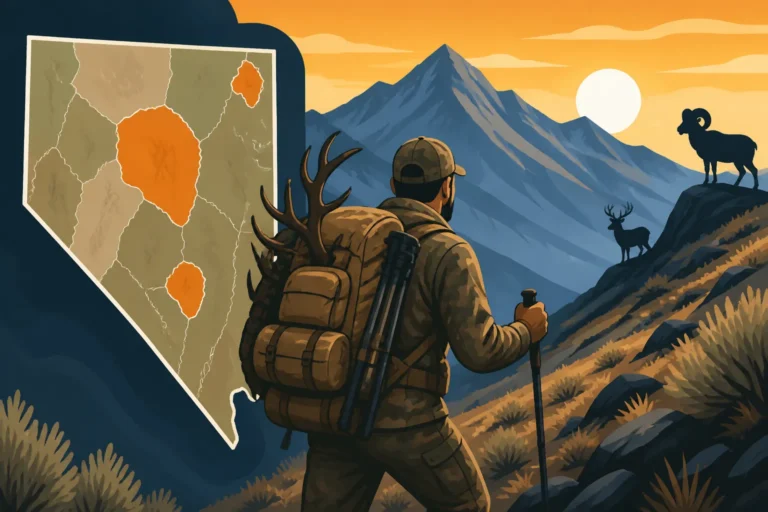
This is the golden rule for escaping pressure in nearly any hunting scenario. Most hunters are creatures of convenience, and the vast majority will not venture more than a mile or two from a road or trail. If you're willing to hike three, five, or even ten miles into roadless country, you'll dramatically increase your chances of finding unpressured game and experiencing true solitude. Utilize mapping tools like onX Hunt to identify large blocks of public land that are far from vehicle access. Pack light, plan for overnight stays if necessary, and be prepared for the physical challenge. This often means finding a trailhead on the edge of a large roadless area, or parking your truck as far as legal motorized travel allows and going on foot from there. Packing an Animal Out of Roadless Country is a crucial skill to consider if you plan to hunt this way.
Hunt Mid-Week or Later in the Season
Opening weekend of any hunting season is almost always the busiest time. Many hunters, especially those from nearby towns, save their vacation days for the opener. If your schedule allows, consider hunting mid-week when many fair-weather hunters have gone back to work. The woods can feel dramatically emptier from Tuesday through Thursday. Similarly, if your season runs for several weeks, the pressure often tapers off significantly after the first week or two. Animals will have been bumped around, some hunters will have filled their tags, and others will have given up. While the animals may be warier, the reduced competition can make for a more rewarding experience. Finding Low Pressure Ground on Opening Weekend is a valid strategy, but sometimes, avoiding the weekend altogether is even more effective.
Focus on Overlooked or Difficult Terrain
Mule deer and elk are incredibly adept at finding sanctuary in rough, steep, or thick terrain that most hunters avoid. Don't be afraid to study maps for those nasty-looking canyons, dense patches of juniper, or rocky, broken ridges that seem impassable. While they might be tougher to navigate, these areas often hold game that has been pushed out of easier-to-access spots. This is where your physical conditioning and comfort with navigating challenging landscapes truly pay off. A steep, north-facing slope with heavy timber or dense brush might look daunting, but it could be exactly where a mature buck decides to ride out the hunting season. Understanding Terrain That Hides an Approach in Open Country can also give you an advantage in these spots. Sometimes, it's not just about going further but going harder.
The Solitude Equation: Weighing Pressure Against Opportunity
Ultimately, the decision of whether to hunt high-pressure units or seek out solitude is a personal one, with distinct trade-offs. It's about finding the right balance for your hunting goals and preferences.
The Trade-Offs of High-Pressure Units
Hunting in a popular, high-pressure unit often means you're in an area known for good genetics, higher animal populations, or perhaps a higher chance of a "better" animal—at least according to historical data. However, you'll likely contend with more competition, more noise, and animals that are more vigilant and likely to be pushed into thicker cover or onto private land. This can make for a frustrating hunt where you spend more time avoiding other hunters than stalking game. Animals in these units also become nocturnal quickly, making early morning and late evening even more critical. Your calling strategies, for instance, might need to be more aggressive, or more subtle, to stand out or avoid alerting other hunters, respectively.
The Rewards and Challenges of Seeking Solitude
Opting for lower-pressure units or employing strategies to escape the crowds within popular ones often means a more serene, wilderness experience. You might encounter more relaxed animals, have entire basins to yourself, and truly feel immersed in nature. The challenge, however, is that these areas might require more physical effort, more extensive scouting (both remotely and on the ground), and potentially longer packing distances. They may not always boast the same "trophy potential" as some of the blue-chip units, but the quality of the overall hunting experience—the quiet mornings, the unmolested sign, the feeling of earning every mile—is often priceless. Sometimes, it's not about the size of the rack, but the quality of the adventure. And let's be honest, spotting an animal that hasn't seen a hunter in weeks can feel more rewarding than chasing a pressured buck among dozens of other trucks. For many, that's what Hunting Water in Nevada's Driest Country is all about—finding those out-of-the-way spots.
Your Personal Hunting Philosophy
Before you apply for your next Nevada tag, take a moment to reflect on what truly defines a successful hunt for you. Is it solely about punching a tag on the biggest animal possible, even if it means jostling for position with other hunters? Or is it more about the entire experience: the quiet mornings, the challenge of the chase, the solitude of the backcountry, regardless of what you bring home? There's no right or wrong answer, but aligning your unit choices and hunting strategies with your personal philosophy will lead to more fulfilling hunts. Whether you leverage data from GoHunt to find an obscure gem or use onX Hunt to pinpoint that roadless basin in a popular unit, make sure it serves your ultimate goal for a memorable Nevada hunting adventure.
Disclaimer
This article is for general informational purposes only and does not constitute professional advice. Laws, prices and regulations vary by location and change over time. Consult a qualified professional for guidance on your specific situation.