Where to Camp Legally Near a Trailhead
It's late, you've been driving for hours across the vast Nevada landscape, maybe bouncing along a dusty two-track, and all you want to do is pull over, set up camp, and get some rest before your early morning hunt. But where can you legally and responsibly pitch your tent or park your rig near a trailhead without running afoul of regulations or impacting the fragile desert ecosystem? This guide is here to walk you through the ins and outs of finding those legal, low-impact camping spots, ensuring your hunting trip starts off on the right foot.
Understanding Nevada's Public Land and Camping Regulations
Nevada is a hunter's paradise largely because of its incredible amount of public land. It's truly a unique situation, but that vastness also comes with a responsibility to understand where you can and cannot recreate, especially when it comes to setting up camp.
The Vastness of BLM and Forest Service Lands
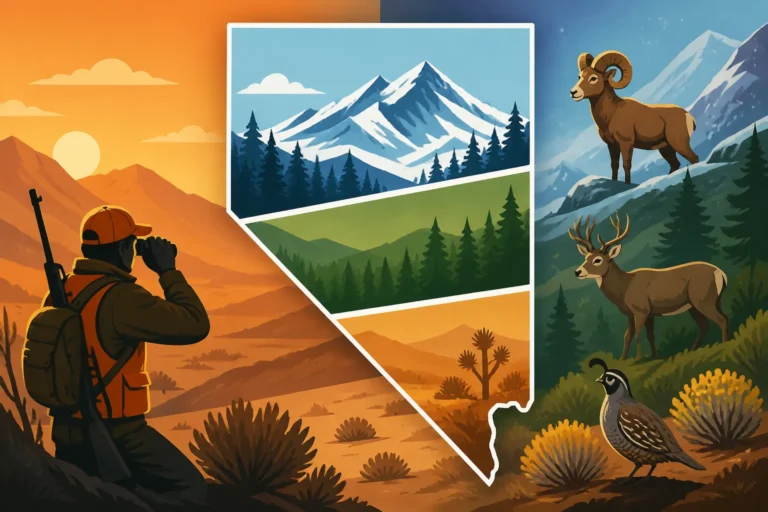
When you look at a map of Nevada, it's immediately apparent how much of the state is managed by federal agencies. We're talking millions of acres of wide-open spaces, ranging from sagebrush flats to towering mountain ranges. Most of this land falls under the jurisdiction of the Bureau of Land Management (BLM) and the U.S. Forest Service. Understanding this distinction is key because while their general approach to dispersed camping is similar, there can be subtle differences in local regulations, especially concerning fire restrictions or designated closures.
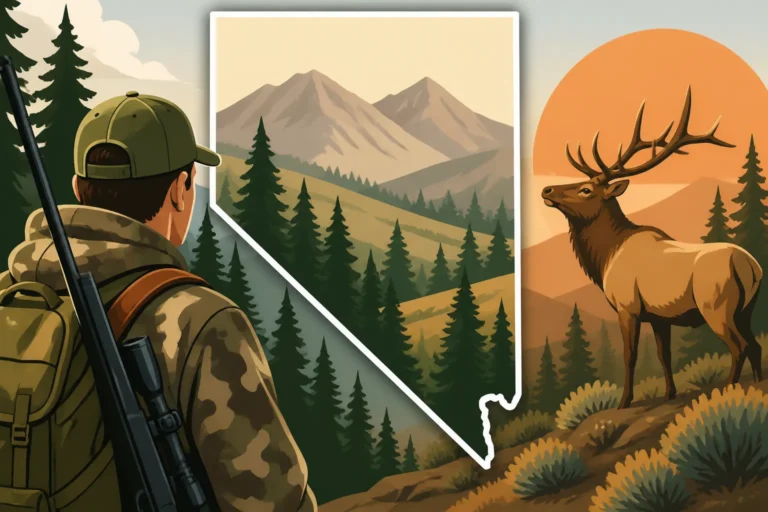
Imagine you've drawn a coveted tag for the Ruby Mountains. A large portion of those mountains are within the Humboldt-Toiyabe National Forest. However, as you descend into the valleys, you'll often find yourself on BLM ground. Both offer fantastic hunting and camping opportunities, but it's crucial to know who manages the specific parcel you're on. This land isn't just a backdrop; it's the very foundation of our hunting experience here. Knowing What Percentage of Nevada Is Federal Land really puts into perspective the scale of opportunity, but also the scale of responsibility we share as users.
For many hunters, the freedom to drive into a remote area, pull off the main road, and set up a primitive camp is a huge part of the appeal. This isn't like a state park where every campsite is numbered and comes with a picnic table. This is wild country, and with that wildness comes the expectation that you are self-sufficient and respectful of the environment. The sheer volume of accessible land is a gift, but it requires us to be informed and careful stewards.
General Rules for Dispersed Camping
Dispersed camping, often called primitive or boondocking, is the practice of camping on public lands away from developed campgrounds. It's typically free and offers a much more private, wild experience. However, "free" doesn't mean "anything goes." There are universal principles and some specific regulations you need to adhere to. The golden rule is always "Leave No Trace." This means packing out everything you pack in, and often more. Think about it: if every hunter left even a small amount of trash, these pristine areas would quickly become dumps.
A common regulation across both BLM and Forest Service lands concerns the length of stay. You generally can't camp in one spot for more than 14 days within a 28-day period. This rule is in place to prevent long-term residency and to ensure the land gets a break from continuous use. Additionally, there are often rules about distance from water sources – usually, you need to be at least 200 feet away to prevent contamination and allow wildlife unimpeded access. And speaking of wildlife, proper food storage is critical to avoid attracting unwanted visitors to your camp. You can find more specific guidance on Camping Legally on Nevada BLM Ground, which covers a lot of the baseline expectations.
Fire restrictions are another huge consideration, especially during the dry summer and fall hunting seasons in Nevada. A small campfire, while seemingly harmless, can quickly turn into a devastating wildfire in a state as arid as ours. Always check the current conditions for the specific area you're heading into. What might be allowed in April could be strictly prohibited in August. Breaking these rules not only puts the landscape and wildlife at risk but can also lead to hefty fines and even jail time.
Navigating Trailhead Proximity and Access
Okay, so you know you're on public land, and you understand the basic rules of dispersed camping. Now, how do you specifically apply that to finding a legal camping spot right near the trailhead where you plan to start your hunt?
Identifying Legal Camping Zones Near Trailheads
Trailheads are natural magnets for hunters. They're the starting point for accessing backcountry areas, and it makes perfect sense to want to camp close by for an early start. However, many actual trailheads are day-use areas only, or they might be too close to private property, designated wilderness boundaries, or developed infrastructure to allow camping right there. The key is often to find a suitable spot near the trailhead, rather than directly at it.
For example, if you're planning to hunt deep into the Jarbidge Wilderness, you'll often find a small parking area or turn-around where the road ends and the trail begins. That immediate area might have signage prohibiting camping, or it might simply be too small or uneven. The trick is to backtrack a short distance down the access road, looking for pull-offs or flatter areas on public land that are far enough away from the trailhead proper, any private land boundaries, and at least 200 feet from any water sources. This might mean camping a quarter-mile or even a mile down the road, but that small sacrifice in proximity often means a legal, more private, and safer camp.
Sometimes, especially in more popular hunting units or near established recreation areas, you might find designated primitive campsites along the access road to a trailhead. These won't have the amenities of a full campground but might offer a fire ring or a cleared tent pad. Always keep an eye out for official signage from the BLM or Forest Service that indicates these spots or, conversely, prohibits camping in certain zones. A quick check of official maps, which we'll discuss next, can often reveal these areas before you even leave home.
Vehicle Access and Designated Sites
Nevada's public lands are crisscrossed with thousands of miles of primitive roads and two-tracks, but not all of them are open to general travel, and driving off these established routes to create a new campsite is almost always prohibited. Motorized Travel Rules on Public Land are clear: stay on designated roads and trails. This is crucial for protecting the delicate desert soils, preventing the spread of invasive species, and preserving the wild character of these areas.
Many trailheads, especially those leading into wilderness areas, will have limited parking and no turn-around space for larger rigs. If you're bringing a truck and trailer or a large RV, you'll need to scout ahead for pull-offs or larger, flatter areas further down the access road where you can safely park and camp without blocking traffic or damaging the landscape. Remember that these access roads can range from well-maintained gravel to deeply rutted, rocky tracks that require high-clearance 4×4 vehicles, so always know your vehicle's capabilities.
While most of this discussion focuses on dispersed camping, it's worth noting that some popular trailheads might have nearby developed campgrounds. These typically offer amenities like vault toilets, potable water (sometimes), and picnic tables, but they often come with a fee and require reservations, especially during peak season. They also tend to be less private. For the true Nevada hunting experience, most of us prefer the solitude of dispersed camping, but developed sites are an option if convenience and amenities are a higher priority. Just be aware that their rules are different from primitive camping.
| Camping Type | Cost | Amenities | Privacy & Experience | Vehicle Access | Typical Stay Limit |
|---|---|---|---|---|---|
| Dispersed Camp | Free | None (pack in/out everything) | High, wild, secluded | Established roads/2-tracks | 14 days/28-day period |
| Developed Camp | Fee (varies) | Toilet, water (sometimes), picnic table | Low to moderate, communal | Paved/well-maintained roads | Often shorter (e.g., 7-10 days) |
Utilizing Technology for Scouting Camping Spots
In this modern age, there's no excuse to go into a hunting area blind. We have incredible tools at our fingertips that can help us identify perfect, legal camping spots near trailheads long before we ever leave home.
Mapping Tools for Public Land Boundaries
Gone are the days of relying solely on paper maps, though a good physical map is always a solid backup. Digital mapping applications have revolutionized how hunters scout and navigate public lands. Platforms like onX Hunt and GoHunt are absolutely indispensable for finding legal camping spots near trailheads. These apps provide detailed land ownership layers, showing you exactly where public land begins and private land ends, preventing accidental trespass before you even arrive.
With onX Hunt, for instance, you can zoom in on a specific trailhead you plan to use, then pan around to see the surrounding land ownership. You can identify flat spots, old two-tracks that lead to secluded clearings, and even potential water sources – all from your couch. The ability to drop waypoints for potential camp locations and measure distances to the trailhead is a game-changer. Similarly, GoHunt's mapping features allow you to cross-reference public land with topo lines, helping you find those flatter, more accessible areas suitable for setting up camp. Understanding Reading a Land Ownership Layer Correctly is vital to avoid any misunderstandings. These apps also often show roads and trails, helping you ensure that any spot you pick is accessible by legal, established routes, not by driving off-road.
I can't stress enough how much these tools improve planning. You can literally "drive" the access road virtually, looking for pull-offs, open areas, and spots that are both convenient to your hunting objective and compliant with regulations. This foresight saves valuable daylight, fuel, and frustration once you're actually on the ground. You can even check the contours to ensure your chosen spot isn't a low point that will collect water if an unexpected rainstorm rolls through.
Leveraging Community and Online Resources
Beyond dedicated hunting apps, other online resources can provide valuable intel on camping near specific trailheads. Satellite imagery, like that available through Google Earth, offers an aerial view that can help you identify clearings, old fire rings, or existing primitive camps (which often indicate suitable and historically used spots). Look for areas that are already disturbed or flat, rather than trying to clear new ground.
Online forums and hunting community groups specific to Nevada can also be a goldmine of information. Many experienced hunters are willing to share general advice or even specific areas they've found reliable for camping near certain trailheads. However, always verify any information you receive against your mapping apps and official regulations, as conditions or rules can change. It's also a good way to get a sense of whether a particular area is heavily used, allowing you to plan for less crowded alternatives if solitude is a priority.
Don't forget to check official agency websites for the latest information on fire restrictions, road closures, and specific regulations for the area you're visiting. A quick search for "BLM [your unit number] camping regulations" or "Humboldt-Toiyabe National Forest dispersed camping" can reveal important details that might not be on a general map. For example, knowing Fire Restrictions During Hunting Season can prevent you from planning on a campfire only to find out it's completely prohibited. This combination of powerful mapping tools and crowd-sourced knowledge means you can arrive at your chosen trailhead feeling confident and prepared.
Respecting the Land and Other Users
Finding a legal spot is just the first step. The true mark of a responsible hunter and outdoors person is how you leave that spot. Nevada's wild spaces are a shared resource, and preserving them for future generations is paramount.
Minimizing Your Impact at Camp
The principles of Leave No Trace are not just suggestions; they are the bedrock of responsible outdoor ethics. When you find that perfect spot near a trailhead, your goal should be to leave it looking as if you were never there. This starts with how you set up camp. Always try to camp on durable surfaces – rock, gravel, dry grasses, or existing primitive campsites. Avoid pitching your tent directly on fragile vegetation or in areas that show no previous use.
Proper waste disposal is non-negotiable. "Pack it in, pack it out" applies to everything, including food scraps, toilet paper, and any garbage generated. Human waste should be buried in a cathole at least 6-8 inches deep and 200 feet from water, trails, and camp. If you're on a multi-day hunt with a group, consider bringing a WAG bag system for human waste to truly leave no trace. If fires are allowed and you choose to have one, keep it small, use existing fire rings if possible, and ensure it's completely out and cold to the touch before you ever leave it unattended or break camp. This means drowning it with water and stirring the ashes until no embers remain.
Beyond the physical impact, consider your presence. Keep noise levels down, especially during early morning and late evening hours when other hunters or wildlife are most active. This enhances the experience for everyone and minimizes disturbance to game animals you might be pursuing. Remember, your actions reflect on all hunters, so let's make sure that reflection is a positive one.
Wildlife and Water Source Considerations
Camping ethically also means being acutely aware of your surroundings, especially concerning wildlife and vital water sources. Nevada is generally an arid state, and water is a precious commodity. We talked about camping at least 200 feet from water sources to prevent contamination. This distance also allows wildlife unimpeded access to drink. Imagine being a deer or an elk, needing a drink, only to find a human camp pitched right next to your only water hole. That's a stressor we can easily avoid.
Proper food storage is another critical aspect. Even if you're not in prime bear country, smaller animals like coyotes, raccoons, and even mice can become a nuisance if they learn to associate human camps with food. Store all food and scented items in sealed containers inside your vehicle or a hard-sided cooler. Never leave food scraps or garbage out, even for a short time. This protects both your supplies and the wildlife by preventing habituation to human food, which can lead to conflict.
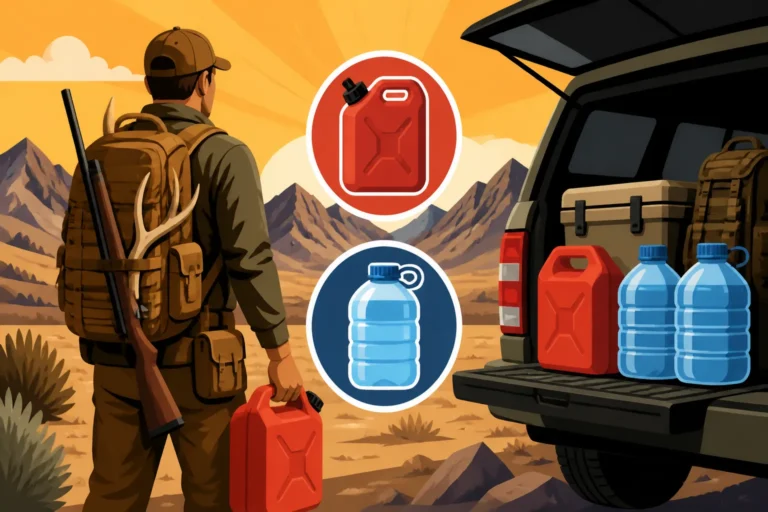
Finally, always carry enough water for yourself, even for a day hunt. Relying on finding water in the desert is a gamble that rarely pays off, and contaminated natural water sources can quickly derail a trip. Water You Must Carry on a Desert Day Hunt is a topic often underestimated. When choosing a camping spot, consider access to a water source for washing or emergency use, but always filter and treat any natural water before consumption, or better yet, pack it all in. By being mindful of these considerations, you ensure your camp is legal, safe, and respectful of the incredible wild places we are privileged to hunt in Nevada.
Disclaimer
This article is for general informational purposes only and does not constitute professional advice. Laws, prices and regulations vary by location and change over time. Consult a qualified professional for guidance on your specific situation.