Desert Against High Country Unit Choices
One of the biggest head-scratchers for any Nevada hunter, especially if you're coming from out of state or just starting to explore our vast public lands, is trying to figure out if you should throw your hat in the ring for a desert unit or aim for one of those higher elevation mountain ranges. Each type of terrain offers vastly different experiences, challenges, and rewards. This guide is here to walk you through the nuances of both, helping you align your hunting style, physical capabilities, and expectations with the right Nevada landscape for your next adventure.
Understanding Nevada's Diverse Hunting Landscapes
Nevada is often painted with a broad brush as "just desert," but anyone who has spent time exploring its vastness knows that's far from the full picture. Our state is a tapestry of extremes, from scorching low-elevation sagebrush flats to towering, snow-capped mountain peaks. These dramatic differences in elevation, moisture, and vegetation create distinct hunting environments, each with its own character and demanding a different approach from the hunter. Understanding this fundamental division between what we call "desert units" and "high country units" is crucial when you're looking at draw odds, planning your scouting, or even just picking the right boots.
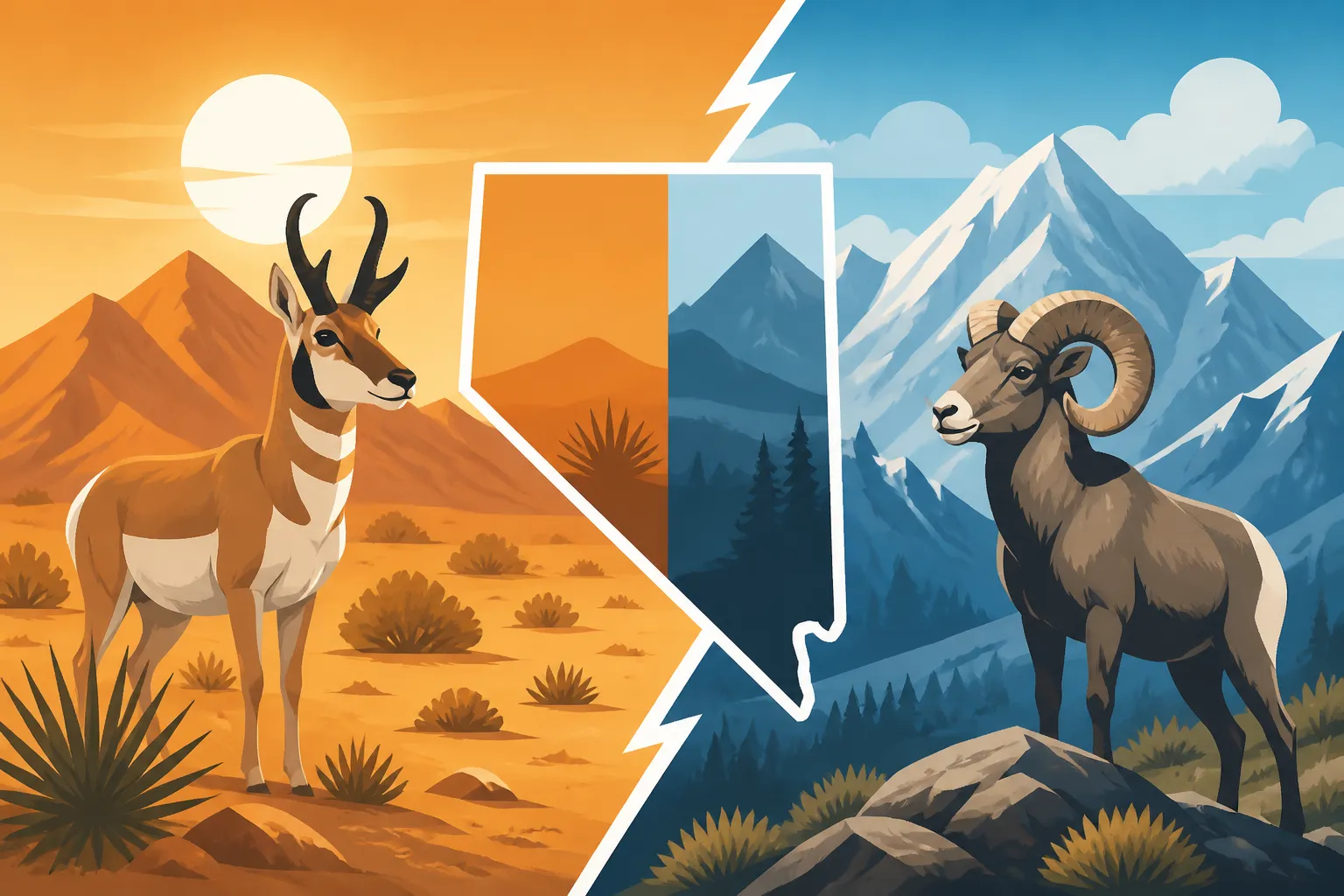
The term "desert unit" in Nevada doesn't necessarily mean sand dunes and cacti, though we have plenty of that in the south. More often, it refers to the immense stretches of basin and range country, characterized by vast sagebrush seas, low-lying mountain ranges, and critically, very little permanent water. These areas can be incredibly productive for mule deer and are the quintessential habitat for pronghorn. On the flip side, "high country units" usually encompass the more isolated and often higher-elevation mountain ranges that catch more precipitation, leading to a richer variety of vegetation, including pinyon-juniper forests, aspens, and mountain mahogany. These are often the strongholds for our elk herds and can hold significant numbers of mule deer as well, particularly during different seasons. The key is that the landscape dictates the game, the challenge, and ultimately, your strategy. It all comes down to understanding the Elevation Bands Worth Understanding in Nevada and what they mean for wildlife.
Deciphering Desert Unit Characteristics for Your Hunt
When you think about hunting Nevada's desert units, envision endless horizons, vast expanses of sagebrush, and mountain ranges that seem to melt into the distance. These units demand a particular kind of hunter – one who is patient, relies heavily on optics, and isn't afraid of long miles on uneven ground.
The Open, Vast Expanse
Hunting in Nevada's desert units is, in many ways, a glassing game. The terrain is generally more open, often rolling hills broken by washes, dry creek beds, and scattered volcanic outcroppings. While there might not be dense timber, don't mistake "open" for "easy." The subtle contours, shallow draws, and ubiquitous sagebrush can hide animals surprisingly well. A buck can simply melt into a patch of head-high sage and disappear, or a herd of antelope can be practically invisible against the backdrop of the valley floor until they spook at 800 yards. The sheer scale means you're often looking to spot game at extreme distances, sometimes miles away. This necessitates top-tier optics and a methodical approach to searching the landscape. Glassing Grids Across a Nevada Basin is not just a technique; it's a necessity out here. The biggest challenge in these dry landscapes, especially during early seasons, is often the scarcity of water, which becomes a magnet for game. Locating these precious Water Sources That Concentrate Desert Game can be the key to finding animals.
Unique Hunting Strategies for Arid Lands
Given the wide-open nature of desert units, your hunting tactics will lean heavily on covering ground with your eyes, not your feet, initially. Setting up on a vantage point before first light and systematically picking apart the landscape with binoculars and a spotting scope is paramount. Once you've spotted an animal you want to pursue, the stalk becomes a masterclass in using whatever meager cover the land provides. You'll be using every dip, rise, and patch of dense sage to break up your silhouette, often crawling the last few hundred yards. This is where modern mapping apps like onX Hunt truly shine. You can zoom in on topo lines to identify subtle terrain features that might offer concealment, mark potential bedding areas, or identify historical water sources that might still be active. Learning to read the wind is absolutely critical, as a slight shift can carry your scent for miles across the open flats, blowing your stalk before you even get close. Reading Wind on a Long Sage Stalk becomes second nature, as does learning to read Terrain That Hides an Approach in Open Country. Physical demands are different here too; while you might not be climbing thousands of feet, you'll be covering vast distances horizontally, often on sharp, uneven ground, and usually under a relentless sun. Staying hydrated and understanding Water You Must Carry on a Desert Day Hunt is non-negotiable.
Navigating High Country Unit Hunting Opportunities
Switching gears to Nevada's high country units introduces an entirely different set of challenges and aesthetics. Here, the air is cooler, the climbs are steeper, and the cover is generally denser, offering a more traditional mountain hunting experience.
Alpine Challenges and Timbered Havens
High country units typically boast more rugged topography, with elevations ranging from 7,000 to well over 10,000 feet. You'll encounter steeper slopes, rocky outcroppings, and more diverse vegetation. Pinyon and juniper give way to stands of aspens, ponderosa pines, and mountain mahogany at higher elevations. This denser cover changes the dynamic of the hunt significantly. Instead of glassing vast distances, you're often focused on smaller pockets, shadowed north-facing slopes, and the edges of timberlines. The vertical nature of these units means significant elevation gain and loss throughout the day, which can be physically taxing. Weather can also be a major factor; these higher elevations are prone to sudden storms, including early season snows, which can add another layer of complexity to your hunt. Iconic ranges like Hunting the Ruby Mountains or accessing the Hunting the Santa Rosa Range offer these kinds of experiences.
Strategies for Elevated Pursuits
Hunting the high country often involves a blend of still hunting through timber, glassing smaller basins and clearings, and potentially incorporating calling, especially for elk. Instead of relying solely on long-range glassing, you'll be looking for tracks, rubs, and fresh sign, moving slowly and deliberately through the cover. Ambush points along game trails, near water sources, or in feeding areas become more viable tactics. Physical conditioning is paramount for high country hunting. The repeated ascents and descents with a pack can quickly wear you down. This isn't just about being fit; it's about being prepared for sustained effort at altitude. Preparing Physically for Long Glassing Days becomes even more critical when combined with steep inclines. Your gear choices will also reflect the varied conditions. Layering is key to adapting to cold mornings, warm afternoons, and sudden weather changes. Layering for Basin and Range Temperature Swings will be essential as you move through different microclimates and elevations. While onX Hunt is still invaluable for navigation and identifying terrain, GoHunt can complement this by providing historical weather patterns and success rates for specific high-country units, helping you predict conditions and analyze past performance in these challenging areas.
Making Your Unit Choice: Key Factors to Consider
Deciding between a desert and high country unit isn't just about what you want to hunt; it's about what you can hunt, both physically and skillfully, and what aligns with your overall hunting goals.
Assessing Your Personal Fitness and Skill Set
Be brutally honest with yourself about your physical condition. Are you capable of hiking thousands of feet in elevation day after day, or are you better suited for covering long, flatter distances? High country hunts are physically demanding, whereas desert hunts, while not easy, often involve less extreme vertical challenges, shifting the strain to endurance and heat management.
Your hunting skills also play a huge role. If you're a master of long-range glassing and confident in taking shots out to significant distances, a desert unit might play to your strengths. Many desert units necessitate proficiency with a rifle sighted for long shots, so understanding your Rifle Zero Distance for Long Sage Shots is paramount. If you prefer still hunting, tracking, or calling in thick cover, and are comfortable with closer, more precise shots, the high country could be your arena. Nevada's vastness means there's a place for every skill set, but matching your unit choice to yours is critical for success and enjoyment.
Understanding Species Preferences and Draw Odds
Different species thrive in different environments, and this should heavily influence your decision. Pronghorn are almost exclusively found in the open, expansive desert units. Elk, on the other hand, are predominantly creatures of the high country, favoring the timbered slopes and alpine meadows. Mule deer are the wild card, found in both environments, but their behavior and distribution will vary dramatically. In desert units, mule deer often stick to broken country and isolated water sources, while in the high country, they might be found higher up in the summer and migrate down as snow flies.
It's also worth noting that draw odds can vary significantly between unit types and even within the same species. Some high-demand, high-country elk units might have astronomically low draw odds, while certain desert mule deer units could offer a slightly better chance. Tools like GoHunt are invaluable here, providing detailed draw statistics and application strategies. You can often see the stark differences in Why Nevada Draw Odds Vary So Much by Unit when comparing a desert unit to a high-country counterpart, allowing you to make an informed decision based on your point totals and desired success rate.
Logistical Considerations and Scouting Tools
Before you even apply, think about the logistics of your hunt. Desert units often mean incredibly remote travel, long stretches between fuel and services, and unforgiving roads. High country units might have better-maintained access roads up to a certain point, but then you're looking at foot or pack animal access into true wilderness. Consider your vehicle, your support system, and how far you're willing to be from civilization. Remote Road Conditions Across Nevada can quickly turn a good day bad, and cell service can be non-existent in either. Cell Coverage Across Nevada Hunt Units is often a luxury, not a given.
Modern scouting tools are a game-changer for both types of units. onX Hunt is indispensable for visualizing public land boundaries, understanding terrain, and marking potential water sources or bedding areas, whether you're in the vast sagebrush or dense timber. Using these platforms for E-Scouting a Nevada Unit Before the Season allows you to virtually "walk" the landscape, identify glassing points, and plan your routes long before you ever set foot on the ground. This pre-season planning is particularly effective when deciding between unit types, as you can analyze satellite imagery for cover, water, and terrain features to see which aligns best with your chosen species and hunting style.
Here's a quick comparison to help solidify your thoughts:
| Feature | Desert Unit Hunting | High Country Unit Hunting |
|---|---|---|
| Typical Terrain | Vast sagebrush flats, low broken ranges, volcanic rock | Steep mountains, timbered slopes (pinyon, juniper, aspen), alpine meadows |
| Primary Method | Extensive glassing, long-range stalking | Still hunting, tracking, calling, glassing small basins |
| Physical Demands | Long horizontal distances, heat, uneven ground | Significant vertical climbs, endurance, altitude |
| Species | Pronghorn, Mule Deer (often dispersed) | Elk, Mule Deer (often concentrated) |
| Optics | Absolutely critical, high power necessary | Essential for spotting, but less extreme distances |
| Cover for Hunter | Minimal, reliant on terrain contours | Denser timber, more opportunities for concealment |
| Water Source | Scarce, major game magnet | More prevalent, but still strategic |
| Weather | Hot, dry, wind; dust storms | Variable, colder, potential for early snow, thunderstorms |
| Access | Often remote, poor dirt roads | Variable; some good roads, others require hiking/packing |
Ultimately, the choice between a desert and high country unit in Nevada boils down to personal preference, physical preparation, and what kind of hunting experience you're truly seeking. Both offer incredible opportunities and unique challenges that make hunting in Nevada truly special.
Disclaimer
This article is for general informational purposes only and does not constitute professional advice. Laws, prices and regulations vary by location and change over time. Consult a qualified professional for guidance on your specific situation.