Terrain That Hides an Approach in Open Country
It's incredibly frustrating when you've spent hours, maybe even days, glassing a magnificent buck or bull in Nevada's vast, open country, only to realize the sheer distance and lack of cover make a successful stalk seem impossible. The Great Basin's wide-open spaces, while beautiful, present a unique challenge for hunters trying to close the distance without spooking game. This guide is dedicated to breaking down the subtle art of using the natural terrain to your advantage, helping you understand how to pick apart the landscape and execute a successful approach even in what appears to be completely exposed country.
Understanding Nevada's Open Landscape for Stalking
Nevada's hunting grounds are defined by their expansive views, sagebrush flats, and rugged mountain ranges. Unlike the dense forests of other states, here, cover is a precious commodity, and understanding how to maximize every subtle dip, rise, and patch of brush is paramount to success. Many hunters new to the region make the mistake of thinking "open" means "exposed," leading to aborted stalks or spooked animals. The truth is, Nevada's open country is rarely truly flat or barren; it's a tapestry of subtle undulations, ancient waterways, and resilient plant life that, when read correctly, offers surprising opportunities for concealment.
The Illusion of Wide-Open Spaces
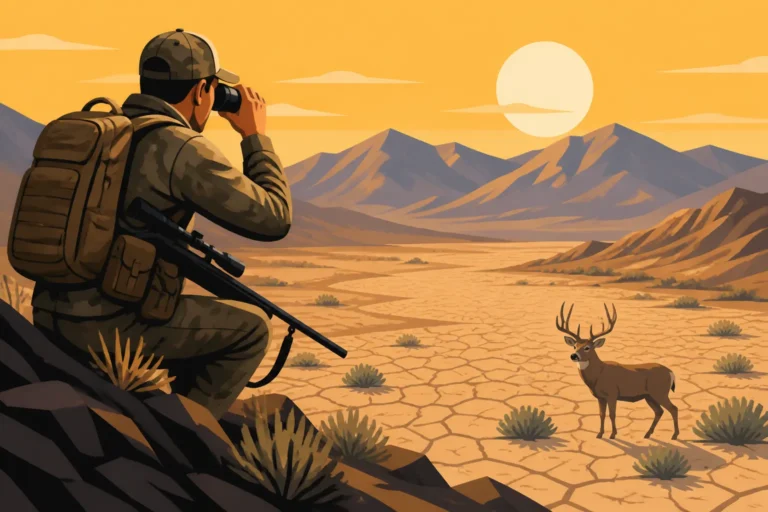
From a distance, looking across a sprawling Nevada basin, it often appears as if there's nowhere to hide. You might be watching an antelope buck at a mile, or a mule deer bedded on a low ridge, and the terrain between you and them looks like a pool table. This visual deception is precisely what makes Nevada hunting so challenging and rewarding. What seems flat is almost never truly flat. There are always subtle variations – shallow draws, small rises, scattered clumps of sagebrush, or even just changes in the texture of the ground – that can provide crucial cover if you know how to identify and utilize them.
These subtle features are often invisible to the untrained eye or when viewed through lower-power optics. However, with good glass and a patient approach, you can begin to deconstruct the landscape, identifying potential travel lanes and hidden approaches. It's about shifting your mindset from seeing a blank canvas to recognizing the intricate details that make up the terrain, much like how you might meticulously set up your tripod for glassing from a ridge to pick apart distant details. The successful hunter in Nevada is a master of observation long before they ever take a step in a stalk.
Why Stalking is Different Here
Stalking in Nevada demands a different skill set than hunting in timber or thick brush. Here, it's less about crashing through cover and more about meticulously planning your route, moving with extreme caution, and embracing patience as your most valuable tool. Your approach will often involve long periods of low crawling, utilizing every single inch of available terrain, and constantly reassessing your position relative to the animal and the wind. The sheer scale of the landscape means that a "short" stalk can still be a mile or more, making physical preparation and mental fortitude absolutely essential.
Furthermore, the types of game you're pursuing—whether it's an alert mule deer, a lightning-fast pronghorn, or a wary elk—are exceptionally tuned to their environment. They rely on their incredible eyesight and sense of smell to detect threats from vast distances. This means that every movement you make, every shadow you cast, and every gust of wind carrying your scent becomes a potential game-ender. This unique challenge is why many veteran hunters consider a successful stalk in Nevada to be one of the most satisfying achievements in Western hunting.
Utilizing Topographical Features for Concealment
When you're trying to close the distance on an animal in Nevada, the macro-terrain features—the big picture stuff you can see on a map or from miles away—become your initial pathways to concealment. These aren't always obvious, but with practice, you'll start seeing them as natural highways for your approach.
Draws and Washes: Natural Corridors
Draws and washes are arguably the most valuable assets for a hunter trying to get close in open country. These are the natural depressions in the landscape, often carved out by water over millennia, that snake across flats and down hillsides. They can range from shallow, barely perceptible swales to deep, rugged arroyos with sheer banks. The beauty of a draw is that it offers vertical cover, allowing you to walk or crawl below the line of sight of your quarry.
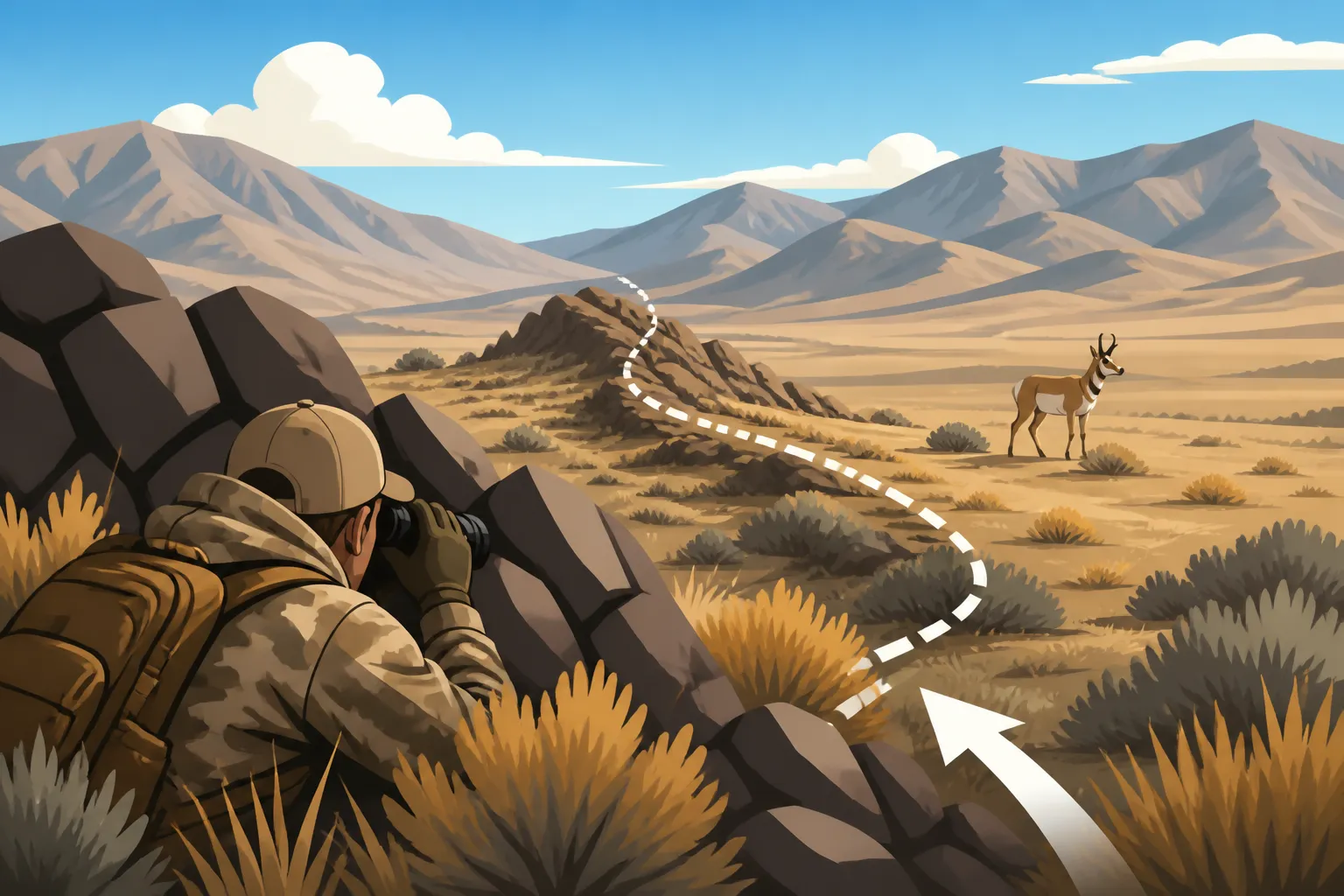
When you identify a draw that leads in the general direction of your animal, it becomes your primary stalking route. You can often travel hundreds of yards, sometimes even miles, within the confines of a draw, completely hidden from view. However, it's crucial to be mindful of side channels and bends in the draw that might unexpectedly expose you. Always move slowly, peeking around corners or up over banks with extreme caution. Remember, the deeper and more sinuous the draw, the better your chances for a concealed approach. Just be prepared for the rough footing and potential for hidden obstacles within these natural corridors.
Rims and Ridgelines: Breaking the Skyline
Rims and ridgelines are another critical topographical feature, especially when dealing with animals positioned on opposing slopes or benches. A rim is essentially a sharp break in the terrain, often the edge of a plateau or a prominent rock formation. A ridgeline is a continuous line of elevated ground, separating two valleys or drainages. Both offer opportunities to break your silhouette and travel undetected. The key is to stay below the crest of the rim or ridge, never skylining yourself against the horizon.
When you're paralleling a ridge, maintain a position just below the top, where the ground rises sufficiently to hide your body. This allows you to advance without being seen, and then carefully, slowly, peer over the crest to check the animal's position or the terrain ahead. This technique is often referred to as "Using a Rim to Break Your Silhouette". Remember that going over the top of a ridge means you're often exposed on both sides, making the approach much riskier. Always try to gain your view by peeking over from a position of cover, using the natural curve of the earth or a small rock to hide your form.
Rolling Hills and Undulations: The Art of the Dip
Nevada's landscapes are often characterized by gentle, rolling hills and subtle undulations—sometimes so subtle they only become apparent when you're on them. These seemingly insignificant dips and rises are goldmines for the patient stalker. The "art of the dip" involves using these slight changes in elevation to your advantage, moving from one low point to the next, much like a wave moving across the ocean.
As you advance, you should constantly be looking for the next patch of slightly higher ground that can hide your movement, followed by a slight dip that allows you to drop out of sight. This might mean crawling on your hands and knees for short bursts, or even belly crawling for extended periods to stay below the visual horizon of the animal. This technique requires excellent field judging of distances and a constant awareness of the animal's line of sight. It's about making deliberate, slow movements, always keeping in mind that even a few inches of extra height can expose you. This method is incredibly effective for closing the last few hundred yards on a bedded animal.
Master the Art of Reading Micro-Terrain
Beyond the large-scale topographical features, the micro-terrain—the small, localized elements—are your final lines of defense and often dictate the success or failure of a stalk. These are the details you spot through your binoculars or spotting scope as you plan your final approach, and they require a keen eye and a patient understanding of how to use them.
Sagebrush and Junipers: Low-Lying Cover
In many parts of Nevada, sagebrush is the dominant vegetation, along with scattered juniper trees in higher elevations or specific drainages. While these don't offer the dense cover of a forest, they are invaluable for breaking up your outline and providing low-lying concealment. A large, dense clump of sagebrush can completely hide a crawling hunter, and even smaller bushes can break up your silhouette sufficiently if you move slowly and deliberately.
When utilizing sagebrush, you're often doing a low crawl or a "sagebrush shuffle," moving from one larger bush to the next. The trick is to keep your body as low as possible, almost slithering through the plants, letting the brush obscure your form. Junipers, being larger, can provide more substantial cover, allowing for a crouched walk or even standing if you're careful about your angles. Always assess the density and height of the vegetation. Remember, even if it doesn't completely hide you, breaking up your outline against the uniform backdrop of the landscape can often be enough to avoid detection, especially if you blend in with the coloration of the terrain.
Rock Outcroppings and Boulders: Immobile Hides
Nevada's volcanic and rocky terrain is littered with countless rock outcroppings and individual boulders, from small car-sized rocks to massive formations. These are naturally occurring, stationary pieces of cover that can be incredibly effective if positioned correctly. Unlike vegetation, they won't sway in the wind, and they offer solid, impenetrable concealment.
When planning your approach, look for a series of boulders or rock ledges that can shield your movement. You can often use them as a "backstop" to set up for a shot, or as intermediate stopping points during a long stalk. The challenge is that they are fixed; you can't move them. This means your path must be carefully chosen to weave from one rock to the next, staying in their shadows or behind their bulk. Be particularly careful about approaching the edges of a rock outcropping. Just like a rim, you need to slowly and carefully peek around or over to check for game or other hazards, especially when you're trying to determine how far to stalk a bedded mule deer.
Dry Creeks and Eroded Channels: Unexpected Pathways
Beyond the main draws and washes, the Nevada landscape is crisscrossed with smaller, often less obvious, dry creeks and eroded channels. These might not be deep enough to walk upright in, but they provide critical shallow depressions that can be crawled through. They are frequently found winding through sage flats or at the base of smaller hills.
These channels are often overlooked but can offer direct pathways to your target. They tend to be narrower and shallower than major washes, which means you'll spend more time on your belly or hands and knees. The advantage is their ubiquity and often less predictable routes, which can sometimes lead directly to a secluded bedding area or a water source where game might be. Always proceed slowly, as the banks of these smaller channels might not provide as much cover, and an abrupt movement could easily expose you. Pay close attention to these features when you're e-scouting a Nevada unit before the season using digital mapping tools.
Advanced Stalking Strategies in Exposed Areas
Even with the best use of terrain, there will be times when you find yourself in highly exposed areas with minimal cover. This is where advanced stalking techniques, combined with an acute awareness of your surroundings and the animal's senses, come into play.
Playing the Wind and Thermals
Understanding and utilizing the wind is perhaps the single most critical factor in any stalk, especially in open country where your scent can carry for long distances. Animals, particularly elk and deer, rely heavily on their sense of smell to detect predators. Even with perfect visual cover, if your scent blows to the animal, the game is over. Before you even begin your stalk, you must know the wind direction and, crucially, how it might shift.
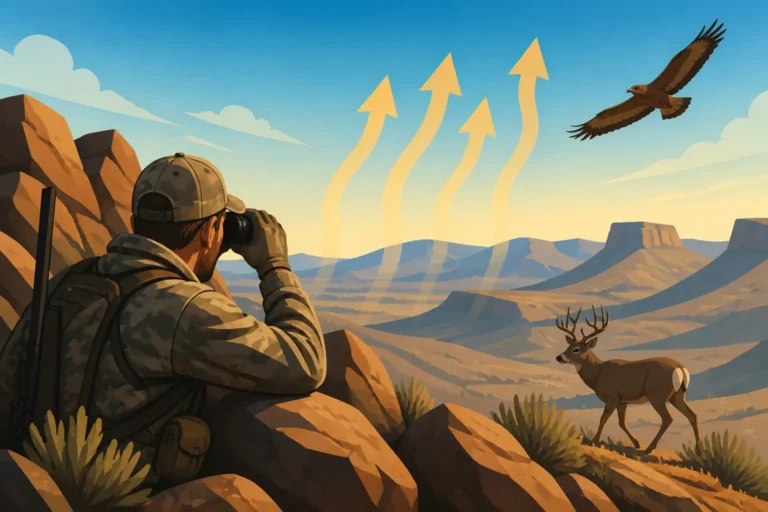
In Nevada's mountainous and basin-and-range terrain, thermals play a massive role. Early in the morning, cold air sinks, causing thermals to pull your scent downhill. As the sun rises and heats the slopes, warm air rises, and thermals reverse, carrying your scent uphill. This means a perfect downhill stalk in the morning could become a recipe for disaster if you delay too long and the thermals shift. Always approach from downwind, or at least crosswind. Tools like a puff bottle are indispensable for constantly checking the wind, and understanding the nuances of reading wind on a long sage stalk will pay dividends. Often, the best approach might not be the most direct, but the one that keeps your scent out of the animal's nose.
Minimizing Noise and Movement
In open country, silence is golden. Every crunch of a boot on dry ground, every rustle of clothing, every clink of gear, is amplified in the still air and can carry far. Your movements need to be slow, deliberate, and fluid. Think like a predator: low to the ground, moving smoothly, and pausing frequently. When you move, pick up your feet, don't drag them. Test each foot placement before putting your full weight down, especially on rocky ground or through dense sagebrush.
Minimizing movement extends beyond just walking. When you stop to glass or assess, do so slowly. Avoid sudden motions. If you need to raise your binoculars, do it in a series of small, unalarming movements, or when the animal's head is down or obscured. Many animals are much less concerned by a slow, subtle movement that looks like natural swaying vegetation than by a quick, jerky motion. This extreme caution is why choosing boots for sharp volcanic rock is so important; the right footwear can significantly reduce noise.
The "Turtle" or Slow Crawl Method
When all other forms of cover fail, and you're within the final few hundred yards in genuinely exposed terrain, the "turtle" or slow crawl method becomes your best friend. This technique involves getting as low to the ground as possible, often on your belly, and advancing agonizingly slowly. It's physically demanding and tests your patience, but it's incredibly effective when there is virtually no other cover.
You'll essentially be moving an inch at a time, using every tiny dip, every low clump of grass, every small rock to hide your form. Your head should be down, only slowly rising to check the animal's position when it's looking away or when you have momentary cover. Think about a turtle pulling its head back into its shell. This is a method you employ when you know the animal has a good vantage point, and you cannot afford to be seen. It's often employed when closing the last hundred yards on a pronghorn, where any vertical movement will draw immediate attention. This requires immense focus and physical stamina, but it often makes the difference between a successful shot and a busted stalk.
Planning Your Approach with Technology and Observation
In today's hunting world, effective stalking isn't just about what you do in the field; it's also about the preparation and real-time adaptation you perform before and during the hunt. Integrating modern technology with traditional observation skills can significantly increase your chances of success.
E-Scouting for Concealment
Before you even set foot in a unit, spend significant time e-scouting. Tools like GoHunt's mapping platform are invaluable for this. You can analyze satellite imagery, topographical maps, and public land ownership layers to identify potential stalking routes and areas of concealment. Look for prominent draws, subtle drainage systems, areas with denser vegetation (even if it's just taller sage), and strings of rock outcroppings. You can mark these potential routes directly on your map.
Focus on identifying ingress and egress points that offer the most cover, and try to visualize your approach from multiple angles relative to where you expect to find game. Pay attention to contour lines on the map; tight contour lines indicate steep terrain, which can offer significant vertical cover, while gentle, widely spaced lines suggest rolling hills perfect for the "dip" strategy. Understanding the terrain that hides an approach in open country from the comfort of your home is a huge advantage. This preparatory work can save you hours of wasted effort and significantly increase your odds in the field.
Real-Time Observation and Adaptation
Once you're in the field, your e-scouting plan is a starting point, not a rigid script. Real-time observation is crucial, as conditions can change rapidly. Wind shifts, animals move, and terrain features that looked great on a map might not offer the cover you anticipated. Always begin by glassing the animal and its surroundings thoroughly. Use your spotting scope and binoculars to identify the exact bedding location, potential escape routes, and, most importantly, the specific micro-terrain features closest to the animal that can provide cover for your final approach. This is where GoHunt's detailed satellite imagery layers come in handy for on-the-go analysis.
As you begin your stalk, constantly re-evaluate. Stop frequently to glass the animal and your planned route. Is the wind holding? Has the animal shifted its position? Are there unexpected obstacles or other animals you didn't see initially? Be prepared to adapt your plan on the fly, even if it means taking a much longer, more circuitous route. Patience here is not just a virtue; it's a strategic necessity. Remember that a successful stalk might take hours, so plan for long days in open terrain by carrying enough water and snacks.
Post-Shot Considerations in Open Terrain
A successful stalk doesn't end with a well-placed shot. In Nevada's open, often vast, and rugged country, what happens immediately after the shot is just as critical. Animals, especially those hit well, can still travel surprisingly far, and tracking them in open, rocky, or sage-covered terrain can be incredibly challenging.
Firstly, if possible, mark the exact spot where the animal was standing when you shot, and where it was last seen. Use a unique rock, a specific bush, or even a piece of flagging tape if you have it. Immediately after the shot, focus on the animal's reaction and its direction of travel. Take note of any features it crosses, like draws or distinct hills. If the animal goes down, continue to observe it through your optics for a sustained period to ensure it's expired before you approach. When you do approach, do so cautiously, keeping your rifle ready. The open nature of the terrain can make it difficult to pinpoint a downed animal, so taking careful mental notes of landmarks is critical for retrieval.
| Terrain Feature | Advantage for Stalking | Disadvantage/Challenge | Best Use Scenario |
|---|---|---|---|
| Draws/Washes | Excellent vertical concealment, natural travel lanes. | Can be noisy, may have unseen bends/obstacles. | Long approaches, moving through flats, approaching water. |
| Rims/Ridgelines | Breaks silhouette, allows peering over for observation. | Skylining risk, requires staying below crest. | Approaching animals on opposite slopes, gaining vantage points. |
| Rolling Hills | Subtle dips and rises for low-profile movement. | Requires constant low-crawling, easy to get exposed. | Closing final distances, "turtle" method on bedded game. |
| Sagebrush/Junipers | Breaks up outline, offers low-lying visual cover. | Limited true concealment, noisy in dry conditions. | Slow advances, moving from clump to clump, final approach cover. |
| Rock Outcroppings | Solid, impenetrable cover; good shooting rests. | Immobile, can create dead zones or exposed transitions. | Setting up for shots, intermediate resting points in open areas. |
| Dry Creeks | Unexpected, shallow pathways for crawling. | Banks may be low, requires very low profile, rough footing. | Surprise approaches, weaving through small flats. |
Disclaimer
Please note that hunting regulations, seasons, and access rules can change frequently. Always consult the most current Nevada Department of Wildlife (NDOW) regulations and official land management maps before planning any hunt. This guide is for informational purposes only and does not supersede official directives. Responsible and ethical hunting practices are paramount.