Hunting Water in Nevada’s Driest Country
Hunting in Nevada's vast, arid landscape presents a unique set of challenges, and for many, the most significant hurdle is simply finding animals in such immense, open country. But seasoned hunters know that in a place defined by its dryness, water becomes the ultimate magnet, concentrating wildlife in ways that are simply unmatched anywhere else. This guide dives deep into the art and science of finding and effectively hunting these precious water sources, giving you the edge in Nevada's driest units.
The Indispensable Role of Water in Nevada's Ecosystems
Nevada's reputation as one of the driest states in the nation isn't just a fun fact; it's a fundamental truth that dictates everything about its wildlife and, consequently, how we hunt it. Understanding the critical role water plays in this harsh environment is the first step to unlocking success in the Great Basin.
Why Water Dictates Game Movement
Imagine living in a place where liquid gold is rarer than actual gold. That's the reality for mule deer, elk, pronghorn, and bighorn sheep across much of Nevada. These desert dwellers are incredibly tough and adapted to survive on minimal moisture, often getting what they need from forage. However, there's a limit. During the scorching summer months, or any prolonged dry spell, accessible water transforms from a luxury into an absolute necessity.
Animals develop predictable patterns around these vital hydration points. They'll bed in cooler, shadier areas during the heat of the day, moving towards water in the early morning or late evening, or even under the cover of darkness. This isn't just about drinking; it's about thermoregulation, digestion, and overall survival. A large mule deer buck, for instance, might be able to go a day or two without direct water in mild conditions, but in August's brutal heat, he's hitting a source at least once every 24 hours, if not more. Recognizing this dependency is key to understanding where to focus your efforts.
The Impact of Scarcity on Hunting Strategies
When rainfall is abundant, game animals disperse, finding temporary puddles and succulent forage across wider areas. This makes them incredibly tough to locate, as they're not tethered to a single resource. But during dry periods, especially the late summer and early fall, that widespread availability dries up, forcing everything to converge on the remaining perennial springs, man-made guzzlers, and reliable creeks. This scarcity creates a natural funnel, concentrating game in a way that, while often leading to heavier hunting pressure, also offers unparalleled opportunities for diligent hunters.
Drought conditions, which are sadly becoming more frequent in the West, amplify this effect dramatically. A spring that might have run freely in a wet year could be reduced to a muddy seep, or even completely dry, in a severe drought. This forces animals to travel further, further consolidating them around the last available water. For the hunter, this means that while scouting might reveal numerous potential spots, only a handful will truly be active during the season. This often involves intense, frustrating pre-season work, but the payoff can be huge.
Identifying Key Water Sources on the Landscape
Successfully hunting water requires knowing what kind of water sources exist, what they look like, and how to differentiate between them on a map and in person. Nevada offers a variety, each with its own nuances for the hunter.
Natural Springs and Seeps
Natural springs and seeps are often the lifeblood of Nevada's high desert. These are places where groundwater naturally surfaces, creating small pockets of moisture, sometimes even flowing into trickles or small pools. They can range from obvious ponds to subtle, damp spots only discernable by greener vegetation or muddy ground.
Finding them is a multi-pronged effort. Topographic maps (topo maps) are an excellent start, as springs are often marked. Satellite imagery, which tools like GoHunt provide in incredible detail, allows you to zoom in and look for tell-tale signs: greener vegetation against a brown, arid landscape, or subtle depressions that might collect water. Don't be fooled by map markers alone, though; a "spring" on a topo map might be dry as a bone in reality, especially in later seasons. Always verify these locations. On the ground, look for game trails converging, fresh tracks, and areas of lush plant growth that stand out. Remember that Reading Water Sources Before an August Hunt is crucial, as some springs dry up as the summer progresses. Approaching these quietly is paramount, as animals often feel secure around them and can be jumpy.
Man-Made Guzzlers and Water Developments
In a state where natural water is so scarce, human intervention often steps in to help wildlife. Guzzlers and other water developments are man-made structures designed to collect and store rainwater for wildlife. These typically consist of a catchment apron, usually made of metal or fiberglass, that funnels precipitation into a storage tank, which then feeds a trough or small drinker accessible to animals. They are strategically placed in areas lacking natural water and are incredibly effective at supporting game populations.
These vital structures are often some of the most reliable water sources in a unit. The Nevada Department of Wildlife (NDOW) and various conservation groups have done tremendous work placing these across the state. You can often find their locations marked on specialized hunting apps and mapping software, like those offered by GoHunt. Understanding How to Locate a Guzzler From Home through these digital tools is a significant advantage. Once you've identified potential guzzler locations during your e-scouting, a pre-season trip to verify water levels and game sign can make all the difference. These sites are true magnets, and it's remarkable How Guzzlers Concentrate Desert Game, drawing animals from miles around.
Ephemeral Water: Charcos and Rain Puddles
While springs and guzzlers are your primary focus for reliable water, never discount the power of ephemeral, or temporary, water sources. These are the small puddles, known as charcos in some desert regions, or simply rain puddles that form in natural depressions after a significant rainfall event. They might only last a few days or weeks, depending on the heat and soil type, but their impact can be profound.
When a good rainstorm rolls through a dry unit, these temporary puddles scatter game. Animals, no longer forced to travel to established sources, will drink from these closer, safer spots. This can temporarily make hunting established water sources less effective. However, as these puddles dry up, animals gradually return to the more permanent locations. The trick here is timing: if you're hunting right after a rain, look for these new, temporary sources, often found in washes, rocky depressions, or flat spots in the sagebrush. As the hunt progresses and the landscape dries, shift your focus back to the reliable springs and guzzlers. It's a dynamic strategy, and understanding the recent weather patterns for your unit is critical.
Advanced E-Scouting and Pre-Season Reconnaissance for Water
In Nevada, success isn't just about hunting hard; it's about hunting smart. And hunting smart starts long before you ever set foot in your unit, with diligent e-scouting and, if possible, pre-season reconnaissance. This is where you leverage technology and information to narrow down your focus to the most productive water sources.
Utilizing Digital Mapping Tools
Modern hunting has been revolutionized by digital mapping platforms, and nowhere is this more evident than in a vast, roadless state like Nevada. Tools like onX Hunt, BaseMap, and especially GoHunt's Insider platform, offer incredible layers of information that are invaluable for water scouting. Start by layering satellite imagery with topo maps to spot potential springs (look for green spots in arid areas) and known water developments (often marked). Pay close attention to terrain features like canyon bottoms, north-facing slopes (which retain moisture longer), and areas where multiple drainages converge, as these are natural funnels for water.
Beyond just identifying water, use these tools to map access points, potential glassing knobs, and areas that offer concealment for a still-hunt. Understanding E-Scouting a Nevada Unit Before the Season involves not just finding water, but also planning how you'll get to it, hunt it, and potentially pack an animal out from it. Use the public land layers to ensure you're within legal hunting boundaries, and check for any wilderness areas or special restrictions. Creating waypoints for every potential water source, even those that look questionable, gives you options once you're on the ground.
Interpreting Historical Data and Reports
E-scouting isn't just about current maps; it's also about understanding historical context. The Nevada Department of Wildlife (NDOW) publishes a wealth of information, including harvest statistics, herd management plans, and sometimes even specific reports on water conditions. While not always readily available for every unit, delving into these resources can provide crucial insights. For instance, historical drought maps can show you which units were hit hardest in previous dry years, giving you an idea of where water might be most scarce and thus most valuable.
When you're Reading a Nevada Hunt Unit Before You Apply, look for any mention of water availability or specific water developments. This context can inform your e-scouting, helping you prioritize which potential water sources to investigate further. It's also wise to check local weather archives for the past few years to understand precipitation trends in your chosen unit. A unit that had a very wet spring might have more dispersed water than one that has been bone dry for months, influencing how animals behave around the more permanent water sources.
Effective On-the-Ground Hunting Tactics for Water Sources
Once you've done your homework and found promising water sources, the real work begins. Hunting water in Nevada isn't always about sitting and waiting; it's a dynamic approach that requires patience, stealth, and adaptability.
Still-Hunting and Ambush Strategies
For many, the classic image of hunting water is a hunter sitting patiently in a blind, waiting for an animal to come drink. This can be incredibly effective, especially in highly arid units with limited water. When Sitting Water in Nevada's Dry Units, choosing your ambush point is critical. You need to be downwind, concealed, and have a clear shooting lane to the water source and the most likely approach trails. Consider the angle of the sun at peak activity times (early morning, late evening) to avoid silhouetting yourself. A small portable blind or even natural rock formations and dense sagebrush can provide adequate cover.
Still-hunting around water sources, rather than strictly sitting, is another excellent strategy. This involves moving slowly and deliberately through the terrain surrounding a spring or guzzler, constantly observing for signs of game. Animals often don't just walk up to water and drink; they'll pause, scent the air, and slowly approach. By still-hunting, you can intercept them on their way in or out, or even catch them bedded in nearby cover after a drink. This requires a keen awareness of the wind, your scent, and extreme stealth, using terrain features to break up your outline as you move.
Glassing for Animals Moving to and From Water
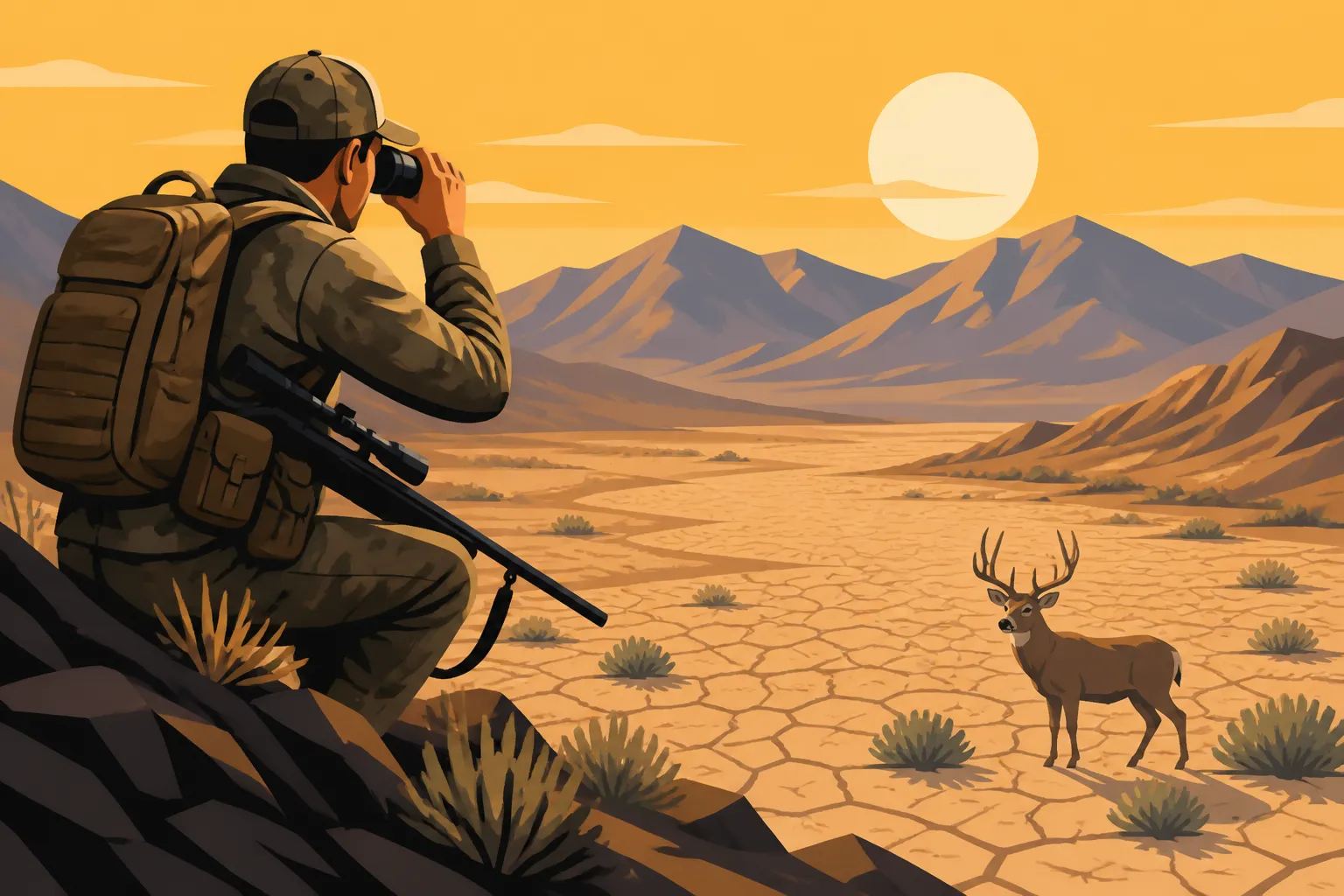
In Nevada's vast, open country, your optics are arguably your most important tool, and this holds especially true when hunting water. Instead of planting yourself directly on a water source, an incredibly effective tactic is to set up a good glassing point overlooking a large basin that contains several water sources or known travel corridors leading to them. This allows you to observe from a distance, minimizing your impact and giving you a much broader view of animal movement.
Find a high point with a clear view and spend hours, even an entire day, systematically Glassing Nevada's Basin and Range for Mule Deer or other game. Animals often use the same trails repeatedly to access water. Look for those dusty lines snaking across the landscape, and then focus your glassing efforts there. Peak movement times are still key, but by glassing, you can spot animals miles away, determine their travel patterns, and then plan an educated stalk. This strategy works particularly well when animals are slightly dispersed but still reliant on a limited number of sources.
Hunting the Periphery and Travel Corridors
It's tempting to focus solely on the water itself, but smart hunters know that game spends far more time around water than actually drinking from it. Animals will stage up in nearby cover before approaching, or they'll bed down a short distance away after getting their fill. This means expanding your hunting zone to include the surrounding terrain, especially the travel corridors that lead to and from the water.
Look for natural pinch points: saddles, draws, and narrow canyons that funnel game traffic towards the water. These are excellent places for an ambush, as animals are often relaxed and focused on reaching their destination. Also, scout for bedding areas on north-facing slopes or in dense patches of bitterbrush or juniper that are within a reasonable distance of water. A big buck might drink at first light, then move a few hundred yards to a shady spot and bed down for the day. By carefully still-hunting or glassing these peripheral areas, you increase your chances of intercepting an animal that might never step directly into your "waterhole blind."
Reading the Landscape: Signs of Life Around Water
The desert speaks a language of subtle signs, and around water, that language becomes a roaring conversation if you know how to listen. Learning to interpret these clues on the ground is paramount to confirming active water sources and understanding game behavior.
Identifying Tracks, Trails, and Droppings
This is fundamental tracking 101, but its importance around water cannot be overstated. Look for fresh tracks in the mud or soft dirt directly adjacent to the water source. Are they from deer, elk, or pronghorn? Are they fresh (sharp edges, no dust in them) or old (weathered, dusty)? Follow trails leading away from the water; these will give you clues about where animals are coming from and going to. A heavily worn trail indicates consistent use, while faint tracks might suggest sporadic visits.
Droppings (scat) are another critical indicator. Fresh, moist droppings mean an animal was there very recently. Dry, brittle droppings mean it's older sign. The quantity of droppings can also tell you about the frequency of use. Are there just a few, or is the area littered with them? Also, pay attention to where the droppings are found—directly at the water's edge, or along the approach trails? This helps you understand where animals are pausing, drinking, and moving through. Learning to differentiate species' tracks and scat will help you focus your efforts on the specific game you're targeting.
Understanding Browing and Rubs
Beyond tracks, game animals leave other, more subtle clues. Browing refers to the feeding sign left on vegetation. Around a water source, animals might browse on more succulent plants that grow in the slightly damper soil. Look for nipped twigs and leaves. If the browse is fresh, it's another indicator of recent activity. Pay attention to the height and type of browse to determine the species.
Rubs and scrapes are territorial markers, particularly for bucks and bulls during the rut. While you might not find rubs right at the water's edge, they are often located along the main travel corridors leading to and from water. A fresh rub on a juniper tree or a sagebrush bush indicates a mature animal has passed through recently. Even outside the rut, bucks will often rub their velvet off on small brush near water sources. These signs tell you not just that an animal is using the area, but often what kind of animal, and that it's a confident, established resident of that territory.
Interpreting Game Cameras and Remote Scouting
Game cameras have become an indispensable scouting tool for many hunters, and they can be particularly effective around water sources. Setting up a camera (where legal) can give you invaluable information about when animals are hitting the water, what species they are, and even their size. This helps you confirm which water sources are active and allows you to pattern animal movement without being present yourself.
However, it's absolutely crucial to be aware of Baiting and Trail Camera Rules in Nevada. Regulations can change, and some states have specific rules about placing cameras on public land or using them in conjunction with bait. Always check the current NDOW regulations for your unit and species. If cameras are legal and you choose to use them, place them discreetly to avoid disturbing animals or other hunters. Reviewing camera footage remotely can save you countless hours of unproductive waiting and help you fine-tune your hunting strategy.
Ethical Considerations and Regulatory Compliance
Hunting around water in Nevada comes with significant responsibility. These are vital resources for wildlife, and how hunters conduct themselves around them can have lasting impacts on both the animals and the hunting experience for everyone.
Respecting Water Development and Infrastructure
Man-made guzzlers and other water developments are lifelines in the desert. They represent significant investment and effort by conservation groups and wildlife agencies. As hunters, we have a responsibility to treat these structures with the utmost respect. That means never disturbing the infrastructure, leaving no trash, and certainly never damaging them. Remember, these guzzlers are often paid for by hunters and anglers through license fees and excise taxes on gear.
Think of it this way: these are not just hunting spots; they are critical wildlife management tools. You might be focused on harvesting an animal, but the primary purpose of a guzzler is to sustain the herd. Ensuring they remain functional and pristine contributes to healthy wildlife populations for future generations. For a deeper dive, consider the broader topic of Water Development and Hunting Ethics and how your actions contribute to the overall health of the ecosystem.
Avoiding Over-Pressuring Water Sources
Because water sources concentrate game, they also tend to concentrate hunters. It's an unfortunate but understandable reality. However, over-pressuring a water source can quickly make it unproductive. If too many hunters are sitting on a spring or guzzler, or driving in and out frequently, animals will become nocturnal, shift their patterns, or simply abandon that water source for a less disturbed one, if available. This ruins the spot not just for you, but for everyone else, and can stress the animals.
If you arrive at a water source and find another hunter already there, or obvious signs of recent human activity, it's often best to move on. There's plenty of public land in Nevada. Consider finding another water source or shifting your strategy to glassing a wider area, looking for animals moving to or from that pressured spot from a distance. Spreading out and giving animals space helps maintain natural patterns and ensures these critical areas remain viable hunting grounds.
Legalities of Hunting Near Water
Always consult the current Nevada hunting regulations, available through the NDOW, for any specific rules regarding hunting near water. While there generally aren't strict "no-hunting zones" around natural water sources on public land, certain situations might have limitations. For example, some private land could border a public water source, and you'd need to be aware of those boundaries. Additionally, regulations often address the use of game cameras (as discussed), baiting, and the proximity of shooting to roads or occupied dwellings, which might coincidentally be near water.
It's also critical to understand "legal shooting hours and blaze orange in Nevada" if applicable to your season and method. If you're hunting archery in August, you won't need blaze orange, but rifle seasons have strict requirements. Ensure you're not disturbing private property or ranching operations that might also rely on certain water developments. Ignorance of the law is not an excuse, so always carry a copy of the regulations, or have them accessible on your phone, and review them thoroughly before your hunt.
Essential Gear and Preparedness for Water-Focused Hunts
Hunting Nevada's dry country, especially when focusing on water, demands specific gear and a robust approach to personal preparedness. The remote, often rugged nature of the terrain means you need to be self-sufficient and ready for anything.
Optics and Glassing Equipment
As mentioned, your optics are your best friend in Nevada. For water-focused hunts, this means investing in high-quality binoculars, a spotting scope, and a sturdy tripod. Binoculars in the 10x or 12x range are excellent for general scanning and close-up work, while a spotting scope (20-60x or higher) on a stable tripod is indispensable for picking apart distant hillsides and identifying animals miles away that are either heading to water or leaving it.
Quality glass makes a monumental difference, especially during the low light hours when animals are most active around water. You need to be able to resolve detail at extreme distances. When you're patiently Glassing Nevada's Basin and Range for Mule Deer, every bit of clarity and light transmission counts. Don't skimp on a tripod either; a shaky image makes long glassing sessions impossible and will lead to missed opportunities. Practice with your optics before the hunt to become proficient at scanning, spotting, and identifying game.
Water for Yourself and Emergency Supplies
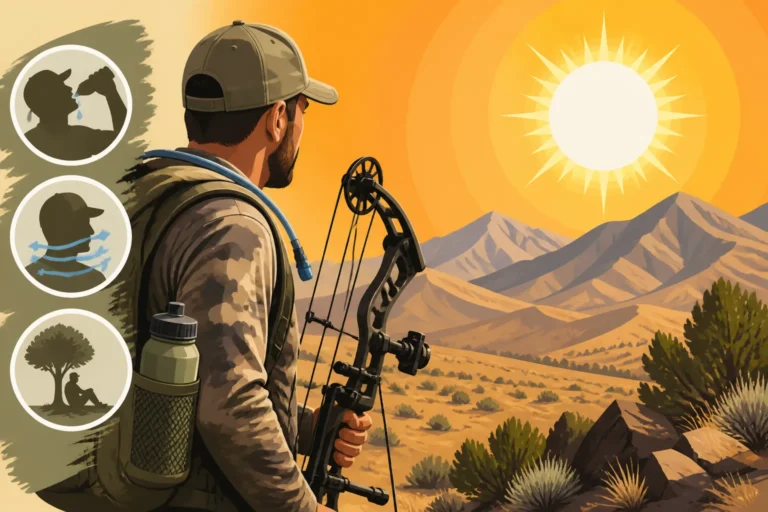
This cannot be stressed enough: carry more water than you think you need. Nevada is notorious for its extreme temperatures, and dehydration can set in quickly and silently. For every day of hunting, plan for at least a gallon of water per person, per day, especially during warmer seasons. If you're backpacking into a remote area, consider lightweight water filters or purifiers as a backup, but always start with a full supply. Check out our guide on Water You Must Carry on a Desert Day Hunt for detailed packing advice.
Beyond water, a comprehensive emergency kit is non-negotiable. This should include a first-aid kit, fire-starting supplies, a headlamp with extra batteries, navigation tools (GPS, compass, paper map), a whistle, emergency shelter (space blanket or lightweight tarp), and a means of communication like a satellite messenger (e.g., Garmin InReach or Zoleo), as cell service is often nonexistent. Vehicle prep for remote Nevada roads is also critical, including extra fuel, spare tires, and recovery gear. Being prepared means you can focus on the hunt, not on surviving an unexpected situation.
Camouflage and Concealment for Ambush
When hunting close to water sources, especially for ambush or still-hunting, effective camouflage and concealment are paramount. Desert environments often have sparse cover, making it challenging to break up your outline. Choose camouflage patterns that blend with the colors and textures of Nevada's sagebrush, juniper, and rocky terrain. Earth tones, tans, and muted greens are generally good choices.
Pay attention to your silhouette: always try to position yourself with a backdrop (a ridge, a large rock, a thick clump of sage) to avoid standing out against the sky. Utilize shadows, especially during the golden hours when animals are most active. Scent control is also important, as animals will often approach water cautiously, using their noses to detect danger. While a complete scent elimination might be impossible in the open desert, minimizing human odor can make a difference. Remember, the goal is to become an invisible, silent part of the landscape, allowing game to approach naturally.
Adapting to Nevada's Ever-Changing Conditions
Nevada's desert ecosystem is dynamic, constantly influenced by weather patterns, particularly precipitation. A successful water-focused hunter understands these shifts and adapts their strategy accordingly.
Hunting During Drought Years
Drought is a harsh reality in the Great Basin, and it profoundly impacts hunting. In a drought year, natural springs might dry up, ephemeral puddles never form, and even some guzzlers might struggle to hold water if there hasn't been enough rain to fill their tanks. While challenging, drought years can also present unique opportunities. With fewer water sources available, animals are even more concentrated around the last reliable spots.
This means your e-scouting and pre-season recon become even more critical. You'll need to focus on finding those truly perennial springs or guzzlers that hold water even in the leanest times. Be prepared for game to be stressed and potentially more nocturnal. Patience becomes an even greater virtue, and you might have to spend more time observing from a distance to pinpoint which sources are being actively used. The silver lining is that when you do find an active water source in a severe drought, it's almost guaranteed to be a hotspot for game. Understanding How Drought Affects Great Basin Deer can help you anticipate game behavior and adjust your tactics.
The Role of Seasonal Precipitation
The flip side of drought is abundant precipitation. A wet spring and summer can mean widespread temporary water sources across the landscape. When these charcos and puddles are plentiful, game animals disperse, as they don't need to travel far for a drink. This can make hunting established springs and guzzlers less productive. If you're hunting right after a significant rain, you might need to shift your strategy from sitting water to more active spot-and-stalk hunting across a broader area, searching for animals that are now spread out and taking advantage of the temporary abundance.
As the season progresses and these temporary sources dry up, animals will gradually return to the more permanent water features. So, your strategy should evolve with the conditions. Keep an eye on weather forecasts and recent precipitation levels for your unit. A sudden downpour might mean a temporary lull in activity at your favorite spring, but the return to dryness will eventually bring animals back. This dynamic approach ensures you're always hunting where the animals are, not just where you expect them to be.
Managing Pressure and Finding Unpressured Spots
Regardless of water availability, human pressure is always a factor. Popular units or easily accessible water sources can quickly become crowded, making game wary and nocturnal. One of the biggest challenges in hunting water in Nevada is finding those unpressured spots where animals feel safe to come out during legal hunting hours.
This often means going deeper, venturing into roadless areas or those that require more physical exertion to reach. Utilize your e-scouting tools to identify water sources that are miles from the nearest road or trailhead. Be prepared for Packing an Animal Out of Roadless Country if you succeed in these remote locations. Alternatively, consider hunting mid-week when pressure is typically lower, or focusing on late-season hunts when many other hunters have packed up and gone home. Even in heavily hunted units, there are always pockets of unpressured ground if you're willing to work for them. Being physically prepared for long days and challenging terrain is key to accessing these secluded havens.
| Water Source Type | How to Locate (E-Scouting) | Key Characteristics for Hunting | Important Considerations |
|---|---|---|---|
| Natural Springs/Seeps | Topo maps, satellite imagery (e.g., GoHunt), look for greener vegetation, converging game trails. | Often subtle, can be overgrown, consistent flow even in dry periods, draws animals from surrounding areas. Can be highly productive but requires stealth and patience. | Approach quietly, check wind, look for historical use. Verify water levels pre-season. |
| Man-Made Guzzlers | NDOW maps, GoHunt layers, satellite imagery for structures. | Reliable, often in remote locations, highly effective at concentrating multiple species (deer, elk, pronghorn, sheep). Less susceptible to drying out. | Don't disturb infrastructure, respect other hunters, check game camera rules (Baiting and Trail Camera Rules in Nevada). |
| Ephemeral Puddles/Charcos | Post-rain scouting (satellite imagery after storms), ground recon of washes/depressions. | Temporary, highly attractive when fresh. Can disperse game quickly from permanent sources. Short-lived opportunity but can be golden right after precipitation. | Focus on recent rainfall areas. Requires quick action; will dry out rapidly. |
| Rivers/Perennial Streams | Topo maps, general geographic knowledge. | More consistent than springs, but game may be more spread out. Focus on pinch points, crossings, and areas where game descends from higher elevations. Often near denser cover. | Look for well-worn trails along banks. Animals may not be as concentrated as at a small spring. |
Disclaimer
The information provided in this guide is for general informational purposes only. Hunting regulations, seasons, and access can change rapidly. Always consult the most current Nevada Department of Wildlife (NDOW) regulations and land management agency rules before planning and engaging in any hunting activities. Adherence to all local, state, and federal laws is the responsibility of the individual hunter. Hunting carries inherent risks, and proper safety precautions, physical fitness, and ethical conduct are paramount.