Why Nevada Deer Hunting Is a Glassing Game
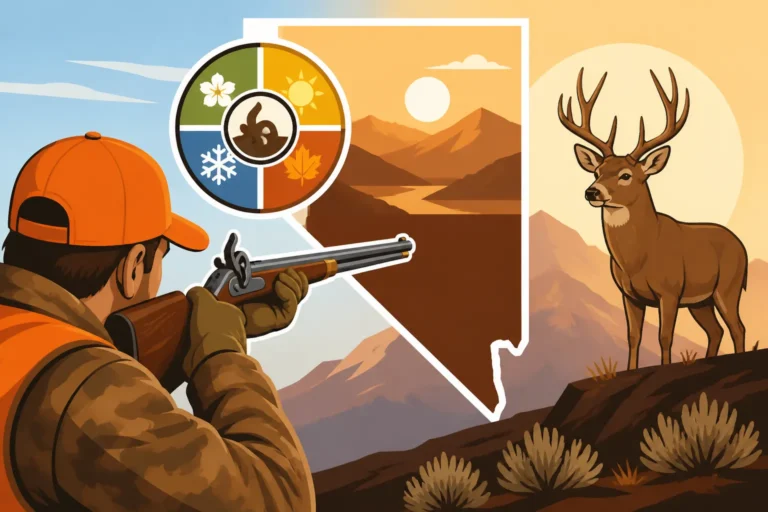
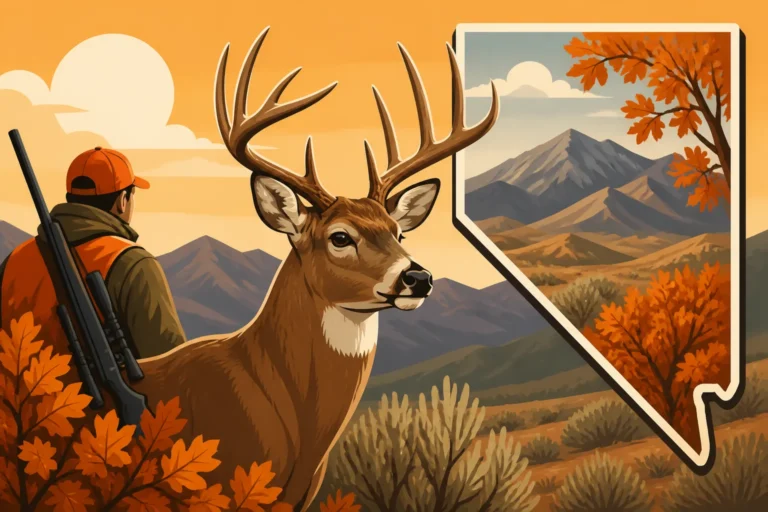
If you've ever set foot in Nevada's vast, open country with a deer tag in your pocket, you know the frustration. The landscape stretches for miles, offering seemingly endless terrain but very little cover. Trying to walk up on a mule deer in these wide-open spaces is often a recipe for busted stalks and empty hands. This guide will meticulously break down why glassing isn't just a tactic here—it's the absolute cornerstone of successful deer hunting in Nevada, transforming seemingly empty expanses into discoverable hunting grounds.
The Immense Scale of Nevada's Hunting Terrain
Nevada isn't your typical timber-choked deer hunting state. It's a land of monumental scale, dominated by the Basin and Range topography that defines the Great Basin. Understanding this unique environment is the first step to realizing why conventional hunting methods fall short here.
Understanding the Basin and Range Topography
Imagine mile after mile of sagebrush flats punctuated by towering, isolated mountain ranges that rise dramatically from the desert floor. This is the Basin and Range. These ranges, often running north-south, are carved by deep canyons and dotted with scattered pinyon-juniper stands on their lower and mid-slopes, giving way to aspen and conifer at higher elevations. The basins in between are broad, open expanses, sometimes 20 or 30 miles wide, offering few places for a hunter to hide. The sheer size of these units can be overwhelming, making it feel like you're searching for a needle in a haystack if you're not approaching it strategically.
The terrain itself dictates the hunt. Steep, rocky slopes often give way to rolling hills before flattening into the expansive valleys. Water sources are incredibly scarce outside of the higher elevations and riparian areas, which means animals often concentrate around these vital points. However, these concentrations can still be spread over vast areas. This unique geography means that your hunting day is less about walking through thick woods and more about surveying colossal landscapes. Trying to cover ground on foot here is an exercise in futility; you simply can't outwalk the distances involved or effectively scan the terrain without a significant elevation advantage.
The Challenge of Sparse Cover for Hunters and Deer Alike
In many hunting environments, cover is your friend, allowing you to move undetected and get close to game. In much of Nevada, especially at lower and mid-elevations, substantial cover is practically nonexistent. We're talking about sagebrush that might only be waist-high, rocky outcrops, and sparse pinyon-juniper that offers little more than broken shadows. For a hunter, this means every movement you make is potentially visible from a mile away. For the deer, it means they've evolved to be incredibly vigilant, relying on their eyesight and the sheer space around them to detect threats.
This lack of cover profoundly influences how deer use the landscape. They're not hiding in cover as much as they are using the vastness and topographical features to stay safe. They might bed on a slight rise in a basin where they can see for miles, or tuck into a small fold in a hillside that blocks them from one direction while allowing them to scan others. This sparse cover means that traditional still-hunting or pushing through brush lines is largely ineffective. You'll likely bump deer long before you ever get a clear visual, if you even see them at all. This environment demands a different approach, one that prioritizes observation from a distance over direct, close-quarters engagement from the outset.
Why "Boots on the Ground" Often Fails in Nevada
Coming from states with dense forests, many hunters arrive in Nevada with the mindset of covering ground on foot. They believe walking is hunting. However, in Nevada's colossal units, this strategy is largely a recipe for exhaustion and frustration. You can walk for hours, covering miles and miles of seemingly identical sagebrush flats or rocky hillsides, and see nothing but the occasional jackrabbit. The scale is just too immense. A typical mule deer might occupy a home range of several square miles, and attempting to physically traverse all potential bedding and feeding areas is simply not feasible within the short timeframe of a hunting season.
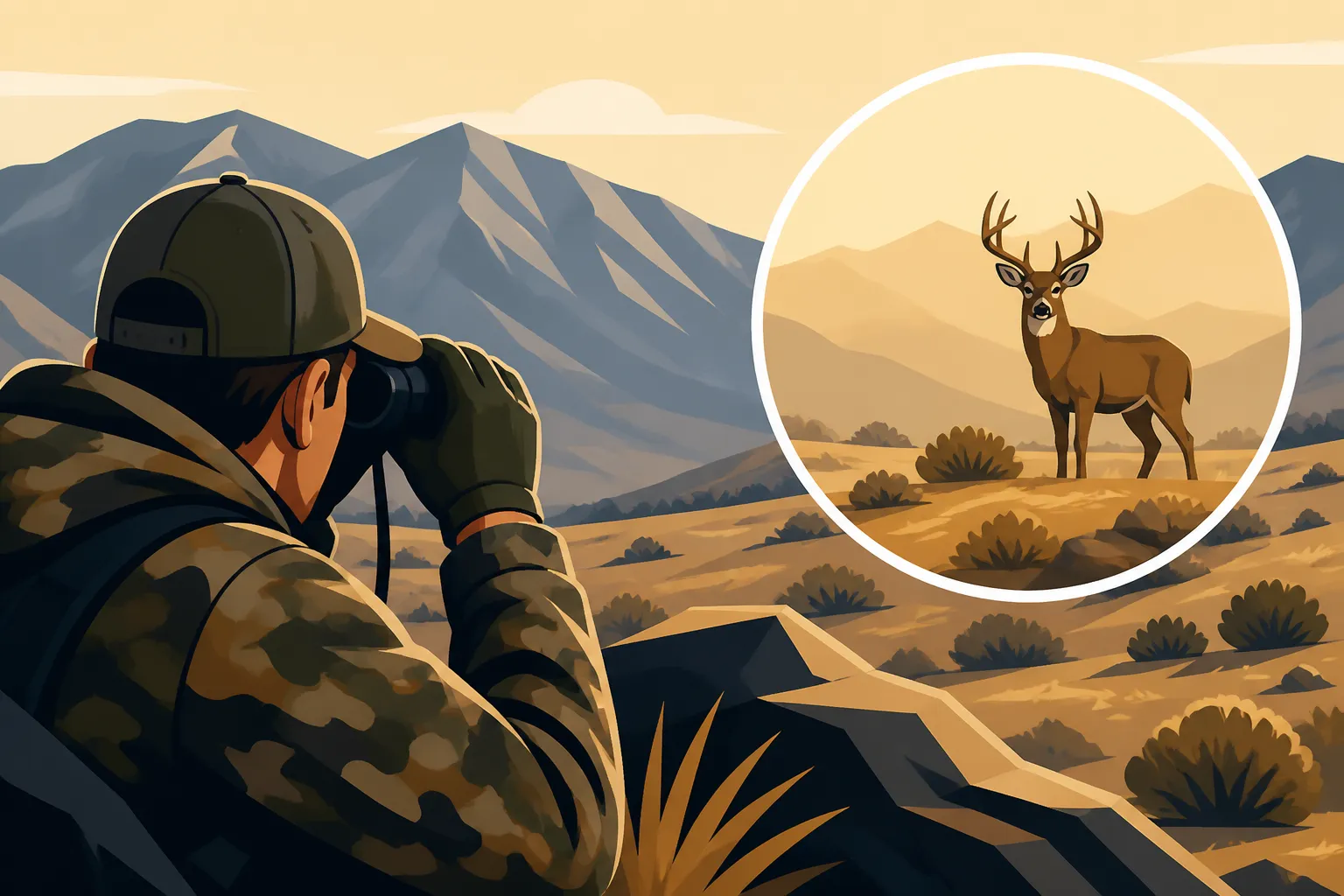
Moreover, every step you take in this open country kicks up dust, rustles dry vegetation, and creates movement that keen mule deer senses can pick up from incredible distances. You're far more likely to spook animals you never even saw than to stumble upon a trophy buck. Instead of covering ground physically, the most effective Nevada hunters cover ground visually. They use their optics to do the "walking" across the landscape, effectively scouting miles of country from a single vantage point, saving their boot leather for the actual stalk. This realization, that less walking often means more hunting, is a critical paradigm shift for success here. If you're physically Preparing Physically for Long Glassing Days, you're on the right track, but it's for the eventual stalk, not for blind wandering.
Mule Deer Behavior in Nevada's Open Country
Understanding why glassing is so crucial in Nevada requires a deep dive into the habits of the mule deer themselves. These animals have adapted to thrive in a landscape that punishes inefficiency, and their survival instincts are finely tuned to the vast, exposed environments they call home.
Feeding Patterns in Wide Open Spaces
Nevada mule deer, much like their counterparts in other arid western states, are primarily browsers. They feed on a variety of shrubs, forbs, and grasses, with sagebrush often forming a significant portion of their diet, particularly in winter. However, their feeding patterns in Nevada's open country are dictated by a few key factors: thermal cover, security, and proximity to water. While they might venture out into open sage flats to feed during cooler parts of the day, they are constantly aware of their vulnerability. Often, you'll find them working edges: the interface between a more open basin and the beginning of a juniper-covered slope, or within the deeper folds of rolling hills where they can graze while maintaining some visual break-up.
During the hottest parts of the day, particularly during early seasons like the Nevada's August Archery Deer Window, deer will seek out any available shade or cool pockets. This might be a sparse cluster of junipers, the shadow side of a deep draw, or even just the meager shade cast by a large rock. These areas become prime glassing targets during midday hours. In the mornings and evenings, they are more active and visible, moving from bedding to feeding areas. Observing these patterns through your optics allows you to predict their movements, focusing your efforts on transition zones and preferred feeding grounds, rather than blindly walking through acres of unproductive terrain.
Bedding Habits for Maximum Security
Mule deer in open country are masters of using topography to their advantage for bedding. Unlike whitetails that often bed in dense thickets, Nevada mule deer will frequently bed on open hillsides or slight benches with expansive views. Their primary defense is their vision, coupled with the vast distance they can cover if spooked. A typical bed might be on a small rise that allows them to survey the basin below and the slopes above, giving them a 360-degree view of potential threats. They often bed with the wind at their back, allowing their nose to cover the unseen approach, while their eyes scan the downwind side. This means that if you're approaching, you're either in their line of sight or directly in their scent cone.
Locating these bedding areas requires patience and sharp optics. Deer will often pick beds that offer natural camouflage, blending seamlessly with the rocky, sage-dotted terrain. Their coloring is perfectly adapted to melt into the background, making them incredibly difficult to spot with the naked eye. This is where a quality spotting scope and binoculars become indispensable. You might be looking for just an ear twitch, a horizontal line in a vertical world, or a patch of color that seems slightly off. Understanding how mule deer use the terrain for security is key to knowing where to point your glass. You're not just looking for deer; you're looking for deer-like shapes in deer-like places.
The Mule Deer's Keen Senses
Mule deer possess an incredible suite of senses, all finely tuned to survival in their often-exposed habitat. Their eyesight is legendary, especially their ability to detect movement at long distances. A slight shift in a hunter's posture, a glint of sun off a binocular, or an unnatural outline against a ridge can send them bolting. Their hearing is also excellent, allowing them to pick up subtle sounds, but it's their sense of smell that truly makes them formidable. The wind carries scent across vast distances in Nevada's open basins, and a mule deer's nose can detect human odor from incredibly far away.
This combination of senses means that closing the distance on a mule deer once it's been spotted requires extreme caution and meticulous planning. A bad wind, a clumsy step, or an exposed approach will inevitably end the stalk. This further reinforces the importance of glassing. By spotting deer from a distance, you give yourself the time and opportunity to analyze the terrain, assess the wind, and plan an approach that minimizes your chances of being detected. It's about turning the odds in your favor by getting a visual advantage before they ever know you're there. Reading Wind on a Long Sage Stalk becomes critical after a successful spot.
The Art and Science of Effective Glassing
Glassing isn't just idly scanning the horizon with binoculars; it's a disciplined, methodical process that combines specialized equipment with learned techniques. Mastering this "art and science" is what separates successful Nevada deer hunters from those who spend days walking aimlessly.
Setting Up Your Glassing Perch
Choosing the right glassing location is paramount. You need an elevated position that offers expansive views of the country you intend to hunt. This could be a prominent ridge, a knob, a saddle, or even the top of a low hill. The key is elevation and a clear line of sight. When you select your perch, consider the sun's position throughout the day to avoid looking directly into glare, which can obscure deer and strain your eyes. Ideally, you want the sun at your back or to your side. Also, think about the wind direction and how it might carry your scent into the basin you're watching. Even if you're a mile away, a sustained scent stream can alert distant game.
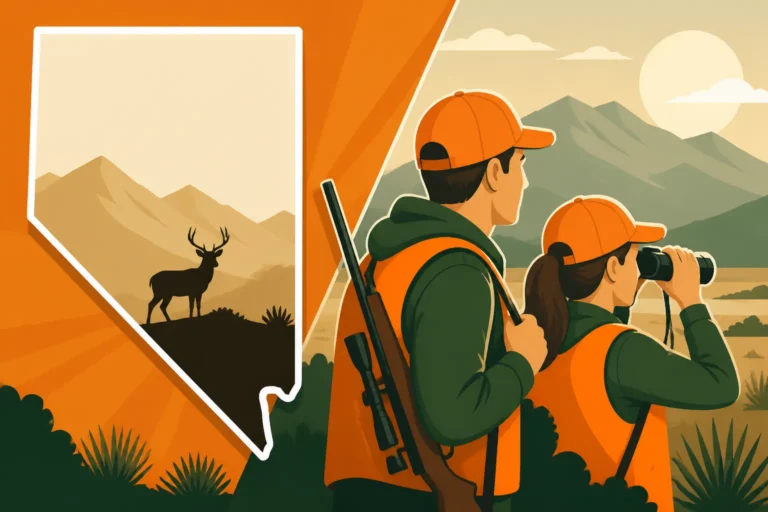
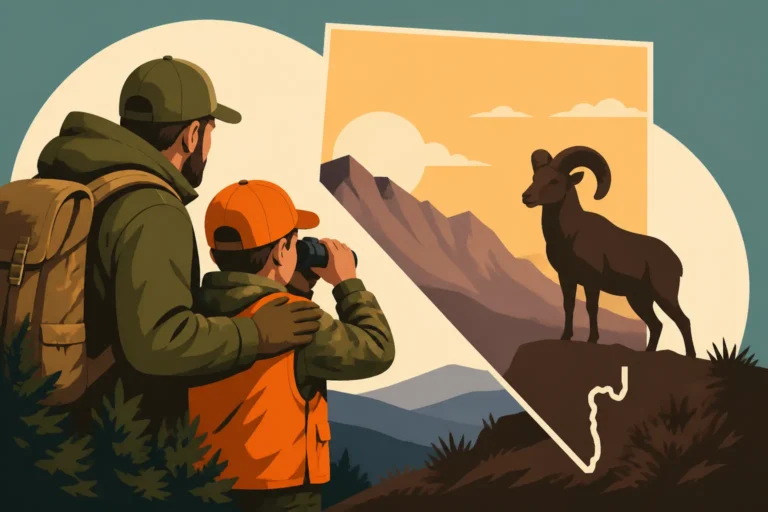
Once you've picked your spot, get comfortable. Seriously, comfort is critical because you'll be spending hours here. Set up your spotting scope and binoculars on a sturdy tripod. This isn't optional; hand-holding optics for extended periods is a recipe for shaky images, eye strain, and missed deer. A comfortable chair or pad to sit on, a good backpack with water, snacks, and extra layers are all essential. Your goal is to be able to sit absolutely still, minimizing movement that could catch a deer's eye, and methodically dissect the landscape with your optics. For more on this, consider how to optimize your Tripod Setup for Glassing From a Ridge.
Systematic Scanning Techniques
Effective glassing isn't about random searching; it's about systematic, disciplined scanning. The most widely adopted and effective method is the "grid glassing" technique. Start by dividing the landscape in front of you into smaller, manageable sections. Pick a point, say a large rock or a patch of juniper, and slowly scan horizontally, overlapping each scan by about 10-20%. When you reach the end of that section, drop your glass slightly and scan back in the opposite direction. Repeat this process, systematically covering every inch of the terrain within your chosen grid, from near to far.
Don't rush it. Take your time, often pausing at points of interest like shady draws, saddlebacks, or patches of browse. It's not about how quickly you can scan, but how thoroughly. Many deer are spotted because a hunter's eyes caught a subtle detail – a flick of an ear, an unnatural shape, or a change in texture – that wouldn't have been noticed in a hasty scan. After thoroughly scanning an area, shift to a new grid. Sometimes, switching between your binoculars (for wider fields of view) and your spotting scope (for detailed inspection) can be highly effective. The principle is simple: be slow, be thorough, and be patient. The more time you spend behind the glass, the more proficient you'll become at discerning deer from the natural landscape. Dive deeper into this method with The Grid Glassing Method, Step by Step.
Judging a Buck at Distance
Once you've spotted a deer, the real work begins. Before you commit to a potentially arduous stalk, you need to judge the animal to ensure it's the one you want to pursue. This is where your high-powered spotting scope truly shines. Nevada is a state with limited tags and often a long waiting game in the draw; you don't want to waste a precious tag on an animal you're not thrilled with, or worse, make a long, difficult stalk only to realize it's a smaller buck than you hoped for.
Use your spotting scope to analyze the buck's antlers, body size, and overall appearance. Pay attention to mass, width, tine length, and any unique characteristics. Learn to gauge size relative to the surrounding vegetation, like a sagebrush bush or a juniper tree. Experienced hunters develop an eye for it, but it takes practice. Sometimes, you'll need to wait for the animal to stand up, turn, or move to get a full assessment. This might mean watching it for an hour or more, especially if it's bedded. Being able to accurately Judging a Mule Deer Buck at Distance will save you immense time and energy, allowing you to focus your efforts on the truly mature animals you're after. Remember, it's always better to over-judge from afar than to under-judge up close.
Essential Gear for Glassing Success
You simply cannot be an effective glassing hunter in Nevada without the right tools. This isn't a place where cheap optics will cut it. The distances, the light conditions, and the need for precision demand quality equipment.
Optics Power for Nevada's Long Sightlines
When hunting Nevada mule deer, your optics are your most important tool, arguably more so than your rifle or bow. For binoculars, a 10x or 12x magnification is generally the sweet spot, offering a good balance of magnification and field of view without being too heavy or shaky for long periods. Brands like Vortex, Swarovski, and Leica are popular choices for their clarity and durability. Higher magnification binoculars, like 15x, can be excellent for open country but absolutely require a tripod for stability.
For spotting scopes, you'll want something in the 60-85mm objective lens range, with variable magnification from 20-60x or even 27-80x. A high-quality spotting scope is non-negotiable for dissecting distant terrain and accurately judging antler size. The larger objective lens gathers more light, which is crucial during the low-light hours of dawn and dusk when deer are most active, or when trying to penetrate shadows. A good quality scope will allow you to pick out details at two or three miles that would be impossible with even the best binoculars. Your glass is literally your eye to the vast landscape, so invest wisely. More details can be found on Optics Power for Nevada's Long Sightlines.
Tripods and Stability for Hours of Glassing
This cannot be stressed enough: you absolutely need a sturdy tripod for both your binoculars and your spotting scope. Hand-holding optics, especially high-magnification ones, for more than a few minutes is inefficient and will lead to eye fatigue and missed opportunities. Even the slightest wobble makes it nearly impossible to resolve details at long distances. A good tripod provides the rock-solid stability needed to systematically dissect distant hillsides and identify subtle movements or shapes that indicate the presence of deer.
Look for a lightweight yet robust tripod that can handle the weight of your optics without flexing. Carbon fiber models are excellent for packing into the backcountry. A fluid head or a smooth ball head is also essential, allowing for precise, controlled movements across the landscape without jarring. Many hunters use an adapter to mount their binoculars directly to the tripod, which is a game-changer for extended glassing sessions. Getting your optics dialed in on a solid tripod means you can maintain focus for much longer, turning what would be a blurry, frustrating experience into a clear, productive one.
Comfort and Protection for Long Sessions
Hours spent behind glass, often exposed to the elements, demand attention to comfort and protection. Sun protection is critical in Nevada's often cloudless skies. A wide-brimmed hat, sunglasses, and sunscreen are absolute necessities to prevent sunburn and eye strain. Layers of clothing are also important, as temperatures in the high desert can swing wildly between cool mornings and scorching afternoons. Be prepared to peel off or add layers as the day progresses.
Beyond personal protection, consider your setup. A comfortable, lightweight pad to sit on can make hours on rocky or dusty ground much more bearable. Keep your water and snacks easily accessible to avoid unnecessary movement. A small pack containing your essentials – extra layers, water, snacks, first-aid, headlamp – should always be within reach. The more comfortable and prepared you are for a long, sedentary session, the less distraction you'll experience, and the more focused you can be on spotting game. Remember, in Nevada, patience isn't just a virtue; it's a critical component of successful glassing.
Putting it All Together: Strategies for Your Hunt
Successfully hunting mule deer in Nevada through glassing isn't just about having the right gear or knowing the techniques; it's about integrating all these elements into a comprehensive hunting strategy. This includes planning before you even leave home, executing a precise stalk, and maintaining a mental fortitude that matches the vastness of the landscape.
E-Scouting and Pre-Season Planning with Technology
Your Nevada deer hunt begins long before you set foot in the field, often months in advance, with thorough e-scouting. Tools like GoHunt's Insider platform, or other advanced mapping software such as onX Hunt, are invaluable for this. They allow you to virtually explore your hunt unit, identifying key terrain features, potential glassing points, and likely bedding and feeding areas. Look for prominent ridges, isolated knobs, and high points that offer expansive views of basins and slopes. Pin these locations as potential glassing perches.
Next, identify areas that mule deer are likely to use: north-facing slopes (especially later in the season for snow cover and thermal advantage), south-facing slopes (for early season warmth), dense pockets of pinyon-juniper, and, crucially, water sources. Look for draws, saddles, and benches that provide natural travel corridors or bedding security. Pay close attention to unit boundaries, private land sections, and areas with limited access. Good e-scouting can save you days of unproductive walking, helping you narrow down vast units into manageable, high-potential areas. It's about letting the technology do the initial "walking" for you, allowing you to prioritize your boots-on-the-ground effort more efficiently. Thorough E-Scouting a Nevada Unit Before the Season is non-negotiable.
Executing the Stalk After the Spot
Spotting a buck from a mile away is only half the battle. The true challenge, and often the most exhilarating part of Nevada deer hunting, is closing the distance for a shot. This requires a meticulous, calculated stalk, where every step and every gust of wind matters. First, assess the situation:
- Wind: Is it steady? Swirling? How will it affect your approach? The wind is your most critical factor. Never stalk with the wind at your back, or even crosswind if possible. You need to keep it in your face or quartering.
- Terrain: What cover is available? Can you use draws, ridges, rocks, or even tall sagebrush to break your silhouette and remain out of sight? Identify a route that keeps you concealed for as long as possible.
- Deer's Position: Is the deer bedded or feeding? What direction is it looking? Are there other deer nearby that might spot you? You might need to wait for the deer to stand or move to a more favorable position before initiating your stalk.
Once you have a plan, execute it slowly and deliberately. Move quietly, constantly checking the wind, and using your binoculars to relocate the deer as you go. Be prepared for setbacks; the deer might move, the wind might shift, or you might hit an unexpected obstacle. Patience is key. Sometimes, the best move is no move at all, choosing instead to wait for a more opportune moment. Remember, How Far to Stalk a Bedded Mule Deer is a critical decision, balancing concealment with shot opportunity.
Patience: The Ultimate Glassing Virtue
In Nevada, patience isn't just a virtue; it's the fundamental characteristic that underpins all successful glassing strategies. These hunts are rarely quick affairs. You might sit on a glassing point for hours, or even an entire day, methodically scanning the landscape, seeing nothing but rocks and sage, before that tell-tale flicker of an ear or the outline of a bedded buck finally appears. Frustration can set in quickly, especially if you're accustomed to more active hunting styles.
Resist the urge to move too soon. Often, the moment you decide to pack up and relocate is the moment a buck steps out from behind a rise you've been watching for hours. Deer, particularly mature bucks, spend a significant portion of their day bedded, often in places that offer them maximum security and camouflage. They don't appear on command. You have to put in the time behind the glass, trusting that if deer are in the area, you will eventually find them if you're thorough and patient. GoHunt’s mapping tools might show you historical deer movements, reinforcing the idea that your patience will eventually be rewarded in a known deer area. Bring a good book, listen to a podcast, or simply enjoy the immense solitude and beauty of the Nevada landscape while you wait. The payoff, when it finally comes, makes every long, quiet hour worthwhile.
Glassing for Success: A Comparative View
To further illustrate the advantage of glassing, let's look at how it compares to simply walking, or still hunting, in typical Nevada terrain.
| Aspect of Hunting | Traditional "Boots on the Ground" (Walking) | Glassing-First Approach (Nevada Style) |
|---|---|---|
| Ground Covered | Limited to what you can physically walk. | Miles and miles covered visually from a single vantage. |
| Detection Range | Short, often within a few hundred yards. | Extremely long, often multiple miles. |
| Deer Spooking | High probability due to movement, scent, noise. | Low probability as you're observing from a distance. |
| Energy Expended | High, constant physical exertion. | Lower during observation, high during the stalk. |
| Observation Quality | Fleeting glimpses, often startled deer. | Detailed, prolonged observation for judgment and planning. |
| Stalk Planning | Hasty, reactive to immediate encounter. | Deliberate, pre-planned using terrain features and wind. |
| Success Rate (Nevada) | Generally low, high frustration. | Significantly higher for patient, skilled hunters. |
This table clearly shows Why Glassing Beats Walking in Sage Country is not just a philosophy, but a proven methodology for hunting in Nevada's unique environment.
Disclaimer
Hunting is an inherently dangerous activity. Always prioritize safety, follow all local, state, and federal regulations, and be aware of your surroundings. This guide provides information for educational purposes and should not be taken as a substitute for professional instruction or official hunting regulations. Wildlife laws and seasons can change, so always consult the most current Nevada Department of Wildlife (NDOW) regulations before planning any hunt.