How Far to Stalk a Bedded Mule Deer
We’ve all been there: you’ve spent hours, maybe even days, behind the glass in Nevada’s vast and unforgiving landscape, and finally, through the shimmer of heat or the last light of day, you spot him. A bedded mule deer buck, maybe even the one you’ve been dreaming about. Your heart races, but then the daunting reality sets in – he's a mile away, in what looks like completely open country, and now you have to figure out how to close the distance without him ever knowing you were there. This guide is all about tackling that exact challenge, dissecting the art and science of stalking a bedded mule deer in Nevada's unique terrain.
Understanding Mule Deer Behavior When Bedded
Before you even think about taking a step, you need to get inside the buck's head. Mule deer in Nevada, especially the mature ones that have survived a few hunting seasons, are masters of their environment. They don't just flop down anywhere; their bedding choices are strategic, designed for survival. Ignoring this critical understanding is often the first mistake hunters make.
Why Deer Choose Specific Bedding Sites
Mule deer, particularly in the open, broken country that defines much of Nevada, are hyper-aware of their surroundings. When they choose a bed, it’s not random. They’re looking for a combination of security, thermal regulation, and optimal escape routes. Often, you’ll find them bedded on a bench or a knoll that offers a commanding view of the terrain below and behind them. This gives them a panoramic outlook, allowing them to spot danger from a distance. If you’re scouting your unit through tools like GoHunt, pay close attention to the contours of the land, especially south-facing slopes in cooler weather for sun exposure, or north-facing slopes and shaded areas during intense August heat to help with Heat Management on an August Archery Hunt.
They’ll also seek out cover, even if it’s sparse. A single juniper bush, a slight rise in the ground, or a patch of taller sagebrush can be enough to break up their outline and make them surprisingly difficult to spot, even at relatively close range. In more mountainous regions, they might tuck themselves under a rock outcropping or on a steep sidehill where they can see everything below them while being protected from above. Understanding this helps you anticipate where they might be and, consequently, where not to approach from. Their choice of bed is a calculated decision to maximize their chances of detecting a threat and making a swift escape.
Their Acute Senses and How They Use Them
Mule deer possess an incredible suite of senses, and when they're bedded, they're utilizing all of them to stay safe. Their eyesight is legendary, especially at detecting movement. That slight twitch of a branch, the glint of your optics, or an unnatural outline against the skyline can instantly send them bolting. They have a wide field of view, making a frontal approach without any cover exceedingly difficult. It’s Why Nevada Deer Hunting Is a Glassing Game emphasizes the importance of using your binoculars and spotting scope from a distance.
Beyond sight, their hearing is equally impressive. A dropped water bottle, a crunch of gravel underfoot, or even a heavy breath can alert them. Sound carries surprisingly far in the dry, still air of the Great Basin. But perhaps their most formidable defense is their nose. Mule deer can detect human scent from an astonishing distance, and even a faint whiff can put them on high alert. This is why playing the wind is not just important; it's absolutely non-negotiable. They will always bed in a way that allows them to scent-check their back trail or the area from which danger is most likely to approach. If your scent cone drifts towards them, the stalk is over before it even begins.
Assessing the Stalk: Distance and Conditions
So, you've found your buck. The next, and arguably most critical, phase is to meticulously assess the situation. This isn't a race; it's a chess match. Many stalks are blown not in the execution, but in the initial assessment because hunters rush, driven by excitement, rather than patiently analyzing every single factor.
Reading the Wind and Thermals
The wind is your compass, your guardian, and your greatest betrayer all at once. Before you take a single step, you must know exactly what the wind is doing, not just where you are, but where the deer is and every point in between. This means using a wind checker constantly. In Nevada, especially in the basin and range country, the wind is rarely consistent. It swirls, it eddies, it reverses. As the sun rises and heats the earth, thermals will begin to pull scent uphill. As evening approaches and the ground cools, thermals reverse and push scent downhill. Ignoring this can ruin a perfect setup. Mastering Reading Wind on a Long Sage Stalk is crucial for success.
Your goal is to always keep the wind in your face or quartering into you, carrying your scent away from the deer. Never, ever allow your scent to blow towards the bedded animal. Even if you have to take a circuitous route that adds miles to your stalk, it's a non-negotiable element. Sometimes, waiting for the wind to shift, or for the thermals to stabilize, is the only viable option. Patience here is paramount. If the wind isn't right, you don't stalk. It's that simple.
Utilizing Terrain and Cover to Your Advantage
Nevada's landscape might look wide open, but it's often full of subtle breaks, draws, and rises that can offer incredible cover if you learn to read them. This is where your optics, used from a distance, become your most valuable scouting tool for the stalk itself. Use your Spotting Scope Power for Open Country to identify every dip, every ridge, every cluster of brush that could offer concealment.
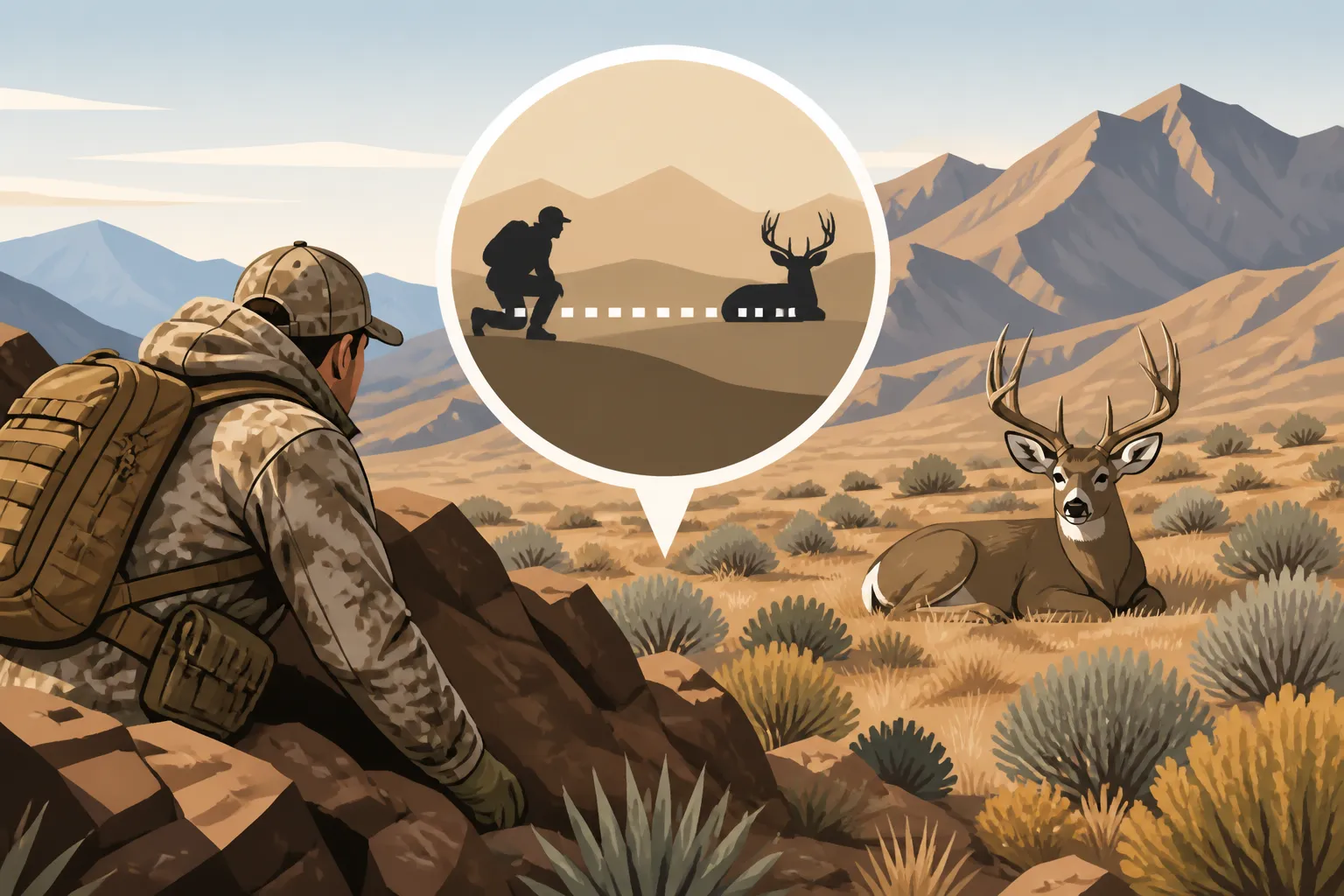
The "how far" to stalk depends entirely on the available cover. Ideally, you want to get within your comfortable shooting range while remaining completely unseen. For a rifle hunter, this might mean 300-400 yards, while a bowhunter needs to get much, much closer, often within 60 yards, which means knowing How Close a Bowhunter Needs to Get on Mule Deer. The key is to use the terrain to break your silhouette and remain out of sight. That means staying below ridge lines, crawling through draws, or moving behind natural features like rock outcroppings or large sagebrush. Think three-dimensional: use every undulation, every piece of vegetation, to your advantage. This concept is perfectly encapsulated in Using Draws and Rims to Close Distance and is essential for navigating Nevada's topography.
| Stalking Condition | Ideal Strategy | Challenging Strategy |
|---|---|---|
| Wind Direction | Steady, in your face | Swirling, crosswind, variable |
| Terrain | Undulating, deep draws, rock formations, dense sage | Flat, open, sparse cover |
| Light | Overcast, early morning/late evening | Midday sun, high contrast |
| Deer Position | Bedded facing away, slightly obscured | Exposed, facing your likely approach |
| Your Gear | Quiet, scent-controlled, minimal | Noisy, bulky, strong scent |
| Pace | Slow, deliberate, frequent stops | Rushed, continuous movement |
Executing the Stalk: Closing the Distance Effectively
Once your assessment is complete and you’ve committed to a plan, the real work begins. This is where discipline, stealth, and an unwavering focus on the deer’s position come into play. Every step matters, and one wrong move can undo hours of effort.
Movement and Pace
The golden rule of stalking a bedded mule deer is simple: move slowly. In fact, move slower than you think you need to. Your pace should be dictated by the terrain, the available cover, and the deer’s behavior. Sometimes, a "crawl" isn't a crawl on your belly, but an extremely slow, deliberate walk, where you pick up your foot, place it down silently, and then shift your weight. When in the open, often the only way to move is when the deer's head is down or obscured. Time your movements to coincide with natural pauses in the deer's behavior, such as when it's chewing its cud, looking away, or even if a gust of wind causes the surrounding vegetation to sway, providing a moment of visual disruption.
Always be ready to freeze instantly. If the deer so much as twitches an ear in your direction, become a statue. Mule deer are incredibly adept at picking up movement, even slight, so avoid any sudden jerks or quick changes in position. Your movement should be fluid, low to the ground, and blend with the natural environment. This takes immense patience and physical endurance. Preparing Physically for Long Glassing Days isn't just about glassing; it's about being able to maintain an uncomfortable, slow pace for an extended period during a stalk.
Gear Considerations for a Quiet Approach
Your gear can make or break a stalk. Noise is your enemy. Everything you carry needs to be secured and silenced. Think about your backpack – are zippers clinking? Is your rifle sling scraping against a button? Are your trekking poles rattling? Before you start, take the time to minimize any potential noise. This might mean wrapping noisy items in athletic tape or soft cloth, or simply removing anything unnecessary from your pack.
Footwear is also crucial. You'll want boots that offer good traction and support for Nevada's often rocky, uneven ground, but also allow you to feel the terrain and move quietly. Choosing Boots for Sharp Volcanic Rock offers great insights into suitable options. Beyond footwear, your clothing needs to be quiet. Avoid noisy synthetics that rustle with every movement. Soft, fleece-lined fabrics are generally preferred. A rangefinder and binoculars should be easily accessible but secured so they don’t swing and hit something. Consider using a chest harness for your binoculars to keep them snug against your body. Even the smallest details, like securing your broadhead quiver if bowhunting, can mean the difference between success and a spooked buck. Companies like GoHunt offer great gear lists and advice for minimizing noise and maximizing stealth.
The Final Approach and Shot Opportunity
You've made it. You're within range, the wind is perfect, and the buck is still bedded, seemingly unaware. This final stage is perhaps the most nerve-wracking, demanding flawless execution and mental fortitude.
Getting Into Shooting Position
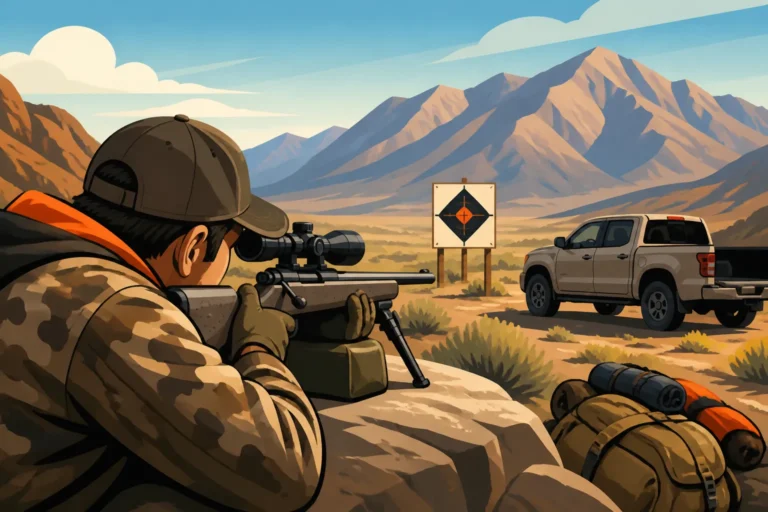
The moment of truth arrives when you need to transition from stalking to shooting. This is often the trickiest part, as it requires movement in potentially open areas. Before you commit to the final few yards, scout ahead one last time using your binoculars. Look for the best spot to set up your shot – a small rise, a cluster of brush, a solid rest for your rifle or bow. For rifle hunters, remember that Rifle Zero Distance for Long Sage Shots is important, but having a stable shooting position is even more so. This is where shooting sticks or a bipod become invaluable.
If the deer is still bedded, you might need to wait for him to stand up. Sometimes a soft whistle or a careful grunt can get him to rise, offering a clean standing shot. However, this is a gamble, as it can also make him bolt. Often, the best strategy is to get into your shooting position and wait. Patience once again is your most potent weapon. If you're bowhunting, this means drawing your bow when the deer's head is down or obscured, then holding until he presents a broadside shot. Every movement must be slow, controlled, and quiet. There’s no room for error now.
Anticipating the Deer's Reaction
Even with a perfect stalk, a bedded mule deer can explode from its bed in an instant. They often have an escape route mentally mapped out. When they do stand, they might offer you only a split second before they’re gone. Be prepared for this. Have your rifle shouldered, or your bow at full draw, as soon as you are in position. Don't wait until he stands to start preparing for the shot.
If the deer is still bedded and you need him to stand, consider a very soft vocalization or a small rock toss behind him to make him look back, giving you a precious second to aim before he realizes what's happening. However, these are advanced tactics and come with significant risk. The best case scenario is that he stands up naturally, stretches, and offers you a clean, calm shot. But in the unpredictable world of Nevada mule deer hunting, you must always anticipate the unexpected. Being ready for a quick shot, especially if you're hunting in an area with sparse cover, can be the difference between filling your tag and going home empty-handed. Remember that Deciding on a Buck Before He Moves is a skill that must be practiced, as once they bust from their bed, they often don't stop until they are well out of range.
Disclaimer
Please note: Hunting regulations and laws are subject to change. Always consult the latest Nevada Department of Wildlife (NDOW) regulations before planning any hunting trip. This guide is for informational purposes only and does not constitute legal advice.