Two Rifle Elk Hunts in Nevada Units
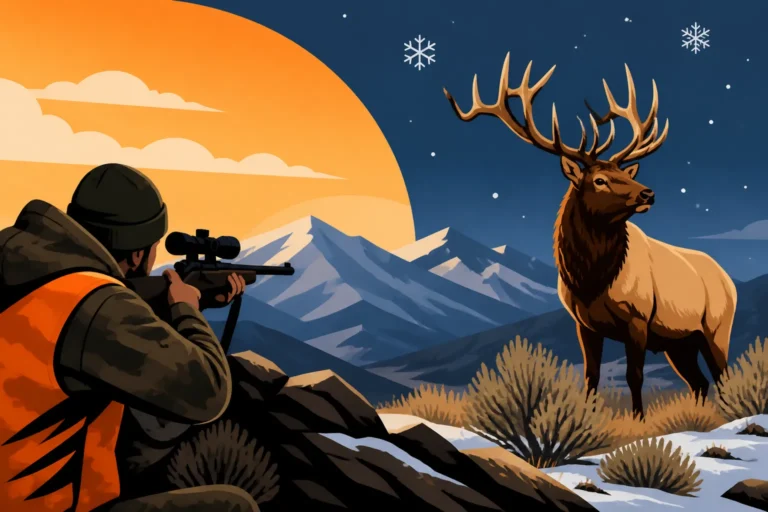
It can be incredibly confusing to look at the Nevada big game regulations and see what looks like the same rifle elk hunt listed twice for a single unit. You might scratch your head, wondering if it's a typo, a chance to apply twice, or if you're just missing something crucial in the fine print. This common frustration stems from Nevada's thoughtful, albeit sometimes complex, approach to elk management, aiming to provide varied opportunities while ensuring herd health. This guide will meticulously break down why and how Nevada structures its rifle elk hunts, particularly focusing on units offering two distinct rifle seasons, so you can navigate the regulations with confidence and build a winning application strategy.
Understanding Nevada's Elk Season Structure
Nevada's elk herds, which have truly blossomed from humble beginnings into a world-class trophy draw, are managed with a deep understanding of their behavior, habitat, and the impact of human presence. This often means carefully tailored hunt structures, including offering multiple rifle seasons within the same geographic area, to achieve specific management goals and enhance hunter success.
The Rationale Behind Multiple Seasons
The decision to implement more than one rifle elk season in a given unit isn't arbitrary; it's a calculated move by the Nevada Department of Wildlife (NDOW) to balance several critical factors. First and foremost, it's about population management. By spreading hunting pressure across different timeframes, they can better control harvest numbers, influence bull-to-cow ratios, and prevent over-pressuring specific areas. For example, an early season might aim to harvest mature bulls before they breed, while a later season might target different age classes or areas. This diversification helps maintain a healthy, sustainable herd while still offering hunters a chance to pursue these magnificent animals.
Secondly, multiple seasons help manage the hunter experience itself. Picture a single, month-long season: the woods would be absolutely crawling with hunters, leading to overcrowding, increased competition, and a less enjoyable (and often less successful) hunt for everyone involved. By splitting the season into two shorter windows, NDOW can distribute hunters more evenly, reducing pressure on the elk and creating a higher quality experience. This also allows for different types of hunts. An early season might cater to those looking for a rutting or post-rut experience, while a late season could appeal to hunters focused on migration patterns and winter range. It's a strategic dance between providing opportunity and preserving the wildness of the hunt.
Finally, differing season dates can also account for varying elk distribution throughout the year. As temperatures change and forage availability shifts, elk move between high-elevation summer ranges and lower-elevation wintering grounds. By offering both early and late seasons, NDOW can provide hunters with opportunities to intercept elk in different habitats as they transition, maximizing the chances of a successful harvest across the entire unit, regardless of when the elk are most accessible. It’s a complex puzzle, but the outcome is more opportunities for us to get out there.
Deciphering Hunt Codes and Unit Groupings
When you're sifting through the Nevada hunt regulations, those alphanumeric hunt codes can look like a secret language. But once you crack them, they reveal a wealth of information. Each code, like "1611" or "0712," isn't just a random number; it's a concise summary of the species, unit, weapon type, and season dates. The key part for our discussion on multiple rifle hunts lies in the last one or two digits, which typically denote the specific season. For instance, Unit 111 might have a rifle elk hunt coded "1111" and another, later rifle elk hunt coded "1112." These distinct codes are how NDOW differentiates between the two separate seasons offered within the same unit.
It's also important to understand that Nevada units are sometimes grouped for management purposes, especially in areas with contiguous habitat or migrating herds. While an entire unit group might be managed as one, specific hunt codes within that group can still delineate separate seasons or even different areas within the larger group. This means a hunt for "Units 111-115" could potentially have multiple rifle seasons listed, each with its own code, opening and closing dates, and tag quotas. Never assume that just because two seasons share a unit or unit group number, they are the same hunt or share the same characteristics. The only way to be sure is to meticulously review the official regulations, paying close attention to the specific hunt code, season dates, and any unit boundary descriptions that might apply to that particular hunt. A resource like GoHunt can be incredibly helpful for filtering and understanding these complex codes and unit details.
Early Rifle Elk Hunts: Opportunity and Challenges
Early rifle elk hunts in Nevada offer a unique blend of potential and pitfalls. These seasons typically align with periods when elk are still active from the rut or are in transition, but the weather can be a wild card. Understanding these dynamics is crucial for planning your hunt.
Typical Timing and Conditions
Nevada's early rifle elk hunts generally kick off in late September and extend through mid-October, sometimes wrapping up just as the first serious cold fronts begin to push through the high country. During this window, you can expect a wide range of conditions. Early on, the temperatures can still be quite warm, especially in the middle of the day, making proper meat care a top priority. As the season progresses into October, however, crisp mornings and cooler daytime temperatures become more common. You might even encounter the first dustings of snow in the highest elevations, which can provide fresh tracks and make elk more visible against a white backdrop.
Elk behavior during these early seasons is fascinating. Depending on the exact timing, you could be hunting the tail end of the rut or the immediate post-rut period. Bulls might still be bugling, albeit less intensely than at the peak, and cows and calves will often be grouped up, moving to recover from the stresses of breeding. You’ll find elk typically in their higher elevation summer ranges, often in timbered pockets adjacent to open sage country or on north-facing slopes, seeking shade and cooler temperatures. The challenge here is that these areas can be vast, and elk, while perhaps still vocal, are usually wary from recent hunting pressure.
Strategies for Early Season Success
Success in an early Nevada rifle elk hunt hinges on adaptation and a good understanding of elk vocalizations. While the thunderous bugles of the rut's peak might be subsiding, effective calling can still be a game-changer. Bulls, even if not actively chasing cows, are often responsive to locator bugles, especially at dawn and dusk. But don't underestimate the power of cow calls. During the post-rut, a subtle cow chirp or mew can often be more effective at drawing in a curious bull or even an entire herd, especially if they've been pressured by aggressive bugling hunters. It’s worth studying various calling sequences and knowing when to Cow Calling Bulls in Thin Timber versus when to throw out a challenge.
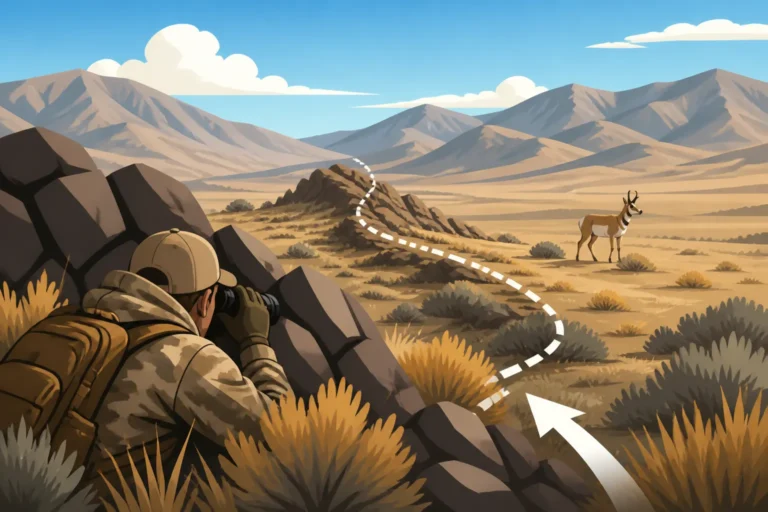
Beyond calling, glassing remains paramount in Nevada's expansive terrain. Elk are masters of concealment, even in relatively open country, and their brown hides blend remarkably well with the sagebrush and juniper. You'll spend countless hours behind your optics, systematically dissecting distant slopes, draw by draw, and timber patch by timber patch. The Best Time of Day to Glass a Basin is typically early morning and late evening when elk are most active, feeding in the open before bedding down. Don't just scan; grid-glass thoroughly, looking for horizontal lines, patches of darker color that don't quite fit, or the tell-tale glint of an antler. Patience and persistence with quality optics will be your best allies.
Finally, you must contend with hunter pressure. Early seasons often attract a good number of hunters, which can make elk extra cautious. Your strategy should include finding pockets of undisturbed elk, often in the steepest, thickest, or most remote country that other hunters are unwilling or unable to access. This might mean longer hikes, tougher terrain, and a commitment to getting farther off the beaten path. Look for areas with limited road access, or features like steep canyons and dense timber stands that provide sanctuary for pressured animals. Be prepared to adapt your approach if you encounter other hunters, perhaps shifting your focus to mid-day bedding areas or less obvious travel corridors.
Late Rifle Elk Hunts: Trophy Potential and Tougher Conditions
The lure of Nevada's late rifle elk hunts is strong, often promising opportunities for larger bulls as herds begin to coalesce. However, these hunts come with their own set of significant challenges, particularly concerning weather and access.
Timing, Weather, and Elk Movement
Nevada's late rifle elk hunts typically span from late October through November, with some extending Late Season Elk Hunts Into December. This period often brings a dramatic shift in weather patterns. You can expect significantly colder temperatures, and the real possibility of heavy snowfall, especially in the higher elevations. Snow can be both a blessing and a curse; it makes elk tracks easier to spot and can push animals to lower, more accessible wintering grounds, but it also creates treacherous driving conditions and makes for much more physically demanding hunts. Prepare for freezing temperatures, strong winds, and the need for reliable, insulated gear.
During these late seasons, elk behavior is largely dictated by forage availability and the onset of winter. The rut is long over, and bulls, cows, and calves begin to group into larger herds. As snow accumulates in the high country, elk are often forced to migrate down to lower elevations, seeking winter range where forage is more accessible and snow depths are manageable. This migration can make elk more predictable, as they often follow established routes. However, finding these routes and intercepting them requires extensive scouting, often before the snow really starts to fly, or the ability to read sign in snow-covered terrain. These larger herds, while easier to spot, also present a challenge as there are many more eyes and ears to detect your approach.
Adapting Your Hunting Approach
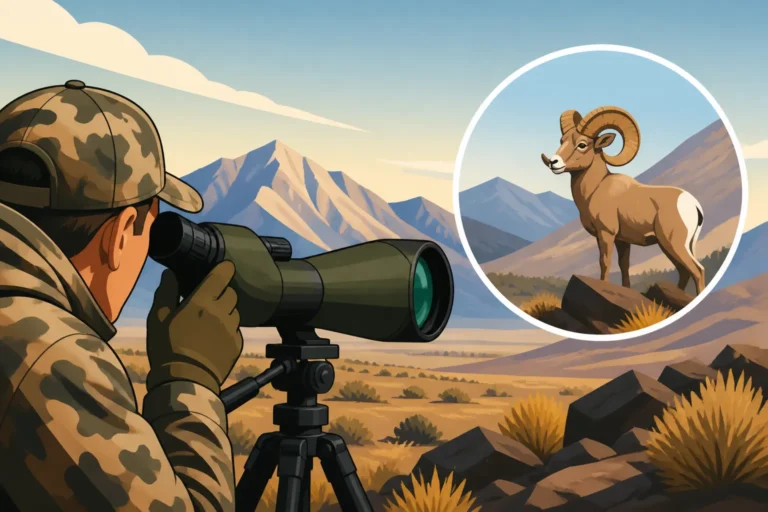
With colder temperatures and often larger herds, the late season calls for a shift in hunting tactics. Spotting and stalking becomes the dominant strategy. Elk, now often in more open country on winter ranges, are incredibly visible, but also incredibly wary. This is where high-quality optics truly shine. A powerful Spotting Scope Power for Open Country mounted on a sturdy tripod is indispensable for picking apart distant slopes, identifying mature bulls within large groups, and planning a strategic approach. You'll spend hours glassing, waiting for elk to bed down or move into a position that allows for a stalk.
Tracking in snow can be an incredibly effective method during late season hunts. Fresh tracks not only tell you what species passed by but also its direction of travel, approximate size, and how recently it was there. Learning to read these signs – how deep the track is, the amount of displaced snow, if leaves are still dislodged – can lead you directly to a feeding or bedding area. Understanding historical migration corridors and applying that knowledge to the current snowline will also give you an advantage. Focus your efforts on known wintering areas, south-facing slopes that shed snow faster, and areas with good thermal cover adjacent to available forage.
Given the potentially harsh conditions, adapting your gear and physical preparation is critical. Layered clothing that allows for both insulation and ventilation is essential. Reliable, waterproof boots with good traction are a must for navigating snow and ice. Carrying extra food, water, and emergency supplies is non-negotiable, as weather can change rapidly and you might be far from help. More than any other season, a late elk hunt demands peak physical endurance. You’ll need to be ready for long hikes through snow, steep climbs, and potentially packing out heavy loads in challenging conditions. Just like with any demanding hunt, Preparing Physically for Long Glassing Days and tough pack-outs is paramount.
Key Differences Between the Two Rifle Seasons
While both early and late rifle elk hunts target the same magnificent animal, the experience, the elk's behavior, and the demands on the hunter can differ significantly between these two distinct seasons. Understanding these nuances is crucial for any hunter considering applying for a Nevada elk tag.
Elk Behavior and Hunter Pressure
The most striking difference between early and late rifle elk seasons often revolves around elk behavior. During the early season, particularly in late September or early October, you're either catching the tail end of the rut or the immediate post-rut recovery period. Bulls might still be vocal, responsive to calls, and often still somewhat scattered as they disperse from breeding groups. Cows and calves will be consolidating, but the overall elk distribution might be more dispersed across higher elevations. This means hunters often employ more calling, cover more ground trying to locate animals, and focus on smaller groups or individual bulls. The pressure can be intense, with hunters often concentrated in popular areas, actively searching and calling. Elk can be quite jumpy and reactive to human presence.
Conversely, late season elk behavior is driven by the impending winter. The rut is a distant memory, and elk are focused on feeding, conserving energy, and moving to winter range. They tend to gather into larger herds, and while this can make them easier to spot, it also means there are dozens, if not hundreds, of eyes, ears, and noses to contend with. Calling is far less effective, and the emphasis shifts almost entirely to quiet, deliberate spotting and stalking. Elk on winter range have usually been pressured for months by earlier hunts, making them exceptionally wary. They are masters of using topography to their advantage, disappearing over a ridge line or into a draw with astonishing speed. The hunter pressure, while still present, might be more spread out as elk move to lower elevations, but the elk themselves are often more educated and harder to approach undetected.
Terrain and Access Considerations
The timing of these hunts directly impacts the terrain you'll encounter and your access to it. Early season hunts typically occur before significant snowfall, meaning most mountain roads and trails are open. This allows access to higher elevation summer ranges, alpine basins, and remote timber pockets where elk spend their warmer months. You might find yourself hunting steep, rocky terrain with challenging footing, but generally, you won't be slogging through deep snow or dealing with frozen ground. However, the mild temperatures mean you'll need to pay close attention to Getting Meat Cooled on an Early Season Hunt quickly after a harvest.
Late season hunts, on the other hand, frequently bring snow and ice, completely altering the landscape and access. While elk might be pushed to lower elevations, these areas can still be rugged. Many forest service roads and high mountain passes will be closed due to snow, limiting vehicle access and requiring longer hikes or even snowshoeing. You'll need to be prepared for Motorized Travel Rules on Nevada Public Land to change due to weather conditions. This makes proper vehicle preparation, including chains, recovery gear, and a full tank of fuel, absolutely critical. What was a navigable dirt track in October could be an impassable snowdrift in November. Scouting a unit from home, or E-Scouting a Nevada Unit Before the Season using satellite imagery and snow depth maps, becomes essential to understand potential snow lines and road closures. The physical demands are also ramped up significantly, as navigating snow-covered terrain, often with a heavy pack, requires a different level of endurance and preparation.
Maximizing Your Draw Odds and Application Strategy
Nevada elk tags are highly coveted, making the application process incredibly competitive. To stand a chance at drawing one of the limited tags, especially for a specific early or late rifle hunt, you need a smart, long-term application strategy that leverages the state's unique bonus point system.
Understanding Nevada's Bonus Point System
Nevada operates on a unique squared bonus point system, which significantly influences draw odds, especially for premium tags like elk. Unlike many states where points simply add up, Nevada squares your total bonus points before adding them to your current year's application, effectively giving exponentially more "chances" as your point total grows. For instance, if you have 4 bonus points, they don't just add 4 chances; they add 4×4=16 chances, plus your current year's application, giving you 17 total chances in the draw. This system heavily favors those who consistently accumulate points over many years. Understanding How Nevada's Squared Bonus Point System Works is foundational to any successful application strategy here.
Building up a substantial number of points is paramount for drawing a Nevada elk tag. It's not uncommon for successful applicants for prime rifle elk units to have well over 10 or 15 points, sometimes even more. This means consistent participation in the draw, even if you don't expect to draw for many years, is vital. You can also purchase points without applying for a tag, ensuring you're always building toward a better chance. For serious elk hunters, this is often a dedicated, multi-year commitment. To truly grasp your chances and make informed decisions, leveraging detailed draw odds data is essential. Resources like GoHunt are invaluable for filtering through past draw results, allowing you to see the minimum and average points required for specific early and late rifle elk hunts in different units. This data helps you understand the commitment needed for your dream hunt.
Strategic Hunt Choice Selection
With a clear understanding of the bonus point system, your next step is crafting a strategic selection of hunt choices. This involves a delicate balance between applying for a unit or season with high trophy potential and one where your accumulated points actually give you a realistic chance of drawing. It's easy to get caught up in the allure of those legendary units known for giant bulls, but if the draw odds are astronomical and you only have a handful of points, that choice might be better served as a second or third option, or a goal for much further down the line.
Consider your personal preferences and physical capabilities when choosing between an early or late season. Do you thrive on the high-energy excitement of the post-rut, with warmer weather and the chance of bugling? Or do you prefer the solitude, the challenge of snow, and the potential for spotting larger herds on winter range that a late season offers? Your physical fitness is a real factor here; late season hunts often require more endurance for traversing snow-covered terrain and braving colder temperatures. Use the detailed statistics available from NDOW and third-party platforms like GoHunt to analyze draw odds for specific early and late rifle seasons within your target units. Look at the number of tags issued, the number of applicants, and the point ranges of successful hunters for both residents and non-residents. This data, often found Where Nevada Publishes Harvest Data, can help you identify which seasons have slightly better odds for your point level, allowing you to make an informed decision that aligns with your long-term hunting goals. Remember, a successful application is a well-researched one.
Preparing for Your Nevada Elk Hunt
Drawing a Nevada elk tag is a monumental achievement, but it's only the first step. The vast, rugged landscape of the Silver State demands thorough preparation, both in terms of gear and physical conditioning, to maximize your chances of success and ensure a safe, memorable experience.
Essential Gear and Physical Fitness
Nevada's diverse terrain and unpredictable weather mean your gear selection needs to be top-notch. Given the expansive nature of the Basin and Range, high-quality optics are not just helpful; they are absolutely non-negotiable. You’ll be spending endless hours behind glass, meticulously scanning distant mountainsides for any sign of elk. A good pair of 10x binoculars, a powerful spotting scope with a range of at least 60x, and a sturdy tripod will be your best friends. Understanding Optics Power for Nevada's Long Sightlines is key to ensuring you can identify elk and judge their size at extreme distances, which is common in this country. Don't skimp here; your ability to locate animals directly impacts your success.
Beyond optics, layered clothing designed for extreme temperature swings is paramount. A crisp desert morning can quickly turn into a scorching afternoon, and an early season hunt can be mild while a late season hunt might demand heavy insulation for sub-freezing conditions. You'll need moisture-wicking base layers, insulating mid-layers like fleece or down, and a waterproof, windproof outer shell. Sturdy, broken-in hiking boots that can handle rocky, uneven terrain are essential, along with multiple pairs of merino wool socks. Always pack extra water, even more than you think you’ll need, and high-energy snacks. This isn't a place to cut corners on survival essentials.
Physical fitness is another area where Nevada hunting truly tests your mettle. Whether you're covering vast distances glassing, navigating steep slopes, or packing out an animal from remote country, the demands are high. This isn't a stroll in the park; it's an athletic endeavor. Start your physical conditioning months in advance, focusing on cardio, strength training, and endurance. Simulating pack-outs with a weighted backpack is an excellent way to prepare for the inevitable. You'll thank yourself for every mile you put in at the gym or on the trail when you're deep in the backcountry. Proper Preparing Physically for Long Glassing Days will make your hunt not just more successful, but also much more enjoyable.
Logistics and Field Care
Success in Nevada hunting is as much about logistical planning as it is about hunting skill. The vast distances between towns, and even between hunt units, mean careful vehicle preparation is non-negotiable. Ensure your truck or SUV is in top mechanical condition, with good tires (and a full-size spare!), extra fuel, and possibly even an extra jerry can. Many of Nevada’s dirt roads can be brutal on vehicles, and cell service is often nonexistent. Carrying Vehicle Prep for Remote Nevada Roads like a tire repair kit, a high-lift jack, and basic tools can save your hunt. Tell someone where you're going and when you expect to return, and consider carrying a satellite communication device like a Garmin inReach or a Zoleo.
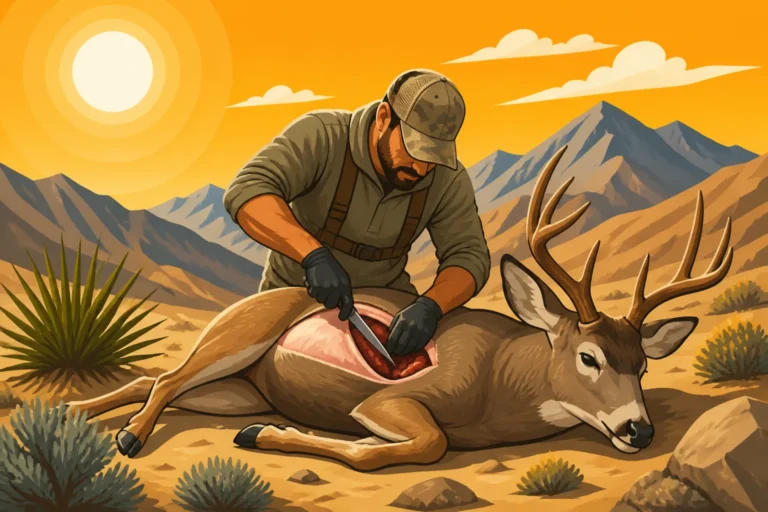
Field care for your harvested elk needs to be meticulous, especially if you draw an early season tag where temperatures can still be warm. Elk are large animals, and cooling them down quickly is vital to preserve the meat. Carry plenty of game bags, a sharp knife, a bone saw, and a plan for how you'll quarter and cool the animal. If it's warm, getting the meat off the bone, into breathable bags, and into a cooler filled with ice is crucial, even if it means making an extra trip. For those late-season hunts where temperatures are well below freezing, you might have more time, but freezing meat too quickly can also be an issue. Always have a strategy for Getting Meat Cooled on an Early Season Hunt whether it's by hanging it in the shade, utilizing snow, or bringing coolers to the field.
Finally, consider your plan for packing out an animal. Nevada is a state of vast roadless areas, and drawing a tag often means you'll be far from any vehicle access. Having a solid strategy for Packing an Animal Out of Roadless Country is critical. This could involve an internal or external frame pack, possibly even a game cart if the terrain allows, or the help of hunting partners. Don't underestimate the physical exertion and time involved in this process. Having a clear plan, the right gear, and the physical stamina to execute it will be the final piece of your successful Nevada elk hunt.
Early vs. Late Rifle Elk Hunts: At a Glance
| Feature | Early Rifle Elk Hunt (Late Sep – Mid Oct) | Late Rifle Elk Hunt (Late Oct – Dec) |
|---|---|---|
| Typical Timing | Late September through mid-October | Late October through December |
| Weather Conditions | Can be warm, transitioning to crisp mornings; potential for light snow at high elevations | Cold, often freezing; high probability of significant snow, high winds |
| Elk Behavior | Post-rut; bulls might still be vocal, cows/calves grouping; elk dispersed in high country | Winter migration; elk grouping into larger herds; focused on forage/survival; very wary |
| Primary Strategy | Calling (cow calls often effective), extensive glassing, active searching | Extensive glassing (spot & stalk), tracking in snow, targeting migration routes |
| Hunter Pressure | Often high, especially in popular areas; active hunters, more calling | Can be spread out as elk move; elk are educated and wary; quieter approach |
| Terrain/Access | Higher elevations, most roads open; rugged, rocky footing; good access to summer range | Lower elevations, challenging access due to snow/closures; deep snow, icy conditions |
| Gear Focus | Quality optics, layered clothing, meat care supplies, good boots | Heavy insulation, waterproof/insulated boots, snow gear, vehicle chains, survival items |
| Physical Demands | Strenuous hikes in varied terrain, pack-out in potentially warm temps | Extremely strenuous: deep snow, cold, possible snowshoeing, tough pack-out |
| Trophy Potential | Good, bulls recovering from rut; may be harder to find concentrated | High, bulls often grouped with cows; can be more visible on winter range |
Disclaimer
The information provided in this guide is for general informational purposes only and is subject to change. Hunting regulations, season dates, and unit boundaries can be updated annually by the Nevada Department of Wildlife (NDOW). It is the hunter's sole responsibility to consult the most current official Nevada hunting regulations before applying for any tags or heading into the field. This guide does not replace the official regulations, and adherence to all state and federal laws is mandatory.