Late Season Elk Hunts Into December
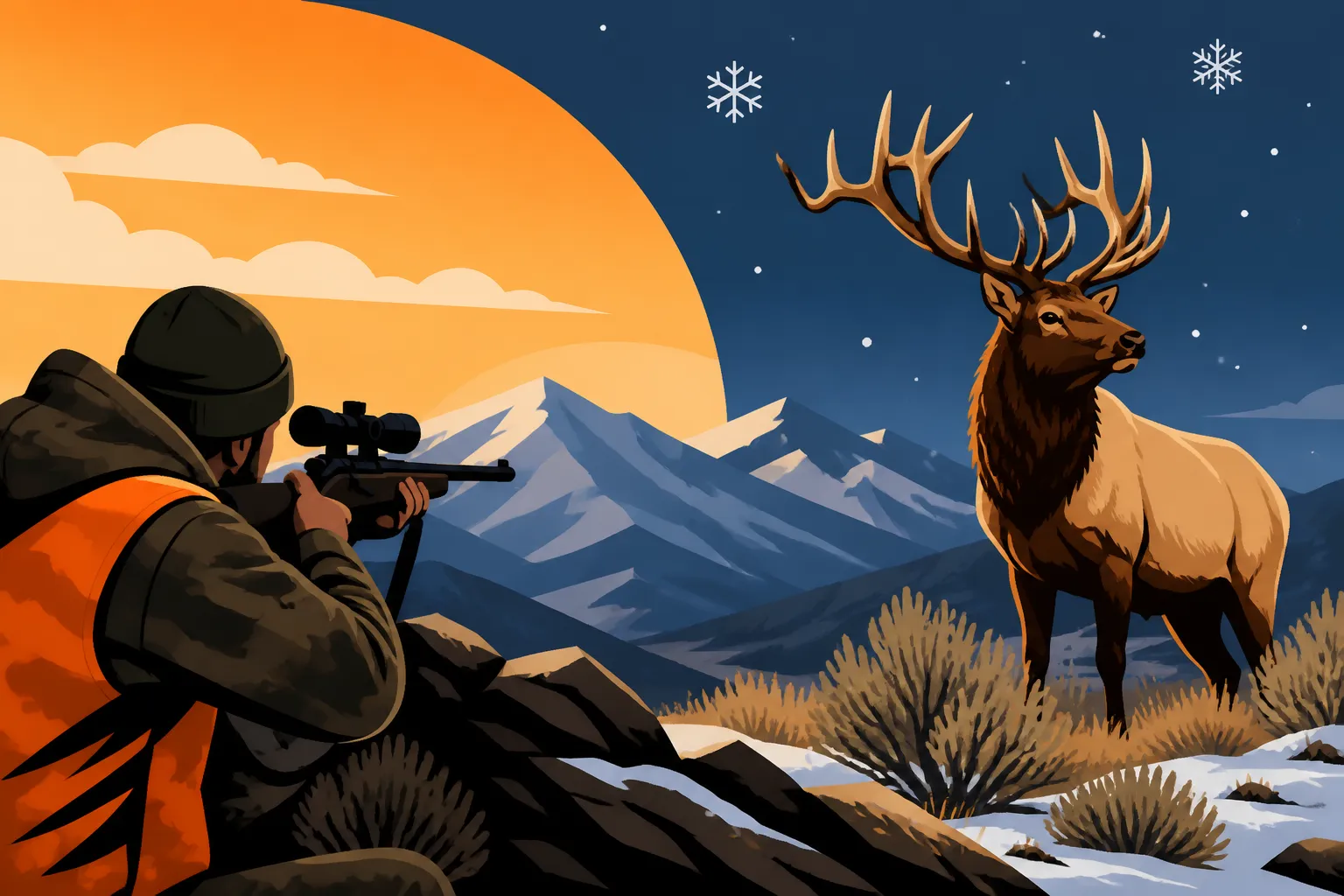
Chasing elk across Nevada's vast, often rugged terrain is a dream for many, but the thought of a late-season hunt, particularly one that pushes into December, can bring a shiver to even the most seasoned hunter. The cold, the snow, and the sheer physical demands are real challenges. This guide will delve deep into what it truly means to pursue elk in Nevada when winter starts to bite, equipping you with the knowledge and strategies to make those late-season dreams a reality.
Understanding Nevada's Late Elk Seasons
Nevada's elk draw offers various seasons, and while many hunters focus on the September rut or early rifle hunts, some of the most challenging—and potentially rewarding—opportunities fall much later in the year. These "late seasons" typically span from late October through November, with specific hunts occasionally extending into the first couple of weeks of December. This isn't your mild, sunny autumn hunting; this is true winter elk hunting, demanding a different level of preparation and grit.
When these late seasons are offered, it's often in units where elk populations are robust, or where wildlife managers are using the later dates to achieve specific herd objectives. Unlike the chaos of the rut, December elk hunts are characterized by animals focused on survival, moving from high country to lower, more protected winter ranges where food and shelter are more accessible. This shift in behavior can make them more concentrated, but also incredibly wary as they've likely encountered hunting pressure in earlier seasons. It's a game of patience and perseverance, where finding the herd's wintering grounds is half the battle. You’ll notice these late season tags often have different hunt codes when you're Reading a Nevada Hunt Unit Before You Apply.
The timing for these hunts can be short and sweet, sometimes just a week or two, which means you need to hit the ground running with a solid plan. The goal here isn't to be the first one in the field, but rather to be the most prepared for the conditions that come with chasing big game as the year draws to a close. While When Nevada Elk Rifle Hunts Open is generally in October, these specific late season tags offer a different set of tactical considerations.
The Unique Challenges of December Elk Hunting
Hunting elk in December in Nevada is a completely different beast than a September archery hunt or an early October rifle season. The elements become your biggest adversary, transforming the landscape and the animals' behavior in dramatic ways.
Weather and Terrain in the Deep Cold
When we talk about December in Nevada, especially in the higher elevations where elk often linger or transition, we're talking about serious winter conditions. Picture biting winds that strip heat right from your bones, deep snowdrifts that can swallow a boot whole, and ice-covered slopes that make every step a precarious dance. Temperatures can plunge well below freezing, and while the days might offer a brief respite, the nights are brutally cold. This cold isn't just uncomfortable; it's dangerous, leading to hypothermia and frostbite if you're not adequately prepared.
The terrain itself becomes another challenge. What might be an easy hike in October can become an impassable snowdrift in December. Draws and canyons that provided cover earlier in the year can become wind tunnels or impassable with accumulated snow. Access roads often close due to snow and ice, pushing hunters further into the backcountry on foot or by snow machine, if permitted. This means you need to factor in not just how you'll hunt, but how you'll even reach your hunting grounds. Proper planning for Vehicle Prep for Remote Nevada Roads is absolutely non-negotiable for these conditions.
Elk Behavior in Winter
Elk are survivors, and as winter settles in, their primary focus shifts entirely to conserving energy and finding sustenance. This means their behavior becomes more predictable in some ways, but also more challenging to intercept. They'll typically move from the high alpine country to lower elevation winter ranges, often favoring south-facing slopes that receive more sun and shed snow faster, exposing vital forage. They'll seek out thermal cover—dense stands of timber or deep canyons that offer protection from wind and cold.
Their movements become more deliberate and often concentrated. Instead of widespread grazing, you'll find them focused on specific pockets of palatable vegetation, moving slowly between bedding and feeding areas. This concentration can be a double-edged sword: easier to find a herd, but harder to approach without detection as more eyes are watching. Understanding Where Elk Winter in the Northern Ranges becomes paramount to putting yourself in the right place at the right time. They'll be feeding more in daylight hours to fuel their metabolism, which can offer more opportunities for spotting, but their senses will be heightened due to the increased vulnerability in open, snow-covered areas. Their patterns are about survival, and every decision they make is geared towards that goal, requiring a hunter to think like a snow-bound elk.
Essential Gear and Preparations for a Late Hunt
Success in a Nevada December elk hunt hinges not just on skill, but on a meticulous approach to gear and preparation. The margins for error are razor-thin when the elements are stacked against you.
Optics and Glassing Strategies
In the vast, open landscapes of Nevada, particularly when covered in snow, high-quality optics are your most critical tool. You won't be still-hunting through thick timber; you'll be spending hours, if not days, behind glass, picking apart distant hillsides for a subtle flick of an ear or the distinct shape of an elk against a snowy backdrop. A good spotting scope, ideally with high Spotting Scope Power for Open Country, mounted on a sturdy tripod is non-negotiable. Binoculars in the 10×42 or 12×50 range are perfect for wide-field scanning.
The snow actually helps with visibility in some ways, highlighting dark-bodied elk against a white canvas, but it also creates vast, reflective surfaces that can cause eye strain. You'll need to master Glassing Grids Across a Nevada Basin, systematically breaking down the terrain. Pay close attention to south-facing slopes, the transition lines between timber and open sage, and areas with known thermal cover. Companies like GoHunt offer invaluable mapping tools and resources that can help you identify these key areas from your living room, allowing you to prioritize your glassing efforts once in the field. Remember, in these conditions, seeing the elk before they see you is often the only way to get within range.
Clothing and Survival Gear
Staying warm and dry is not a comfort; it's a matter of survival. Your clothing system must be meticulously planned. Start with moisture-wicking base layers to pull sweat away from your skin. Follow with insulating mid-layers – think fleece or puffy down/synthetic jackets – that can be added or removed as activity levels and temperatures change. Your outer layer needs to be completely waterproof and windproof, capable of shedding snow and blocking the brutal Nevada winds. Don't skimp on quality here; garments from brands like Sitka Gear or Kuiu are designed for these conditions.
Crucially, you need insulated boots rated for extreme cold, with excellent traction for snow and ice, and gaiters to keep snow out. Warm hats, heavy gloves or mittens (with thinner shooting gloves for dexterity), and hand/foot warmers are also essential. Beyond clothing, your survival kit needs to be robust: a reliable fire starter, emergency shelter (like a bivy sack), extra food and water (yes, even in the cold, dehydration is a risk), a headlamp with spare batteries, a first-aid kit, and communication devices (satellite phone or inReach). Being prepared for Layering for Basin and Range Temperature Swings is vital, as a warm, sunny December afternoon can quickly turn into a sub-zero blizzard. Investing in a solid mapping system from a platform like GoHunt can also help you identify emergency bail-out routes.
Weapons and Ammunition
Your rifle needs to be reliable in freezing conditions. Lubricants can thicken, actions can become sluggish, and scopes can fog. Make sure your rifle is cleaned and lubricated with cold-weather-specific products. When Choosing a Rifle for Basin and Range Country, consider calibers that perform well at longer ranges, as late-season elk often offer limited, distant shot opportunities. Cartridges like .300 Win Mag, 7mm Rem Mag, or .300 PRC are popular choices for their flat trajectories and energy retention.
Ammunition choice is also critical. Look for high-quality, bonded, or monolithic bullets designed for deep penetration and reliable expansion on large, heavy-boned animals, especially with a thick winter coat. Before the hunt, practice shooting in cold weather with your hunting layers on, and confirm your Rifle Zero Distance for Long Sage Shots in conditions as close to hunting conditions as possible. Temperature can affect bullet trajectory, and a cold bore shot might behave differently than subsequent shots. A dependable sling is also crucial, as you'll likely be covering many miles on foot in potentially difficult terrain.
Strategies for Success on December Elk
Having the right gear is only part of the equation; knowing how to use it effectively and adapting your hunting strategy to the harsh realities of December is where true success lies.
Scouting and E-Scouting for Winter Range
Your pre-season scouting, or "e-scouting," is absolutely critical for a late-season hunt. Long before the snow flies, spend hours poring over maps, satellite imagery, and topographical data. Platforms like GoHunt are invaluable for this, allowing you to identify potential wintering areas: south-facing slopes, dense timbered pockets that offer thermal cover, and areas that historically hold elk in the winter. Look for natural travel corridors, water sources that might still be accessible, and distinct changes in elevation that could provide shelter from prevailing winds.
Don't just look for elk sign; look for elk habitat in winter conditions. This means identifying areas with abundant forage that will remain accessible even under snow, such as bitterbrush, aspen stands, or specific grass species. Understanding these patterns is key to E-Scouting a Nevada Unit Before the Season. When you hit the field, you'll be looking for fresh tracks in the snow, droppings, and browsed vegetation to confirm current elk presence and movement. Focus your physical scouting on these predetermined winter range hotspots to save valuable hunting time.
Approach and Stalking in Snow
Stalking elk in snow presents a unique set of challenges and opportunities. On one hand, fresh snow reveals tracks like an open book, allowing you to pinpoint animal movement and direction. On the other hand, it makes silent movement incredibly difficult. Every crunch, every squeak of snow underfoot, carries much further in the cold, still air. You'll need to move painstakingly slowly, taking advantage of any natural cover like rocks, sagebrush, or timber to break your outline and muffle your steps.
Always be hyper-aware of the wind direction; it's even more crucial in winter to prevent your scent from carrying to the animals. Constantly monitor Reading Wind on a Long Sage Stalk, using a wind checker frequently. Pay attention to thermals, which can be fickle as the sun rises and sets, sometimes changing direction in an instant. Use depressions, rims, and Terrain That Hides an Approach in Open Country to stay out of sight as much as possible. A slow, methodical approach, often covering minimal ground but making maximum use of terrain and wind, is far more effective than a fast, noisy one.
Field Care and Extraction
You've put in the work, braved the cold, and successfully harvested an elk. Now the real work begins. While the freezing temperatures are a boon for cooling meat, they can make field dressing a brutal affair. Your hands will get cold quickly, so have warm gloves ready for after the initial work. Get the animal gutted and skinned as quickly as possible to allow the carcass to cool uniformly. Unlike Field Dressing in August Heat, where heat is the enemy, here you're battling the cold and potential for ice to form on surfaces.
Packing an elk out in deep snow is one of the most physically demanding tasks in hunting. Whether you're using a pack frame, game cart, or horses (if accessible and allowed), every pound feels heavier in the soft snow. Breaking down the animal into packable quarters is essential. Plan your extraction route carefully, taking into account snow depth, potential for hidden obstacles, and your physical limitations. Consider carrying extra game bags, ropes, and a sharp, sturdy knife. Knowing your route and planning for Packing an Animal Out of Roadless Country before you even pull the trigger will save you immense hardship and ensure the meat is handled properly.
Comparing Early vs. Late Season Elk Hunting
To really drive home the distinctions, let's look at a quick comparison between a typical early-season elk hunt and the unique challenges of a late-season hunt into December in Nevada.
| Feature | Early Season (Sept/Oct) | Late Season (Nov/Dec) |
|---|---|---|
| Elk Behavior | Rutting, vocal, scattered, active | Survival mode, concentrated, quiet, predictable |
| Weather | Mild to cool, potential for early snow, longer days | Bitter cold, deep snow, ice, strong winds, short days |
| Terrain Access | Generally good, most roads open, less physical strain | Many roads closed, deep snow, ice, high physical demand |
| Vegetation | Lush, full cover for elk and hunters | Sparse, less cover, elk contrast with snow |
| Optics Importance | High, for spotting in varied terrain | Extremely high, for spotting on open, snowy slopes |
| Clothing Needs | Layering for temperature swings | Extreme cold-weather layering, waterproof/windproof |
| Physical Demands | Moderate to high, depending on unit | Very high, often grueling in snow |
| Hunter Concentration | High during rut, moderate during rifle seasons | Often lower, but concentrated around winter ranges |
| Field Care | Focus on rapid cooling due to heat | Focus on keeping hands warm, managing icy conditions |
Disclaimer
The information provided in this guide is for general informational purposes only and does not constitute legal advice. Hunting regulations and conditions in Nevada can change rapidly. Always consult the most current Nevada Department of Wildlife (NDOW) regulations and local land management agency guidelines before planning any hunt. Hunting carries inherent risks, and it is the responsibility of each individual to hunt safely, ethically, and in compliance with all applicable laws and regulations.