Nevada Rifle Deer Season Timing
Hunting for mule deer in Nevada can feel like an exercise in navigating a bureaucratic maze, especially when you're just trying to pinpoint those elusive rifle deer season dates. Many of us have spent countless hours poring over regulations, scratching our heads at hunt codes, and feeling the frustration of trying to piece together a hunt plan from disparate information. This guide aims to clear up the confusion surrounding Nevada's rifle deer season timing, offering a comprehensive look at how these seasons are structured, when they occur, and what you need to know to confidently plan your application and, hopefully, your next successful hunt.
Understanding the Nevada Draw and Rifle Deer Season Windows
The journey to a Nevada rifle deer tag often begins long before you set foot in the field—it starts with the application process, which can be daunting for newcomers and even seasoned hunters from other states. Nevada's draw system is unique, and understanding its intricacies is key to deciphering the timing of its rifle deer seasons. It’s not just about looking at a calendar; it’s about understanding the entire framework that dictates when those seasons open and close.
The Squared Bonus Point System
One of the biggest head-scratchers for many applying in Nevada is the squared bonus point system. Unlike many states where your points simply accumulate, Nevada's system squares your points, giving you an exponential advantage in the draw. For example, if you have two points, you effectively have four "chances" in the draw. Have three points? That's nine chances. This system is designed to reward loyalty and persistence, but it also means that drawing a high-demand tag in a prime unit can take many, many years, as the pool of applicants with a significant number of squared points grows. It’s a frustrating reality when you see those odds, but it’s the game we play. This unique approach is thoroughly explained in our guide on How Nevada's Squared Bonus Points Work, which can help clarify the math behind your draw odds.
Navigating Non-resident Application Requirements
If you're coming from out of state, the application process for a Nevada rifle deer tag adds another layer of complexity. Beyond just the tag fee, non-residents are typically required to purchase a Nevada Combination License before they can even apply for a big game tag. This license often comes with a higher price tag than a resident license, which can be a bitter pill to swallow when you’re already investing significant money into application fees and potential travel. It’s crucial to factor in these additional costs when budgeting for your Nevada hunting adventures. You'll want to check out the details on The Nonresident Nevada Combination License to ensure you've got all your ducks in a row. Missing a step here can invalidate your application, and nobody wants that kind of heartache after waiting all year.
When Nevada Applications Open and Close
The single most critical piece of timing information for any Nevada hunter is the application period. Miss this, and you're out of luck for the entire year, regardless of how many bonus points you've accumulated. Historically, Nevada's big game applications open in late March and close in mid-May. Specifically, Nevada Applications Run March 23 to May 13, so marking these dates on your calendar is absolutely non-negotiable. The deadline is usually firm, and there's no grace period. It’s a moment of truth, and waiting until the last minute is a gamble many experienced hunters avoid. It's often best to submit your application well in advance of The Nevada Application Deadline in May to avoid any last-minute technical glitches or payment processing issues that could derail your plans.
Breaking Down Nevada's Rifle Deer Season Dates
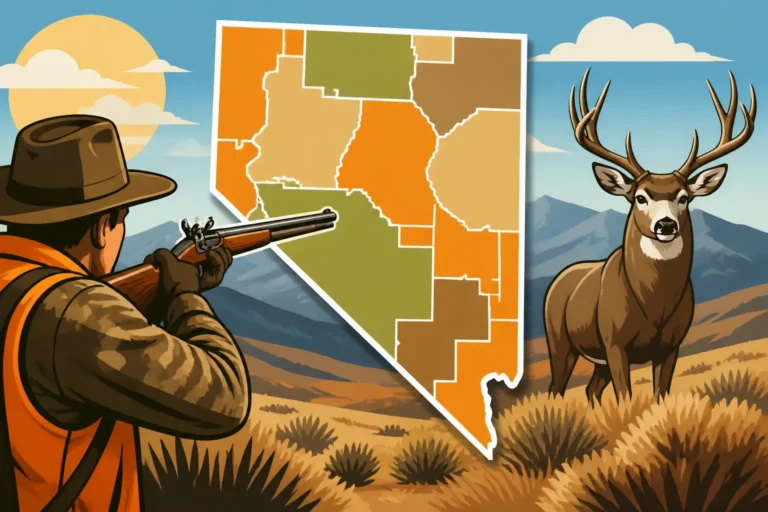
Nevada's diverse landscape, from high mountain ranges to vast sagebrush basins, means that rifle deer seasons aren't a one-size-fits-all affair. The timing can vary significantly from unit to unit, designed by the Nevada Department of Wildlife (NDOW) to manage herd health, spread out hunting pressure, and offer different hunting experiences. It's a complex dance that aims to balance opportunity with conservation, often leaving hunters scratching their heads about the "best" time to apply.
Early Rifle Opportunities
You'll find some Nevada rifle deer seasons opening as early as late September or very early October. These hunts often occur in the higher elevations where deer are still in their summer patterns, typically feeding on lush forage before the harsh winter weather truly sets in. The weather can be milder, but it can also be unpredictable, swinging from warm, sunny days to sudden snowstorms. Deer might still be concentrated in certain areas, but they haven't yet been pressured by hunters, offering a unique chance. The challenge here is often finding bucks that haven't yet shed their velvet (if you're into that), and dealing with potentially thick cover before leaf-off makes glassing easier. The deer are generally in good shape, but they aren't necessarily concentrated in migration corridors, making these hunts a true test of scouting and woodsmanship.
Prime Rut Hunts
Here's a common point of frustration for rifle hunters: "prime rut" hunts for mule deer are exceedingly rare in Nevada. Most rifle seasons fall either before or after the peak of the rut, which typically occurs in mid-November in many western states. Nevada's later rifle seasons, often in late October or early November, might catch the very beginning of the pre-rut activity, where bucks are starting to move more, rub velvet off, and challenge each other. While you might see some increased buck activity, don't go into a Nevada rifle hunt expecting to call in a lovesick giant. The sheer size of the units and the sparse deer populations mean that even during the rut, "prime" activity can be localized and fleeting. For a deeper dive into deer behavior, understanding When the Mule Deer Rut Actually Starts is crucial, and it highlights why pure rut hunts are hard to come by with a rifle tag in Nevada.
Late Season Potential for Big Bucks
This is where many trophy hunters focus their efforts, and for good reason. Nevada's late rifle deer seasons, stretching into late October and even November, are often considered the holy grail for mature buck hunters. These seasons coincide with colder weather, shorter days, and often, the beginning of the deer migration from high summer ranges to lower wintering grounds. As deer are pushed by snow and declining forage, they become more concentrated and visible. This is when you hear stories of big, reclusive bucks suddenly appearing in areas you wouldn't expect. The downsides are extreme weather conditions, including bitter cold, deep snow, and challenging access. But the rewards can be immense. If you want to understand the allure, checking out Why Late Seasons Produce Bigger Bucks will give you a good perspective on why these hunts are so sought after despite their inherent challenges. These later seasons often capitalize on the deer's natural desire to move, making them more predictable for those willing to brave the elements.
Deciphering Hunt Codes and Unit Groupings for Rifle Deer
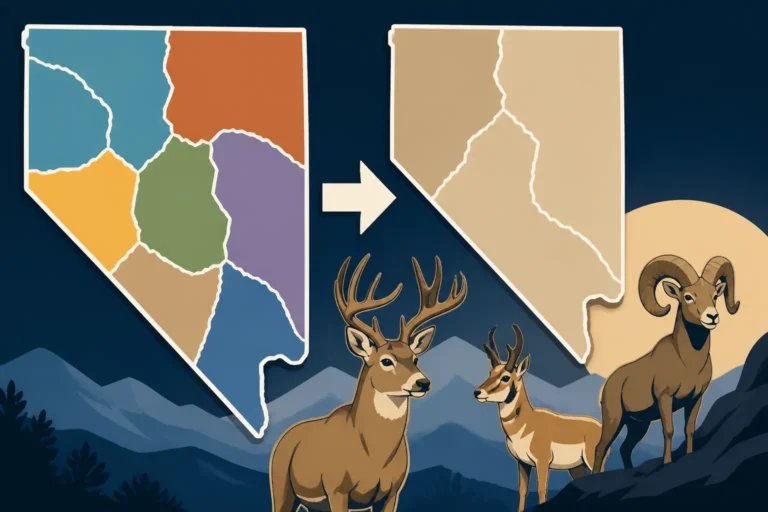
Understanding Nevada's rifle deer season timing isn't just about dates; it's intricately tied to the hunt codes and unit groupings that NDOW uses to manage its diverse deer herds. This system can be incredibly confusing, making it feel like you need a secret decoder ring just to figure out where and when you can legally hunt. But with a bit of patience, it becomes clearer, and it’s absolutely essential for a successful application.
Reading the Regulations Document
Your most vital tool for understanding Nevada rifle deer season timing is the official NDOW Big Game Seasons and Application Guide. This document, released annually, is your bible. It contains every legal detail, every hunt code, and every open season. The frustration often comes from its density and the sometimes opaque language. Each hunt typically has a unique "hunt number" or code, often a string of numbers like "1111." This code usually tells you the species, the weapon type, the unit or unit group, and the season dates. Learning to break down these codes is paramount. For example, the first digit might indicate the species (e.g., '1' for deer), the next might indicate the weapon (e.g., '1' for rifle), and subsequent digits specify the unit and season. Our guide on Reading a Nevada Hunt Number Before You Apply goes into detail on how to interpret these codes and prevent costly mistakes. It's not the most exciting reading, but it's where the rubber meets the road.
Understanding Unit Specificity and Flexibility
Nevada is a massive state, and its hunting units are equally vast and varied. Many rifle deer hunts are specific to a single unit, but others might be grouped, allowing you to hunt across several adjacent units under one tag. This grouping offers more flexibility and acreage, which can be a huge advantage in a state where deer populations can be sparse and spread out. However, it also means you need to be acutely aware of the exact boundaries. The regulations will list the specific units included in each hunt group, and it's your responsibility to know them. Trust me, you don't want to accidentally cross into an unauthorized unit or private land. Our comprehensive article on Reading a Nevada Hunt Unit Before You Apply is a lifesaver here, guiding you through how to understand these boundaries and unit descriptions so you can scout and plan effectively. The reality is, some units are tiny and rugged, while others are sprawling sagebrush seas, each with its own set of challenges and opportunities for rifle hunters.
Here's a simplified table illustrating general rifle deer season timings across different unit types in Nevada. Always consult official NDOW regulations for exact dates and hunt codes for the current year.
| Unit Type/Characteristic | Typical Season Start | Typical Season End | Notes & Challenges |
|---|---|---|---|
| Early High Country | Late September | Early October | Warmer temps, deer in summer patterns. Focus on high elevations, potential for early snow. |
| Mid-Season Mountain | Mid-October | Late October | Transition period, deer beginning to move. Variable weather, bucks may start to group up. |
| Late Season Mountain | Early November | Mid-November | Post-rut migration, potential for significant snow. Excellent for trophy bucks but physically demanding. |
| Desert/Basin | Mid-October | Early November | Milder weather, deer more spread out. Focus on water sources and subtle terrain features. |
| Junior Hunts | Mid-October | Late October | Specific youth-only hunts often timed for good weather and school breaks. |
Strategies for Applying for Nevada Rifle Deer Tags
Successfully drawing a Nevada rifle deer tag often feels like winning the lottery, and for many, it's about much more than just luck. It's about a well-thought-out application strategy, informed research, and a clear understanding of the odds. The complex nature of Nevada's draw means you can't just pick a unit and hope for the best; you need to play the game smart.
Researching Draw Odds with Tools like GoHunt
This is where modern technology becomes an invaluable asset for serious Nevada hunters. Trying to manually crunch draw odds from years of state-published data is a monumental task that few have the time or patience for. That's why tools like GoHunt have become essential. They aggregate years of draw data, analyze it with sophisticated algorithms, and present it in an easily digestible format, allowing you to compare units, analyze success rates, and strategize your point usage. With GoHunt, you can see exactly how many points it took to draw a particular tag in previous years, helping you decide if you have a realistic chance or if it's better to focus on building points. They even offer tools that project future draw odds based on current applicant pools and point accumulation. This kind of detailed insight is a game-changer, removing much of the guesswork and replacing it with data-driven decisions. If you're serious about drawing a Nevada tag, investing in a platform like GoHunt is almost a necessity.
Point Strategy vs. Drawing a Tag
This is the perennial dilemma for any hunter in a draw state: do you go for the long-shot, high-demand tag, or do you apply for easier-to-draw units just to get a tag in your pocket? With Nevada's squared bonus point system, this decision is even more critical. Applying for a very difficult tag, year after year, will build your points quickly, increasing your future chances exponentially. This "point strategy" is a long-term play, often meaning many years without a tag, but the potential payoff for a truly premier hunt can be worth it for some. On the other hand, applying for a unit with lower demand and better odds might get you hunting sooner, even if it's not your absolute dream unit. There's no right or wrong answer, as it depends on your personal hunting goals and patience. Many hunters choose to apply for a point only every few years, especially if they have hunting opportunities elsewhere, which is a common practice and can be done through a Buying a Nevada Point-Only Application.
Choosing Hunt Choices Wisely
Nevada allows you to list up to five hunt choices on your application, and the order in which you list them is incredibly important. The draw system processes your choices sequentially, starting with your first choice. If you don't draw your first choice, it moves to your second, and so on. This means your top choice should be the unit and season you most want, even if the odds are slim. Your subsequent choices can then be units with slightly better odds, acting as safety nets. It’s tempting to put all the premier units as your top choices, but a more strategic approach often involves mixing in some units with higher draw odds further down the list. However, it's a known frustration that second and subsequent choices draw much less often for popular species like deer, especially in units with high demand. Understanding this order and its implications is vital for a successful application strategy. We cover this extensively in our article, Choice Order Strategy in the Nevada Draw, which provides real-world examples of how to maximize your application's potential.
The Impact of Weather and Terrain on Rifle Deer Seasons
Nevada is a state of extremes, and its diverse topography and unpredictable weather patterns profoundly influence not only the timing of rifle deer seasons but also the nature of the hunt itself. From towering mountain ranges to vast, arid basins, the environment dictates deer behavior, access, and ultimately, your hunting strategy.
High Country vs. Desert Seasons
When you look at Nevada's rifle deer seasons, you'll notice distinct differences between units that are primarily high-elevation mountain terrain and those that are characterized by vast, lower-elevation desert or basin landscapes. High country seasons, often found in units like those in the Ruby Mountains or the Schell Creek Range, tend to be shorter, later, and more weather-dependent. These areas often experience early snows, pushing deer down from their summer ranges and concentrating them, but also making access challenging. Hunting here means being prepared for anything Mother Nature throws at you. Conversely, desert and basin seasons, found in units across central and southern Nevada, might open earlier and sometimes run longer. Deer in these environments are often more spread out, and the challenges revolve around finding sparse water sources and glassing vast expanses under generally milder, but still potentially harsh, conditions. Understanding these differences and how Elevation Bands Worth Understanding in Nevada impacts deer behavior is critical. It's a completely different game whether you are stalking pinyon-juniper breaks or aspen groves, as compared to open sage flats.
Post-Rut Migration Patterns and Winter Range
Many of the most coveted late rifle deer seasons in Nevada are specifically timed to coincide with the post-rut migration. As temperatures drop and snow begins to accumulate in the high country, mule deer naturally begin their descent to lower, more hospitable winter ranges. This migration can funnel deer through predictable corridors, making them more visible and, theoretically, easier to find. Hunters who draw these tags often spend considerable time scouting these migration routes and wintering areas. The rut itself also plays a role, as bucks, exhausted from breeding, are often more susceptible and less cautious during this period. Finding bucks during this phase means understanding not just when the migration happens, but where deer are heading. Identifying these crucial wintering grounds is a key component of successful late-season hunting, and our article on Where Mule Deer Winter in Sage Country offers valuable insights into these critical areas and how to locate them from your maps. The success of a late season hunt often hinges on how well you predict and intercept these movements.
Essential Gear and Preparation for Nevada Rifle Deer Hunts
Hunting Nevada's vast and rugged landscapes with a rifle requires more than just a tag; it demands careful preparation and the right gear. The sheer scale of the terrain, coupled with often extreme weather conditions and long shot opportunities, means that your equipment and physical conditioning are just as important as your hunting skills.
Optics Power for Open Country
If there's one piece of gear that stands out as indispensable for Nevada rifle deer hunting, it's high-quality optics. The Great Basin is a glassing game. You'll spend far more time looking through binoculars and spotting scopes than you will walking or stalking. The wide-open spaces, vast sagebrush flats, and expansive mountain ranges demand optics that can resolve detail at incredible distances. Forget about small, lightweight binos; you need powerful, clear binoculars (10×42 or 12×50 are common) mounted on a tripod for stability during long glassing sessions. A high-magnification spotting scope (20-60x or higher) is equally vital for verifying bucks and planning approaches. You’ll be judging animals at ranges that would be unthinkable in denser timber. Investing in the best glass you can afford isn't a luxury in Nevada; it's a necessity. For a deeper dive, check out Optics Power for Nevada's Long Sightlines and Spotting Scope Power for Open Country to help you make informed decisions about your optical setup.
Rifle and Ammunition Choices for Long Shots
The open terrain of Nevada often translates to longer shot opportunities than what many hunters are accustomed to. While ethical shot distance is always a personal decision, you need a rifle and ammunition combination capable of accuracy and knockdown power at extended ranges. Calibers like .270 Win, .30-06, 7mm Rem Mag, and .300 Win Mag are popular choices, offering a good balance of trajectory and energy. The most crucial factor, however, is your proficiency with your chosen rifle. Practice shooting from field positions, not just a bench, and be comfortable with range estimation and bullet drop at various distances. Many Nevada hunters zero their rifles for 200 or 300 yards to optimize for the vast distances. It’s not about shooting across canyons; it’s about being prepared for those 300-400 yard shots that are common. Our article on the Best All-Around Caliber for Open Country can offer some guidance, as can Rifle Zero Distance for Long Sage Shots for setting up your rifle effectively for these unique conditions.
Physical Conditioning for Rugged Terrain
Nevada deer hunting is not for the faint of heart, or the couch potato. Whether you're in the high country or the desert, you will be covering significant ground, often at high elevations, and typically carrying a heavy pack. Days can be long, often starting before dawn and ending well after dark. The terrain can be unforgiving, with steep climbs, sharp volcanic rock, and endless miles of sagebrush. Your physical conditioning directly impacts your ability to scout effectively, stalk quietly, and pack out an animal once it's down. Don't underestimate the demands. Start a fitness regimen months before your hunt, focusing on cardiovascular endurance, strength training, and hiking with a loaded pack. This isn't just about bagging a buck; it's about enjoying the experience safely and effectively. We dive deeper into the kind of preparation needed in Preparing Physically for Long Glassing Days, because believe me, your body will thank you for it when you're 8 miles deep on a mountain side.
Disclaimer
Please note that hunting regulations, season dates, and unit boundaries are subject to change annually by the Nevada Department of Wildlife (NDOW). It is the sole responsibility of every hunter to consult the most current official NDOW Big Game Seasons and Application Guide and all applicable state and federal laws before planning or embarking on any hunting trip. This guide is for informational purposes only and should not be considered a substitute for official regulations.