Nevada Unit Groups and How They Combine
Navigating Nevada's big game draw can feel like trying to solve a cryptic puzzle, especially when you encounter the bewildering system of hunt units and, even more perplexing, unit groups. It's a common source of frustration for new and seasoned applicants alike, making it tough to decipher where you can actually hunt if you draw a specific tag. This guide aims to pull back the curtain on how Nevada's unit groups work and how these combinations can significantly impact your hunting plans and application strategy.
Understanding the Basics of Nevada Hunt Units
The Nevada Department of Wildlife (NDOW) manages hunting across the state by dividing it into numerous designated hunt units. These units are essentially specific geographical areas with defined boundaries, often following natural features like mountain ranges, rivers, or man-made lines such as highways. Understanding these individual units is the first step, but the real complexity often arises when these units are combined.
Why Nevada Uses Complex Unit Numbers
It’s easy to get overwhelmed when you first dive into the Nevada hunt regulations. You'll see unit numbers like "011," "031," "071," and so on, each representing a distinct parcel of land. The reason for this granular division is multifaceted. Nevada's diverse topography, from sprawling sagebrush basins to high alpine peaks, means wildlife populations and habitat conditions can vary dramatically even over short distances. Using precise unit numbers allows NDOW to manage specific herds more effectively, tailor tag quotas to local populations, and distribute hunting pressure across the landscape. Without these distinctions, managing the state's incredible mule deer, elk, and bighorn sheep populations would be nearly impossible. It's a system designed for ecological precision, even if it feels like a headache for hunters. If you're struggling to make sense of the basic codes, diving into Reading a Nevada Hunt Unit Before You Apply can really help demystify the process.
Deconstructing a Typical Nevada Hunt Unit Code
When you see a hunt unit code, it's not just a random set of digits; it actually tells you a lot if you know how to read it. For instance, a unit might be listed as "111." The first digit, or sometimes the first two, generally indicates the region of the state. For example, units starting with "01" or "02" are typically in the northwest, while "10" or "11" might be in the central part of the state. The subsequent digits further refine the specific area within that region.
But it gets more intricate. Beyond the base unit number, you'll also see hunt codes that combine the unit number with season types and dates, creating a unique identifier for a specific hunt. For example, "MDR111" might signify a Mule Deer Rifle hunt in Unit 111. The more you explore the regulations, the more you'll understand that each piece of the code is a clue to the hunt's characteristics. Getting familiar with What the Digits in a Nevada Unit Mean can really make a difference in your understanding. It's a system built for clarity for the wildlife managers, and with a little effort, it can become clear for you too.
How Unit Groups Consolidate Hunting Opportunities
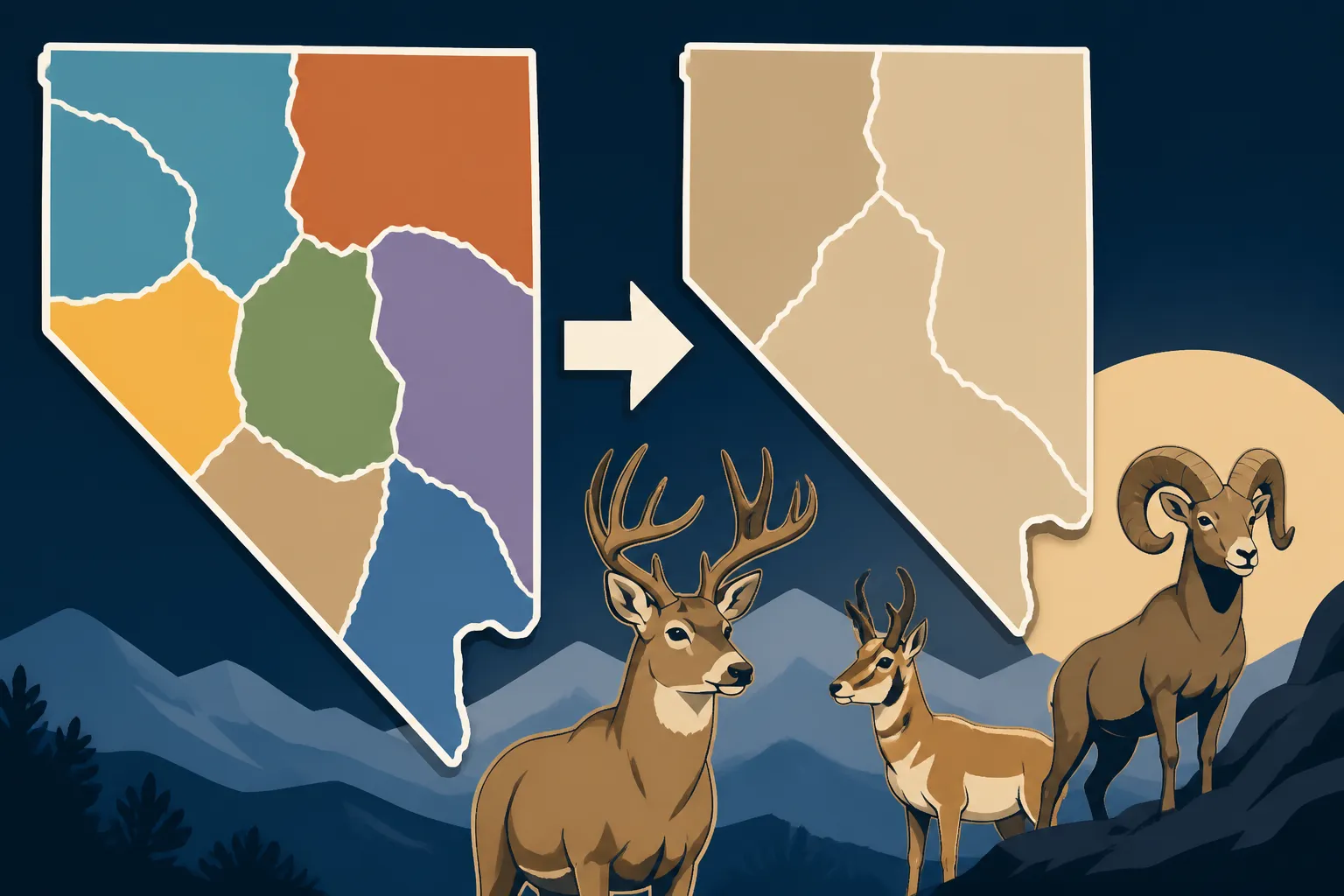
Now, let's tackle the real head-scratcher: unit groups. You'll often see hunt codes that don't just list a single unit, but a combination, such as "011-013" or "041-042-043." These are unit groups, and they are essentially multiple individual hunt units that NDOW has decided to combine for a particular hunt. When you draw a tag for a unit group, it means you are legally allowed to hunt in any of the individual units within that specified group for the given season.
The Purpose of Combining Units
You might wonder why NDOW goes through the trouble of creating unit groups instead of just listing single units. There are a few key reasons for this approach, all geared towards effective wildlife management and hunter opportunity.
Firstly, combining units can help manage species populations that migrate across different areas throughout a season. For example, mule deer might summer in a higher elevation unit but move down to a lower, adjacent unit as winter approaches. By grouping these units, hunters have the flexibility to follow the animals. Secondly, it can help spread out hunting pressure. Instead of concentrating all hunters in one small, highly desirable unit, a unit group allows for a broader distribution, which can be beneficial for both the hunters seeking solitude and the wildlife. Lastly, it can be a tool to simplify regulations for less-pressured species or areas where population densities might be lower, making it less efficient to manage each unit individually. It's about optimizing the resource and the experience, even if it adds a layer of complexity to the application process.
Practical Implications for Your Application Strategy
Understanding unit groups is absolutely critical for your application strategy. If you apply for and draw a tag for a unit group, your hunting area is significantly larger than if you had drawn a single unit. This can be a huge advantage, providing more diverse terrain, more potential for finding game, and more options for adapting to weather or game movement.
However, it also means your scouting needs to be broader. If you're focused on a specific "honey hole" in Unit 011, but you draw a tag for the "011-013" group, you now have to consider the entire 013 unit as well. This might mean more e-scouting time, potentially more boots-on-the-ground scouting, and a deeper dive into maps and aerial imagery. Tools like GoHunt's Insider platform are invaluable here, as they often compile statistics and maps that can help you visualize these combined units. You'll need to know not just How Nevada Numbers Its Hunt Units, but also how those numbers come together into larger hunt areas. When you're trying to figure out Why Nevada Draw Odds Vary So Much by Unit, remember that a unit group's draw odds are calculated based on the combined quota and applicants, not individual units.
Consider this: if you're applying for a coveted elk tag, drawing a group that includes both high-country summer range and lower-elevation migration corridors could mean the difference between a successful hunt and coming home empty-handed. It essentially gives you more plays in your playbook.
Navigating the NDOW Regulations for Unit Groups
The official Nevada Big Game Seasons and Application Guide is your bible when it comes to understanding unit groups. This document, published annually by NDOW, outlines all the hunt codes, unit boundaries, season dates, and, crucially, which units are grouped together for specific hunts. You absolutely cannot skip reading this document from cover to cover before submitting any application.
Finding Unit Group Information in the Regulations
When you crack open the regulations, you'll want to pay close attention to the tables listing hunt codes, species, and units. For example, under a specific hunt type (e.g., "Mule Deer Archery"), you'll see columns for the hunt number, the unit(s) included, season dates, and tag quotas. This is where you'll find the explicit listing of unit groups. Instead of "Unit 071," you might see "Units 071-072." This tells you straight away that if you draw that specific hunt number, you have access to both Unit 071 and Unit 072.
It's important to differentiate between general unit boundaries and hunt-specific unit groups. The general boundaries for Unit 071 are always the same, but for a particular hunt, NDOW might decide to group it with 072. For a different hunt, say a late-season rifle hunt, Unit 071 might stand alone, or even be grouped with a different unit entirely. So, always check the exact hunt code and the unit(s) associated with that specific hunt in the current year's regulations. Tools like GoHunt also make interpreting these regulations much easier by presenting the information in a more digestible format, often with interactive maps. Remember, Reading the Nevada Big Game Seasons Document is a non-negotiable step.
Tools and Resources for Mapping Combined Units
Once you've identified a unit group you're interested in, the next step is to visualize that combined area on a map. This is where modern hunting technology really shines.
Traditional paper maps, like those from the Bureau of Land Management (BLM), are fantastic for general topography and boundaries, but piecing together multiple unit boundaries can be cumbersome. Digital mapping applications are a game-changer. Services like onX Hunt, BaseMap, or Gaia GPS allow you to download public land layers and, critically, hunt unit boundary layers directly to your phone or GPS device. You can then toggle on the boundaries for each unit within your chosen group to see the entire huntable area. This visual representation is invaluable for planning your scouting, understanding access points, and identifying potential travel corridors for game.
Many hunters also rely on online resources like GoHunt's mapping features, which often integrate these unit boundaries and provide an easy way to overlay them with other data, such as private land ownership, water sources, and topography. This kind of e-scouting capability lets you identify promising areas, plan routes, and even locate potential camp spots, all from the comfort of your home. Learning to use Using onX Layers for Nevada Public Land or similar platforms can give you a significant advantage in visualizing these grouped units. Additionally, you can often find Where Nevada Publishes Unit Access Maps on the NDOW website, which can provide a valuable baseline.
Here's a simplified look at how unit groups might appear and what they mean:
| Hunt Code | Species | Season Type | Units Included | Total Tag Quota | Notes |
|---|---|---|---|---|---|
| MDR101 | Mule Deer | Rifle | 101 | 50 | Standalone unit, focused management. |
| MDR101-103 | Mule Deer | Rifle | 101, 102, 103 | 150 | Combines three units for greater hunter flexibility. |
| EDA131 | Elk | Archery | 131 | 15 | High-demand, limited tags, single unit. |
| EDA131-132 | Elk | Archery | 131, 132 | 30 | Groups adjacent units, potentially for migration. |
| PRA051 | Pronghorn | Archery | 051 | 10 | Specific to a small, isolated herd. |
| PRA051-052 | Pronghorn | Archery | 051, 052 | 25 | Provides more open country for stalking pronghorn. |
This table illustrates how the same species might have hunts available in a single unit or a combination of units, each with its own hunt code and quota. Always double-check the current regulations for the most accurate and up-to-date information for your desired hunt. The nuances of How Nevada Sets Its Season Framework are complex, but understanding these groups is key to successful application.
Conclusion
The Nevada hunt unit grouping system, while initially daunting, is designed to provide hunters with broader opportunities and to allow for more dynamic wildlife management. It might feel like an extra layer of complexity, but by understanding how to decipher these combined units in the regulations and utilizing modern mapping tools, you can transform a potential source of confusion into a strategic advantage for your next hunt. Taking the time to truly grasp these groupings will empower you to make more informed application choices and, ultimately, increase your chances of a successful and rewarding Nevada hunting experience. Don't be afraid to dig in; the more you understand, the better your odds.
Disclaimer
The information provided in this article is for general guidance and informational purposes only. Hunting regulations in Nevada, including unit boundaries and groupings, can change annually. It is the sole responsibility of the hunter to consult the official Nevada Department of Wildlife (NDOW) regulations and season proclamations for the current year before applying for any tag or engaging in any hunting activity. Always confirm all dates, unit designations, and legal requirements directly with NDOW.