Why Four Nevada Bonus Points Buy Seventeen Chances
Navigating the big game draw systems out West can feel like trying to decipher an ancient riddle, and Nevada's unique approach to bonus points often leaves hunters scratching their heads. You’ve likely heard whispers of "squared points" and wondered what that even means for your chances. This guide is here to unravel the mystery, showing you precisely how those seemingly simple bonus points can multiply your drawing power in the Silver State.
Understanding Nevada's Unique Bonus Point System
When you're dreaming of a Nevada tag, whether it's for a monster mule deer or a trophy elk, understanding the bonus point system is absolutely critical. It’s not just about accumulating points; it’s about how those points are weighted in the draw. Nevada has a system that truly makes loyalty pay off, but it's a bit more complex than simply getting an extra ticket for every year you apply and don't draw.
The Basics of Nevada Bonus Points
At its core, a Nevada bonus point is a tool designed to reward hunters who consistently apply for big game tags but don't draw. Think of it as a consolation prize, but one that significantly increases your odds in subsequent years. For every year you apply for a given species and are unsuccessful, you accrue one bonus point for that species. These points are species-specific, meaning a mule deer point won't help you draw an elk tag, and vice-versa. It’s a pretty straightforward concept on the surface, just like many other Western states.
However, the real magic, or perhaps the real head-scratcher, begins when these points are actually used in the draw. They aren't simply added to your application as extra entries. Instead, Nevada takes your accumulated bonus points and squares them, then adds one additional entry for your current year's application. This "squared plus one" formula is where the system truly differentiates itself and gives long-term applicants a significant edge. It’s a mechanic that sometimes feels counterintuitive if you're used to other states, but it's crucial to grasp if you want to play the game effectively.
How Points Accumulate
The process of accumulating bonus points in Nevada is fairly simple and consistent. Each year, when the application period opens, usually from Nevada Applications Run March 23 to May 13, you submit an application for your desired species and unit choices. If you apply and are unsuccessful in drawing a tag, the system automatically awards you one bonus point for that species. This point is then added to your existing total. So, if you had two points for mule deer and didn't draw this year, you'd roll into next year with three points. It's a steady build, year after year, as long as you continue to apply.
It's important to remember that you must apply for a tag to earn a point if you don't draw. Simply buying a hunting license without submitting a big game application won't get you a point. However, Nevada also offers a "point-only" option, which is a fantastic strategy for those years when you can't commit to a hunt or don't want to risk drawing a tag you can't use. With a point-only application, you're explicitly telling the system you want to accrue a bonus point for that species without being considered for a tag in the current draw. This means your financial commitment is lower, as you're not paying the full tag fee upfront, but you still keep your place in line, so to speak. Understanding Buying a Nevada Point-Only Application can be a game-changer for many hunters.
The "Squaring" Mechanic Explained
Now, let's dive into the fascinating part that truly sets Nevada apart: the squaring mechanic. This isn't just about adding extra numbers to a hat; it's about exponential growth in your drawing power. The state uses a formula where your accumulated bonus points are squared, and then one additional entry (for your current year's application) is added to that total. The result is the number of "chances" you have in the draw.
Let's look at a concrete example. If you have zero bonus points for a particular species, your chances in the draw are calculated as (0 points * 0 points) + 1 = 1 chance. This is your first year applying. If you apply for a second year and don't draw, you now have 1 bonus point. In your third year applying, your chances become (1 point * 1 point) + 1 = 2 chances. This is where many people get confused because they think a point is just an extra entry. But notice the multiplication.
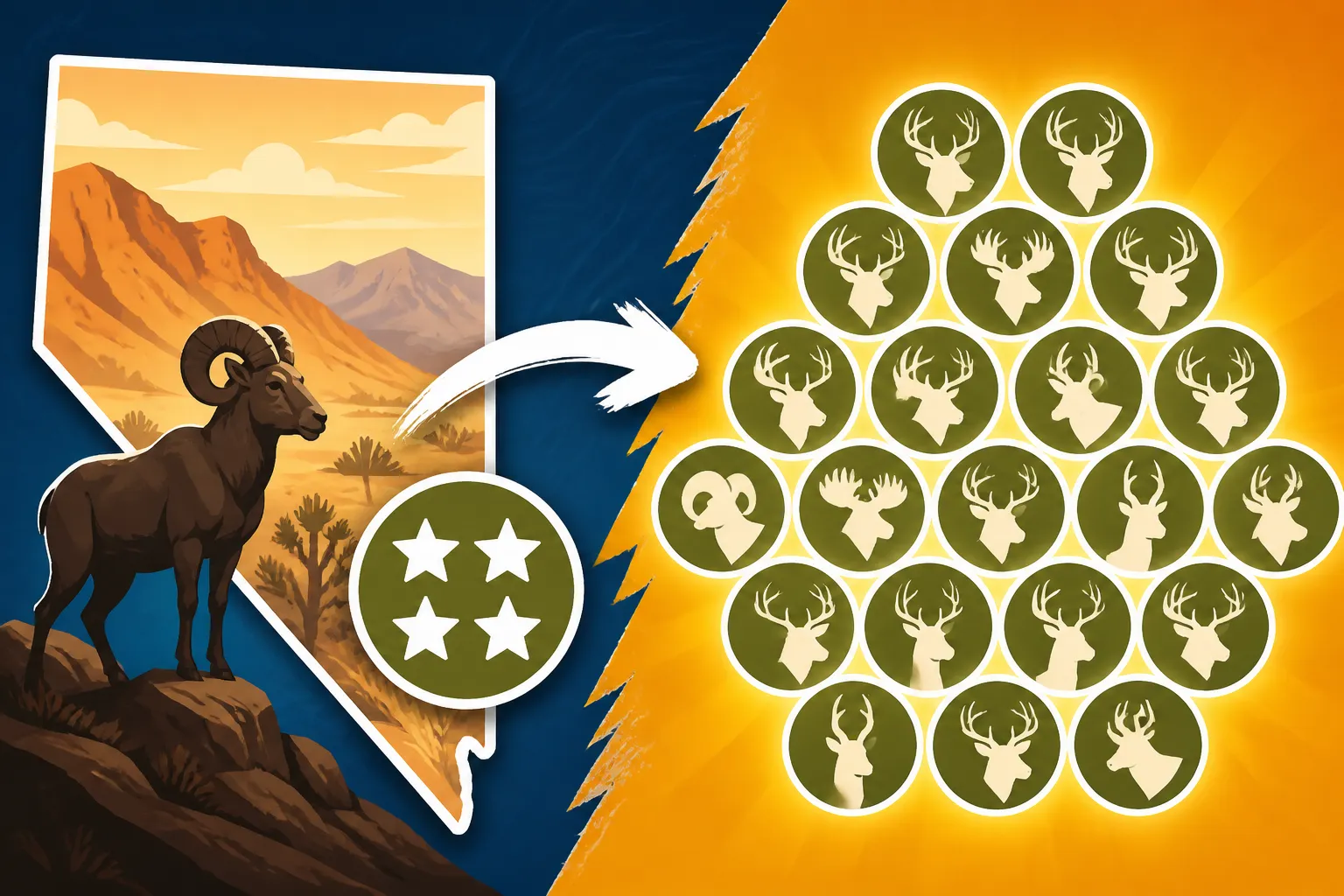
The power truly reveals itself as your points grow. If you have 4 bonus points, your chances aren't 5 (4 points + 1 entry). Instead, they are (4 points * 4 points) + 1 = 17 chances. This exponential increase is why the system is so compelling for long-term applicants. It’s why How Nevada's Squared Bonus Points Work is so impactful. This isn't just a slight bump in odds; it's a significant boost that dramatically improves your position over time, making every year you don't draw a little less painful.
Deciphering the Power of Squared Points
Understanding the squaring mechanic on paper is one thing, but truly grasping its power and what it means for your draw odds takes a bit more reflection. It's a system designed to reward persistence, making Nevada a state where building points over time can genuinely pay off, especially for those highly coveted, limited-entry tags.
Visualizing the Multiplier Effect
Let's visualize this multiplier effect to really drive it home. Imagine a standard raffle where each ticket represents one chance. If you have 4 bonus points in a state with a "straight point" system, you'd effectively have 5 tickets (4 bonus tickets + 1 current year application ticket). Fair enough.
Now, apply that to Nevada's squared system. With 4 bonus points, your chances are calculated as 4 squared (16) plus one for the current year's application, totaling 17 chances. That's more than three times the number of chances compared to a straight point system! The difference becomes even more pronounced the more points you accumulate. For instance, if you have 8 bonus points, you don't have 9 chances; you have (8*8)+1 = 65 chances. With 10 points, you'd have 101 chances.
This system creates a substantial advantage for those who commit to applying year after year. It means that while the early years of accumulating points might feel slow, the growth in your draw chances accelerates rapidly once you hit a decent number of points. It's truly a long game, but one with increasingly exciting prospects. This is the essence of Why Nevada Squares Bonus Points and why it's such a compelling part of their draw.
How Squared Points Compare to a Straight Draw
To fully appreciate the impact, let's contrast Nevada's squared system with a hypothetical straight draw system where one point equals one extra entry.
| Bonus Points | Straight Draw Chances (Points + 1) | Nevada Squared Chances (Points^2 + 1) | Difference (Nevada vs. Straight) |
|---|---|---|---|
| 0 | 1 | 1 | 0 |
| 1 | 2 | 2 | 0 |
| 2 | 3 | 5 | 2 |
| 3 | 4 | 10 | 6 |
| 4 | 5 | 17 | 12 |
| 5 | 6 | 26 | 20 |
| 6 | 7 | 37 | 30 |
| 7 | 8 | 50 | 42 |
| 8 | 9 | 65 | 56 |
| 9 | 10 | 82 | 72 |
| 10 | 11 | 101 | 90 |
As you can clearly see in the table, for the first couple of points, there isn't much difference. However, once you hit 2 or 3 points, Nevada's system starts pulling ahead significantly. By the time you reach 4 points, you've got more than three times the chances compared to a straight draw. This table powerfully illustrates How Many Chances Four Nevada Points Buy and shows why this mathematical quirk is so central to a Nevada application strategy. This exponential growth is why Nevada is often a state where hunters with a long history of applying have a much, much higher probability of eventually drawing a coveted tag.
Real-World Impact on Your Application
The practical implication of this squared point system is immense. For general draw units, especially those with higher tag quotas, even a few points can push your odds from slim to quite reasonable. For those truly once-in-a-lifetime tags, like certain trophy elk units or bighorn sheep, accumulating a high number of points is almost a prerequisite for a legitimate chance. Without a significant point total, your odds for these premier tags remain incredibly low, regardless of the unit.
This also means that patience and consistency are paramount for Nevada hunters. You can't just apply for a couple of years and expect to draw a top-tier tag. It's a system that actively discourages hit-or-miss applications for trophy units unless you're truly just trying to get lucky with one chance. Instead, it encourages a commitment to the draw, year after year, knowing that each unsuccessful application is building a more powerful hand for the future. For those who understand and embrace this long-term strategy, Nevada offers some of the most exciting trophy opportunities in the West.
Practical Application Strategy with Bonus Points
Armed with a clear understanding of how Nevada's bonus point system operates, the next step is to integrate this knowledge into a coherent application strategy. It’s about being deliberate with your choices, both in which tags you apply for and when you choose to simply build points.
The Long Game: Building a Point Portfolio
For most hunters eyeing the premier tags in Nevada, especially for species like elk or bighorn sheep, the application process is definitely a long game. Realistically, drawing a top-tier tag in your first few years is highly improbable unless you are incredibly lucky. Therefore, a sound strategy involves consistently building your "point portfolio" over time. This means committing to applying annually, even if you don't draw, knowing that each year you're adding significant drawing power for the future.
This strategy might involve applying for a less popular unit with better odds in some years, or even choosing the point-only option, especially if your schedule doesn't permit a full hunt. The goal isn't just to draw any tag, but to maximize your chances for a quality tag down the line. Many experienced Nevada applicants will spend years accumulating points for their dream unit, meticulously studying Reading a Nevada Hunt Unit Before You Apply and waiting for their squared points to give them a statistical advantage that's too good to pass up. This patient approach pays dividends in a state where trophy quality often correlates directly with draw difficulty.
When to Apply and When to Buy Points Only
Deciding whether to apply for a tag or opt for a point-only application is a key strategic decision each year. There are several factors that should influence this choice:
- Your Schedule and Availability: If you know you won't have the time or resources to fully commit to a hunt in a given year, or if there's a family event planned, buying a point only is a smart move. It allows you to maintain your point accumulation without the stress or financial burden of a tag you might not use.
- Financial Commitment: Applying for a tag typically requires you to pay the full tag fee upfront, which can be substantial, especially for non-residents. The Nevada Application Fees Per Species are usually non-refundable, and the tag itself can be quite expensive, like What a Nonresident Nevada Elk Tag Costs. A point-only application significantly reduces this immediate financial outlay.
- Draw Odds and Point Levels: If you're targeting a unit where your current points still put you far outside the typical drawing range, it might make more sense to save your hunt choices for a year when your chances are genuinely higher. This is where researching Checking Nevada Draw Odds Before You Apply becomes invaluable. You can see historical data and make an informed decision.
- Opportunity vs. Trophy Quality: Sometimes, a general tag with decent odds offers a good hunting opportunity even if it's not a "trophy" hunt. If you're simply looking to hunt a particular species, applying for one of these units can be a great way to get out in the field while still building points for the big one.
Analyzing Draw Odds with GoHunt
In today’s digital age, hunters have access to incredible tools that can revolutionize their application strategy. One such powerful resource is GoHunt. They provide detailed draw odds, unit breakdowns, and harvest data that are crucial for making informed decisions in Nevada's draw. Instead of just guessing, you can use their platform to see exactly how many points it historically takes to draw specific units, and how your current point total translates into real chances.
Using GoHunt, you can input your current bonus points for a species and instantly see how your squared chances would compare to the historical draw results for various units. This allows you to identify units where you might have a legitimate chance, units where you're just building points, and units that are still completely out of reach. For example, you can analyze Nevada Mule Deer Harvest Success by Unit or Elk Harvest Success Broken Down by Unit to fine-tune your choices. Their tools can help you understand the nuances of Nevada Elk Muzzleloader Timing by Unit or the various Nevada Elk Rifle Season Structure options, allowing you to select hunt codes that align with your available points and desired hunting experience. This level of analysis is invaluable, helping you avoid wasting application fees on units where you have virtually no chance and instead focusing on strategic applications that move you closer to your goals.
Common Misconceptions and FAQs About Nevada Points
Even with a clear explanation, the Nevada bonus point system often sparks a lot of questions and sometimes leads to misunderstandings. Let’s clear up some of the most common points of confusion to ensure you're navigating the draw with accurate information.
Do Points Transfer Between Species?
This is a frequently asked question, and the answer is a definitive no. Your bonus points in Nevada are strictly species-specific. A point you accrue for mule deer can only be used to enhance your chances of drawing a mule deer tag. It has absolutely no bearing on your application for an elk, antelope, or bighorn sheep tag. Each species operates on its own independent bonus point system.
This means if you're interested in hunting multiple species in Nevada over the years, you'll need to build a separate point portfolio for each one. This can, of course, increase your application costs and the time investment required to build significant points for multiple species. However, it also prevents a hunter from accumulating points for an easily drawn species and then suddenly having a huge advantage for a highly sought-after tag they've never applied for. The species-specific nature of the points ensures that the system rewards dedication within each individual hunt category.
What Happens to Points When You Draw?
Another critical aspect to understand is what happens to your hard-earned bonus points once you actually draw a tag. In Nevada, when you successfully draw a big game tag for a specific species, your bonus points for that species are completely reset to zero. This is a common feature in many Western draw systems, and it makes sense – once you've been rewarded with a tag, you start over in the point-building process for that animal.
So, if you draw a mule deer tag, all your accumulated mule deer points vanish, and you'll start at zero for mule deer applications in subsequent years. However, and this is important, your points for other species remain completely untouched. If you had 5 elk points and drew a deer tag, you still have those 5 elk points for future elk draws. This ensures that a successful hunt for one species doesn't derail your long-term strategy for another. For more details, refer to What Happens to Nevada Points When You Draw. This reset mechanism is why successful hunters often find themselves immediately beginning to build points again for their next desired tag.
Point Expiration and Special Circumstances
The good news for consistent applicants is that Nevada bonus points generally do not expire as long as you continue to apply each year, either for a tag or for a point-only option. This is a huge benefit for hunters who are playing the long game for those high-demand tags. You can steadily build your points without fear of losing them, provided you keep your application active.
However, there are a few special circumstances to be aware of:
- Missing an Application Year: If you fail to apply for a species (either for a tag or point-only) for an entire draw cycle, you will lose all accumulated bonus points for that specific species. This is a critical rule to remember. Life happens, but setting reminders for The Nevada Application Deadline Date and The Closing Hour on Nevada Deadline Day is paramount to protect your point investment.
- Purchasing a Leftover Tag: If you purchase a leftover tag that was not awarded through the primary draw process, it typically does not affect your bonus points. These are tags that went unsold and are offered on a first-come, first-served basis, and drawing one doesn't reset your points because you didn't "draw" it in the lottery system. However, it's always wise to double-check the current year's regulations on this.
- Nevada Dream Tags and Heritage Tags: These are unique tags awarded through raffles or auctions that operate outside the standard draw system. Drawing or purchasing one of these prestigious tags also generally does not affect your accumulated bonus points in the regular draw. They are truly special opportunities that don't penalize your long-term point strategy.
Understanding Do Nevada Points Ever Expire? is crucial for safeguarding your investment in the Nevada draw. Consistency is key, and missing a single year can set you back significantly.
Maximizing Your Chances: Beyond Bonus Points
While bonus points are undeniably powerful in Nevada's draw, they are just one piece of a larger puzzle. A truly successful application strategy considers all available avenues to maximize your chances, from unit selection to understanding group application rules.
Smart Unit Selection and Research
Even with a substantial number of bonus points, simply listing the most popular unit as your first choice without any research is a recipe for disappointment. Smart unit selection is paramount. This involves delving into draw odds, harvest success rates, animal population trends, and habitat conditions for various units. Tools like GoHunt or the Nevada Department of Wildlife (NDOW) website offer a wealth of information to help you make informed decisions.
Consider factors like:
- Public Land Access: Some units might have excellent animals but very limited public access, which can make hunting difficult without private land permission. Tools like onX can help you Using onX Layers for Nevada Public Land.
- Terrain and Physicality: Nevada's diverse terrain ranges from vast open basins to rugged mountain ranges. Choose a unit that matches your physical capabilities and hunting style. Understanding Elevation Bands Worth Understanding in Nevada can really help.
- Hunter Pressure: Some units, particularly those known for trophy animals or easy access, can experience heavy hunter pressure. Researching this can help you find less crowded opportunities.
- Water Sources: In arid Nevada, water is life, and knowing how Water Sources That Concentrate Nevada Game can impact animal distribution is a huge advantage. Mapping Water Before an August Hunt is a common strategy for archery hunters.
Don't just chase the biggest antlers; chase the unit that offers the best blend of opportunity, access, and experience for you. Checking Where Nevada Publishes Harvest Data is an excellent starting point for this research.
The Role of First and Second Choices
Nevada's application system allows you to list up to five unit choices for each species. While it's tempting to put all your dream units at the top, understanding how these choices are processed is vital. In Nevada, your application is first considered for your first choice. If you don't draw that, it then moves to your second choice, and so on, through all your selections. However, your bonus points are only applied once to your first choice. If you don't draw your first choice, your application goes into a "random draw" pool for your subsequent choices, meaning your bonus points offer no advantage past your initial selection.
This makes your first choice incredibly important. It's where your accumulated bonus points provide their maximum leverage. Therefore, a common strategy is to use your first choice for the unit you truly want to draw and where your squared points give you a legitimate chance. Your subsequent choices might then be for units with higher quotas, slightly lower trophy potential but better draw odds, or areas you'd be happy to hunt even without the point advantage. Understanding Choice Order Strategy in the Nevada Draw is key to optimizing your application. Don’t waste that first choice on a unit where your odds are still statistically impossible, even with points.
Group Applications and Point Averaging
Nevada does allow group applications, which can be a great way to hunt with friends or family. However, there's a crucial detail regarding bonus points in a group application: the group's bonus points are averaged, and then that average is squared. This can significantly impact your odds, especially if there's a large discrepancy in points among group members.
For example, if one hunter has 8 points (65 chances) and another has 0 points (1 chance), their average is 4 points. When squared, that's (4*4)+1 = 17 chances for the group. While better than the 0-point applicant's individual chances, it's significantly worse than the 8-point applicant's individual chances. This dynamic means that combining with lower-point applicants can dilute the drawing power of high-point individuals.
Therefore, when considering a group application, it's essential to weigh the benefit of hunting together against the potential reduction in draw odds. It generally works best when all members of the group have similar point totals, or when the primary goal is simply to hunt together, regardless of the difficulty of the draw. Understanding How Nevada Averages Points Across a Group is critical before submitting a joint application.
The Financial Side of Nevada Applications
Hunting in Nevada, especially for non-residents, can be a significant financial investment. Understanding the various fees involved—from license costs to application fees and actual tag prices—is crucial for budgeting and preventing any unwelcome surprises.
Cost of a Point-Only Application
Opting for a point-only application is generally the most budget-friendly way to maintain your bonus point streak in Nevada. For non-residents, this typically involves purchasing the non-resident combination license and then paying a small application fee per species for which you want to accrue a point. For instance, you might pay for your combination license and then around $15 for a deer point-only application, and another $25 for an elk point-only application.
This fee structure makes the point-only option an attractive choice for hunters who are playing the long game but need to manage their finances year to year. It allows you to stay active in the draw and build those crucial squared points without the much larger upfront cost of a full tag fee. For residents, the costs are significantly lower for both the combination license and the point-only application fees, making point accumulation even more accessible.
Understanding License and Application Fees
Before you can even apply for a big game tag or purchase a bonus point, you must acquire a Nevada hunting license. For non-residents, this typically means purchasing a The Nonresident Nevada Combination License, which allows you to apply for multiple species. The cost of this license alone can be several hundred dollars. Residents pay a much lower fee for their licenses.
In addition to the license, there are application fees for each species you apply for. As mentioned, these are distinct from the tag fee and are generally non-refundable, regardless of whether you draw a tag or not. The Nevada Application Fees Per Species vary by animal, with elk often carrying a higher application fee than deer or antelope. These fees contribute to the administrative costs of running the draw and managing Nevada's wildlife resources. It's important to factor in these non-refundable costs when planning your annual application budget, as they represent the baseline investment simply to participate in the draw.
Nonresident Costs vs. Resident Costs
There's a substantial difference in costs between residents and non-residents for hunting in Nevada, a common practice across Western states designed to prioritize opportunities for residents who contribute directly to the state's economy and wildlife management through their taxes.
Non-Resident Costs:
- Combination License: Typically several hundred dollars.
- Application Fees: ~$15-$25 per species (non-refundable).
- Tag Fees (if drawn): These are the big ones. A non-resident mule deer tag can be around $300-$400, while a non-resident elk tag, as explored in Why a Nevada Nonresident Elk Tag Costs So Much, can easily exceed $1,200. Bighorn sheep and mountain goat tags are even higher.
Resident Costs:
- Combination License: Significantly lower, usually under $100.
- Application Fees: Often around $10-$20 per species (non-refundable).
- Tag Fees (if drawn): Much more affordable. A resident deer tag might be $80-$100, and an elk tag could be a few hundred dollars.
This financial disparity means that non-residents must be particularly strategic with their applications, focusing their efforts and budget on species and units where their squared bonus points give them the best chance for a successful draw and a memorable hunt. For residents, the barrier to entry is much lower, allowing for more frequent applications across various species.
Planning Your Nevada Hunting Journey
Beyond understanding the bonus point system and managing finances, a successful Nevada hunting journey requires meticulous planning, awareness of key dates, and a good dose of persistence. Nevada is a state that rewards those who put in the effort both before and during the hunt.
Key Dates and Deadlines
Missing a crucial deadline is perhaps the easiest way to lose your bonus points or miss out on a draw opportunity entirely. Nevada's application period typically runs from late March to early May. For example, Nevada Applications Run March 23 to May 13. These dates are firm, and late applications are not accepted. You'll want to mark your calendar, set multiple reminders, and ideally submit your application well before the final closing hour.
Once applications close, there's a period of anticipation before When Nevada Draw Results Land at the End of May. Successful applicants are typically notified via email, and the results are also posted on the NDOW website. If you're successful, there's usually a window to pay the full tag fee if you hadn't already done so. After the main draw, there are often leftover tags available, which are sold on a first-come, first-served basis, but these tags typically don't affect your bonus points. Staying on top of these dates is paramount to a successful application year.
Utilizing Online Resources for Planning
In the modern hunting landscape, online resources are invaluable for planning a Nevada hunt. The NDOW website is your official source for regulations, season dates, harvest statistics, and unit maps. They publish detailed documents like Reading the Nevada Big Game Seasons Document which is a must-read for any applicant.
Beyond official government sites, platforms like GoHunt provide enhanced data analysis, mapping tools, and community forums. You can delve into historical draw odds, explore unit boundaries with topographical maps, and read discussions from other hunters about specific areas. For mapping, services like onX Hunt are essential for understanding land ownership, finding public access points, and identifying potential hunting spots, which is crucial in a state like Nevada where How Much of Nevada Is Public Land but access can still be tricky. These tools can help you with E-Scouting a Nevada Unit Before the Season and are critical for identifying Where Nevada Mule Deer Winter or Hunting Water in Nevada's Driest Country. Leveraging these resources effectively can significantly increase your preparedness and on-the-ground success.
The Importance of Persistence
Finally, and perhaps most importantly, successful hunting in Nevada often boils down to persistence. Whether it's the persistence to apply year after year to build those bonus points, the persistence to research and scout extensively, or the persistence to keep hunting when conditions are tough, it's a quality that pays off. Drawing a premier tag in Nevada takes time, and the exponential growth of squared bonus points is a direct reward for that commitment.
Don't get discouraged by early unsuccessful draws. See each one as an investment, stacking up those chances for a future hunt of a lifetime. The vast, rugged beauty of Nevada, with its incredible wildlife, is worth the effort. The experiences, even in the non-drawing years spent scouting or just enjoying the wild landscapes, are part of the journey. Keep applying, keep learning, and eventually, your number will come up, and you’ll find yourself chasing a dream animal in one of the most unique and challenging hunting states in the West.
Disclaimer
Please remember that hunting regulations, fees, and draw systems can change. Always consult the official Nevada Department of Wildlife (NDOW) regulations and current year's application guide before making any decisions related to licenses, applications, or hunting activities. This guide is for informational purposes only and should not replace official sources.