Nevada Holds All Three Bighorn Subspecies
For many hunters, the ultimate Western big game challenge isn't an elk or a mule deer – it's the iconic bighorn sheep. Drawing a bighorn tag in Nevada is a once-in-a-lifetime opportunity for most, a true testament to patience and persistence in the draw, and a demanding physical and mental test once you're in the field. This guide dives deep into what makes Nevada home to not one, but three distinct bighorn subspecies, exploring their unique habitats, the state's incredible conservation efforts, and what it truly takes to pursue these magnificent animals in some of the most rugged and breathtaking landscapes on earth.
The Majesty of Nevada's Bighorn Sheep
There's something inherently mystical about bighorn sheep. They inhabit terrain that seems impassable to others, their powerful, sure-footed movements making a mockery of sheer cliffs and crumbling scree slopes. For hunters, the draw of bighorns isn't just about the trophy horns; it's about the deep dive into their remote world, the intense physical challenge, and the profound sense of accomplishment that comes from earning a shot at one of these incredible animals. Nevada, with its vast mountain ranges rising from arid valleys, offers a unique opportunity to encounter all three North American bighorn subspecies, a rarity that sets it apart.
A Hunter's Dream: Why Bighorns Captivate
The allure of bighorn sheep lies in their wildness and the extreme environments they call home. Unlike other big game, which might utilize a wider variety of habitats, bighorns are creatures of the steep, rocky, and open country. Their survival depends on their keen eyesight and ability to navigate treacherous terrain, using it as a fortress against predators. This makes hunting them a physically grueling, mentally taxing, and ultimately, deeply rewarding experience. A bighorn hunt pushes you to your limits, forcing you to sharpen your glassing skills, perfect your stalking prowess, and build incredible physical endurance. It’s not just a hunt; it’s an expedition into the very heart of the wilderness, often in places so remote you feel like you're the first human to ever set foot there. The sheer beauty of their habitat, often featuring stunning vistas and unparalleled solitude, adds another layer to their captivating mystique.
The rarity of a tag also contributes significantly to their appeal. For many, a bighorn tag represents decades of applying, accumulating bonus points, and dreaming. When that coveted tag finally arrives, it's not just a piece of paper; it's a validation of years of dedication. This profound sense of earning the opportunity elevates the entire experience, transforming it from a mere hunt into a true pilgrimage. Every step, every glassing session, every moment spent in their country feels sacred, knowing how few people ever get to experience it.
The Rarity of Drawing a Nevada Bighorn Tag
Let's be blunt: drawing a bighorn sheep tag in Nevada is tough. It's often referred to as the "lottery of a lifetime" for a reason. Unlike deer or elk, where odds can vary from challenging to relatively achievable depending on the unit and weapon, bighorn tags are consistently among the hardest to draw. This is a direct reflection of conservative herd management and the limited populations of these specialized animals. The Nevada Department of Wildlife (NDOW) prioritizes herd health, issuing only a handful of tags for rams each year in specific units, ensuring sustainable populations for future generations.
The draw system in Nevada further amplifies the challenge. While a bonus point system is in place, giving loyal applicants an advantage, the sheer number of applicants nationwide vying for these limited tags means that even with many points, drawing is far from guaranteed. It’s a game of patience, persistence, and a healthy dose of luck. Hunters often apply for 10, 20, or even 30+ years before their number is called. This long wait makes the moment you finally see your name on the draw results list even more exhilarating, knowing you’ve beaten astronomical odds. It’s why resources like GoHunt become invaluable for analyzing Nevada Bighorn Sheep Draw Odds and crafting a strategic application to maximize your chances over the long haul.
Unveiling Nevada's Three Bighorn Subspecies
Nevada is truly special because it's one of the few places where you can find all three bighorn subspecies native to North America: the Desert, California, and Rocky Mountain Bighorn. Each subspecies has adapted to distinct environments across the state, showcasing the incredible diversity of Nevada's landscapes, from scorching low deserts to high alpine peaks. Understanding these differences isn't just for biologists; it's crucial for hunters to grasp their specific habitats and behaviors when preparing for a hunt.
The Resilient Desert Bighorn
The Desert Bighorn (Ovis canadensis nelsoni) is arguably the most iconic bighorn subspecies in Nevada, thriving in the rugged, arid mountains of the southern and central parts of the state. These incredible animals are master survivors of extreme heat and drought, often found in mountain ranges that rise like islands from vast, sun-baked valleys. Their coats are typically a lighter, sandy brown, helping them blend seamlessly into the tan and gray rock faces of their desert homes. Desert Bighorns are characterized by their relatively compact bodies and impressive, tightly curled horns on the rams, which can grow into full-curl trophies.
You'll find Desert Bighorns concentrated in ranges such as the Sheep Range within the Desert National Wildlife Refuge, the Muddy Mountains, the River Mountains near Lake Mead, and numerous other isolated ranges south of the state's central highway corridors. Their survival hinges on their ability to locate and utilize sparse water sources – often springs, seeps, or man-made guzzlers – especially during the brutal summer months. Historically, populations faced severe declines due to overhunting, disease introduced by domestic sheep, and habitat encroachment. However, dedicated conservation efforts, including strict hunting regulations, habitat restoration, and successful Transplant Programs That Rebuilt Nevada Herds, have allowed these resilient animals to make a remarkable comeback across much of their historic range.
The Elusive California Bighorn
Moving north and west in Nevada, you'll encounter the California Bighorn (Ovis canadensis californiana). These sheep typically inhabit higher elevations and more open, rolling terrain than their desert cousins, often associated with the sagebrush-steppe and pinyon-juniper woodlands of the Great Basin. While still requiring rugged, rocky escape terrain, their habitat often includes more forage and slightly milder conditions than the extreme deserts. Their coats tend to be a darker brown, providing better camouflage against the darker soils and vegetation of their northern ranges. The rams typically carry horns that are more flared and less tightly curled than Desert Bighorns, presenting a distinct aesthetic challenge for field judging.
Prime California Bighorn country in Nevada includes the Santa Rosa Range, the Sheldon National Wildlife Refuge (though hunting is managed separately here), and parts of the Pine Forest Range and other isolated mountain systems in the state's northwestern quadrant. These sheep are equally adapted to their niche, utilizing the steeper slopes for security while descending to feed on grasses and forbs in more accessible areas. Their populations, too, faced significant challenges in the past, including habitat fragmentation and disease. Conservation efforts have focused on reintroductions into historical ranges and careful management to maintain healthy, stable populations, allowing for limited hunting opportunities. When considering units for your application, it's vital to research the specific subspecies present, as their behavior and preferred habitat can influence your scouting and hunting tactics.
The Majestic Rocky Mountain Bighorn
Finally, in the highest, most rugged mountains of eastern Nevada, specifically in the Ruby Mountains, East Humboldt Range, and portions of the Schell Creek and Snake Ranges near Great Basin National Park, lives the Rocky Mountain Bighorn (Ovis canadensis canadensis). These are the giants of the bighorn world, often found at or above timberline in true alpine environments. Their coats are typically the darkest of the three subspecies, ranging from dark brown to grayish-brown, perfectly suited to the granite and limestone of their high-elevation homes. Rocky Mountain Bighorn rams are renowned for their massive, heavy horns that can form a wider, more open curl compared to the tighter curls of Desert Bighorns, giving them a truly majestic and formidable appearance.
These sheep are perfectly adapted to cold, snowy winters and thrive on high-elevation forbs and grasses during the summer. Their presence in Nevada is a testament to the state's diverse geography, reaching into the southernmost extent of typical Rocky Mountain bighorn habitat. While not as widespread as the other two subspecies in Nevada, the populations that do exist offer truly incredible hunting experiences in breathtaking alpine wilderness. Like their cousins, these herds have benefited from intense conservation and management, ensuring their survival in these unique Nevada ecosystems. A hunt for a Rocky Mountain Bighorn often means enduring significant elevation gains, unpredictable weather, and some of the most physically demanding stalks imaginable.
Here's a quick comparison of Nevada's bighorn subspecies:
| Subspecies | Primary Range in Nevada | Typical Habitat | Coat Color | Horn Characteristics (Rams) |
|---|---|---|---|---|
| Desert Bighorn | Southern & Central Nevada (e.g., Sheep Range, Muddy Mountains) | Arid, low-elevation, rugged desert mountains; sparse water | Light, sandy brown | Tightly curled, compact |
| California Bighorn | Western & Northern Nevada (e.g., Santa Rosa Range, Pine Forest Range) | Higher elevations, sagebrush-steppe, pinyon-juniper woodlands | Darker brown | More flared, less tightly curled than Desert |
| Rocky Mountain Bighorn | Eastern Nevada (e.g., Ruby Mountains, Schell Creek Range) | High alpine, above timberline, steep granite/limestone peaks | Dark brown/grayish | Massive, heavy, wider/more open curl |
Conservation Success Stories and Ongoing Challenges
The presence of three bighorn subspecies in Nevada today is not by accident; it's a monumental conservation achievement, especially given the historical challenges these animals have faced. From near extirpation in some areas to thriving populations, the journey has been long and arduous, marked by dedicated efforts from wildlife agencies, conservation groups, and passionate individuals. However, the work is never truly done, and new challenges constantly emerge, requiring ongoing vigilance and adaptive management strategies.
Rebuilding Herds Through Transplants
At the turn of the 20th century, bighorn sheep populations across North America, including Nevada, were at critically low levels. Unregulated hunting, habitat destruction, and the devastating introduction of diseases from domestic sheep decimated herds. By the mid-20th century, many historical ranges were empty. Recognizing the urgent need for action, the Nevada Department of Wildlife (NDOW) and its partners embarked on ambitious Transplant Programs That Rebuilt Nevada Herds. These programs involved carefully capturing bighorns from healthy, established herds and relocating them to suitable, vacant historical habitats.
These efforts have been incredibly successful. For example, Desert Bighorns were reintroduced into numerous ranges across southern Nevada, slowly recolonizing mountains where they hadn't been seen for decades. Similar efforts bolstered California Bighorn populations in the north. The process is meticulous, requiring extensive habitat assessment, careful animal handling, and ongoing monitoring to ensure the transplanted sheep establish viable breeding populations. This work is a testament to the power of proactive conservation and the resilience of these animals when given a chance. Hunters and conservationists often contribute through organizations like the Wild Sheep Foundation, whose fundraising efforts directly support these vital programs, ensuring a future for wild sheep.
Battling Disease and Habitat Loss
Despite the remarkable successes in reintroduction, Nevada's bighorn sheep still face significant threats. Perhaps the most pervasive and devastating is disease, particularly pneumonia, often caused by the Mycoplasma ovipneumoniae (Movi) pathogen. This respiratory disease can sweep through bighorn herds, causing massive die-offs, especially among lambs, and leaving chronic health issues in adults. The source often traces back to contact with domestic sheep or goats, highlighting the critical importance of maintaining strict separation between wild and domestic herds to prevent Bighorn Disease Die-Offs Explained. NDOW actively monitors herds for disease outbreaks and implements management strategies to minimize spread, but it remains a constant concern.
Beyond disease, habitat loss and fragmentation continue to impact bighorn populations. While much of Nevada is public land, urban encroachment, mining operations, and altered fire regimes can degrade critical bighorn habitat. Drought, an increasingly frequent reality in the arid West, also poses a significant threat, impacting forage quality and the availability of water sources that are vital for desert-dwelling sheep. Competition with feral horses and burros for scarce resources further exacerbates these challenges in some areas. These factors mean that even healthy herds require continuous monitoring and proactive management to ensure their long-term viability against an ever-changing landscape.
How Nevada Counts Bighorn From the Air
Accurate population data is fundamental to managing bighorn sheep and setting tag quotas. In Nevada, one of the most effective methods for estimating herd sizes and composition is aerial surveys. NDOW biologists and pilots fly specific transects over known bighorn ranges, meticulously counting animals, classifying them by sex and age (lambs, ewes, rams), and noting their locations. This labor-intensive process, detailed in articles like How Nevada Counts Bighorn From the Air, is crucial for understanding herd health, reproductive success, and population trends.
These surveys are typically conducted at specific times of the year when sheep are more visible, often during cooler months or when they congregate near water or feeding areas. The data collected directly informs tag allocations for the upcoming hunting seasons, ensuring that harvest levels are sustainable and do not negatively impact the overall health or recovery goals of the herds. Without these precise and consistent aerial counts, NDOW would be unable to make informed management decisions, which is why this expensive and challenging work is absolutely vital to the future of bighorn hunting in Nevada.
Navigating the Nevada Bighorn Tag Draw
The path to hunting a bighorn sheep in Nevada almost always begins with the general big game draw. For most hunters, this means years, even decades, of applying and accumulating bonus points. It's a system designed to give loyal applicants a better chance over time, but the demand far outweighs the supply, making every tag drawn a remarkable achievement. Understanding the nuances of the application process is key to maximizing your chances in this ultimate lottery hunt.
Understanding the Odds and Bonus Point System
Nevada utilizes a bonus point system for its big game draw, including bighorn sheep. This system is designed to reward persistent applicants. Each year you apply and are unsuccessful in drawing a tag for a specific species, you earn one bonus point for that species. In the draw, your accumulated bonus points are "squared" – meaning if you have 5 points, you get 25 entries into the draw, effectively multiplying your chances. However, if you successfully draw a tag, your bonus points for that species reset to zero. This system significantly improves your odds over time, but it doesn't guarantee a tag, especially for a highly coveted species like bighorn sheep where the number of tags issued is extremely low.
For instance, if only a handful of ram tags are available statewide for a particular subspecies, and thousands of applicants are vying for them, even having 20 or 30 squared points still puts you in a pool with many others who also have high point totals. This is why it's crucial to look at the Nevada Bighorn Sheep Draw Odds from previous years to understand the realistic chance for different units. Some units might be virtually impossible to draw without decades of points, while others might offer a slightly better (though still very long) shot. Your patience and commitment to consistently applying are your greatest assets in this long game.
Application Strategies for the Hunt of a Lifetime
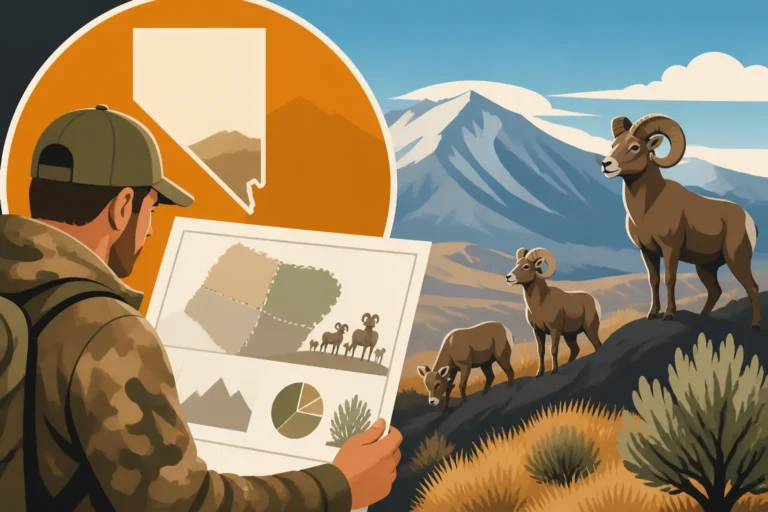
Given the formidable odds, developing a smart application strategy for a Nevada bighorn tag is essential. The first step, as mentioned, is diligent research into draw odds, harvest success rates, and unit characteristics. Resources like GoHunt provide invaluable data, allowing you to analyze past draw results, unit boundaries, and habitat profiles to make informed choices. This data can help you understand Reading a Nevada Hunt Unit Before You Apply and where to focus your limited choices.
While some hunters choose to apply for "trophy" units with historically low odds but high potential for record-book rams, others might opt for units with slightly higher odds, even if the average ram size might be smaller. Some units might be easier to access, while others require extensive backcountry travel. You'll need to decide if you want to apply for a ram or ewe tag, as ewe tags are generally easier to draw but are still very limited and highly sought after for meat and a unique hunting experience. Remember, you can typically list up to five hunt choices on your application, so strategically ranking units based on your research and desired experience is critical. Most importantly, consistency is key – missing a year means missing out on a bonus point, which delays your journey to that coveted tag.
The All-In Cost of a Nevada Bighorn Sheep Tag
Beyond the challenge of drawing, the financial commitment for a Nevada bighorn sheep hunt is substantial. For non-residents, the initial investment includes the cost of a Nevada Combination License, which is mandatory before you can even apply for any big game tag. On top of that, each species application carries a non-refundable fee. Should you be lucky enough to draw, the tag fee itself is significant, reflecting the rarity and prestige of the animal.
Currently, a nonresident Nevada Combination License runs over $180, and the bighorn sheep application fee is around $15. But the real cost comes with the tag itself. For a nonresident, a bighorn sheep tag costs over $1,200. This doesn't even begin to cover the actual hunt expenses: travel, lodging, specialized gear (optics, boots, backpacks), potential guide fees, and meat processing or taxidermy. Many hunters save for years specifically for this hunt, viewing it as a once-in-a-lifetime expedition. When considering your application, be prepared for the full financial scope of this incredible adventure.
Hunting the High Country: Tactics for Nevada Bighorns
Once you've beaten the odds and drawn a Nevada bighorn tag, the real work begins. Hunting bighorn sheep is a profoundly different experience than pursuing deer or elk. It demands exceptional physical fitness, meticulous glassing skills, and an unwavering mental toughness to navigate the most challenging terrain imaginable. These animals live in a world of verticality, and to hunt them successfully, you must be prepared to enter that world.
Glassing as the Cornerstone of a Sheep Hunt
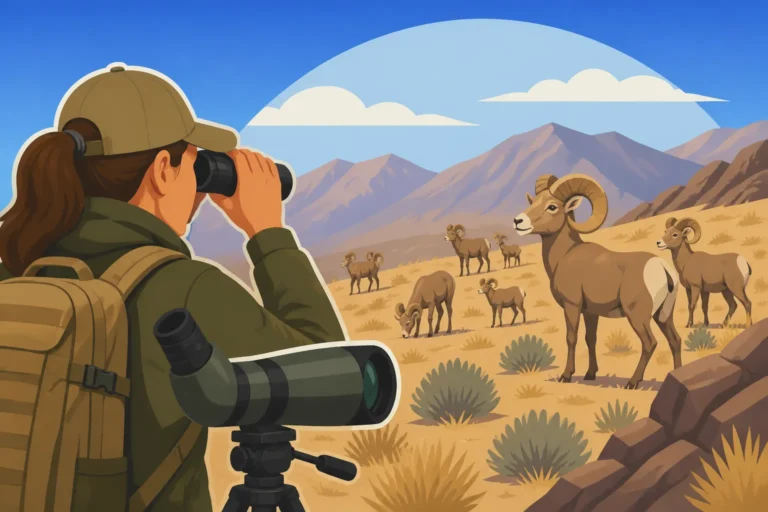
In the vast, open, and often treeless mountains where bighorns reside, your optics are your most important tool, even more so than your rifle or bow. Glassing is not just a tactic; it's the entire foundation of a successful sheep hunt. You simply cannot walk up on bighorns without spooking them; their keen eyesight and elevated positions make that nearly impossible. Just like with Glassing Nevada's Basin and Range for Mule Deer, you'll spend hours, often days, behind binoculars and a spotting scope, systematically picking apart every rockslide, every rimrock, every patch of broken country.
You'll need high-quality binoculars (10x-15x is common) and a powerful spotting scope (20-60x or even 25-75x is ideal) mounted on a sturdy tripod. The tripod is non-negotiable for stability during long glassing sessions, especially when judging ram curl or spotting a faint flicker of movement miles away. Position yourself on a vantage point that allows you to see into the bighorn's escape terrain. Use a grid pattern, slowly scanning sections of the mountain, looking for anything that looks out of place: a patch of white rump, the glint of a horn, or a shape that isn't quite rock. Patience is paramount; sheep can lie perfectly still, camouflaged against the rocks for hours. It’s a painstaking process, but it's the only way to effectively locate these elusive animals. Optics Power for Nevada's Long Sightlines can give you more insight into choosing the right glass.
The Demanding Stalk in Steep Terrain
Once a ram is spotted and deemed shootable, the true physical and mental test begins: the stalk. Bighorn country is steep, rocky, and unforgiving. You'll navigate loose scree, treacherous talus slopes, and often vertical ascents, all while trying to remain unseen and unheard. Reading the wind in these complex mountain environments is crucial, as thermals can shift rapidly, carrying your scent directly to the sheep. You'll need to use every available piece of cover – a rock outcropping, a small ravine, the back side of a ridge – to break your silhouette and conceal your approach.
A bighorn stalk can take hours, even a full day, covering miles of brutal terrain to get within shooting range. It often involves significant elevation changes, and you'll need to carry all your essentials for the day, including water, without being burdened by unnecessary weight. There will be moments of doubt, exhaustion, and frustration. The mental toughness to push through these challenges, to remain focused and stealthy when your body is screaming for a break, is what defines a successful bighorn hunter. It's a dance between aggressive movement and excruciating patience, all leading to that one critical moment when you finally have a clear, ethical shot.
Field Judging Ram Curl Requirements Nevada Enforces
Successfully harvesting a legal ram is a critical aspect of bighorn hunting, and understanding Nevada's specific regulations for ram curl is non-negotiable. NDOW has strict Ram Curl Requirements Nevada Enforces, typically requiring a ram to be "full curl" or older, or to have a horn tip that has been broken off. A "full curl" generally means the tip of the horn has grown past the bridge of the nose, making at least a 3/4 curl on the outside edge. It's imperative that hunters can accurately field judge rams at a distance before making a move or taking a shot.
This skill is developed through studying photos, practicing with a spotting scope, and understanding the nuances of how horns grow and appear from different angles. Taking your time, using your best optics, and consulting with a hunting partner (if applicable) are essential. A mistaken ram could result in a citation and the forfeiture of your tag, a heartbreaking outcome after years of effort. This is why many hunters spend significant time pre-season scouting or even hire experienced guides, not just for their hunting knowledge, but for their expertise in accurately judging rams in the field.
Essential Gear and Physical Preparation
Hunting bighorn sheep is not for the faint of heart or the unprepared. The environments they inhabit are brutal, and your gear needs to match the challenge. Furthermore, your body needs to be a finely tuned machine, capable of handling extreme physical exertion at high altitudes. Skimping on either of these aspects can not only ruin your hunt but also put your safety at risk in Nevada's remote and unforgiving ranges.
Optics That Make or Break a Sheep Hunt
As discussed, optics are paramount. Don't skimp here; invest in the best you can afford. A high-quality set of 10x or 12x binoculars with excellent light transmission and ergonomic design will be your constant companion, used for initial scanning and closer inspection. Many serious sheep hunters also carry a pair of 15x binoculars, often mounted on a tripod, for wider, more detailed sweeps of distant terrain. These higher-powered binos can often save you from setting up the spotting scope constantly, especially when covering vast distances.
The spotting scope, however, is your ultimate tool for detailed examination and ram judging. A 60-80mm objective lens with a variable eyepiece from 20-60x or even 25-75x provides the necessary power and clarity to pick out fine details and accurately assess horn characteristics at extreme distances. Mount it on a lightweight, sturdy carbon fiber tripod that can hold steady in the wind and be easily adjusted on uneven ground. Brands like Swarovski, Zeiss, Kowa, and Vortex are often favored by serious sheep hunters for their optical quality and durability. This isn't just about seeing better; it's about seeing enough to make critical, irreversible decisions.
Footwear and Clothing for Rugged Nevada Ranges
Your feet are your vehicle in sheep country, and proper footwear is non-negotiable. You need mountaineering-grade boots – stiff, supportive, waterproof, and with excellent ankle support. These aren't just for comfort; they're for safety, providing stability on loose scree, sharp volcanic rock, and steep slopes. Look for boots with a stiff sole that can edge on small protrusions and prevent foot fatigue over miles of brutal terrain. Brands like Lowa, Scarpa, Kenetrek, or Crispi are popular choices among serious mountain hunters. Break them in thoroughly before your hunt, or you'll regret it.
Clothing should be based on a versatile layering system that can adapt to rapid temperature changes. Days can be hot in the sun, especially in early seasons, but evenings and mornings in the high country can be surprisingly cold. Wind is also a constant factor. Start with a moisture-wicking base layer, add insulating layers (fleece or synthetic puffy), and top it with a durable, windproof, and waterproof outer shell. Stealthy, earth-tone colors are preferred, blending into the rock and sage. Don't forget a wide-brimmed hat, gloves, and quality sun protection. Considering the ruggedness, also pack extra socks, a first-aid kit, and an emergency shelter.
Conditioning Your Body for Extreme Demands
A bighorn sheep hunt is perhaps the most physically demanding big game hunt in North America. There's no substitute for being in peak physical condition. This isn't just about being able to walk; it's about being able to climb steep, unstable slopes with a heavy pack, recover quickly, and then hold steady for a shot. Start your physical preparation months, if not a year, in advance. Focus on a combination of cardiovascular endurance, strength training, and flexibility.
Incorporate activities like hiking with a weighted pack (simulating your hunt pack) on steep terrain. Seek out local hills or stairs and climb them repeatedly. Preparing Physically for Long Glassing Days and tough stalks means building leg strength, core stability, and lung capacity. Don't neglect balance exercises, which are crucial for navigating treacherous ground. If possible, train at altitude or simulate it with specialized masks to prepare your body for the thinner air you'll likely encounter. Remember, this isn't just about chasing sheep; it's about being able to perform safely and effectively in a challenging environment. This intense training is just as important as your gear, if not more so.
Regulations, Ethics, and Post-Harvest Responsibilities
Securing a bighorn tag is a privilege, and with it comes the profound responsibility to understand and adhere to all Nevada regulations, practice ethical hunting, and properly care for your harvested animal. Respect for the animal, the land, and the hunting tradition is paramount throughout the entire process.
Legal Shooting Hours and Blaze Orange in Nevada
While bighorn sheep hunting often occurs in remote, unpressured areas, all hunters in Nevada must adhere to the standard legal shooting hours. Generally, these are from one-half hour before sunrise to one-half hour after sunset. It's crucial to consult the current year's Nevada Big Game Hunting Regulations, as these times can sometimes shift slightly through the season, and it's your responsibility to know the exact times for your hunt dates. Hunting outside of legal shooting hours is a serious offense.
Regarding blaze orange, while it's a requirement for many rifle deer and elk seasons in Nevada, it is typically not required for bighorn sheep hunting. However, always double-check the current regulations for your specific hunt code, as rules can change. Even if not required, some hunters choose to carry a blaze orange vest to wear when moving through areas where other hunters might be present, or when packing out an animal, especially if there's any chance of encountering other big game hunters in the same unit. Safety is always paramount. You can review general rules under Legal Shooting Hours and Blaze Orange in Nevada.
Mandatory Reporting and Carcass Transport Rules
In Nevada, after you've successfully harvested a bighorn sheep, you have several mandatory responsibilities. First and foremost, you must immediately validate your tag by notching it according to the instructions, and then attach it to the carcass. This proves legal harvest and identifies the animal. Beyond tagging, there is a mandatory reporting requirement for bighorn sheep. You must report your harvest to NDOW within a specified timeframe, often within 24 or 48 hours, and present the head and horns (and often the entire carcass) for inspection. This inspection allows biologists to collect valuable biological data, such as age, horn measurements, and overall health.
Additionally, carcass transport rules are in place, particularly concerning Chronic Wasting Disease (CWD). While CWD has not been detected in Nevada's wild sheep, the state has proactive measures to prevent its introduction and spread. You may be restricted on what parts of the carcass you can transport out of certain areas, especially if you plan to cross state lines. Generally, the skull plate with horns attached, cleaned meat, and hides are acceptable, but you should always refer to the most current regulations for specifics. This ensures data collection and disease prevention, which are critical for the long-term health of Nevada's bighorn herds.
Respecting the Resource: Ethical Considerations
Hunting a bighorn sheep is a profound experience, and it comes with an ethical obligation to treat the animal and its habitat with the utmost respect. This includes striving for a clean, ethical shot to ensure a swift harvest. If an animal is wounded, every effort must be made to recover it, regardless of the difficulty of the terrain. Hunters should also practice "leave no trace" principles: pack out everything you pack in, including spent shell casings, and leave the wilderness as pristine as you found it.
Ethical considerations also extend to how you behave in the field. Respect other hunters and their space. If you encounter another hunting party, communicate clearly and avoid interfering with their hunt. Understand and respect Reading a Nevada Unit Boundary Before You Apply to ensure you are always on legal hunting ground. Finally, remember that your actions reflect on the entire hunting community. By conducting yourself responsibly and ethically, you help preserve the future of bighorn hunting for generations to come.
Disclaimer
Please note: The information provided in this article is for general guidance and informational purposes only. Hunting regulations, seasons, and draw odds in Nevada are subject to change annually. It is the sole responsibility of every hunter to consult the most current Nevada Department of Wildlife (NDOW) Big Game Hunting Regulations and any emergency orders before applying for a tag or heading afield. Always verify all information with official NDOW sources.