Nevada Elk Herds Grew From Nothing Into a Trophy Draw
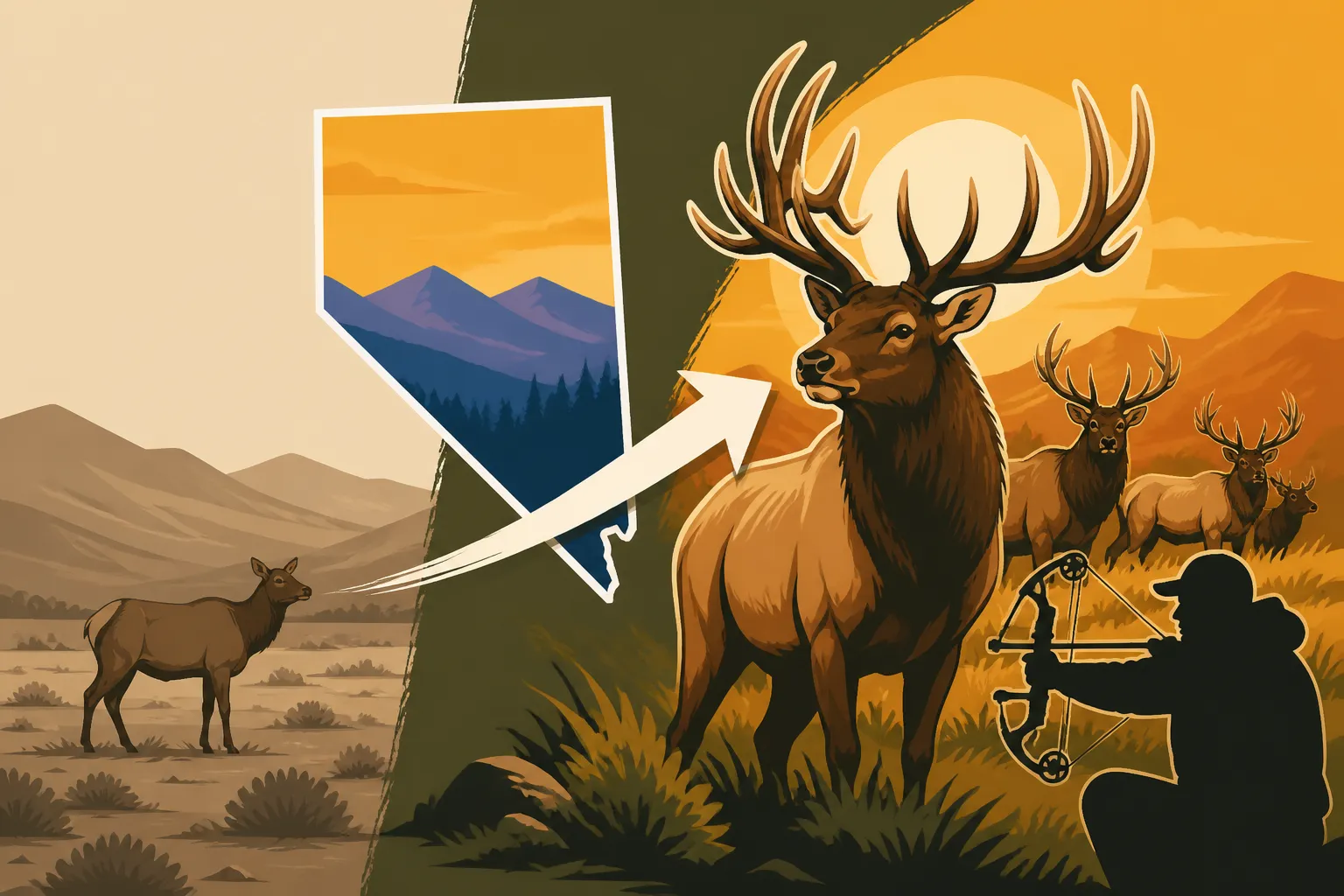
For many folks, when they picture Nevada, they envision endless desert, bright lights, and not much else. The idea of trophy elk roaming this arid landscape often seems like a mirage, a cruel joke for those dreaming of bugling bulls. But the truth is, Nevada has quietly, and against all odds, cultivated one of the most remarkable elk hunting opportunities in the West. This guide will walk you through the incredible journey of how Nevada's elk herds transformed from non-existent to a highly coveted draw, offering you a deeper understanding of this unique big game success story.
The Unlikely Return: How Elk Came Back to Nevada
It's hard to imagine now, but elk weren't always a fixture in the Silver State. For centuries, the vast landscapes of Nevada were home to mule deer, pronghorn, and bighorn sheep, but elk populations had been extirpated. Their absence was a significant void in the ecosystem, and for many years, the thought of a thriving elk herd here seemed like a far-fetched dream. However, through dedicated conservation efforts and a vision for restoring native species, those dreams began to take shape, proving that even the most barren-looking lands can support majestic animals.
From Extinction to Reintroduction
Historically, elk likely roamed parts of what is now Nevada, particularly in the more verdant mountain ranges and river bottoms. However, by the late 19th and early 20th centuries, due to unregulated hunting and habitat alteration, elk were completely extirpated from the state. They simply vanished, leaving a blank spot on the biological map. It wasn't until the mid-20th century that serious conversations began about bringing them back. Early reintroduction efforts, spearheaded by the Nevada Department of Wildlife (NDOW) and conservation groups, were small-scale and often experimental, aiming to see if the available habitat could even support a viable population.
These initial transplants were critical, but also fraught with challenges. Moving wild animals is no easy feat, and ensuring their survival in a new environment requires careful planning and a bit of luck. The chosen areas needed to offer sufficient forage, water, and cover, often in rugged, high-elevation terrain that was far removed from human disturbance. The dedication of wildlife biologists and volunteers during this period cannot be overstated; they were literally laying the groundwork for what would become a generational hunting opportunity. It was a slow, deliberate process, but each successful release chipped away at the notion that Nevada was unsuitable for elk.
The Power of Small Beginnings
The first significant reintroductions started in the 1930s and 40s, primarily in the eastern part of the state. Animals were sourced from healthier herds in states like Wyoming and Colorado, released into remote mountain ranges like the Schell Creek and Ruby Mountains. These initial releases were often just a handful of animals, a testament to the belief that even a small founding population could, given the right conditions, blossom. For instance, reports suggest that as few as 20-30 animals were released in certain areas, numbers that seem almost insignificant when compared to the robust herds we see today.
What’s truly remarkable is how these small groups adapted and thrived. Nevada's mountains, while seemingly harsh, offered surprisingly good forage in certain elevation bands, and crucial water sources. The elk found refuge in the vast, roadless country, where they could grow and reproduce with minimal disturbance. It wasn't an overnight explosion, but a steady, persistent growth. Each year, a few more calves hit the ground, and the herds slowly expanded their range. This patient approach, allowing nature to take its course with a little human assistance, laid the foundation for the impressive populations that now draw hunters from across the continent.
Building Blocks of a Trophy Program: Habitat and Management
The success of Nevada's elk herds isn't just a tale of reintroduction; it's a testament to the quality of the habitat and the strategic, long-term management decisions made by the state. While Nevada might appear to be nothing but sagebrush and dust, its mountain ranges and basins offer a surprising diversity of ecosystems perfectly suited for elk, especially when those areas are managed with an eye towards quality over quantity. This careful balance has been crucial in developing a hunting program that consistently produces trophy-class animals, making every tag drawn a truly special event.
Prime Habitat for Giants
Nevada's unique "basin and range" topography, characterized by north-south running mountain ranges separated by arid valleys, creates ideal conditions for elk. These ranges, particularly in the northern and eastern parts of the state, act as ecological islands, providing distinct elevation zones. During the summer, elk utilize the higher elevations, where aspen groves, conifer forests, and lush mountain meadows offer abundant forage and cooler temperatures. As winter approaches, they migrate down to lower slopes and sagebrush-dominated foothills, finding thermal cover and accessible browse even under snow. This seasonal movement is vital for their survival and allows them to exploit different resources throughout the year.
Furthermore, the sheer vastness of public land, primarily managed by the Bureau of Land Management (BLM) and the U.S. Forest Service, offers expansive, undisturbed territories. These remote areas provide the space and solitude necessary for elk, especially mature bulls, to reach their full potential. Without this critical combination of diverse forage, elevation gradients, and expansive, low-pressure habitat, the dream of trophy elk in Nevada would remain just that—a dream.
Strategic Management Decisions
NDOW’s management philosophy has been instrumental in cultivating a trophy elk program. Unlike some states that manage for maximum harvest numbers, Nevada has often prioritized herd health, age structure, and trophy quality. This means conservative tag quotas, particularly for bull tags, which allows a significant number of bulls to survive multiple seasons and grow into mature, large-antlered animals. They’ve focused on gathering robust data through aerial surveys, field observations, and harvest reports to make informed decisions about herd objectives and tag allocations.
The department carefully monitors bull-to-cow ratios and calf recruitment, adjusting management strategies as needed to ensure sustainable growth. This often involves careful consideration of different weapon types and their season timing. For instance, managing specific Nevada Elk Muzzleloader Timing by Unit allows for focused pressure and specific experiences, while overall harvest numbers are kept in check. This strategic approach ensures that the herds not only survive but also continue to produce the kind of impressive animals that put Nevada on the map for serious elk hunters. The result is a healthy population with a good age class distribution, which is precisely what drives trophy potential.
Water Sources and Their Importance
In a state as famously arid as Nevada, water is the lifeblood of all wildlife, and elk are no exception. While the mountain ranges can hold snowpack and seasonal springs, the basins and lower elevations often lack reliable water sources. This is where strategic water developments, often called "guzzlers" or "wildlife waters," play a crucial role. These man-made structures collect rainwater and snowmelt, storing it in tanks for wildlife access, often through seepers or troughs. They are vital in sustaining elk, especially during the hot, dry summer months when natural sources might dwindle.
These water points concentrate game, making them key areas for both biologists monitoring herds and hunters attempting to locate animals. Understanding where these sources are located, especially when Hunting Water in Nevada's Driest Country, can be a game-changer for a successful hunt. NDOW, along with conservation partners like the Wild Sheep Foundation and Rocky Mountain Elk Foundation, has invested heavily in maintaining and expanding this network of water sources, ensuring that even in the most challenging drought years, elk have access to this essential resource. Without these critical watering holes, the expansion and health of Nevada's elk herds would be severely limited, especially in the more remote, drier units.
Understanding Nevada's Elk Herd Dynamics
When you talk about Nevada elk, you're not just talking about isolated pockets of animals; you're discussing dynamic, growing herds that behave differently based on their specific environment within the vast state. Understanding these dynamics is crucial for anyone hoping to pursue them, whether you're drawing a tag for a specific unit or simply marveling at their success. The distribution, growth, and trophy potential of these herds are all intertwined with the landscape and the careful stewardship they've received.
Where Elk Herds Concentrate
While elk are found in many of Nevada's mountain ranges, their primary strongholds are in the central, eastern, and northeastern parts of the state. Think of ranges like the Ruby Mountains, East Humboldt Range, Schell Creek Range, and the Jarbidge Wilderness. These areas offer the ideal mix of high-elevation summer range, timbered slopes for cover, and accessible wintering grounds in the lower valleys. These are generally the units that consistently show higher elk densities and offer the best chances of encountering significant numbers of animals.
The sheer remoteness and ruggedness of these regions mean that elk often live in relative peace, away from constant human disturbance. This allows them to establish stable family groups and traditional migration routes, making their behavior somewhat predictable to experienced hunters and biologists. As you move west and south in Nevada, elk populations become more scattered and often smaller, though even these areas can hold surprising pockets of animals. For those serious about their odds, focusing on the historical strongholds and researching Where Nevada's First Elk Came From provides valuable insight into current distributions.
Herd Growth Over Time
The story of Nevada's elk isn't static; it's one of continuous, albeit sometimes slow, growth. Since their reintroduction, herds have steadily increased, both in individual animal numbers and in their overall distribution across the state. This growth hasn't been without its challenges, including drought cycles, habitat changes, and occasional disease outbreaks, but the general trend has been upward. The consistent availability of quality forage in key ranges, combined with conservative hunting pressure, has allowed this expansion to occur.
This growth has transformed Nevada's elk hunting from a long shot into a highly anticipated opportunity. When Nevada Elk Herd Growth Over Time is studied, it's clear that the management strategies have paid off, leading to not just more elk, but healthier elk. This allows for sustainable harvest levels while ensuring the herds remain robust. For hunters, this translates into more opportunities over the long term, even with the highly competitive draw system.
Managing for Trophy Quality
One of the most appealing aspects of Nevada elk hunting is the potential for harvesting a truly magnificent bull. This isn't accidental; it's a direct result of NDOW's management philosophy. By issuing a limited number of bull tags, particularly in the premium units, they ensure that a significant number of bulls survive year after year. This allows them to age gracefully, developing impressive antler growth and reaching their full genetic potential. Many bulls in Nevada's top units are five, six, or even seven years old, which is often considered the prime age for trophy antler development.
The low tag numbers mean that successful hunters are often pursuing mature, dominant bulls rather than younger, smaller animals. This makes the hunt even more challenging and rewarding. For instance, the reputation of units like Unit 162 and Its Record Book Bulls comes directly from this management focus on quality. This strategy, while frustrating for those who struggle to draw a tag, ultimately benefits the resource and ensures that Nevada continues to be known as a premier destination for trophy elk. The data from previous years on Elk Harvest Success Broken Down by Unit further illustrates how successful this management has been in specific areas, making the draw worth the wait.
The Draw System: Why a Nevada Elk Tag is So Coveted
If you've spent any time researching western big game hunting, you've likely heard whispers, or perhaps outright boasts, about Nevada elk tags. They're often spoken of with a reverence usually reserved for lottery winnings or once-in-a-lifetime experiences, and for good reason. Drawing an elk tag in Nevada is genuinely tough, a testament to the quality of the animals and the limited number of permits available. It's a system designed to provide exceptional hunting opportunities for a fortunate few, rather than mass participation.
The Scarcity and the Prize
At its heart, the covetousness of a Nevada elk tag boils down to scarcity. There are simply not many tags issued each year, especially for bull elk in the top units. This low quota is a direct result of the management strategy focused on trophy quality and herd health. While other states might issue thousands of elk tags annually, Nevada’s numbers are far more modest, often in the hundreds for all elk tags combined, with an even smaller subset for prime bull units. This extreme limitation means that thousands of hunters apply for a chance at just a few tags, making the draw odds incredibly low.
The prize, however, is substantial. A drawn Nevada elk tag often provides access to vast, low-pressure public land where mature, heavy-antlered bulls roam. This isn't just a hunt; it's an opportunity for a truly memorable, challenging, and potentially record-book experience. The combination of scarcity and the high-quality animals available drives the intense competition and the almost legendary status of a Nevada elk tag. It truly is a bucket-list hunt for many.
Nevada's Squared Bonus Point System
Adding another layer of complexity and allure to the Nevada draw is its unique squared bonus point system. Unlike many states where points simply add up year after year, in Nevada, your accumulated bonus points are squared before being entered into the draw. This means that if you have one point, you get one entry (1×1=1). If you have two points, you get four entries (2×2=4). Three points gets you nine entries (3×3=9), and so on. This system heavily favors applicants with more points, significantly increasing their chances of drawing a tag over time.
For elk, where odds are already slim, accumulating points is the primary long-term strategy. It means that while a first-time applicant might have a near-zero chance in a popular unit, a hunter with 10 or 15 points suddenly has 100 or 225 entries, respectively, making their odds dramatically better. This mechanism is a powerful incentive for hunters to continue applying year after year, building their points. Understanding How Nevada's Squared Bonus Points Work is absolutely critical for any hunter serious about drawing a Nevada elk tag. Resources like GoHunt, which analyze draw odds with this system in mind, become indispensable tools for planning your application strategy and understanding your chances.
Nonresident Tag Pricing and Value
For nonresident hunters, the allure of a Nevada elk tag is balanced by a significant financial investment. Beyond the application fee and the cost of buying a point-only option if you don't draw, the actual tag fee for a nonresident elk tag is substantial. We're talking well over a thousand dollars, often more. For instance, What a Nonresident Nevada Elk Tag Costs can be upwards of $1,200 or more, not including the required nonresident combination license. This price tag reflects the premium nature of the hunt and helps fund Nevada's wildlife conservation efforts.
Despite the cost, many nonresidents view it as a worthwhile investment. The prospect of a truly wild, fair-chase hunt for a large bull in stunning, uncrowded landscapes makes the price palatable for those with the means and the desire for such an experience. It’s a testament to the quality and reputation of Nevada's elk that hunters are willing to pay such a premium. This financial commitment underscores just how valuable and unique these hunting opportunities are in the western United States.
Hunting Strategies for Nevada Elk
Drawing a Nevada elk tag is only half the battle; the other, arguably more difficult, half is successfully hunting these elusive animals in some of the West's most rugged and open country. Nevada's elk don't often live in dense timber, presenting a completely different challenge than elk hunting in more forested states. Success here relies heavily on keen observation, strategic movement, and an understanding of how elk utilize their unique desert-mountain habitat.
Glassing for Bulls in Open Country
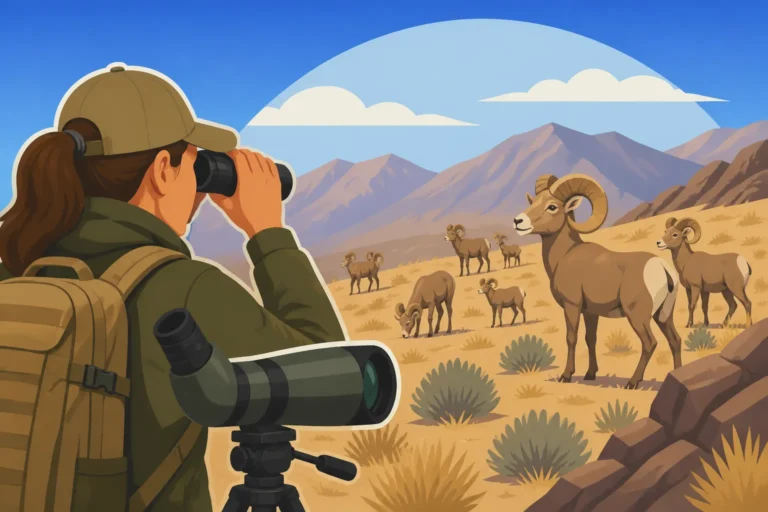
Forget walking miles through dark timber hoping to stumble upon an elk; Nevada elk hunting is predominantly a glassing game. The vast, open basins and sparse timber in many units mean that spotting animals from a distance is not just an advantage, it's a necessity. Hunters will spend countless hours behind high-quality optics – powerful binoculars, spotting scopes on tripods – systematically scanning distant ridges, canyon bottoms, and mountain sides for any sign of elk. This patience and dedication to glassing is what allows hunters to locate animals across miles of country.
The technique is similar to Glassing Nevada's Basin and Range for Mule Deer, but scaled up for a larger animal in potentially even more expansive terrain. You're looking for subtle movements, a patch of brown that seems out of place, or the tell-tale glint of an antler in the sun. Once an animal or herd is spotted, the real work begins: planning a careful, concealed stalk to close the distance for a shot. This requires intimate knowledge of the terrain, understanding wind patterns, and often navigating incredibly steep and rocky ground.
Timing the Rut: Archery and Muzzleloader Opportunities
For those fortunate enough to draw an early season archery or muzzleloader tag, hunting during the rut offers a thrilling, if challenging, experience. Early September sees bull elk in peak rut activity, bugling loudly and challenging rivals, providing opportunities for hunters to locate and call them in. The sound of a bugling bull echoing through a Nevada canyon is an unforgettable experience.
Archery hunters, in particular, will focus on trying to Bugling Bulls in Nevada's Northern Mountains, using locator calls to pinpoint herds and then moving in cautiously. Calling strategies often involve both bugles and cow calls to entice bulls closer. However, the open terrain makes getting within bow range incredibly difficult, demanding expert stalk skills and patience. Muzzleloader hunters also benefit from the rut activity, offering a chance at a bull before the general rifle seasons begin. The specific Nevada Elk Muzzleloader Timing by Unit often coincides with some of the best bugling. These early seasons are physically demanding, requiring hunters to be in prime shape to cover ground and manage the heat, but the rewards can be immense.
Late Season Rifle Hunts
While the rut offers excitement, many of Nevada's best rifle elk tags are for late-season hunts, often stretching into November and even Late Season Elk Hunts Into December. These hunts present their own unique set of challenges and opportunities. As temperatures drop and snow begins to fall at higher elevations, elk often migrate to lower wintering grounds, concentrating in more accessible areas. This can make locating animals easier, but it also means elk are often in larger, more wary herds.
Hunting during the late season requires different tactics. Elk are generally quieter, so glassing for herds becomes even more crucial. Hunters need to be prepared for cold weather, snow, and potentially difficult driving conditions on remote roads. Strategic planning, including reviewing E-Scouting a Nevada Unit Before the Season and understanding potential migration corridors, becomes paramount. A reliable rifle chambered in a suitable caliber, like those discussed in Choosing a Rifle for Basin and Range Country, capable of making ethical long-range shots is often a necessity, as opportunities might present themselves across wide-open spaces. It's a grind, but late season hunts often yield some of the biggest bulls, as they've had months to evade earlier hunters.
Key Units and Their Reputation
When hunters talk about Nevada elk, certain units invariably come up in conversation. These aren't just arbitrary lines on a map; they represent areas with a proven track record of producing exceptional elk, often tied directly to their unique habitat features, herd densities, and the specific management strategies employed by NDOW. Understanding the reputation of these units is key to setting realistic expectations and formulating a successful application strategy.
Units Known for Record Book Bulls
Nevada has several units that consistently produce bulls worthy of Boone and Crockett or Pope and Young record books. Perhaps the most famous is Unit 162, often referred to as the "Super Tag" unit. This unit, and others like it in eastern Nevada, possess the ideal combination of habitat diversity, limited human access, and conservative tag quotas that allow bulls to reach truly massive proportions. Hunters who draw tags in these units are typically looking for 350-inch-plus bulls, and the potential for even larger giants is always present.
These units aren't just about high-scoring animals; they're about the entire experience of hunting truly wild elk in challenging, expansive country. The success stories from units like Unit 162 and Its Record Book Bulls fuel the dreams of thousands of applicants, year after year. While drawing one of these tags is akin to winning the lottery, the fact that such opportunities exist is a testament to the success of Nevada's elk program.
Understanding Unit Specifics with Resources
For anyone considering applying for a Nevada elk tag, diving deep into unit specifics is non-negotiable. Each unit, even those adjacent to one another, can have vastly different terrain, elk densities, public land access, and draw odds. It’s not enough to simply know a unit’s reputation; you need to understand its nuances. This means pouring over maps, studying harvest statistics, and checking draw odds.
Online platforms like GoHunt provide incredibly valuable resources, compiling years of draw data, harvest reports, and detailed unit profiles. They offer tools that allow you to compare units, analyze success rates, and even project your draw odds based on your bonus points. Beyond commercial platforms, NDOW publishes detailed regulations, season dates, and statistics that are crucial for making informed decisions. Learning Reading a Nevada Hunt Unit Before You Apply involves looking at everything from public land percentage to the historical snowfall in that area. Taking the time to research thoroughly can make all the difference in where you decide to apply and what your expectations should be for the hunt.
Accessing Remote Elk Country
Many of Nevada's prime elk units are characterized by vast, remote, and often roadless country. This is a double-edged sword: it provides the solitude and lack of pressure that allows elk to thrive and grow large, but it also presents significant access challenges for hunters. Getting into these areas often means navigating long, rough dirt roads, sometimes for hours, and then embarking on physically demanding hikes, often carrying heavy packs.
Hunters must be prepared for self-sufficiency. Cell service is often nonexistent, and the nearest town with services could be many hours away. This necessitates careful planning regarding vehicle preparation, carrying extra fuel and water, and having robust emergency communication devices like satellite messengers. For some of the most remote units, a pack string of horses or mules might be the only practical way to get deep into elk country and, more importantly, pack out a heavy bull. This ruggedness is part of what makes Nevada elk hunting such an epic adventure, demanding physical and mental toughness from anyone who ventures into its remote corners.
Preparing for Your Nevada Elk Hunt
So, you've beaten the odds and drawn a coveted Nevada elk tag. Congratulations! Now the real preparation begins. Unlike a whitetail hunt from a treestand, a Nevada elk hunt is a serious physical and logistical undertaking. To maximize your chances of success and ensure a safe, enjoyable experience, you need to be prepared in every sense of the word. This isn't just about shooting straight; it's about enduring the elements, navigating vast landscapes, and being self-sufficient.
Physical Conditioning for Rugged Terrain
Nevada elk hunting is physically demanding, plain and simple. You'll be climbing steep, rocky slopes, often at high altitudes, and covering miles of uneven terrain daily. Hauling a heavy pack, or even just your day pack, up and down these mountains will test your endurance. A downed elk, especially a large bull, means packing hundreds of pounds of meat out of often challenging country. This is why Preparing Physically for Long Glassing Days and long stalks is so critical.
Start an intense fitness regimen months before your hunt. Focus on cardiovascular endurance, leg strength, and core stability. Hiking with a weighted pack, stair climbing, and varied terrain running are excellent ways to simulate the demands of the hunt. Don't underestimate the impact of elevation if you're coming from a lower altitude; spend time acclimating if possible. Your physical condition can often be the difference between making that last push for a stalk and being forced to turn back.
Essential Gear for the Great Basin
The gear you bring to Nevada needs to be robust, reliable, and appropriate for extreme temperature swings and challenging conditions. High-quality optics are paramount. A good pair of 10x or 12x binoculars, paired with a powerful spotting scope (20-60x or higher) on a sturdy tripod, are absolutely essential for glassing the vast landscapes. As detailed in Optics Power for Nevada's Long Sightlines, your glass is your most important tool.
Beyond optics, consider:
- Layered Clothing: Temperatures can swing wildly from freezing mornings to warm afternoons. Pack layers that can be added or shed easily.
- Sturdy Footwear: Good quality, broken-in hiking boots with excellent ankle support are a must for rocky, uneven terrain.
- Navigation Tools: A reliable GPS unit or a mapping app like onX Hunt on your phone, loaded with offline maps, is critical. Always carry a physical map and compass as a backup.
- Water Filtration: Always carry more water than you think you need, and a reliable water filter or purification tablets.
- First-Aid Kit: A comprehensive kit for minor injuries and emergencies.
- Backpack: A comfortable, capable backpack for day hunts and, if applicable, a larger pack frame for packing out meat.
E-Scouting and Pre-Season Planning
Your Nevada elk hunt truly begins long before you set foot in the field. Extensive e-scouting and pre-season planning are crucial for success. Utilize satellite imagery, topographic maps, and public land ownership layers (many of which are available through GoHunt subscriptions) to identify potential elk habitat, water sources, travel corridors, and access points. This allows you to develop a strategic plan for how you'll approach the unit.
Looking at E-Scouting a Nevada Unit Before the Season involves much more than just glancing at a map; it means analyzing historical weather patterns, identifying north-facing slopes for bedding, south-facing slopes for winter forage, and even marking potential glassing points and escape routes. Pay attention to road access and any wilderness boundaries. Reach out to NDOW biologists or local field offices for current conditions or insights, if possible. The more detailed your plan is before you arrive, the more efficient your time in the field will be, maximizing your chances of finding that elusive Nevada bull.
Disclaimer
The information provided in this guide is for general informational purposes only and does not constitute professional advice. Hunting regulations, seasons, and unit boundaries are subject to change. Always consult the official Nevada Department of Wildlife (NDOW) regulations and local authorities before planning any hunting trip. Compliance with all applicable laws and regulations is the sole responsibility of the hunter.