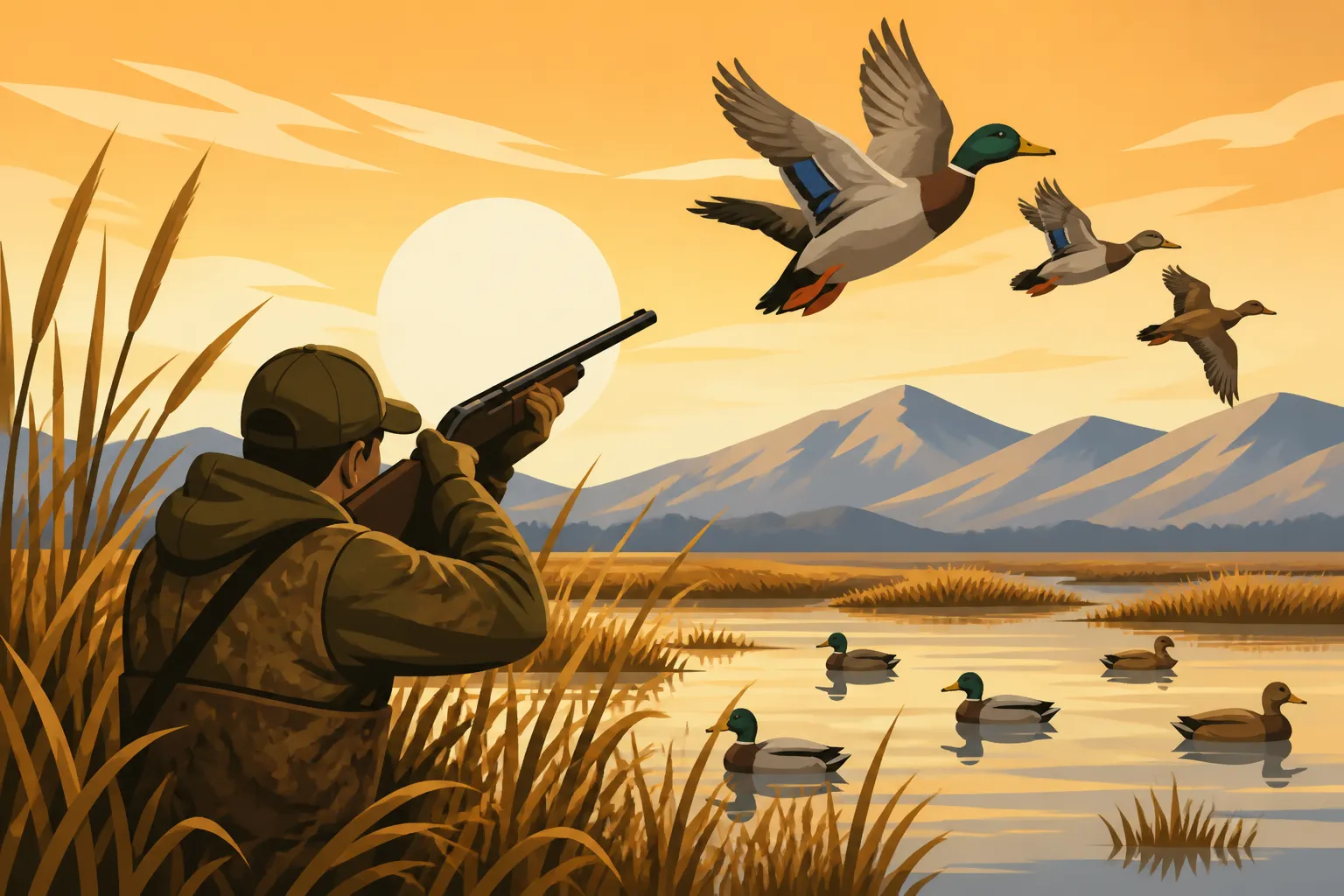
Duck Numbers on the Lahontan Marshes
It’s a unique thrill, isn't it? That sound of wings beating overhead as a flock of ducks cups up and drops into your decoys. But for anyone who has ever hunted the vast, often unpredictable wetlands of the Lahontan Marshes in Nevada, you know that consistent success can feel like chasing a mirage. Duck numbers can fluctuate wildly, leaving hunters scratching their heads from one season to the next. This guide is going to pull back the curtain on what truly drives those duck populations in this critical Western waterfowl hub and arm you with the knowledge to better anticipate and adapt to the ever-changing conditions. We'll explore the ecosystem, the dynamic factors at play, and practical strategies for making the most of your time in the blind.
The Unique Ecosystem of the Lahontan Marshes and Its Waterfowl Appeal
Nevada might be known for its vast deserts and soaring mountain ranges, but tucked away in the western part of the state lies a watery jewel: the Lahontan Valley. This basin, fed by the Truckee and Carson rivers, forms a sprawling complex of wetlands that are absolutely vital for millions of migratory birds along the Pacific Flyway. When you think of duck hunting in Nevada, your mind almost certainly drifts to these marshes, and for good reason.
A Vital Western Flyway Stopover
The Lahontan Valley wetlands, including significant areas like the Stillwater National Wildlife Refuge and the Carson Lake and Pasture, are truly an oasis in the desert. They represent one of the most important wetland complexes in the arid Great Basin, acting as a crucial stopover, breeding ground, and wintering area for an incredible diversity of waterfowl. Birds that have traveled thousands of miles from their breeding grounds in Alaska, Canada, and the northern states find refuge here, drawn by the relatively abundant water and food resources. This blend of natural playas, managed impoundments, and agricultural runoff creates a dynamic mosaic that, in good water years, can be absolutely brimming with ducks and geese. It’s not just a place to hunt; it’s a living, breathing testament to conservation efforts and the resilience of migratory patterns. Understanding the sheer scale and importance of this area is the first step in appreciating why duck numbers here are such a significant topic for hunters. It's a place where you can feel the pulse of the wild West, even as you're tucked into a blind, waiting for the sunrise. You might have heard of the various Waterfowl on Nevada's Desert Marshes and how integral these areas are to their survival.
Key Waterfowl Species That Frequent the Marshes
When you spend enough time in the Lahontan Marshes, you start to get a feel for the rhythm of the different species. While the composition can change with the seasons and water conditions, there’s a consistent cast of characters that makes these wetlands their home at various times of the year.
Mallards, with their iconic green heads, are always a favorite, offering hearty flights and delicious table fare. You'll often find them dabbling in the shallower, vegetated areas. Pintails, often called "sprigs" for their long tail feathers, are another common sight, especially early in the season, slicing through the air with their elegant flight. Green-winged teal are abundant, zipping across the water with incredible speed and often forming large, tight flocks. Wigeon, with their distinctive whistling call, are also regulars, grazing on submerged vegetation.
But it’s not just dabblers. Divers like canvasbacks, redheads, and even scaup can be found in the deeper, more open water sections of the marshes, particularly as the season progresses and colder weather pushes them south. You'll also encounter a good number of geese, primarily Canada geese, often honking overhead or resting in nearby fields. The sheer variety means that a successful hunt isn't just about bagging one type of duck; it's about experiencing the diversity of the Pacific Flyway. If you're really delving into species, it's worth checking out the Nevada Waterfowl Season Framework to see specific bag limits and dates for each.
Understanding the Dynamics of Duck Numbers: Factors at Play
Hunting in the Lahontan Marshes is rarely a static experience. What was true last season might be completely different this season, and the primary driver behind this variability is the fluctuating duck numbers. These fluctuations aren't random; they're the result of a complex interplay of environmental factors, most notably water availability, weather patterns, and the overall health of the habitat.
The Overriding Role of Water Availability
If there’s one single factor that dictates duck numbers in the Lahontan Marshes, it’s water. Nevada is an arid state, and its wetlands are entirely dependent on the Truckee and Carson rivers. These rivers, in turn, are fed by snowmelt from the Sierra Nevada mountains. When there's a heavy snowpack and good runoff, the marshes flourish. Water levels rise, new areas are flooded, and prime waterfowl habitat expands. This means more food, more cover, and ultimately, more birds.
However, drought years can be absolutely brutal. Water diversions for agriculture and municipal use further stress the system, leading to dramatically reduced wetland acreage. Puddles that were once teeming with birds become dry, cracked earth. This concentrates birds into fewer, smaller areas, making them vulnerable and stressing food supplies, or, more often, simply pushes them to find water elsewhere, sometimes even completely bypassing the region. It's a stark reminder that even managed wetlands face immense challenges in a landscape defined by scarcity. Efforts by various agencies to manage and maintain water levels, often through intricate irrigation systems, are crucial. For example, understanding how to navigate specific areas like the Stillwater Wildlife Management Area Access often hinges on knowing where the water is.
Weather Patterns and Their Influence on Migration
While water availability paints the long-term picture, weather patterns act as the immediate brushstrokes, directing birds to and through the Lahontan Marshes. Ducks are migratory, and their movements are profoundly influenced by atmospheric conditions.
Think about it: a strong cold front sweeping down from the north, especially one that brings early freezes to breeding grounds in Canada and the Dakotas, acts like a giant funnel. It pushes millions of birds south, often right into the waiting wetlands of Nevada. When these major "push" events occur, you can see a dramatic increase in duck numbers overnight in the Lahontan Valley. Conversely, a mild autumn or early winter in the northern states can delay migration, meaning fewer birds arrive in Nevada until much later in the season, if at all.
Local weather also plays a critical role during the hunting season. Strong winds can get birds moving, making them more active and responsive to calls and decoys. Overcast days with a bit of a chop on the water are often ideal. Conversely, calm, bluebird days can make ducks reluctant to fly, keeping them resting in large rafts out of reach. Paying attention to both regional and local forecasts is paramount for planning a successful hunt. This isn't just about hunter comfort; it's about understanding bird behavior.
Habitat Health and Food Sources
Beyond simply having water, the quality of the habitat and the abundance of food sources are equally important in sustaining duck numbers in the Lahontan Marshes. Ducks need specific vegetation for foraging, loafing, and concealment. Think of bulrushes and cattails for cover, and various pondweeds, smartweeds, and seeds from sedges and grasses as primary food sources.
Adjacent agricultural lands, particularly those growing corn or alfalfa, can also provide vital supplemental feeding grounds, attracting ducks from the marshes to fields at dawn and dusk. The balance here is delicate. Issues like excessive salinity, which can happen in closed basins during prolonged dry spells, can negatively impact desirable plant growth. Invasive species, like certain types of phragmites, can choke out native vegetation, reducing biodiversity and food availability. Furthermore, disease outbreaks, such as avian botulism, can periodically devastate localized populations, especially during low water years when birds are concentrated. Maintaining healthy, diverse wetland ecosystems is an ongoing challenge that directly impacts how many ducks the Lahontan Marshes can support. Understanding these dynamics is crucial, and resources like GoHunt often offer valuable insights into various Water Development Projects Built for Wildlife across the state, which can indirectly affect marsh health and subsequently, duck numbers.
| Duck Species | Primary Habitat in Lahontan Marshes | Peak Season (General) | Diet Preference |
|---|---|---|---|
| Mallard | Shallow, vegetated areas | Mid-season to Late | Seeds, aquatic insects, grains |
| Northern Pintail | Shallow, open water, mud flats | Early to Mid-season | Seeds, grains, aquatic plants |
| Green-winged Teal | Shallow, heavily vegetated areas | Mid-season | Seeds, aquatic invertebrates |
| American Wigeon | Open water, grazing on shores | Mid-season | Aquatic plants, grasses |
| Canvasback | Deeper, open water | Late season | Submerged aquatic vegetation |
| Redhead | Deeper, open water | Mid-season | Submerged aquatic vegetation |
Strategies for Anticipating and Hunting Duck Numbers in Lahontan
Given the dynamic nature of duck numbers in the Lahontan Marshes, successful hunting here requires more than just showing up with a shotgun. It demands research, scouting, adaptability, and an understanding of how to leverage available information.
Utilizing Pre-Season Information and Scouting
The hunt for information often begins long before the first duck season opens. The Nevada Department of Wildlife (NDOW) is an excellent resource, often releasing waterfowl reports or updates on habitat conditions. Keeping an eye on these, as well as local news and online hunting forums specific to Nevada, can give you a vital head start. You'll want to know if it's been a good water year in the Sierras, how much runoff the rivers have seen, and what the water levels are looking like in key marsh areas.
Beyond official reports, nothing beats good old-fashioned scouting. If you can get out there before the season, or even just before your planned hunt, you can see firsthand where the water is holding and, more importantly, where the birds are concentrating. Are they spread out across a large area, or are they bunched up in isolated pockets? Are they feeding in specific types of vegetation? This is where modern tools can be incredibly useful. Platforms like GoHunt, while often highlighted for big game, can provide valuable topographical maps and public land layers that help identify potential access points, water sources, and key habitat features in the wider Lahontan region. Even though it's waterfowl, the same principles apply as E-Scouting a Nevada Unit Before the Season for deer. You're looking for patterns, access, and concentrations.
Adapting Hunting Tactics to Current Conditions
Once you have a handle on the current duck numbers and water conditions, the next step is to adapt your hunting strategy. This is where experience and flexibility really shine.
In low water years, ducks will be forced into fewer, smaller pools or channels. This can make them easier to locate, but also warier due to increased pressure. Your spreads might need to be smaller, more natural, and your concealment absolutely impeccable. You might find success focusing on bottleneck areas where birds are forced to fly over. Conversely, in high water years, ducks can be spread out across vast expanses. This means you might have to scout more aggressively to find their preferred feeding and loafing areas, and your decoy spread might need to be larger and more visible to attract birds from a distance. Calling becomes even more critical in these situations, as you're trying to draw attention in a sea of options.
Remember, the Lahontan Marshes are huge, with various management units like Stillwater and Carson Lake. Different areas might hold different water levels or attract different species. Being able to pivot and move to a different location if your initial spot isn't producing is a key skill. Don't be afraid to try different decoy spreads, experiment with calling sequences, and adjust your hide based on how the birds are reacting. Sometimes, even the wind can dictate your success, so be sure to understand Reading Wind on a Long Sage Stalk even if you are not stalking, but for setting up your decoys and blind.
Researching and Understanding Draw Odds and Public Access
While many waterfowl opportunities in Nevada are available through general seasons, certain prime areas within the Lahontan complex might have specific regulations, controlled hunts, or limited access that require permits or draws. Understanding these nuances is crucial to avoid frustration and ensure legal access.
This is another area where a comprehensive resource can be your best friend. Even if GoHunt focuses heavily on big game draws, the underlying principles of researching public land access, understanding unit boundaries, and dissecting regulations are universal. You'll want to pinpoint where public access is guaranteed and where it might be more restricted. For example, some areas within refuges might have specific days or zones open to hunting, or even a permit system in place. Knowing how to interpret land ownership maps, like those available through platforms mentioned by GoHunt, can save you a lot of headache by preventing accidental trespass onto private land or restricted areas. Always confirm the most current regulations directly with NDOW or the managing agency for a specific refuge. It's not just about finding ducks; it's about finding legal access to those ducks. Remember to always know your boundaries, particularly when considering Reading a Nevada Unit Boundary Before You Apply. You'll also want to review the larger context of Hunting the Lahontan Valley Wetlands for a full picture.
Disclaimer
This article is for general informational purposes only and does not constitute professional advice. Laws, prices and regulations vary by location and change over time. Consult a qualified professional for guidance on your specific situation.