Predator Hunting Across the Great Basin
The vast, sun-baked expanses of the Great Basin can feel utterly empty at first glance, but beneath the surface, a complex ecosystem thrives, full of cunning predators that challenge even the most seasoned hunter. For those of us who feel the pull of the sagebrush and the call of the wild, understanding these animals and the unique environment they inhabit is key to a successful and rewarding predator hunt. This guide aims to break down the nuances of predator hunting in Nevada's Great Basin, offering insights into animal behavior, effective techniques, and the gear that will give you an edge in this demanding landscape.
Understanding the Great Basin Predator Landscape
Nevada's Great Basin is a land of extremes, defined by its characteristic basin and range topography, arid climate, and sparse vegetation. This unique environment shapes every aspect of wildlife, including the predators that call it home. Hunters often find themselves navigating vast, open vistas punctuated by abrupt mountain ranges, dry lakebeds, and endless sagebrush flats. It's a place where patience and keen observation are just as crucial as marksmanship.
Habitat and Terrain Challenges
The terrain itself presents significant challenges. We’re talking about massive, roadless tracts of public land where a short walk can quickly turn into a multi-mile trek across rough, unforgiving ground. The dominant sagebrush provides excellent cover for smaller animals, but it also creates a deceptive landscape where predators can seemingly vanish into thin air. Imagine staring at a basin that stretches for miles, feeling like you can see everything, yet knowing that a coyote could be perfectly hidden just a few hundred yards away in a wash or behind a rise. The rocky, volcanic soils and sheer vastness demand physical stamina and a good set of boots. Understanding how predators utilize drainages, rimrock, and even isolated stands of juniper for travel and ambush is fundamental.
Water, or rather the lack of it, is another defining characteristic. In this arid environment, water sources often act as magnets for all wildlife, from small rodents to big game, and naturally, where there's prey, there are predators. Learning to read the land for these critical resources can provide invaluable clues to predator movements. Identifying and understanding how Water Sources That Concentrate Desert Game influences predator distribution can significantly improve your scouting and hunting efforts, especially during drier periods when animals are forced to consolidate around reliable hydration points.
Impact of Drought and Prey Availability
The health of predator populations is inextricably linked to the availability of their prey, which in turn is heavily influenced by environmental factors like drought. When Nevada experiences prolonged dry spells, vegetation suffers, impacting the small mammals and birds that make up the bulk of a coyote's or fox's diet. This can lead to increased competition among predators and, sometimes, more aggressive hunting behavior as they work harder to find food.
During leaner times, predators might expand their hunting territories or become less wary, driven by hunger. This can create opportunities for hunters, but it also means you need to be acutely aware of how these environmental shifts alter animal patterns. A coyote that might typically stick to the cover of a wash during a lush year might be forced to traverse more open ground during a drought in search of a meal. Keeping an eye on local conditions and understanding the broader ecosystem helps you anticipate these changes and adapt your strategies accordingly.
Common Predators and Their Behavior
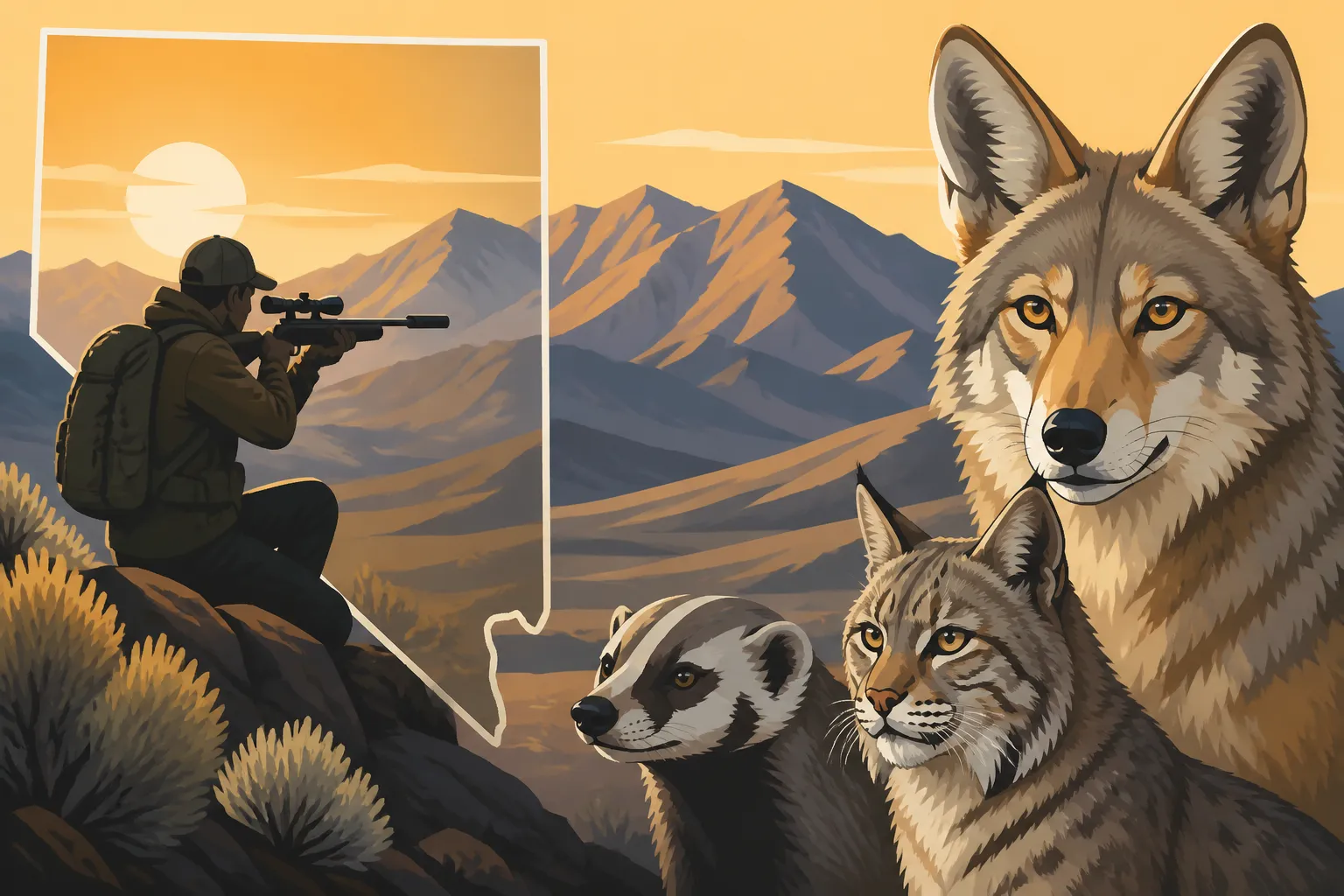
Nevada’s Great Basin is home to several fascinating predator species, each with unique behaviors that dictate how best to hunt them. From the ubiquitous coyote to the secretive bobcat, understanding their habits is the first step toward a successful encounter.
Coyotes: The Ultimate Survivor
Coyotes are, without a doubt, the most common and widely distributed predators in Nevada. They are incredibly adaptable, thriving in everything from high mountains to open desert flats, and even on the fringes of urban areas. These opportunistic canids are always on the move, constantly searching for their next meal, whether it's a jackrabbit, a rodent, or even carrion. Their intelligence and wariness make them a challenging adversary, but their abundance offers consistent hunting opportunities.
Coyotes are highly vocal, especially at dawn and dusk. Their yips, howls, and barks are iconic sounds of the Western wilderness. These vocalizations serve multiple purposes: communicating with pack members, warning off rivals, and locating each other. Learning to interpret these sounds and use them to your advantage is a game-changer. While they are most active during twilight hours, coyotes can be hunted Hunting Coyotes Year Round in the Great Basin, often venturing out during the day, especially in less pressured areas or during colder months when they need to forage more. Their diet is incredibly varied, making them resilient to changes in specific prey populations.
Bobcats: Elusive Hunters
Bobcats are the stealthy ghosts of the sagebrush, far more elusive and solitary than coyotes. These beautiful felines primarily operate under the cover of darkness, though it's not uncommon to spot them at dawn or dusk, particularly in the quieter, more remote corners of the Great Basin. They prefer areas with good cover – think rocky outcrops, dense juniper thickets, and deep washes – where they can ambush their prey, which largely consists of rabbits, rodents, and birds.
Hunting bobcats requires immense patience and a keen eye. Unlike coyotes, they rarely respond aggressively to calls, often sneaking in silently to investigate. Their movements are deliberate and calculated, making them incredibly difficult to spot until they are almost upon you. Successful bobcat hunting often hinges on choosing a location with prime habitat, setting up discreetly, and being prepared for a brief, intense encounter. For those interested in pursuing these enigmatic hunters, it's crucial to be aware of Bobcat Season and Pelt Tag Rules, as regulations often include specific tagging requirements and season dates due to their value and conservation status.
Foxes and Other Opportunists
Nevada's Great Basin is also home to two primary fox species: the red fox and the kit fox. Red foxes are more common in agricultural areas and higher elevations, while the smaller, more desert-adapted kit fox roams the arid flats. Both are primarily nocturnal and opportunistic hunters, feeding on rodents, insects, and small birds. They are generally less wary than coyotes, which can make them a bit easier to call in, especially with rodent distress sounds.
Beyond the well-known predators, hunters might also encounter badgers and skunks. While not typically "hunted" in the same sporting sense, understanding their presence and habits contributes to a complete picture of the Great Basin ecosystem. Badgers, with their powerful digging abilities, are formidable burrow-dwelling hunters, often creating the very dens that coyotes and foxes will later utilize. For comprehensive information on specific seasons and regulations, you'll want to review Fox and Raccoon Season Dates to ensure you're compliant with all local rules.
Effective Hunting Techniques for Great Basin Predators
Hunting predators in the vastness of the Great Basin requires a blend of traditional fieldcraft and modern technology. The sheer scale of the landscape means you need strategies that cover ground efficiently, both visually and audibly.
Calling Strategies: Decoys and Sounds
Calling is arguably the most popular and effective method for hunting coyotes and foxes in the Great Basin. Electronic callers have revolutionized this technique, offering a vast library of sounds from distress calls of rabbits and rodents to pup yips and coyote howls. The key is to select the right sound for the right situation. A lone howl can be a great locator, while a rabbit in distress can bring a hungry coyote sprinting in from a mile away. Often, combining various sounds—a few challenge howls followed by a series of distress calls—can mimic a realistic scenario that piques a predator's curiosity or territorial instincts.
Visual decoys, particularly those that simulate a struggling rabbit or a small bird, can significantly enhance your calling setup. Coyotes, especially, are drawn to movement, and a decoy can divert their attention away from your hide, allowing them to focus on the "prey." Placing your decoy upwind and away from your position, perhaps 50-70 yards out, forces the approaching predator to expose itself as it circles downwind to investigate the scent. This gives you a clear shot opportunity before they catch your wind. Remember to vary your calling sequences and sounds; sometimes, less is more, while other times, a frantic sequence can trigger an immediate response.
Spot and Stalk in Open Country
While calling is powerful, the vast, open nature of the Great Basin also lends itself perfectly to spot and stalk hunting, especially for coyotes and sometimes even for bedded bobcats. This method relies heavily on high-quality optics and patient observation. Glassing for hours from a vantage point is often Why Glassing Beats Walking in Sage Country, as it allows you to cover immense tracts of land without expending precious energy or disturbing potential targets. A good pair of binoculars and a spotting scope with high Optics Power for Nevada's Long Sightlines are absolutely non-negotiable for this style of hunting.
Once a predator is spotted, the challenge begins: closing the distance. This often involves intricate route planning, using every dip, rise, and patch of cover to conceal your approach. Reading the wind on a long sage stalk is paramount, as a coyote's nose is its primary defense. You'll need to stay downwind or crosswind, moving slowly and deliberately, often taking advantage of thermals in the mornings and evenings. A successful stalk might take hours, crawling through the dust and rocks, but the reward of outsmarting a wary predator in its own domain is incredibly satisfying.
Night Hunting Considerations
Night hunting for predators, especially coyotes and foxes, is a popular and often highly effective method in Nevada. Many predators are primarily nocturnal or crepuscular, meaning they are most active during the low light of dawn, dusk, and throughout the night. This is when they feel safest and when many of their prey species are also active. Specialized equipment, such as night vision, thermal optics, and powerful predator lights (often red or green to minimize spooking animals), becomes essential.
When hunting at night, safety is paramount. Always be absolutely certain of your target and what lies beyond it. Identifying your shooting lanes and backstops in daylight is a critical preparatory step. Calling tactics remain similar, but the visual element changes dramatically. A strong beam of light can "hypnotize" a predator, allowing for a steady shot, but animals can also become light-shy with repeated pressure. Understanding the specific regulations around night hunting, including legal shooting hours, is crucial to ensure you are hunting within the law.
Legal and Ethical Considerations
Hunting in Nevada, whether for big game or predators, comes with a set of rules and ethical guidelines designed to ensure fair chase, conservation, and public safety. Familiarizing yourself with these is not just a matter of compliance; it’s about being a responsible hunter.
Season Dates and Regulations
Unlike big game seasons which are strictly controlled and typically require a drawn tag, many predator species in Nevada can be hunted year-round, often without a specific tag beyond your general hunting license. However, this isn't universally true for all predators, and nuances exist. For instance, specific seasons and quotas might apply to species like bobcats due to their fur value. Always consult the most current Nevada Department of Wildlife (NDOW) regulations. These documents are your bible for understanding what you can hunt, when, where, and with what methods.
Regulations can also dictate specific equipment. For instance, while scopes are generally allowed on rifles, there might be rules regarding artificial lights for night hunting, or limitations on baiting for certain species. Baiting and Trail Camera Rules in Nevada primarily concern big game, but it's vital to understand them as they might indirectly affect how you approach predator hunting in the same areas, particularly if you are trying to avoid issues that could apply to other species. Never assume; always verify.
Responsible Hunting Practices
Ethical hunting goes beyond legal compliance. It's about respecting the animals, the land, and other users of public spaces. For predator hunting, this includes making clean, ethical kills to minimize suffering, retrieving every animal you shoot, and understanding the role predators play in the ecosystem. While predators are often managed to protect livestock or game populations, they are still a vital part of the natural balance.
Practicing good sportsmanship means being mindful of your impact. This includes packing out all your trash, leaving gates as you found them, and being courteous to other hunters, hikers, and landowners. In the vastness of the Great Basin, this also means being prepared for emergencies. Carrying a first aid kit, extra water, and communication devices is not just smart; it's a responsible part of hunting in remote areas. Your actions reflect on the entire hunting community, so always strive to uphold the highest standards.
Essential Gear for Predator Hunting
The right gear won't guarantee success, but it will certainly improve your chances and make your time in the field more comfortable and safe. The Great Basin demands durable, reliable equipment that can withstand its harsh conditions.
Optics for Long Sightlines
In a landscape where you can see for miles, your optics are arguably your most important tool. A quality pair of binoculars, at least 10x, is essential for constantly scanning the horizon and picking apart distant sagebrush. You'll spend a lot of time behind them, so invest in a comfortable, clear pair. For serious long-range spotting, a spotting scope (15-45x or 20-60x) mounted on a sturdy tripod is indispensable. This allows you to identify coyotes or bobcats at extreme distances, confirm their sex, and plan your approach without spooking them.
When glassing, learn to break down the landscape into grids and systematically scan each section. This method, often called the "grid glassing method," is highly effective for ensuring no ground goes unchecked. The ability to spot a flicker of movement or a patch of fur against the sagebrush requires patience and practice, but it's how you'll find the vast majority of your targets in this open country. Using a tool like GoHunt can help you identify potential vantage points and map out the terrain you plan to glass before you even leave home.
Firearms and Ammunition Choices
For most predator hunting in the Great Basin, flat-shooting, accurate rifles chambered in small, fast calibers are the norm. Popular choices include .223 Remington, .204 Ruger, .22-250 Remington, and even the venerable .22 Hornet. These calibers offer minimal recoil, excellent accuracy, and high velocities that are crucial for making clean kills on small-bodied animals at varying ranges. When it comes to Rifle Zero Distance for Long Sage Shots, most hunters opt for a 200-yard zero, giving them a manageable holdover or holdunder for shots from close range out to 300-400 yards.
Ammunition choice is also critical. Varmint-specific bullets, often with thin jackets and frangible cores, are designed to expand rapidly upon impact, delivering maximum energy to dispatch the animal quickly while minimizing ricochets in rocky terrain. For foxes or if you plan to salvage pelts, a less destructive bullet might be preferred, but the priority should always be a humane kill. Always practice your shooting at various distances and from different field positions – prone, kneeling with shooting sticks, or using a bipod – to be prepared for real-world scenarios.
Calling Devices and Accessories
Your calling device is your voice in the field. Hand calls, both open and closed reed, are lightweight, reliable, and require no batteries. They demand practice to master but offer incredible versatility in mimicking various distress calls and howls. Electronic callers, however, offer a distinct advantage with their sheer volume of sounds, remote operation, and often louder output, which is crucial for reaching out across vast basins. Brands like Foxpro or Primos are popular choices, offering robust units built for rugged outdoor use.
Beyond the caller itself, consider a comfortable shooting rest. Bipods, tripods, or shooting sticks are invaluable for stability, especially when taking longer shots in windy conditions or from awkward terrain. A good headlamp with a red or green light option is a must for navigating in low light, setting up your stand, or packing out at night. Don't forget durable clothing in appropriate camouflage patterns, and be prepared for drastic Layering for Basin and Range Temperature Swings – what starts as a freezing morning can turn into a scorching afternoon.
Planning Your Hunt and Scouting
Predator hunting in Nevada's Great Basin isn't just about showing up with a rifle and a call; it's about meticulous planning, thorough scouting, and understanding the nuances of the land you intend to hunt. The more prepared you are, the higher your chances of success.
E-Scouting and Map Research
Before you even set foot in the field, modern technology allows for incredible pre-hunt preparation. E-scouting, using tools like Google Earth, Gaia GPS, or specialized hunting apps from platforms like GoHunt, lets you digitally explore potential hunting areas. Look for key features: water sources, dense cover, pinch points in terrain, and areas where different habitat types converge. Identifying these "transition zones" often reveals prime predator travel corridors and hunting grounds.
When you're E-Scouting a Nevada Unit Before the Season, pay close attention to access roads and land ownership. The Great Basin is predominantly public land managed by the BLM, but private inholdings exist, and respecting these boundaries is crucial. Map out potential stands, approach routes, and escape routes. Understanding the topography from a satellite image can reveal subtle elevation changes that are invisible from the valley floor but could offer perfect concealment for a stalk or a calling setup. GoHunt, for instance, offers detailed land ownership maps and overlays that are indispensable for this kind of remote planning.
Physical Preparation and Safety
The sheer scale and ruggedness of the Great Basin should not be underestimated. Long walks, steep climbs, and extreme weather shifts are the norm. Physical fitness is a major asset, especially if you plan to cover significant ground on foot or pack out an animal. Preparing physically for long glassing days, intense stalks, and the possibility of carrying a heavy pack over rough terrain will make your hunt much more enjoyable and safer.
Safety, especially in remote areas, is paramount. Always inform someone of your hunting plans, including your route and expected return time. Carry ample water, extra food, a first-aid kit, a communication device (satellite messenger or GPS-enabled emergency beacon is highly recommended, as cell service is often nonexistent), and appropriate survival gear. Be aware of the presence of rattlesnakes, especially during warmer months. Vehicle prep for remote Nevada roads is also crucial; carrying extra fuel, a spare tire, and recovery gear can prevent you from being stranded miles from civilization where Remote Road Conditions Across Nevada can change from passable to impossible in a flash.
Field Scouting and Reading Sign
No amount of e-scouting can replace actual boots-on-the-ground reconnaissance. If possible, scout your chosen areas a few weeks or days before your hunt. Look for fresh tracks in washes, scat on game trails, and active den sites. Pay attention to the presence of prey animals like rabbits and rodents, as their density will indicate where predators are likely concentrating. Observing thermal currents, which are often Playing Thermals on a Rimrock Stalk, will give you a real-world understanding of how wind patterns shift throughout the day, which is vital for planning your setups and stalks.
When you're out there, take notes, mark waypoints on your GPS, and pay attention to subtleties. A discarded feather pile, fresh coyote tracks around a water hole, or the sight of a bobcat scratching post can all be indicators of recent activity. The Great Basin reveals its secrets slowly, but for the patient and observant hunter, these clues can lead to truly memorable encounters. This kind of detailed field work, combined with solid digital planning on platforms like GoHunt that can mark specific points of interest, gives you the most complete picture of your hunting area.
Disclaimer
This article is for general informational purposes only and does not constitute professional advice. Laws, prices and regulations vary by location and change over time. Consult a qualified professional for guidance on your specific situation.