Water Sources That Concentrate Desert Game
Finding game in Nevada's vast, arid landscape can often feel like searching for a needle in a haystack, especially if you're new to the Great Basin. The sheer scale and dryness can be overwhelming, making it tough to predict where animals might be. But here's the secret: in a place defined by its lack of water, those precious sources become magnetic north for every creature, concentrating desert game in ways that can make your hunt far more predictable. This guide will help you understand the crucial role water plays and how to use it to your advantage.
The Lifeblood of Nevada's Desert Wildlife
Imagine spending days in a landscape where every plant seems to be fighting for its very existence, where the ground is often cracked and dusty, and the sun beats down relentlessly. That's much of Nevada, and for the wildlife that calls it home, water isn't just a convenience – it's the absolute essence of survival. Without it, nothing thrives, nothing survives, and certainly nothing concentrates. Understanding this fundamental truth is the first step to truly "reading" the Nevada high desert as a hunter.
Water dictates everything for these animals, from their daily routines to their long-term migratory patterns and overall distribution across a unit. It's not just about drinking; it's about the forage that grows near water, the cooler microclimates it creates, and the very structure of their social lives. A reliable water source can turn a desolate expanse into a vibrant hub of activity, creating predictable patterns that, once understood, become invaluable for hunters.
Scarcity and Its Impact on Game Patterns
The desert is a master of constraint, and water is its tightest leash. When water is scarce, animals simply cannot afford to wander far from a reliable drink. This isn't just an occasional visit; it becomes a non-negotiable part of their daily existence, especially during the hotter months or extended dry periods. Think of a mule deer buck or a herd of bighorn sheep: they might browse widely for forage, but their internal clock is always ticking, counting down to their next trip to water.
This scarcity forces game to converge, often creating literal bottlenecks in the landscape. Instead of being spread thinly across tens of thousands of acres, you'll find them concentrating their movements within a mile or two of a spring or guzzler. This means that an area that might otherwise seem empty can, in fact, hold a surprising number of animals, all drawn to that precious liquid. Understanding these forced congregations is key to successful hunting in Nevada. You're not just looking for game; you're looking for where the game must go. This predictability, born of necessity, is what makes hunting near water so effective.
Types of Natural Water Sources
Nevada, despite its reputation for dryness, isn't entirely devoid of natural water. You just have to know where to look, and often, what you find will be much more subtle than a flowing river. Natural springs, seeps, and potholes are the unsung heroes of many desert ecosystems. Springs are where groundwater surfaces, often creating small oases of lush vegetation in an otherwise stark environment. Seeps are even more subtle, perhaps just a damp spot on a rock face or a patch of greener dirt where water slowly oozes out. Potholes are natural depressions in rock, collecting rainwater and snowmelt, offering intermittent but vital hydration.
These natural sources vary wildly in reliability. A spring might flow year-round, while a pothole could dry up in a few weeks without rain. Game animals, however, are intimately familiar with these cycles. They know which springs are perennial and which potholes are worth checking after a thunderstorm. Locating these can be challenging – they're often tucked away in rocky canyons, at the base of cliffs, or in dense creek bottoms. They don't always show up clearly on standard maps. Hunters using tools like onX Hunt will often have to cross-reference satellite imagery with topo maps to spot the tell-tale green streaks that indicate moisture, then verify on the ground. When you find one, especially an active, reliable one, you've found a jackpot.
Man-Made Water Developments: Guzzlers and Wells
While natural water sources are critically important, they often aren't enough to support thriving game populations across Nevada's vast expanses. That's where man-made water developments, particularly guzzlers, step in to fill the gaps. These ingenious systems are deliberately designed and installed to capture, store, and provide water for wildlife in otherwise dry areas, effectively expanding the habitat available to many species. They're a testament to conservation efforts and a boon for wildlife, making previously uninhabitable areas capable of supporting healthy herds and flocks.
Guzzlers typically consist of a collection apron (often a metal or fiberglass roof, or a concrete pad) that funnels rainwater and snowmelt into an underground storage tank. From this tank, a small drinker-trough is fed, allowing animals to access water consistently, even during prolonged dry spells. These aren't just for big game; smaller drinkers are often attached for quail and chukar, ensuring a wide array of species benefits. These developments are game-changers, creating new focal points for wildlife activity where none existed before.
How Guzzlers Concentrate Game
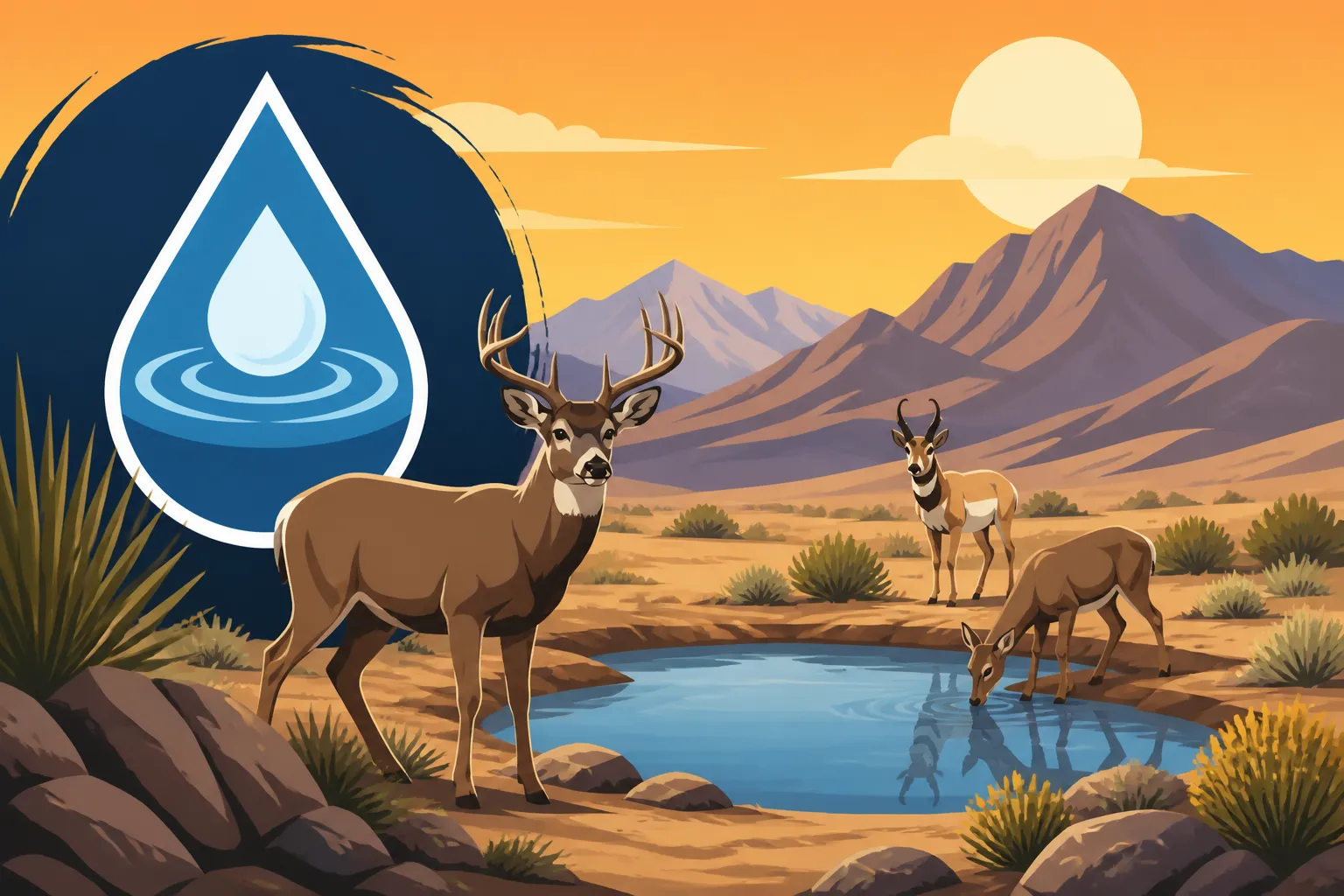
The mechanics of a guzzler are simple yet profoundly effective for wildlife. By providing a dependable, year-round water supply in areas where natural water is either absent or ephemeral, guzzlers become indispensable. For species like mule deer, bighorn sheep, and antelope, guzzlers offer a consistent lifeline. These animals will often establish daily routines revolving around visits to these sites, especially during hot summer months when other water sources have dried up. You might find mule deer bedding in the shade of nearby juniper trees, waiting for the cooler evening hours to approach the drinker. Bighorn sheep will often visit guzzlers in the middle of the day, using their incredible eyesight to scan for danger before committing to a drink.
Guzzlers essentially create choke points in the landscape. Animals traveling through a unit will often deviate from their direct path to hit a known guzzler. This predictable movement turns these locations into hubs of activity, concentrating game in a way that is incredibly advantageous for hunters. A well-placed guzzler can influence game movement over miles, drawing animals from distant hillsides and remote basins. If you know where the guzzlers are, you have a much better idea of where to focus your efforts. These artificial oases provide critical support for How Guzzlers Concentrate Desert Game.
Locating and Utilizing Guzzlers for Hunting
Finding guzzlers is now easier than ever thanks to modern mapping applications. Tools like onX Hunt and GoHunt often have layers that specifically mark wildlife guzzlers, springs, and other water sources. Before your hunt, spend time e-scouting your unit. Zoom in on areas marked as guzzlers, and look at the surrounding topography. Are there natural travel corridors leading to it? Are there potential bedding areas nearby, like north-facing slopes or thick brush?
When you're on the ground, approach guzzlers cautiously. Look for fresh tracks, droppings, and rubbed vegetation around the water. Pay attention to game trails leading to and from the guzzler; these will tell you how animals are approaching and departing. It's crucial to respect these sites as vital resources for wildlife. While hunting near guzzlers is generally legal in Nevada, it's always wise to check current regulations for any specific unit or species. For example, some states have rules about how close you can set up to a water source. Nevada, generally, allows hunting near water, but always consult the current regulations for any specific limitations. Avoid contaminating the water source or leaving trash behind. Remember, these are life-sustaining resources for the animals you pursue.
Hunting Strategies Around Water Sources
Once you understand the profound influence of water on Nevada's desert game, you can begin to craft effective hunting strategies. This isn't just about showing up at a waterhole; it's about meticulous planning, observation, and patience. The desert will test you, but water offers a distinct advantage to the prepared hunter.
Pre-Season Scouting and E-Scouting for Water
The real hunt often begins long before you set foot in the field. Pre-season scouting, both from your computer and on the ground, is absolutely critical when focusing on water sources. Start with your digital maps like onX Hunt. Look for all marked springs, guzzlers, and potential seeps. Cross-reference these with satellite imagery to identify lush vegetation, game trails, and potential bedding areas. Pay attention to terrain features that might funnel animals toward water, such as canyons, saddles, or rims. This is also a good time to study How to Locate a Guzzler From Home.
If possible, make a physical scouting trip. Visit the water sources you identified, looking for actual game sign. Are there fresh tracks? Recent droppings? Rubs or scrapes? How much pressure does the area seem to get? Sometimes, a seemingly perfect waterhole will be too accessible or heavily used by other hunters, making it less productive. Observe the surrounding cover: Is there adequate concealment for you? Are there good glassing points nearby where you can observe the water from a distance without disturbing it? Your goal is to gather as much intelligence as possible about how and when animals are using these vital spots.
On-The-Ground Tactics and Patience
When the season finally arrives, your on-the-ground tactics around water will depend on the species you're pursuing and the specific conditions. For mule deer and bighorn, especially during hotter early seasons, sitting water can be incredibly effective. Find a good vantage point, ideally downwind of the water source, with plenty of cover. Get there well before dawn or settle in for an afternoon sit, as animals often visit water during the cooler parts of the day, or even mid-day if it's exceptionally hot. This is particularly true during Nevada's August Archery Deer Window where Sitting Water on a Nevada August Hunt can be the most productive tactic. Be prepared for long waits. Bring good optics—binoculars and a spotting scope are essential for picking apart distant hillsides and confirming your target. Patience is your most valuable asset here.
Another tactic is still-hunting or slow-stalking towards water sources. Instead of sitting right on top of the water, work your way along game trails that lead to it, being incredibly stealthy. Pay attention to the wind, using terrain to your advantage to break your silhouette. Remember, animals approaching water will be hyper-alert. For chukar, especially during late summer and early fall, finding a small, hidden spring or guzzler on a steep hillside can be a goldmine. The birds often gather there in the morning and evening. You'll need to be in good physical shape for Chukar Country on Nevada's Steep Slopes, but if you locate their water, you've found their hub.
Ethical and Legal Considerations
Hunting around water sources in Nevada comes with significant responsibility. These spots are critical for the survival of wildlife, and they are often shared resources, even if you’re the only hunter present. Our actions directly impact the health of the habitat and the experience of others who may be using the land, whether it's another hunter, a hiker, or wildlife viewers. Being mindful of your footprint and adhering to ethical guidelines ensures these precious areas remain productive for generations to come.
Respecting Wildlife and Regulations
First and foremost, treat all water sources with the utmost respect. Avoid contaminating the water, leaving trash, or creating excessive disturbance. While it might seem obvious, leaving food scraps or human waste too close to a guzzler can spread disease or habituate animals to human presence in an unhealthy way. The goal is to observe and hunt, not to alter the natural patterns or health of the ecosystem. Many guzzlers are maintained by volunteer groups or wildlife agencies, so any damage or litter detracts from these crucial efforts.
Always be aware of specific regulations regarding hunting near water. While Nevada generally permits it, specific rules can change or be unit-dependent. For instance, Hunting Over a Guzzler Legally is generally fine, but some states have specific setbacks or restrictions. It’s always your responsibility to consult the most current Nevada Department of Wildlife (NDOW) regulations before your hunt. This isn't just about legality; it's about being a responsible steward of the land and its wildlife. Never take for granted that these essential resources are there; protect them.
Access and Land Ownership
Water sources, both natural and man-made, can sometimes be located in tricky areas regarding land ownership. A spring might be on a small parcel of private land surrounded by public land, or a guzzler might be just inside a wilderness boundary where vehicle access is restricted. This is where your detailed mapping and e-scouting become invaluable. Using tools like onX Hunt, you can clearly see land ownership boundaries. Pay close attention to these distinctions, especially when planning your approach and escape routes.
Trespassing to reach a water source, even unknowingly, is a serious offense and can jeopardize your hunting privileges. Always verify that you are on public land or have explicit permission from a landowner if you intend to cross or hunt on private property. While water is a magnet for game, it doesn't grant you carte blanche to ignore property lines. Sometimes, the most productive water source might be inaccessible or require extensive walking to reach legally, which is just part of the challenge and reward of hunting in Nevada's vast and wild places.
Comparing Water Sources for Game Concentration
To give you a clearer picture, here's a quick comparison of natural versus man-made water sources and how they generally influence game.
| Feature | Natural Water Sources (Springs, Seeps, Potholes) | Man-Made Water Sources (Guzzlers, Wells) |
|---|---|---|
| Reliability | Varies greatly (some perennial, many seasonal/ephemeral), dependent on rainfall/snowpack. | High, designed for year-round availability, less dependent on immediate weather. |
| Location | Often hidden, tucked into canyons, rock formations, or low spots; may require keen observation to find. | Deliberately placed in strategic, often drier areas to expand habitat; may be marked on maps. |
| Game Concentration | Can be intense, especially for local populations; patterns shift with water availability. | Very high, especially in arid zones; creates consistent draw for multiple species. |
| Discovery Challenge | High, requires detailed map study, satellite imagery, and on-the-ground scouting; often not clearly marked. | Moderate, often marked on specialized hunting maps (e.g., onX Hunt, GoHunt); visible on satellite imagery. |
| Hunting Pressure | Varies, often less pressure at truly hidden natural sources; can be high if easily accessible. | Can be high due to predictability and visibility, especially for well-known guzzlers. |
| Species Attraction | All game, but especially localized populations of deer, sheep, birds; opportunistic users. | Broad range of species including deer, elk, antelope, bighorn, chukar, quail; essential for survival. |
| Ethical Considerations | Minimize disturbance, leave no trace. | Minimize disturbance, leave no trace, respect structures; be aware of Water Development and Hunting Ethics. |
Disclaimer
This article is for general informational purposes only and does not constitute professional advice. Laws, prices and regulations vary by location and change over time. Consult a qualified professional for guidance on your specific situation.