Hunting Coyotes Year Round in the Great Basin
For many hunters, the end of big game season signals a long wait until next fall. But for those of us who love the chase and the challenge of the Great Basin, there's a thrilling pursuit that never closes: coyote hunting. Nevada offers a unique, year-round opportunity to hone your skills, contribute to healthy prey populations, and experience the solitude of its vast landscapes, provided you understand the specific nuances of chasing these wily canids across different seasons and terrains.
The Unique Appeal of Year-Round Coyote Hunting in Nevada
Unlike most game species that have strict seasons, quotas, and limited tags, coyotes in Nevada are classified as an unprotected mammal, meaning you can pursue them all year long. This isn't just a loophole; it's a recognition of their adaptable nature and their significant impact on prey populations, particularly in an ecosystem as delicate as the Great Basin. For hunters, it means endless opportunities to get out into the field, whether it's the dead of winter or the scorching heat of August.
One of the biggest frustrations hunters face is the pressure cooker of a short season, trying to cram all their hunting aspirations into a few weeks. With coyotes, that pressure is off. You can scout, experiment with new calls, try different tactics, and truly learn an area without the ticking clock of a limited tag. This continuous engagement with the landscape deepens your understanding of wildlife behavior, weather patterns, and the subtle changes that occur throughout the year. It’s a masterclass in hunting skills, available on your schedule.
Understanding Nevada's Regulations for Coyotes
While the season is always open for coyotes, that doesn't mean there are no rules. It’s important to remember that general hunting ethics, land ownership boundaries, and certain methods still apply. For example, you can't just drive anywhere on public land; Motorized Travel Rules on Nevada Public Land dictate where you can and cannot operate a vehicle. Retrieving a downed animal from private property requires explicit permission, just like with any other game.
There are also specific regulations regarding the use of electronic calls and night hunting. While electronic calls are widely legal for predators like coyotes in Nevada, the rules for spotlighting or using artificial lights to hunt can vary, often being restricted to specific periods or requiring permits, especially if you're hunting other species that might be out at night. It's always your responsibility to consult the latest Nevada Department of Wildlife (NDOW) regulations to ensure you're in compliance. Thinking about heading out? Take a few minutes to confirm you're good to go.
Why Year-Round Pressure is Good for Predator Management
Coyotes are incredibly intelligent and resilient animals. Their populations can rebound quickly, and in certain areas, they can exert significant pressure on deer fawns, elk calves, and upland bird nests. Year-round hunting, when done ethically and consistently, can help manage these populations, especially in localized areas where prey animals might be struggling. It’s not about eradication, but about balance.
For instance, in units known for strong mule deer populations, consistent coyote hunting pressure throughout the spring and summer can help reduce fawn predation, giving the next generation a better chance to survive. This also allows hunters to be active participants in conservation beyond just the big game seasons. It’s a chance to put your hunting skills to use for the benefit of the ecosystem, which is a powerful motivator for many of us. Plus, it gives you a fantastic excuse to be outdoors when most other hunters have hung up their gear.
Essential Gear and Tactics for Great Basin Coyotes
Hunting coyotes in the vastness of the Great Basin demands a specific set of tools and a patient, adaptable approach. This isn't your grandfather's rabbit hunt. The terrain is often wide open, the weather can be extreme, and the coyotes themselves are highly attuned to their environment. Success often hinges on your ability to observe, adapt, and remain undetected in a landscape that offers little cover.
You'll need reliable optics to scan those impossibly long sightlines, a rifle capable of precise shots at extended ranges, and a calling system that can cut through the wind and draw in a wary predator. Beyond the obvious, however, is the importance of mobility and preparedness. Nevada's backroads can be brutal, and being self-sufficient far from services is paramount. Vehicle Prep for Remote Nevada Roads isn't just for big game season; it's a year-round mantra here.
Optics: Seeing Them Before They See You
In the Great Basin, your eyes are your most valuable tool, and good optics are your force multipliers. This isn't dense timber hunting where a 10x binocular is sufficient. You're often glassing huge swaths of sagebrush country, looking for the flicker of an ear or the faint outline of a coyote moving through a wash. A high-quality binocular, ideally 10×42 or 12×50, is non-negotiable for initial scanning. Brands known for their clarity and durability truly shine here, holding up to the dust and temperature swings.
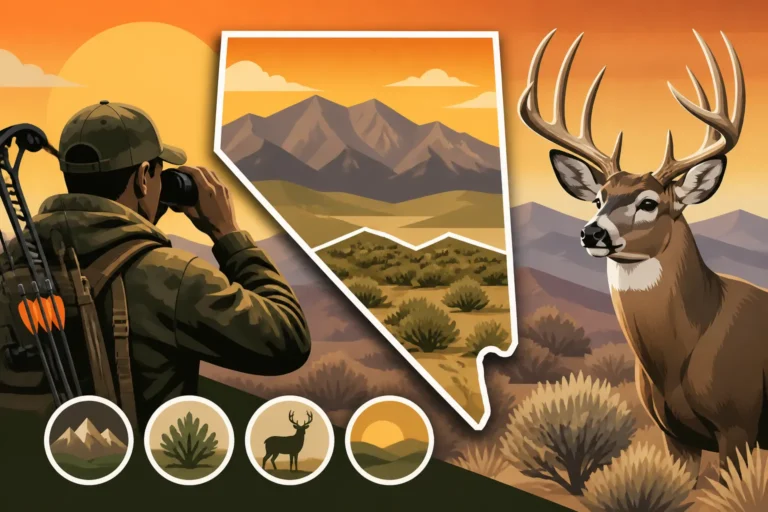
Beyond binoculars, a good spotting scope becomes invaluable, especially if you're committed to long-range calling or trying to identify a distant animal. Something in the 60-80mm objective range with variable power will allow you to pick apart distant shadows and confirm that movement you thought you saw. When set up on a stable tripod, you can spend hours systematically Glassing Grids Across a Nevada Basin, picking apart the landscape, conserving your energy, and letting your optics do the hard work before you even think about a call or a stalk. Remember, patience with your glass is key; a hasty scan often misses the prize.
Firearms and Ammunition for the Western Coyote
Coyotes might not be big game, but they are tough, and the distances you'll engage them at in Nevada can be significant. This isn't the time for a rimfire unless you're confident in extremely close-range shots. Most seasoned coyote hunters in the Great Basin opt for flat-shooting centerfire cartridges. Popular choices include the .223 Remington, .22-250 Remington, or even a .204 Ruger for their blistering velocities and minimal recoil, making follow-up shots easier to manage.
A lightweight, accurate rifle is a must. You'll be carrying it, often trekking across uneven terrain or setting up for long waits. Pairing it with a quality variable power scope (e.g., 3-9x, 4-16x) that offers clear glass and reliable adjustments is crucial for those cross-canyon shots. As for ammunition, choose bullets designed for rapid expansion to ensure humane kills and minimize ricochets in rocky country. Hollow-point or V-Max style bullets are common choices. And always, always practice at the ranges you expect to shoot. Rifle Zero Distance for Long Sage Shots is a real consideration when you're looking at shots that might stretch beyond 300 yards.
Calling, Camouflage, and Concealment
Calling coyotes is an art form, and in Nevada, it requires versatility. You'll need a variety of calls, both electronic and hand calls, to adapt to different situations and the time of year. Electronic calls offer a huge library of sounds, from rabbit distress to pup howls, allowing you to mimic a wide range of prey animals or other coyotes. Hand calls provide a level of nuance and realism that can be hard to replicate electronically, especially for close-in work. We'll dive deeper into calling strategies shortly.
Camouflage isn't just about blending in; it's about breaking up your outline and remaining still. Full camo, including a face mask and gloves, is essential. But more important than the pattern is your position. You need to find concealment that offers a good shooting lane but keeps you hidden from a sharp-eyed coyote approaching your setup. This might be a cluster of sagebrush, a small rock outcrop, or a fold in the terrain. Wind direction is critical; always set up with the wind in your face or quartering. Reading Wind on a Long Sage Stalk isn't just for deer; coyotes will pick up your scent instantly. Remember, a coyote's nose is its primary defense, and if they smell you, the hunt is over.
Finding Productive Coyote Habitat in the Great Basin
The Great Basin is an immense, wild place, and not all of it holds equal numbers of coyotes. To consistently find success, you need to understand where these adaptable predators thrive, what draws them to a particular area, and how to use modern tools to scout effectively. It's a combination of habitat knowledge, diligent e-scouting, and boots-on-the-ground confirmation.
One of the biggest mistakes hunters make is just driving out to a random spot and hoping for the best. While coyotes are widespread, concentrating your efforts on areas that provide their essential needs will dramatically increase your odds. This means focusing on food sources, water, and cover, which, in the Great Basin, often looks very different from other parts of the country.
Reading the Landscape for Coyote Sign
Coyotes, like all predators, go where the food is. In the Great Basin, this primarily means areas with abundant small prey: rabbits, rodents, ground squirrels, and even upland birds like chukar or sage grouse. Look for areas with a mix of sagebrush for cover and open patches for hunting. Draws, washes, and the fringes of agricultural fields can be magnets for prey and, consequently, coyotes. You might even find them shadowing big game herds, looking for an easy meal like a newborn or a weakened animal.
Beyond prey, look for actual coyote sign. Tracks in dusty roads or dry washes, scat on rocks or trails, and even fresh dens in spring or summer can tell you if coyotes are present and active. While seeing a coyote during the day is a good indicator, their nocturnal habits mean you often need to piece together the story from the sign they leave behind. The more you walk, the more you see, and the more you learn to connect the dots in the landscape.
Water Sources and Coyote Concentration
Water is life in the desert, and this holds true for coyotes and their prey. Even in vast, arid landscapes, animals will congregate around reliable water sources. This could be a natural spring, a cattle trough, or a man-made guzzler installed for wildlife. Hunting Water in Nevada's Driest Country is a tactic that works for all sorts of game, and coyotes are no exception. Knowing where these water points are can give you a significant advantage, especially during the hotter months.
Tools like GoHunt or other mapping applications can be incredibly powerful for identifying these critical water sources, as well as finding public land access points and understanding the terrain before you even leave home. By overlaying layers that show springs, guzzlers, and even historical water flows, you can pinpoint potential hot spots. While coyotes are excellent at going without water for periods, they will still visit reliable sources, often under the cover of darkness, but also during twilight hours. Setting up downwind of a water source, especially in the early morning or late evening, can be a highly effective strategy.
E-Scouting and Understanding Unit Features
Before you even step foot in a new area, a thorough e-scouting session can save you countless hours and miles. Using satellite imagery, topographical maps, and public land overlays, you can identify key features that coyotes will utilize. Look for:
- Drainages and Washes: These provide travel corridors, cover, and often hold more vegetation and prey.
- Ridgelines and Prominent Points: Coyotes use these for observation, and you can use them for calling setups, especially if you can get above them.
- Isolated Pockets of Cover: Even in open country, small draws or thickets of sage can be places coyotes bed during the day.
- Confluence of Habitat Types: Where different vegetation types meet, or where desert gives way to more riparian areas, can be transition zones rich in prey.
The vastness of Nevada can be overwhelming, but e-scouting helps you break it down into manageable chunks. You can identify potential access roads (and those to avoid!), plot out walking routes, and mark promising calling locations. Sites like GoHunt offer detailed mapping features that allow you to analyze a unit from the comfort of your home. This preparatory work is not just efficient; it allows you to approach your hunt with a much higher degree of confidence and a solid plan, rather than just wandering aimlessly.
Coyote Calling Strategies for Different Times of Year
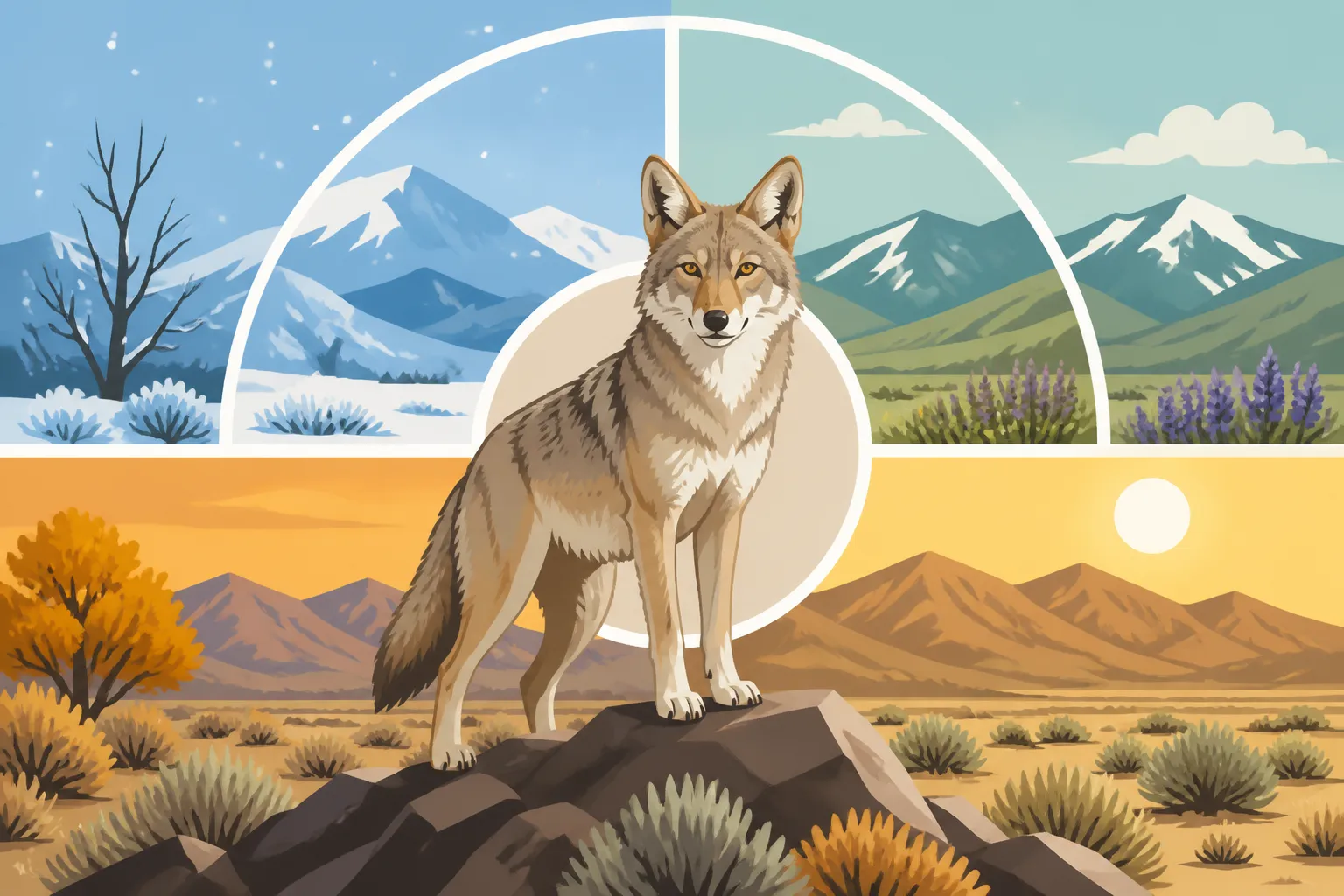
The adaptable nature of coyotes means your calling strategies need to be equally flexible. What works in the dead of winter when food is scarce might not be as effective during the spring denning season or the chaos of the fall. Understanding the seasonal behavior of coyotes and tailoring your calls accordingly is the hallmark of a successful predator hunter.
This isn't just about having a variety of calls; it's about understanding when to use them and why. Are you trying to evoke a maternal instinct? Provoke a territorial response? Or simply sound like an easy meal? Each season offers unique opportunities and challenges for drawing in a wary coyote, and mastering these nuances will significantly elevate your success rate in the Great Basin.
Winter: Hunger and Territory
Winter is often considered prime time for coyote hunting. Food sources are scarcer, and coyotes are often more willing to respond to distress calls as they are constantly on the lookout for an easy meal. This is when rabbit distress, fawn distress, or even bird distress calls can be incredibly effective. The cold, crisp air also carries sound further, so your calls will reach more ears.
Beyond hunger, winter is also when coyotes are often paired up and more territorial. This opens up opportunities for challenge howls. A bold male coyote, hearing a perceived intruder in his territory, might come in to investigate or run off the competition. A series of lone howls followed by a challenging bark can sometimes bring them in on a string. Be ready, because a challenging coyote often comes in fast and hot, looking for a fight, not a meal.
Spring: Denning and Pups
As spring arrives, coyotes shift their focus to denning and raising pups. This is a critical time for them, and their behavior changes dramatically. Distress calls can still work, but they often trigger a different response. A female might come to a rabbit distress call, not to eat it herself, but to bring it back to the den for her hungry pups. Be prepared for her to be extremely cautious and circle downwind to confirm the sound.
This is also an excellent time for pup distress calls. A coyote hearing a lost or injured pup might come in with a strong maternal or protective instinct. These calls can often be softer, more intermittent, mimicking a young animal in trouble. Remember, you're tapping into their most fundamental drive: protecting their young. When using pup calls, ensure your setup offers ample concealment and a clear line of sight, as the responding adults will be hyper-vigilant.
Summer and Fall: Opportunistic Hunting
During the long, hot Nevada summer, coyote hunting can be challenging. Coyotes are often more dispersed, seeking shade during the heat of the day, and natural food sources like rodents and insects are generally abundant. Success often comes down to early morning or late evening hunts, focusing on areas near water or in cooler, shaded draws. Sitting Water on a Nevada August Hunt can be surprisingly productive, even for coyotes.
As fall approaches, coyotes become more opportunistic. The influx of migratory birds, the availability of fallen berries or seeds, and the presence of big game hunters (who sometimes leave gut piles) all present new food sources. Distress calls remain effective, but incorporating locator howls can help you find coyotes that are spread out. A short, sharp howl at dawn or dusk can often elicit a response, telling you exactly where to set up your next stand.
| Season | Primary Motivation | Effective Call Types | Key Tactics |
|---|---|---|---|
| Winter | Hunger, Territory | Rabbit/Fawn Distress, Challenge Howls | Long-range calling, target lone males, hunt open areas |
| Spring | Denning, Protection | Pup Distress, Subdued Prey Distress | Focus on denning areas (from a distance), maternal calls |
| Summer | Opportunistic, Water | Bird Distress, Rodent Squeaks | Early/late hunts, target water sources, shorter stands |
| Fall | Opportunistic, Scouting | General Distress, Locator Howls | Use howls to locate, adapt to varying prey availability |
Regardless of the season, always vary your calling sequence. Start soft, build intensity, then go silent for a few minutes before repeating. A coyote can hear a call from a long way off, and sometimes the silence after a burst of sound is what finally pushes them to commit and come looking. Remember, every coyote is an individual, and every hunt is a new puzzle to solve.
Disclaimer
This article is for general informational purposes only and does not constitute professional advice. Laws, prices and regulations vary by location and change over time. Consult a qualified professional for guidance on your specific situation.