Using a Rim to Break Your Silhouette
Using a rim to break your silhouette lets Nevada hunters stay hidden and get within range of game animals across open flats.
Close the distance.
Archery, muzzleloader, and firearm techniques — calling, stand placement, still-hunting, spot-and-stalk, and the weapon rules that change at the state line.
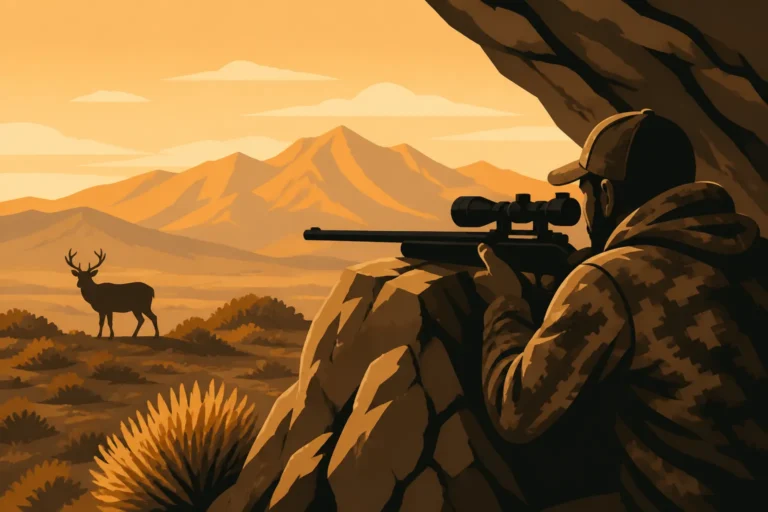
Using a rim to break your silhouette lets Nevada hunters stay hidden and get within range of game animals across open flats.
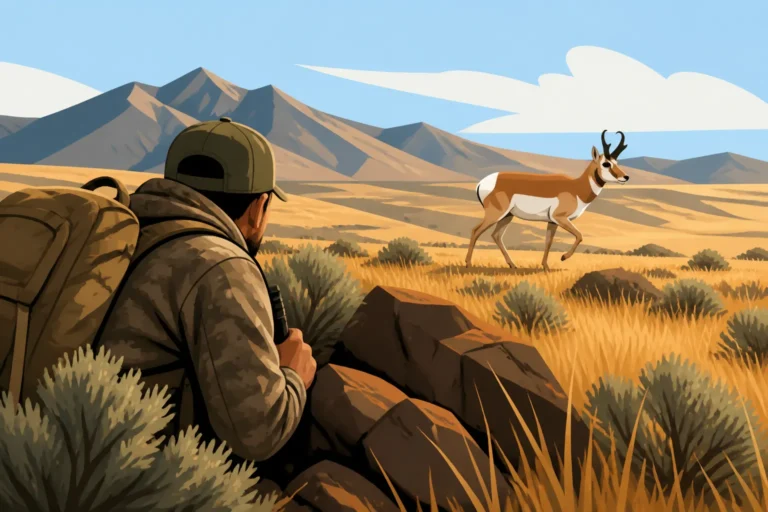
Nevada pronghorn vision equals eight power binoculars and helps these fast animals spot hunters trying to close the final hundred yards.
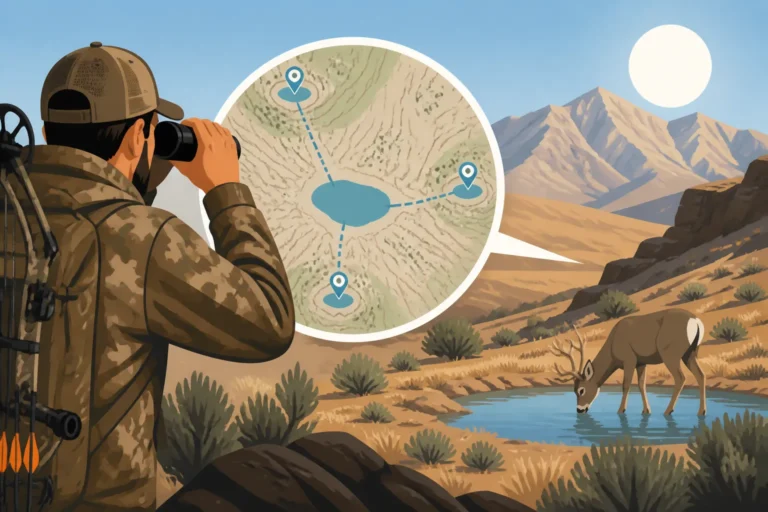
Nevada August hunting strategies explained through wildlife water source analysis, mule deer movement patterns, and Great Basin spring locations.
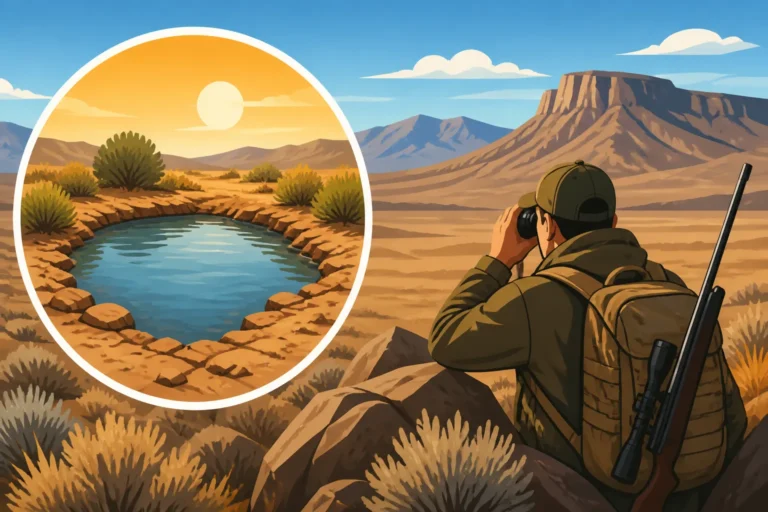
Hunting water in Nevada arid units reveals wildlife locations, helping hunters pattern deer and elk near scarce springs.
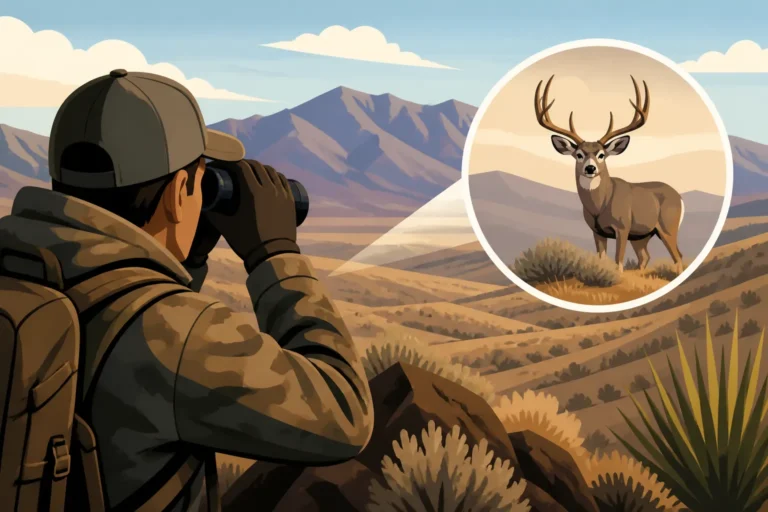
Judging mule deer buck size in Nevada requires overcoming distance, light glare, and optical illusions across open basins.
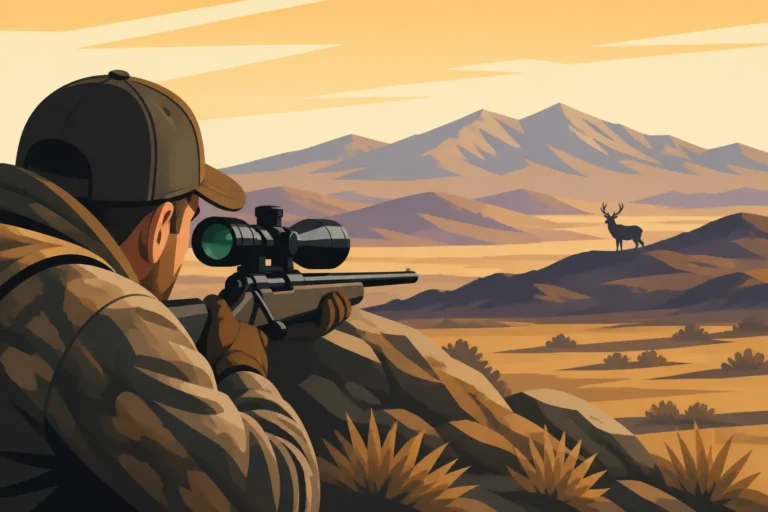
Optics power helps Nevada hunters judge distance across long sightlines, evaluating mule deer and pronghorn across vast terrain.
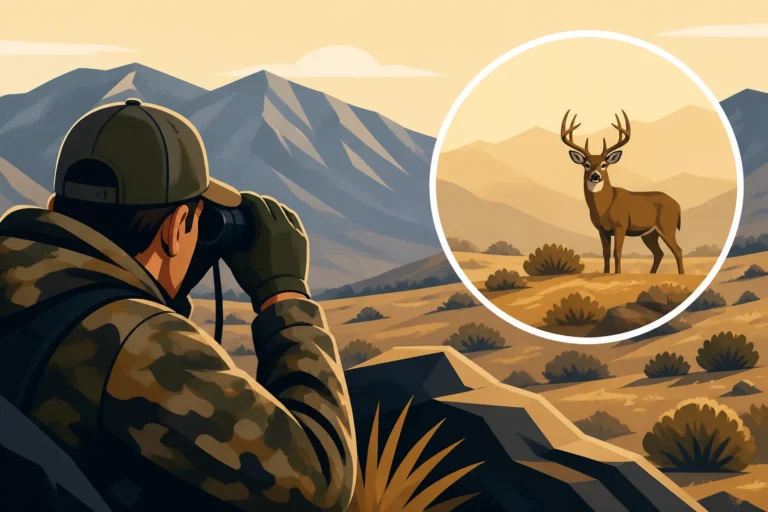
Nevada deer hunting requires glassing open Basin and Range terrain because sparse cover makes walking across massive sagebrush flats ineffective.
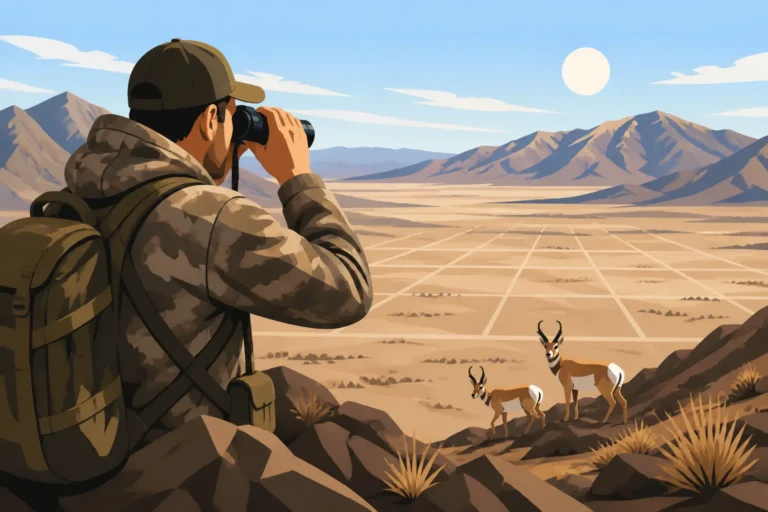
Systematic grid glassing methods help hunters divide vast Nevada basins into manageable sections to spot mule deer.
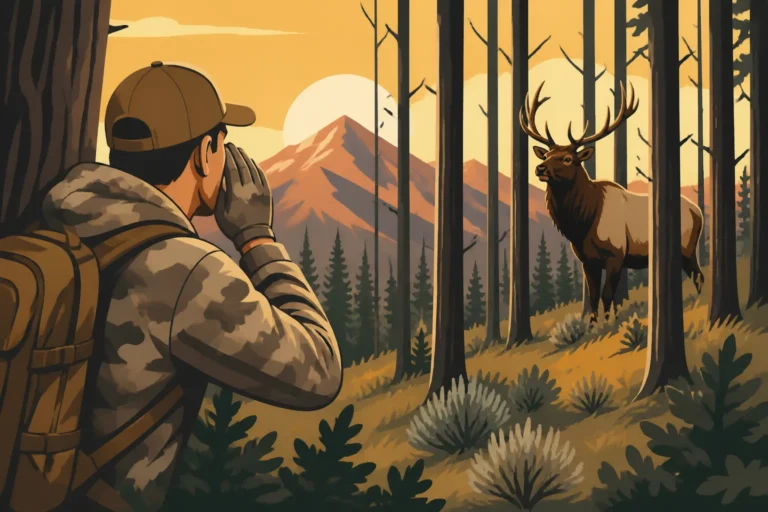
Cow calling in Nevada thin timber helps hunters lure tight-lipped elk out of hiding during post-rut silences and mid-day lulls.
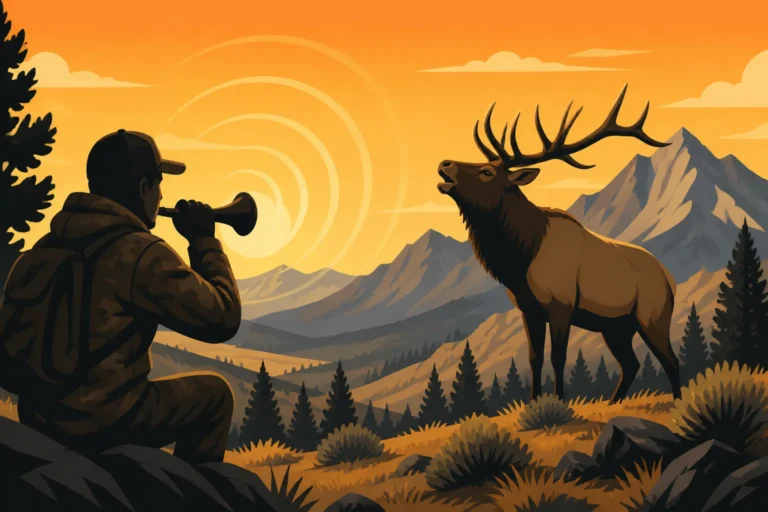
Nevada elk bugling timing varies across mountain ranges, driven by weather, moon phases, and hunter pressure during archery seasons.