Bugle Timing in Nevada’s Elk Country
Many hunters dream of chasing bugling elk, but the reality in Nevada can feel a lot different than the cinematic portrayals of screaming bulls. It's frustrating when you spend years accumulating points for a coveted tag, only to find the elk seem to have gone silent, or you're just not hearing what you expected. This guide is dedicated to dissecting the nuances of bugle timing in Nevada's diverse elk country, helping you understand when to expect those thrilling calls and, more importantly, how to adapt your strategies when the woods don't sound like a symphony of rutting bulls.
Understanding the Nevada Elk Rut It's Not Always the Same Old Story
It's easy to fall into the trap of believing there's one perfect week for elk bugling, a magical "peak rut" when every bull in the herd is screaming his head off. The truth, especially in the vast and varied landscapes of Nevada, is far more complex. The elk rut is a dynamic period, influenced by a multitude of factors that can shift the timing and intensity of bugling from one mountain range to the next, and even from one year to the next. What worked for your buddy in northern Idaho might not apply to an elk herd in the high desert ranges of eastern Nevada, and it's this unpredictability that often leaves hunters scratching their heads.
The Myth of the "Peak" Rut
Let's bust this myth right now: there isn't a single, universal "peak rut" for all elk, especially not across an entire state as diverse as Nevada. You'll hear countless discussions about the last week of September or the first week of October being the time, and while these periods are often highly active, they're not guaranteed. What might be peak bugling activity in a high-elevation unit with abundant timber could be a completely different scenario in a more open, lower-elevation unit where temperatures remain high. The notion of a singular peak can set unrealistic expectations, leading to frustration when you're out there and the woods are quieter than you anticipated. Instead, think of the rut as a long, undulating wave of activity, with smaller peaks and valleys that are highly localized. Focusing too much on a calendar date can make you miss the subtle signs that elk are, in fact, rutting, just perhaps not in the way you've been conditioned to expect.
Factors Influencing Elk Breeding Behavior
So, if it's not a rigid calendar date, what actually drives the timing and intensity of elk breeding behavior and, by extension, their bugling? There are several key environmental and biological factors at play. Weather, for instance, is a massive determinant. Abnormally warm temperatures can push the rut later or make daytime bugling significantly less frequent, as bulls conserve energy and seek shade. Conversely, an early cold snap or significant rain can sometimes kickstart activity. Moon phase is another often-debated factor; some hunters swear by dark moon phases for more intense daytime action, while others report success under a full moon. Herd dynamics within a specific unit also play a role; a healthy bull-to-cow ratio can lead to more competition and more vocal bulls, whereas a skewed ratio might mean less active bugling. Finally, hunter pressure, particularly in Nevada's limited-entry units, can dramatically alter elk behavior. If bulls are constantly being called to and pursued, they'll often go silent and become incredibly wary, making traditional bugling strategies less effective. Understanding these variables is crucial for adapting your approach.
Early Season Bugles Archery's Promising Start
Nevada's August archery deer and elk seasons kick off when temperatures can still be scorching, making those early bugles feel even more precious. While it might not be the full-blown, aggressive rut you dream of, there are definite opportunities to engage with bulls, particularly during the cooler parts of the day. The key here is subtlety and understanding the elk's immediate needs, primarily water and shade, rather than just breeding.
Locator Bugles and Soft Calls
When that first sliver of dawn breaks over a Nevada basin, or as the sun dips below the horizon, that's often your best bet for eliciting a response from an elk in the early season. These aren't usually roaring challenge bugles, but more like tentative inquiries. Your strategy should lean heavily on locator bugles – short, sharp calls designed to get a bull to reveal his position without committing to a full-on confrontation. Think of it as knocking on a door, not kicking it down.
Once you get a response, the trick is often to switch to soft, inquisitive cow calls. A few subtle mews or chirps can often pique a bull's curiosity enough to make him investigate, especially if he's a satellite bull not yet actively herding cows. You're trying to sound like an unbred cow or a small group of cows moving through, not a rival bull. Patience is absolutely paramount here. Often, the bull might not bugle back immediately, but will instead circle downwind to scent-check the source of the sound. This is where your ability to remain hidden and quiet becomes critical. Understanding Locator Bugles for Finding Bulls at Dawn is a fundamental skill for these early morning and evening sessions.
Hunting Wallows and Water Sources
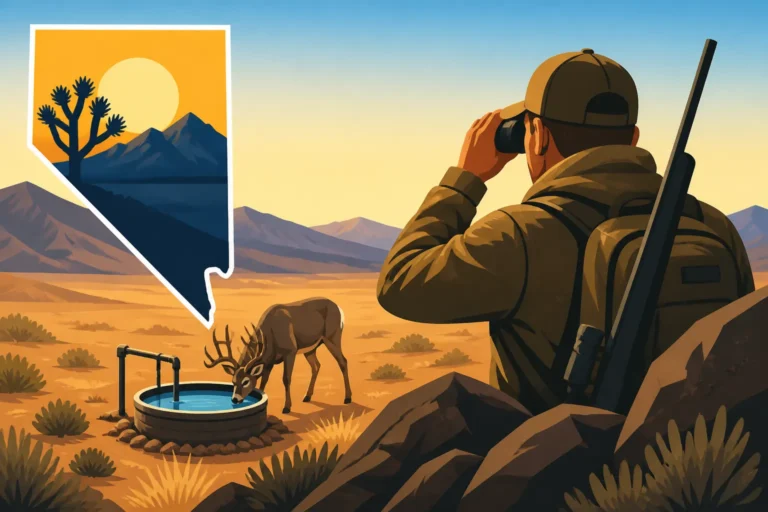
In the oppressive heat that can define Nevada's early archery seasons, water is gold, both for the elk and for the hunter trying to find them. Elk need to drink regularly, and they absolutely love to wallow in muddy pools to cool down and get rid of parasites. These wallows and springs become natural congregation points, especially in arid units where water is scarce. This means they are prime locations for encountering elk, and consequently, for hearing early season bugles.
Focus your scouting efforts on identifying these critical water sources, either by E-Scouting a Nevada Unit Before the Season using detailed maps or by putting in boots-on-the-ground recon. Once found, look for fresh tracks, droppings, and the characteristic muddy depressions of a recently used wallow. During the early season, you'll often hear casual chirps, mews, and sometimes even a soft bugle around these water sources, particularly in the pre-dawn hours or as evening cools. Setting up downwind of a well-used wallow or spring and waiting patiently can be incredibly effective. You're not necessarily calling them in as much as you are intercepting them. Learning about Hunting a Wallow During Early Archery can significantly increase your success rate.
The Heart of the Rut When the Bugles Get Loud
For many, this is the time of year we live for – when the bulls are truly fired up, their hormones are raging, and the mountains echo with their primal screams. This period, usually late September into early October in Nevada, is when aggressive calling strategies can be most effective, drawing out challenging bulls eager to defend their cows or steal yours. However, even during this peak, context is everything. What works on one bull might shut down another.
Aggressive Calling and Challenge Bugles
When you start hearing consistent, loud bugles, often paired with chuckling and grunting, it's a good indication that bulls are actively herding cows and defending them from rivals. This is when you can become more assertive with your calling. Employing challenge bugles – loud, drawn-out calls that mimic a dominant bull – can provoke a response from a herd bull or attract curious satellite bulls. The key is to match the intensity of the bull you're interacting with. If he's screaming, don't be afraid to scream back. If he's more reserved, start with a slightly less aggressive bugle and escalate if he matches you.
Pay close attention to the nuances of his calls. A bull that cuts off your bugle might be very aggressive and coming in hot. One that rakes trees and then bugles is definitely looking for a fight. It's a verbal chess match, and every sound you make, and every sound he makes, is a move in that game. Knowing when and how to engage in Bugling Against Cow Calling in September is a skill honed over many hours in the field, but it's during this time that it can yield spectacular results.
The Art of the Two-Hunter Set-up
Hunting rutting elk can be incredibly dynamic, and sometimes, trying to be both the caller and the shooter is a recipe for disaster. This is where the two-hunter setup shines, particularly when bulls are bugling aggressively. One hunter acts as the dedicated caller, positioned slightly behind or to the side of the shooter, drawing the bull's attention away from the shot opportunity. The other hunter, the shooter, positions themselves strategically to intercept the bull as it approaches the sounds. This setup allows the shooter to remain silent, focused, and ready, while the caller can actively manipulate the bull's approach.
The caller's job isn't just to make noise; it's to paint a picture for the bull. Using cow calls to sound like a receptive female, combined with some light bugling or raking to simulate a challenging bull, can really sell the illusion. The shooter needs to anticipate the bull's likely approach, often circling downwind to pick up scent. This tactic is incredibly effective for getting a bull to commit those crucial last few yards for a shot. For more advanced strategies on this, delve into Two-Hunter Calling Setups That Actually Work. Utilizing tools like GoHunt's mapping overlays can help you pre-plan these setups, identifying terrain features that funnel elk or provide natural cover for the shooter.
Late Season Strategy Post-Rut Silence and Locator Calls
Just as quickly as the rut explodes, it can seemingly vanish, leaving a frustrating silence in its wake. This post-rut period, typically after the first week or two of October, presents a whole new set of challenges for elk hunters. Bulls are often exhausted, some cows are bred, and the intense, aggressive bugling often tapers off significantly. If you're holding a late rifle tag or an archery tag that extends into this window, you need to completely shift your mindset and tactics.
Why Bulls Go Quiet After the Peak
Imagine running a marathon, then fighting a few boxing matches, all while trying to impress the ladies. That's essentially what a bull elk goes through during the peak of the rut. They lose a significant amount of body mass, their energy reserves are depleted, and their focus shifts from breeding to simply surviving and recovering. The cows, having been bred, are no longer receptive, reducing the incentive for bulls to loudly challenge rivals. Instead of forming large herds around a dominant bull, elk tend to break into smaller, less conspicuous groups. Bulls may form bachelor groups again, or simply wander alone, quietly feeding and resting.
The woods aren't entirely silent, but the nature of the calls changes dramatically. You might still hear a lone, raspy bugle from a satellite bull looking for a last chance, or a quiet mew from a cow. The widespread, echoing roars that characterized the peak rut are largely gone. This "silence" can be disheartening, but it doesn't mean the elk aren't there; it just means they're playing a different game, and you need to adjust yours to match.
Adapting Your Calling to Post-Rut Behavior
When the bugles die down, your aggressive calling strategies should too. Instead, focus heavily on cow calls – soft, subtle mews and chirps that mimic contented feeding or a cow calling her calf. These non-threatening sounds are far more likely to elicit a response from a post-rut bull who is no longer interested in confrontation. You're trying to sound like companionship, not competition. Be patient, use fewer calls, and give the elk ample time to respond.
Often, the best strategy in the late season shifts from calling them in directly to using calls as a locator, then transitioning to a more stealthy approach. A subtle cow call might make a bull give away his position with a quiet grunt or a soft bugle, after which you immediately become a still hunter or initiate a cautious stalk. This is the time to really put your glassing skills to the test, finding elk visually and then planning a quiet approach. Learning the nuances of Cow Calling Bulls in Thin Timber becomes an invaluable skill when bulls are tight-lipped and wary. GoHunt's historical harvest data can also provide insights into which units might still hold pockets of active elk later in the season, helping you refine your strategy.
Reading the Signs Beyond the Sound
While listening for bugles is a cornerstone of elk hunting, it’s far from the only indicator of elk presence and activity. The most successful hunters are those who can read the subtle messages elk leave behind, effectively piecing together a story of their movements, habits, and current mindset. In Nevada’s open landscapes, these visual cues are often just as, if not more, important than the auditory ones. You need to become a detective, constantly searching for evidence.
Fresh Sign and Rubs
Elk leave a trail of breadcrumbs wherever they go, and learning to interpret these signs is critical, especially when the bugling is minimal. Fresh tracks in the dirt or mud, particularly those with sharp edges that haven't been eroded by wind or rain, indicate recent passage. Look for distinct dew claws in soft ground, which often suggest a heavier animal, potentially a bull. Fresh droppings – dark, moist, and shiny – are another clear sign, telling you elk have been in the immediate vicinity very recently.
Beyond these common indicators, during the rut, bulls leave behind tell-tale rubs. These are trees or saplings where a bull has raked his antlers, tearing off bark and leaving frayed wood behind. Fresh rubs will still have damp, exposed wood and possibly even fresh antler velvet shreds. Multiple rubs in an area indicate a bull has been actively marking his territory or expressing aggression. The size and height of the rub can also give you a clue about the size of the bull. Pay attention to how these rubs are oriented; they often point in the direction the bull was moving. Understanding Reading Fresh Elk Sign in Thin Timber can help you determine how hot the trail is.
Understanding Elk Movement Patterns
Elk are creatures of habit, yet they're also highly adaptable to pressure and environmental conditions. Understanding their typical movement patterns within a unit is crucial for anticipating where they'll be, even if they're not bugling. Elk generally move between bedding areas, feeding grounds, and water sources. In mountainous terrain, they often follow natural contours like ridges, draws, and saddles. During the rut, these movements become more concentrated as bulls herd cows.
Thermals and wind play a massive role in how elk navigate their environment and how you should plan your approach. In the mornings, thermals rise, carrying scent uphill. In the evenings, they fall, carrying scent downhill. Elk instinctively use the wind and thermals to their advantage, rarely moving directly into a perceived threat. They'll often bed on benches or saddles where they can scent-check downwind and visually monitor areas upwind. Knowing how to read the terrain and predict these movements is essential. Learning to adapt to Reading Wind on a Long Sage Stalk can make or break your ability to get close to these wary animals. GoHunt's detailed satellite imagery and topographical maps can be invaluable for e-scouting these patterns from home, identifying potential travel corridors and bedding areas before you even set foot in the field.
Specifics for Nevada's Unique Landscape
Nevada is not Colorado, Montana, or even neighboring Utah. It's a vast state defined by its Basin and Range topography, which means steep, isolated mountain ranges rising abruptly from arid valleys. This unique landscape, combined with its limited-entry hunting structure, creates a distinct elk hunting experience that demands specific strategies and a deep understanding of local conditions.
Elevation and Habitat Influence
The timing and intensity of the rut in Nevada are profoundly influenced by elevation and the specific habitat type. In the higher, timbered mountain ranges, where temperatures are cooler and forage is more consistent, the rut might play out more typically, perhaps peaking in late September. Here, you'll find denser pockets of aspen and pine, offering more cover and potentially more vocal elk. However, in the lower, more arid "desert mountain" ranges, which still hold significant elk populations, the rut can be compressed or shifted. Higher temperatures in these areas might mean bulls are less active during the day, bugling more intensely at night or during the very early morning and late evening hours.
Furthermore, the type of forage available can dictate where elk congregate. In some units, elk might be found primarily around riparian areas or springs, while in others, they might be scattered across vast sagebrush slopes dotted with juniper. Your approach to finding and calling these elk needs to be tailored to the specific micro-habitat you're hunting. This regional variation is why understanding When the Elk Rut Peaks in Nevada is less about a single date and more about observing local conditions.
Managing Pressure in Draw-Only Units
Nevada is almost entirely a draw-only state for elk, meaning tags are limited and highly coveted. This system, while leading to high-quality hunts, also means that every hunter in the field has invested significant time and bonus points to be there. Consequently, there can be considerable hunter pressure in accessible areas, even in units that are otherwise remote. Elk, being intelligent animals, quickly learn to associate human presence with danger.
When a bull has been called to repeatedly or bumped by other hunters, he's far more likely to go silent and become incredibly wary. This is where truly deep scouting, both pre-season and during the hunt, pays dividends. You need to find those pockets of less-pressured elk, often by hiking further, getting into more rugged terrain, or hunting during less conventional times. Even a bull that was screaming his head off on Monday might be completely silent by Wednesday if too many hunters have tried to work him. GoHunt's detailed unit statistics and draw odds data can give you an edge, helping you select units that historically have better success rates or might offer more secluded areas. This is why Checking Nevada Draw Odds Before You Apply isn't just about drawing a tag, but about understanding the potential hunting experience within that unit.
| Rut Phase | Typical Timing in Nevada (Approx.) | Calling Strategy Focus | Elk Behavior | Key Considerations |
|---|---|---|---|---|
| Pre-Rut / Early Archery | Late August – Mid-September | Locator calls, soft cow calls | Bulls seeking cows, less aggressive, water-focused | High temps, focus on water/shade, patient responses |
| Peak Rut | Mid-September – Early October | Aggressive bugles, challenge calls, cow calls | Bulls herding cows, highly vocal, aggressive | High hunter pressure possible, adapt to bull's mood |
| Post-Rut / Late Season | Mid-October – November | Soft cow calls, minimal bugles | Bulls recovering, less vocal, focus on feeding | Stealth, glassing, minimal calling, patience |
Disclaimer
The information provided in this guide is for general informational purposes only and is not intended as legal advice or a substitute for official Nevada Department of Wildlife (NDOW) regulations. Hunting regulations, seasons, and unit boundaries can change. Always consult the most current NDOW regulations before planning or undertaking any hunting activity in Nevada.