Sitting Water in Nevada’s Dry Units
Hunting in Nevada's vast, often parched landscapes presents a unique set of challenges, and perhaps none is more crucial than understanding and utilizing water sources. For many hunters, the thought of glassing endless sagebrush for days without a solid plan can feel overwhelming, leading to frustration and empty tags. This comprehensive guide is designed to cut through that uncertainty, offering you realistic strategies and practical advice for successfully hunting around water in Nevada's driest units, turning a potential weakness into your greatest strength.
The Unmistakable Truth: Water is Life in Nevada's Arid Hunting Grounds
Let's be honest, Nevada is a desert state. While there are mountains and some timbered areas, the vast majority of huntable public land is defined by arid, open country. This isn't your lush, green forest hunting. Here, water isn't just a convenience; it's the absolute lifeline for all wildlife, from the smallest quail to the largest bull elk. Understanding this fundamental truth is the cornerstone of any successful hunt in the Silver State, especially in those famously dry units where precipitation is scarce and temperatures soar.
Why Every Drop Matters for Wildlife
In a state like Nevada, where annual rainfall can be astonishingly low, animals are constantly in search of moisture. They need it not just for drinking, but for temperature regulation, digestion, and overall survival. A spring, a well-maintained guzzler, or even a temporary puddle after a rare rain shower acts as a magnet, drawing in everything from deer and elk to antelope and bighorn sheep. If you can locate these vital water sources, you've found the pulse of the unit, and with it, a concentrated area of animal activity. It's a simple ecological equation: no water, no life, no game. This makes Hunting Water in Nevada's Driest Country an unavoidable strategy for success.
The Scarcity Factor and Hunter Opportunity
The very scarcity of water in Nevada's dry units is what creates such incredible hunting opportunities. Unlike areas with abundant water, where game can be dispersed and difficult to pattern, Nevada's wildlife is often forced to frequent predictable water points. This predictability, while not a guarantee, significantly increases your odds of encountering game. Imagine a vast, empty basin where the only reliable water is a single spring. Every animal within a considerable radius will eventually make its way there. As hunters, this is our advantage. It transforms scouting from a needle-in-a-haystack endeavor into a focused search for these critical resources. However, it also means these spots can receive pressure, so knowing how to approach and when to sit is key.
Unmasking Productive Water Sources: Where to Look and What to Expect
Finding water on a map is one thing; understanding its significance and reliability in the field is another entirely. Not all water sources are created equal, and knowing the difference can save you countless hours of unproductive sitting. The type of water source, its accessibility, and the surrounding terrain all play a role in how and when animals will use it.
Natural Springs and Seeps: Hidden Oases
Natural springs and seeps are the historical lifeblood of Nevada's wildlife. These are often subtle, sometimes just a damp spot on a hillside, but they provide a constant, gravity-fed supply of water. They're typically found in canyons, at the base of rocky outcrops, or in drainages where groundwater pushes to the surface. Animals will often have well-worn trails leading directly to these springs, sometimes through surprisingly thick brush for the desert. Identifying these on topographic maps is a start, but in-person scouting is essential to confirm their flow and recent animal use. Sometimes, what looks like a robust spring on paper is nothing more than a trickle or a mud hole in dry years. When Reading Water Sources Before an August Hunt, pay close attention to historical patterns and recent drought conditions.
Guzzlers and Man-Made Water Developments
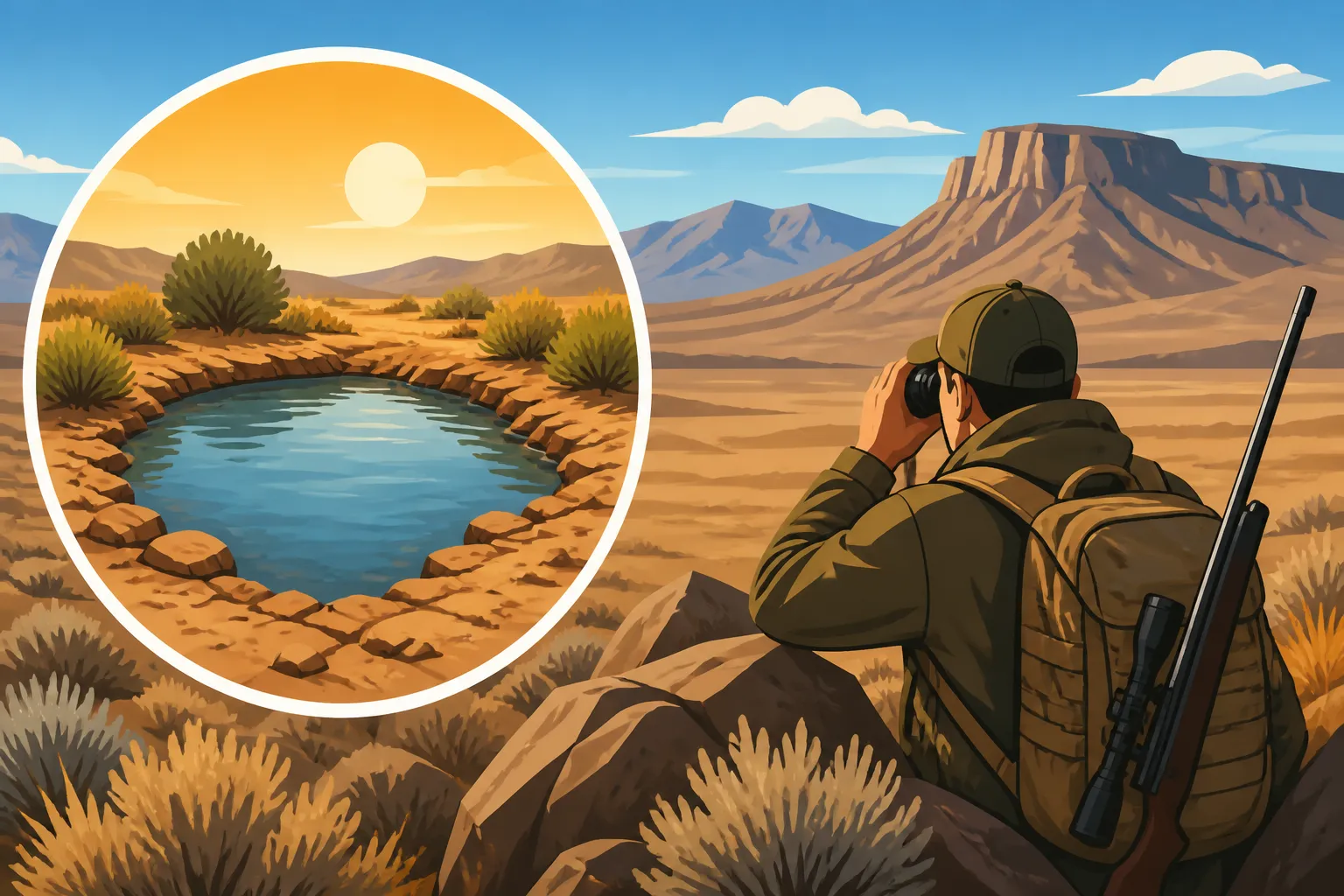
Beyond natural springs, Nevada has a network of man-made water developments, often called "guzzlers." These are typically designed and maintained by wildlife agencies or conservation groups to provide reliable water in otherwise waterless areas. A guzzler usually consists of a collection apron that funnels rainwater into a large storage tank, which then feeds a drinking trough or basin. These are truly incredible features that concentrate desert game, especially in units devoid of natural water. They are often marked on detailed maps and can be located through careful e-scouting with tools like GoHunt's mapping overlays. Understanding How Guzzlers Concentrate Desert Game is vital. They are game-changers, providing a predictable source of water even during prolonged dry spells.
Ephemeral Water Sources: The Gamble of Rain
Then there are the ephemeral, or temporary, water sources. These are puddles, small pools in washes, or damp depressions that only hold water after a significant rain event. While less reliable, if you're hunting shortly after a storm, these can be absolute gold mines. Animals will take advantage of these fleeting opportunities, often in areas where they wouldn't normally linger. The challenge, of course, is that they dry up quickly. You'll need to be flexible and adaptive if you plan to target these. They're harder to scout beforehand, relying more on real-time weather observations and boots-on-the-ground exploration.
Mastering the Water Hole Sit: Tactics for Success
Sitting a water source is not always glamorous. It demands patience, stealth, and a deep understanding of animal behavior. It's not just about showing up; it's about setting the stage for a successful encounter. This strategic approach is what separates the successful water hole hunter from someone simply taking a long break by a puddle.
Timing Your Approach and Setting Up Your Blind
The most critical aspect of a successful water hole sit is your approach and setup. Animals, especially mature bucks and bulls, are incredibly wary around water. They know it's a vital, yet vulnerable, location. You need to arrive before they do, ideally in the pre-dawn hours for a morning sit, or well before midday for an afternoon/evening sit. Your approach should be silent, slow, and, whenever possible, concealed by terrain or vegetation.
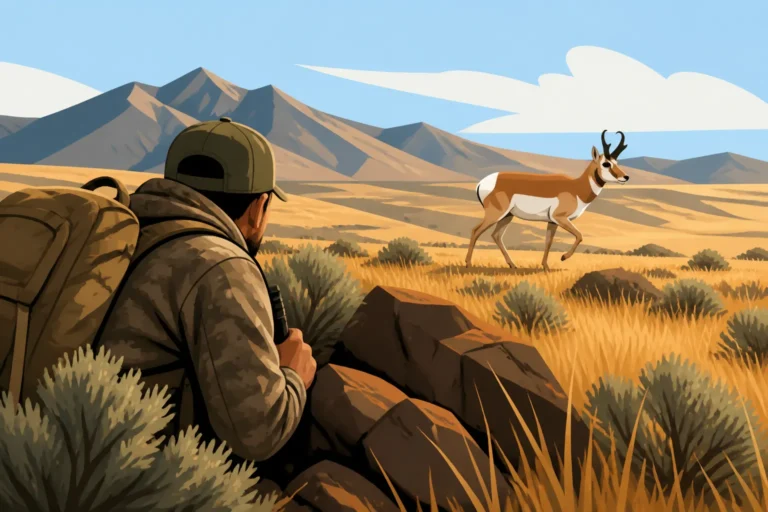
Once you're near the water, scout out your position. You're looking for natural cover – a clump of sagebrush, a rocky outcropping, a small ravine – that offers concealment and a clear line of sight to the water without being sky-lined. Consider the sun's position throughout the day; you don't want to be staring directly into it. If natural cover is scarce, a pop-up ground blind can be a lifesaver, but introduce it well in advance if possible to allow animals to get used to it. Remember, you're trying to blend into the environment, not stand out. This often means Sitting Water on a Nevada August Hunt requires careful heat management and early morning movement.
Understanding Wind and Sun Direction
Just as critical as concealment is managing your scent and silhouette. Always position yourself downwind from the water source. Even a slight breeze can carry your scent for hundreds of yards, alerting animals before they ever come into view. Use a wind checker frequently. Pay attention to thermals, which typically rise in the morning and fall in the evening, especially in broken terrain. A handheld anemometer can be incredibly useful to truly understand local air currents.
The sun's position is equally important. In the morning, you want the sun at your back, illuminating the animals as they approach the water. In the evening, the reverse is true – you want the sun setting behind you. This prevents glare from obscuring your vision and keeps you out of a stark silhouette against the sky. This careful consideration of environmental factors is part of Reading Wind on a Long Sage Stalk, which applies to stationary hunting as well.
Patience, Stealth, and the Long Game
Water hole hunting is a game of patience. You might sit for hours, even an entire day, without seeing the animal you're after. That's okay. Resist the urge to fidget, check your phone, or move unnecessarily. Maintain absolute stealth. Keep your movements slow and deliberate, especially when glassing or adjusting your position.
Wildlife will often approach water cautiously, circling downwind, pausing, and observing before committing. A wise old buck isn't going to just waltz in. He'll use every sense he has to ensure the coast is clear. Your job is to be an invisible, silent observer. The "long game" here means being prepared to wait, to endure, and to stay focused. It's not a sprint; it's a marathon, and the reward is often a close-range, ethical shot at a wary animal.
| Water Source Type | Reliability in Dry Units | Animal Preference | Best Time to Sit | Key Scouting Tip |
|---|---|---|---|---|
| Natural Springs/Seeps | High, if perennial | All game species | Dawn & Dusk | Look for game trails; verify flow in person |
| Guzzlers (Man-made) | Very High | All game species | Dawn, Dusk, Midday heat | Check topo/GoHunt maps; look for maintenance |
| Ephemeral Puddles | Low, post-rain only | Deer, Antelope | Post-rain; quick dry-up | Monitor weather; scout immediately after rain |
| Stock Tanks | Medium, if actively used | Cattle, Deer | Dawn & Dusk | Respect private land; look for recent use |
Equipping Yourself for the Long Haul: Gear for Water Hole Hunting
A successful water hole sit isn't just about strategy; it's also about having the right gear to support your efforts. Being prepared for extended periods in the elements, maintaining concealment, and having the tools for observation are non-negotiable. Don't skimp on these essentials; they contribute directly to your comfort, effectiveness, and safety.
Optics and Observation Tools
You're going to be doing a lot of watching, often at long distances before an animal commits to the water. High-quality optics are paramount. A good pair of binoculars (10×42 or 12×50 are popular choices) on a tripod will save your eyes and allow you to pick apart the terrain for approaching animals. A spotting scope (20-60x or 22-45x power) is an invaluable tool for Spotting Scope Power for Open Country or confirming the size and sex of an animal long before it reaches shooting range. You can use it to identify smaller species, observe behavior, and generally keep yourself entertained and engaged during those long hours. GoHunt's mapping tools can help you identify vantage points around water sources for optimal glassing.
Comfort and Concealment Essentials
Sitting still for hours demands comfort. A lightweight, portable hunting chair or a sturdy seat cushion will be your best friend. A ground blind, as mentioned, provides excellent concealment and protection from the elements. If you're not using a blind, wear camouflage that matches the local vegetation, and ensure your face and hands are covered to break up your human outline. Gloves, a face mask, and a wide-brimmed hat can make a huge difference. Dress in layers, as desert temperatures can swing dramatically from chilly mornings to scorching afternoons. A simple blanket or sleeping bag can make those predawn hours much more tolerable.
Hydration, Safety, and Emergency Preparedness
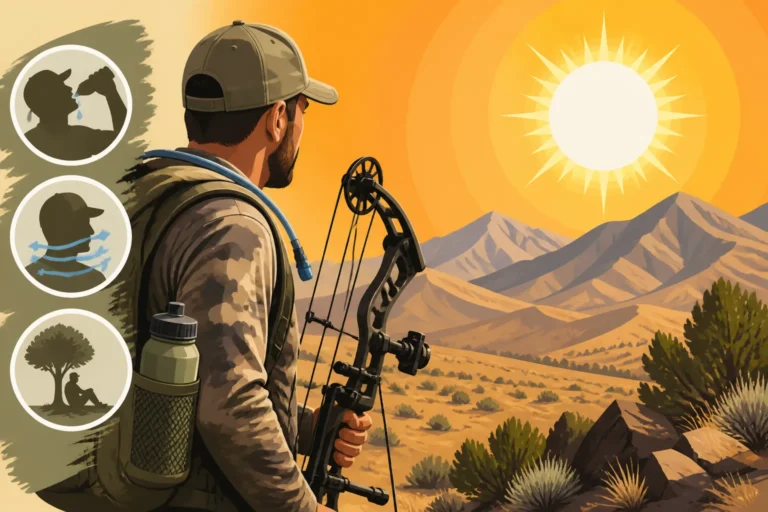
Nevada's dry units can be unforgiving. Water You Must Carry on a Desert Day Hunt is not a suggestion, it's a requirement. Always carry more water than you think you'll need, especially if you're out for an entire day. Electrolyte packets are a good idea. Beyond hydration, a basic first-aid kit, emergency shelter (even a simple space blanket), and a reliable communication device (satellite messenger is highly recommended where cell service is non-existent) are crucial. Inform someone of your hunting plans and expected return time. Be aware of venomous snakes and other desert critters; a snake bite kit might be overkill for some, but a valid consideration in certain areas.
Beyond the Water: Integrating Water Sits into Your Broader Hunt Plan
While water sits can be incredibly productive, they shouldn't exist in a vacuum. The most successful Nevada hunters integrate this tactic into a larger, more dynamic hunt plan. Think of water sources as anchor points around which you build your scouting and hunting strategy.
E-Scouting and Ground Truthing Water Sources
Before you ever set foot in the unit, spend significant time e-scouting. Utilize tools like GoHunt's detailed maps and public land overlays to identify potential springs, guzzlers, and even ephemeral water sources. Look for drainages, saddles, and benches that might hold moisture. However, e-scouting is only the first step. You must ground truth these locations. Many hunters have been disappointed by a "spring" on a map that's nothing more than a dry, rocky depression. Drive or hike in beforehand to confirm water availability, game sign, and potential setup locations. This proactive E-Scouting a Nevada Unit Before the Season is critical for any successful desert hunt.
Reading Sign Around Water Sources
Once you've located a viable water source, don't just sit down. Take the time to "read" the area around it. Look for fresh tracks, droppings, and rubbed trees or bushes. Are there multiple game trails leading to the water? Which ones appear most heavily used? This tells you not only that animals are using the water but also their preferred approach and exit routes. Pay attention to the types of tracks – are they deer, elk, or antelope? Are they bucks or does, bulls or cows? Fresh sign indicates recent activity and confirms that the water is currently in use. This goes hand-in-hand with Reading Fresh Elk Sign in Thin Timber or similar deer sign in the sage.
Combining Water Sits with Spot and Stalk
A water sit can be an excellent way to start or end your day, or even fill the midday hours when animals are seeking shade and moisture. But don't be afraid to combine it with other tactics. For instance, you might spend the first few hours of daylight glassing from a high point, hoping to spot animals moving towards water, then transition to a water sit if nothing materializes. Or, you might spot an animal coming off water and initiate a spot and stalk. The key is flexibility. Don't commit to a water sit for the entire day if conditions or animal movement suggest a different approach. Learning to Glassing Grids Across a Nevada Basin can help you identify movement patterns leading to water.
Ethical Considerations and Regulations for Water Hunting
Hunting around water in Nevada comes with responsibilities and specific rules you need to understand. Ethical behavior and adherence to regulations are paramount to ensure sustainable hunting practices and respect for both wildlife and fellow outdoorsmen.
Respecting Wildlife and Other Hunters
Water sources are critical for wildlife survival, especially in harsh conditions. While it's a legal and effective hunting strategy, it's important to be mindful of your impact. Avoid harassing animals or unduly stressing them at water. If another hunter is already at a water source, respect their space and move on to another location. Communication is key if you encounter others. Remember that these spots are finite resources, and ethical sharing benefits everyone. A common understanding of Water Development and Hunting Ethics is vital.
Understanding Baiting and Trail Camera Rules
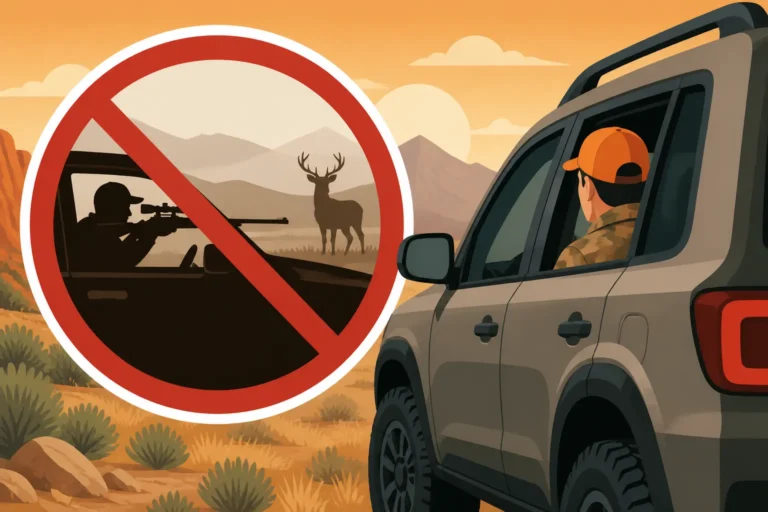
Nevada has specific regulations regarding baiting and the use of trail cameras, particularly in relation to water sources. Generally, baiting big game is illegal. This means you cannot place food, minerals, or other attractants near a water source to draw in animals. Always consult the current Nevada Department of Wildlife (NDOW) regulations booklet for the most up-to-date information on Baiting and Trail Camera Rules in Nevada. Trail cameras are typically legal for scouting purposes, but there might be restrictions on how close they can be to a guzzler or public water source, or rules about removing them after a certain period. Ignorance of the law is never an excuse, so do your homework.
Retrieving Game Near Water
Should you successfully harvest an animal near a water source, prioritize a swift and ethical retrieval. This means locating the downed animal quickly, field dressing it, and getting the meat cooled as soon as possible, especially during warmer seasons. Field Dressing in August Heat is a particular challenge. Do your best to keep the carcass out of the water source itself and clean up any significant blood or entrails, if practical, to maintain the integrity of the water for other wildlife. Always ensure you have sufficient help or equipment to pack out your animal, as vehicle access near sensitive water developments might be restricted.
Disclaimer
The information provided in this guide is for general informational purposes only and is not intended as legal advice. Hunting regulations, seasons, and requirements in Nevada are subject to change. Always consult the most current Nevada Department of Wildlife (NDOW) regulations and official resources before planning and executing any hunting activity. It is your responsibility to know and abide by all applicable laws and regulations.