Using a Rim to Break Your Silhouette
Oh, the sheer frustration of being spotted in Nevada's wide-open country! You spend hours glassing, finally spot that buck or bull you’ve been dreaming of, make your plan, and then, poof – they're gone, vanished into thin air because you showed yourself against the horizon. It’s a gut punch, right? This guide is all about fixing that. We’re going to dive deep into one of the most fundamental, yet often overlooked, tactics for staying hidden in the vastness of the Great Basin: effectively using a rim to break your silhouette and get within range of that trophy animal.
Understanding the High-Contrast Nevada Landscape
Nevada is a land of extremes and stark beauty, but that beauty often comes with a challenge for hunters: a distinct lack of heavy cover. Unlike the dense forests of the Midwest or the dark timber of the Rockies, much of Nevada is open, expansive, and high-contrast. This unique environment makes stealth an art form, and understanding why you get busted is the first step to becoming a ghost in the sagebrush.
Why Flat Ground Betrays You
Let's be honest, staring out across miles of sagebrush flats, it feels like there’s nowhere to hide. You see that deer at 2,000 yards, and it sees you. The lack of significant topographical relief means that a standing human form, especially one moving, creates a very obvious vertical line against a relatively flat horizon. Our human shape, with our distinct head, shoulders, and legs, is something wild game animals are hardwired to recognize as a threat.
Imagine trying to hide a flagpole in a bowling alley. That's often what it feels like when you're caught on an open flat in Nevada. The animal’s eyes, often on the lookout for predators from all angles, pick up on the slightest movement and the most unnatural shapes. Even if you're wearing excellent camouflage, your overall human outline becomes a glaring beacon against the muted tones of the landscape. It’s why so much of Why Nevada Deer Hunting Is a Glassing Game focuses on spotting from afar before the stalk even begins, because once you’re moving, you're at a disadvantage on those open flats.
The Sun, Sky, and Horizon Problem
Adding another layer of difficulty to the open Nevada landscape is the sun and sky. When you're moving on a ridge or saddle, especially when the sun is behind you or directly overhead, your body can create a sharp, dark silhouette against the bright sky. This isn't just a problem for photographers; it's a huge problem for hunters. That dark outline is incredibly easy for an animal to see, even at a distance. Their eyes are incredibly sensitive to changes in light and shadow, and that crisp, human-shaped shadow-puppet against the sky is a dead giveaway.
The horizon line itself acts as a natural backdrop that emphasizes your form. Any time you skyline yourself, meaning you expose your entire body above the natural line of the terrain, you're essentially putting up a giant "here I am!" sign for every animal within eyeshot. The goal, then, becomes a constant dance of staying below that critical horizon, using every subtle dip and rise to your advantage. It’s a constant mental battle, reminding yourself to slow down, assess your position, and consider what the animal sees against the backdrop.
What Exactly is a "Rim" in Hunting Context?
When we talk about using a "rim" in Nevada hunting, we're not always talking about the grand, dramatic edges of a massive canyon. Often, it's something much more subtle, but equally effective, that breaks up that tell-tale human silhouette. Understanding these nuances is crucial for success in a landscape defined by vastness.
Defining Natural Terrain Features
In Nevada, a "rim" can be any natural terrain feature that offers a break in the landscape sufficient to conceal your presence. This might include:
- The edge of a canyon or large draw: This is the classic definition, providing a dramatic drop-off that allows you to move completely out of sight. Think of the deeper cuts in the Schell Creek or Jarbidge Wilderness areas.
- The crest of a ridge or hill: Not necessarily a sheer cliff, but the point where the ground starts to slope away, offering a natural horizon line to stay below. These are abundant across nearly all units.
- A subtle rise or Knoll: Even a small hump in an otherwise flat valley floor can act as a crucial rim, allowing you to drop just enough to avoid being silhouetted. On the extensive antelope flats, a rise that's only a few feet higher than the surrounding ground can be a lifesaver when Closing the Last Hundred Yards on a Pronghorn.
- The lip of a wash or gully: These natural drainage features, often unseen until you're right on them, can provide excellent, close-range cover for stalking. They act like miniature, winding canyons.
The key characteristic of any effective "rim" is its ability to block your line of sight with an animal, or at least break up your distinct outline against the sky or distant landscape. It's about recognizing these opportunities, no matter how small, and understanding how to exploit them. Tools like GoHunt can be invaluable here, allowing you to zoom in on detailed topographical maps and identify these subtle features long before you ever set foot in the field. This kind of E-Scouting a Nevada Unit Before the Season can give you a massive leg up.
How Rims Offer Cover and Concealment
A rim offers a powerful one-two punch in the world of stealth: cover and concealment. While often used interchangeably, there's a distinct difference, and rims excel at both.
- Cover: This is physical protection. A rim provides something solid that will stop a bullet or an arrow, but more importantly for a stalk, it completely blocks the animal's view of you. If you're behind a rim, the animal literally cannot see you. This is invaluable when you need to make significant movements – stand up, adjust your pack, or even take a quick break without fear of being spotted. The solid earth of the rim is your best friend.
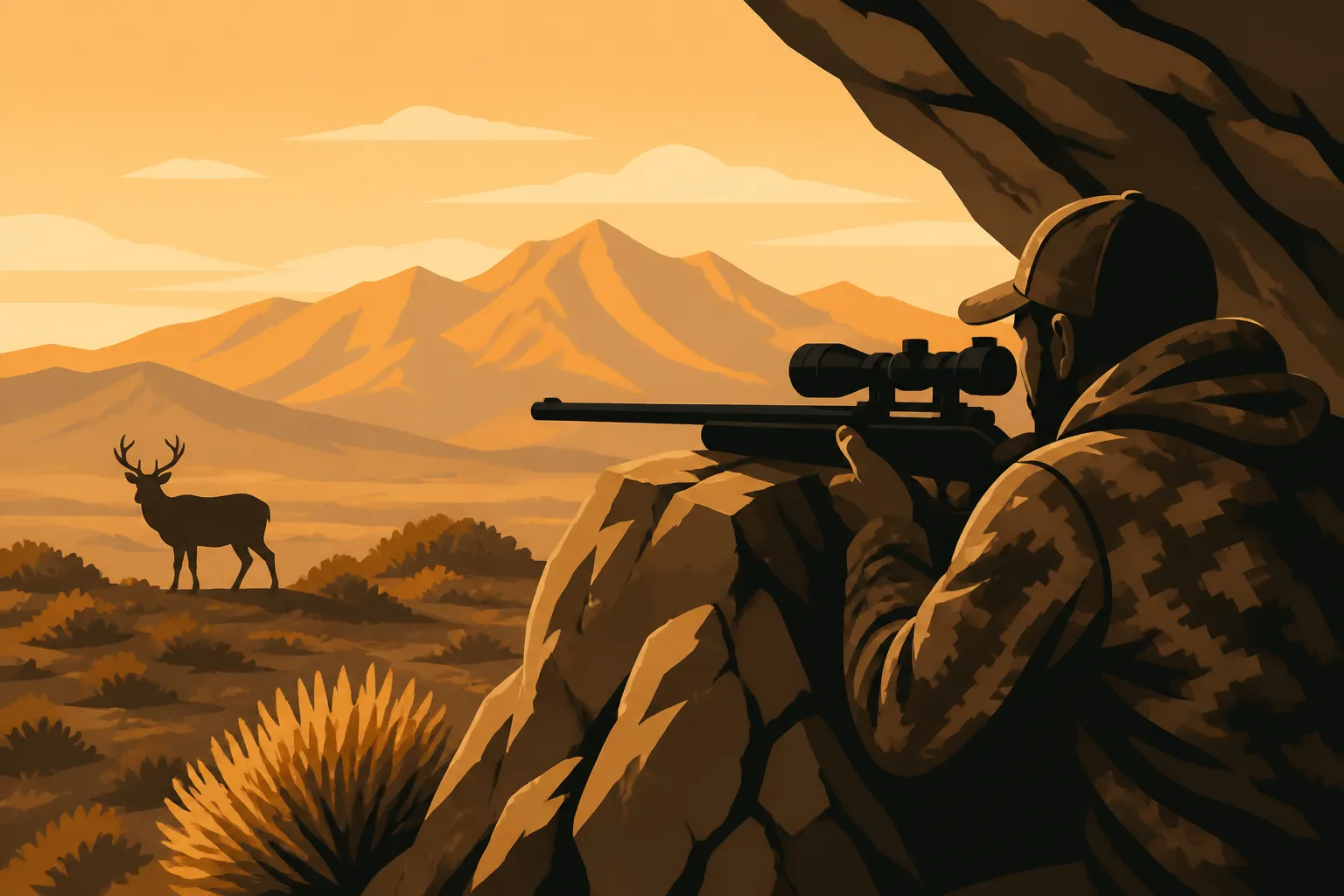
- Concealment: This refers to hiding your presence without necessarily offering physical protection. A rim, even if it's not tall enough to fully cover you, can still break up your outline, making it much harder for an animal to distinguish your human form from the background. By moving just below the crest of a ridge, your head and shoulders might intermittently pop up, but your entire body won't be silhouetted against the sky. This works because the jagged, irregular line of the rim itself blends with your form, disrupting that clean, unnatural human outline.
The best rims offer both. They give you a solid barrier to move behind, allowing you to get closer, and then, as you peek over or move along the top, they help to blend your form into the natural contours of the land. It's a strategic advantage that no amount of fancy camouflage alone can provide in the wide-open spaces of Nevada.
Tactical Approaches to Using Rims for Stalking
Successfully using rims in Nevada isn't just about finding them; it's about mastering the art of movement and observation in conjunction with these terrain features. Every step, every peek, needs to be deliberate and calculated to avoid detection.
The "Stay Below the Horizon" Principle
This is the golden rule when it comes to rim usage. Always, and I mean always, strive to keep your body below the natural skyline or horizon as viewed from the animal's position. This often means moving much slower and lower than feels natural.
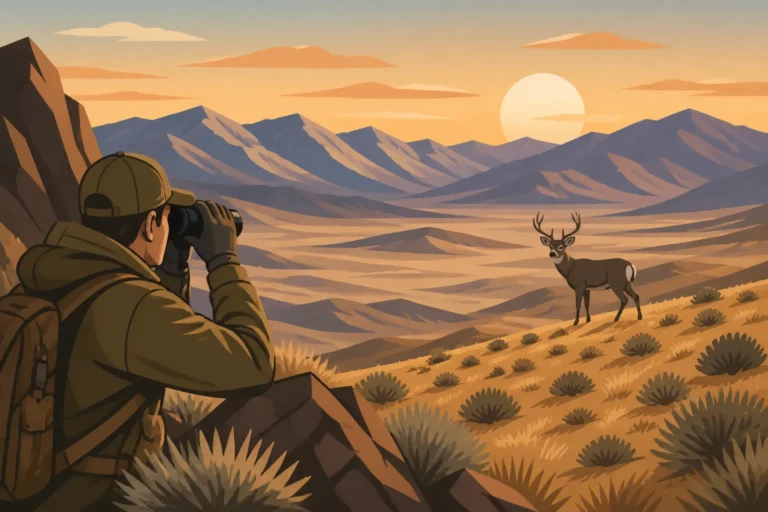
- Creeping and Crawling: When you're approaching the crest of a rim, especially for a peek, drop to your hands and knees, or even flat on your belly, and slowly push forward. Use your binoculars or spotting scope from this low position to scan. Never rush this critical moment. You'll likely need to spend significant time on your knees when How Close a Bowhunter Needs to Get on Mule Deer.
- Sizing Up Your Peeking Point: Before you ever lift your head, choose exactly where you're going to peek over. Look for a spot where a small shrub, rock, or even a slight dip in the rim can provide additional cover for your head and shoulders. Don't just pop up at the highest point.
- Slow Motion Movement: Animals are incredibly sensitive to sudden movements. Whether you're crawling, walking crouched, or moving between larger sections of cover, do it in slow motion. Imagine moving through cold molasses. Every motion should be fluid and controlled. When you approach a rim, slow down, then slow down some more. This controlled approach is critical for How Far to Stalk a Bedded Mule Deer.
This principle is the cornerstone of effective stalking in open country. It requires patience, discipline, and a willingness to get dirty, but it’s absolutely essential for consistently getting within range.
Reading the Terrain for Your Next Move
Effective rim usage starts long before you even spot an animal. It begins with intelligent terrain analysis, both from your couch and in the field. You need to become a master at visualizing how the land lays out and how to navigate it unseen.
- E-Scouting with Topo Maps: Before you even leave home, use mapping software like GoHunt to study the contour lines of your chosen unit. Look for natural funnels, draws, and ridges that could offer covered approaches to known bedding areas or feeding grounds. Identify potential stalking routes that maximize your time behind a rim or in a depression. Pay close attention to subtle elevation changes; even a 5-foot rise can be a significant rim in the right situation. The ability to use these tools for Reading a Nevada Hunt Unit Before You Apply is invaluable.
- In-Field Reconnaissance: Once you're on the ground, always be aware of the terrain around you. Even when just hiking, scan the landscape for future possibilities. When you spot an animal, immediately look for the nearest and most effective rim or series of rims that can take you closer. Don't just look directly at the animal; look at the ground between you and the animal. What features can you use? Is there a subtle draw? A long, low ridge? A series of small rises that you can link together?
- Planning Your Route: Once you’ve identified your target animal and potential rims, plan your entire route backward from your desired shooting position to your current location. Think about each segment of the stalk. Where will you emerge? Where might you need to crawl? Where will you stop for another look? Remember, Terrain That Hides an Approach in Open Country is your primary asset, and the more you leverage it, the better your chances.
| Terrain Feature | Description | Effectiveness as a Rim | Best Use Case |
|---|---|---|---|
| Canyon Edge | Steep, significant drop-off; often has thick brush/trees along rim. | Excellent (Full Cover) | Large movements, covering significant distance, complete concealment. |
| Ridge Crest | Elevated ground where slopes diverge; can be sharp or rounded. | Good (Cover & Concealment, watch skyline) | Stalking, glassing from concealed position. Avoid silhouetting. |
| Draw/Wash Lip | Edge of a natural drainage, often winding and less visible from afar. | Very Good (Close to mid-range cover) | Mid-range stalks, particularly effective on undulating ground. |
| Knoll/Small Rise | Minor elevation change in otherwise flat terrain; subtle. | Moderate (Concealment, limited full cover) | Antelope, subtle movements on flats. Requires extreme low profile. |
| Saddle | Dip between two higher points on a ridge or mountain pass. | Good (Cover, but often a wind tunnel) | Crossing ridges, changing basins. Can be exposed if not careful. |
Playing the Wind and Thermals with Rim Use
Even the perfect rim stalk can be ruined if the animal catches your scent. Integrating wind and thermal knowledge is critical, and rims can sometimes offer unexpected advantages or create new challenges in this regard.
- Wind Direction and Rims: Always approach an animal from downwind. Rims can sometimes create localized wind currents or eddies. Before committing to a stalk along a specific rim, pause and test the wind at that elevation and location. A rim might block the main wind, but create a swirling downdraft on the lee side that carries your scent directly to your target. Reading Wind on a Long Sage Stalk is a skill you must continuously practice, especially in broken country.
- Thermals and Time of Day: Thermals are air currents driven by temperature changes, usually rising in the morning as the sun warms the earth and falling in the evening as it cools. Rims, being elevated, can play a significant role.
- Morning Ascent: As the sun rises, warm air starts to rise up hillsides and ridges. If you're stalking uphill along a rim in the morning, your scent will likely be carried up and away from animals below you.
- Evening Descent: Conversely, in the evening, as the air cools, thermals reverse and flow downhill. If you're stalking downhill along a rim, your scent will be carried down towards animals below.
- Strategic Pauses: Sometimes, the best use of a rim is to stop behind it, get completely out of sight, and wait for the thermals or wind to change in your favor. Playing Thermals on a Rimrock Stalk means being patient and understanding the nuances of how the air moves in that specific environment. Don't rush a stalk just because you have good visual cover; ensure your scent is also handled.
Common Mistakes and How to Avoid Them
Even seasoned hunters make mistakes, especially in the unforgiving landscape of Nevada. Recognizing and actively avoiding common pitfalls associated with rim usage can be the difference between a successful harvest and going home empty-handed.
Silhouetting Yourself Carelessly
This is arguably the most common and devastating mistake in open country. It happens quickly and is almost always fatal to the stalk.
- The "Skyline Stand-Up": You've been crawling for what feels like an eternity, aching muscles, dust in your teeth. You finally reach what you think is a safe spot behind a rim and stand up quickly to stretch or get a better look. Busted. That sudden movement, that clean human outline against the sky, is an instant red flag for animals. Always move slowly, always peek, and if you must stand, do it behind solid cover, never on the skyline.
- Peeking Too High or Too Fast: When you finally reach the crest of your chosen rim, the temptation is strong to pop your head up quickly to see if the animal is still there. Resist it. Just your head and shoulders, even momentarily silhouetted, can be enough. Instead, crawl to the very edge, slowly raise just your eyes and binoculars first, then maybe your head, keeping as low as possible. Use a small shrub or rock for additional breakup if available.
- Movement on the Edge: Even if you're staying low, quick, jerky movements right on the edge of a rim can catch an animal's eye. Imagine an animal seeing a slight flicker or change in the natural horizon line. It’s enough. Maintain a slow, deliberate pace, even when crawling, especially when visible to the animal.
Underestimating Animal Vision
We, as humans, tend to judge visibility by our own standards. But deer, elk, and especially antelope have evolved incredible vision, far superior to ours in many ways relevant to detecting danger. Underestimating this will get you busted every time.
- Wide Field of View: Mule deer, for instance, have eyes on the sides of their heads, giving them an almost 300-degree field of view without moving their heads. This means they can see you coming from a much wider angle than you might expect.
- Motion Detection: Their eyes are finely tuned to detect movement. Even a slow, deliberate movement on your part can be picked up if your silhouette is compromised. This is why "freezing" when an animal looks up is often your best bet, even if you’re exposed.
- Low Light Performance: Many big game animals are crepuscular, meaning most active during dawn and dusk. Their eyes perform exceptionally well in low light, when human vision starts to fail. This means that a silhouette against a dim skyline at first light or last light is still a huge liability.
Always assume the animal sees better than you do, moves faster than you think, and is constantly scanning. This mindset fosters the necessary caution and patience needed for effective rim stalking.
Not Utilizing Available Cover Fully
Sometimes, hunters get so fixated on a primary rim or major terrain feature that they overlook smaller, closer opportunities for concealment. This can lead to unnecessary exposure or a less efficient stalk.
- Small Rocks and Sagebrush: Don't dismiss a cluster of tall sagebrush or a small rock outcrop as insignificant. In the right scenario, these can provide crucial temporary concealment as you transition between larger rims, or allow you to get that last 20 yards closer when no other major cover exists. They help break up your outline, even if they don't offer full cover.
- Linking Features: A truly masterful stalk isn't about using one single rim, but linking together a series of smaller depressions, washes, rises, and large sagebrush patches. Think of it as a patchwork quilt of cover. Plan your route to utilize every bit of Using Draws and Rims to Close Distance effectively.
- Changing Levels: Sometimes the best cover isn't directly behind a rim, but by dropping into a gully or wash that runs parallel to your target. This changes your level, breaking your silhouette against the natural ground, even if you're technically not "behind" a rim. Always look for ways to decrease your profile and blend with the ground, not just the skyline.
Advanced Rim Usage and Scouting with Technology
Moving beyond the basics of using rims means integrating them with other cover, leveraging modern technology, and practicing until the movements become second nature. This is where you elevate your game in the challenging Nevada environment.
Integrating Rims with Other Cover
No single type of cover is usually sufficient on its own. The real magic happens when you weave rims together with other natural elements to create an impenetrable path to your target.
- Sagebrush and Junipers: In much of Nevada, sagebrush isn't just a ubiquitous plant; it's a vital part of your concealment strategy. When stalking along a rim, use large sagebrush bushes or scattered juniper trees to break up your shape even further. Move through these patches when possible, allowing the foliage to mask your movement. They can hide a standing hunter temporarily or provide extra cover for a crawling approach.
- Shadow Lines: Pay close attention to the sun's position. Moving through shadow lines, whether cast by larger ridges, cloud cover, or even dense patches of brush, can provide a significant advantage. A rim becomes even more effective if its edge is bathed in shadow, making your movements less detectable.
- Depressions and Undulations: The ground in Nevada is rarely perfectly flat. Even subtle depressions or undulations in the terrain can provide temporary cover. Learn to "read" these minor changes and incorporate them into your stalk. Think of them as mini-rims that, when linked together, can provide a surprisingly effective low-profile approach across seemingly open ground.
Mapping Software for Identifying Stalking Routes
Modern hunting apps and mapping software have revolutionized how we scout and plan hunts, making them indispensable for advanced rim usage. Companies like GoHunt provide incredible topographical data that, when understood, can unveil hidden stalking routes.
- Contour Line Interpretation: Learn to read contour lines on a topographical map. Closely spaced lines indicate steep terrain (good for quick, hidden drops), while widely spaced lines indicate gentle slopes. Look for areas where contour lines suggest natural depressions, draws, or the crest of a ridge. Practice visualizing the 3D landscape from these 2D lines.
- 3D Viewer Capabilities: Many modern apps offer a 3D view. This is gold for planning. You can virtually "walk" your intended stalking route, seeing exactly where potential rims, draws, and other cover exist. You can even simulate your line of sight from the animal's position to identify any spots where you might be silhouetted. This takes the guesswork out of field execution.
- Layering Public/Private and Water Sources: Combine terrain data with layers showing public land boundaries and known water sources. Animals often congregate near water, especially How Guzzlers Concentrate Desert Game. By using your mapping software to identify rims leading to these areas, you can develop highly effective ambush or stalking plans. This kind of detailed planning, including methodologies like The Grid Glassing Method, Step by Step, vastly improves your odds before you even leave camp.
Practicing Your Approach
Like any skill, mastering rim usage requires practice. You wouldn't expect to hit a target at 500 yards without putting in time at the range, and you shouldn't expect to execute a flawless stalk without practicing your movements.
- Dry Run Drills: Go to a local park, public land, or even your backyard if it has varied terrain. Identify a "target" (a tree, a fence post) and practice stalking it using imaginary rims. Focus on slow, deliberate movements, staying low, and peeking correctly. Pay attention to how your body feels and what feels unnatural. The more you practice, the more these movements will become ingrained.
- Filming Yourself: Ask a friend to film you practicing a stalk. You'll be amazed at what you see. You might think you're staying low, but the camera reveals your head popping up too much, or your movements are too jerky. This objective feedback is invaluable for refining your technique.
- Physical Conditioning: Stalking low, crawling, and moving slowly over broken terrain is physically demanding. Building your core strength, flexibility, and endurance will make these movements easier, quieter, and less tiring, allowing you to focus on the hunt rather than your discomfort.
Species-Specific Considerations for Rim Usage
While the core principles of using a rim remain the same, different species require slightly different tactical adjustments due to their habitat, behavior, and visual acuity. Tailoring your approach to the game you're after is key to success.
Mule Deer in the Basins
Mule deer are the quintessential Nevada big game animal for many, and they often inhabit the vast sagebrush basins and broken canyon country. This means that rim usage is not just important; it's absolutely critical for getting within range.
- Glassing from a High Rim: Often, the most effective way to hunt mule deer in Nevada is to get to a high vantage point, utilize your optics to Judging a Mule Deer Buck at Distance, and glass the basins below. Once you spot a deer, identify the system of rims, draws, and washes that will allow you to drop off your high point and approach unseen.
- Exploiting Bedding Areas: Mule deer often bed on slight rises or points within a basin, giving them a commanding view of their surroundings. This makes direct approaches incredibly difficult. Using rims to come in from behind or below their line of sight, often by circling wide, is usually the most successful tactic. Your goal should be to approach from an angle where they are looking away from your intended path or where the rim creates a permanent blind spot.
- Patience is a Virtue: Mule deer can be incredibly patient when bedded. They might stay in one spot for hours. This gives you time to execute a long, winding stalk using every available rim. Don't rush. Take your time, re-evaluate, and ensure every movement is quiet and concealed.
Pronghorn on the Flats
Pronghorn, often called the "speed goats" of the plains, present a unique challenge for rim usage. They live in incredibly open country, and what constitutes a "rim" for a pronghorn hunt might be a very subtle feature indeed.
- Mini-Rims are Key: On flat antelope country, a rim might be nothing more than a few inches to a foot of elevation change – the lip of a shallow wash, a slight rise in the terrain, or even the edge of a dirt road embankment. These tiny features become monumental for concealment.
- Long-Range Stalks, Low Profile: Because pronghorn inhabit such open areas, your stalks will often be extremely long, requiring you to stay low and out of sight for extended periods. This might mean crawling on your belly for hundreds of yards, using every minor depression and rise as a rim.
- Using Decoys in Conjunction: Sometimes, despite the best rim usage, you simply can't get close enough. This is where a pronghorn decoy can come into play. You can stalk as far as possible behind rims, and then, if you're still out of range, deploy a decoy to draw the buck closer, keeping yourself completely hidden behind the rim while the decoy acts as a distraction.
Elk in Broken Country
While Nevada's elk country is often more timbered than the mule deer basins, rims are still incredibly important, especially when navigating the broken, mountainous terrain where elk reside.
- Rims as Travel Corridors: Elk often travel along natural benches, ridges, and the tops of draws. These features can serve as excellent "rims" for a hunter to move quietly along, using the steep drop-offs or thick timber on either side for cover.
- Calling and Concealment: When Bugling Bulls in Nevada's Northern Mountains or using cow calls, rims become crucial for positioning. You want to call from behind a rim or dense cover, forcing the bull to come to you, exposing himself as he crests the rim, rather than having him spot you first.
- Playing Steep Terrain: Nevada's elk often live in steep, rugged country. These steep slopes themselves can act as massive rims. Use the changes in elevation to your advantage, moving across a hillside where the ground above or below you provides a visual barrier. This makes Reading Fresh Elk Sign in Thin Timber much more effective as you can move into range unseen.
Using a rim effectively in Nevada is a skill born of necessity. The vastness of the landscape demands a meticulous approach, a keen eye for terrain, and the patience of a true predator. Master these techniques, and you'll transform from a glaring silhouette into a ghost, silently moving closer to your next trophy.
Disclaimer
Hunting is an inherently dangerous activity. This article provides general information and recommendations only. Always consult and strictly adhere to the current Nevada Department of Wildlife (NDOW) regulations, local laws, and landowner permissions. Ensure you have proper licensing, hunter education, and safety equipment. The author and publisher are not responsible for any incidents, accidents, or legal issues that may arise from using this information. Hunt safely and ethically.