Checking Nevada Draw Odds Before You Apply
Navigating the Nevada big game draw can feel like trying to solve a puzzle blindfolded. With limited tags and highly sought-after species, many hunters experience the frustrating cycle of applying year after year only to be unsuccessful, leaving them wondering if their strategy is even working. This comprehensive guide is here to demystify the process of checking Nevada draw odds before you apply, offering clear insights and practical steps to help you make informed decisions and increase your chances of finally drawing that coveted tag.
Understanding the Nevada Draw System's Nuances
Nevada's drawing system isn't just a simple lottery; it's a sophisticated structure designed to reward persistence while still offering a chance for new applicants. Grasping the core mechanics of how applications are weighted and how tags are distributed is the first critical step toward making sense of the odds and building a successful application strategy. It’s easy to get discouraged when you hear stories of people waiting a decade or more for a premium tag, but understanding the system reveals opportunities you might otherwise overlook.
The Squared Bonus Point System
One of the most distinctive features of the Nevada draw is its squared bonus point system, a concept that can initially confuse even seasoned applicants. Unlike some states where points are simply added, Nevada literally squares your accumulated points. This means if you have one point, you get one chance in the draw. With two points, you get four chances (2×2). With three points, you get nine chances (3×3), and so on. This exponential increase significantly boosts your odds as you accumulate more points, making the long game particularly rewarding for those chasing the state's premier tags.
This system strongly favors those who consistently apply and build up a substantial bank of points. For instance, someone with four bonus points doesn't just get four chances; they get sixteen chances (4×4). This compounding effect is why many hunters, especially non-residents, choose to prioritize accumulating points over drawing a tag immediately, especially for highly competitive species like elk or bighorn sheep. If you're wondering exactly how this system translates into draw entries, you'll want to dig into the details on How Nevada's Squared Bonus Points Work.
Nonresident vs. Resident Draw Pools
It's a common misconception that all applicants are treated equally, but Nevada, like most Western states, maintains separate draw pools for residents and nonresidents. A set percentage of tags, usually a smaller allocation, is reserved specifically for nonresidents. This means that while the squared bonus point system applies to both, the competition within the nonresident pool is often far more intense due to the limited number of tags available.
Understanding these separate pools is crucial for managing expectations. Nonresidents, even with a solid number of points, will generally face lower success rates than residents applying for the same unit and species. This isn't to discourage nonresident applications, but rather to highlight the reality of the draw and inform a more realistic strategy. If you're a nonresident, it's particularly important to research The Nonresident Nevada Combination License and budget accordingly, as the tag costs can be substantial once you draw.
Applying for Multiple Species
Many hunters eye more than one species in Nevada, hoping to maximize their chances of drawing something. The good news is that Nevada allows you to apply for multiple species in a single application year. However, it's not a free-for-all. Each species application is a separate entry into its respective draw, and you'll typically pay an application fee per species. This means you could theoretically apply for deer, elk, and antelope all in the same year, each with its own set of choices and corresponding bonus points.
This multi-species approach can be an excellent way to diversify your efforts, especially if you're willing to hunt a variety of animals or have different point totals for each. Just remember, while you can apply for multiple species, you can only draw one primary big game tag per year, with some very specific exceptions for specific antlerless tags. To fully understand your options and the financial implications, it's wise to review information on Applying for Multiple Species in One Nevada Year.
Where to Find Reliable Draw Odds Data
Once you understand the basic mechanics, the next step is finding the actual numbers. The internet is awash with information, but not all sources are equally reliable or easy to interpret. Sifting through raw data versus using streamlined tools can make a huge difference in how effectively you strategize your application. It’s a common frustration to see outdated or incomplete information, so knowing where to go for the most accurate picture is paramount.
Official NDOW Resources
The Nevada Department of Wildlife (NDOW) is the official source for all things hunting in the state, including draw statistics. They typically publish past draw results and statistics on their website after each year's draw cycle. This raw data is invaluable, as it comes directly from the source. You'll usually find tables showing how many applicants applied for each unit, how many tags were issued, and the success rates for both residents and nonresidents, often broken down by point level.
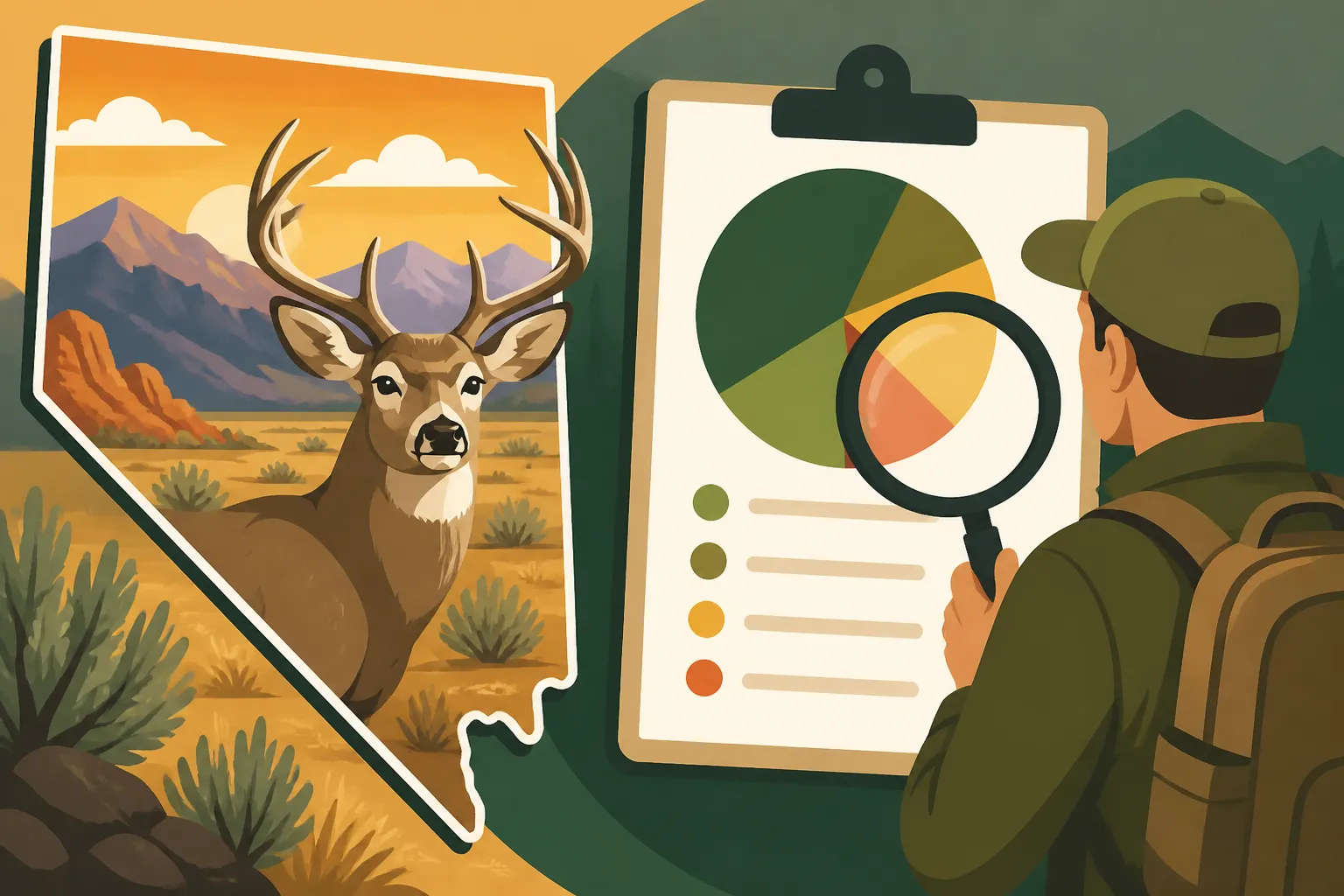
While NDOW's data is the most authoritative, it can sometimes be presented in a way that requires a bit of effort to digest. You might need to cross-reference multiple tables or perform your own calculations to get a clear picture of specific odds. Don't be intimidated by the raw numbers; they tell the true story. You'll want to refer to Reading Nevada Hunt Draw Statistics to make the most of the NDOW's official reports and understand what each column and row truly represents.
Third-Party Draw Odds Calculators and Tools
For many hunters, especially those who prefer a more streamlined approach, third-party platforms offer invaluable tools that synthesize NDOW's raw data into user-friendly draw odds calculators. Services like GoHunt are excellent examples of this, providing detailed analysis, unit breakdowns, and often predicting future draw odds based on historical trends and current application numbers. These platforms take the guesswork out of complex calculations and present the information in an easily digestible format.
Using a service like GoHunt can save you countless hours of sifting through data, allowing you to quickly compare units, analyze success rates by point level, and even visualize how many applicants are typically in your point bracket. Many of these tools also offer "what if" scenarios, helping you see the impact of adding another point or choosing a different unit. While these services often come with a subscription fee, the time saved and the clarity gained can be well worth the investment for serious applicants. Just remember that while incredibly helpful, these are predictive tools based on historical data, and actual results can vary.
Reading Historical Harvest Reports
Beyond just draw odds, delving into historical harvest reports can provide a broader context for unit quality and hunting success. NDOW also publishes these reports, which detail harvest success rates, average antler size (for deer and elk), and even buck-to-doe ratios for different units. While not directly draw odds, this information is crucial for understanding what kind of hunting experience you can expect if you do draw a tag for a particular unit.
A unit might have fantastic draw odds, but if its harvest success rate is consistently low, or the average antler size is small, it might not be the trophy hunt you envisioned. Conversely, a unit with tough draw odds but a high success rate for mature animals tells you that if you do draw, your chances of a quality hunt are significantly better. This holistic view helps you identify units that not only offer a reasonable chance of drawing but also meet your hunting objectives. Always consider checking these alongside the draw odds to get the full picture of any given unit.
Interpreting Draw Odds and Statistics
Looking at a table full of percentages and numbers can be daunting. It’s not just about seeing a low percentage and assuming it’s impossible; it’s about understanding the nuances of how those numbers are generated and what they truly signify for your application. Misinterpreting these statistics is a common pitfall that can lead to missed opportunities or unrealistic expectations.
Understanding "Applicant" vs. "Point" Odds
One of the most critical distinctions in draw statistics is between "applicant" odds and "point" odds. Applicant odds typically show the overall percentage of all applicants who drew a tag for a specific unit, regardless of their point level. Point odds, on the other hand, specifically show the success rate for applicants at a particular point level. This is where Nevada's squared bonus point system really shines, and where third-party tools like GoHunt often excel in their presentation.
For instance, a unit might show an overall "applicant" success rate of 5%. This might seem incredibly low. However, when you look at the "point" odds, you might find that applicants with 10 points had a 25% chance of drawing, while those with 0-1 points had a less than 1% chance. Understanding this distinction allows you to gauge your personal chances much more accurately, based on your current point standing. This is especially true for highly coveted tags, where the vast majority of tags go to high-point holders.
First Choice vs. Second Choice Success
Nevada allows you to list multiple choices on your application for each species. It’s natural to wonder if your second or third choice ever actually draws. The reality is that the vast majority of tags are allocated to first-choice applicants. Units with significant tag quotas or very low demand might see tags awarded to second-choice applicants, but it's much rarer. For premium units or species, it's almost unheard of.
This doesn't mean your second or third choices are useless. They can serve as a safety net or a way to potentially draw a less competitive tag if your first choice is a long shot. However, for most hunters, especially those targeting a specific unit or high-quality animal, the focus should be squarely on their first choice. Consider your choices carefully and realistically. If you're pondering Does Your Second Choice Ever Draw in Nevada?, the short answer for prime units is usually "no," but it's worth understanding the exceptions.
What Low Odds Really Mean
Seeing draw odds of 1% or less can be incredibly disheartening, but it doesn't necessarily mean it's impossible. It simply means that for every 100 people applying at a certain point level, only one might draw. For a unit with a very limited number of tags, these percentages can be even smaller. It's a game of patience and persistence. Many hunters continue to apply for these long-shot units, knowing that eventually, if they keep accumulating points, their number could come up.
However, low odds also highlight the importance of realistic expectations. If your goal is to hunt this year, applying for a unit with 0.5% odds might not be the most practical approach. Instead, you might consider units with slightly higher odds, or ones where your current point level gives you a more tangible chance. This requires a careful balance between your dream hunt and your desire to get out into the field sooner. Understanding Why Nevada Draw Odds Vary So Much by Unit can shed more light on these extreme variations.
Strategizing Your Nevada Application
Armed with a better understanding of the draw system and how to interpret the data, it's time to build a robust application strategy. This isn't just about picking a unit; it's about making deliberate choices that align with your long-term hunting goals and your current point standing.
Building Points vs. Hunting Now
This is perhaps the most fundamental decision many Nevada applicants face: do you apply for a highly competitive unit to continue building points, knowing your draw odds are low, or do you apply for a less competitive unit with higher odds to try and hunt this year? The squared bonus point system heavily incentivizes point accumulation for trophy units, making the "long game" appealing. If you're after a truly exceptional bull elk or a giant mule deer, accumulating points might be your best bet, even if it means years of unsuccessful draws.
However, if your primary goal is to simply get out and hunt in Nevada, regardless of "trophy potential," then applying for units with higher draw odds—even if they're not the legendary ones—makes more sense. Some hunters even choose to apply for a point-only application in some years, explicitly to build points without tying up their application fee in a long-shot draw. Learning about Buying a Nevada Point-Only Application can be a great way to maintain your point bank without the full financial commitment or the risk of drawing a tag you're not ready for.
Group Applications and Point Averaging
For those who enjoy hunting with friends or family, Nevada offers the option of a group application. This can be a fantastic way to share the experience, but it comes with a critical caveat: when applying as a group, your collective points are averaged. This means if one hunter has 10 points and another has 2, their group application will be weighted as if they each had 6 points (the average). This can significantly dilute the advantage of a high-point holder if they group with low-point partners.
Therefore, group applications require careful consideration. If you're a high-point holder aiming for a top-tier unit, applying solo or with other high-point individuals is usually the better strategy. Group applications are often more effective for units with higher draw odds where the dilution of points isn't as detrimental, or when the shared experience outweighs the desire for maximum draw potential. Make sure to read the specific rules on Group Application Rules in the Nevada Draw before committing with your hunting partners.
Considering Less Popular Units
While everyone dreams of drawing a tag for the units known for producing Boone and Crockett animals, there are many other excellent hunting opportunities in Nevada in less popular units. These units often have significantly better draw odds, sometimes even allowing hunters with fewer points to draw a tag. These "sleeper" units might not make the magazine covers, but they can offer fantastic hunting experiences, healthy animal populations, and the chance to simply get out into the field.
Researching these less popular units involves looking beyond the top-tier draw statistics. It means digging into NDOW's harvest reports for average success rates and antlerless tag availability, and perhaps even scouting remotely via satellite imagery. Sometimes, a unit might be less popular simply because it's harder to access, requires more physical effort, or has a different hunting season structure. Don't overlook these hidden gems; they could be your ticket to hunting Nevada sooner than you think. You can gain valuable insights by learning Reading a Nevada Hunt Unit Before You Apply to uncover these lesser-known opportunities.
Beyond the Numbers: Other Factors to Consider
Draw odds are a vital piece of the puzzle, but they are by no means the only factor. A successful hunt involves far more than just drawing a tag. Savvy hunters consider a host of other elements that can make or break their experience, from the quality of the habitat to the accessibility of the terrain.
Unit Quality and Hunter Density
A unit's perceived quality isn't just about draw odds; it's about the entire hunting experience. Some units might have reasonable draw odds but are notoriously crowded with hunters, especially on opening weekend. Others might have lower hunter density but also lower animal populations or tougher terrain. Tools like GoHunt often include data on hunter pressure, which can be invaluable. Considering How Many Tags Nevada Issues Each Year for a unit can give you a hint about potential crowding.
It's important to balance your desire for a tag with your preferred hunting style. If you crave solitude and a true wilderness experience, a unit with high hunter density might lead to disappointment, even if you draw. Researching the unit's terrain, access points, and historical harvest success (beyond just draw odds) can give you a better feel for what to expect. Sometimes, even within a crowded unit, remote pockets exist for those willing to work harder.
Weather Patterns and Drought Impacts
Nevada is a high desert state, and weather, particularly rainfall and drought conditions, plays a massive role in wildlife populations and hunter success. Years of severe drought can negatively impact fawn and calf survival, leading to reduced herd numbers and smaller average body and antler size. Conversely, a year with abundant moisture can result in lush forage and healthier animals. These factors aren't directly reflected in draw odds but significantly affect the quality of your hunt if you do draw.
Keeping an eye on long-term weather forecasts and drought maps in the months leading up to the season can give you a realistic picture of what to expect. While you can't control the weather, being aware of it can help you adjust your expectations, plan your hunt around water sources, and potentially influence your unit choice if you're applying in an area heavily impacted by drought. Understanding How Drought Affects Great Basin Deer can provide crucial insights for planning your hunt.
Physical Demands of the Unit
Nevada's diverse landscape ranges from vast, open sagebrush flats to incredibly rugged, steep mountain ranges. Some units are relatively accessible by vehicle, while others require extensive hiking, backpacking, or even pack stock to reach prime hunting areas. Your physical fitness and preferred hunting style should heavily influence your unit selection. There's nothing worse than drawing a dream tag only to find you're physically unprepared for the demands of the terrain.
When researching units, look at topography maps, satellite imagery, and even hunting forums for insights into the physical challenges. A unit with lower draw odds might be that way because it's simply too demanding for many hunters, presenting an opportunity for those who are physically fit and well-prepared. Conversely, if you prefer a less strenuous hunt, focus on units known for easier access and gentler terrain. It's always a good idea to assess your readiness and consider Preparing Physically for Long Glassing Days if you're planning a challenging hunt.
A Comparative Look at Nevada Draw Odds Resources
To bring it all together, here's a quick comparison of the types of draw odds resources commonly used by Nevada hunters. This table helps to weigh the pros and cons of each, giving you a clearer picture of which resource might best suit your application style and needs.
| Feature / Resource | NDOW Official Data | Third-Party Platforms (e.g., GoHunt) | Hunter Forums / Social Media |
|---|---|---|---|
| Accuracy | 100% official, raw historical data | Very high, based on official data + proprietary algorithms | Varies wildly, anecdotal, often outdated |
| Ease of Use | Requires manual interpretation, can be complex | Highly user-friendly, interactive tools, visual | Easy to read opinions, hard to verify facts |
| Data Presentation | Tables of raw numbers, PDFs | Graphs, charts, personalized odds calculators | Text discussions, embedded screenshots |
| Cost | Free | Subscription-based (annual usually) | Free |
| Speed of Updates | Annually, after draw results are finalized | Quickly updated post-draw, predictive modeling | Real-time discussion, but not official |
| Additional Features | Regulations, season dates, harvest reports | Unit analytics, research tools, filtering, e-scouting | Gear advice, trip reports, camaraderie |
| Best For | Verifying official numbers, deep dive into specific data | Comprehensive analysis, strategic planning, saving time | Gathering subjective insights, community |
This table highlights that while NDOW provides the definitive truth, a platform like GoHunt offers a powerful and efficient way to process and strategize with that information. It's often a combination of these resources that gives a hunter the most well-rounded understanding.
Final Thoughts on Your Nevada Application
Applying for a Nevada big game tag is more than just throwing your hat in the ring; it's an investment of time, money, and hope. Understanding the draw odds, leveraging the right resources like GoHunt, and carefully strategizing your application choices are critical steps toward turning that hope into a tangible hunting opportunity. Don't be discouraged by low odds; instead, use them as motivation to understand the system better, build your points strategically, and make informed decisions that align with your hunting aspirations. Whether you're chasing a trophy bull or simply aiming to explore Nevada's vast public lands with a tag in your pocket, a well-researched application is your best shot at success.
Remember, the journey of hunting in Nevada is often as rewarding as the harvest itself. So, dive into the data, weigh your options, and apply with confidence.
Disclaimer
The information provided in this guide is for general informational purposes only and is subject to change. Hunting regulations, draw odds, and season dates are determined by the Nevada Department of Wildlife (NDOW) and can vary year to year. Always consult the official NDOW website and current regulations before applying for any licenses or tags.