Choosing Boots for Sharp Volcanic Rock
If you've spent any time hunting the vast, rugged landscapes of Nevada, you know firsthand that the terrain is as beautiful as it is brutal on your gear. One of the biggest culprits for prematurely ending a hunt or just making every step pure misery is the incredibly sharp, abrasive volcanic rock that's scattered across so many of our prime hunting units. This guide is all about helping you understand why these rocks are such a problem and, more importantly, how to choose the right boots to protect your feet and your investment, ensuring your next Nevada adventure is about the hunt, not your blistering heels.
Understanding Nevada's Volcanic Terrain and its Impact on Footwear
Nevada is a land forged by fire, and much of its surface is a testament to ancient volcanic activity. From the stark, jagged peaks of the Jarbidge Wilderness to the seemingly endless expanses of the Black Rock Desert, you're going to encounter volcanic rock in many forms. This isn't your average smooth river rock or soft forest floor. We're talking about terrain that actively tries to tear your boots apart, and often, your feet right along with them.
The Abrasive Nature of Volcanic Rock
The primary issue with volcanic rock, often basalt or rhyolite, is its extreme abrasiveness and sharp, angular edges. When lava cools quickly, it forms a rock with a very fine grain and often glass-like properties. Imagine walking miles across broken glass — that's not far from the reality of traversing some of Nevada's units. These rocks don't just wear down your boot soles; they cut and abrade the uppers, tear stitching, and find every weak point in the boot's construction.
Many hunters make the mistake of thinking any sturdy hiking boot will do, only to find their expensive footwear shredded after a single season. The sharp edges act like tiny knives, constantly grinding against the sole and the rand, even working their way into the fabric or leather of the upper. This constant, relentless abuse means that features like thick rubber rands, durable sole compounds, and robust upper materials aren't just "nice-to-haves" — they're absolutely essential for survival in this environment.
Where You'll Encounter the Toughest Ground
While volcanic rock is widespread, some areas are particularly notorious. Head into units in Eastern Nevada, especially around the Schell Creek and Snake Ranges, and you'll climb through scree fields of sharp chert and basalt. The ranges north of Winnemucca, like the Santa Rosas, also feature plenty of this unforgiving ground, especially as you climb higher. Even seemingly flat sagebrush basins can hide fields of razor-sharp lava rock underfoot.
For those venturing into extreme wilderness areas, such as sections of the Jarbidge Wilderness, the rocky terrain becomes even more pronounced. It’s critical to scout your unit, often using resources like those found on Using onX Layers for Nevada Public Land or Reading a Nevada Unit Boundary Map, to understand the specific geological makeup. This upfront research can give you a heads-up on whether you're facing primarily volcanic rubble or something a bit softer. The truth is, anywhere you find chukar or bighorn sheep in Nevada, you're likely to find the kind of terrain that eats boots for breakfast.
Key Features to Prioritize in Boots for Volcanic Rock
When you're shelling out good money for a pair of hunting boots, especially for the kind of abuse Nevada's volcanic rock dishes out, you need to be really picky about construction and materials. This isn't a place to cut corners, because a blown-out boot miles from the truck can turn a great hunt into a survival situation, especially when you consider things like Water You Must Carry on a Desert Day Hunt.
Uncompromising Durability and Abrasion Resistance
This is the absolute top priority. You need boots built like tanks. Look for full-grain leather uppers, ideally 2.8mm or thicker, or high-denier synthetic materials known for their toughness, like Schoeller Keprotec or Cordura. However, even the best fabric can eventually give way to sharp rock, so leather often still reigns supreme for sheer durability.
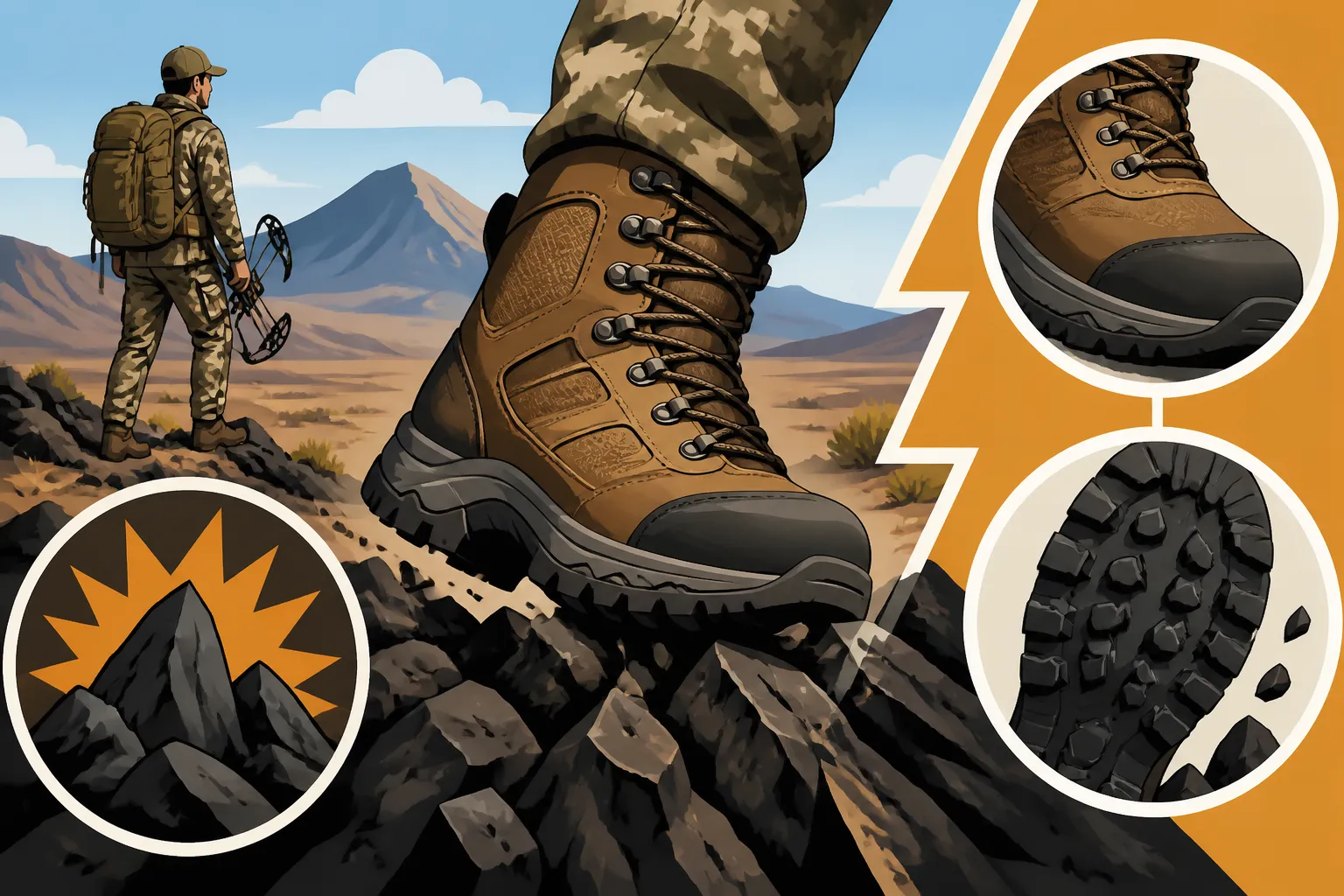
What really sets a boot apart for volcanic terrain is a substantial, wraparound rubber rand. This protective strip, usually made of a harder rubber compound, encircles the lower part of the boot, from the toe box all the way around the sides and heel. It acts as a sacrificial barrier, taking the brunt of the rock abrasion instead of your stitching or the main upper material. The thicker and more complete this rand, the better. Boots designed for mountaineering or heavy-duty backpacking often feature the most robust rands, and for good reason – they're built for similar, unforgiving conditions.
Stiff Soles and Superior Ankle Support
Walking across uneven, jagged volcanic rock demands a boot that offers maximum stability and protection. A stiff sole, often referred to as a "full shank" or "3/4 shank" boot, is crucial. This rigid sole prevents your foot from flexing excessively over sharp edges, distributing pressure more evenly and reducing foot fatigue significantly. Imagine trying to walk across a field of golf balls in soft-soled sneakers versus stiff-soled work boots; the difference is immediate and profound. This stiffness also protects the bottom of your feet from bruising, a common complaint after a long day on sharp rocks.
Coupled with a stiff sole, you need excellent ankle support. Many Nevada hunts involve traversing steep, loose scree slopes where an ankle roll is a constant threat. High-cuff boots that lace up securely provide the necessary lateral stability. Look for a well-padded collar and a lacing system that allows you to really cinch down the boot, locking your heel in place and preventing slippage that can lead to blisters. This is especially important when you're Packing an Animal Out of Roadless Country with a heavy load. A stable boot will save your ankles and make moving across difficult terrain much safer.
Aggressive Traction and Waterproofing
While durability and support are paramount, don't overlook traction. The outsoles need deep, multi-directional lugs to grip loose rock, dirt, and even slick surfaces you might encounter around water sources. Vibram is a highly respected name in outsoles, and many quality hunting boots feature their compounds. Look for patterns designed for uneven, rocky terrain rather than smooth, trail-walking patterns.
And, of course, waterproofing. While Nevada is largely dry, unexpected rain showers can turn dusty trails into muddy, slick messes, and you'll inevitably cross streams or encounter morning dew in higher elevations. A quality waterproof membrane, like Gore-Tex or similar proprietary technologies, is a must. However, remember that even the best waterproof membrane can be compromised if the outer materials are shredded. This reinforces the need for those super durable uppers and rands. You want to make sure your feet stay dry, comfortable, and protected, especially when dealing with the unpredictable weather swings you find in the Layering for Basin and Range Temperature Swings article.
Specific Boot Types and Construction for Nevada's Challenges
When it comes to picking a boot that can stand up to Nevada's volcanic rock, you're generally looking at some serious contenders designed for mountain hunting or heavy-duty backpacking. These aren't your lightweight trail runners, and for good reason.
Mountaineering-Style and Heavy-Duty Backpacking Boots
These categories are often your best bet. Brands like Scarpa, La Sportiva, Lowa, and Kenetrek are well-regarded for producing boots that can take a beating. Mountaineering boots, while sometimes overkill for general hunting, often feature extremely robust full-grain leather uppers, complete rubber rands, and incredibly stiff soles designed for kicking steps into snow or edging on rock. They excel in protection and support, though they can be heavier and take longer to break in.
Heavy-duty backpacking boots offer a slightly more flexible, but still very durable, option. They often strike a good balance between the rigidity of mountaineering boots and the comfort needed for long days of walking. Look for models with a 3/4 or full shank and a comprehensive rubber rand. Brands like Hanwag, Zamberlan, and Crispi also produce excellent boots in this category. They understand that a hunting boot isn't just about walking; it's about stability and protection under a heavy pack, whether you're climbing for chukar or stalking a mule deer.
When researching, services like GoHunt offer a wealth of information from other hunters who have faced these exact challenges. Their forums and gear reviews can be invaluable for identifying specific models that hold up well in similar environments.
| Boot Feature | Benefit for Volcanic Rock Terrain | Downsides (Potential) |
|---|---|---|
| Full-Grain Leather Uppers | Excellent abrasion resistance, molds to foot over time, durable. | Heavier, requires more break-in, needs regular conditioning. |
| Full Rubber Rand | Critical protection against cuts and abrasion to the boot upper/stitching. | Adds weight, can stiffen the boot. |
| Stiff Sole (Full/3/4 Shank) | Superior foot protection from sharp points, reduces fatigue on uneven ground, enhances stability. | Less flexible for casual walking, heavier. |
| High Ankle Support | Prevents ankle rolls on steep, loose terrain, crucial for stability under load. | Can feel restrictive initially, adds weight. |
| Aggressive Outsole | Provides grip on loose rock, dirt, and varying surfaces. | Can wear faster on pavement, some patterns collect mud. |
| Waterproof Membrane | Keeps feet dry in wet conditions, essential for comfort and preventing blisters. | Can reduce breathability in hot weather. |
The Importance of Fit and Break-In
Even the toughest boot is useless if it doesn't fit correctly. A poorly fitting boot is a recipe for blisters, hot spots, and general misery, regardless of how "tough" it is. Make sure to try on boots with the kind of socks you'll actually wear hunting. Walk around the store, find a ramp, simulate uphill and downhill movement. Your heel should feel locked in place, and your toes shouldn't jam against the front of the boot on downhills.
Once you've bought a pair, the break-in process is non-negotiable. Don't, I repeat, do not save your new boots for opening day. Wear them around the house, on short walks, then progressively longer hikes. This allows the boots to mold to your feet and helps you identify any pressure points before you're miles deep in the backcountry. Think of it as part of your overall Preparing Physically for Long Glassing Days and general hunting prep. Many hunters find that a successful hunt starts long before the season opens, with careful gear selection and break-in.
Remember, a heavier, stiffer boot might feel clunky at first, but that stiffness is what protects your feet and ankles from the constant assault of Nevada's volcanic rock. It’s a trade-off worth making for comfort and durability in the long run. When you're spending days glassing the vast, open country, as detailed in Why Glassing Beats Walking in Sage Country, the last thing you want is debilitating foot pain.
Care and Maintenance for Boots on Harsh Terrain
Even the best, most expensive boots will eventually succumb to the relentless abuse of Nevada's volcanic rock if not properly cared for. Think of boot maintenance as an extension of the hunting season; it’s an ongoing process that ensures your investment lasts as long as possible.
Regular Cleaning and Conditioning
After every hunt, especially after treks through dusty, rocky units, it's crucial to clean your boots. Dirt, grit, and fine volcanic dust can get into the stitching and pores of the leather, accelerating wear. Use a stiff brush to remove loose debris, then wipe them down with a damp cloth. For leather boots, once they're clean and dry, apply a high-quality leather conditioner or wax. This keeps the leather supple, prevents it from drying out and cracking, and maintains its water repellency. Brands like Obenauf's, Nikwax, or Sno-Seal are popular choices among serious hunters.
For synthetic boots, cleaning is often simpler, but you still need to ensure the fabric is free of embedded grit. If your synthetic boots have a DWR (Durable Water Repellent) coating, you might need to reapply a spray-on treatment periodically to maintain water repellency. Regularly inspecting stitching and laces for wear is also key. Replace worn laces immediately, as a broken lace in the field can be a real headache.
Repairing Minor Damage Promptly
Don't wait for a small tear or a lifting rand to become a catastrophic failure. Address minor damage as soon as you spot it. Small cuts in the leather or synthetic uppers can often be patched with specialized adhesive or repair kits. A lifting rand can usually be re-glued with a strong, flexible adhesive like Shoe Goo or Aquaseal. Carrying a small tube of one of these in your pack isn't a bad idea, as a quick field repair can save a hunt.
Some boot manufacturers also offer resoling services, or you can find a reputable cobbler who specializes in outdoor footwear. While this can be an investment, resoling a high-quality pair of boots that still have solid uppers can be much more cost-effective than buying a new pair. Checking the condition of your boots and performing these preventative or minor repairs should be a regular part of your post-hunt routine, much like checking over your Vehicle Prep for Remote Nevada Roads after a dusty drive.
Proper Storage Between Seasons
How you store your boots also impacts their longevity. Always ensure they are completely dry before putting them away for an extended period. Remove insoles to allow air circulation. Store them in a cool, dry place away from direct sunlight or extreme temperature fluctuations, which can degrade materials. Avoid leaving them crammed in a closet or gear bag where they can't breathe. Stuffing them loosely with newspaper or boot trees can help maintain their shape.
By investing in high-quality, durable boots specifically designed for rugged, rocky terrain and committing to a consistent maintenance routine, you can significantly extend the life of your footwear. This proactive approach not only saves you money in the long run but, more importantly, ensures your feet are comfortable and protected for every challenging step of your Nevada hunting adventures.
Disclaimer
Please note that the information provided in this article is for general guidance and informational purposes only. Hunting regulations, gear recommendations, and terrain conditions can change. Always consult the official Nevada Department of Wildlife (NDOW) regulations before any hunting activity. Proper research and preparation are the responsibility of each individual hunter.