Hound Rules for Mountain Lion Hunting
Hunting mountain lions with hounds in Nevada can be one of the most exhilarating and challenging pursuits, but it's also wrapped in a thicket of specific regulations that often leave even seasoned hunters scratching their heads. You're not just dealing with the vast, rugged terrain and elusive nature of the cougar; you're also navigating a detailed set of rules designed to manage the population responsibly while ensuring ethical practices. This comprehensive guide aims to unravel the complexities of Nevada's hound rules for mountain lion hunting, offering clarity on everything from licenses to zone closures.
Understanding Nevada's Hound Hunting Regulations for Mountain Lions
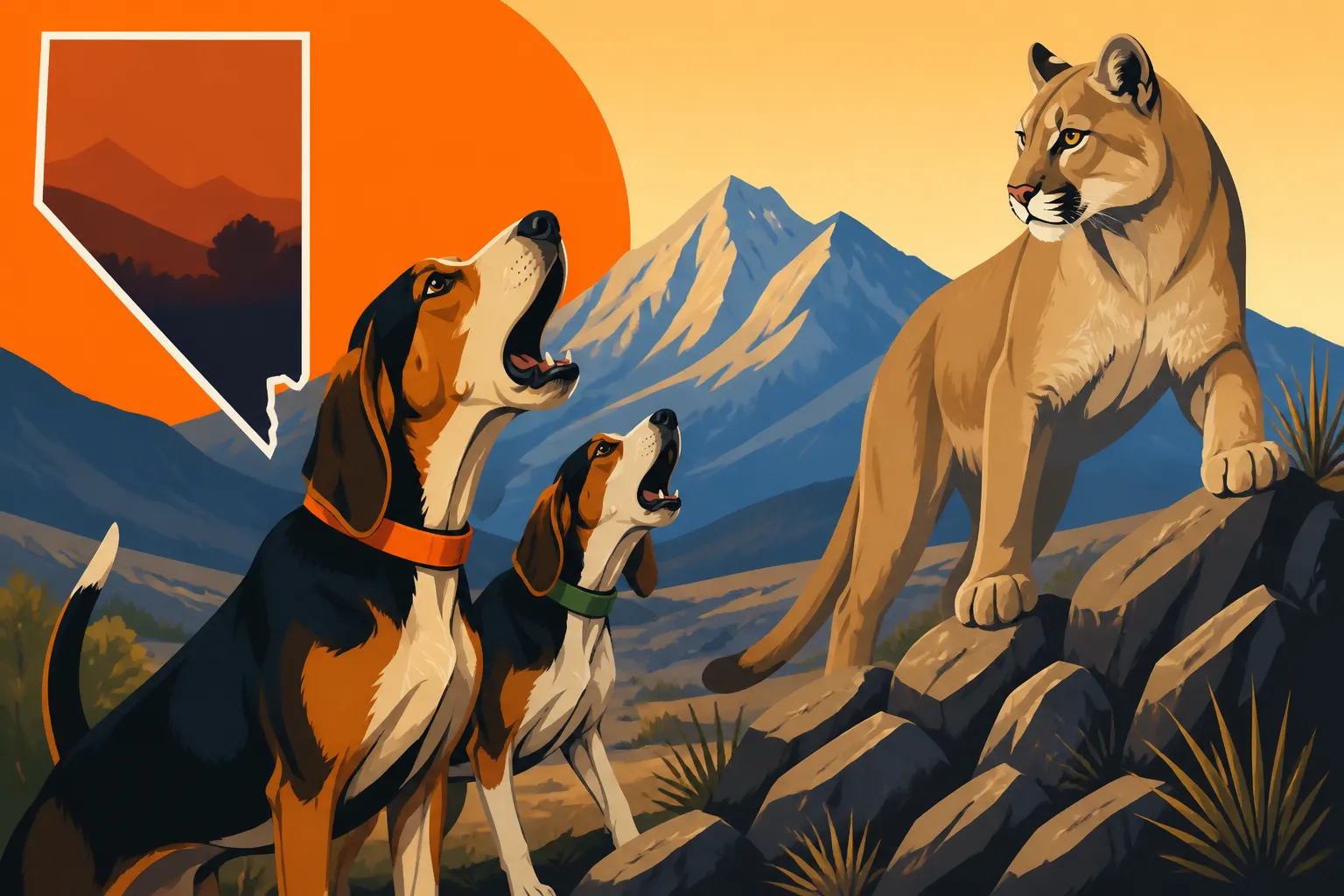
Mountain lion hunting with hounds in Nevada is a specialized activity, steeped in tradition but governed by modern wildlife management principles. It's not simply about unleashing your dogs; it's about understanding and adhering to a framework designed to ensure fair chase, sustainable harvest, and respectful interaction with the landscape and its wildlife.
General Rules and Licensing for Hound Hunters
Before you even think about hitting the sagebrush with your dogs, you need to ensure you're squared away with the fundamental requirements. First and foremost, a valid Nevada hunting license is essential. Beyond that, anyone who intends to hunt mountain lions with hounds must possess a Mountain Lion Tag, obtained through the state's draw system or purchased as an over-the-counter tag in specific circumstances, particularly for residents. This isn't like chasing coyotes where general licenses suffice; lions are big game, and the tag system is strict.
Beyond your own licensing, there are specific guidelines about the hounds themselves. While there isn't a separate "hound license" for the dogs, the rules dictate how they can be used. For instance, you’ll typically be limited to a certain number of dogs per hunter, and all dogs must be clearly identifiable, often with a collar bearing the owner’s contact information. This is crucial for recovery if a dog gets separated in the vast Nevada wilderness. The Nevada Department of Wildlife (NDOW) is serious about ethical hunting, and that extends to the welfare and control of your hounds. It’s a good idea to ensure your dogs are well-trained and conditioned for the rough terrain, as a lost dog is a dangerous situation for both the animal and potentially other wildlife. Always check the current year's regulations because these specifics can change, especially regarding things like GPS collars or other tracking devices that aid in managing your pack during a chase.
Season Dates and Quotas for Lion Harvest
Unlike some other big game species with fixed season dates, mountain lion seasons in Nevada often operate on a quota system. This means the season isn't defined by strict calendar dates alone, but rather by the number of animals harvested within specific management zones. The season typically opens at a set time, often in the fall, but can close prematurely if the predetermined quota for that zone is met. This system is in place to ensure that lion populations remain healthy and viable across the state. NDOW biologists carefully monitor harvest numbers, closing zones as quotas are approached or reached to prevent overharvest.
For a hound hunter, this quota system demands vigilance. You can't just plan your hunt months in advance and assume the season will still be open. Successful hound hunters are constantly checking the NDOW website or contacting regional offices for real-time updates on harvest numbers and zone closures. Imagine spending weeks scouting a prime unit, only to find it closed the day before your hunt begins because the quota was met in another part of that zone! This constant monitoring is a non-negotiable part of the game. It underscores why understanding the specific unit you plan to hunt and how its quota interacts with larger management zones is vital. For more context on the big picture, you might want to read up on how Nevada Manages Lion Harvest, as it provides excellent insight into the science behind these regulations.
Permitted and Prohibited Practices
Hound hunting for mountain lions, while a recognized method, comes with a clear set of dos and don'ts. Permitted practices generally include using GPS collars on your dogs to track them during a pursuit. This is incredibly helpful in Nevada's expansive, broken country where a lion can lead a pack for miles across rugged canyons and peaks. Many hunters rely on sophisticated systems, often integrated with tools like GoHunt for overlaying private land boundaries and topographic maps, to keep tabs on their valuable hounds.
However, certain practices are strictly prohibited. The most critical prohibition is baiting mountain lions. You cannot use any form of bait to attract a lion, nor can you hunt over a previously baited site. This rule is fundamental to fair chase ethics. Another key rule involves the number of dogs; while specific numbers can vary by year or zone, there's usually a maximum pack size. Also, once a lion is treed or bayed by the hounds, you must approach cautiously, assess the animal, and make an ethical decision. The focus should always be on a clean, humane harvest. Using dogs to simply harass or injure an animal without intent to harvest is unethical and illegal. Understanding these nuances is critical, and a misstep can lead to severe penalties, including fines and loss of hunting privileges.
Navigating Unit-Specific and Zone Restrictions
Nevada's vast and diverse landscape means that mountain lion management isn't a one-size-fits-all approach. Regulations, especially for hound hunting, often vary by geographical zone, reflecting local lion populations, habitat, and human-wildlife interactions.
Zone Management and Closures
The state is divided into several mountain lion management zones, each with its own specific harvest quota. These zones are designed to distribute hunting pressure and protect localized populations. For example, some units in the Ruby Mountains might have different quotas or even season lengths than those in the remote central Nevada ranges. NDOW continually monitors harvest within these zones, and when a quota is met or approached in a particular zone, that zone will be closed to hunting.
This means you can't just assume if one part of Nevada is open, all are. It requires meticulous research, often using platforms like GoHunt that integrate up-to-date regulations and maps. The moment a zone closes, hunting ceases immediately, regardless of whether you have a lion treed or are actively pursuing one. It's the hunter's responsibility to know the current status of their chosen zone. Imagine being deep in the backcountry, finally hearing your hounds bay a lion, only to discover through your satellite messenger that the zone closed an hour ago. That's a frustrating, but real, scenario that underscores the need to continually check the current Nevada Mountain Lion Quotas and Zones before and during your hunt.
To illustrate the critical nature of these closures, here's a simplified table representing how NDOW might post quota information and closures. Keep in mind that specific units and quotas change annually, so always refer to the most current NDOW regulations.
| Lion Management Zone | Units Included | Annual Quota (e.g., Male/Female) | Harvest To Date | Status (Open/Closed) | Last Update |
|---|---|---|---|---|---|
| Northwest Zone | 011-013, 031-032 | 10 total (max 4 female) | 8 (3 female) | Open | 10/26/2023 |
| Central Highlands | 161-163, 171-173 | 12 total (max 5 female) | 11 (5 female) | CLOSED | 10/25/2023 |
| Eastern Basin | 221-223, 231 | 8 total (max 3 female) | 6 (2 female) | Open, nearing quota | 10/26/2023 |
| Southern Desert | 241, 261-263 | 15 total (max 6 female) | 10 (4 female) | Open | 10/26/2023 |
Note: This table is hypothetical and for illustrative purposes only. Always consult current NDOW regulations for actual quotas and closure status.
Public vs. Private Land and Access
Nevada is famously the most federally owned state in the lower 48, boasting vast expanses of public land, primarily managed by the Bureau of Land Management (BLM) and the U.S. Forest Service. This offers incredible opportunities for hound hunting. However, even on public land, access can be a challenge due to rough roads, locked gates on private inholdings, or simply the sheer remoteness.
When hunting with hounds, it's paramount to be acutely aware of land ownership boundaries. Your dogs, once on a scent, don't recognize property lines. They might lead you across public land, through a private ranch, and then into a Wilderness Study Area, all in one chase. Knowing exactly where you are and whose land you're on is crucial to avoid trespassing. Tools that allow you to overlay land ownership data, such as those found on hunting apps that leverage GIS data, are indispensable. Many hunters also make it a point to connect with local ranchers and landowners. Gaining permission to retrieve a dog or a treed lion from private property before the season even starts can save a lot of heartache and potential legal trouble. Remember, while you might legally hunt on public land, if your dogs cross onto private property without permission, you could be in violation of trespass laws. Understanding how to use onX Layers for Nevada Public Land and other digital mapping resources is essential for ethical and legal hunting.
Wilderness and Roadless Area Considerations
Nevada has numerous designated Wilderness Areas and Wilderness Study Areas (WSAs) which present unique challenges and rules for hound hunters. In these areas, motorized vehicle use is generally prohibited or heavily restricted. This means you can't just drive your truck and dog box deep into a wilderness to start your hunt or follow your dogs. Any access into these areas must be on foot or horseback. This demands a high level of physical fitness, meticulous planning, and robust gear, including satellite communication devices, because cell service is non-existent.
For hound hunters, the implications are significant. If your dogs chase a lion deep into a Wilderness Area, you're looking at a long, arduous trek on foot to reach them. This can add hours, if not an entire day, to an already intense pursuit. It also means you need to be prepared to pack out an animal from remote, roadless country, which is no small feat for a large mountain lion. Before venturing into these magnificent but challenging landscapes, you should familiarize yourself with all Motorized Travel Rules on Public Land and specific Wilderness Study Area Vehicle Limits to ensure compliance and safety. Planning an approach into these areas might require more than just e-scouting; it might demand scouting trips on foot to understand the terrain and potential challenges.
Ethical Considerations and Best Practices for Hound Hunters
Hunting mountain lions with hounds is a privilege, and with that privilege comes a significant responsibility to uphold ethical standards, ensure animal welfare, and contribute positively to wildlife conservation.
Responsible Dog Management
Your hounds are your partners in this pursuit, and their care and responsible management are paramount. This goes beyond just feeding and sheltering them. It involves extensive training to ensure they are disciplined, responsive to commands, and do not harass non-target wildlife or livestock. A well-trained pack is less likely to run astray, get injured, or cause conflicts with other animals or people. Many dedicated hound hunters spend countless hours conditioning their dogs, not just for speed and endurance, but also for scent discrimination and recall, especially in difficult terrain.
Furthermore, preparation for the hunt itself includes ensuring your dogs are healthy and equipped for the environment. That means sturdy, protective collars, often with GPS tracking devices, and understanding how to manage their energy and hydration during a long chase. The rugged Nevada terrain, with its sharp volcanic rock and thorny brush, can be brutal on paws and bodies. Recovering a lost dog is a top priority, and you should always have a solid plan, including communication devices and maps, for tracking and retrieving your hounds if they get separated from you or the pack. Remember, you're not just a hunter; you're a responsible dog owner, and the welfare of your pack directly reflects on the sport.
Fair Chase and Respect for the Animal
The concept of "fair chase" is a cornerstone of ethical hunting, and it applies strongly to hound hunting for mountain lions. While hounds are used to locate and tree the animal, the hunt should never devolve into harassment or an unfair advantage. Once a lion is treed, the hunter has the responsibility to approach cautiously, assess the animal, and make a clean, humane shot. It's not about prolonging the chase or cornering a lion unnecessarily. This quick and decisive action honors the animal and minimizes stress.
Respect for the animal also extends to what happens after the harvest. Mountain lion meat is excellent table fare, and it's important to utilize the animal fully. Proper field dressing, especially when considering Field Dressing in August Heat, and packing out the meat are essential. This means being prepared with the right equipment to quarter and cool the carcass, especially in remote areas where Packing an Animal Out of Roadless Country can be a monumental task. Leaving a significant portion of edible meat in the field is a violation of ethical hunting principles and often state law.
Collaboration with Wildlife Agencies
As a hound hunter, you play a unique role in wildlife management. Your direct interaction with mountain lions provides valuable data that can aid NDOW in understanding population dynamics, health, and distribution. Mandatory reporting after a Nevada harvest is critical, providing biologists with data points on age, sex, and location of harvested animals. This information directly feeds into the quota setting process and ensures that future hunting opportunities remain viable.
Beyond mandatory reporting, many hound hunters actively assist NDOW with various projects, such as identifying lion activity in areas with livestock conflicts or participating in research studies. Being a responsible and engaged hunter means being a good ambassador for the sport. This can involve sharing observations, adhering strictly to regulations, and promoting ethical practices among your peers. Collaboration ensures that the tradition of hound hunting for mountain lions can continue as a sustainable and respected activity for generations to come.
Disclaimer
Please remember that hunting regulations, seasons, and quotas can change frequently. While this guide provides a comprehensive overview, it is essential to always consult the current Nevada Department of Wildlife (NDOW) regulations and official proclamations before planning or engaging in any hunting activity. The information presented here is for educational and informational purposes only and should not be considered legal advice.