Broadhead Requirements for Bowhunting
Trying to figure out all the ins and outs of bowhunting regulations in Nevada can feel a bit like trying to find a shed antler in a vast sagebrush flat – you know it’s out there, but pinpointing the exact location can be tough. Many bowhunters, both seasoned veterans and eager newcomers, find themselves scratching their heads over broadhead requirements. No one wants to head into the field only to realize their equipment isn't legal, risking their hunt, their tag, and potentially facing penalties. This guide is here to untangle the specifics of broadhead rules for big game in Nevada, making sure you're fully prepared and compliant for an ethical and successful hunt.
Understanding Nevada's Core Broadhead Regulations for Big Game
When you commit to bowhunting in Nevada, you're signing up for a true challenge and an intimate experience with the landscape and its wildlife. Part of that commitment is understanding and adhering to the regulations set forth by the Nevada Department of Wildlife (NDOW), especially when it comes to the business end of your arrow – the broadhead. These rules aren't just arbitrary; they're designed to ensure a humane and ethical harvest, something every responsible hunter strives for.
Minimum Cutting Diameter and Blade Requirements
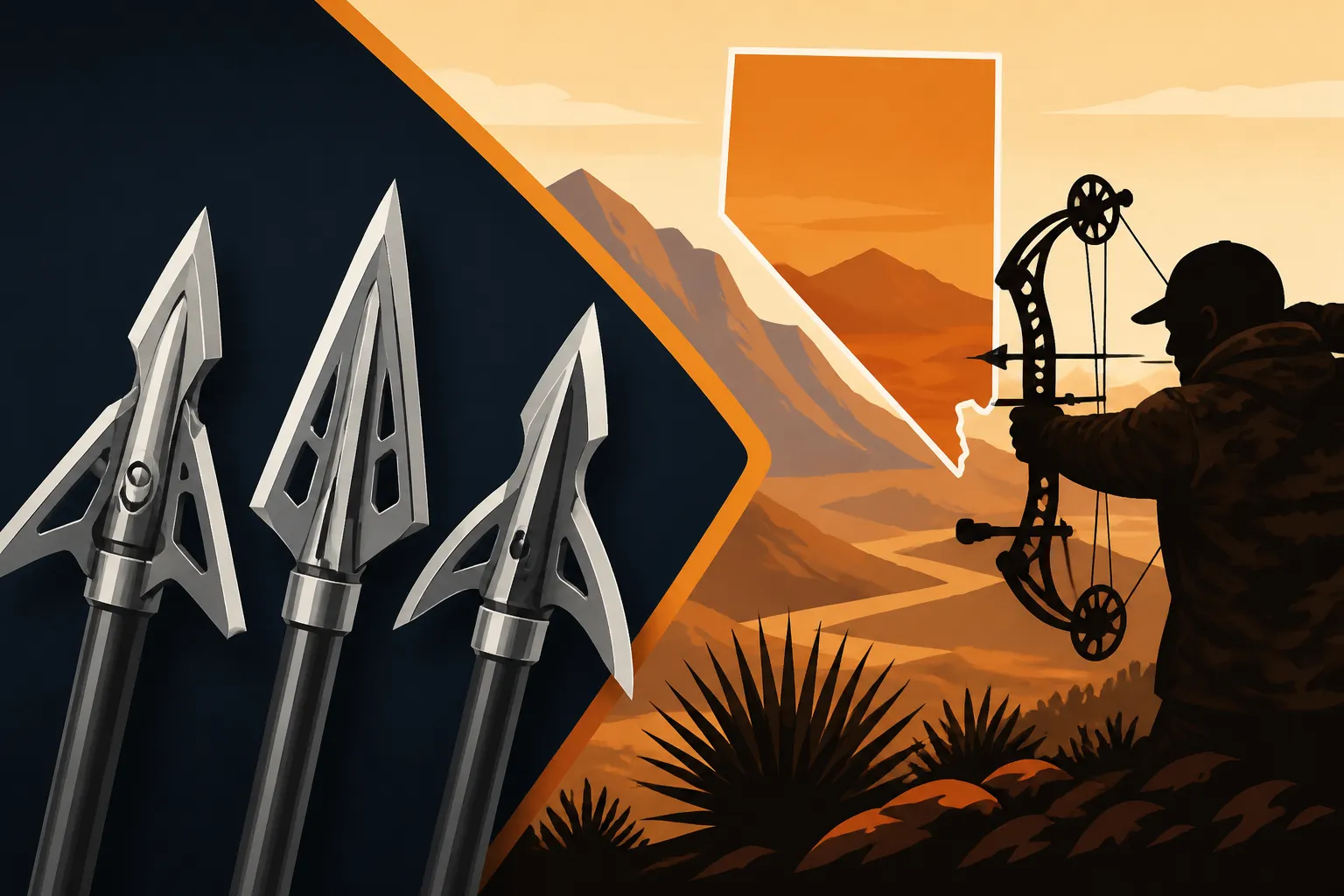
The fundamental requirements for broadheads in Nevada are quite clear, aimed at ensuring sufficient cutting action for a quick, humane kill. NDOW regulations specify that broadheads used for big game must have at least two opposing cutting edges. This isn't just about having multiple blades, but about how those blades are positioned to create a wide wound channel. Furthermore, these broadheads must be a minimum of 7/8 inch wide. This measurement refers to the cutting diameter, meaning the overall width of the cutting surface that enters the animal.
This combination of opposing edges and minimum width is crucial. It ensures that when your arrow hits its mark, it creates a significant wound that promotes rapid blood loss, leading to a quick and ethical harvest. Think about it: a broadhead that's too small or lacks proper cutting edges might not penetrate effectively or create a large enough wound channel, leading to a prolonged and unnecessary struggle for the animal. We all want a clean kill, and these regulations are a critical step in making that happen. These rules apply across the board for all big game species you might pursue in Nevada, whether it's mule deer, elk, antelope, or bighorn sheep. You can find detailed breakdowns of these regulations and other hunting methods, like When Nevada Archery Deer Season Opens, which offers specific season dates to plan around.
Prohibited Broadhead Features and Why They're Outlawed
Just as important as knowing what is allowed is understanding what isn't. Nevada's regulations explicitly prohibit certain broadhead features, primarily those that are deemed unethical or cause undue suffering. The most common prohibition you'll encounter is against barbed broadheads. A barbed broadhead is essentially designed with rear-facing projections or a shape that makes it difficult to withdraw from an animal once it has entered.
The reasoning behind this prohibition is rooted deeply in ethical hunting practices. While such designs might seem to ensure the broadhead stays in place, they cause significantly more trauma and make tracking an animal, should it escape with the arrow, much more difficult and painful. An arrow should pass through an animal cleanly to maximize blood loss, not get hung up inside. Beyond barbs, it's generally understood that any broadhead containing explosives, chemicals, or other paralyzing agents would also be illegal, falling far outside the realm of fair chase and humane hunting. These might seem like extreme examples, but the spirit of the law is to ensure that the hunt remains fair, challenging, and respectful of the animal.
Navigating Specific Broadhead Types and Their Legality
The market is flooded with different types of broadheads, each with its proponents and detractors. Understanding how each style fits into Nevada's legal framework is key to avoiding issues in the field. From the traditional fixed blades to the increasingly popular mechanical designs, there are options for every bowhunter, as long as they meet the state's stringent requirements.
Fixed Blade Broadheads: The Time-Honored Choice
Fixed blade broadheads are the grandfathers of the bowhunting world, and for good reason. They are simple, robust, and incredibly reliable. These broadheads feature blades that are permanently affixed to the ferrule, meaning there are no moving parts. This inherent simplicity translates to exceptional durability and, when tuned correctly, consistent flight. When you launch a fixed blade, you know exactly how it's going to perform upon impact.
Popular fixed blade designs, from classic Muzzy Trocar tips to the sleek G5 Montec or the highly regarded Iron Will broadheads, generally meet Nevada's "two opposing cutting edges" and minimum 7/8-inch width requirement without issue. Their solid construction means they hold up well to bone impacts, often providing excellent penetration. However, the key phrase here is "when tuned correctly." Fixed blade broadheads, due to their fixed aerodynamic profile, can be a bit more finicky to get flying perfectly with your bow setup. It often requires meticulous bow tuning and lots of practice at distance to ensure they hit the same spot as your field points. Many resources, including articles found on platforms like GoHunt, provide excellent guidance on how to properly tune your bow for fixed blades, ensuring a straight and true shot when it counts.
Expandable (Mechanical) Broadheads: The Modern Option with Caveats
Expandable, or mechanical, broadheads have surged in popularity over the last couple of decades, primarily because they offer field point accuracy in practice and then deploy upon impact to create a massive wound channel. This can be a game-changer for many bowhunters, but their legality in Nevada comes with specific conditions, echoing the broader question of Are Expandable Broadheads Legal? in many states. Yes, they are generally legal in Nevada, but they must meet the 7/8-inch minimum cutting width when fully expanded. This is critical and often where hunters can run into trouble if they choose a broadhead that doesn't quite measure up or, worse, fails to deploy properly.
The appeal of mechanicals is clear: their streamlined profile in flight reduces wind drift and often allows them to fly identically to your practice field points, simplifying tuning. However, the potential for mechanical failure is a real concern. If a blade doesn't deploy fully, or if the mechanism breaks upon impact with bone, you're left with a significantly smaller cutting diameter than intended, compromising the ethical take down. High-quality mechanicals from brands like Rage, NAP, or Grim Reaper are designed for reliable deployment and structural integrity, but even then, it's paramount to test them. Don't just trust the package; shoot a few into a broadhead target to ensure they open consistently and hold together. This rigorous testing minimizes surprises when you're facing a Nevada mule deer at close range, knowing that How Close a Bowhunter Needs to Get on Mule Deer makes every shot count.
Blunt, Judo, and Other Points: Know Their Place
While fixed and expandable broadheads are designed for big game, there's a whole category of arrow points that are absolutely not suitable for deer, elk, or other large animals. These include blunt points, Judo points, and other specialty points. It might seem obvious to many experienced hunters, but it's a mistake worth highlighting, especially for those new to the sport.
Blunt points, as the name suggests, have no sharpened edges and are designed to deliver blunt force trauma. They are excellent for small game like rabbits and squirrels, where the goal is to stun or crush, not to penetrate deeply. Similarly, Judo points, with their distinctive spring-wire arms, are fantastic for hunting small game in thick cover, as the arms prevent the arrow from burrowing into the ground and getting lost. However, for big game, these points are highly unethical. They will not penetrate sufficiently to cause a quick, humane kill. Instead, they would only inflict painful and superficial wounds, leading to prolonged suffering for the animal. Always ensure you are using a legally compliant and ethically appropriate broadhead for big game, saving your blunt and Judo points for their intended purpose: chasing small game or honing your skills in the backyard practice range.
Practical Steps for Broadhead Compliance and Ethical Hunting
Beyond simply knowing the rules, applying them practically to your hunting preparation is what truly matters. Being compliant means more than just having the right equipment; it means having a deep understanding of the regulations, keeping up with any changes, and meticulously preparing your gear.
Consulting Official Sources and Staying Updated
The first and most critical step in broadhead compliance, or any hunting regulation really, is to consult the official source: the Nevada Department of Wildlife (NDOW). Their website and official regulations booklet are the definitive guides. Regulations can change from year to year, and what was legal last season might have a slight tweak this year. No one wants to be caught off guard by a rule change, so make it a habit to check the current regulations before every season.
Beyond the official NDOW publications, reputable hunting resources often compile this information in an easily digestible format. Platforms like GoHunt, for example, frequently provide updated regulatory information for various states, including Nevada, often with helpful insights into specific hunt units or species. However, always double-check against the official NDOW documentation to ensure accuracy. If you're ever in doubt, a quick call to a local game warden or a visit to a trusted sporting goods store in Nevada can provide clarification. Remember, your understanding should be based on the precise letter of the law, not just campfire stories or old forum posts. This diligent research is akin to effective E-Scouting a Nevada Unit Before the Season, where you're gathering crucial intelligence before you even step foot in the field.
The Importance of Proper Setup and Practice
Selecting a legal broadhead is only half the battle; the other, equally important half, is ensuring your entire archery setup is perfectly tuned and that you, the hunter, are proficient with it. A legal broadhead on a poorly tuned bow, or one shot by an unpracticed hand, is still an unethical combination. It's about the entire system working in harmony.
Start with your bow's draw weight and your arrow's weight and front-of-center (FOC) balance. All these elements work together to dictate how your arrow flies and penetrates. For instance, understanding the Minimum Bow Draw Weight for Big Game is foundational, as sufficient kinetic energy is necessary for proper broadhead penetration. Once your bow is set up, the real work begins: practice. Shoot your hunting broadheads before the season. Don't just shoot field points; practice with the exact broadheads you intend to use. This is crucial for "broadhead tuning" – ensuring your broadheads fly true and hit the same spot as your field points. Many bowhunters will spend countless hours on the range, preparing physically and mentally, much like the preparation involved in Preparing Physically for Long Glassing Days for a long-distance hunt. Your shot execution under pressure is paramount, and it comes from confidence built through practice.
Real-World Scenarios and Avoiding Common Mistakes
Hunting in Nevada's vast and challenging landscape means preparing for anything. Your broadhead choice and your adherence to regulations play a direct role in how you handle those "what if" moments and uphold your ethical responsibilities.
The "What If" Moments: Dealing with Specific Challenges
Imagine a moment many bowhunters face: you've made a great shot on a mule deer, but the arrow encountered a rib on the way in. This is where a quality, legal broadhead truly proves its worth. A well-designed fixed blade or a robust mechanical that reliably deploys is far more likely to penetrate through or past that obstacle, creating the necessary wound channel for a quick harvest. Conversely, a broadhead that's too small, poorly constructed, or fails to deploy can deflect or shatter, leaving you with a wounded animal and a difficult, potentially unsuccessful, tracking job.
Consider an early season hunt, perhaps during Nevada's August Archery Deer Window. The temperatures can be brutally hot, making Heat Management on an August Archery Hunt absolutely critical for preserving your meat. A quick, humane kill from a properly performing broadhead means you can get to field dressing and cooling your animal much faster, minimizing meat spoilage. A drawn-out tracking job in the scorching heat is a nightmare for both the hunter and the meat. Furthermore, a broadhead that creates a good, wide wound channel is essential for leaving a clear blood trail, greatly aiding in the recovery of your animal, especially in sparse desert vegetation.
The Ethical Bowhunter's Responsibility
Choosing your broadheads isn't just about avoiding a ticket; it's a profound expression of your ethical responsibility as a hunter. We owe it to the magnificent animals we pursue to ensure that, if we take a shot, it results in the quickest, most humane death possible. This means selecting broadheads that meet or exceed Nevada's legal requirements and, crucially, are razor sharp. Dull blades, regardless of their type or legality, simply don't cut it (pun intended). They tear rather than slice, causing more pain and reducing the effectiveness of the shot. Regular maintenance, including sharpening fixed blades and inspecting mechanicals, is a non-negotiable part of ethical bowhunting.
Ultimately, your broadhead choice is a reflection of your commitment to fair chase and animal welfare. By diligently researching regulations, practicing relentlessly, and maintaining your equipment, you uphold the integrity of bowhunting and demonstrate respect for wildlife. This responsibility starts with fundamental steps like understanding hunter education requirements, such as knowing that Anyone Born After 1959 Needs Nevada Hunter Education, and extends to every piece of gear you carry into the field.
Broadhead Suitability for Nevada Big Game
Here's a quick overview of common broadhead types and their general suitability for big game hunting in Nevada, keeping the regulations in mind:
| Broadhead Type | Nevada Big Game Legal | Key Features | Pros | Cons | Notes |
|---|---|---|---|---|---|
| Fixed Blade | Yes (if compliant) | 2+ sharpened, opposing edges, min 7/8" width, one-piece/replaceable blade | Extremely reliable, durable, deep penetration | Can be harder to tune for perfect flight, wider profile in quiver | Traditional choice, excellent for all big game |
| Expandable/Mech | Yes (if compliant) | 2+ sharpened, opposing edges, min 7/8" expanded width, reliable deployment | Field point accuracy, larger cutting diameter (when open) | Potential for mechanical failure, less penetration on bone | Must reliably expand to legal width, choose high-quality models |
| Barbed Broadhead | No | Features rear-facing barbs to prevent withdrawal | N/A (Illegal) | Unethical, causes undue suffering, prohibited by NDOW | Absolutely prohibited for big game hunting in Nevada |
| Blunt/Judo Point | No (for Big Game) | No sharpened edges, designed for impact or stunning (Judo has spring arms) | Excellent for small game (rabbits, squirrels) or practice | Causes only blunt force trauma, highly unethical for big game | Legal for small game, never use for deer, elk, etc. |
Disclaimer
The information provided in this guide is for general informational purposes only and is not intended as legal advice. Hunting regulations can change, and it is the hunter's sole responsibility to consult the current Nevada Department of Wildlife (NDOW) regulations and local laws before hunting.